AUDIO-TECHNICA ATH-M40X REVIEW: WHY "FLAT AND ACCURATE" SOUNDS WRONG TO THE WRONG PERSON — AND RIGHT TO EXACTLY THE RIGHT ONE
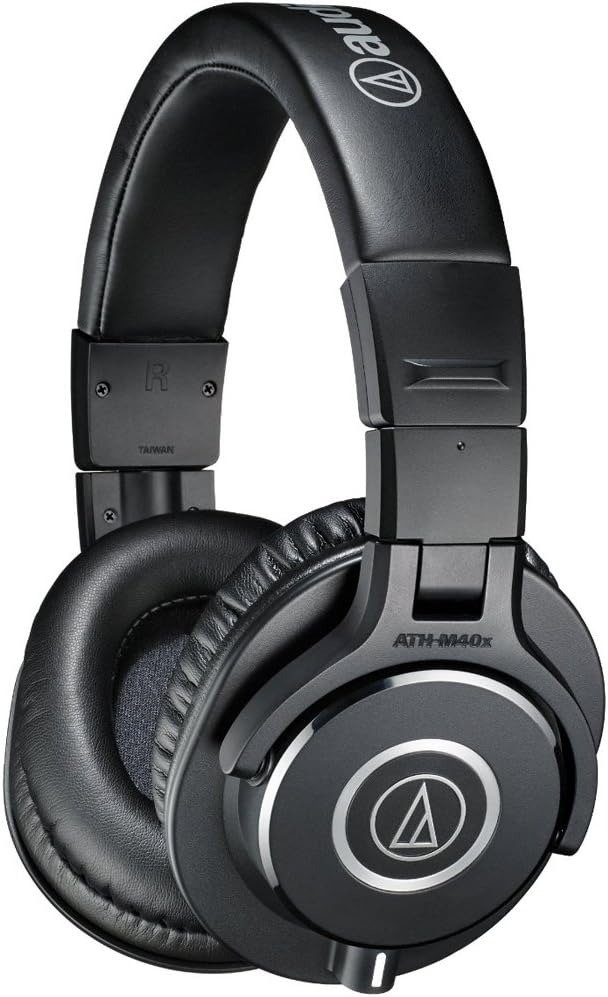
The Result Sounds Fine. The Problem Isn’t.
You put them on. Volume up. And something feels off.
Not broken. Not defective. Just… underwhelming. The bass doesn’t punch the way you expected. The highs don’t sparkle. The whole thing sounds like someone turned the excitement dial down to zero.
So you check the reviews. They all say the same thing: accurate, flat, professional, highly recommended. You start wondering if your ears are broken — or if the people writing these reviews actually listen to music.
Neither. The issue is simpler and more structural: the ATH-M40x headphones deliver sound that can feel “dull” to those accustomed to consumer headphones — and if nobody told you that before you bought them, the first listen will feel like a disappointment, not a revelation.
The headphone isn’t failing. Your expectation model is.
That’s the gap this article closes.
What You’re Actually Feeling but Not Naming
There’s a specific kind of sonic dissatisfaction that hits people who buy their first true studio monitor headphone. It doesn’t sound like quality. It sounds like absence.
No boosted bass. No artificially brightened treble. No euphonic shimmer. The instruments sit exactly where they were recorded — not enhanced, not flattered, not colored.
Upper midrange notes are clear and accurate, and lower voices come through well thanks to a modest boost from 100–200Hz. Mixes that make good use of left-to-right pans sound very good on these headphones.
But if you’ve spent years listening on consumer gear — Sony, Beats, Bose — that sonic honesty reads as flatness. Because your ears have been trained on a lie: that music is supposed to sound “enhanced.”
The ATH-M40x doesn’t enhance. It reports.
That’s not a flaw. That’s a professional tool doing its job. The friction you’re feeling isn’t coming from the headphone — it’s coming from the distance between what you’re hearing and what you were expecting to hear.
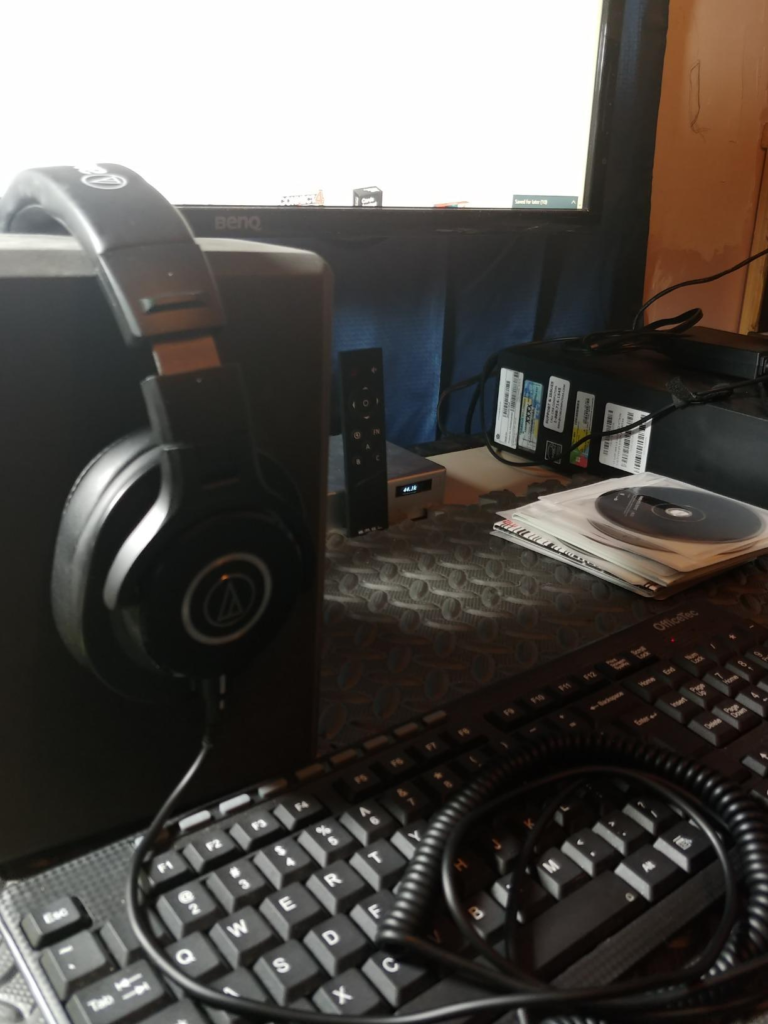
The Hidden Mechanism Behind the Miss
Here’s what most reviews skip entirely.
The ATH-M40x sits in a family of products where model numbers create false assumptions. The M50x — its more famous sibling — carries a reputation as the gold standard of affordable studio headphones. So buyers assume the M40x is a cheaper, slightly inferior version of the same thing.
It isn’t. The M50x has more bass emphasis and a wider soundstage. The M40x is flatter and more analytical. For pure mixing accuracy, the M40x actually wins. For enjoyable listening, many prefer the M50x. Different tools for different jobs.
The mechanism behind the difference is the tuning philosophy. The ATH-M40x is tuned flat for incredibly accurate sound monitoring across the entire frequency range. This isn’t a budget compromise — it’s a deliberate engineering decision that makes the M40x better at mixing than the M50x, not worse.
But that same decision is exactly what makes it feel wrong to a listener who bought it hoping for a premium listening experience.
The gap between those two use cases is where most buyers fall in.
The Threshold Where the Outcome Quietly Breaks
The ATH-M40x performs inside a specific performance window. Outside it, the experience degrades — and the degradation is quiet enough that you might not name it correctly when it happens.
| Condition | What Happens |
|---|---|
| Volume above ~90 dB | You begin to experience significant amounts of bleed. Sound leaks in and out more than expected. |
| Noisy environments | The ATH-M40x don’t have the best isolation. If you plan on wearing these on the train, be prepared for the noise of the outside world to interfere significantly. |
| Sessions beyond 2–3 hours | The pads get hot and sweaty. The material doesn’t breathe well, and clamping force digs into the sides of the head. |
| Large head or large ears | The clamping force is on the tighter side, which may lead to some discomfort if you have a large head. |
| Vocal tracking at louder levels | Significant headphone bleed can leak into what would’ve otherwise been a perfect take. |
| Bass-heavy mastering work | The distortion profile shows distinct problems in the bass — high odd-order distortion that cannot be calibrated away, suggesting resonances at those frequencies. |
These aren’t edge cases. These are the exact conditions that define how most people actually use studio headphones. The threshold isn’t a cliff — it’s a slow accumulation of small discomforts that adds up to a session you end early.
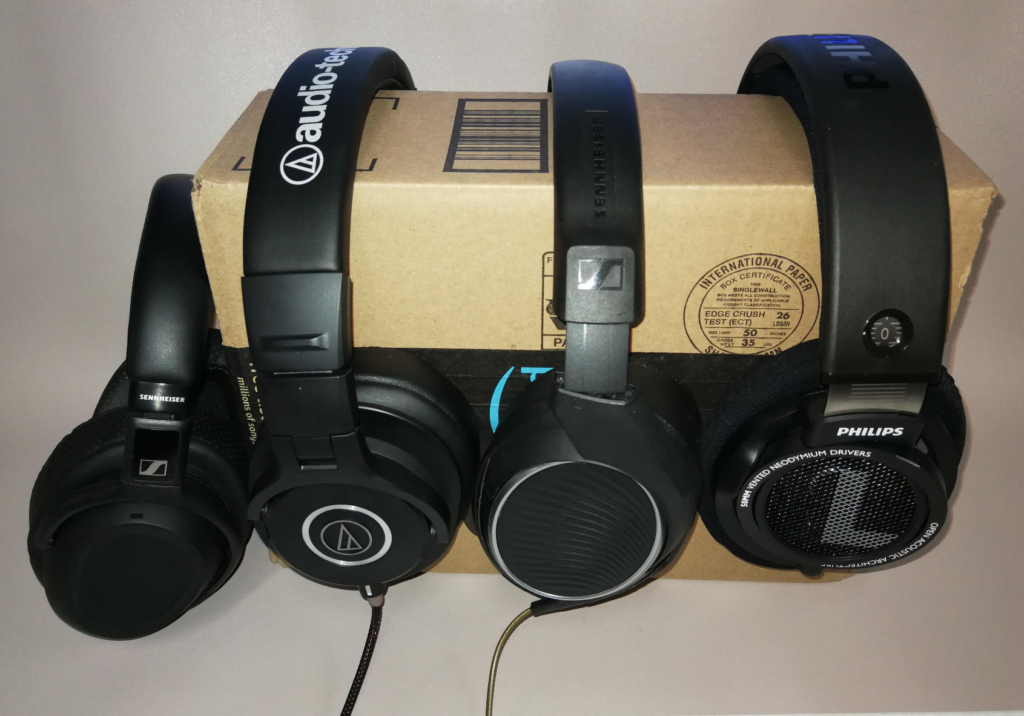
Why Most Buyers Misread This Too Early
The most common mistake isn’t buying the ATH-M40x. It’s buying it for the wrong reason.
Mistake 1: Treating it as a daily listening headphone. The flat frequency response that makes it accurate for mixing makes it boring for music consumption. If you want to enjoy music, this headphone will feel like a downgrade from far cheaper consumer gear.
Mistake 2: Comparing specs against the M50x and calling the M40x inferior. Audio-Technica’s ATH-M40x may receive a lesser model number than the M50x, but that doesn’t mean it’s a lesser headphone. The number is a lineup position, not a quality rank.
Mistake 3: Assuming “studio headphone” means “better at everything.” Studio gear optimizes for one variable — accuracy — by deliberately sacrificing others: entertainment value, portability suitability, environmental noise rejection at high volume.
Mistake 4: Reading the “tuned flat” claim as a guarantee. Mixing and tracking are doable with these, but for mastering, something with a cleaner THD profile would be more suitable. Flat tuning and perfect accuracy are related but not identical.
The buyer who misses all four of these arrives expecting a premium listening experience. What they get is a precision instrument. The gap between those two things is where regret lives.
Who Is Actually Inside This Problem
The ATH-M40x is the right headphone for a specific person in a specific situation. That person looks like this:
| Profile | Fit |
|---|---|
| Home studio producer mixing in a quiet room | ✅ Strong fit |
| Podcaster monitoring recordings during editing | ✅ Strong fit |
| Audio engineer on a budget needing tracking headphones | ✅ Strong fit |
| Beginner producer learning to hear a mix accurately | ✅ Strong fit |
| DJ needing one-ear monitoring at moderate volumes | ✅ Acceptable fit |
| Listener who wants to enjoy music on commute | ❌ Wrong tool |
| Gamer needing spatial awareness and directional audio | ❌ Wrong tool |
| Person mastering final mixes at the highest precision level | ❌ Needs a cleaner distortion profile |
| Anyone who needs wireless or built-in mic | ❌ Not available |
| User with a very large head or unusually large ears | ⚠️ Test before committing |
The M40x with its 35Ohm impedance and generous sensitivity can be easily driven from any headphone output — even low-powered options like laptops, tablets, and cell phones can provide enough volume and headroom. That matters for home studio users who don’t own a dedicated headphone amplifier.
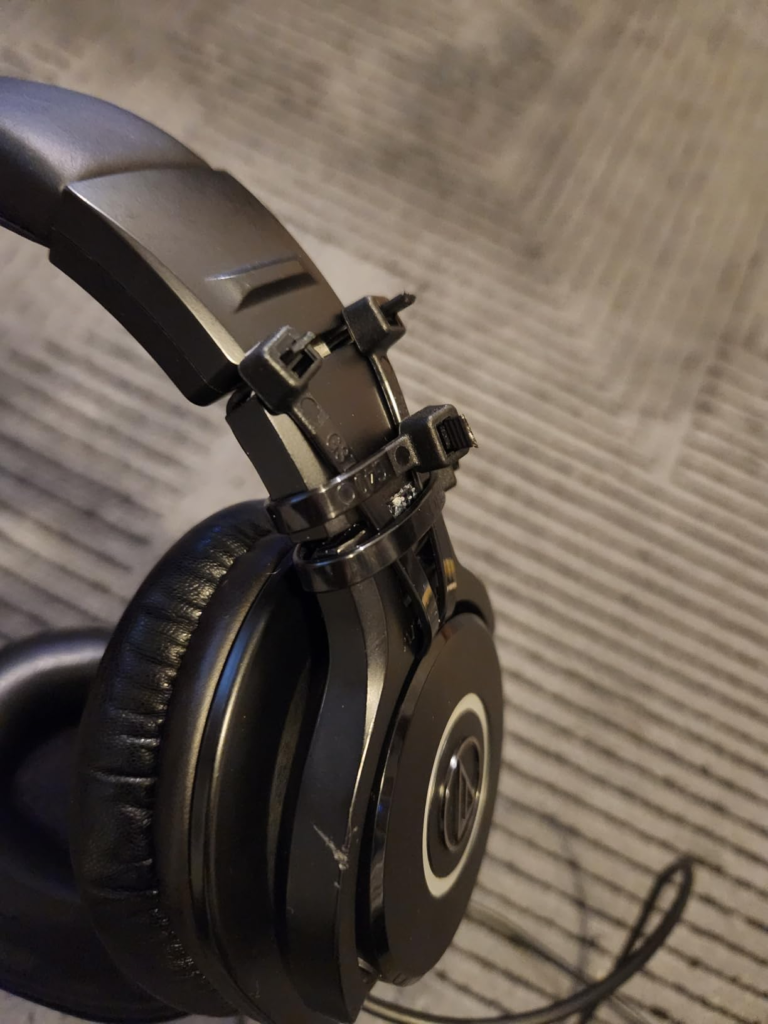
Where Wrong-Fit Begins
There are three wrong-fit scenarios that generate the most regret with the ATH-M40x. They’re not obvious at the point of purchase. They become obvious about two weeks in.
Wrong Fit 1: The Daily Music Listener
If your primary relationship with headphones is enjoying music — on the subway, at the gym, in the background while working — the ATH-M40x will drain the pleasure from every session. The flat response that reveals mix problems also strips the enjoyable color from finished recordings. You will feel like something is missing because something is missing: the enhancement you were used to.
Wrong Fit 2: The Comfort-First User
These headphones get warm over long periods of time, the cable system has a proprietary mount, and the mid frequencies have a slight cut to them. For someone who wears headphones eight hours a day, the thermal buildup alone becomes a daily annoyance that gradually compounds into resentment.
Wrong Fit 3: The High-Volume Tracker
These are headphones meant for studio monitoring, preferably in a quiet confined space. At levels above 90 dB, bleed becomes a significant problem. If you’re tracking vocals or live instruments and you push the volume to compensate for environmental noise, bleed becomes a take-ruining problem, not a minor inconvenience.
The One Situation Where the ATH-M40x Becomes Logical
If you are a producer, engineer, podcaster, or creator who works in a reasonably controlled audio environment, needs honest frequency reproduction to make accurate mix decisions, and doesn’t want to spend $200+ to achieve that — the ATH-M40x is the logical endpoint of that search.
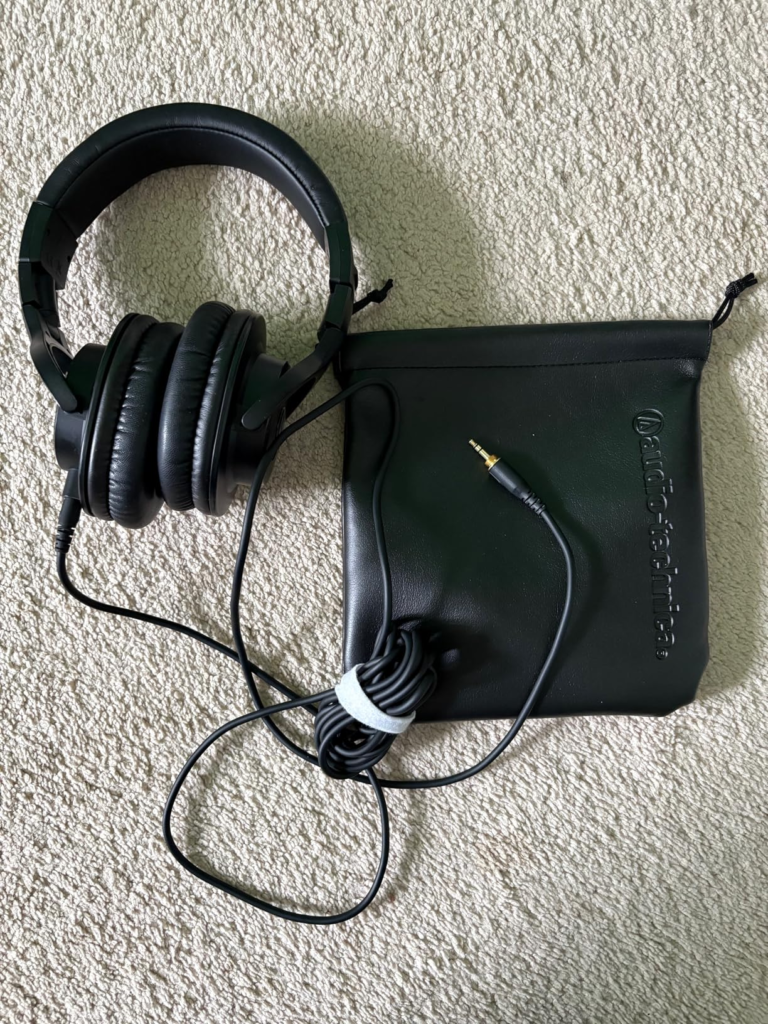
For less than $100 USD, you get clear sound quality, a sturdy frame, and multiple cables. There are plenty of headsets with a more accurate frequency response, but you need to spend a lot more for them.
The technical picture, in one place:
| Specification | Value |
|---|---|
| Driver Diameter | 40mm neodymium |
| Frequency Response | 15 – 24,000 Hz |
| Impedance | 35 Ohms |
| Sensitivity | 98 dB |
| Weight | 240g (without cable) |
| Cable Type | Detachable (proprietary lock) |
| Cables Included | 1.2m–3.0m coiled + 3.0m straight |
| Accessories | 6.3mm adapter, carrying pouch |
| Design | Closed-back, circumaural |
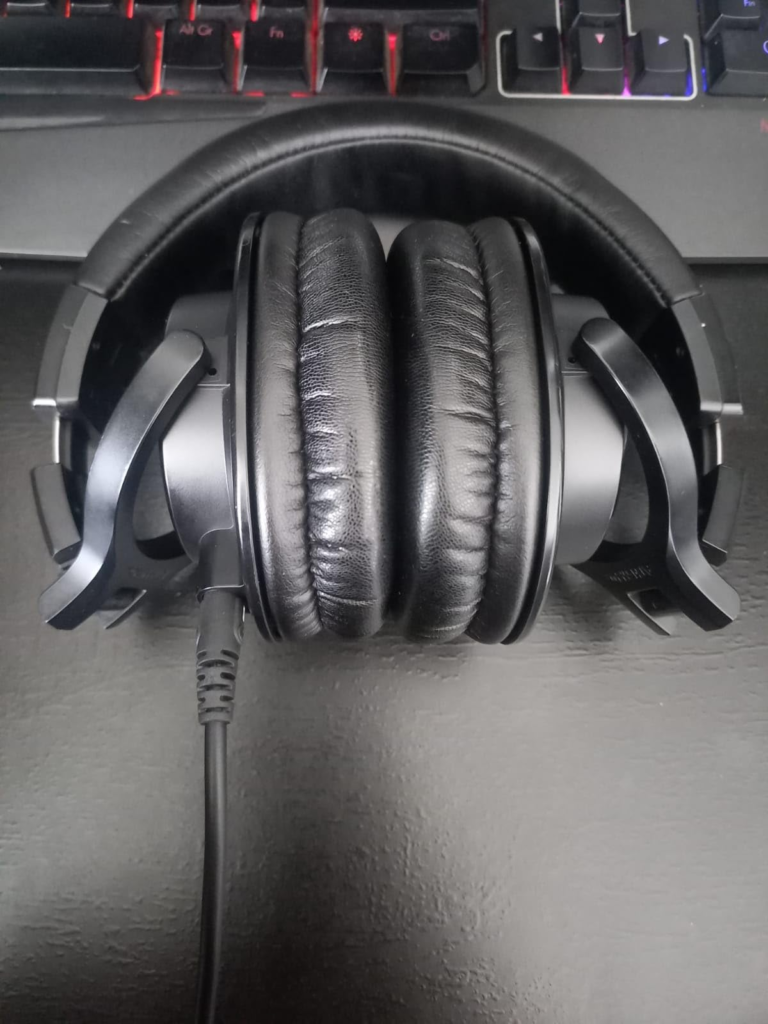
| Earcup Feature | 90° swivel for one-ear monitoring |
| Collapsible | Yes |
The detachable cables prevent the cable from ripping out mid-session, which eliminates one of the most common failure points in long-term studio headphone use. The 90-degree swivel makes one-ear monitoring practical for producers who track vocalists and need to hear both the room and the playback simultaneously. The circumaural design contours around the ears for excellent sound isolation in loud environments.
This is not a headphone that does everything. It’s a headphone that does one thing with unusual precision for its price class.
What It Solves, What It Reduces, and What It Still Leaves to You
What the ATH-M40x solves:
- The inability to hear mix problems clearly on consumer gear
- The cost barrier to professional monitoring (sub-$100 access to flat response)
- Cable reliability through detachable, lockable connection
- Portability through collapsible, compact design
What it reduces:
- Frequency coloring that leads to bad EQ decisions
- Bleed during moderate-volume tracking sessions
- Fatigue in sessions under two to three hours
What it still leaves to you:
If you keep the frequency graph handy and remember the limitations of this headphone, it will help in crafting nice mixes. No monitoring headphone at this price eliminates the need for reference checking. The M40x narrows the gap — it doesn’t close it.
The proprietary connector type is unique to Audio-Technica headphones, which means cable replacements require sourcing brand-specific parts. Plan for that long-term.
Comfort over extended sessions remains a managed variable, not a solved one. As with many closed-back headphones, heat build-up becomes noticeable during longer sessions. Aftermarket pads exist and are widely used, but that’s an additional cost and decision to factor in.
Frequently Asked Questions
| Question | Answer |
|---|---|
| Is the ATH-M40x better than the ATH-M50x for mixing? | For mixing accuracy specifically, yes. The M40x is flatter and more analytically tuned. The M50x has more bass emphasis, which makes it more enjoyable for listening but less reliable for making precise EQ and level decisions. If your primary use is mixing, the M40x is the more honest tool. |
| Can I use the ATH-M40x without a headphone amplifier? | Yes. At 35 Ohms impedance and 98 dB sensitivity, it runs cleanly from a laptop, phone, or audio interface headphone output. No dedicated amp required. |
| Is the ATH-M40x comfortable for all-day wear? | Not without caveats. The clamping force is tighter than average, and the pleather pads accumulate heat during extended sessions. For two-to-three-hour sessions, most users find it manageable. Beyond that, comfort becomes a variable that depends heavily on head size, room temperature, and personal heat sensitivity. Third-party pad replacements are a common and effective upgrade. |
| Why does the ATH-M40x sound “dull” compared to my previous headphones? | Because your previous headphones were likely tuned for enjoyment rather than accuracy. The M40x removes the bass boost, treble enhancement, and v-shaped coloring that most consumer headphones add. That “missing” element is the enhancement you were accustomed to — not something the M40x failed to provide. |
| Is the ATH-M40x good for gaming? | Not particularly. The closed-back design restricts soundstage, which limits spatial awareness and directional accuracy — both important for competitive gaming. It also lacks a built-in microphone. It will work, but there are more purpose-fit options for gaming. |
| What’s the cable situation? | The ATH-M40x uses a proprietary twist-lock mechanism for cable attachment. Two cables are included: a coiled cable (1.2m extending to 3.0m) and a straight cable (3.0m). Replacement cables must be Audio-Technica compatible due to the proprietary connector — a real consideration for long-term ownership. |
| Does the ATH-M40x work for podcasting? | Yes. For monitoring recordings during editing and post-production, the flat response is genuinely useful — you hear exactly what your listener will hear rather than a flattering version of it. Pair it with a decent USB microphone or audio interface and it handles the monitoring role effectively. |
Final Compression
The ATH-M40x is not the headphone that sounds best. It’s the headphone that lies least.
If you are inside the problem it solves — you need accurate monitoring, you work in a controlled environment, you’re building or mixing audio rather than consuming it — this headphone is the logical answer at its price point. Whether you need to use it for live monitoring, a midnight editing session, or tracking in a home studio, the Audio-Technica ATH-M40x is a capable companion.
If you’re outside that problem — if you want to enjoy music more, if you need it for commuting, if comfort over eight-hour days is non-negotiable, if gaming spatial audio matters — stop here. This isn’t the wrong price point. It’s the wrong tool entirely.
The decision point is simple: are you trying to hear what’s actually in the audio, or are you trying to enjoy what you’re listening to? Those are different problems. The ATH-M40x only solves the first one.
If the first problem is yours, the ATH-M40x is available on Amazon here.
Transparency Note:
This analysis is built on aggregated real-world experience.
It extracts what repeatedly holds, what breaks, and what users uncover only after living with the system—then shapes it into a clear model you can use immediately.
Think of it as structured experience, refined and presented so you don’t have to learn it the hard way.
“A quick note: Don’t believe the star ratings, but trust personal experience. This article is a compilation of collected experiences”