My Normcore V4 Tamper Review: You’re Solving the Wrong Problem Until This Clicks
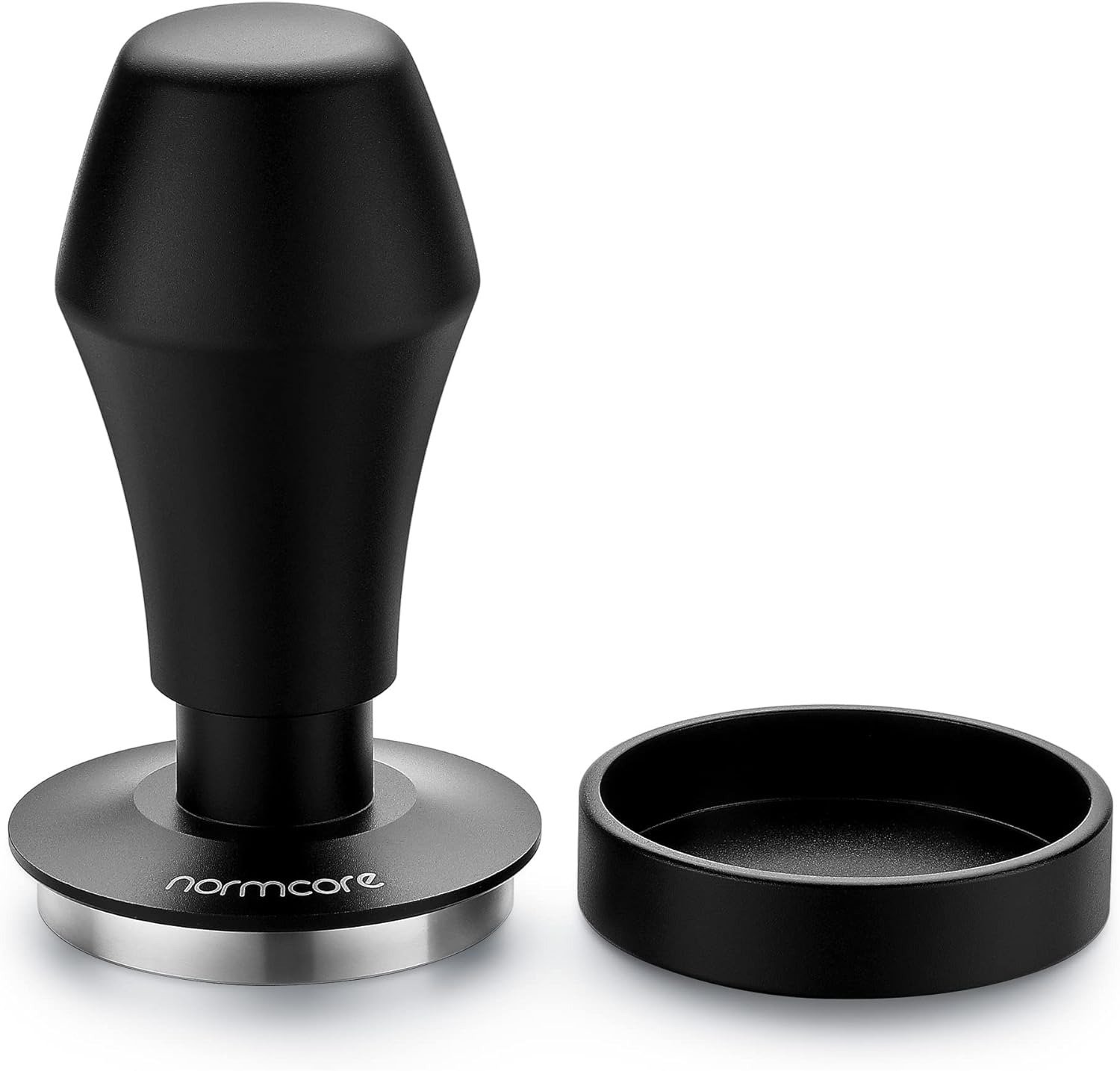
NORMCORE V4 COFFEE TAMPER
You pull a shot. The flow looks uneven. One side of the basket runs fast, the other drags. The crema is thin in patches, bitter at the finish. You tamp harder next time. Same result.
So you assume tamping is the problem. And you’re partially right — but only partially. The part you’re missing is why tamping fails. Not how hard you press. Not the angle. The exact mechanical reason your puck keeps betraying you the same way.
That’s the conversation this review is actually about.
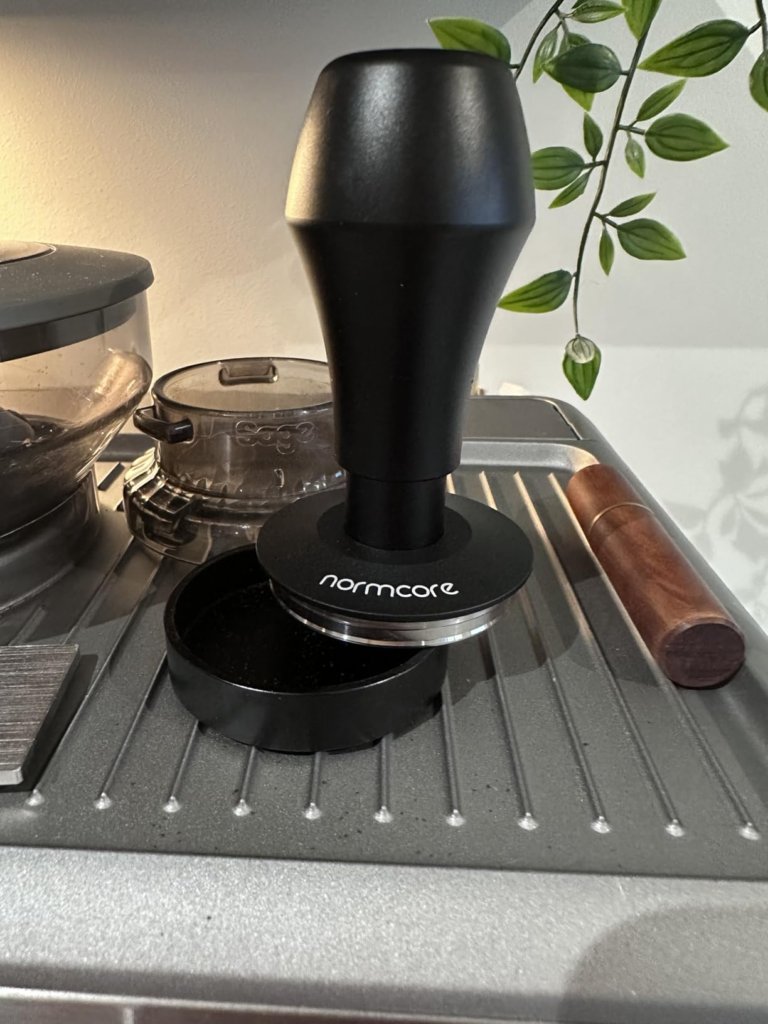
The Normcore V4 Coffee Tamper is a spring-loaded, self-leveling tamper designed for Breville/Sage 54mm portafilters. I’ve examined it across real-world use, community feedback, structural research, and competitive context. What I found is that this tool is precisely correct for a specific type of failure — and completely irrelevant to another.
Knowing which one you have is the only decision that matters.
The Result Looks Fine. The Problem Isn’t.
Most home espresso problems have the same outer appearance: shots pulling too fast, too slow, or inconsistently between brews. The instinctive diagnosis is pressure. Apply more. Apply less. Press harder. Stop second-guessing.
But channeling, uneven flow, and unstable extraction are almost never caused by tamping pressure alone — they arise from internal inhomogeneity inside the puck itself. Which means: if your grounds are unevenly distributed before the tamper ever touches them, no amount of pressure control will fix what you’re experiencing.
Water finds the path of least resistance. Uneven pressure creates weak spots in the puck where water rushes through, over-extracting some areas while leaving others untouched. But the mechanism cuts both ways — a perfectly level tamp on a poorly distributed bed still fails for the exact same structural reason.
The Normcore V4 solves the leveling problem with mechanical precision. What it cannot solve is the distribution problem upstream. These are two distinct failure points, and only one of them is inside this tool’s authority.
What You’re Actually Feeling but Not Naming
There’s a specific frustration that belongs to the Breville/Sage home barista: you’re pressing the tamper down, trying to feel for “level,” but your wrist angle is subtly off. You can’t tell. The shot confirms nothing useful. You’re getting results, but not repeatable results.
Traditional tampers lead to inconsistent results and, if you’re not careful, can even cause strain injuries over time — the toll of applying guesswork force under uncertainty, repeated dozens of times a week.
That unnamed frustration — the feeling of doing the same action and getting different outcomes — is the exact friction point this tamper was built to capture.
The upgraded central shaft design in V4 improves precision tamping for even presses and barista comfort for long-term handling. Since the base fits directly onto the filter basket, hardly any coffee grounds get caught on the rim — which means the puck is compressed to avoid gunking up the group head and prevent messes from side-channeling leakage.
That’s not marketing language. That’s a structural fix for a physical failure mode.
The Hidden Mechanism Behind the Miss
Here is what the leveling plate actually does — and why it matters structurally, not cosmetically.
When you press a standard tamper into a portafilter, you are relying entirely on your proprioception to keep the base horizontal. There’s no external reference point. Your wrist, your shoulder position, your angle of approach — all of them introduce micro-tilts you cannot feel in real time.
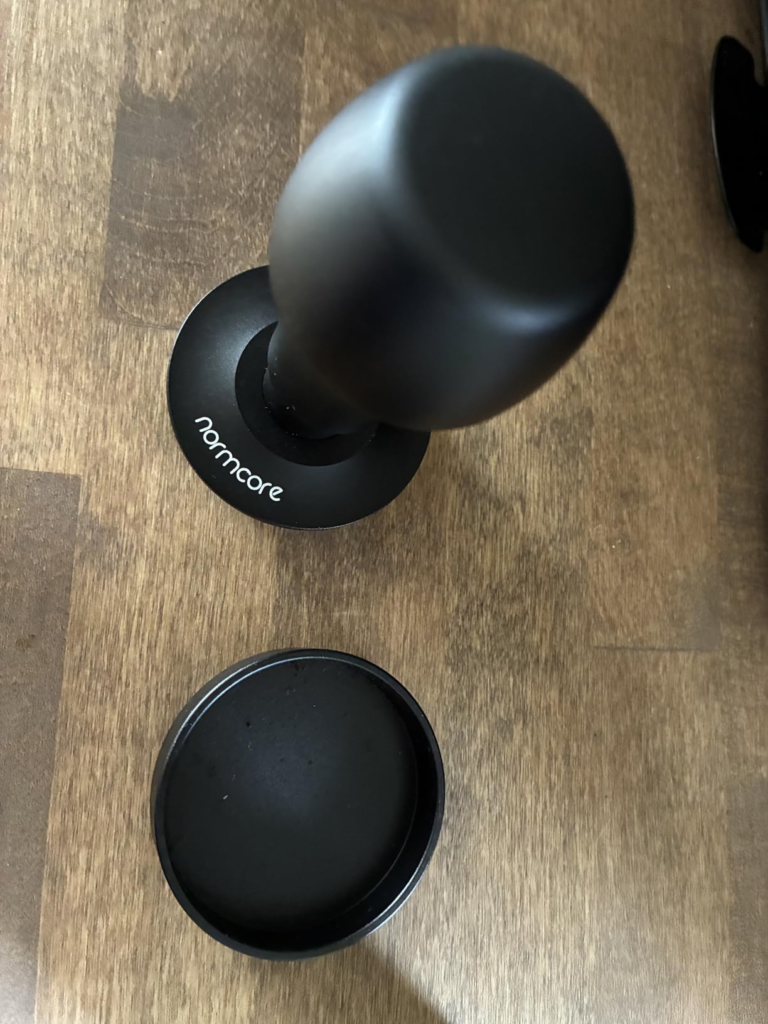
The leveling plate design ensures your tamping is level every time by resting on top of the filter basket as you press down on the ground coffee. The basket rim becomes the reference. Your body position stops mattering.
This is the mechanical distinction that separates the Normcore V4 from conventional tampers. It doesn’t rely on your skill to maintain angle. It uses the geometry of the basket itself. The spring then controls the pressure ceiling: three interchangeable springs at 15lb, 25lb, and 30lb apply pressure directly to the coffee grounds through the central shaft — so the amount of force is governed by the spring, not by how hard you press.
Consistent tamping matters more than exact force. Ideal pressure sits around 25–30 pounds, and evenness across the puck surface is what determines extraction quality — not the maximum pound reading alone.
The V4’s 25lb pre-installed spring lands directly inside that window.
The Threshold Where the Outcome Quietly Breaks
Here is the threshold you need to name before buying.
The Normcore V4 eliminates angle deviation and pressure inconsistency. It cannot eliminate distribution failure. These are the two separate variables in puck preparation, and they do not collapse into each other.
Tamping pressure is not a fine control, but a change of state: the puck is either homogeneously compressed — or not. Static pressure preserves defects in distribution. It does not correct them.
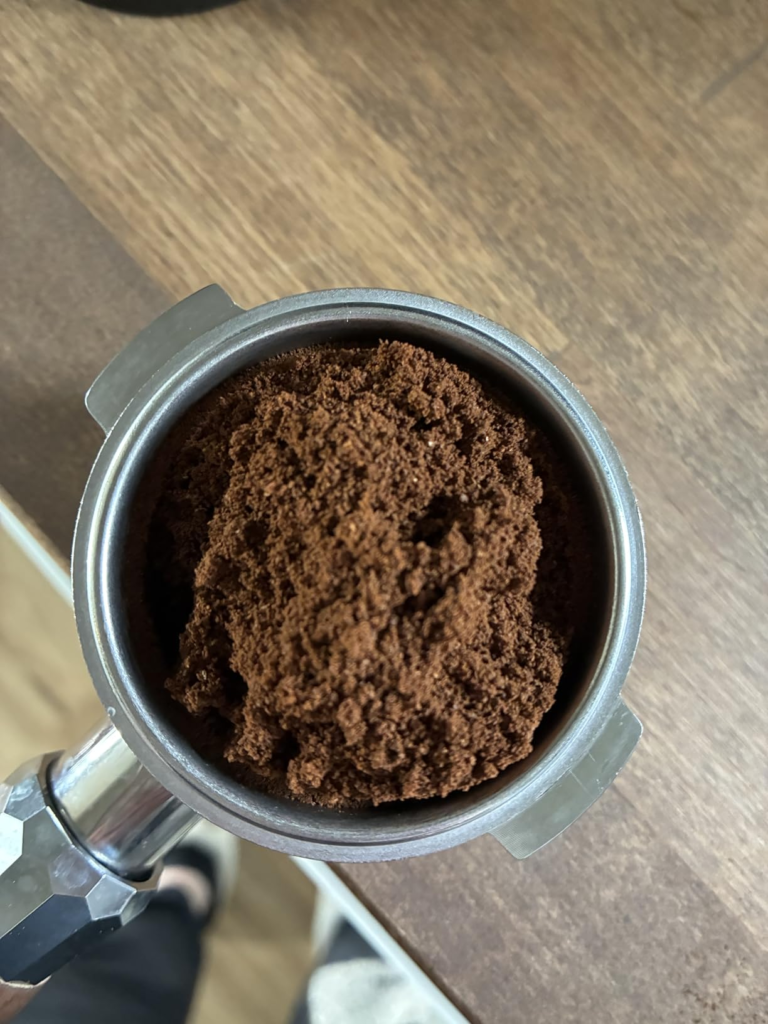
Meaning: if you are loading ground coffee into the basket unevenly — with clumps, with density gradients, with grounds piled higher on one side — the leveling plate will compress that uneven bed with perfect geometry. The compression will be level. The problem underneath it will remain.
| Variable | Normcore V4 Controls It? | What Addresses It Instead |
|---|---|---|
| Tamper angle deviation | ✅ Yes — mechanically | Leveling plate geometry |
| Tamping pressure consistency | ✅ Yes — spring-governed | Interchangeable springs (15/25/30lb) |
| Grind distribution in basket | ❌ No | WDT tool, dosing funnel, distribution tool |
| Dose volume consistency | ❌ No | Scale, grinder calibration |
| Channeling from fine grind clumps | ❌ No | Proper distribution before tamping |
This is not a flaw in the Normcore V4. It is the honest boundary of its authority.
Why Most Buyers Misread This Too Early
The mistake happens at the comparison stage. Someone sees a cheaper spring-loaded tamper for $12 and asks: “Why pay more for the Normcore?”
The answer isn’t materials or branding. The answer is mechanical precision of the leveling system itself.
The Normcore V4 features a dual-action leveling design that eliminates the risks of uneven tamping — both through the self-leveling plate geometry and through calibrated spring pressure. Cheaper alternatives typically include a spring but no true leveling plate. They control pressure without controlling angle — which means they solve only half the problem.
The second common misread is expecting the tamper to fix shots that were broken before it touched the basket. A spring-loaded tamper gives you consistency IF you can ensure the same dose every time and set it up correctly. If you are in constant adjustment mode, you will get a different result with every change — the tamper cannot compensate for variable inputs upstream.
The Normcore V4 works downstream of distribution. It cannot work upstream.
Who Is Actually Inside This Problem
| User Profile | Fits This Tamper? |
|---|---|
| Breville/Sage 54mm portafilter user | ✅ Direct mechanical fit |
| Beginner who presses inconsistently at different angles | ✅ Solves this precisely |
| Home barista pulling 1–3 shots per day, wants daily repeatability | ✅ Core use case |
| Busy cafe environment, multiple baristas using same setup | ✅ Eliminates individual technique drift |
| User already practicing proper distribution (WDT or similar) | ✅ This is the final piece |
| User with different portafilter diameter (58mm standard) | ❌ Wrong size — needs different model |
| User blaming the tamper for channeling from poor distribution | ❌ Wrong diagnosis — tamper is not the root cause |
| Advanced user who has already mastered level tamping manually | ⚠️ Marginal gain — likely doesn’t need this tool |
The core user is clear: Breville home barista, inconsistent shots, suspects tamping angle or pressure, and is correct in that suspicion.
Where Wrong-Fit Begins
Wrong-fit is not about the tamper being bad. It’s about the wrong problem getting treated.
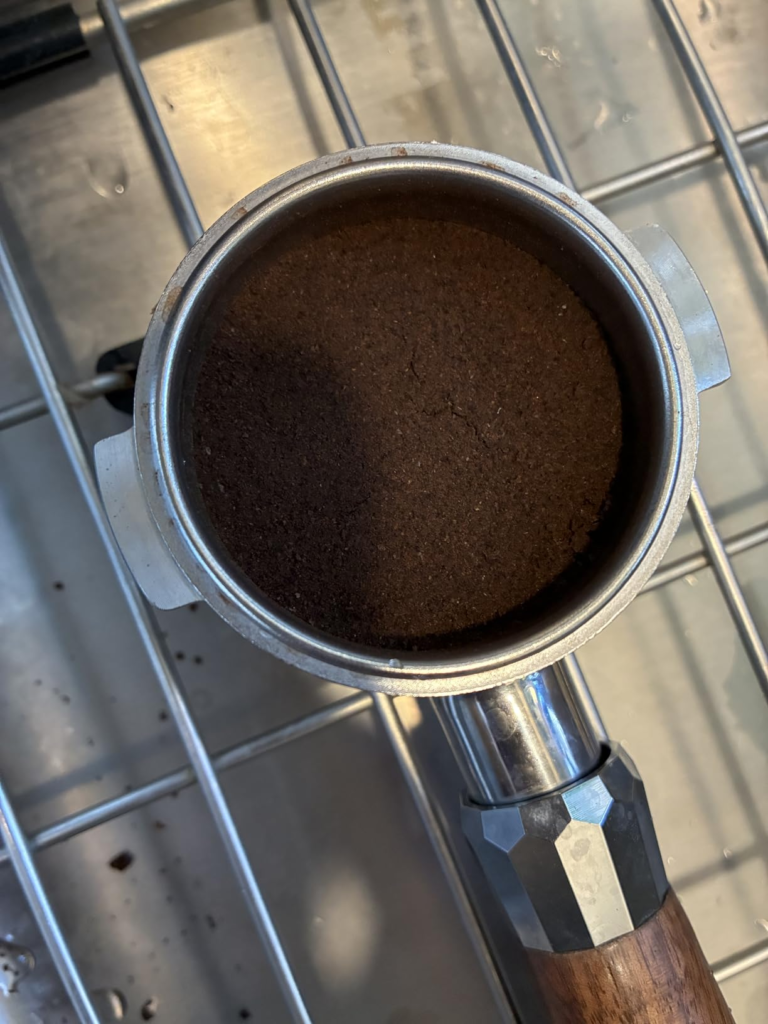
If you are channeling badly and you have never done any distribution work before tamping, buying this tamper will not fix your shots. You will press more evenly — and still channel. Because the defect lives upstream, in the loosely-settled grounds that the tamper’s geometry faithfully preserves at a perfect angle.
The cause of most channeling is internal inhomogeneity of the puck. Static pressure preserves these defects — it does not correct them.
Wrong-fit also applies to portafilter mismatch. The 53.3mm version is engineered for Breville/Sage 54mm baskets specifically. It cannot be adjusted for different diameters — the Normcore tamper comes in six sizes and each is non-interchangeable. Buying the wrong size produces the tamping equivalent of a tool that never touches the problem at all.
And wrong-fit applies to expectation: while product quality reviews are consistently positive, several buyers have flagged Normcore’s customer service as genuinely difficult to reach when post-purchase issues arise. Buy through Amazon specifically — not the brand’s own website — if post-purchase support matters to you.
The One Situation Where This Product Becomes Logical
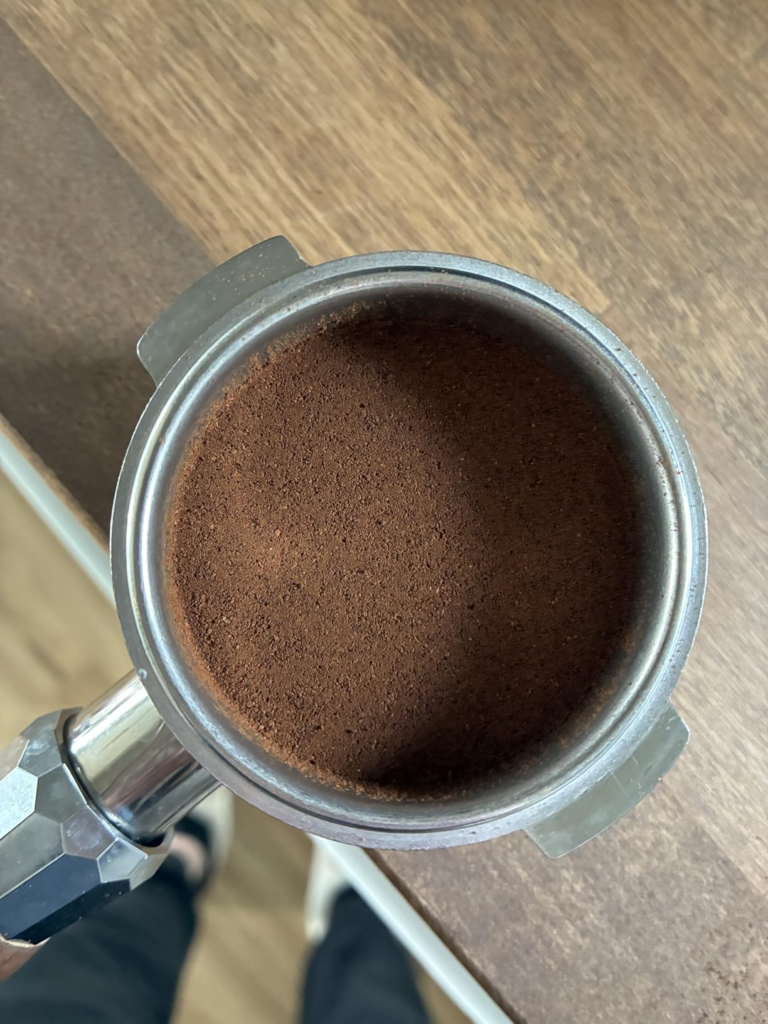
You are a Breville/Sage user. You’ve dialed in your dose — same weight, same grind setting, every time. You’re doing some form of distribution before tamping. But your shots are still inconsistent shot to shot, and when you watch yourself tamp, you notice the tamper doesn’t always sit flush. Sometimes you lean slightly. Sometimes you press harder than others.
That is the exact failure mode this tamper was designed to eliminate.
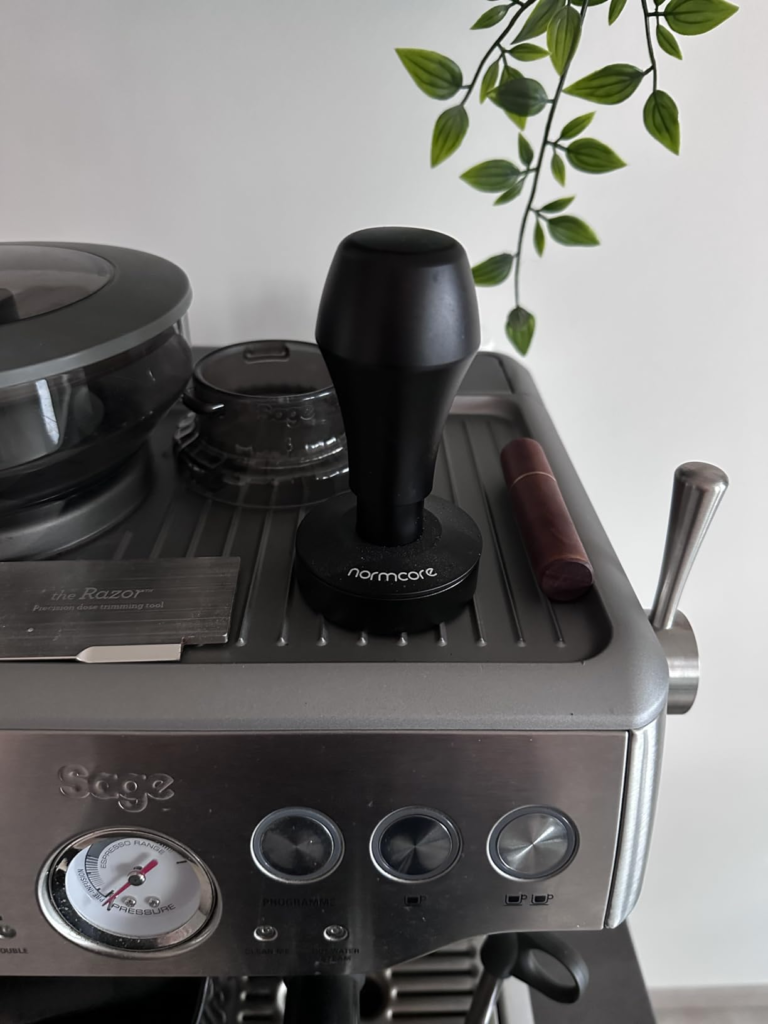
The Normcore V4 takes the guesswork out of tamping with its spring-loaded design. You get the same tamping result every time thanks to guaranteed constant pressure from the pre-installed 25lb spring — with two additional springs to adjust if your machine or grind preference requires it.
The leveling plate removes your body from the equation. The spring removes your force judgment from the equation. What remains is the variable that was actually costing you consistency: the distribution work you do before the tamper arrives.
| Spec | Detail |
|---|---|
| Diameter | 53.3mm (fits Breville/Sage 54mm portafilters) |
| Springs included | 15lb / 25lb (pre-installed) / 30lb |
| Base material | 304 stainless steel, flat |
| Handle material | Anodized aluminum |
| Includes stand | Yes |
| Compatible machines | Barista Express, Barista Pro, Bambino Plus, Barista Touch, Infuser, Duo-Temp Pro |
| Price range | ~$45–$57 (Amazon) |
| Dishwasher safe | No |
At this price point, no other spring-leveling tamper in this diameter range provides both a mechanically governed angle reference and a calibrated pressure ceiling. That combination, for a Breville user inside this specific failure window, has no honest equivalent at the price.
What It Solves, What It Reduces, and What It Still Leaves to You
What the Normcore V4 solves:
Tamper angle variation. Pressure inconsistency between shots. The physical fatigue of forcing a guess-based tamp through repetition. The gap between what you intended and what the puck received.
What it reduces:
Shot-to-shot variance where the dominant variable was your technique, not your dose or distribution. The sensory burden of trying to feel your way to a level tamp.
What it still leaves to you:
Your grind distribution. Your dose consistency. Your grinder calibration. Your water temperature. Your machine’s pre-infusion settings.
The tamper is one piece of the puck preparation chain. It occupies the compression stage. Everything before it — distribution, settling, dosing — remains your responsibility.
Once you have the technique foundation in place — consistent dosing and proper distribution — the Normcore gives you the same result every time. The combination is what produces consistently good espresso, not the tamper alone.
| Stage | Normcore V4 Involved? | What You Still Control |
|---|---|---|
| Grinding | ❌ | Grinder setting, dose weight |
| Distribution | ❌ | WDT, dosing funnel, distribution tool |
| Dosing | ❌ | Scale, basket volume |
| Tamping angle | ✅ | Nothing — mechanically handled |
| Tamping pressure | ✅ | Spring selection only |
| Machine extraction | ❌ | Pressure profile, temperature, yield |
Final Compression
If you are a Breville/Sage 54mm user, pulling daily shots, and your inconsistency traces back to tamping angle or pressure variation — not to distribution or dosing — this tamper resolves that problem cleanly, mechanically, and without requiring you to build years of wrist-level precision.
If your inconsistency comes from distribution failure upstream, buying this tamper first is the wrong sequence. Fix distribution. Then let the V4 lock the last variable in place.
The decision compresses to this: identify which stage is breaking your shots. If it’s the tamp, this is the logical choice at this price. If it’s anything before the tamp, this tool is waiting for you — but not yet.
Frequently Asked Questions
| Question | Answer |
|---|---|
| Does the Normcore V4 tamper fix channeling? | Not directly. Channeling usually originates from uneven coffee distribution before tamping — a problem the tamper cannot reach. If channeling persists after using the V4, the root cause is upstream in your distribution or dosing stage, not in your tamping angle or pressure. |
| Which Breville machines is the 53.3mm size compatible with? | The Barista Express, Barista Pro, Barista Touch, Bambino Plus, Infuser, and Duo-Temp Pro — all of which use a 54mm portafilter basket. The 53.3mm tamper diameter provides the necessary clearance for a snug, even compression inside those baskets. |
| Which spring should I start with? | The 25lb spring comes pre-installed and suits most home setups. For lighter roasts with finer grinds, the 15lb spring reduces risk of puck cracking. For darker roasts or coarser grinds, the 30lb spring provides a firmer seal. Change one variable at a time when experimenting. |
| Is the spring pressure replacing the force I apply? | Not replacing — governing it. You still press down, but the spring determines the ceiling. Once the spring is fully compressed, additional force from your hand does not transfer to the puck. This is the mechanism that decouples your daily effort variation from the actual tamping result. |
| Do I still need a distribution tool if I use this tamper? | Yes. The tamper handles compression geometry and pressure. Distribution — breaking up clumps, evening the density of grounds in the basket before tamping — is a separate process this tool does not perform. Both matter. They are not substitutes for each other. |
| Is it worth buying through Amazon versus the Normcore website? | If post-purchase support is a concern, Amazon provides a significantly safer purchase path. Multiple users have reported very limited responsiveness from Normcore’s own customer service channel. Amazon’s return policy provides the practical safety net the brand’s own channel does not consistently offer. |
| What makes V4 different from V3? | The V4 improved the central shaft design so that the interchangeable springs apply pressure directly through the shaft to the coffee grounds — a more mechanically direct path than earlier versions. This tightens the energy transfer from spring to puck, making pressure delivery more accurate per spring rating. |
Transparency Note:
This analysis is built on aggregated real-world experience.
It extracts what repeatedly holds, what breaks, and what users uncover only after living with the system—then shapes it into a clear model you can use immediately.
Think of it as structured experience, refined and presented so you don’t have to learn it the hard way.
“A quick note: Don’t believe the star ratings, but trust personal experience. This article is a compilation of collected experiences”