RANCILIO SILVIA REVIEW: WHY THIS MACHINE REWARDS SOME BUYERS AND QUIETLY PUNISHES OTHERS
The Shot Looks Right. The Problem Isn’t What You Think.
You pull a shot on the Rancilio Silvia for the first time. The crema appears. The color looks right. You take a sip — and something is off. Not dramatically wrong. Just slightly hollow. Slightly sour. Slightly thin.
You descale. You adjust. You wait longer after the ready light. The next shot is better. Then the one after that is worse again. You’re not sure what changed.
This is not a defect. This is the Silvia telling you something specific — something that most buyers don’t fully understand before they purchase, because the machine’s reputation travels faster than its actual operating logic.
The Rancilio Silvia has been in continuous production since 1997. It is perhaps the most famous domestic espresso machine on the market, with few other models sharing a similar history. That history has built a mythology around it — and mythology, in coffee equipment, is the most reliable source of buyer regret.
What the Silvia actually is: a commercial-philosophy machine miniaturized for home use. What it is not: a machine that produces consistent results on autopilot. The gap between those two things is where most of the confusion lives.
What You’re Actually Feeling but Not Naming
You bought this machine because you were serious. You spent nearly a thousand dollars. You expected that seriousness to translate directly into results.
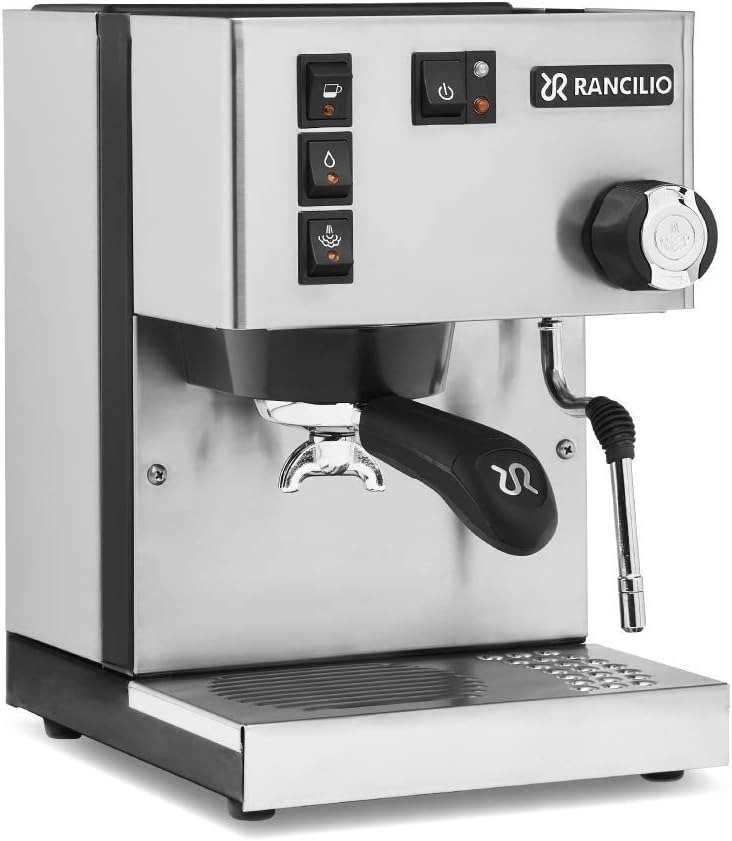
Instead, you feel something harder to name. The machine looks authoritative. The 58mm portafilter feels exactly right in your hand. The stainless steel chassis doesn’t flex, doesn’t wobble, doesn’t feel cheap in any way. At roughly 14 kilograms of metal-and-brass stability, it doesn’t scoot around when you lock in a portafilter — it has that long-term appliance feel that’s hard to fake.
And yet the shot is inconsistent. The cappuccino sometimes means waiting while the crema fades. You’re not sure if you’re doing something wrong, or if the machine is limited, or if the information you’re missing is something nobody bothered to document clearly.
That specific friction — the friction of not knowing whether the problem is you or the machine — is the defining psychological experience of early Silvia ownership. It’s not imaginary. It’s structural. And it has a precise explanation.
The Hidden Mechanism Behind the Inconsistency
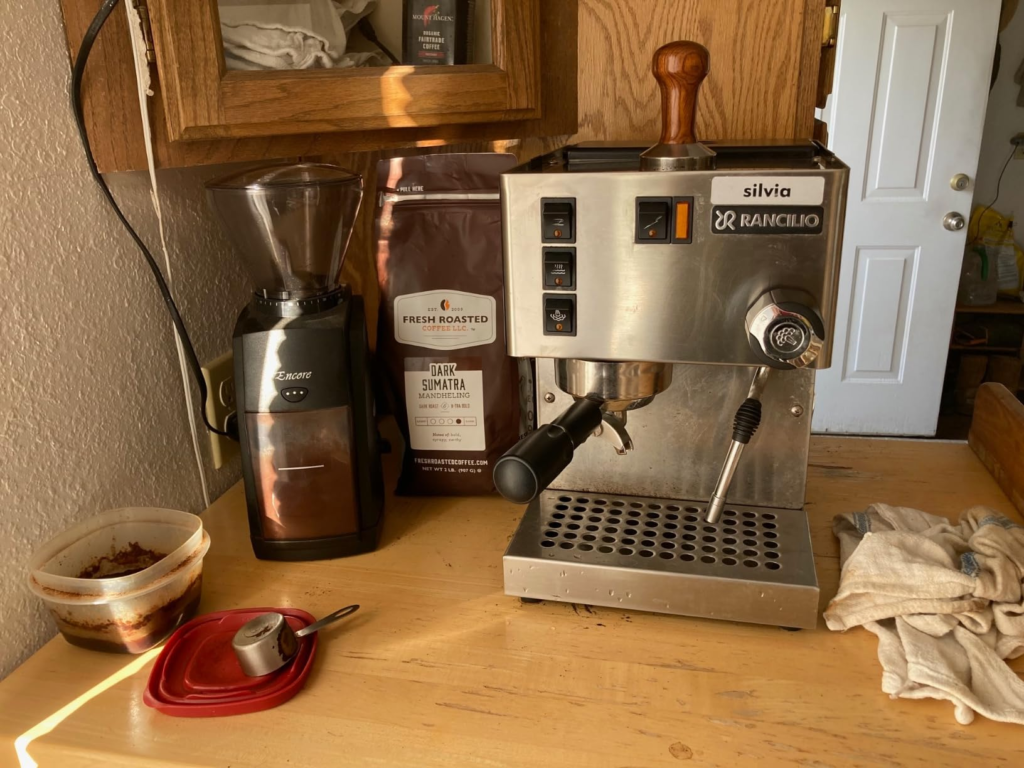
The Rancilio Silvia runs on a single boiler. That one architectural fact determines almost everything about how the machine behaves.
Brewing espresso ideally happens around 200°F/93°C, while producing steam requires significantly higher temperatures. The same boiler has to go between these extremes. This means you have to practice what is called “temperature surfing” to get the best results.
Here is what temperature surfing means operationally: you cannot simply wait for the ready light and pull your shot. The Silvia has no PID controller — a device that controls temperature to keep it stable. Without stable and consistent boiler temperatures, you won’t get consistent shots.
The ready light tells you the boiler is hot. It does not tell you the boiler is at the right temperature for espresso extraction. Rancilio uses a thermostat with a wide range — called a “deadband” — between too cold and hot enough, to keep the heating element from constantly cycling. A large deadband increases the likelihood of the brew water temperature being off the mark when you start an extraction.
This means the same machine, the same beans, the same grind, the same tamp — can produce meaningfully different shots depending on exactly when in the boiler’s heating cycle you pull the trigger.
That is not user error. That is physics. And understanding it is the difference between fighting this machine and working with it.
The Threshold Where Results Quietly Break
There is a specific point at which the Silvia’s single-boiler architecture shifts from manageable inconvenience to genuine output limitation. That threshold is: the back-to-back milk drink.
Making a second drink would require further fiddling — so if you want a machine for making back-to-back drinks or to use quickly during your morning rush, the Silvia isn’t the right choice.
The concrete scenario: you want to make a cappuccino. First, you pull your shot. However, to steam milk, you have to wait roughly 90 seconds while the boiler gets up to steaming temperature. The crema of the shot will start to fade during that period.
For one drink, for one person, this is workable with discipline. For two people making different drinks in sequence — or for anyone who wants to move at the speed of a morning routine rather than the speed of a ritual — this is the point where the machine stops being a pleasure and starts being a negotiation.
Below is a clear picture of how the Silvia’s operational reality maps across different use cases:
| Use Case | Silvia Performance | Notes |
|---|---|---|
| Single espresso, daily | Excellent | Full control, high ceiling |
| Double espresso, sequential | Very Good | Minor timing management |
| Cappuccino for one | Good | Requires 90-sec transition wait |
| Cappuccino for two, back-to-back | Strained | Crema fades, workflow disrupts |
| Milk drinks on demand, no planning | Poor | Single boiler not built for this |
| Black coffee ritual, deep involvement | Outstanding | Machine at its best here |
Why Most Buyers Misread This Too Early
The Silvia gets compared constantly to the Breville Barista Express, the Gaggia Classic Pro, and entry-level super-automatics. Those comparisons, made at the surface level, generate misleading conclusions.
The typical early comparison goes like this: “The Breville has a built-in grinder, a PID, and is easier to use — so the Silvia at the same price is objectively worse.”
That framing misidentifies what you’re actually buying.
At her worst, the Silvia is finicky and demanding. At her best, she’ll outperform machines costing twice the price. The difference is entirely in the barista.
The Silvia is not trying to automate your espresso. It is trying to give you a machine made with commercial-grade materials — a cast iron frame housing a 12-oz brass boiler, commercial group head and portafilter, and a 3-way solenoid pressure relief valve — at a price point where those components are structurally unusual.
The second comparison trap is assuming the purchase price is the full cost. It is not.
| Component | Estimated Cost | Required? |
|---|---|---|
| Rancilio Silvia V6 (machine) | ~$995 | Yes |
| Quality burr grinder (e.g. Eureka Mignon) | $200–$400 | Non-negotiable |
| PID controller (e.g. Auber kit) | $150–$200 | Strongly recommended |
| Precision scale (grams) | $20–$60 | Strongly recommended |
| Tamping mat + distribution tool | $20–$50 | Recommended |
| Total realistic entry | ~$1,400–$1,700 | — |
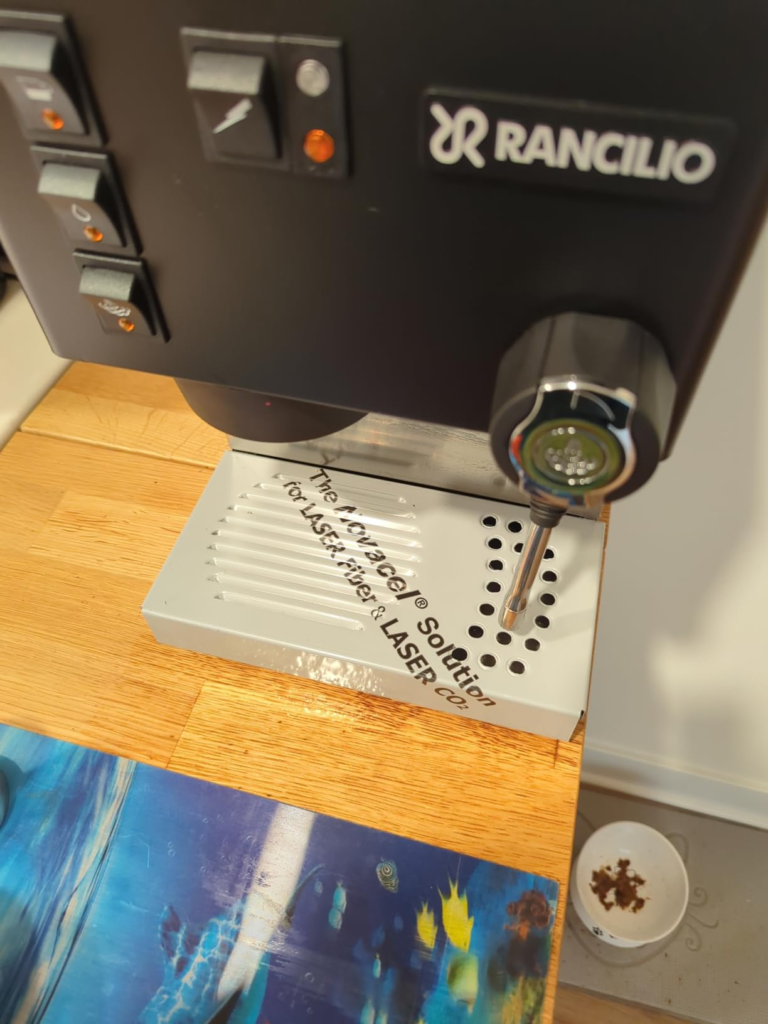
The Silvia does not include a grinder — you’ll need a quality burr grinder, as it is non-optional if you want the machine to perform like the first serious machine it is known as. The grinder is not an accessory. It is a co-equal part of the system. Pairing the Silvia with a blade grinder or a low-quality burr grinder produces results that tell you nothing true about what the machine can do.
Who Is Actually Inside This Problem
The Rancilio Silvia is not for everyone who wants good espresso. It is specifically for a subset of that group.
You are the right buyer for the Silvia if:
- You pull mostly black espresso — shots, ristrettos, Americanos — with milk drinks as occasional, not daily.
- You find the process of dialing in a shot genuinely interesting rather than annoying.
- You want a machine that will still be operational and fully repairable in fifteen to twenty years.
- You are willing to invest 2–4 weeks of daily use learning the temperature routine before expecting consistent results.
- You understand that buying a $300 grinder alongside a $995 machine is not optional — it is the system.
The Silvia produced some of the best espresso in laboratory testing, surpassing the quality of some highly-rated competitors — with a 19-gram dose extracting 30 grams of espresso in 28 seconds and a measured extraction yield of 18.9%, within the industry standard of 18–22%.
That ceiling is real. But reaching it requires the variables above to be in place.
Where Wrong-Fit Begins
There are buyers for whom the Silvia will generate regret. Not because the machine is defective — but because the fit is wrong from the start.
You are likely the wrong buyer if:
- Your primary drinks are lattes and cappuccinos, made sequentially, for multiple people.
- You want to press a button in the morning and have espresso in under two minutes without managing timing.
- You are new to espresso and want the machine to teach you gradually through automation.
- You are unwilling or unable to buy a quality grinder as part of the setup.
- You compare machines primarily on spec sheets rather than on workflow experience.
If you see yourself preparing lots of cappuccinos or lattes for successive milk-based drinks, you may want to consider a heat exchanger or dual-boiler espresso machine — for a drink or two, though, a dual boiler borders on overkill.
The specific moment where wrong-fit becomes expensive is approximately three months in. That is when the novelty of the machine has settled, the daily ritual has solidified, and the structural limitations reveal whether they are tolerable or intolerable for your actual life. Buyers who discover the wrong fit at month three typically lose 20–30% of their purchase price on resale — and still need to buy the correct machine.
| Buyer Profile | Silvia Fit | Expected Outcome |
|---|---|---|
| Daily espresso drinker, process-curious | Strong | High satisfaction |
| Occasional espresso, mostly black | Strong | Clean, long-term ownership |
| Daily latte/cappuccino, solo | Moderate | Workable with discipline |
| Daily latte/cappuccino, multiple people | Poor | Workflow friction, likely regret |
| Beginner wanting automation | Poor | Frustration before competence |
| Coffee enthusiast, long-term investment mindset | Excellent | Machine of a decade |
The One Situation Where This Machine Becomes Logical
After filtering through everything above, the Rancilio Silvia becomes the clear logical choice in one specific configuration:
You are a home barista — or someone who wants to become one — who drinks primarily espresso-forward drinks, is willing to invest in a proper grinder, and values longevity and repairability over convenience and automation.
In that configuration, the Rancilio Silvia V6 remains the benchmark first serious machine for home baristas who value longevity, metal build, and a real 58mm workflow — capable of genuinely excellent espresso once the brass boiler and group are heat-soaked.
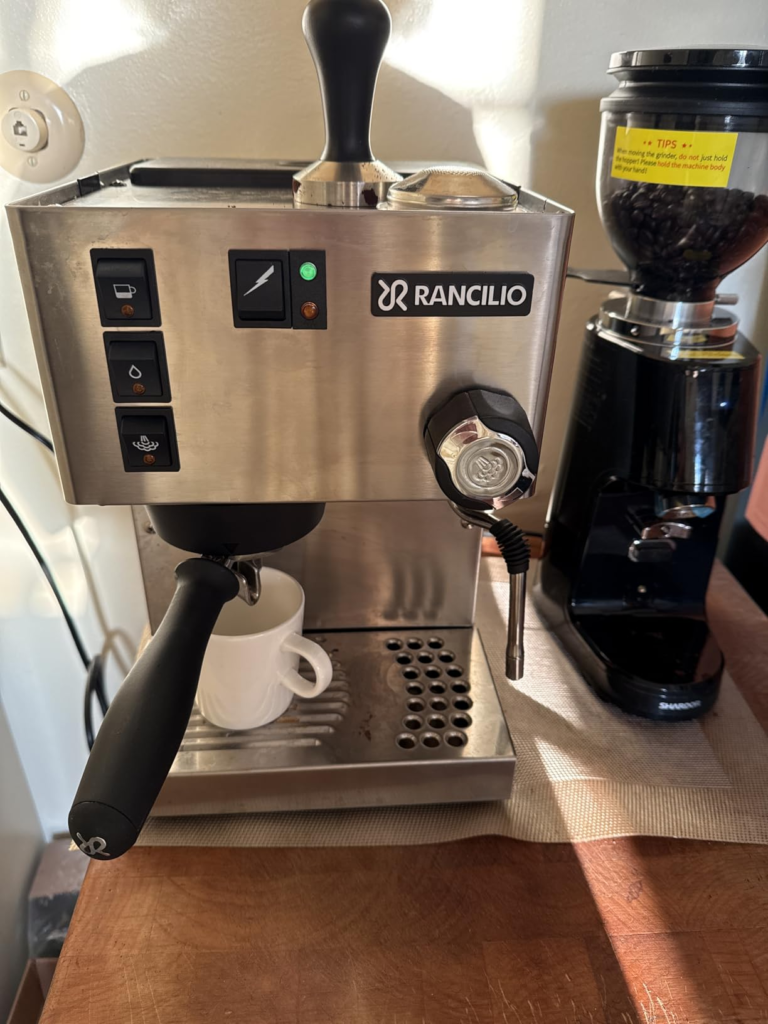
The Silvia helped popularize the world of home espresso. It upholds the legacy of Italian espresso tradition with commercial-level parts and a hefty boiler, all at a digestible price. The 58mm commercial portafilter means the aftermarket accessory ecosystem is vast. The internals are straightforward for both repair shops and careful owners. A new vibratory pump runs under $50 and is easy to swap in after years of heavy use.
This is a machine you buy once and maintain, not a machine you replace in three years.
What It Solves, What It Reduces, and What It Still Leaves to You
What the Rancilio Silvia solves:
- The build quality problem: most home espresso machines at this price use plastic components where this machine uses commercial brass and steel.
- The 58mm workflow problem: commercial accessories, commercial portafilter, commercial-feel pull.
- The longevity problem: documented machines running 15–25 years with basic maintenance.
- The shot quality ceiling: when conditions are right, results that compete with café espresso.
What it reduces but does not eliminate:
- The skill requirement: temperature surfing is learnable, but it takes weeks of daily practice.
- The waiting time between brewing and steaming: manageable for one drink, strained for sequential service.
- The setup cost: still requires a grinder investment that many buyers underestimate.
What it still leaves entirely to you:
- Grind consistency — the machine cannot compensate for a poor grinder.
- Temperature discipline — the ready light is not your guide; your routine is.
- Puck preparation — distribution and tamp evenness determine channeling.
- Bean freshness — at two and a half weeks post-roast, the machine starts to misbehave and you cannot get decent crema without additional troubleshooting.
| Variable | Machine Handles | You Handle |
|---|---|---|
| Build quality | Yes — commercial grade | — |
| Pump pressure (9 bar) | Yes | — |
| Steam power | Yes — strong for single-boiler | — |
| Brew temperature stability | Partial (thermostat deadband exists) | Timing / surfing |
| Grind quality | No | Requires separate grinder |
| Shot consistency | Partial | Requires technique |
| Milk sequencing | Partial | Requires planning |
| Bean freshness | No | Entirely yours |
Final Compression
The Rancilio Silvia is not the machine for buyers who want espresso made simple. It is the machine for buyers who want espresso made right — and who understand those are different things.
If your daily reality is one or two espresso-forward drinks, you have 2–4 weeks to invest in learning the temperature routine, and you are prepared to pair it with a proper burr grinder, this machine has a ceiling most equipment in its class cannot touch. With regular care, documented Silvia machines have reached 15–25 years of operational life — a timeline that reframes the purchase price entirely.
If your daily reality is multiple milk drinks in sequence, a morning rush with no room for protocol, or a preference for automation over craft, this machine will not improve with time. It will frustrate with precision.
The decision is not complicated once the threshold is named. The machine performs at the level of your investment in learning it — no more, no less.
If you are inside the fit described above, the Rancilio Silvia is available here. If you are outside it, the Silvia Pro X at $2,195 with dual boilers and built-in PID is the logical next step — or a different category entirely.
Frequently Asked Questions
| Question | Answer |
|---|---|
| Does the Rancilio Silvia require a separate grinder? | Yes, without exception. The machine does not include a grinder, and a quality burr grinder is not optional — it is a core part of the system. Budget $200–$400 for a dedicated espresso grinder. |
| What is “temperature surfing” and do I have to do it? | Temperature surfing is the technique of timing your shot extraction to a specific point in the boiler’s heating cycle, compensating for the machine’s thermostat deadband. You can pull shots without it — results will be less consistent, but still drinkable. A PID controller eliminates the need for surfing entirely and costs $150–$200 installed. |
| How long does it take to learn the Silvia properly? | Most owners report 2–4 weeks of daily use before shots become reliably consistent. This assumes a quality grinder, fresh beans, and disciplined puck preparation from the start. |
| Is the Rancilio Silvia good for lattes and cappuccinos? | For one drink at a time, yes — with a 90-second transition wait between pulling the shot and steaming milk. For multiple milk drinks in sequence, or for anyone who needs morning speed, a dual-boiler machine is a more honest fit. |
| What is the realistic total cost of a Silvia setup? | Between $1,400 and $1,700 when including the machine, a quality grinder, a PID controller, a precision scale, and basic accessories. Buyers who account for only the machine price typically experience sticker shock at the grinder stage. |
| How long does the Silvia last with proper care? | Documented ownership histories range from 15 to 25 years. The machine is fully serviceable — pump, gaskets, and thermostat are all replaceable with widely available parts. Descaling regularly and cleaning the group head daily are the two primary maintenance requirements. |
| Should I buy the Rancilio Silvia or the Silvia Pro X? | If you primarily drink black espresso and want to learn real barista technique, the standard Silvia is the correct entry. If you drink frequent milk drinks, want simultaneous brewing and steaming, and prefer digital temperature control, the Silvia Pro X at $2,195 with dual boilers and PID is the structurally better fit. |
| What beans work best with the Silvia? | Fresh beans — roasted within the past 10–14 days — are critical. Medium to medium-dark roasts are more forgiving during the learning period. Light roasts require more precise temperature control and benefit significantly from a PID installation. |
Transparency Note:
This analysis is built on aggregated real-world experience.
It extracts what repeatedly holds, what breaks, and what users uncover only after living with the system—then shapes it into a clear model you can use immediately.
Think of it as structured experience, refined and presented so you don’t have to learn it the hard way.
“A quick note: Don’t believe the star ratings, but trust personal experience. This article is a compilation of collected experiences”