The Ninja ES601 Luxe Café Keeps Getting Compared to the Wrong Machines — and That’s Why Most Buyers Misread It
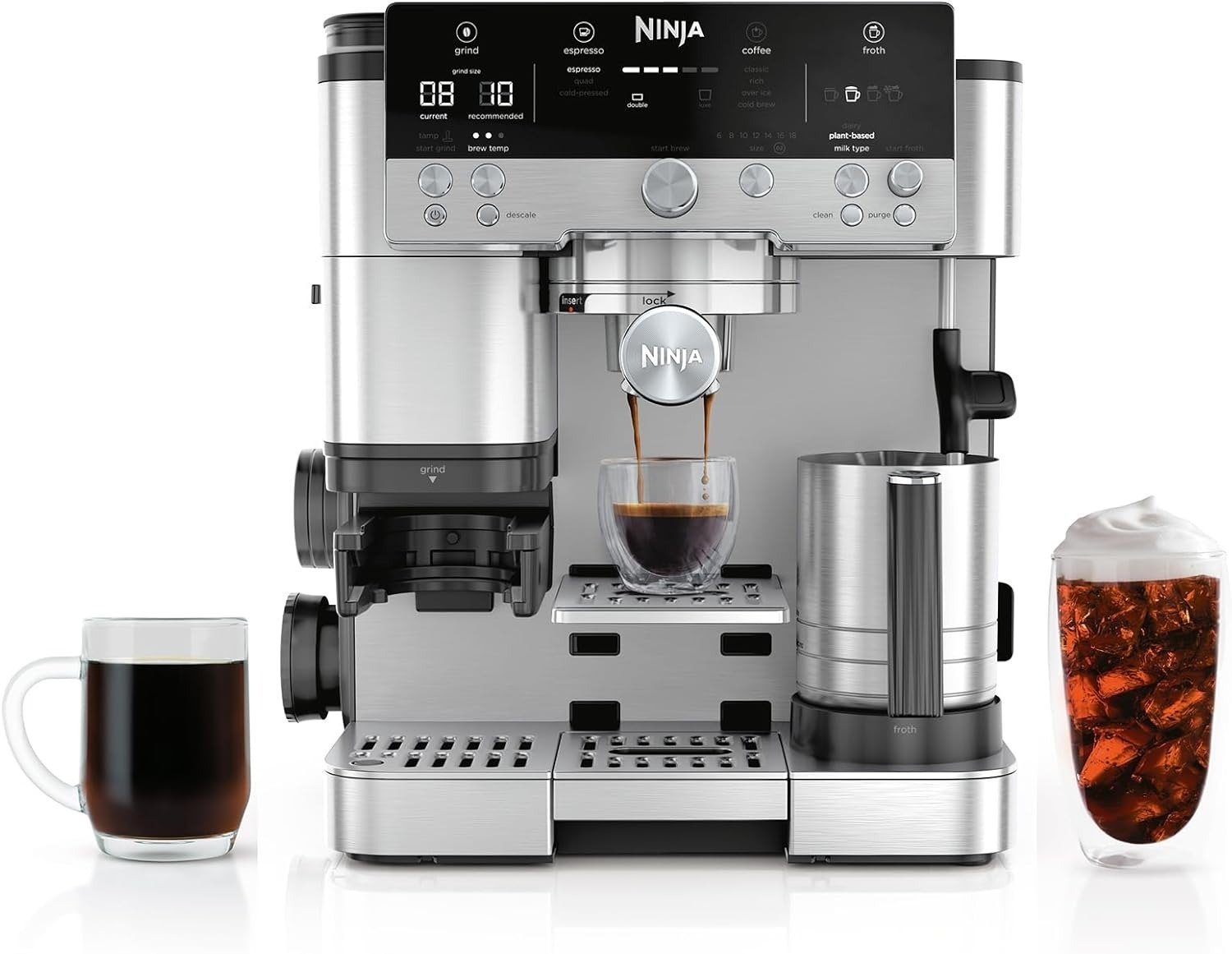
NINJA ES601 LUXE CAFÉ
The Result Looks Fine. The Breakdown Isn’t Visible Yet.
You wake up. You press a button. A shot pulls cleanly. The foam is even. The cup is warm from the top of the machine. You drink something that genuinely tastes like a café made it.
And for six weeks, that’s the story. Then a pattern emerges.
The drip tray is full again. You forgot you emptied it yesterday. The grinder is louder than the kitchen. The water tank, 2 liters of it, is down to half. The machine auto-purged the steam wand three times since breakfast. You didn’t ask it to. It just did.
None of this is a malfunction. Every one of these things is the machine working exactly as designed.
That gap — between a machine that performs and a machine that fits — is where most ES601 reviews fail to go. They stop at “it makes great espresso,” which is true, and never reach the more useful question: for whom is this machine actually logical, and at what point does it stop being one?
That’s the question this review is built to answer.
What You’re Actually Feeling but Not Naming
In 2024, over 62% of espresso machine purchases were driven by the desire to recreate café-style beverages at home. Most of those buyers weren’t looking for a hobby. They were looking for a reliable, daily replacement for a $7 habit.
That distinction matters more than any spec sheet.
The friction that sends people toward the Ninja ES601 isn’t “I want to learn espresso.” It’s quieter than that. It sounds more like: I’m spending $200 a month at the coffee shop for drinks I could make at home if the machine didn’t require a barista degree to operate. Or: I want one machine, not three. I want espresso on Tuesday and drip on Wednesday and cold brew on Saturday and I don’t want to think about any of it.
That’s a real, specific problem. And it is exactly the problem the ES601 was built to solve — not as a compromise, but as a deliberate architecture decision.
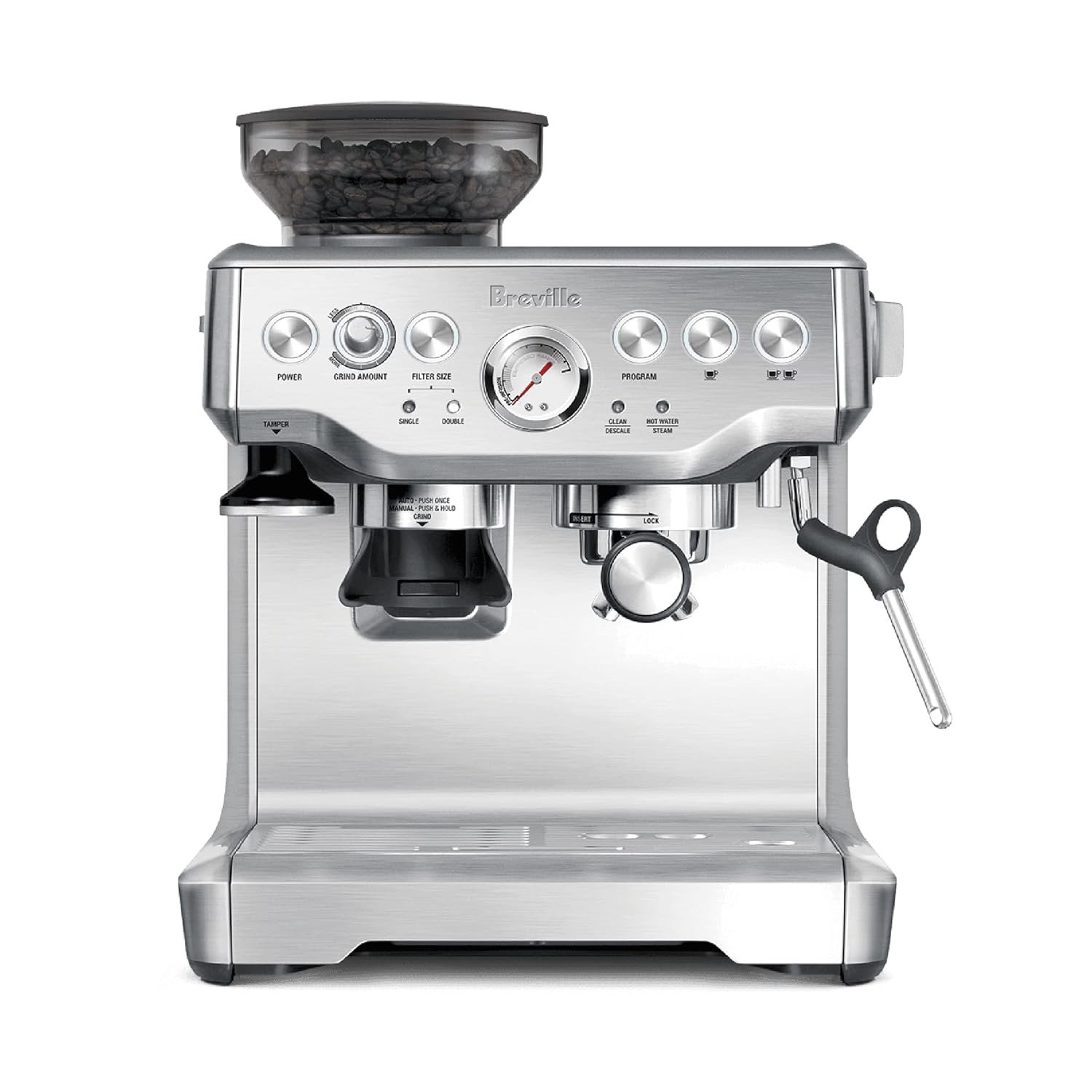
The confusion starts when buyers walk into this machine with the wrong reference point. They’ve been reading Breville forums and watching YouTube grind-dial videos, and they arrive expecting the ES601 to compete on that axis. It doesn’t. It was never trying to. The machine that actually competes with the ES601 is the four-device setup sitting across three different spots on your counter.
The Hidden Mechanism Behind the Performance Gap
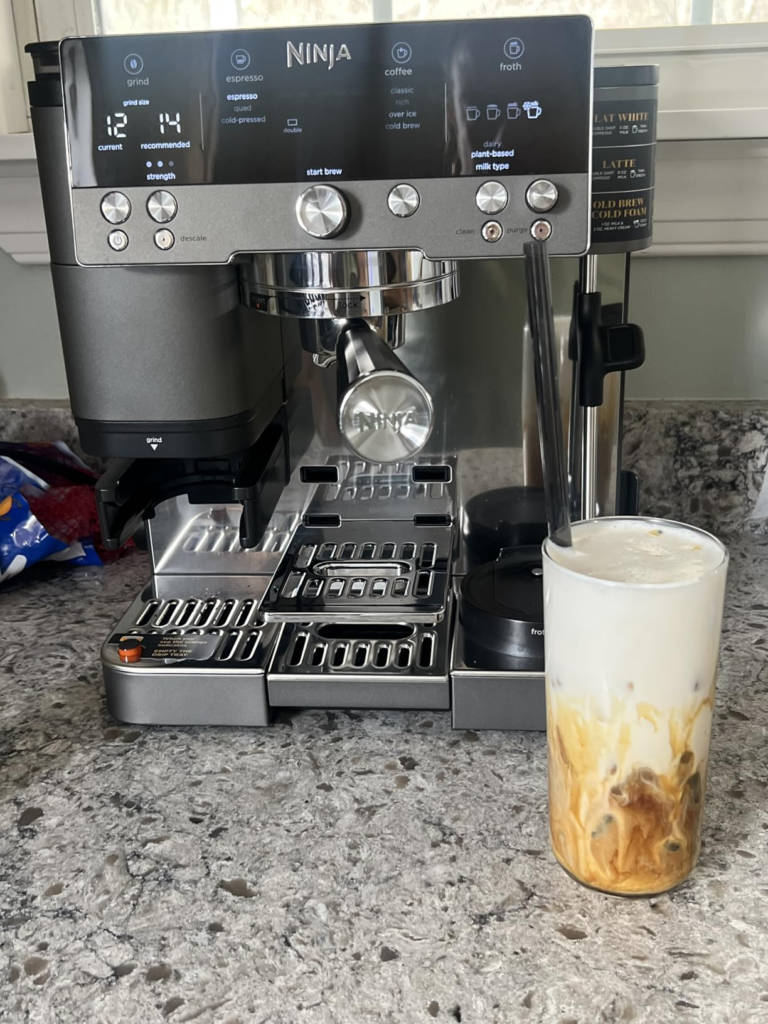
Here is what the ES601 actually is, technically, before any marketing language: an integrated grinder and espresso machine with a portafilter, designed for freshly roasted coffee beans, with traditional non-dual-walled espresso baskets, a 25-setting conical burr grinder, Barista Assist Technology that recommends grind size, and a pro steam wand that handles both manual and automatic milk frothing.
Unlike cheap “espresso-style” machines that use steam pressure, the Ninja uses a legitimate 9-bar pump. It produces real crema and genuine espresso extraction.
That is not a marketing claim. That is a mechanical distinction. Steam pressure and pump pressure produce fundamentally different results — different extraction dynamics, different crema formation, different flavor density. The ES601 operates on the correct side of that line.
The Barista Assist system is where the machine makes its most significant structural choice. The assisted tamper applies consistent 30-pound pressure, creating perfectly level pucks every single time — eliminating the shot-to-shot variation typically seen with manual tamping. For a beginner, this is the difference between consistent extraction and a week of sour or bitter shots while they figure out why nothing tastes right.
The Dual Froth System combines steaming and whisking simultaneously — a technique previously seen only in commercial machines — tested successfully across whole milk, 2%, oat milk, almond milk, and soy milk, producing consistent microfoam texture across all varieties.
The mechanism hiding behind the “all-in-one” label is this: the ES601 doesn’t ask you to become competent. It absorbs the skill requirement into the hardware. That is genuinely rare at this price point, and it is the actual source of its value — not the number of brew modes.
The Threshold Where the Experience Quietly Breaks
Every machine has a threshold. The ES601’s threshold is not about espresso quality. It’s about usage volume and maintenance frequency — two variables that never appear in the product description.
The Auto-Purge Reality: The machine frequently auto-purges the steam wand and thermoblock, dumping water into the drip tray. You will find yourself emptying the tray and refilling the 2-liter tank far more often than you expect. This is the price of the Auto-Purge system that keeps the wand and internals clean — a maintenance reality you must accept.
This is not a defect. It is a deliberate engineering choice that prioritizes internal cleanliness over water economy. But for a single user making one drink a day, it can feel like the machine is consuming more water than the person drinking from it.
The Americano Gap: A specific gripe for the US and Canada model (ES601) is the lack of a hot water dispenser. If you are an Americano drinker, you are out of luck unless you use a separate kettle or run blank shots — which is messy, inaccurate, and can lead to stray grinds in your hot water. The EU model has this feature, but the US version does not. This is a baffling omission for a machine that claims to be a complete café solution.
The Light Roast Ceiling: Light roasts are notoriously hard to extract and require high temperatures. The Breville Barista Express allows you to manually adjust the internal water temperature (PID), giving you better control over acidic light roasts. The ES601 does not offer this level of temperature adjustment. If you drink exclusively light-roast specialty coffee and care deeply about extraction precision, you are approaching the ceiling of what this machine can do for you.
The Drip Volume Limit: The drip coffee setting maxes out at around 700ml. For a household that brews a full pot in the morning, this is a structural limitation, not a setting to adjust.
These are not reasons to reject the machine. They are the exact boundaries you need to know before you are inside them.
| Threshold Factor | ES601 Reality | Who It Affects |
|---|---|---|
| Auto-Purge water loss | Frequent, non-optional | Single-drink-per-day users |
| No US hot water dispenser | Americanos require workaround | Daily Americano drinkers |
| Light roast extraction | No PID temperature control | Specialty light roast devotees |
| Drip volume cap | ~700ml maximum | Large-pot morning households |
| Manual control ceiling | Guided, not adjustable | Serious espresso craft enthusiasts |
Why Most Buyers Misread This Machine Too Early
The comparison that kills more good decisions than any other in this category is: Ninja ES601 vs. Breville Barista Express.
They are not the same machine. They are not solving the same problem.
The Breville is an analog experience. You have a pressure gauge, manual buttons, and you need to dial in your grind size by hand. You learn how to make espresso. It feels like driving a manual car. Total control. High learning curve. Expect to waste a bag of beans figuring out how to dial in.
Breville’s build quality and customization provide better long-term value for someone whose skills are developing. Ninja may need upgrading as skills develop.
The Breville Barista Express retails for $700 at full price. The ES601 sits at $499–$549 depending on timing and retailer.
The correct comparison table is not feature-by-feature. It is intention-by-intention:
| Decision Axis | Ninja ES601 | Breville Barista Express |
|---|---|---|
| Primary buyer | Versatility seeker, convenience maximizer | Espresso craft learner |
| Learning investment | Near-zero | High, intentional |
| Multi-drink household | Yes — drip, espresso, cold brew | No — espresso only |
| Manual control ceiling | Moderate | High |
| Milk frothing | Hands-free automatic | Manual, skill-dependent |
| Americano (US) | Requires workaround | Dedicated hot water |
| Entry price | ~$499 | ~$700 |
| Upgrade path | Complete replacement | Component learning |
The buyer who chooses Breville over Ninja because “it’s more professional” but doesn’t actually want to dial in grind settings on a Tuesday morning is making the wrong decision for themselves. The buyer who chooses Ninja expecting to eventually reach God Shot territory will also eventually feel the ceiling.
Neither machine is better. They serve different humans.
Who Is Actually Inside This Problem
The ES601 is not for everyone who wants good coffee. It is for a specific intersection of wants that the market rarely serves cleanly.
The machine is for someone who wants high-quality coffee without all the ritual. It is for households where the wife wants a latte, the husband wants drip, and a neighbor stopping by might want iced coffee — all in the same morning.
More precisely, the ES601 is designed for:
- People upgrading from pod systems or basic drip makers who want real extraction without a learning curve
- Households with genuinely diverse coffee preferences across at least two or three drink styles
- Professionals who drink quality coffee daily and value consistency over craft ownership
- Anyone who has been spending $150–$250/month on café visits and wants a machine that actually replicates the output, not just the category
Office closures and hybrid work models have led to a 29% increase in household spending on coffee appliances since 2021. That spending pattern represents a specific buyer: someone who used to expense their coffee, now makes it at home, and has a clear financial reference point for what “worth it” means.
If a latte costs $7 at a café and you make two per day, the machine pays for itself in under 40 days on beans alone, not counting convenience, time, or consistency.
Where Wrong-Fit Begins
There are buyers who will regret this purchase. Naming them now is more useful than discovering it at month three.
The Specialty-Only Espresso Purist. If you buy single-origin light roast beans, care about extraction temperature, enjoy the ritual of tamping and pulling manually, and follow r/espresso for entertainment rather than utility — this machine will feel like a toy. Its guided automation, which is a strength for most users, will feel like constraint to you. The Breville or a prosumer machine is your category.
The Large-Volume Drip Household. If you make a full 10–12 cup pot every morning for a family or a home office, the 700ml drip cap is a structural problem you will encounter every day.
The Daily Americano Drinker in the US. The hot water omission in the US model is real. It is not a minor inconvenience if your default drink requires hot water over espresso. It is a daily workaround.
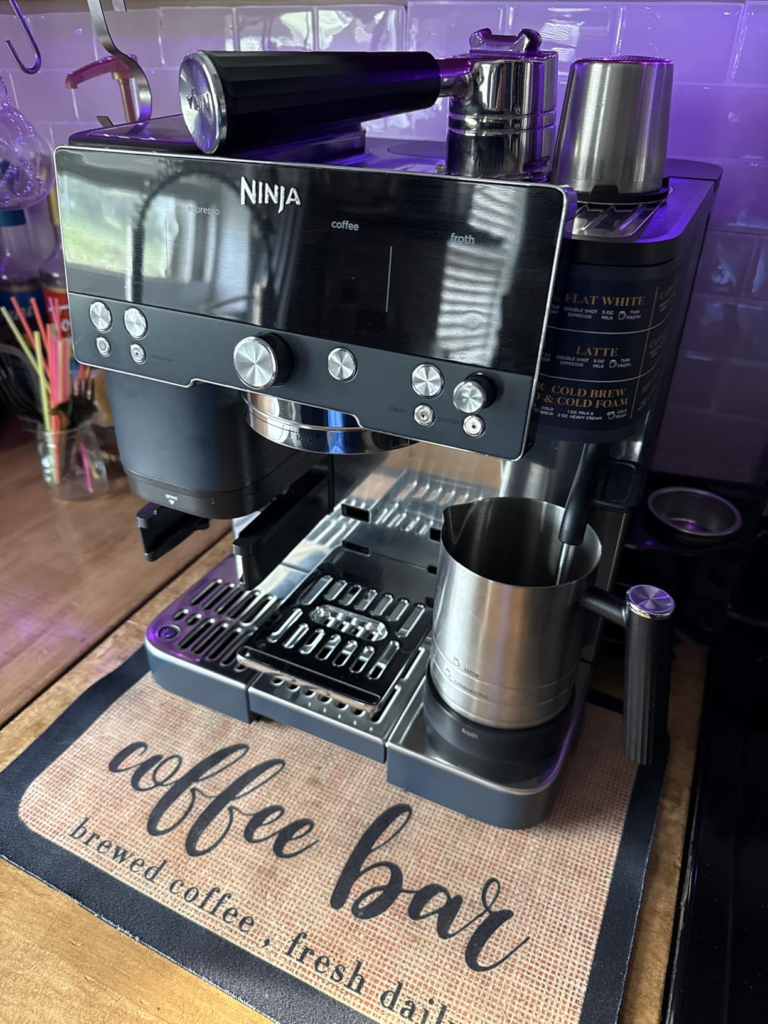
The Counter-Space Minimalist. The machine uses plastic in some components, which may be a drawback for users who prefer all-metal construction. And at roughly 13 inches wide by 15 inches tall, it is not a small appliance. It takes real estate.
| Wrong-Fit Profile | Specific Break Point |
|---|---|
| Light roast specialty only | No PID, no temperature precision |
| Large morning drip volume | 700ml cap is a daily constraint |
| Daily Americano drinker (US) | No hot water dispenser |
| Manual control enthusiast | Automation feels like restriction |
| Counter-space limited kitchen | Significant footprint |
| One-drink-per-day minimal user | Auto-purge water loss disproportionate |
The One Situation Where the Ninja ES601 Becomes the Logical Choice
After that full map of edges and exclusions, here is the situation where the ES601 stops being a good option and becomes the only structurally sound one:
You drink at least two different types of coffee — one espresso-based, one drip or cold brew. You live with or make coffee for at least one other person with different preferences. You are not interested in learning espresso craft; you want the output of the craft without its demands. You have been spending money at cafés for drinks you know you could replicate at home if the machine weren’t intimidating. You want one machine on your counter, not three.
If that describes your actual morning, the ES601 is not a compromise. It is the only machine that was designed for you.
CoffeeGeek, after rigorous testing, awarded the Ninja Luxe Café Premier its Best in Class designation with an 88.5 score, noting that it delivers genuine espresso-grade performance at a price point that disrupts the entry-level segment. According to Circana industry data, Ninja is the number-one best-selling espresso brand for 2025. That is not a marketing claim. That is a sales data point representing real purchasing decisions by real people who evaluated alternatives and chose this machine.
The ES601 specification breakdown:
| Feature | Specification |
|---|---|
| Pump pressure | 9-bar (genuine espresso pressure) |
| Grinder | Integrated conical burr, 25 settings |
| Brewing modes | Espresso (double/quad), Drip (classic/rich/over ice), Cold Brew (cold-pressed/cold brew) |
| Frother | Hands-free dual froth system (steams + whisks simultaneously) |
| Tamper | Assisted, consistent 30-pound pressure |
| Water tank | 2 liters, removable |
| Footprint | ~13″W × 15″H × 13″D |
| Power | 1,650W |
| Price range | $449–$549 |
| Warranty | 2 years (manufacturer) |
| Hot water (US model) | Not included |
What It Solves, What It Reduces, and What It Still Leaves to You
What the ES601 solves completely:
- The need for multiple machines across brew styles
- Manual tamping inconsistency
- Milk frothing skill gap
- The “intimidating espresso machine” barrier to entry
- Counter clutter from separate devices
What it reduces but doesn’t eliminate:
- Maintenance burden (auto-purge handles internal cleaning; you still empty the tray and descale regularly)
- Bean quality dependence (better beans produce meaningfully better output; the machine amplifies the ingredient, not replace it)
- Daily water management (2L tank empties faster than expected given purge cycles)
What it still leaves entirely to you:
- Bean selection and freshness
- Grind size dialing for specific beans (the Barista Assist recommends; you confirm)
- Milk jug positioning for manual frothing if you prefer that mode
- Americanos — you’ll need a kettle or a workaround
What it cannot do:
- Replace a PID-controlled machine for light roast precision
- Brew a full pot of drip coffee
- Dispense hot water for Americanos in the US version
- Satisfy someone who wants full manual control over every extraction variable
Final Compression
The Ninja ES601 Luxe Café is not the best espresso machine in its price range. It is the best system in its price range for a specific type of household.
The machine’s actual value is not its espresso quality in isolation — though that quality is genuine, 9-bar, and crema-producing. Its value is the elimination of a multi-device setup, the removal of the skill barrier, and the daily reliability of a machine that makes good coffee across three brew categories without requiring you to become a barista.
The threshold that matters is not price. It’s intent. If your mornings contain more than one drink type across more than one person, this machine collapses a complexity that other machines in its class don’t even attempt to address.
The home espresso machine market recorded over 18 million units sold globally in 2024, with more than 60% falling under the automatic category — reflecting a structural consumer shift toward convenience without quality sacrifice. The ES601 is the most complete expression of that shift below the $600 mark.
If you drink only light-roast single-origin espresso and consider dialing in a personal ritual — this is not your machine. If you want one morning system that serves a household, requires no barista knowledge, and replaces a café habit with something that actually tastes like the café — this is the decision that stops being complicated.
Frequently Asked Questions
| Question | Answer |
|---|---|
| Does the Ninja ES601 make real espresso or just espresso-style coffee? | Real espresso. The machine uses a 9-bar pump — the same pressure specification required for genuine espresso extraction. It produces actual crema, not simulated foam. Machines that use steam pressure instead of pump pressure produce a categorically different output. |
| How does the ES601 compare to the Breville Barista Express? | They solve different problems. The Breville is a skill-development machine with higher manual control and a steeper learning curve, retailing around $700. The ES601 is an automation-first multi-brew system at $449–$549. If you want to learn espresso craft, choose Breville. If you want consistent café-quality output without that investment, choose the ES601. |
| Can the Ninja ES601 make cold brew? | Yes. It offers two cold brew modes: rapid cold-pressed espresso and cold brew coffee, available in sizes from 6 to 18 oz. This is a genuine cold extraction function, not chilled hot coffee. |
| Is the Ninja ES601 difficult to maintain? | The auto-purge system handles internal wand cleaning automatically, which is a maintenance advantage. The trade-off is that it uses water to do so, meaning the drip tray fills and the water tank empties more frequently than users typically expect. Descaling is required periodically and is prompted by the machine. |
| Why doesn’t the US version of the ES601 have a hot water dispenser? | The EU model includes a dedicated hot water button for Americanos. The US (ES601) version does not — a confirmed regional omission. Daily Americano drinkers in the US should consider this a meaningful limitation before purchasing. |
| Who should not buy the Ninja ES601? | Light-roast specialty coffee drinkers who need precise temperature control (PID), households that brew a full 10–12 cup pot of drip coffee each morning, daily Americano drinkers in the US, and anyone who wants full manual control over every espresso variable. The ES601 is designed for automation — those who want to override it will find the ceiling. |
| Does the integrated grinder affect espresso quality compared to a standalone grinder? | Yes, at the edges. The 25-setting conical burr grinder is functional and produces a consistent grind adequate for the machine’s extraction profile. Serious espresso enthusiasts running high-end standalone grinders will notice a quality difference. For the machine’s intended user, the integrated grinder is sufficient and significantly more convenient. |
| Is the Ninja ES601 worth $499? | The answer depends entirely on what it’s replacing. If it replaces a separate espresso machine, drip maker, and cold brew setup — plus a partial café habit — the financial case is straightforward. If it’s a standalone espresso machine purchase being compared to a Breville at $700, the ES601 |
Transparency Note:
This analysis is built on aggregated real-world experience.
It extracts what repeatedly holds, what breaks, and what users uncover only after living with the system—then shapes it into a clear model you can use immediately.
Think of it as structured experience, refined and presented so you don’t have to learn it the hard way.
“A quick note: Don’t believe the star ratings, but trust personal experience. This article is a compilation of collected experiences”