THE ECOVACS DEEBOT X8 PRO OMNI CLEANS FLOORS THAT ARE ALREADY UNDER CONTROL — AND FAILS THE ONES THAT AREN’T
The Floor Looks Cleaner. The Problem Is Still There.
You ran the robot. It went back to its dock. The app said: cleaning complete. You walked across the kitchen ten minutes later and felt something under your foot — a grain of something, a faint drag of stickiness, a corner that clearly did not get touched. You looked at the machine. It sat there, lit up, docked, smugly presenting itself as finished.
This is not a malfunction. This is the threshold problem that nearly everyone who buys a premium robot vacuum at this price point runs into — and almost no one names correctly before purchasing.
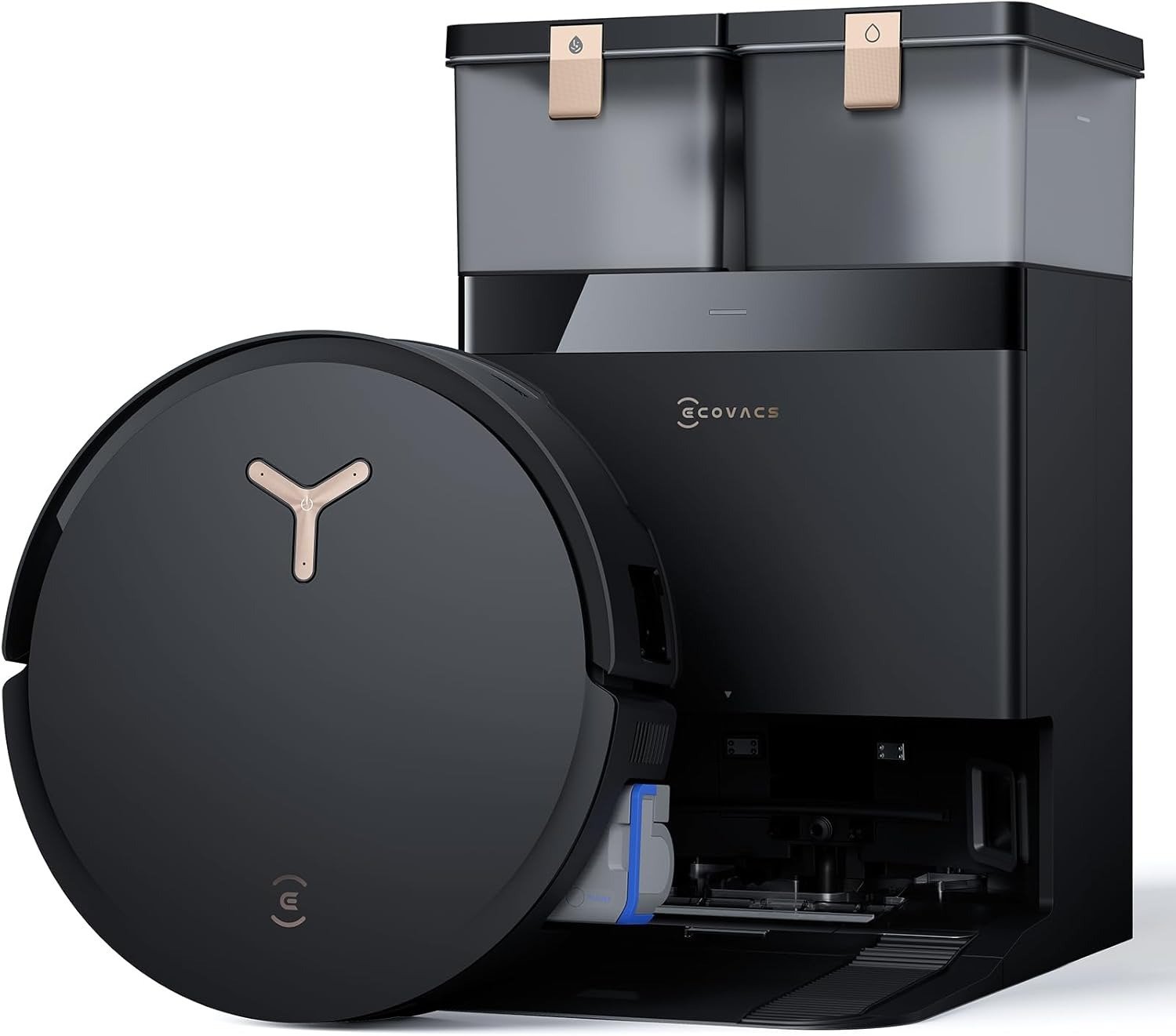
The DEEBOT X8 PRO OMNI is the 2025 flagship in Ecovacs’ X-series lineup, and the first model in the brand’s history to deploy a roller mop system that cleans itself continuously while working — rather than returning to the base station between passes. That is a genuine mechanical advancement. It delivers 18,000Pa of suction and features a roller mop that minimizes streaks, leaves significantly less water behind than pad-based competitors, and extends outward to reach room edges during cleaning runs.
Those numbers are real. The mechanism works. And yet, across hundreds of real-world reports, a consistent pattern appears: buyers who expected transformation got maintenance. Buyers who already had maintenance got transformation.
That difference is not a marketing flaw. It is the threshold. And if you do not know which side of it you are on, this article will tell you — before you hand over $800.
What You’re Actually Feeling But Not Naming
There is a category of cleaning frustration that does not have a precise name in everyday language, which is why people describe it in five different ways and mean the same thing:
“It misses spots.”
“It doesn’t feel like it actually mopped.”
“I still have to vacuum after it vacuums.”
“The floor looks clean until you step on it.”
“I thought this would replace the mop. It didn’t.”
These are not descriptions of different failures. They are all descriptions of the same structural mismatch: the robot is operating as a maintenance layer over a floor that still has an active dirt load underneath it.
Multiple real owners from Best Buy reviews describe the X2 OMNI series — the predecessor architecture — with exactly this split: strong suction on paper, navigation that “gets confused and lost half the time,” and cleaning paths that feel erratic relative to the price paid. The X8 PRO OMNI improves navigation meaningfully. It uses AIVI 3D 3.0 technology to map intelligently, avoids obstacles with greater accuracy, and switches between dry vacuuming and wet mopping based on the surface it detects. But improving navigation does not fix the underlying problem: the robot is built to maintain a floor, not to reset it.
If your floor needs resetting — meaning there is embedded debris in carpet, cooking grease buildup on tile, or pet dander that has layered across hardwood over weeks — a single autonomous session will not deliver what you are picturing.
The question is not “is this robot good?” It is: “what state does my floor need to be in before this robot becomes the tool that makes sense?”
The Hidden Mechanism Behind the Miss
Here is what the spec sheet does not tell you, and what most reviews bury in paragraph seven:
Traditional robot mops — including the spinning pad design used on the X2 OMNI — only have truly clean mop pads immediately after leaving the docking station. From that point forward, the pads accumulate dirt and redistribute it with each pass. The robot is, in effect, spreading a progressively dirtier substance across the floor while technically “mopping.”
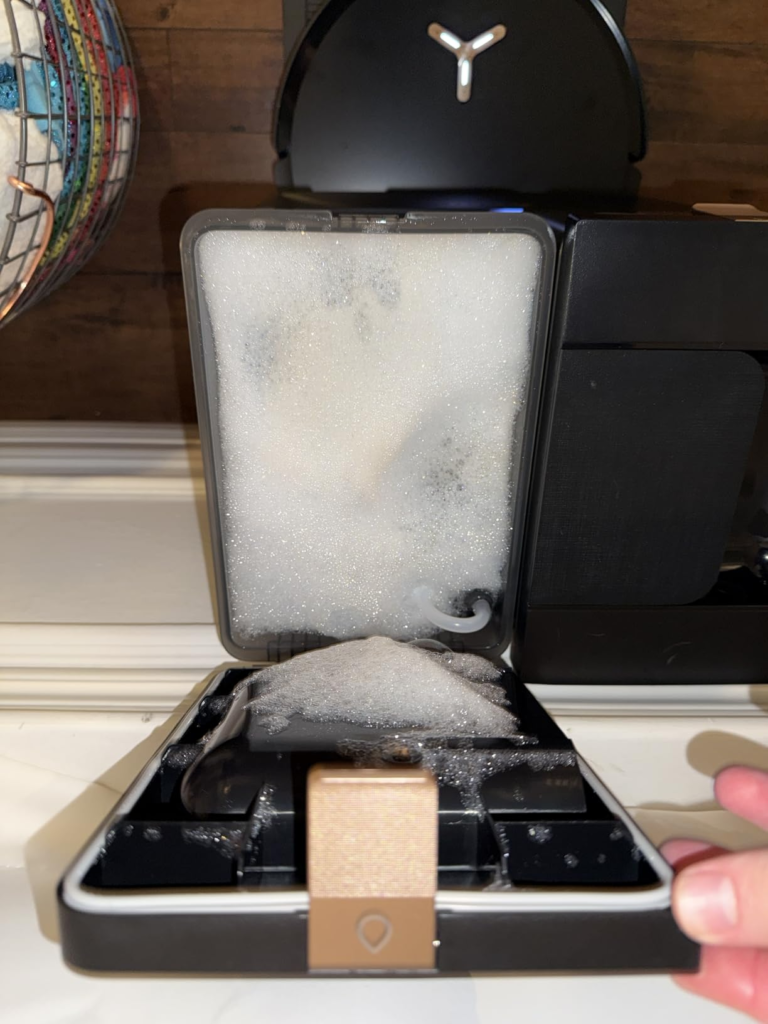
The X8 PRO OMNI’s roller system addresses this mechanically. While the mop spins, a squeegee removes dirty water and fresh nozzles apply clean water continuously — dramatically reducing the redistribution of soiled liquid across the floor during a single session. This is the actual engineering difference that matters between pad mopping and roller mopping at this price tier.
But there is a second mechanism that the spec sheet also does not address: suction power does not translate linearly into cleaning outcome on carpet.
Despite the X2 OMNI series having one of the highest airflow results tested — over 24 CFM — laboratory-style debris tests showed below-average performance on carpet, particularly for hair. The brush roll’s lack of a floating system means it does not maintain consistent contact on all surface variations, reducing effective pickup regardless of how high the stated Pascal number is.
The X8 PRO OMNI upgrades suction to 18,000Pa — more than double the X2 OMNI’s 8,000Pa. That is a 10,000Pa difference over the prior generation, which is not incremental — it is a different category of force. But the mechanism that delivers that force to embedded debris still depends on brush-to-surface contact dynamics, carpet pile depth, and pass overlap. No suction number eliminates this dependency.
Understanding both mechanisms — the continuous mop cleaning and the suction-contact relationship — tells you what this robot actually does well, and where its structural limit lives.
The Threshold Where the Outcome Quietly Breaks
There is a specific condition at which the ECOVACS DEEBOT X8 PRO OMNI performs as described in its best reviews: the floor has already been subjected to a manual deep clean within the last two to three weeks, the household generates moderate daily debris (foot traffic, light cooking, a pet or two), and the robot is running on a scheduled cadence of three to five times per week.
Under those conditions, the X8 PRO OMNI does what it’s built for — maintenance cleaning sessions on a daily or weekly basis, keeping floors consistently clean without requiring human intervention between runs.
The threshold breaks when:
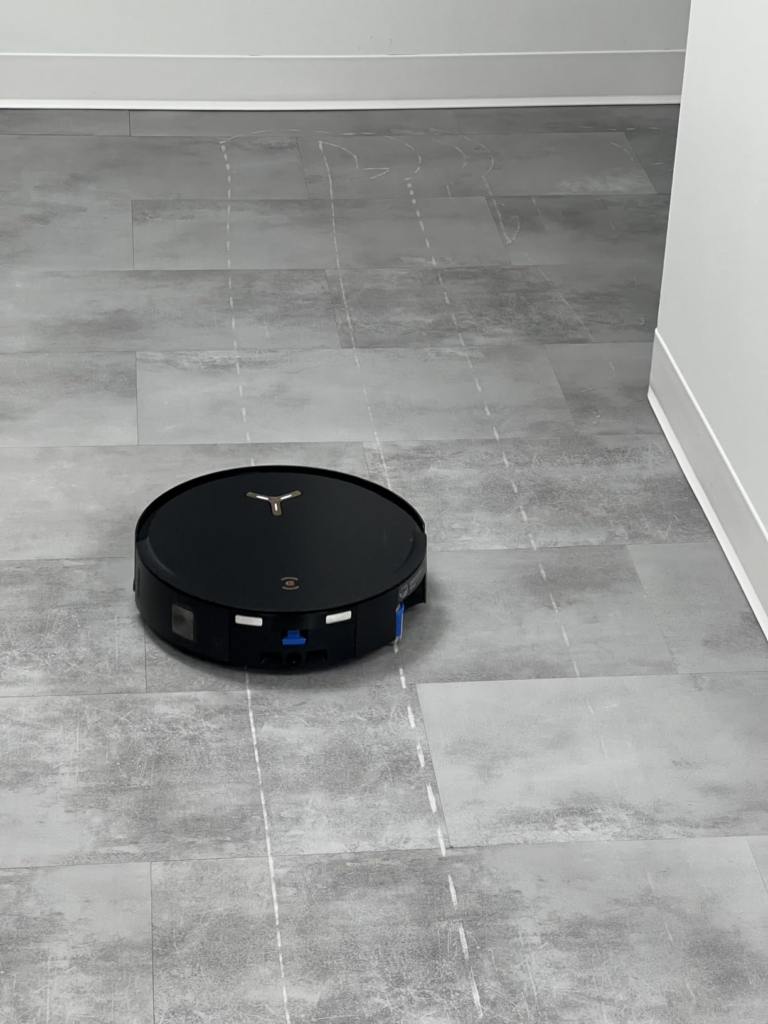
The floor carries accumulated load. Grease buildup from two weeks of cooking. Pet hair that has felted slightly into low-pile carpet. Sand or grit that has been walked in for days without a vacuum pass. In these conditions, the robot completes its session, returns to its dock, and the floor feels approximately 40–60% improved — which is not what someone spending $800 expected.
The home layout includes inconsistencies the map has not fully resolved. Real owners report the robot cleaning adjacent rooms when told to clean a specific zone, mapping phantom areas that do not exist, and failing to unload debris properly after sessions — dropping dust in front of the base station rather than sealing it into the bag. These are not universal failures, but they appear frequently enough in multi-surface, multi-room homes that they represent a genuine structural risk for complex floor plans.
The carpet is medium-pile or deeper. The roller mop lifts only 10mm when it detects carpet, allowing it to vacuum and mop hard-floor/carpet-mixed homes in one run — but this clearance is optimized for low-pile. The 15mm mop lift on predecessor models still allowed pads to graze carpet on uneven surfaces; medium-pile carpets in particular create persistent contact between mop and fiber. The X8 PRO OMNI mitigates this, but the risk does not disappear for thicker pile.
Naming the threshold is not a reason to dismiss the product. It is a reason to understand whether your home is on the right side of it.
Why Most Buyers Misread This Too Early
The comparison trap is the primary cause of misread. Someone researching the X8 PRO OMNI has typically already looked at three or four competitors, built a mental model based on suction numbers and mop system names, and arrived at a shortlist that looks like this:
| Feature | DEEBOT X8 PRO OMNI | Roborock S8 MaxV Ultra | Dreame X50 Ultra |
|---|---|---|---|
| Suction Power | 18,000 Pa | 10,000 Pa | 20,000 Pa |
| Mop System | Roller (continuous clean) | Pad | Roller |
| Edge Cleaning | Auto-extending roller + side brush | Standard | Standard |
| Auto Station | Yes (hot water, self-empty, drying) | Yes | Yes |
| Price (approx.) | ~$800 | ~$1,000+ | ~$1,400+ |
The numbers create a logic: more suction, roller mop, auto station, lower price. This appears to be the obvious choice. The comparison is not wrong — but it compresses the decision into a specification comparison that omits the one variable that actually governs outcome: your current floor state.
The X8 PRO OMNI’s roller extends outward during edge runs to reach corners in a way that even the square-bodied X2 OMNI could not match — which is genuinely impressive engineering. But that engineering advantage is irrelevant if the mop encounters a grease film that requires multiple passes at pressure, or a carpet edge that has accumulated debris the roller cannot reach at 10mm lift height.
The second misread is about object avoidance. The DEEBOT X2 OMNI had obstacle avoidance that reviewers called “in a different class to anything else tested” — needing manual intervention only once across an entire month of daily use. The X8 PRO OMNI inherits and improves this with AIVI 3D 3.0. But obstacle avoidance and navigation logic are different things. Knowing where the obstacle is does not tell the robot which room to clean first, or whether the sequence makes sense for how you actually live in the space.
After setup and customization, the X8 PRO OMNI generally runs without fuss — but getting it to that state requires intentional configuration of custom routines, room priorities, and surface-type settings in the app. This is a 30–90 minute investment that most buyers do not anticipate.
Who Is Actually Inside This Problem
The ECOVACS DEEBOT X8 PRO OMNI is the correct tool for a specific person. That person looks like this:
The floor type is mixed. Hard floors — tile, hardwood, LVP — make up 60% or more of the home’s surface area, with carpet in bedrooms or a living area rug. It’s best suited to larger homes that have a good mix of hardwood flooring, tiles, and carpet, where it can intelligently switch between dry vacuuming and wet mopping without manual mode changes.
The home is already in maintenance range. A deep manual clean happened recently. The floor is not carrying heavy accumulated soil. The robot is being deployed to prevent buildup, not to reverse it.
The household generates consistent, moderate debris. Pets that shed. Kids who track in dirt. Regular cooking. These are exactly the conditions where a scheduled daily or every-other-day run keeps the home consistently clean. Over a four-week testing period, the X8 PRO OMNI consistently delivered fresh-looking carpets and streak-free hard floors when used on a regular maintenance schedule.
The buyer values mopping quality over raw suction maximization. The roller mop system is meaningfully better than pad-based alternatives for tile and hardwood. The roller minimizes streaks and leaves less water behind, and the detergent dispenser — at a 200:1 ratio — delivers consistent cleaning without requiring manual mixing or monitoring.
The home is large enough that autonomous cleaning saves real time. A 1,500-square-foot main level cleans in under an hour, hands-free. For a household that used to spend 45–60 minutes weekly vacuuming and mopping manually, the time recovery alone justifies a significant portion of the cost over a two-year horizon.
Where Wrong-Fit Begins
The wrong-fit buyers become visible in the negative reviews. They share consistent characteristics:
Homes with predominantly medium or thick carpet. The roller lifts for carpet detection, but the transition physics still create mop contact risk on uneven carpet edges. If carpet covers more than 50% of the home’s floor area, the mopping system provides limited value, and the suction advantage over cheaper vacuum-only robots narrows significantly.
Buyers expecting set-and-forget from day one. Real users report spending up to six hours configuring maps, zones, and scheduling across two floors before the robot operated reliably. If the expectation is “unbox, charge, press start, done,” this machine will disappoint. The setup investment is real and front-loaded.
Homes with highly variable layout or frequently rearranged furniture. Stored maps rely on consistent environmental cues. When furniture moves significantly, the robot can lose orientation, clean wrong zones, or require a full remap. Users specifically flag navigation confusion after environmental changes as a recurring problem class across the DEEBOT X series.
Buyers who need deep-clean performance as the primary use case. If the floor is carrying accumulated soil from irregular cleaning, one autonomous session will not deliver the reset. The robot will improve the floor measurably, but the gap between improvement and the expected result will feel like a failure — even though the product is working exactly as designed.
Anyone on a floor that regularly sees major spills or high-volume pet accidents. The dirty water tank can go unalerted for extended periods, meaning the system can continue running long past the point where the dirty water capacity is serving a meaningful function.
| Home Profile | Fit Assessment |
|---|---|
| Mixed floors, regular maintenance schedule, moderate debris | Strong Fit |
| Predominantly carpet (medium–thick pile) | Poor Fit |
| Large home, frequent cooking + pets, already clean baseline | Strong Fit |
| Highly variable layout, furniture moves often | Moderate Risk |
| Deep-clean needed before maintenance mode possible | Wrong Entry Point |
| Apartments under 700 sq ft | Economically Questionable |
The One Situation Where This Product Becomes Logical
You have 1,200 to 2,500 square feet of mixed flooring. The home is clean but stays dirty fast — cooking, pets, foot traffic, or some combination. You have done a deep clean relatively recently. You are not looking for something that cleans your floor once; you are looking for something that prevents the floor from getting dirty again between the times you do clean it manually.
Under those conditions, the ECOVACS DEEBOT X8 PRO OMNI becomes the logical choice at its price point. Not because it is perfect, but because the mechanics align with the problem:
The roller mop extends to edges, lifts automatically for carpet transitions, and allows simultaneous vacuuming and mopping across mixed floor types in a single uninterrupted run. The 18,000Pa suction performs above average on carpet deep-clean evaluations, and the auto-extending side brush improves corner coverage in ways that round-bodied competitors without this feature cannot match. The station empties, washes the roller with hot water, dries it, refills the clean water tank, and stores dirty water — removing every routine maintenance step that typically causes owners to stop using robot vacuums within six months.
The price, currently around $800 — down significantly from the $1,500+ of its predecessors — positions it as the most capable roller-mop robot vacuum below the $1,000 ceiling. RTINGS identifies it as Ecovacs’ 2025 flagship X8 family model and the first DEEBOT to use this continuous roller-cleaning architecture.
If you are inside the threshold described above, the decision to delay costs you time and floor quality every week. If you are outside it, the decision to buy costs you $800 and a sustained frustration that the robot was not the problem — the expectation was.
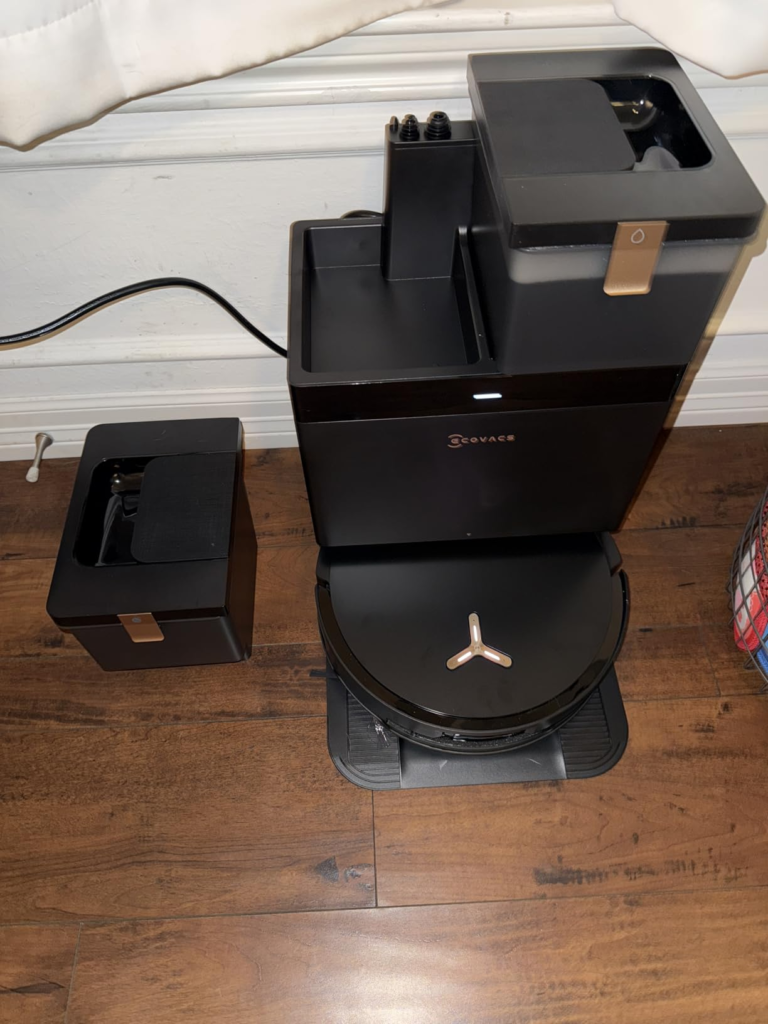
What It Solves, What It Reduces, and What It Still Leaves to You
What it solves:
- Daily debris accumulation on hard floors and low-pile carpet
- The “mop spreading dirty water” problem that makes pad-based robots feel counterproductive
- Edge and corner reach limitations that round-bodied robots have always struggled with
- Manual intervention burden for routine cleaning in mixed-floor homes
- Mop pad maintenance as a recurring chore
What it reduces — but does not eliminate:
- Pet hair tangling (improved with the roller over pads, but not zero)
- Navigation errors in complex multi-room layouts (better, but still requires initial configuration effort)
- Water usage concerns for wood floors (low by category standards, but still requires appropriate flow level settings)
- App setup complexity (the Ecovacs Home app has improved, but custom routines and surface-type configurations still require intentional setup time before the machine runs at its full potential)
What remains yours:
- Deep cleaning when soil accumulation exceeds the robot’s maintenance capacity
- Quarterly manual inspection and cleaning of internal brush components
- Remapping after significant furniture changes
- Monitoring dirty water tank fill level (no proactive alert in current firmware)
- Medium-to-thick carpet cleaning that requires a full-size upright vacuum
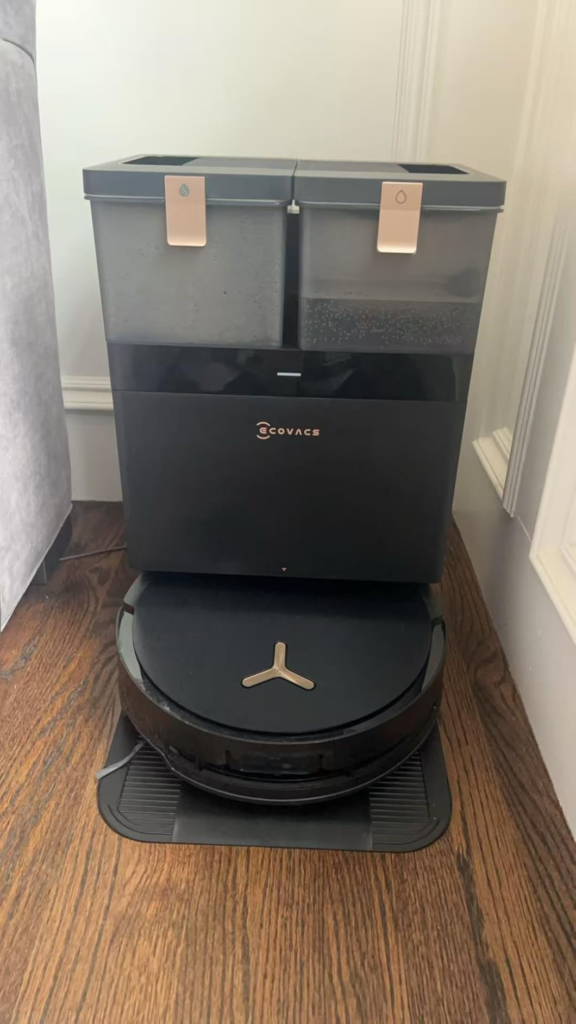
Final Compression
The ECOVACS DEEBOT X8 PRO OMNI is not for the floor that needs rescuing. It is for the floor that needs defending.
If your home already has a reasonably clean baseline — or if you are willing to establish one before deploying the robot — and you have mixed flooring between 1,000 and 2,500 square feet, with consistent daily debris from pets, cooking, or foot traffic, this machine earns its cost over time in recovered hours and consistent floor quality.
The threshold is not about the robot’s capability. The robot is capable. The threshold is about alignment between what the machine was designed to do and what your floor actually needs done.
| Decision Signal | Verdict |
|---|---|
| Mixed floors, regular schedule, moderate load | Buy — this is exactly the use case |
| Primarily carpet household | Wait — wrong tool for the surface profile |
| Need a one-time deep clean solution | No — establish a clean baseline first, then deploy |
| Already using a robot, want meaningful upgrade | Yes, if moving from pad-based to roller matters to you |
| Budget-constrained, floors mostly hard surface | Consider the T50 MAX PRO OMNI at lower cost first |
Frequently Asked Questions
| Question | Answer |
|---|---|
| Does the ECOVACS DEEBOT X8 PRO OMNI work on thick carpet? | The roller mop lifts 10mm on carpet detection, which handles low-pile reliably. Medium and thick pile creates contact risk with the mop during transitions, and suction effectiveness on deep carpet is dependent on surface contact dynamics that high Pa numbers alone do not guarantee. It vacuums thick carpet — it just doesn’t mop it, and the vacuum performance on deep pile is not the product’s strongest argument. |
| How often does the dirty water tank need emptying? | Tank capacity varies by floor size and soil load. In a 1,500-square-foot mixed-floor home with moderate debris, most owners report emptying every 3–5 cleaning sessions. The current firmware does not send a proactive full-alert, so manual monitoring is required. |
| Is the DEEBOT X8 PRO OMNI significantly better than the X2 OMNI? | Mechanically, yes — the roller mop architecture, 10,000Pa additional suction, improved edge reach, and auto-extending side brush represent genuine generational improvements. If you are evaluating the X2 OMNI at a discounted price versus the X8 PRO OMNI at current market, the roller mop advantage alone justifies the X8 for any home where mopping quality matters. |
| How long does setup actually take? | Allow 45–90 minutes for initial map creation, room labeling, zone configuration, and scheduling setup. The robot is functional before that, but it operates at full designed capability only after those customization steps are complete. |
| Can it replace a traditional mop entirely? | For regular maintenance on tile |
Transparency Note:
This analysis is built on aggregated real-world experience.
It extracts what repeatedly holds, what breaks, and what users uncover only after living with the system—then shapes it into a clear model you can use immediately.
Think of it as structured experience, refined and presented so you don’t have to learn it the hard way.
“A quick note: Don’t believe the star ratings, but trust personal experience. This article is a compilation of collected experiences”