MOCCAMASTER KBGV SELECT REVIEW: WHY GOOD BEANS STILL MAKE BAD COFFEE
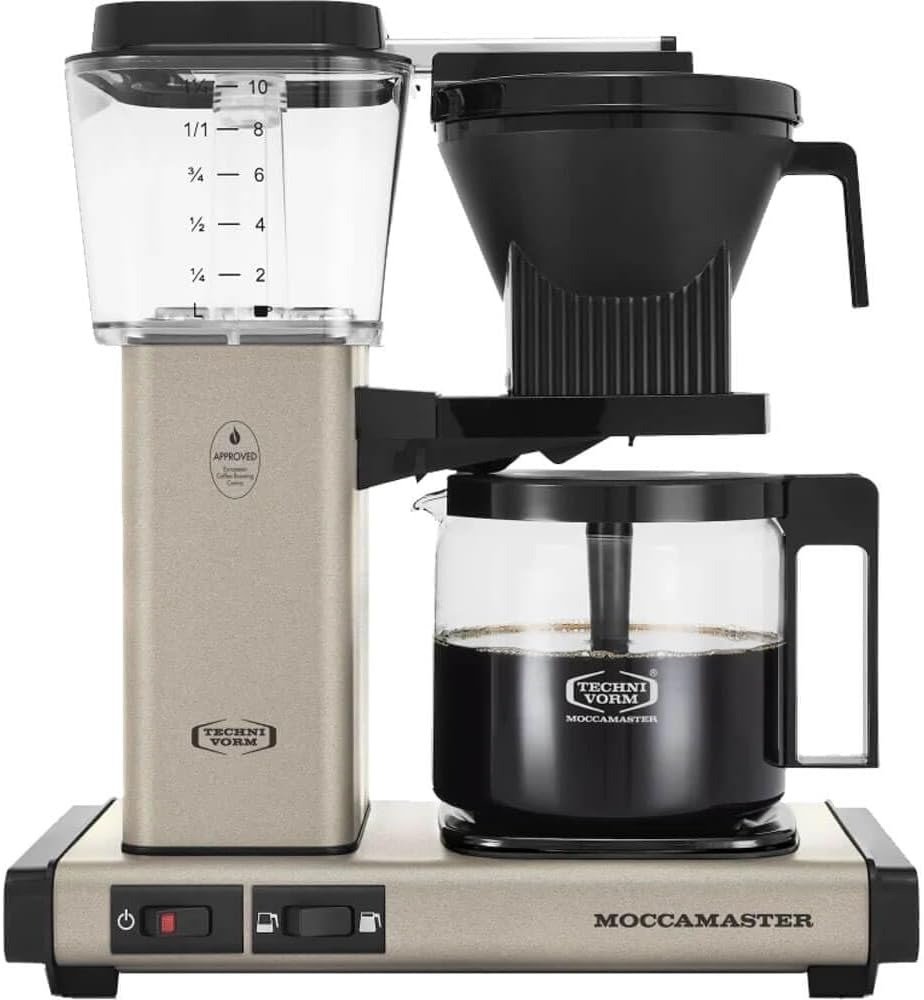
MOCCAMASTER KBGV SELECT
You grind the beans yourself now. You bought the bag with the tasting notes on it — stone fruit, brown sugar, something about a “clean finish.” You did everything the coffee people told you to do. And the cup in your hand still tastes like the pot at a gas station.
I’ve made that exact cup. More than once. For a while I blamed the beans, then the grinder, then my own technique, before I understood where the problem actually lives.
It’s not you. Most home coffee makers — including some expensive-looking ones — never reach the temperature or timing window that actually pulls flavor out of good coffee. They just look like they’re doing the job.
Coffee Tastes Weak or Bitter at Home: The Result Looks Fine. The Problem Isn’t.
Every visual cue tells you the machine worked. Steam rose. The carafe filled. The kitchen smells like coffee. Nothing about the ritual looks broken.
Then you drink it, and it’s thin one morning and harsh the next, using the same beans and the same scoop. Coffee brands write entire support pages around this exact complaint because so many people land on it: “my coffee tastes weak or bitter,” typed into a search bar at 6:40 a.m., machine still humming behind them.
That inconsistency isn’t a beans problem or a you problem. It’s a machine that can’t hold a line.
Inconsistent Coffee Taste: What You’re Actually Feeling but Not Naming
Here’s what that actually feels like, in pieces you probably haven’t put words to yet.
The second cup is always worse than the first, because the coffee’s already cooling before you’ve finished pouring the first. Leave the pot on the hotplate past the twenty-minute mark and it turns from “coffee” into something scorched and flat. You’ve started doing quiet math each morning — was it the beans, the grind, the water, me — instead of just drinking your coffee.
None of that is paranoia. It’s a machine quietly asking you to compensate for what it can’t do on its own.
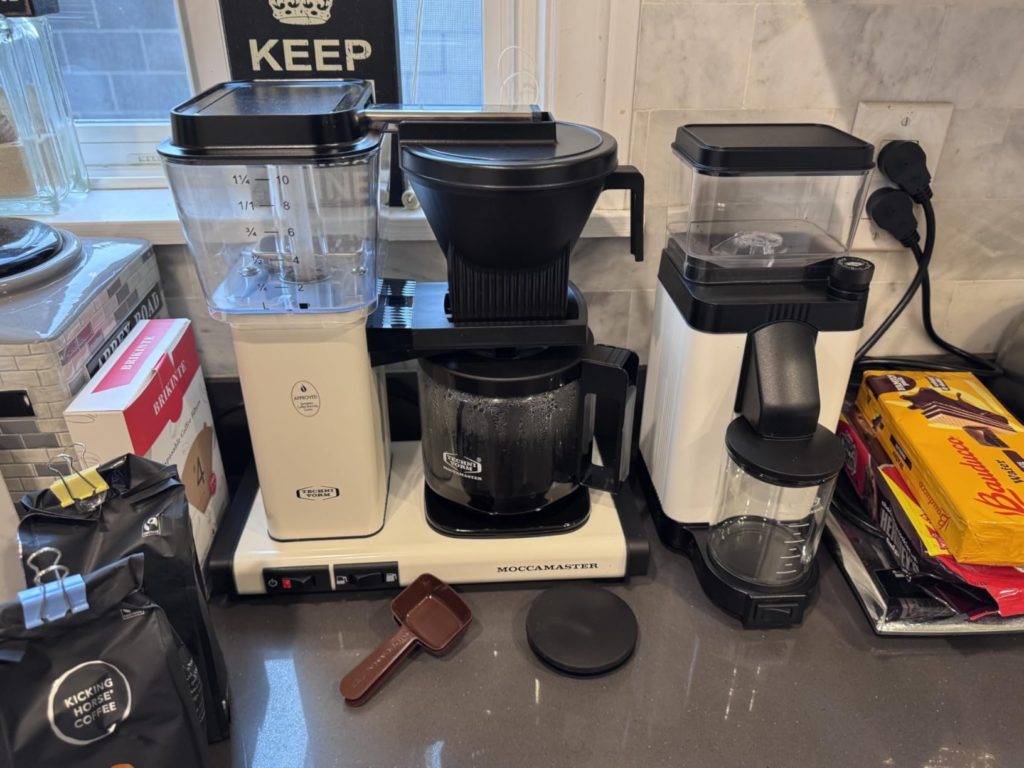
Why Drip Coffee Tastes Different Than a Café: The Hidden Mechanism Behind the Miss
Extraction is a temperature problem before it’s anything else. Hot water pulls flavor compounds out of ground coffee at a specific rate, and that rate only works inside a narrow band. Water that’s too cool pulls out acids and salts first and stalls before it reaches the sugars — you get sour, thin, “weak” coffee even from great beans. Water that lingers too long or hits unevenly over-pulls the bitter compounds instead.
Budget drip machines routinely brew well under where they should. Lab testing on entry-level machines has clocked brew-basket temperatures in the high 170s°F — a good 20 to 30 degrees short of where extraction actually opens up. The machine still “works.” It just never reaches the part of the process where flavor happens.
The SCA Golden Cup Standard: The Threshold Where the Outcome Quietly Breaks
There’s an actual line here, not a vibe. The Specialty Coffee Association’s Golden Cup standard requires water sustained between roughly 195–205°F for the full brew cycle, even saturation of the grounds, and a brew time in the 4-to-6-minute range for a full pot. Machines only earn the certification after lab testing confirms they hit it consistently, cycle after cycle — not once, in a showroom.
| SCA Golden Cup standard | Typical budget drip machine | |
|---|---|---|
| Water temperature | 195–205°F, sustained | Often 165–180°F |
| Brew time (full pot) | Roughly 4–6 minutes | Uneven — often rushed or dragging |
| Grounds saturation | Full, even contact | Frequently partial, edges under-brewed |
| Result | Balanced sweetness, body, clarity | Sour, flat, or harsh depending on the miss |
Two machines can list nearly identical wattage and capacity on a spec sheet and still land on opposite sides of that table. The number that matters isn’t printed on the box.
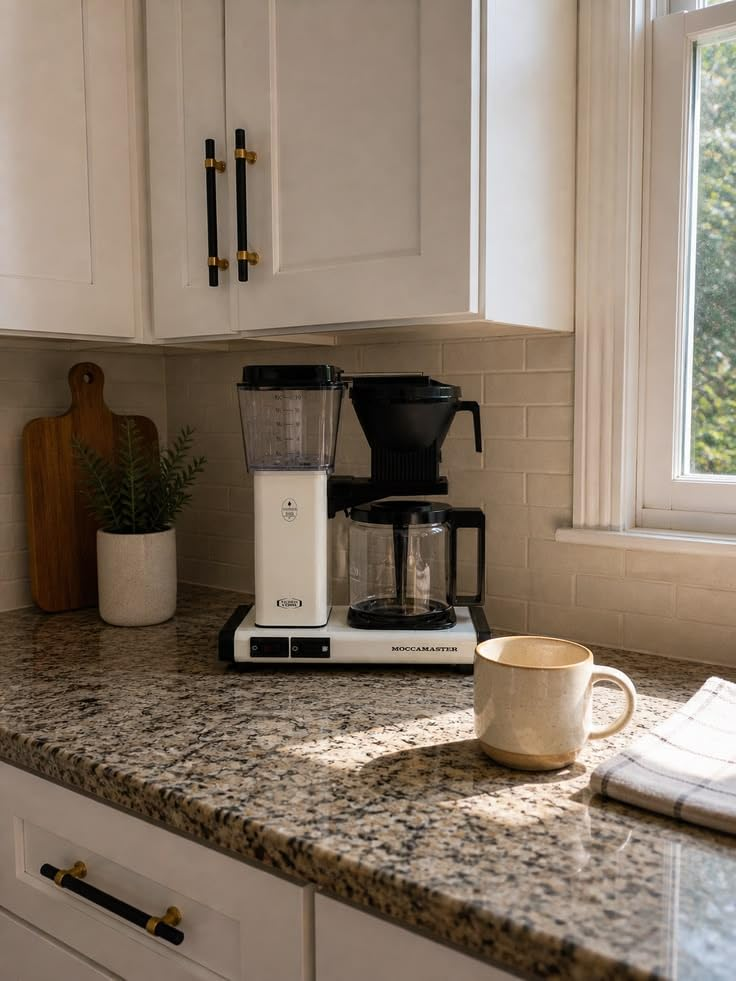
Moccamaster vs Bonavita vs Breville: Why Most Buyers Misread This Too Early
Once people learn the threshold exists, they usually shop by price or feature count instead — and end up comparing machines that solve completely different disagreements.
Bonavita gets you into SCA-certified territory for meaningfully less money, with a pre-infusion bloom setting Moccamaster doesn’t offer, in a shorter, more counter-friendly body. It’s also made in China with a shorter warranty window, and several reviewers describe the housing as noticeably more plastic-feeling under the hand. Breville’s Precision Brewer costs about the same as a Moccamaster but hands you full control — temperature, bloom time, flow rate, a dedicated Golden Cup preset, even a programmable start time. That control is exactly what some people want and exactly what exhausts others.
| Moccamaster KBGV Select | Bonavita | Breville Precision Brewer | |
|---|---|---|---|
| Typical price | ~$369 (varies by color) | ~$150–$350 | ~$300+ |
| Built | Handmade, Netherlands | Assembled in China | Designed with more electronics |
| Brew temp | 196–205°F, SCA-certified | 195–205°F, SCA-certified | Adjustable; has a Golden Cup preset |
| Customization | None — one switch, brew size only | Optional bloom/pre-infusion | Full: temp, bloom, flow rate, presets |
| Warranty | 5 years + lifetime repair | Typically around 2 years | Standard limited warranty |
| Best suited to | Taste and simplicity, long-term | Tight counters, tighter budgets | People who like to tinker |
None of these is the “best” machine in the abstract. They’re built for different mornings.
Who Should Buy a Moccamaster: Who Is Actually Inside This Problem
The person this actually solves a problem for drinks coffee daily, already spends real money on decent beans, and is tired of the outcome varying by the day for no reason they can find. They don’t want to bloom, program, or fine-tune anything before 7 a.m. — they want one switch and a result they can trust.
They’re also not always brewing for a crowd. Some mornings it’s one mug; some mornings it’s the whole house. That’s specifically why the Select variant exists instead of the standard KBGV — the flow rate and hotplate temperature adjust with the brew size, so a half pot hits the same standard as a full one instead of just being a smaller, weaker version of it.
Moccamaster KBGV Select Downsides: Where Wrong-Fit Begins
This is also where I’ll talk you out of it, if that’s what the facts say.
It stands 14 inches tall, and I’ve seen more than one buyer discover — after unboxing — that it doesn’t clear their upper cabinets. There’s no programmable start time; you flip the switch yourself, every single morning, forever. Nothing on it is dishwasher-safe. The filter basket, the handle, and the included scoop all feel thinner than a $369 price tag suggests, even though the metal housing and base are genuinely solid. And if you actually enjoy adjusting bloom time or flow rate, this machine will never let you.
| You’ll probably love it if… | You’ll probably regret it if… |
|---|---|
| You drink coffee daily and can taste “fine” versus “good” | You want it brewing before you’re even awake |
| You want café-level consistency without manual pour-over | Your cabinets sit low over the counter |
| You brew for one person some days, a full house on others | You want every part dishwasher-safe |
| You’d rather own one machine for a decade than three for two years each | You like tuning bloom time or flow rate yourself |
| The way it looks on your counter genuinely matters to you | $369 feels hard to justify for “just coffee” |
Moccamaster KBGV Select Review: The One Situation Where This Product Becomes Logical
If you’ve read this far and recognized your own kitchen in most of it, here’s what you’re actually buying.
The KBGV Select is hand-assembled in the Netherlands, a design lineage Technivorm has been refining since 1968. A copper boiling element brings water into that 196–205°F window fast and holds it there through a pump-free, natural-percolation brew — water pulses over the grounds rather than blasting through them, which is part of why it sounds nothing like a typical machine gurgling on a counter. The selector switch is the actual reason to choose “Select” over the base KBGV: it changes both flow rate and hotplate temperature depending on whether you’ve picked a half or full pot, so the smaller batch is brewed to its own correct parameters instead of just being a diluted version of the big one. An automatic drip-stop valve lets you pull the carafe mid-cycle for an early cup without a mess on the counter.
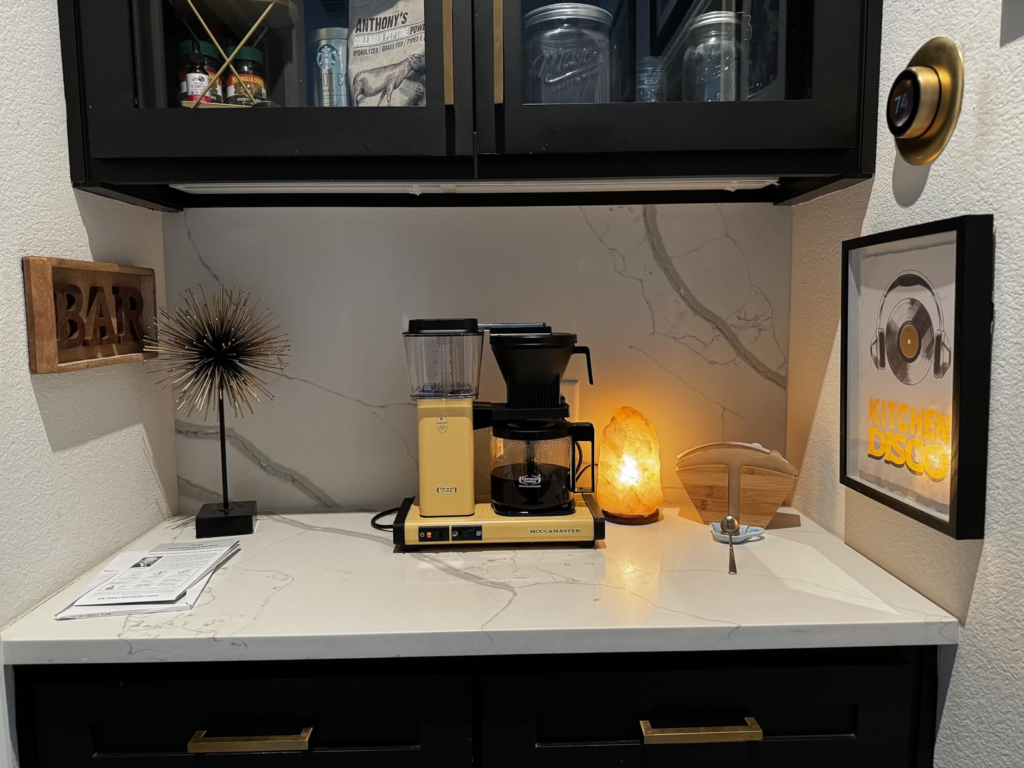
The Sandstone colorway shown here is one of Moccamaster’s roughly two-dozen standing color options — a neutral, permanent finish, not the same thing as the brand’s separate limited “Color of the Year” release (that’s Sorbet, a coral shade, for 2026). Worth knowing before you assume you’re looking at a seasonal drop.
| Spec | Detail |
|---|---|
| Model | KBGV Select, Sandstone — #53633 |
| Capacity | 1.25L / 40oz / 10 cups, switchable to a 4–6 cup half pot |
| Brew time | 4–6 minutes, either size |
| Brew temperature | 196–205°F via copper boiler |
| Hotplate temperature | 175–185°F, adjusts with brew size |
| Auto-off | Hotplate shuts off 100 minutes after brewing |
| Power | 120V, 1475W |
| Dimensions | 14″H x 12.75″W x 6.5″D |
| Weight | 6 lbs |
| Certifications | SCA Golden Cup approved, ECBC certified |
| Warranty | 5 years, plus lifetime repair service |
| Filter | #4 cone paper (compatible reusable metal filters also fit) |
| Price | ~$369 MSRP; varies roughly $309–$389 by color, and shows up on sale periodically |
Is the Moccamaster KBGV Select Worth It: What It Solves, What It Reduces, and What It Still Leaves to You
It solves the actual threshold problem — every cup, half pot or full, lands inside the temperature and timing window that makes decent beans taste like decent beans. It reduces the daily guessing game; you stop doing the “was it me or the machine” math.
It does not solve bad beans, a dull grinder, or a grind size you haven’t dialed in. It’s not magic — it’s a machine that finally gets out of the way and lets your beans do what you paid for. Hand-washing and periodic descaling stay on you.
| What it gets right | What it doesn’t |
|---|---|
| Hits the Golden Cup window every brew, half or full | No programmable timer — you flip the switch yourself |
| 5-year warranty plus a genuine lifetime repair policy | Filter basket, handle, and scoop feel thinner than the price implies |
| A full pot in under 6 minutes, quietly | No part of it is dishwasher-safe |
| Two switches, no screen, nothing to learn | No built-in bloom or pre-infusion setting |
| Roughly two dozen colors to actually match a kitchen | 14 inches tall — checks your cabinet clearance for you |
Moccamaster KBGV Select Review: Frequently Asked Questions
What’s the actual difference between the KBGV and the KBGV Select?
The base KBGV only brews a full pot. The Select adds a switch that changes both flow rate and hotplate temperature for a half pot, so a smaller batch hits the same Golden Cup standard instead of just being a weaker version of the full-pot cycle.
Is the KBGV the same as the KBG?
Functionally, yes — KBGV is the 120V US version, KBG is the 230V UK/EU version built for a different plug and voltage. Same machine underneath.
Does it turn off automatically?
The hotplate and heating element shut off 100 minutes after brewing finishes. The main power switch still has to be flipped off by hand.
Is it dishwasher-safe?
No. The carafe, basket, and lid are hand-wash only.
How long does it actually last?
It carries a 5-year warranty and a lifetime repair commitment from Technivorm, and it’s common to see owners still running the same unit a decade or more later.
How is it different from a Bonavita?
Bonavita costs less, adds a bloom setting, and has a smaller footprint — but it’s built with more plastic, made in China, and backed by a shorter warranty, typically around two years versus Moccamaster’s five.
What grind and filter does it need?
A medium to medium-coarse grind — think coarse sand — with a #4 cone paper filter, or a compatible reusable metal filter if you’d rather skip paper.
Is the Moccamaster KBGV Select actually worth $369?
If you drink coffee daily and can taste the gap between “fine” and “actually good,” yes — you’re paying once for a threshold problem that stops recurring. If you’re chasing convenience features or you’re genuinely price-sensitive, that same money solves a different problem better elsewhere.
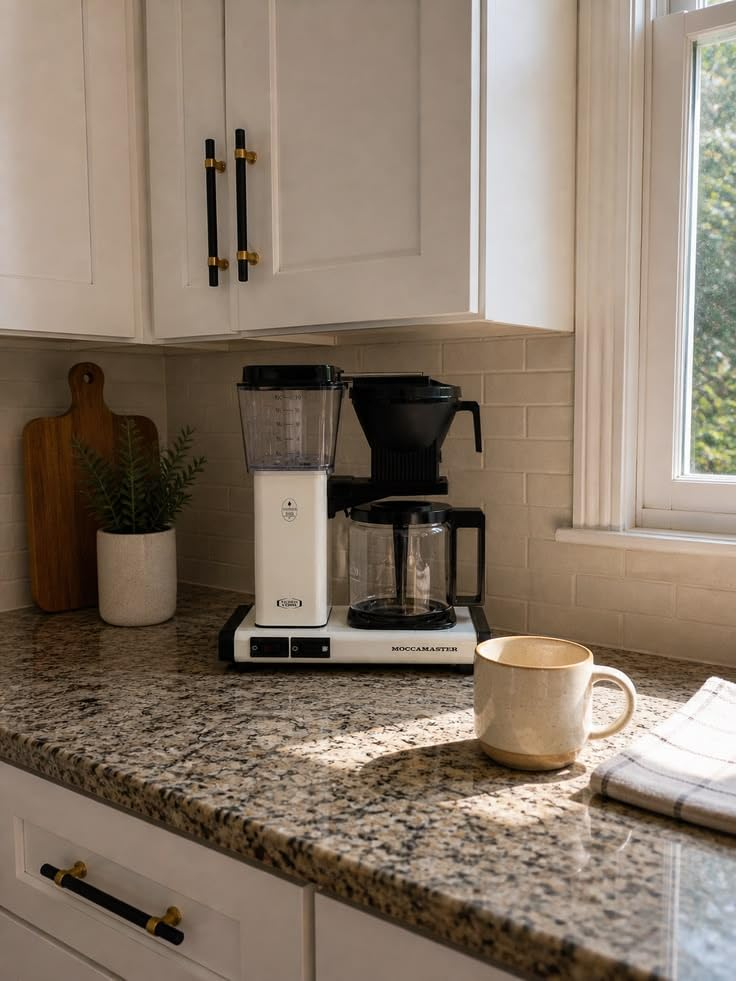
Moccamaster KBGV Select Verdict: Final Compression
Everything above comes down to one question: is your coffee inconsistent because of your beans, or because your machine never gets hot enough to use them properly? If you’ve been quietly suspecting it’s the second one, you already have your answer.
This is the Moccamaster KBGV Select in Sandstone — where that particular problem stops repeating.
Transparency Note:
This analysis is built on aggregated real-world experience.
It extracts what repeatedly holds, what breaks, and what users uncover only after living with the system—then shapes it into a clear model you can use immediately.
Think of it as structured experience, refined and presented so you don’t have to learn it the hard way.
“A quick note: Don’t believe the star ratings, but trust personal experience. This article is a compilation of collected experiences.”