iFi Uno Review: Your Laptop Is Producing Sound. It Is Not Producing Audio.
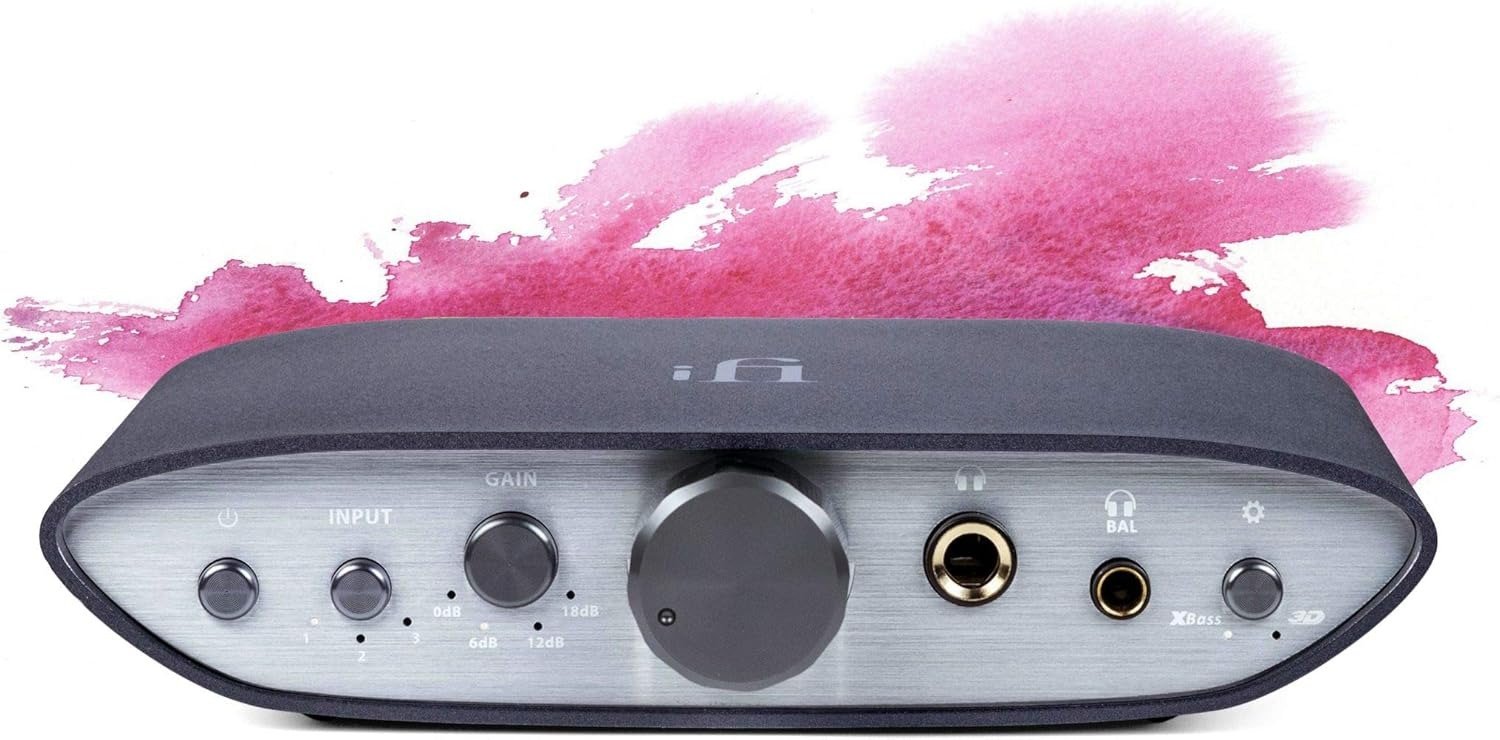
IFI UNO
You have decent headphones. You plug them into your laptop or PC. The music plays. Vocals are there, instruments are present, the volume is sufficient. Everything functions.
But something is blurred. There’s a ceiling you keep reaching and can’t push past. More volume doesn’t fix it. Switching tracks doesn’t fix it. It doesn’t hurt — it just never quite satisfies.
That blur is not your headphones. It’s the integrated audio chip inside your machine doing the minimum it was designed to do: produce a signal, not a soundstage.
The Result Looks Fine. The Problem Isn’t.
The integrated DAC on a typical laptop or desktop PC was never built for audio quality. It was built for compliance — to pass a signal through at minimum cost, minimum space, and zero interference guarantee.
The result is a floor, not a feature. You get clean enough sound for calls, for background playback, for notification tones. You get nothing that communicates what a well-recorded track actually contains: depth, separation, the space between instruments, the low-end weight that belongs to the mix.
Most people assume they’re hearing the headphones. They are not. They are hearing the weakest link before the headphones, and that link is the onboard chip converting digital signal to analog — quietly failing in ways that measurements alone don’t fully expose.
The problem never announces itself. It simply limits every listening session you’ve ever had at that machine, session after session, without a word.
What You’re Actually Feeling but Not Naming
You’ve been listening to good music through a constrained aperture.
When people describe their frustration here, they rarely name it correctly. They say things like “the sound feels flat” or “it’s missing something” or “I know these headphones are better than this.” That is the language of a listener detecting source interference without knowing the term exists.
What they are describing is source compression: the point where the digital-to-analog conversion stage adds noise, reduces dynamic range, collapses imaging, and strips the upper-harmonic layer from audio that deserved better. The headphones reproduce exactly what they receive. If what they receive is degraded at the source, the best driver in the world cannot compensate.
This is the specific problem the iFi Uno exists to solve. Not headphone inadequacy. Not streaming quality. Source compression — the quiet degradation that lives inside every device built to “good enough” audio standards.
The Hidden Mechanism Behind the Miss
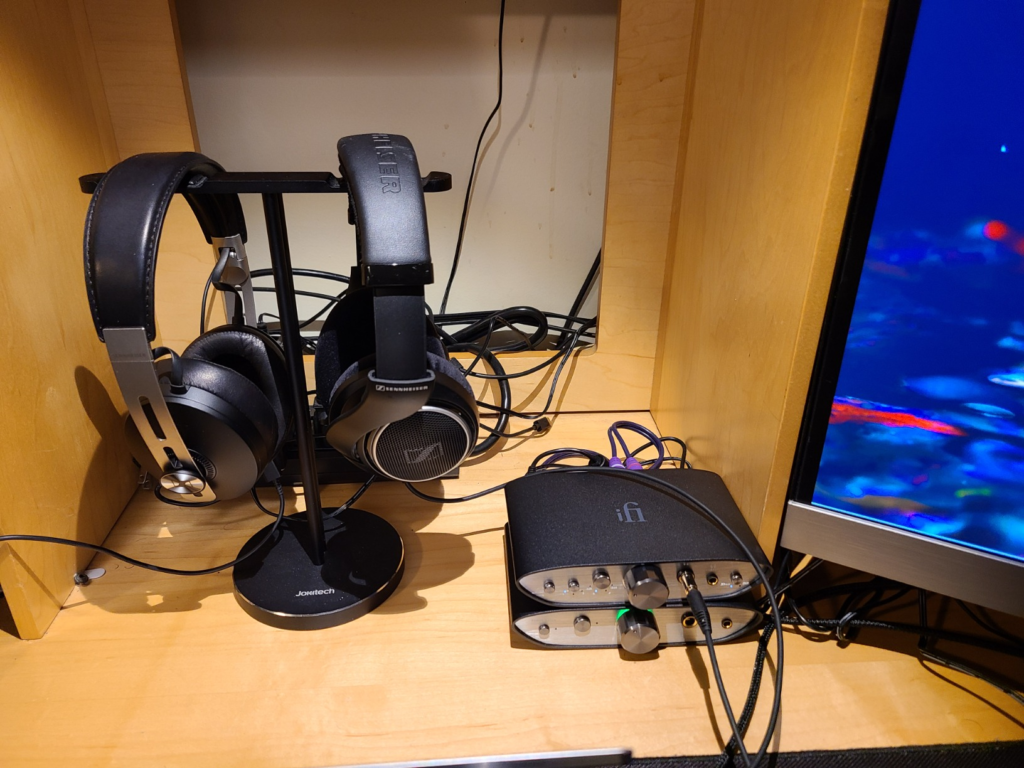
The iFi Uno uses an ESS ES9219MQ DAC chip — a Sabre HyperStream III implementation with Quad DAC+ architecture. This is not the chip class your onboard audio uses. It is not even in the same category.
The practical consequence is this: where your integrated chip converts a digital signal with measurable noise, harmonic distortion, and imaging collapse, the Uno converts the same signal with a signal-to-noise ratio of ≥113 dBA at the headphone output, a THD+N figure of ≤0.02%, and an output impedance of less than 1 ohm — which matters enormously for IEM compatibility and frequency response accuracy.
The analog circuitry is equally intentional. Volume control operates at the analog level, not the digital level — meaning the signal path is kept clean before it reaches the headphone output stage. The DRE (Dynamic Range Enhancement) feature is implemented in analog, not digital processing, which preserves resolution where digital alternatives routinely sacrifice it.
The result is a chain where the signal leaves the USB connection, is converted with precision, and arrives at your ears through an amplification stage that was designed specifically for headphone loads — not as an afterthought inside a general-purpose machine.
| Technical Parameter | iFi Uno | Typical Laptop Onboard |
|---|---|---|
| DAC Chip | ESS ES9219MQ (HyperStream III) | Generic codec (Realtek, etc.) |
| SNR (Headphone Out) | ≥113 dBA | ~90–95 dB (typical) |
| THD+N | ≤0.02% | Often 0.1–1%+ |
| Output Impedance | <1Ω | 10–50Ω (typical) |
| Max Output Power (32Ω) | 211mW | 10–30mW (typical) |
| Hi-Res PCM Support | Up to 32-bit/384kHz | Usually 16-bit/48kHz |
| DSD Support | DSD256 native | Rarely or not supported |
| MQA Support | Yes | No |
| Analog Volume Control | Yes | No (digital only) |
| Frequency Response | 10–80kHz (–0.5dB) | 20–20kHz (limited) |
These are not marketing numbers. They represent the actual engineering gap between a device built for audio and a device built to include audio.
The Threshold Where the Outcome Quietly Breaks
The Uno’s performance is not unconditional. There is a specific boundary where what it does well stops, and understanding that boundary is the difference between a satisfied buyer and a regretful one.
The impedance ceiling is real. The Uno delivers 211mW at 32 ohms and 39mW at 300 ohms. That 39mW figure matters. Headphones with impedances at 250–300 ohms and low sensitivity ratings — the Sennheiser HD 800, Hifiman Arya, Audeze LCD series — will not receive adequate power headroom. Multiple reviewers who tested the Uno with such demanding headphones confirmed the same outcome: not enough headroom, especially on quiet recordings.
The volume knob has a known zone. At very low volume levels — the bottom 2–3% of knob travel — there is a slight channel imbalance. This is not unique to the Uno and appears on similarly priced devices in this class, but it is present. Listeners who regularly use efficient IEMs at whisper-quiet volumes will encounter it.
The sweet spot is real too. Between approximately the 9 o’clock and 2 o’clock positions on the volume dial, the Uno performs with the coherence and clarity that justifies every claim made in its favor. Above 2 o’clock, the treble can sharpen into territory that fatigues. Below 9 o’clock, that channel imbalance enters.
Background hiss with hyper-sensitive IEMs is detectable. The Uno’s S-Balanced output on the 3.5mm jack reduces noise and crosstalk considerably relative to a standard output. But listeners with very sensitive IEMs — those rated below 16 ohms with sensitivities above 110 dB/mW — may detect a low-level noise floor during silent passages.
| Use Case | Outcome at This Threshold |
|---|---|
| 16–80Ω headphones (most consumer/enthusiast cans) | Strong performance with good headroom |
| 250–300Ω high-impedance headphones | Marginal headroom; quiet recordings feel underpowered |
| Efficient IEMs (>100 dB/mW sensitivity) | Slight background hiss detectable; use Low PowerMatch |
| Volume below ~9 o’clock | Minor channel imbalance possible |
| Volume above ~2 o’clock | Treble can sharpen toward fatiguing |
| RCA preamp output to powered speakers | Functional, but EQ modes and DRE do not carry through |
The EMI sensitivity is also documented. The Uno’s polymer chassis offers no shielding against RF interference from nearby devices. If your setup involves strong Wi-Fi routers, older smartphone RF, or certain USB hubs in close proximity, occasional noise injection is possible.
Why Most Buyers Misread This Too Early
There are two comparison traps that cost people money.
The dongle comparison trap. A segment of buyers compares the Uno against $20–$50 USB dongle DACs — small adapters that plug directly into a laptop’s USB port. The logic goes: both convert digital to analog, both are inexpensive, the dongle is more portable. The dongle wins on portability. It loses on almost everything else that makes sustained listening satisfying. The Uno’s analog volume control, the physical gain switch with DRE, the RCA preamp output, the actual desktop weight and stability, the soundstage behavior — none of these are features the dongle category competes with honestly. They are different device categories sharing a price bracket.
The “it’s just a DAC” reductionism trap. Some buyers assume that at $79, the Uno cannot possibly deliver anything meaningfully different from what they already have. This assumption is wrong in a specific, documentable way. The ES9219MQ chip inside the Uno is the same class of silicon used in devices sold at two to three times this price. iFi was able to deliver it at $79 by reducing physical size, eliminating Bluetooth, removing a balanced headphone output, and using a polymer chassis. The core conversion and amplification quality was not reduced to match the price.
The “it does everything” fantasy trap. Some buyers purchase the Uno expecting it to drive any headphone they own. It does not. The 39mW ceiling at 300 ohms is a hard technical constraint. If your headphones are power-hungry, the Uno will expose that limit audibly. This is not a defect — it is an honest engineering trade-off at this price point. The correct response is to match the device to the load it was built to drive, not to assume all headphones receive equal treatment.
Who Is Actually Inside This Problem
The iFi Uno solves a real and specific problem for a real and specific listener.
You are inside this problem if your daily listening setup involves a laptop or desktop PC, your headphones or IEMs have an impedance between 16 and 200 ohms, your typical listening is through streaming services (Tidal, Apple Music, Spotify), and you have started noticing a gap between what you know your headphones can do and what you’re actually hearing at your desk.
You are also inside this problem if you run powered desktop speakers and want a device that handles both headphone output and a clean preamp signal to your monitors — the Uno’s rear RCA output makes this dual-use workflow available without additional hardware.
You are inside this problem if you use a gaming PC and want audio that functions in a movie, music, or gaming context without committing to a dedicated gaming soundcard. The three analog EQ modes — Music, Movie, Game — are not dramatic transformations, but they are real, analog-implemented adjustments that cost nothing in resolution.
| Listener Profile | Uno Fit |
|---|---|
| Laptop user with 16–200Ω headphones | Strong fit |
| Desktop PC user upgrading onboard audio | Strong fit |
| Console gamer (PS5, Nintendo Switch) | Confirmed fit — USB OTG tested |
| iPad / iPhone user with USB-C adapter | Confirmed fit — plug-and-play |
| Powered speaker user needing a preamp | Functional fit via RCA output |
| Android mobile user | Works with USB OTG cable |
| User with 250–300Ω planar/dynamic headphones | Marginal — see power output threshold |
| User with hyper-sensitive IEMs < 16Ω | Minor hiss risk — test before committing |
Where Wrong-Fit Begins
There are listeners who will buy the Uno and regret it. Naming them precisely is more useful than vague warnings.
If you own headphones with impedance above 200 ohms and low sensitivity — the HD 800S, the Abyss AB-1266, the Audeze LCD-4 — the Uno is the wrong device. It will play them. It will not drive them correctly. The difference will be audible and the dissatisfaction will be permanent.
If your primary use case is balanced headphone output — 4.4mm or 2.5mm balanced termination — the Uno does not have a balanced headphone output. The S-Balanced output on its 3.5mm jack reduces noise and crosstalk compared to a standard single-ended output, but it is not true balanced amplification. If you need true balanced output, this device is not the answer regardless of price.
If you need a dedicated preamp with a fixed line-level output — for connecting to a power amplifier with its own volume control — the Uno’s RCA output is variable, controlled by the analog volume knob. This means: if you plug headphones into the front while the RCA is connected to an amplifier and forget to turn down the volume knob, you will apply maximum gain to your external amp. It is a design choice with a practical risk for users who switch between headphone and speaker listening frequently.
If you are an audiophile expecting the Uno to compete with devices above $200, you will encounter its limits in staging precision, imaging focus at complex passages, and overall technical resolution. The Uno performs above its price but not above its category. That distinction matters.
The One Situation Where This Product Becomes Logical
You listen to music, games, or films through headphones at a desk. Your source is a PC, Mac, laptop, gaming console, or mobile device. Your headphones have an impedance between 16 and 200 ohms. You are producing a signal from an integrated audio chip that was never designed to do what you are asking it to do.
In that situation, the iFi Uno replaces the single weakest point in your entire listening chain with a device built specifically to do that job well. The improvement to your sound experience is audible — better detail retrieval, lower-frequency extension, improved soundstage, more controlled transient response — and it is not subtle.
At $79, you are getting an ES9219MQ ESS Sabre DAC, an analog volume control with DRE, three analog EQ presets, S-Balanced 3.5mm output, RCA preamp output, full plug-and-play compatibility across Windows, macOS, iOS, Android, and consoles — and 211mW of headphone output at 32 ohms with a sub-1-ohm output impedance.
That specification sheet exists at this price because iFi made deliberate trade-offs: no balanced headphone output, no Bluetooth, no metal chassis, no dedicated power input beyond USB-C. If those omissions don’t disqualify it for your use case, you are looking at the most competent desktop DAC/amp available at this price point.
Specifications Reference Table
| Specification | iFi Uno |
|---|---|
| DAC Chip | ESS ES9219MQ (Sabre HyperStream III) |
| Digital Input | USB-C |
| Supported Formats | PCM 32-bit/384kHz, DSD256, MQA |
| Headphone Output | 3.5mm S-Balanced |
| RCA Output | Variable, 2V max |
| Output Power (32Ω) | ≥211mW |
| Output Power (300Ω) | ≥39mW |
| Output Impedance (HP) | <1Ω |
| SNR (HP) | ≥113 dBA |
| THD+N (HP) | ≤0.02% |
| SNR (RCA Line) | ≥119 dBA |
| THD+N (RCA Line) | ≤0.03% |
| Channel Separation | ≥80dB (1kHz/600Ω) |
| Frequency Response | 10–80kHz (–0.5dB) |
| EQ Modes | Music / Movie / Game (all analog) |
| PowerMatch (Gain) | 2 levels: Low / High (+6dB) |
| Volume Control | Analog knob (also power switch) |
| Power Input | USB-C 5V / 0.5A |
| Dimensions | 88 × 81 × 26 mm |
| Weight | 92g |
| Chassis | Mineral-filled polymer + aluminum front |
| OS Compatibility | Windows, macOS, iOS, Android |
| Warranty | 12 months |
| Price | $79 USD |
What It Solves, What It Reduces, and What It Still Leaves to You
What the Uno solves completely: The source quality gap between an integrated audio chip and a purpose-built DAC/amp. The resolution ceiling you felt without being able to name it. The output impedance mismatch that degrades frequency response accuracy on IEMs and low-impedance headphones. The lack of a clean analog preamp path to powered desktop speakers.
What the Uno reduces meaningfully: Volume control noise compared to digital attenuation. Harmonic distortion at the analog stage. Crosstalk between channels. Listener fatigue during extended sessions within the sweet-spot volume range.
What the Uno still leaves to you: Driving high-impedance, low-sensitivity headphones. Balanced headphone output. EMI shielding in dense RF environments. Fixed line-level preamp behavior when switching between headphone and speaker listening.
| What Changes After Adding the Uno | What Remains Your Responsibility |
|---|---|
| Source resolution (DAC quality) | Matching headphone impedance to output power |
| Noise floor at the source | Protecting sensitive IEMs from volume accidents |
| Dynamic range of playback | Managing RCA/headphone output switching |
| Analog volume control precision | EMI environment (router placement, USB hub quality) |
| Hi-res format support | Driver installation on Windows (required) |
| Platform versatility | Choosing the right EQ mode for your headphones |
The Uno does not complete your audio chain. It repairs the broken section at the start of it.
Final Compression
You are not looking for perfection. You are looking for the specific upgrade that fixes the specific gap you’ve been listening through.
If the gap is a PC or laptop feeding decent headphones through a chip that was never designed for them, that gap is exactly what the iFi Uno was built to close.
The Uno’s performance punches well above its $79 price point, with the ESS Sabre DAC implementation and analog EQ modes delivering refinements typically expected from pricier gear. The volume sweet spot is real, the power ceiling is real, and both are knowable before you buy — which means your decision, at this point, is not vague.
If your headphones are between 16 and 200 ohms, your source is a PC or console, and you have been hearing the symptom described in this article — the Uno is where the correction begins.
Frequently Asked Questions
| Question | Answer |
|---|---|
| Does the iFi Uno work without installing drivers? | On macOS, iOS, Android, and consoles it is fully plug-and-play. On Windows, a driver download from iFi’s website is required for full functionality, including firmware updates. Without the driver, basic audio playback may still work, but firmware maintenance and format control require the correct driver installed. |
| Can the iFi Uno drive high-impedance headphones like the Sennheiser HD 650? | The Uno can drive headphones like the HD 650 in high-gain mode with adequate headroom for most listening levels. However, headphones at 250–300 ohms with very low sensitivity will leave limited headroom on quiet recordings. The Uno is best matched to headphones between 16 and 200 ohms. |
| What is S-Balanced and does it actually do anything? | S-Balanced is iFi’s proprietary circuit implementation on the 3.5mm jack that reduces crosstalk and noise compared to a standard single-ended output. It does not provide the full power advantage of true balanced amplification, but it measurably improves channel separation and noise floor compared to a conventional single-ended output at this price. |
| Do the EQ modes degrade audio quality? | No. All sound modes on the Uno are analog by design rather than digital, so there is no loss of sound quality. The three modes — Music, Movie, Game — are analog frequency shaping applied without touching the digital signal path. Resolution is preserved in all three modes. |
| Can the iFi Uno be used as a preamp for powered speakers? | Yes. The rear RCA output provides a variable-level analog output controlled by the front volume knob. This allows the Uno to function as a desktop preamp for powered monitors or active speakers. Note: the EQ modes and DRE do not carry through the RCA output — they are active only at the headphone jack. |
| What happens if I plug headphones in while the RCA output is connected to an amplifier? | If you plug headphones into the front output, the RCA output is muted. [Headfonia](https://www.headfonia.com/ifi-audio-uno-review/) However, the volume knob remains active. iFi’s design mutes the RCA when headphones are inserted, but you should turn the volume down before switching to avoid applying maximum gain to the external amplifier upon reconnection. |
| Is there audible hiss with sensitive IEMs? | With sensitive IEMs, there is a slight background hiss detectable during quieter audio — noticeable enough to mention, but not enough to make them unlistenable. [hifioasis](https://www.hifioasis.com/reviews/ifi-uno-review/) The S-Balanced output reduces this compared to standard outputs. Using Low PowerMatch mode further minimizes the noise floor with efficient IEMs. |
| Does it work with gaming consoles? | Yes. The iFi Uno has been confirmed as plug-and-play on PlayStation 5 and Nintendo Switch via USB. No driver installation is required on these platforms. |
| What is the channel imbalance issue at low volumes? | At very quiet listening levels there is a slightly uneven channel balance. [HiFi Oasis](https://www.hifioasis.com/reviews/ifi-uno-review/) This is a characteristic of the analog volume pot at the bottom 2–3% of its travel range, and is common to this price tier. Normal listening volume is unaffected. |
| How long is the warranty? | The iFi Uno comes with a 12-month limited warranty through iFi Audio, subject to local reseller laws. |
Transparency Note:
This analysis is built on aggregated real-world experience.
It extracts what repeatedly holds, what breaks, and what users uncover only after living with the system—then shapes it into a clear model you can use immediately.
Think of it as structured experience, refined and presented so you don’t have to learn it the hard way.
“A quick note: Don’t believe the star ratings, but trust personal experience. This article is a compilation of collected experiences”