De’Longhi La Specialista Arte Evo Review: The Shot Looks Right, but the Real Decision Starts Earlier
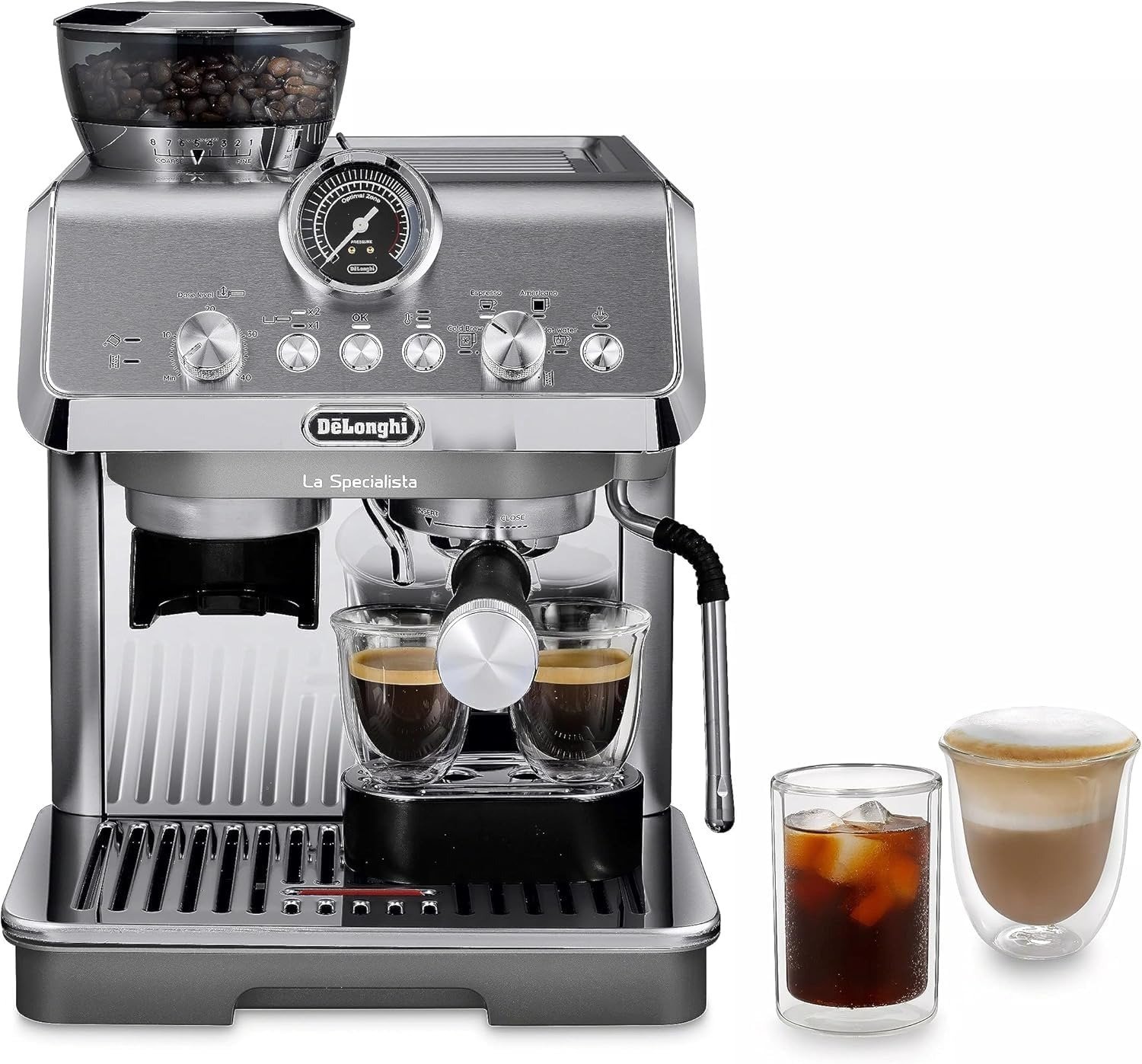
DE’LONGHI LA SPECIALISTA ARTE EVO
I think most people buy the wrong espresso machine for one ugly reason: they are not chasing coffee. They are chasing relief.
Relief from the stale pod taste. Relief from the syrupy café bill. Relief from that half-formed irritation that hits when your kitchen looks polished, your mugs are stacked, your beans smell alive, and yet the ritual still feels cheap.
That is where the De’Longhi La Specialista Arte Evo becomes interesting. Not because it promises magic. Because it sits in a very specific place between two bad outcomes: a machine too simple to feel satisfying, and a machine demanding enough to turn your counter into a part-time apprenticeship. De’Longhi positions it as a compact semi-automatic machine with an integrated conical burr grinder, three infusion temperatures, a 15-bar pump, four drink presets, and cold extraction in under five minutes. Independent reviews largely agree on the hot espresso side: it can make genuinely good espresso and strong milk drinks, but the cold-brew promise is much shakier.
The Result Looks Fine. The Problem Isn’t.
The first trap is visual.
A machine like this can produce a handsome shot quickly enough to make you think the decision is obvious. Stainless steel face. Compact footprint. Built-in grinder. Steam wand. Barista kit. It looks like control. It sounds like control. On a counter, it changes the room immediately: instead of a lonely appliance shoved under a cabinet, it reads like a deliberate coffee station. The proportions help. At roughly 14.37 x 11.22 x 15.87 inches, it is noticeably easier to place in a modern kitchen than bulkier all-in-one rivals, especially if you want it near a grinder corner, under wall cabinets, or framed beside a cutting board and cups rather than dominating the whole surface.
But the real problem is not whether the shot looks café-worthy. It is whether the machine removes enough friction to keep you using it after the honeymoon week. That is where most buyers misdiagnose themselves. They tell themselves they want “better espresso.” Often what they actually want is a cleaner, steadier morning sequence—grind, tamp, pull, steam—without the chaos tax of separate equipment, endless dialing-in, and constant second-guessing. That distinction matters more than the pressure gauge ever will. Reviews praising the Arte Evo tend to focus on exactly that: value, compactness, ease of use, and strong espresso for the category. The harshest criticism shows up when people expect deeper grinder flexibility or hobbyist-level control from the built-in system.
What You’re Actually Feeling but Not Naming
The feeling is not “I want a nicer machine.”
It is this:
You want the kitchen to stop resisting you.
You want the cup to stop being random.
You want the ritual to feel expensive without behaving like a second job.
That is why machines in this segment sell so hard. They are not purchased on crema alone. They are purchased at the collision point of three tensions:
| What you think you’re buying | What you’re actually trying to fix | Why it matters |
|---|---|---|
| Better espresso | Less workflow drag | You use it more often |
| A premium machine | A calmer morning sequence | The habit survives |
| Café-style drinks | Fewer variables to fight | Regret drops after week one |
The Arte Evo is built for that psychology. The integrated grinder, dosing/tamping aids, preset recipes, and temperature options all exist to reduce the number of decisions per drink while still letting you feel involved. That balance is the product. Not the cold brew badge. Not the stainless finish. The balance.
The Hidden Mechanism Behind the Miss
Here is the hidden variable most buyers miss: this machine is not mainly about espresso quality in isolation. It is about how much manual control you can tolerate before the routine starts to rot.
That sounds abstract until you live it.
A fully manual setup can make you feel powerful for ten days and exhausted by day thirty. A superautomatic can feel convenient on day one and emotionally flat by month two. The Arte Evo tries to sit in the narrow middle: enough ritual to make the drink feel earned, enough guidance to keep you from burning time every morning.
Technically, that balance comes from the built-in conical burr grinder with eight settings, three infusion temperatures, low-pressure pre-infusion before extraction, a thermoblock heating system, and a manual steam wand designed for microfoam. That package is why reviewers often call it strong for beginners and solid for buyers who want a guided semi-automatic experience. It is also why critics hit the same pressure points: eight grind settings can feel limiting, the grinder is not as versatile as a separate high-end unit, and the cold-brew mode often fails to match what cold-brew lovers mean by actual cold brew.
The Threshold Where the Outcome Quietly Breaks
This machine has a threshold, and once you see it, the entire decision becomes easier.
I would call it the Control-Without-Tinkering Threshold.
Below that threshold, the Arte Evo makes deep sense. You want beans, steam, tamping, and extraction to feel real. You do not want pods. You do not want a dead-button experience. But you also do not want to spend your evenings hunting micron-level grind changes, replacing accessories, or building a Frankenstein workflow around separate tools.
Above that threshold, the illusion breaks.
If you are the kind of buyer who will obsess over narrow grind windows, chase café-lab precision, resent stepped adjustments, or compare every shot to a separate grinder paired with a more tweakable machine, the eight-setting grinder becomes a ceiling instead of a convenience. Multiple user discussions and reviews land on the same theme: once your expectations move toward hobbyist precision, the integrated grinder stops feeling like freedom and starts feeling like a fence.
There is a second threshold too, and it is colder.
If you are buying this primarily for the under-five-minute cold brew claim, slow down. De’Longhi explicitly markets that feature and says it was developed with the Specialty Coffee Association, but Wired’s testing found the resulting cup weak, bitter, watery, and tepid, and even Wired’s broader cold-brew recommendations later called the fast cold-brew function disappointing despite good espresso performance.
That does not make the machine misleading across the board. It just means the threshold is real:
- Hot espresso-first buyer: usually inside the fit.
- Milk-drink buyer wanting real steam practice: often inside the fit.
- Cold-brew-first buyer: at risk of disappointment.
- Precision-obsessed tinkerer: often outside the fit.
Why Most Buyers Misread This Too Early
Because they shop by features that sparkle on a product page and ignore the fatigue those features are supposed to prevent.
A built-in grinder sounds like a luxury. Sometimes it is. Sometimes it is simply a commitment to one range of adjustability. A steam wand sounds empowering. It is—but only if you want to learn milk texture instead of pressing a fully automatic button. Cold extraction sounds like bonus versatility. It may be, but only if your standards for cold brew are forgiving.
This is where sloppy comparisons ruin the decision. People place machines like this next to cheaper espresso units and say, “Why pay more?” Or they place it next to more serious enthusiast setups and say, “Why accept less control?” Both comparisons can be technically true and practically useless.
The machine is not built to win either extreme. It is built to compress a messy middle.
That middle is huge. And underserved.
Who Is Actually Inside This Problem
You are the real buyer if three things are true.
First, you care about the ritual. Not in a romantic, coffee-poetry way. In a lived, tactile way. Beans into hopper. Portafilter in hand. Steam hissing. Cup warming. You want the kitchen to feel like something is actually happening.
Second, you do not want a sprawling setup. The Arte Evo’s compact body, integrated grinder, removable tray, dishwasher-safe detachable parts, and guided barista kit all push toward a neater footprint and easier cleanup, which is exactly why reviewers keep describing it as high value for smaller kitchens or first serious setups.
Third, your main drinks are hot espresso drinks—straight shots, americanos, cappuccinos, lattes—not specialty cold brew you plan to judge against a long-steep immersion method. De’Longhi provides presets for Espresso, Americano, Cold Brew, and Hot Water, but the strongest external praise consistently centers on espresso and milk performance, not the cold-brew mode.
If that sounds like you, the machine starts to read differently. Not as a compromise. As a filter.
It filters out the wrong kind of complexity.
Where Wrong-Fit Begins
Wrong-fit begins the moment you expect this machine to solve identity conflict.
If you want convenience and laboratory control at the same time, this is where friction starts.
If you want true enthusiast grinder flexibility, retention management, broad adjustability, and upgrade freedom, the integrated grinder becomes the part you eventually outgrow. If you want one-button milk and no learning curve, the manual steam wand becomes a burden instead of a pleasure. If you want rich, mature, slow-developed cold brew flavor as a primary use case, this machine’s fast extraction system may feel like a shortcut that never quite lands. Those are not edge-case complaints. They are recurring boundaries found across professional reviews and user discussions.
Here is the cleanest way I can put it:
| Buyer type | Likely outcome |
|---|---|
| Wants real espresso ritual without building a full setup | Strong fit |
| Wants cappuccinos and lattes with manual steam control | Strong fit |
| Wants compact all-in-one for a polished kitchen | Strong fit |
| Wants hobbyist grinder precision and upgrade path | Weak fit |
| Wants cold brew to be the star feature | Weak fit |
| Wants zero learning curve | Weak-to-misaligned fit |
That table matters more than any spec list because regret rarely begins with quality alone. It begins with mismatch.
The One Situation Where This Product Becomes Logical
The De’Longhi La Specialista Arte Evo becomes logical when your breakpoint is not espresso quality by itself, but espresso quality relative to effort, counter space, and routine friction.
That is the moment the machine stops looking overpriced to some people and starts looking unusually well judged to the right buyer.
I would place it in one very specific scene. A medium-size kitchen. Not a giant one. Clean counters. Stainless or matte hardware. A corner near an outlet, with enough room on the right to work the portafilter and enough clearance above for the bean hopper. A pair of cups nearby. Maybe a knock box tucked out of sight. Not a café cosplay altar. Just a disciplined station. In that environment, the Arte Evo makes visual and practical sense because its compact frame and metal finish read like intentional equipment rather than countertop clutter. The machine is easy to present well: flush against the backsplash, cups to the left, milk pitcher and tamper kit below or beside it, leaving the front area open so the steam wand movement and shot pulling feel uncramped.
And functionally, the logic holds. The official feature set gives you fresh grinding, temperature control, manual steaming, and quick preset access; reviewers broadly found the espresso performance strong for the class, with some calling it one of the best-value entry-level bean-to-cup or all-in-one machines they had tested.
If this is the condition you are actually dealing with, this is the logical next step
What It Solves, What It Reduces, and What It Still Leaves to You
What it solves is the gap between cheap convenience and fussy ambition.
What it reduces is guesswork, setup sprawl, and the nagging sense that making a proper drink at home must either be trivial and soulless or impressive and exhausting. The barista kit, guided workflow, built-in grinder, and compact body all exist to reduce mess and lower entry friction without erasing the physical satisfaction of making the drink yourself.
What it still leaves to you is judgment.
You still need decent beans. You still need to learn how milk behaves under a manual wand. You still need to accept that stepped grinder adjustment is not infinite control. You still need to understand that “cold brew” on a spec sheet is not always the same thing as the round, deep profile people expect from long-steep methods. In other words, the machine can shrink the mess, not abolish reality.
That honesty is exactly why the fit can be strong. Machines create regret when they pretend to erase trade-offs. This one makes more sense when you see the trade-off clearly.
Final Compression
The De’Longhi La Specialista Arte Evo is not the right machine for everyone, and that is the reason it becomes powerful for the right buyer.
Buy it for real espresso, a tighter routine, compact elegance, and hands-on drinks without hobbyist sprawl. Do not buy it because the cold-brew label hypnotized you, or because you secretly want grinder-level precision that belongs to a different class of setup. Officially, it offers eight grind settings, three infusion temperatures, a 15-bar pump with pre-infusion to 9-bar extraction, manual steaming, four presets, and a compact stainless build. In practice, the strongest outside verdict is simple: hot coffee performance is good to excellent for the category; cold brew is the weak spot; the grinder is good enough until your standards cross into enthusiast territory.
That is the threshold.
Cross it knowingly, and the machine feels calm, handsome, and strangely relieving. Cross it blindly, and you will start blaming the machine for a mismatch that was there before the first shot even hit the cup.
Transparency Note:
This analysis is built on aggregated real-world experience.
It extracts what repeatedly holds, what breaks, and what users uncover only after living with the system—then shapes it into a clear model you can use immediately.
Think of it as structured experience, refined and presented so you don’t have to learn it the hard way.
“A quick note: Don’t believe the star ratings, but trust personal experience. This article is a compilation of collected experiences”