CHEF iQ SMART COOKER REVIEW: THE TIMER SAID DONE. MY CHICKEN WASN’T.
CHEF iQ SMART COOKER
You pull the chicken out. The screen says done. The timer backs it up. You cut into it anyway, just to check — and there it is, that faint pink near the bone that makes you doubt a $200 appliance before you doubt your own cooking.
That’s not really a CHEF iQ problem. It’s every pressure cooker’s problem. The only question worth asking is whether the machine you bought was actually built to notice.
CHEF iQ SMART COOKER REVIEW: WHEN “DONE” ON THE SCREEN ISN’T DONE ON YOUR PLATE
Every electric pressure cooker on the market runs on the same quiet assumption: follow the recipe’s time and pressure, and you’ll get the recipe’s result. Most days that’s close enough. Then you swap in a colder cut of meat, a slightly bigger chicken breast, or forgot your beans never actually soaked, and “close enough” turns into a dry, chewy, or under-set dinner you’re now serving to people.
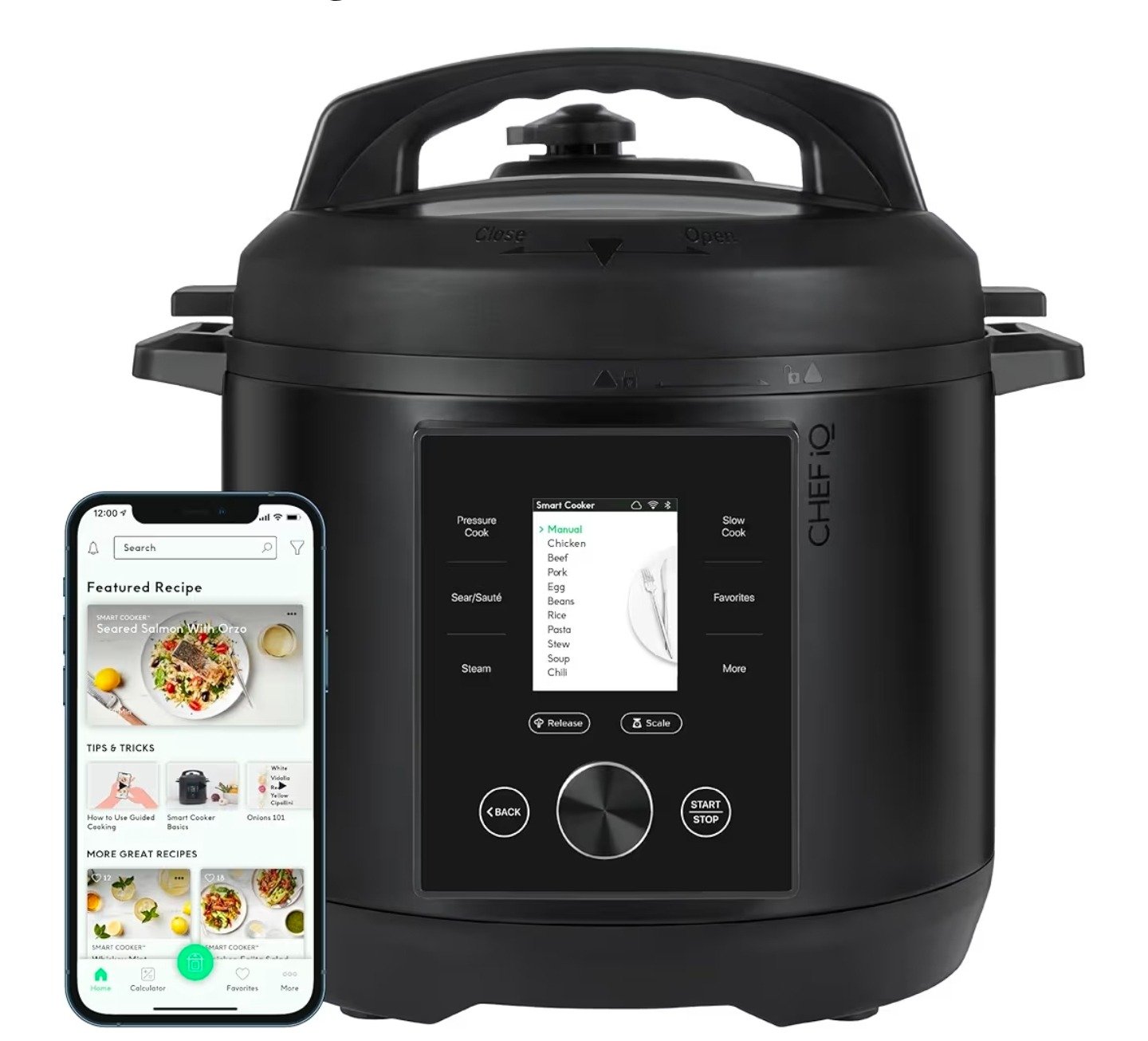
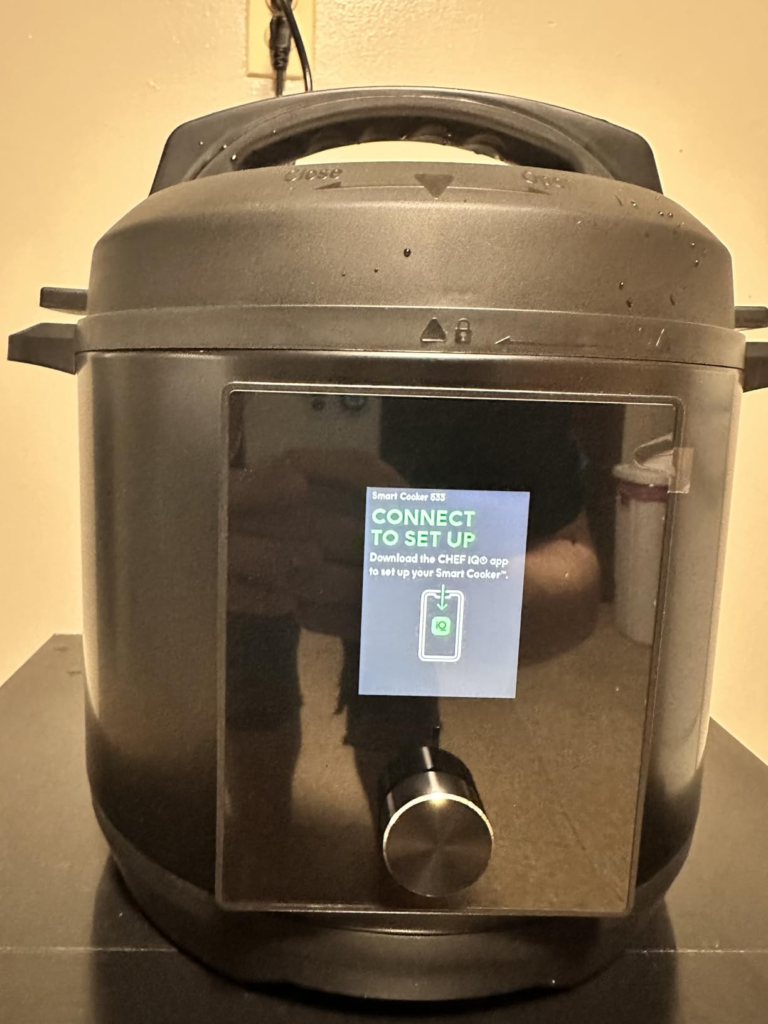
The CHEF iQ Smart Cooker holds a 6-quart capacity and runs on 1,000 watts, so it takes up roughly the same counter space as whatever multicooker you already own. It handles pressure cooking, slow cooking, searing and sautéing, and steaming, and a 2.83-inch color touchscreen replaces the dial most of us grew up twisting half-blind.
None of that is the real story, though. The real story is a built-in scale most people scroll straight past on the product page — and that’s where this review is actually going.
| Spec | Detail |
|---|---|
| Capacity | 6 quarts, “family size” — an 8-quart version exists separately |
| Power | 1,000 watts |
| Display | 2.83″ color touchscreen with a control knob, no other buttons |
| Connectivity | WiFi + Bluetooth via the CHEF iQ app |
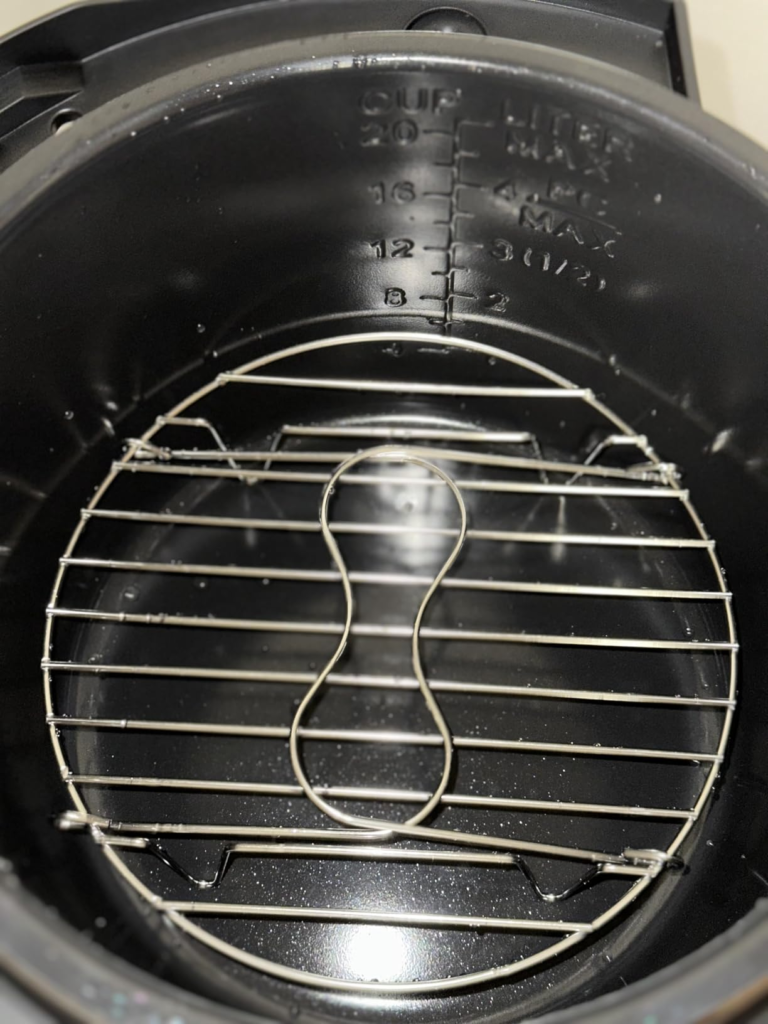
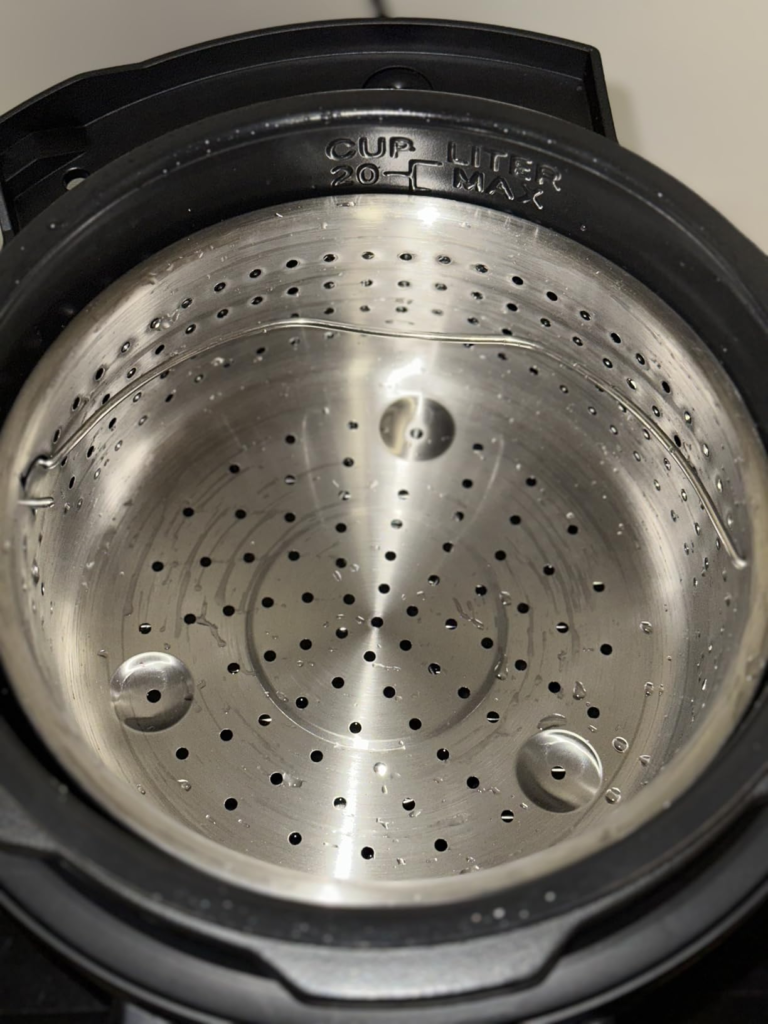
| Inner pot | Nonstick, ceramic-coated aluminum — FDA-approved, PFOA-free, dishwasher-safe |
| Pressure release | Automatic — Rapid, Pulse, or Natural, chosen for you |
| Recipes / presets | 500+ guided recipes, 1,000+ built-in presets |
| Size / weight | 13″ diameter, about 10 lbs |
| Warranty | 1 year, extended to 1 year + 3 months if you register it in the app |

CHEF iQ PRESSURE COOKER PROBLEMS: WHAT YOU’RE ACTUALLY FEELING (BUT NEVER SAY OUT LOUD)
Here’s what actually happens, even to people who’ve owned a pressure cooker for years. You don’t fully trust the timer, so you crack the lid a minute early “just to peek.” You cut into the thickest part of the meat before serving, which means the first slice loses its juice to the cutting board instead of the plate. You round the cook time up — “five extra minutes won’t hurt” — which is how a good pork tenderloin turns into shoe leather.
None of that is bad cooking. It’s a rational response to a machine that only ever tells you how long it ran, never what actually happened inside the pot.
CHEF iQ SMART COOKER TECHNOLOGY: THE HIDDEN MECHANISM BEHIND THE MISS
Why does the exact same recipe behave differently every time, even on a cooker that calls itself smart? Because most “smart” cookers, including the flagship Instant Pot line, are reactive. They read how temperature rises and falls once heat is already applied, then work backward to guess what that means for doneness — the same way a thermostat only reacts once a room has already gone cold.
The mechanism here runs the opposite direction. Four built-in sensors weigh what’s actually sitting in the pot and calculate how much liquid it needs before cooking even starts, instead of assuming your chicken breast weighs whatever the recipe card assumed it would. That’s the real gap between “smart” as a marketing word and smart as an engineering decision.
The release works on the same logic. Instead of one generic setting, the cooker automatically chooses between Rapid, Pulse, or Natural release depending on what’s inside, easing pressure off in controlled steps rather than one abrupt vent — the difference between a roast that stays intact and one that seizes up from a shock release.
CHEF iQ SMART COOKER LIMITATIONS: WHERE THIS “SMART” SYSTEM QUIETLY BREAKS
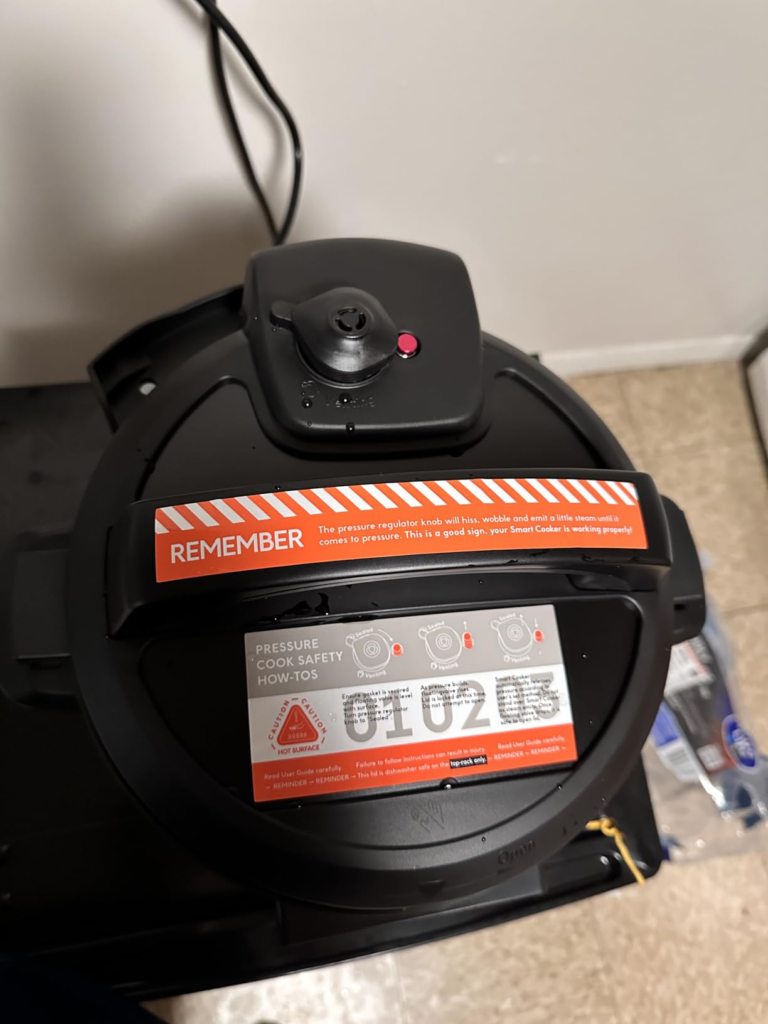
Every smart appliance shares the same weak point: the moment the connection drops, how much of the value drops with it? If your WiFi or the app goes down, the cooker keeps working in manual mode off the knob — pressure cook, sauté, slow cook, steam, all still there. But the weight-based calculations, the guided recipes, the remote alerts — the actual reason you paid a premium over a $130 basic model — go with it.
There’s a second, more specific break worth naming: searing. Because the system is tuned to catch hot spots automatically, it can dial back or cut the heat mid-sear the moment it senses uneven browning, exactly when you want it to do the opposite. If a hard, restaurant-style crust matters more to you than anything else on this page, that’s worth knowing before you unbox it.
Then there’s ordinary wear. The sealing ring is rated for roughly 12 to 18 months before it needs replacing, and skipping that is the most common cause of steam leaks owners report. The app also wants a 2.4GHz WiFi network specifically, not 5GHz — a detail that trips up more kitchens than you’d expect.
| Code | Usually means | Quick fix |
|---|---|---|
| E1 | Sensor fault, often temperature-related | Unplug 5 minutes, restart |
| E2 | Pressure or lid problem | Check lid seating, sealing ring, valve |
| E3 | Unit is overheating | Remove pot, clean the base, let it cool |
On safety specifically: Best Buy’s Insignia line was recalled for lids that could detach under pressure, and Sensio’s Bella, Bella Pro, Cooks, and Crux cookers faced a similar recall for the same reason. CHEF iQ isn’t on that list as of this writing. That said, personal-injury law firms do actively solicit burn and malfunction claims involving CHEF iQ cookers specifically — which isn’t proof of a defect, but it’s a fair reason to treat this cooker the way you’d treat any pressure cooker: don’t force the lid, don’t rush the release, and don’t ignore a sealing ring that’s stretched or cracked.
CHEF iQ VS INSTANT POT: WHY THE COMPARISON EVERYONE MAKES IS THE WRONG ONE
The comparison most people reach for is “it’s just an Instant Pot with WiFi.” That’s the lazy version, and it skips the one feature that actually changes outcomes.
The only Instant Pot that genuinely enters this conversation is the Pro Plus, which added app control and a wireless venting valve. Even that model has no integrated scale — it’s still guessing off a temperature curve, same as every Instant Pot before it. That’s the structural difference hiding underneath two machines that otherwise look nearly identical on a counter.
| CHEF iQ Smart Cooker | Instant Pot Pro Plus | |
|---|---|---|
| Built-in scale | Yes | No |
| Doneness estimate | Weighs mass upfront, calculates | Infers from temperature after heating starts |
| App / WiFi control | Yes | Yes |
| Auto pressure release | Rapid / Pulse / Natural | Wireless venting valve |
| Works without WiFi | Yes, manual modes via knob | Yes, manual modes |
| Typical price tier | Premium, roughly $180–$220 | Similar premium tier |
WHO SHOULD BUY THE CHEF IQ SMART COOKER: ARE YOU ACTUALLY INSIDE THIS PROBLEM?
Picture the exact moment this earns its keep: a chicken breast straight from the freezer, not the recipe card, and you need it to land at a safe, juicy finish without opening the lid four times to check. If that’s a regular Tuesday for you, keep reading.
You’re the right buyer if you cook protein often and you’re tired of the same three dishes turning out inconsistently. You meal-prep and want batch four to taste like batch one. And you don’t mind an app on your phone if it means one less guess at dinner.
WHO SHOULD SKIP THE CHEF IQ SMART COOKER: WHERE WRONG-FIT BEGINS
You’re the wrong buyer if you already have a system that works and no real interest in fixing what isn’t broken. If an appliance needing an account and a WiFi password sounds like a chore rather than a convenience, this isn’t for you — the entire value depends on actually opening the app.
And if your kitchen WiFi is shaky, or a hard, aggressive sear matters more to you than anything else here, a simpler, “dumber” cooker will frustrate you less.
| YOU’RE THE RIGHT FIT IF… | YOU’RE THE WRONG FIT IF… |
|---|---|
| You cook meat or poultry often and want consistent doneness | You’re already happy with your current setup |
| You meal-prep and want repeatable results batch to batch | You don’t want another app tied to a kitchen gadget |
| You’re fine pairing an appliance to WiFi/Bluetooth | Your kitchen WiFi is unreliable |
| You want one machine instead of a scale plus a guess | An aggressive, restaurant-style sear is your priority |
| You’re replacing a basic cooker that keeps missing doneness | You want the cheapest option that gets the job done |
CHEF iQ SMART COOKER REVIEW: THE ONE MOMENT THIS MACHINE ACTUALLY EARNS ITS PRICE
Strip away the marketing language, and here’s where it lands. This isn’t a cooker for someone who wants a cheaper way to make rice — a basic $130–150 pressure cooker already handles that fine.
It’s for the specific, recurring moment when a timer-based guess stops being good enough — when doneness genuinely matters, when you’re cooking for people you don’t want to disappoint, and “probably done” has stopped being an acceptable answer. That’s the narrow, real problem the built-in scale and app-guided cooking were actually built to solve. After going through the owner reports, the teardowns, and CHEF iQ’s own documentation, that’s the honest read: everything else on the spec sheet is packaging around that one decision.
CHEF iQ SMART COOKER PROS AND CONS: WHAT IT FIXES, WHAT IT REDUCES, WHAT’S STILL ON YOU
| Pros | Cons |
|---|---|
| Built-in scale removes liquid-ratio guesswork | Full “smart” value needs a stable WiFi connection |
| Auto pressure release (Rapid/Pulse/Natural) | Heat modulation can throttle a hard sear |
| Nonstick ceramic pot, dishwasher-safe cleanup | Sealing ring needs replacing every 12–18 months |
| 500+ guided recipes, growing weekly | Real premium over basic multicookers |
| Still works manually if WiFi or the app is down | App account required to unlock the core advantage |
What it doesn’t do: replace your judgment entirely, work around a dead WiFi signal, or turn a beginner into someone who never checks a recipe again. It narrows the gap between what the timer says and what’s actually true. That’s a smaller promise than the marketing makes — and a more honest one.
CHEF iQ SMART COOKER FAQ: THE QUESTIONS BUYERS ACTUALLY ASK BEFORE ORDERING
| Question | Answer |
|---|---|
| Does it include the wireless meat probe? | No — that’s a separate CHEF iQ product, the Smart Thermometer, and the probe would be damaged by pressure anyway, so it’s only used in non-pressurized modes like sauté or slow cook. |
| Do I need WiFi to use it at all? | No. Manual pressure cook, sauté, slow cook, and steam run fine off the knob. You lose the weight-based calculations and guided recipes without the app. |
| What size is this exact listing? | 6 quarts, “family size”; an 8-quart version is sold separately. |
| Has it been recalled? | Not that public records show. Other brands — Insignia, Bella, Cooks, Crux — have faced official recalls for lid-related burn risks; CHEF iQ isn’t among them as of this writing. |
| How is it really different from an Instant Pot? | The scale measures ingredients first instead of guessing from temperature after the fact — that’s the actual difference, not just the app. |
| What do the error codes mean? | E1 is usually a sensor fault, E2 a pressure or lid issue, E3 overheating — most clear with a restart, a clean sealing ring, or a cooldown. |
| How long does the sealing ring last? | Roughly 12–18 months under normal use. |
| What’s the warranty? | One year, extended to 1 year plus 3 months if you register the cooker in the app. |
CHEF iQ SMART COOKER REVIEW: FINAL VERDICT
Strip away the touchscreen and the app, and the question this cooker answers is a small one: how do you actually know it’s done? The scale, the auto release, the guided recipes — all of it traces back to replacing a guess with a measurement.
If that’s the exact gap you’ve been quietly living with — the timer says done, your fork disagrees — this is the logical next step, not a leap.
Transparency Note:
This analysis is built on aggregated real-world experience.
It extracts what repeatedly holds, what breaks, and what users uncover only after living with the system—then shapes it into a clear model you can use immediately.
Think of it as structured experience, refined and presented so you don’t have to learn it the hard way.
“A quick note: Don’t believe the star ratings, but trust personal experience. This article is a compilation of collected experiences.”