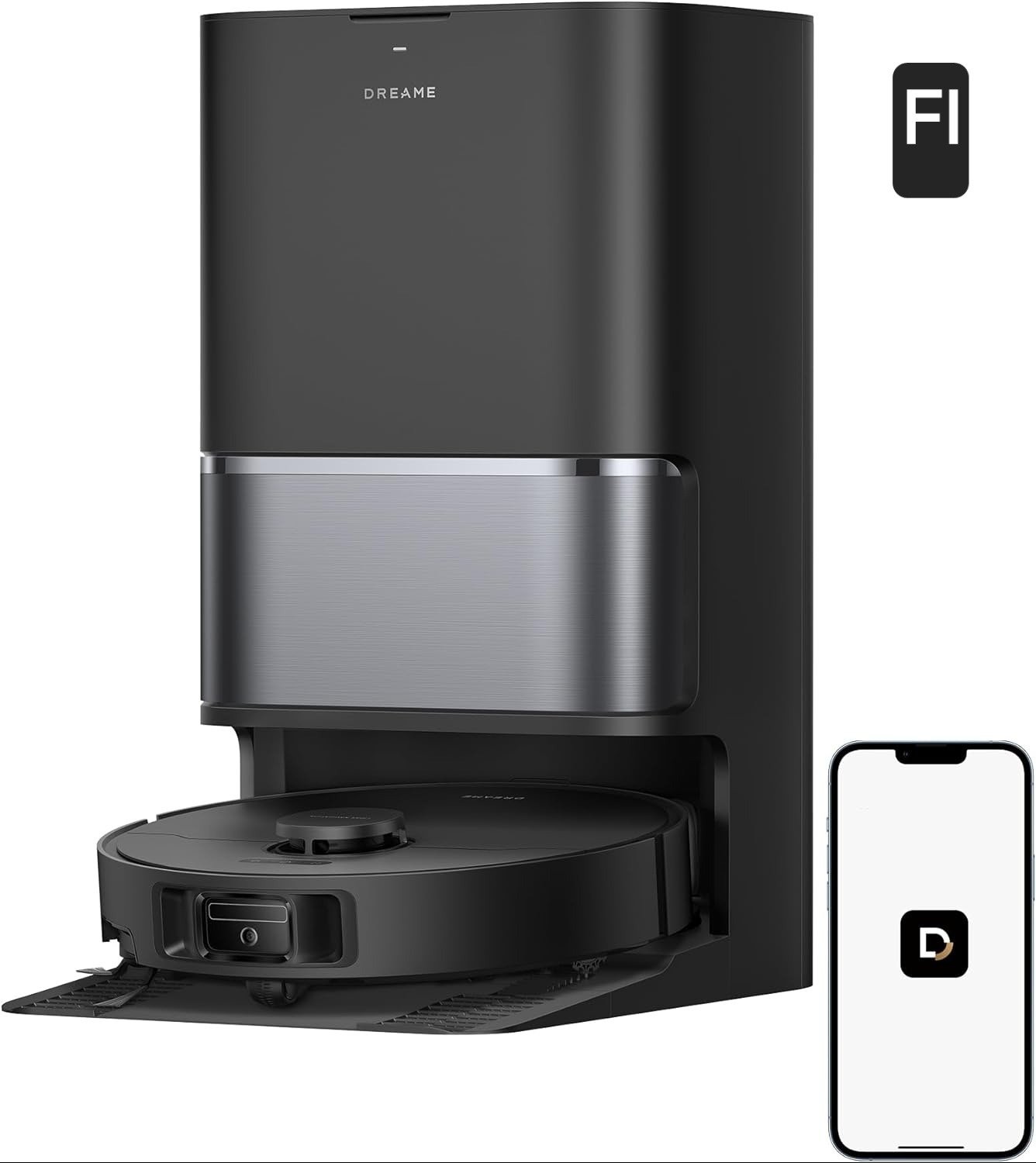
DREAME L10S PRO ULTRA HEAT: YOUR FLOOR LOOKS CLEAN. YOUR BASEBOARDS KNOW THE TRUTH.
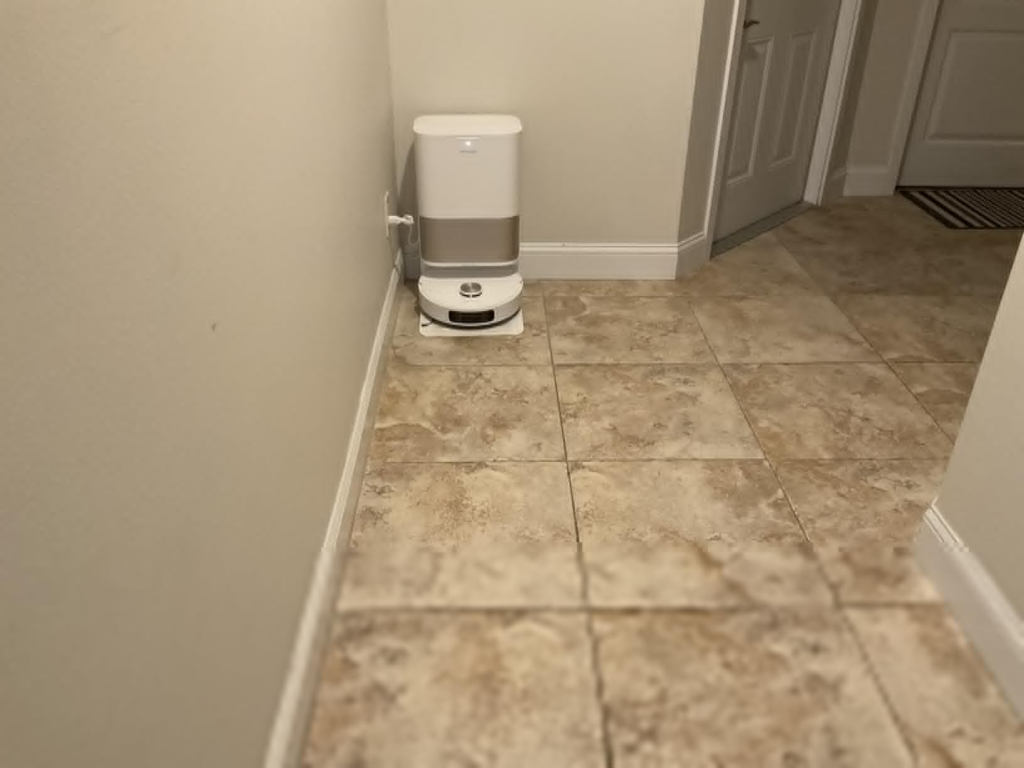
You run a robot vacuum. The floor looks fine. Then you crouch down to pick something up near the wall — and there it is. That thin, permanent line of dust and dried grime running the entire length of your baseboard, untouched, every single time, like a border your machine silently agreed never to cross.
That’s not a minor cosmetic issue. That’s the actual failure mode of nearly every robot vacuum and mop on the market. And it’s been quietly accepted as a design limitation for over a decade — until the architecture of the mop mechanism itself changed.
The Dreame L10s Pro Ultra Heat is built around a different structural premise. This review is about what that premise actually solves, what it doesn’t, who it genuinely fits, and where it becomes a misread purchase.
The Result Looks Fine. The Problem Isn’t.
After a cleaning cycle, your floor registers as clean. The robot mapped everything, ran its path, returned to the dock. The app says 100% complete.
But “complete” in the language of robot vacuums has always meant: everything except the last few centimeters adjacent to every wall, every piece of furniture, every baseboard in the house.
The difference between mopping with and without the mop extended is clearly visible. It removes more dirt from edges than machines that lack the articulated arm — the effect is directly measurable, not just claimed.
The robot didn’t fail. It performed exactly as designed. The design just excluded the edges by default — because the mop pads, fixed to the robot’s underbody, physically cannot reach past the robot’s own housing. The machine cleans up to itself. The wall gets nothing.
This is the silent failure. It doesn’t announce itself. It accumulates.
What You’re Actually Feeling but Not Naming
It’s not the dust. It’s the recalibration fatigue.
You bought an automated cleaning system to stop thinking about the floor. But the floor keeps pulling your attention — specifically the corners, the baseboards, the strip behind the couch leg. You find yourself doing “just a quick pass” with a microfiber cloth after the robot finishes. That pass, done twice a week, done on your hands and knees, is the signal that something in the system didn’t close.
One user with three dogs and sandy floors described it as not wanting to go barefoot in the house — not because the robot failed to run, but because the grit kept coming back in the zones the robot couldn’t fully reach.
This is friction that lives below the complaint threshold. You don’t call it a malfunction. You just keep doing that extra wipe. You keep seeing that line. You keep adjusting your expectation of what “clean” means — downward, quietly, over time.
The Dreame L10s Pro Ultra Heat is designed specifically to close that loop.
The Hidden Mechanism Behind the Miss
Every conventional robot mop positions its wet pads fixed to the undercarriage. The robot’s outer edge — its housing wall — becomes the mopping boundary. Anything beyond that housing, meaning the gap between the machine’s body and the wall, remains unmapped by any wet surface.
The L10s Pro Ultra Heat uses MopExtend™ technology, which pushes the right-hand mop pad outward by several centimeters, flush with the housing edge, enabling wall-to-wall contact. This feature was previously exclusive to the higher-tier L20 Ultra, and was brought down into this model’s architecture at a lower price point.
The mechanism activates upon edge detection. When the robot reads a wall boundary, the mop extends laterally. When it moves away from the boundary, it retracts. The extension and retraction happen automatically, in real time, within the cleaning cycle itself — no separate mode, no user trigger required.
This is not a cosmetic upgrade. It’s a structural rethinking of where the mop can physically go.
| Feature | Standard Robot Mop | Dreame L10s Pro Ultra Heat |
|---|---|---|
| Edge mopping reach | 2–5 cm gap from wall | Flush contact via MopExtend™ |
| Mop pad position | Fixed undercarriage | Laterally extendable right pad |
| Edge detection | Passive (stops at boundary) | Active (extends at boundary) |
| Mop lift on carpet | Standard (varies) | 10.5 mm automatic lift |
| Mop self-cleaning | Cold water rinse | 136°F / 58°C hot water wash |
The Threshold Where the Outcome Quietly Breaks
The edge-cleaning result holds up well under normal household conditions — tile, hardwood, vinyl plank, low to medium pile carpet. The 58°C heated mopping genuinely removes stains that cold-water robot mops won’t lift, particularly on kitchen tiles where grease and food residue bond to the surface over time.
But there is a threshold where the system’s performance assumptions begin to shift.
The robot’s obstacle avoidance reads more than 55 object types. It navigates cables, shoes, pet bowls. What it cannot entirely compensate for is a floor that hasn’t been cleared. The machine works best in a managed environment — one where the floor surface is accessible. Heavily cluttered rooms introduce mapping gaps that no sensor array fully overcomes.
The second threshold is carpet pile depth. The mop lifts 10.5 mm when transitioning. For carpets with pile longer than approximately 15 mm, the recommended setting is avoidance rather than cleaning — the lift height is not sufficient to keep moisture entirely clear of deep-pile surfaces.
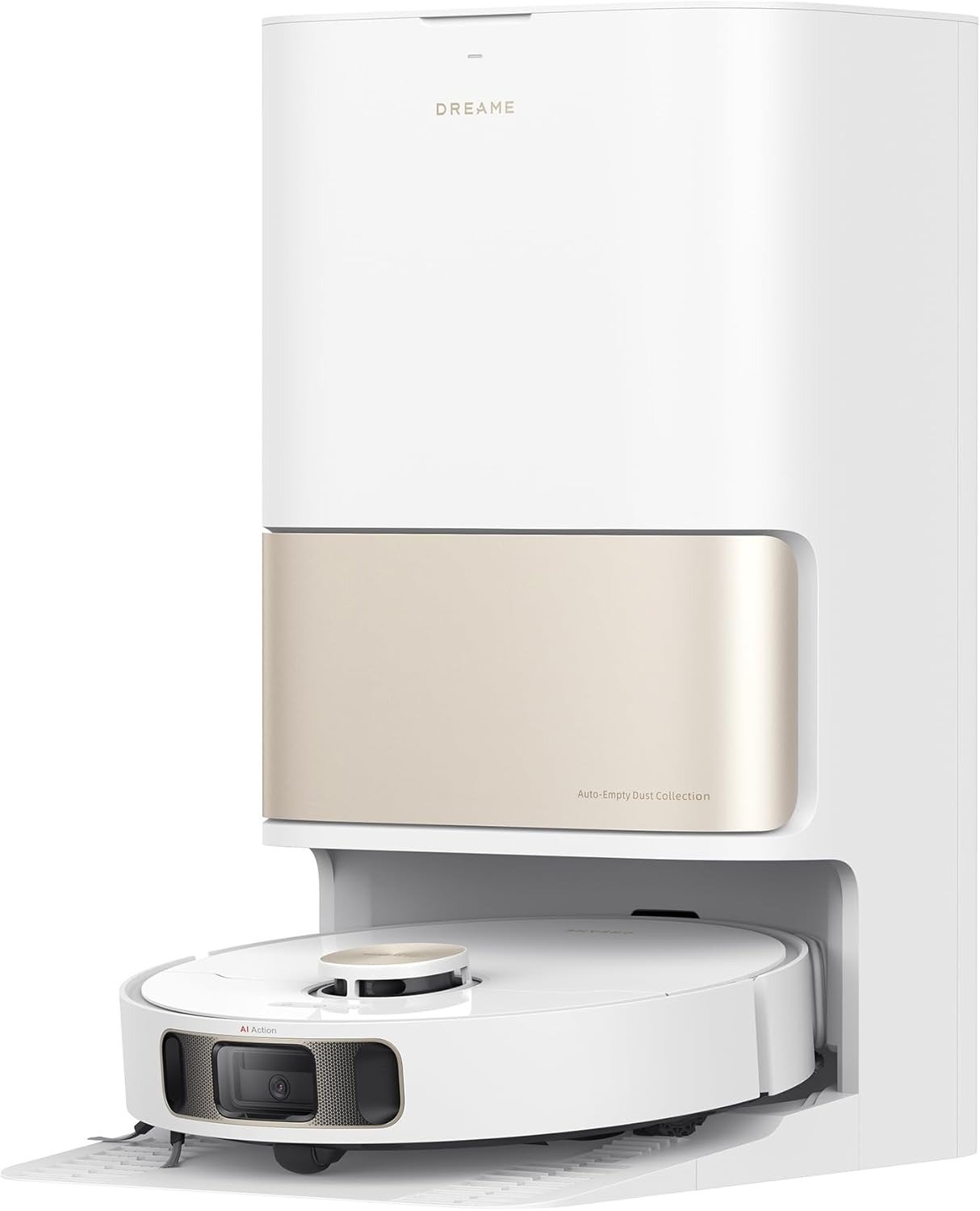
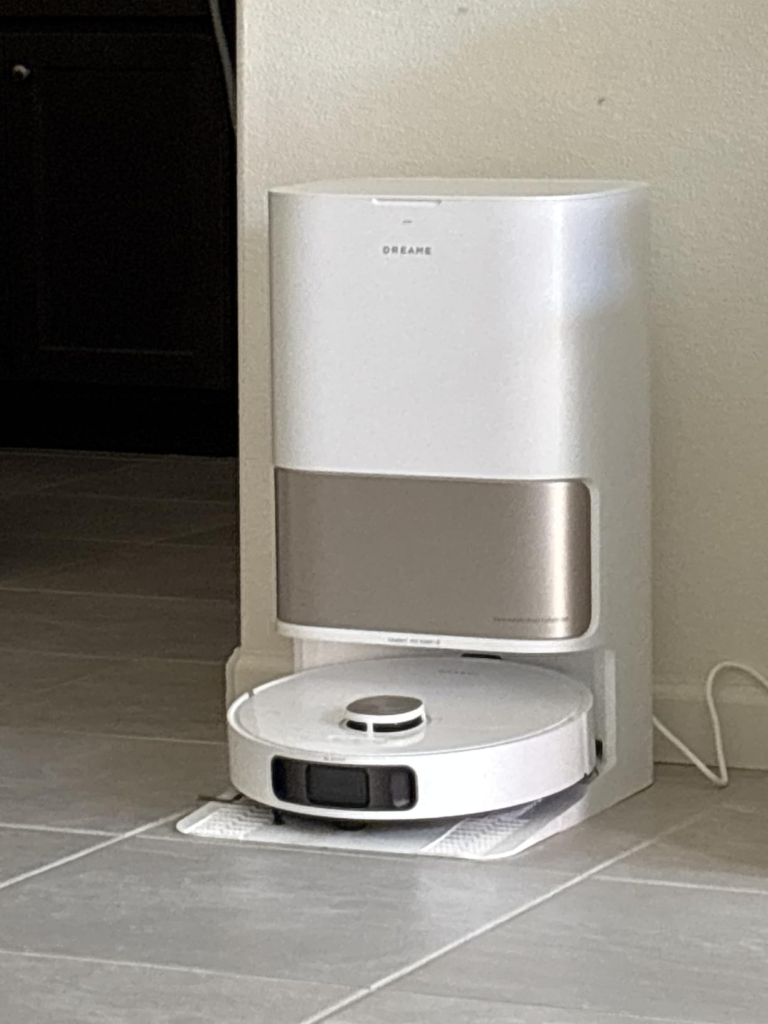
The third threshold is base station space. The all-in-one station — which handles dust collection, hot water mop washing, hot air mop drying, water refilling, and detergent dispensing — is a significant physical unit. It is not a small dock. It requires dedicated floor space, ideally against a wall with both electrical and water proximity. Homes with no suitable permanent placement for the station encounter setup friction that doesn’t resolve itself over time.
| Condition | Performance Expectation |
|---|---|
| Hardwood / Tile / Vinyl (clear floor) | Excellent — edge to edge |
| Low to medium pile carpet | Strong suction, automatic mop avoidance |
| Deep pile / shag carpet (>15 mm) | Set to avoidance mode — not cleaning |
| Cluttered floors | Reduced mapping accuracy — clear first |
| Grease / kitchen stains | Significantly improved via hot water cycle |
| Pet hair (heavy shedding) | Effective — optional TriCut brush recommended |
Why Most Buyers Misread This Too Early
The most common misread is comparing this machine on suction power alone.
At 7,000Pa, it sits below several newer Dreame models that advertise 10,000Pa, 13,000Pa, or even 25,000Pa. If suction is the primary metric, this robot loses on paper immediately.
Within expert communities, the L10s Pro Ultra Heat is consistently positioned as a solid mid-to-high tier option where the heated mop washing and MopExtend architecture are the actual differentiators — not raw suction numbers, which matter most on deep pile carpet.
The second misread is treating hot water self-cleaning as a gimmick. After 45 days of daily testing including pet hair and mixed flooring, the 58°C hot water mop washing kept the pads clean and free of odor for the entire test period — a result that standard cold-water self-cleaning systems consistently fail to maintain beyond the first week of heavy use.
The third misread is evaluating the station as overhead rather than as core functionality. The base station is not peripheral hardware. It is the system. It handles auto-emptying with a 3.2L dust bag, hot water mop washing, hot air drying to prevent odor formation, and automatic water and detergent refilling — together creating up to 75 days of autonomous dust collection between manual interventions.
Buyers who evaluate the robot without accounting for the station are evaluating roughly 40% of what they’re actually purchasing.
Who Is Actually Inside This Problem
This robot fits a specific operational profile. The more closely a buyer matches it, the more structurally sound the purchase becomes.
Strong fit:
- Homes with predominantly hard flooring — tile, hardwood, vinyl plank — where mopping quality directly affects daily comfort
- Pet owners with medium shedding levels, where floor cleanliness is a daily and not a weekly concern
- Households where the occupant has previously run a robot vacuum and still found themselves manually cleaning edges, corners, or baseboards afterward
- Buyers willing to allocate dedicated, permanent station space in exchange for genuinely hands-free operation over 60+ day intervals
Moderate fit (with managed expectations):
- Mixed hard floor and carpet homes, where the mop lift handles transitions but carpet cleaning relies entirely on suction, not mopping
- Smaller apartments where a single cleaning cycle fully covers the space — the system performs well, but some of its longer-range automation becomes less relevant at smaller scale
After extended testing, the clearest profile for this machine is homeowners with extensive hard flooring who are specifically frustrated by the edge-cleaning weakness of other robots — not buyers pursuing the highest suction specification available.
Where Wrong-Fit Begins
There are conditions under which this machine is a structurally incorrect purchase — not because it fails in those conditions, but because its core differentiators become irrelevant or actively underutilized.
Wrong fit:
- Primarily carpet homes where mopping is rare or never needed. The MopExtend architecture and hot water system — the primary value drivers — contribute nothing to a dry vacuum-only workflow.
- Homes where floor space for a large base station cannot be permanently dedicated. The station cannot be stored between uses and moved out for each cycle — the workflow breaks.
- Buyers whose primary pain is suction power on very high-pile carpets. Higher-Pa models with deeper carpet penetration are more relevant at that specific threshold.
- Those expecting zero maintenance. The complex base station requires more frequent maintenance than simpler single-function docks — the additional systems (water tanks, mop washing grooves, detergent reservoir) introduce more maintenance surfaces than a basic self-emptying station.
| Buyer Profile | Fit Assessment |
|---|---|
| Mostly hard floors, pets, edge frustration | Strong fit |
| Mixed floors, moderate traffic | Good fit |
| Primarily carpet, no mopping need | Poor fit — wrong differentiator |
| No permanent station space | Poor fit — workflow breaks |
| Deep-pile carpet, suction-first priority | Poor fit — spec mismatch |
| Maximum automation, minimal maintenance | Conditional — review station requirements first |
The One Situation Where This Robot Becomes Logical
The purchase becomes structurally logical when two conditions are simultaneously true: the floor is predominantly hard surface, and the occupant has previously experienced the baseboard problem — the permanent, accumulating strip of missed grime that no previous robot fully addressed.
The Dreame L10s Pro Ultra Heat brings MopExtend™ and hot water mop washing from the higher-tier L20 Ultra into a lower price architecture — which means the primary features that resolve edge-cleaning failures are accessible without purchasing into the flagship tier.
In extended real-world use, the heated mopping makes a measurable difference on kitchen tiles and grease-bearing surfaces — not equivalent to steam cleaning, but capable of removing stains that cold-water robot mops leave behind on repeated passes.
The robot is not the logical choice for everyone. It is the logical choice for the specific buyer whose floor tells a different story than their robot’s completion report.
Full Specification Reference
| Specification | Detail |
|---|---|
| Suction Power | 7,000 Pa |
| Mopping System | Dual rotary mop pads, 180 RPM |
| Edge Cleaning | MopExtend™ — lateral pad extension at walls |
| Mop Self-Cleaning | 136°F / 58°C hot water wash |
| Mop Drying | Hot air drying post-wash |
| Mop Lift (carpet) | 10.5 mm automatic lift |
| Dust Bag Capacity | 3.2L — up to 75 days auto-empty |
| Water Tank | Auto water + detergent refilling from station |
| Navigation | LiDAR + AI RGB camera + structured 3D light |
| Obstacle Recognition | 55+ object types |
| Carpet Sensing | Ultrasonic carpet recognition |
| Max Cleaning Area | Up to 2,150 sq ft per session |
| Maintenance Alert | App notification with photo of detected obstacle |
| App | Dreamehome — iOS + Android |
| Optional Upgrade | TriCut anti-tangle brush (sold separately) |
What It Solves, What It Reduces, and What It Still Leaves to You
What it solves:
The baseboard and wall-edge mopping gap — structurally, not partially. MopExtend changes the physical reach of the mop, not the cleaning strategy. The grime line along every baseboard stops accumulating.
The mop hygiene cycle. Hot water self-cleaning at 136°F prevents the pad from becoming a bacterial transfer mechanism — a real and common failure mode in cold-water self-cleaning systems that most buyers don’t notice until the floor starts smelling faintly wrong after mopping.
What it reduces:
Manual intervention intervals. The 75-day auto-empty cycle, combined with auto water refilling and auto detergent dispensing, substantially reduces the frequency of hands-on maintenance — though it does not eliminate it.
Pet hair management. The rubber brush design handles medium-shedding pets well. Heavy-shedding long-haired breeds benefit from the optional TriCut brush upgrade, which cuts hair as it collects rather than tangling it around the brush axle.
What it still leaves to you:
Station maintenance — the water tanks, the mop washing tray, the filter — requires periodic attention. The system is more autonomous than any simpler dock design, but more surfaces means more maintenance contacts over time.
Floor preparation in cluttered environments. The obstacle avoidance is sophisticated, but it is not a substitute for a reasonably clear floor. Very dense obstacle environments reduce mapping accuracy and cleaning coverage.
Frequently Asked Questions
| Question | Answer |
|---|---|
| Does MopExtend™ work on every cleaning run, or only in specific modes? | MopExtend activates automatically during mopping cycles whenever the robot detects a wall boundary. It does not require a separate mode selection. During vacuum-only runs without mopping, the extension does not engage. |
| Can the robot handle thresholds between rooms? | The machine handles thresholds up to approximately 20 mm as a published spec. Real-world testing indicates slight difficulty at 14 mm thresholds — passable but requiring extra maneuvering. Flat, level transitions are handled cleanly. |
| How often do the water tanks actually need to be refilled? | The station’s clean and dirty water tanks are sized for sustained multi-day operation. Refill frequency depends on floor area and cleaning schedule — most users in 1,000–1,500 sq ft homes report weekly tank attention under daily use. |
| Is the mop hot during cleaning, or only during self-cleaning? | The hot water is used during the self-cleaning cycle at the base station, not during the mopping pass on the floor. The mops clean your floor with the temperature and moisture from the standard mopping system — the 136°F heat is applied to sanitize the pads between uses, not to steam-mop the floor surface. |
| What is the base station footprint? | The station is a substantial unit — approximately the size of a small bedside table. It requires dedicated permanent floor space against a wall with access to a power outlet. It is not designed to be moved between cleaning sessions. |
| Does the robot work without WiFi or the app? | Basic cleaning functions operate via the physical button on the robot. Full scheduling, zone management, cleaning history, and obstacle notifications require the Dreamehome app and WiFi connection. |
| How does it compare to the Dreame X40 Ultra or X50 Ultra? | The X40 and X50 series are positioned as the technology-forward flagship tier — with more advanced obstacle avoidance and higher-tier sensor systems. The L10s Pro Ultra Heat is consistently described as a strong mid-to-high option where the specific value is the combination of MopExtend and hot water self-cleaning at a lower price point than the flagship tier. |
| Is pet hair a genuine use case or a marketing claim? | Real-world testing in homes with active shedding dogs confirmed strong performance on hardwood and vinyl — picking up pet hair alongside fine dust and larger debris without repeated passes. The optional TriCut brush significantly improves long-hair handling for heavy shedders. |
Final Compression
The floor either has a grime line along the baseboards or it doesn’t. Every robot mop manufactured before MopExtend technology left that line. It wasn’t a cleaning failure. It was a geometry failure — the pad couldn’t reach past the housing.
The Dreame L10s Pro Ultra Heat changes the geometry. The pad extends. The line disappears.
That change is worth something precise — to the buyer for whom that line is the actual problem. It is worth nothing to the buyer whose floor is carpet-dominant, whose primary concern is suction depth, or whose space cannot accommodate a permanent base station.
If you’ve previously run a robot vacuum and still found yourself wiping down baseboards — not because the machine malfunctioned, but because it physically couldn’t reach — this is the machine that closes that gap.
The decision isn’t vague at that point. It becomes structural.
Transparency Note:
This analysis is built on aggregated real-world experience.
It extracts what repeatedly holds, what breaks, and what users uncover only after living with the system—then shapes it into a clear model you can use immediately.
Think of it as structured experience, refined and presented so you don’t have to learn it the hard way.
“A quick note: Don’t believe the star ratings, but trust personal experience. This article is a compilation of collected experiences”