MARSHALL MINOR IV REVIEW: THE SOUND IS REAL. THE FIRST IMPRESSION ISN’T.
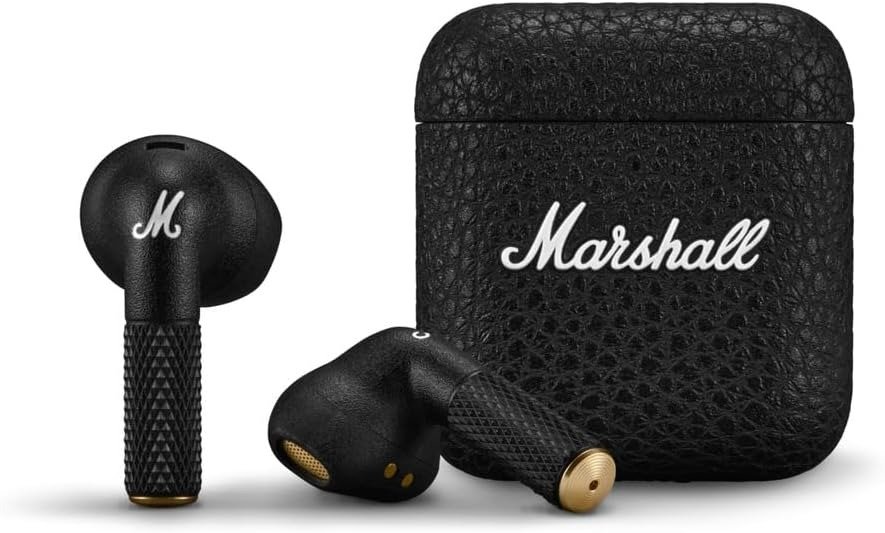
MARSHALL MINOR IV
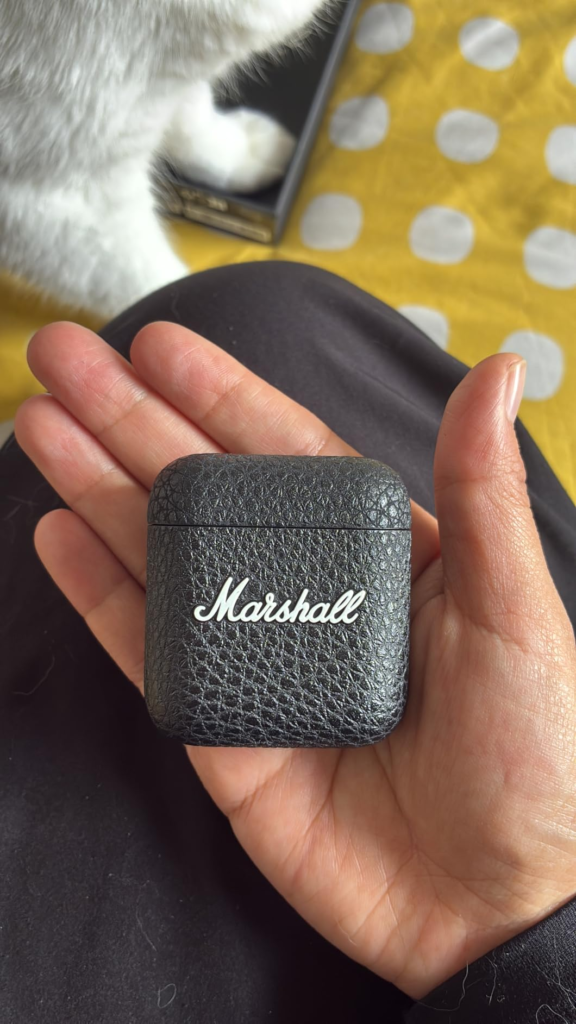
You open the case for the first time — in a store, or fifteen seconds after the delivery box hits your desk — and the Minor IV does exactly what every Marshall product is built to do. It sounds expensive immediately. The mids feel warm, the logo catches the light, the lid snaps shut with a thud that feels deliberate. That moment isn’t the review. That moment has already sold you.
What actually decides whether these earbuds earn a permanent spot in your ears happens later — somewhere around the first jog, the first rainy commute, the first time you reach up mid-call and brush the touch panel by accident. That’s the gap this review actually lives in.
Marshall Minor IV Sound Quality: The First Five Minutes Lie to You
Straight out of the case, on the default “Original Marshall Sound” profile, these earbuds sound good — warm mids, a guitar-friendly upper register, the kind of tuning that makes classic rock and vocal-heavy tracks feel close and present. That part is genuine and well documented across independent testing.
What’s missing in those first five minutes is bass weight. Not absent — just restrained, a little boomy without depth, especially compared to the punch you’d expect from the Marshall name. That’s not a flaw you imagined. It’s physics, and it’s explained in the next section. The short version: the sound you hear out of the box is not the sound these earbuds are capable of. It’s the sound before you’ve done one optional five-minute step.
| Spec | Marshall Minor IV |
|---|---|
| Driver | 12mm dynamic |
| Battery (earbuds) | Up to 7 hours |
| Battery (with case) | 30+ hours total |
| Quick charge | 15 min ≈ 3 hours playback |
| Bluetooth | 5.3, LE Audio ready |
| Codecs | SBC, AAC |
| Water resistance | IPX4 (splash/sweat, not submersible) |
| Charging | USB-C + wireless |
| App | Marshall Bluetooth (EQ, battery preservation, OTA) |
| ANC | None |
| Ear tips | None — open-ear design |
| Weight | ~7.4g per earbud |
| Launch price | $129.99 |
Marshall Minor IV Fit and Comfort: The Annoyance You Haven’t Named Yet
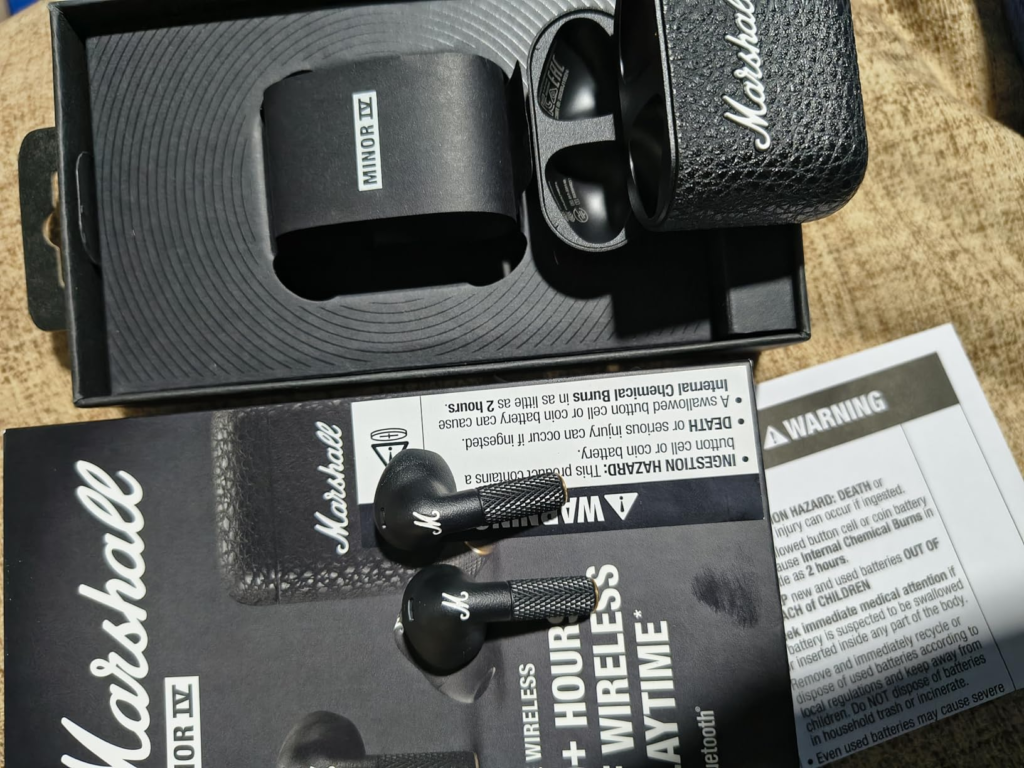
Here’s the thing nobody puts in the marketing copy: these don’t seal your ear canal. They rest in the outer ear, the same general idea as a standard AirPod, not pushed in like a typical silicone-tipped earbud. The first hour, that’s a relief — no pressure, no “stuffed ear” fatigue on long calls. By hour three, on a treadmill or a windy walk, you’ll notice yourself doing a small unconscious thing: a quick press with one finger, resettling the bud, checking it’s still sitting right.
That’s not a defect. It’s the open-fit trade-off, and it’s the exact friction most buyers can’t name before they own a pair — they just feel “slightly off” and assume it’s their ears. It usually isn’t. It’s the design.
Why the Open-Ear Design Changes Everything: The Mechanism Nobody Explains
Sealed earbuds work like a tiny speaker in a sealed room — the seal traps low frequencies and pushes them straight at your eardrum, which is why cheap sealed buds can still sound bass-heavy. Open-ear buds like the Minor IV have no seal. Bass frequencies, which are long and need that trapped air to feel powerful, simply have somewhere to escape. Mids and highs, which are shorter and more directional, survive the trip just fine.
That’s the actual mechanism behind the “thin bass” complaint you’ll see repeated across reviews and owner threads. It’s not a manufacturing inconsistency — it’s the same trade-off every open-fit earbud makes, AirPods included. Marshall’s answer is the Bluetooth app: open it, nudge the EQ toward bass, and the low end fills back in noticeably. Skip the app, and you’re listening to maybe 80% of what these can do. That single five-minute setup step is the threshold between “these are fine” and “these are actually good” — and it’s the one step most first-time buyers never take.
Marshall Minor IV Battery Life: Where the Real Number Breaks From the Marketing Number
Marshall states 7 hours per charge, 30+ hours total with the case. That’s not an inflated number — owners running them daily at typical volume report meeting or slightly beating it, with some logging closer to 7.5 hours before needing a top-up. Quick charge adds 3 hours of playback from just 15 minutes in the case, which matters more in practice than the headline number, because it’s the difference between “dead before your commute” and “fine, give me two songs to charge.”
The threshold to know: that 7-hour figure assumes moderate volume. Push past roughly 80–90% volume regularly, or lean on the bass-boosted EQ profile discussed above, and you’ll trim real time off the top. Reasonable trade, but worth knowing before you assume the number on the box is the number in your pocket.
Marshall Minor IV vs Minor III: Why Most Buyers Compare the Wrong Things
This is where most shopping goes sideways, including searches that land on the wrong product entirely. The Minor III and Minor IV look similar enough in thumbnail photos that people treat them as the same earbud at two prices. They’re not.
| Minor III (2021) | Minor IV (2024) | |
|---|---|---|
| Battery (earbuds / total) | 5h / 25h | 7h / 30+h |
| App and EQ | None | Marshall Bluetooth app, full EQ |
| iPhone audio codec | SBC only | AAC added |
| Stem design | Perpendicular | ~20° angled, “truer fit” |
| Bluetooth version | 5.2 | 5.3, LE Audio ready |
| Launch price | $129.99 | $129.99 |
The Minor III had no companion app at all — what you heard out of the case was permanently what you got, no EQ, no fixing the bass issue described above. iPhone owners were stuck on the lowest-quality codec since the III never supported AAC. The IV closes both gaps. If you’re choosing between the two purely on price because a III turns up cheaper secondhand, know exactly what you’re giving up: the app, the EQ, and meaningfully better iPhone audio.
Who the Marshall Minor IV Actually Fits
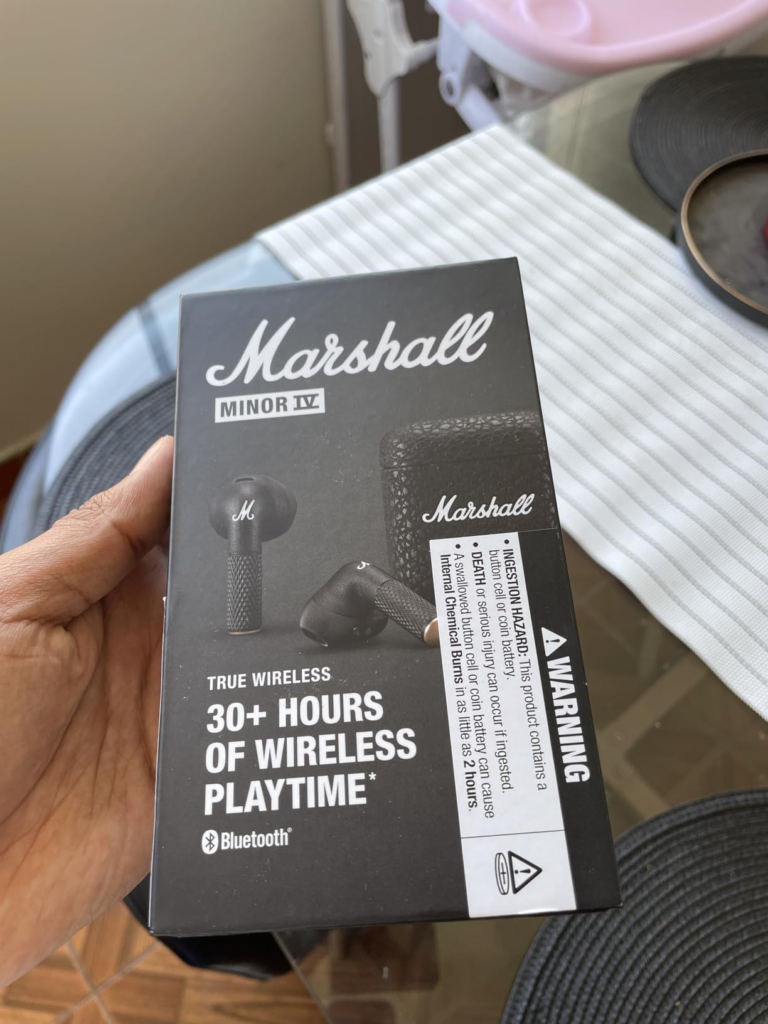
This earbud is built for one specific kind of listener: someone who wants Marshall’s tuning and visual identity, doesn’t want their ear canal sealed for hours at a time, moves between a phone and a laptop often enough that multipoint actually gets used, and isn’t chasing flight-cancelling silence. If that’s a fair description of your day, the rest of this review is mostly confirmation.
It’s also a strong pick if you’re upgrading from the Minor III specifically because the lack of app control bothered you, or if you’re on iPhone and the III’s codec limitation was the dealbreaker last time.
Where the Marshall Minor IV Stops Being the Right Choice
If you need genuine noise cancellation for flights or open-plan offices, this isn’t that product — Marshall makes one that is, the Motif II A.N.C., and it costs more for a reason. If your priority is bass you feel in your chest without touching an app, an open-fit design will frustrate you no matter how much EQ you apply. And if you need a guaranteed locked-in seal for heavy lifting or sprint intervals, a stemmed open-fit bud is a harder sell than something with a hook or wing tip.
| Buy the Minor IV if… | Skip it if… |
|---|---|
| You want Marshall’s sound without sealing your ear canal | You need ANC for flights or commutes |
| You switch between phone, laptop, and tablet often | You live for sub-bass, EQ or not |
| You’re on iPhone and the Minor III’s codec bothered you | You need a guaranteed sealed gym fit |
| You’ll actually open the app and set an EQ once | You won’t bother with the app at all |
The One Situation Where the Marshall Minor IV Becomes the Obvious Pick
Strip away the marketing and the comparison noise, and the logic lands in one place: if you’ve owned open-fit earbuds before and liked the comfort more than you disliked the bass, and you’re willing to spend five minutes in an app exactly once, the Minor IV is a straightforward upgrade over almost anything else in this price range wearing the open-fit shape — including its own predecessor. That’s not a marketing win. It’s just what the spec sheet and the owner reports agree on once you take ANC off the table as a requirement.
What It Actually Solves, What It Reduces, and What’s Still Left to You
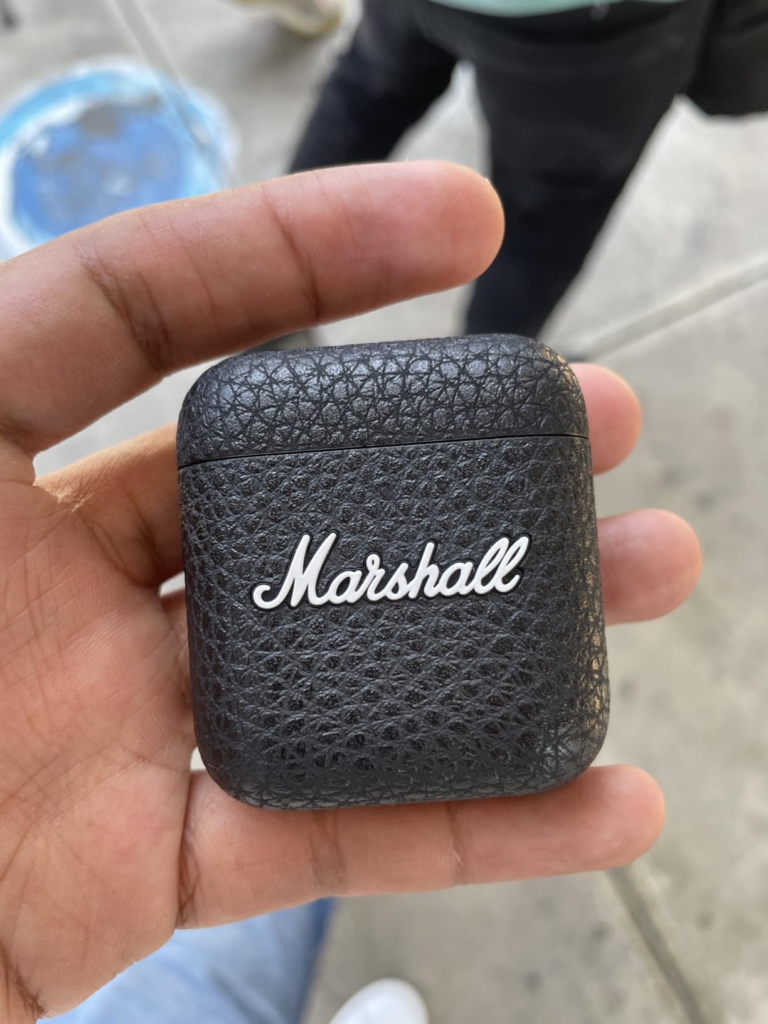
It solves the Minor III’s biggest gaps cleanly: real battery margin, a usable app, and an iPhone codec that doesn’t sound compressed. It reduces, but doesn’t eliminate, the open-fit comfort-versus-bass trade-off — the EQ step helps, it doesn’t replace a seal. What it leaves entirely to you is noise isolation. In a loud room, on a plane, on a subway platform, you will hear the room. That’s not a bug to be patched in a future firmware update. It’s the category these earbuds were built in, and no amount of EQ changes that.
Marshall Minor IV FAQ: Quick Answers Before You Decide
| Question | Answer |
|---|---|
| Does the Marshall Minor IV have noise cancellation? | No. It’s an open-fit design by intent, not by missing feature. Marshall’s ANC model is the Motif II A.N.C., a different product at a different price. |
| How long does the battery actually last? | Roughly 7 hours per charge at moderate volume, 30+ hours total with the case, per Marshall and matched closely by real-world owner reports. Quick charge gives about 3 hours of playback from 15 minutes. |
| Is it waterproof? | It’s IPX4-rated — resistant to sweat and splashing rain from any direction. It is not swim-proof or submersible. |
| Do I need the app to use it? | No, it pairs and plays straight out of the case. You need the app only to access EQ, battery preservation mode, and OTA firmware updates — which is also where most of the bass complaints get resolved. |
| Will it fall out during a workout? | The redesigned, angled stem fits more securely than the Minor III’s, and most reviewers report it staying put through normal exercise. As with any open-fit design, ear shape plays a role, and it’s not a sealed, locked-in fit the way a wing-tip sport earbud is. |
| Does it work well with iPhone? | Better than the Minor III did. AAC support was added, closing the main audio-quality gap iPhone users had with the previous generation. Siri and spatial audio remain Apple-ecosystem features you won’t get here. |
| What’s in the box? | The earbuds, charging case, USB-C cable, and documentation. No spare ear tips, because there’s nothing to swap — it’s a single open-fit shape. |
Final Verdict
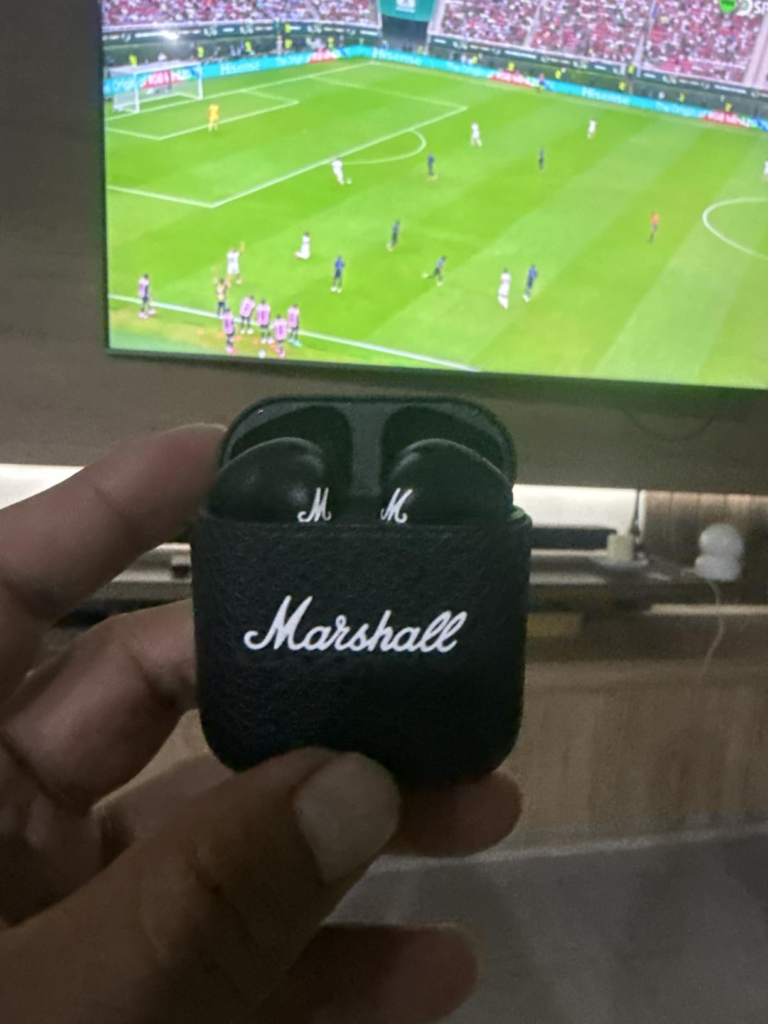
If everything above describes the trade-off you’re actually willing to make — comfort and Marshall’s tuning over a sealed, isolated sound — the decision stops being complicated.
From our analytics lab: More top-rated reviews
Transparency Note:
This analysis is built on aggregated real-world experience.
It extracts what repeatedly holds, what breaks, and what users uncover only after living with the system—then shapes it into a clear model you can use immediately.
Think of it as structured experience, refined and presented so you don’t have to learn it the hard way.
“A quick note: Don’t believe the star ratings, but trust personal experience. This article is a compilation of collected experiences.”