Avantree Opera Aura Review: Why Turning Up the TV Isn’t the Fix You Think It Is
AVANTREE OPERA AURA
Somebody on the couch says “what did she just say?” for the third time in twenty minutes. Somebody else reaches for the remote. The volume climbs from 28 to 34 to 41, and the dialogue still doesn’t land — it just gets louder along with the music, the footsteps, the door slamming somewhere in the background. That’s the moment this review is actually about. Not headphones. That moment.
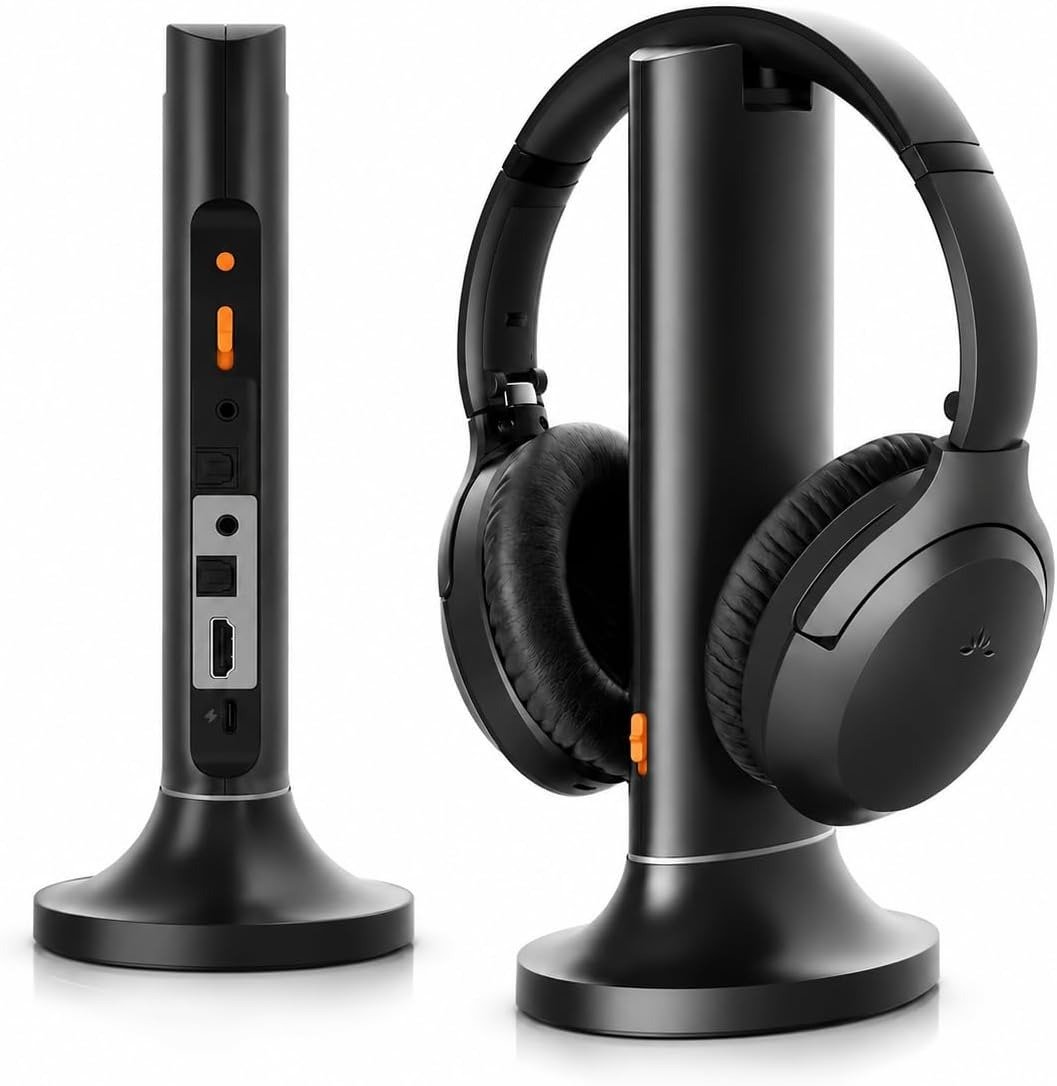
The Avantree Opera Aura is built specifically for it. It isn’t a commute headphone or a gym headphone — it’s a TV-listening system: a small transmitter base that plugs into your television, paired with over-ear headphones that talk to it through Auracast, the newest broadcast version of Bluetooth. I went through Avantree’s own documentation line by line, checked what it says against what it quietly leaves out, and tracked down how real owners of the rest of Avantree’s TV-headphone lineup have fared over time. Here’s the honest shape of it.
TV Volume vs. Dialogue Clarity: The Result Looks Fine, The Problem Isn’t
The TV is on. The volume bar shows a perfectly respectable number. Nobody would say it’s too quiet. And yet half the dialogue still slides past you, while the music swells and the explosions land just fine. That’s the paradox nobody names out loud: the problem was never really about volume.
It’s why an estimated 40% of Netflix viewers keep subtitles on by default, hearing loss or not. Subtitles work, until they don’t — live news, sports, a guest dropping by mid-episode, anyone who’d rather watch a face than read a ribbon of text. The actual fix isn’t “louder.” It’s getting the right frequencies to the right ears without dragging everything else along with them.
Missing TV Dialogue at Home: What You’re Actually Feeling but Not Naming
There’s a specific, low-grade fatigue to straining through a ninety-minute movie — leaning forward at the quiet parts, laughing a half-second late because you caught the punchline from everyone else’s reaction instead of the line itself. There’s the rewind reflex: back ten seconds, again, again, until you give up and just keep watching.
And there’s the quieter cost, the one people don’t say out loud — being “the one who needs it loud,” or worse, watching a parent become that person and not knowing how to bring it up without it turning into a whole conversation about aging. None of that is really about the TV. It’s about straining to do something that used to be effortless, and starting to dread doing it.
Why TV Dialogue Is Hard to Hear: The Hidden Mechanism Behind the Miss
Why does cranking the volume to 40 make it worse instead of better? Two reasons, and neither is really about your ears. Modern flat-screen TVs are thin by design, which means the speakers usually fire downward or backward instead of straight at you — the sound bounces off the wall or the stand before it reaches your seat. And modern soundtracks, especially films, are mixed for theater setups with five or more speakers spreading dialogue, music, and effects across the room. Most living rooms don’t have that. On a TV’s built-in stereo speakers, all of it gets flattened into the same two channels, and dialogue is usually the first thing to lose the fight.
Raising the master volume doesn’t separate those layers — it just makes all of them louder together, background score included. That’s a mechanical problem, not a hearing problem, although hearing plays its own part: by age 65, roughly a third of people have some measurable hearing loss, and that climbs to about 55% past 75, according to U.S. federal hearing-health data. Put a mechanical mixing problem on top of an aging auditory system, and “just turn it up” stops working twice over.
Mild vs. Moderate Hearing Difficulty: The Threshold Where the Fix Quietly Runs Out
Avantree draws a real line here, and it’s worth taking seriously rather than skimming past. Opera Aura ships with four EQ presets — Bass, Balanced, and two Clear Voice modes, one tuned for mild speech difficulty and a stronger one for moderate difficulty. The packaging is explicit that it’s not built for severe hearing loss and isn’t a medical device.
That’s not fine print designed to dodge a return; it’s an honest boundary. A $200 headphone with smart EQ can push speech frequencies forward and cut background clutter. It cannot do what a fitted, audiologist-programmed hearing aid does for someone whose hearing loss has actually been diagnosed as significant. If the difficulty is “I miss things during fast dialogue and arguments about volume,” this threshold doesn’t apply to you. If it’s “I’ve been told my hearing loss is severe,” it does, and the next call should be to a hearing professional, not to Amazon.
Auracast vs. Regular Bluetooth Headphones: Why Most Buyers Misread This Too Early
This is where I see most people trip before they’ve even opened the box. Auracast sounds like ordinary Bluetooth with a new name, so the assumption is that any wireless headphones — the ones already sitting in a drawer — should work with the base. They don’t. The transmitter only broadcasts over Auracast, so whatever’s receiving has to be Auracast-enabled too: the included headphones, another Auracast headset, or a compatible hearing aid. Your everyday Bluetooth earbuds simply won’t hear it.
The second misread is bigger, and it’s the one piece of this that surprised me most in the research. “Hearing aid compatible” sounds like it means “will stream into the hearing aids I already own.” For most people, right now, it doesn’t. Auracast support in hearing aids is still new — ReSound’s Nexia was among the first fully enabled models, with newer Signia, Starkey, Oticon, and Philips devices becoming Auracast-ready through firmware updates. Most hearing aids on the market today, including most Phonak models, still run on classic Bluetooth, not Auracast, and Avantree’s own support materials say as much. If your hearing aids aren’t on that short, growing list, the realistic plan is wearing the Opera Aura headphones themselves, not bridging the broadcast straight into devices you already have.
Avantree Opera Aura Buyers: Who Is Actually Inside This Problem
| You’re a strong fit if… |
|---|
| You keep asking “what did they say” and reaching for rewind |
| You and someone else in the house disagree on how loud the TV should be |
| Your TV is older, non-smart, or has no built-in Bluetooth |
| You want to take a phone call without pausing the show |
| The difficulty is mild to moderate — noticeable, not diagnosed as severe |
HDMI Soundbars, Severe Hearing Loss, Audiophile Ears: Where Wrong-Fit Begins
| Look elsewhere if… |
|---|
| You’ve been told your hearing loss is severe or profound |
| Your soundbar runs through HDMI ARC and you don’t want to rewire it |
| You want serious music or full-surround movie sound, not chiefly dialogue |
| You’re buying specifically to stream into existing hearing aids you haven’t confirmed are Auracast-enabled |
That HDMI ARC point deserves a beat of its own, because it’s an easy way to end up annoyed in week one. The base can pass audio through to an external sound system at the same time as the headphones, but only over an Optical connection — it isn’t built to do that over HDMI ARC. If your soundbar only runs through ARC, simultaneous output means rerouting to Optical, and the HDMI cable itself isn’t included in the box either way.
Avantree Opera Aura Specs and Price: The One Situation Where This Product Becomes Logical
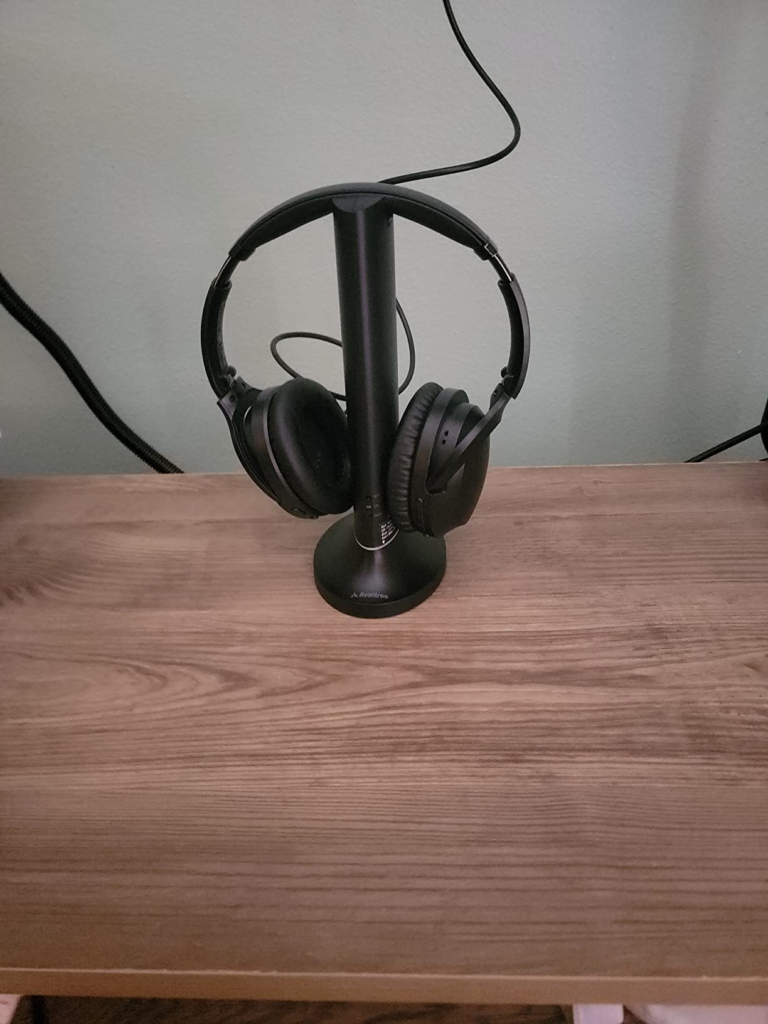
Once the mismatch cases are off the table, what’s left is a fairly specific, well-built answer to a fairly specific problem. Avantree has been making wireless audio gear for over two decades out of San Jose, with offices spanning Hong Kong, the UK, and Canada, and a product strategy built almost entirely around people who don’t have textbook-perfect hearing — that focus predates “Auracast” being a word anyone used.
| Spec | Avantree Opera Aura |
|---|---|
| What it is | Over-ear wireless headphones + TV transmitter/charging base |
| Wireless tech | Auracast (Bluetooth LE Audio) + classic Bluetooth, dual-mode |
| Codec | LC3 |
| TV inputs | HDMI ARC (cable not included), Optical, AUX |
| Battery life | Up to 35 hours per charge |
| Recharge time | About 2 hours |
| EQ modes | Bass, Balanced, Clear Voice 1, Clear Voice 2 |
| Volume Boost | Up to +6dB in Optical mode |
| Listeners per base | Multiple, each with independent volume |
| Price | $199.99 list, frequently discounted into the $170s |
| Warranty | 24 months if registered or bought direct; 12 months standard via marketplaces |
It’s also worth knowing where this sits inside Avantree’s own lineup, since the name change isn’t just marketing:
| Opera Plus (predecessor) | Opera Aura (this one) | |
|---|---|---|
| Wireless tech | 2.4GHz proprietary | Auracast |
| Headphones per base | Up to 2 | Effectively unlimited |
| Hearing aid streaming | No | Only Auracast-enabled models |
| Works at public Auracast venues | No | Yes |
| Typical price | ~$160 | ~$170–$200 |
Avantree Opera Aura Pros and Cons: What It Solves, What It Reduces, What It Still Leaves to You
| Pros | Cons |
|---|---|
| Actually targets speech clarity, not just raw volume | Auracast-only means you can’t reuse headphones you already own |
| One base, multiple headphones, independent volume — ends the remote tug-of-war | “Hearing aid compatible” only applies to the short list of Auracast-enabled models |
| Works with non-smart, non-Bluetooth TVs and modern Bluetooth TVs alike | HDMI ARC soundbar owners lose simultaneous output without rewiring to Optical |
| 35-hour battery, simple charging dock | Not built for serious music listening |
| Take calls without losing your place in the show | Not appropriate for severe hearing loss |
| 24-month warranty from a company that’s done this for 20+ years | Earlier Opera-line owners report buttons and charging wearing in year two |
| Forward-compatible with the wider Auracast ecosystem | Too new yet for a deep track record of independent reviews |
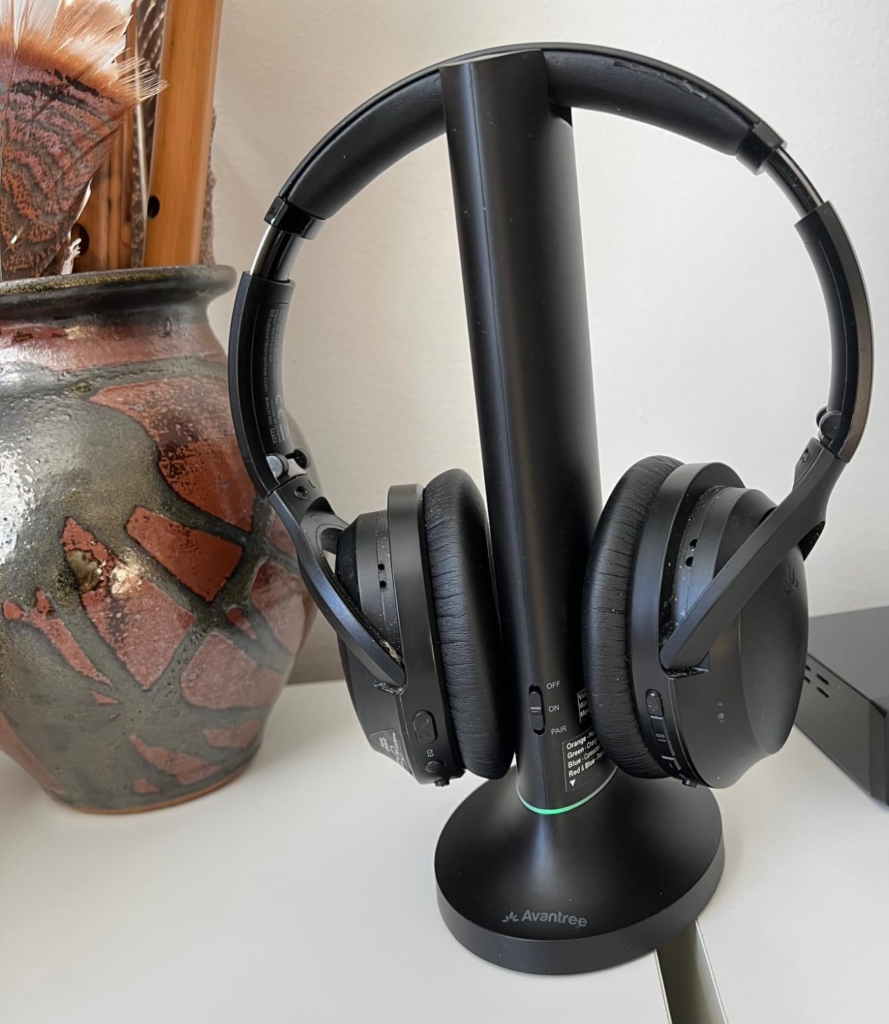
If I’m being straight with you, the real weak point in this lineage was never sound quality. It’s what happens after eighteen months. A few owners of earlier Opera and Duet headphones describe earcup mounts or volume buttons wearing out somewhere between year one and year two, and at least one report of a unit failing two months past an unregistered warranty window. Avantree’s customer service comes through reliably for the people who register their product — replacements arriving fast, support walking people through setup by phone — but it’s noticeably less forgiving for anyone who skipped that step or bought through a reseller without registering. Five minutes on their site at unboxing buys you a full extra year of coverage. It’s worth doing before you forget.
Avantree Opera Aura FAQ: Your Questions, Answered Straight
| Question | Answer |
|---|---|
| Can I use headphones I already own, like AirPods, with the base? | No. The transmitter only broadcasts over Auracast, so it needs an Auracast-enabled receiver — the included headphones, another Auracast headset, or a compatible hearing aid. The Opera Aura headphones can separately pair to your phone over classic Bluetooth at the same time, but that’s a different connection, not a workaround. |
| Will it stream straight into my hearing aids? | Only if your specific model is Auracast-enabled, and that list is still short — ReSound’s Nexia was among the first, with newer Signia, Starkey, Oticon, and Philips models becoming ready through firmware updates. Most hearing aids today, including most Phonak models, still use classic Bluetooth. If yours isn’t on that list, plan on wearing the headphones themselves. |
| Can I still hear my soundbar at the same time? | Yes, if it connects over Optical. It’s not built to pass through simultaneously over HDMI ARC, so an ARC-only soundbar would need to move to an Optical connection for both to run together. |
| Is this a hearing aid, or a medical device? | No, and Avantree says so directly. It’s built for mild to moderate listening difficulty, not severe hearing loss. If hearing loss has actually been diagnosed as significant, this is a comfort upgrade, not a substitute for proper care. |
| What happens if it breaks after the first year? | You’re covered for 24 months if you register the product or bought directly from Avantree, and 12 months as a baseline through marketplaces without registering. Given how often button and charging wear shows up around the 18-to-30-month mark across this product line, registering on day one is worth doing. |
| Is it any good for music, not just TV? | Adequate, not its purpose. Every independent look at this headphone family lands on the same conclusion: comfortable enough for casual listening, but tuned and marketed around dialogue clarity, not music fidelity. |
Avantree Opera Aura Verdict: Final Compression
None of this makes the Opera Aura a miracle box, and it isn’t trying to be one. It solves one specific, well-defined problem: dialogue getting lost on a modern TV, for someone whose hearing difficulty is real but not severe, in a household where not everyone wants the volume at the same number. It doesn’t fix severe hearing loss, it doesn’t replace an audiologist, and it doesn’t become great music headphones just because you sometimes wear them between shows.
If the scene from the start of this review — the rewind, the “what did she just say,” the volume argument — is one you live through more nights than not, that’s the actual condition Opera Aura is built to solve, and everything else here is just detail. If that’s where you are, checking today’s price and stock on Amazon is the next sensible step, not an emotional one.
Transparency Note:
This analysis is built on aggregated real-world experience.
It extracts what repeatedly holds, what breaks, and what users uncover only after living with the system—then shapes it into a clear model you can use immediately.
Think of it as structured experience, refined and presented so you don’t have to learn it the hard way.
“A quick note: Don’t believe the star ratings, but trust personal experience. This article is a compilation of collected experiences.”