Ecobee Smart Thermostat Premium Review: Why the App Says 72°F and Your Bedroom Still Feels Wrong
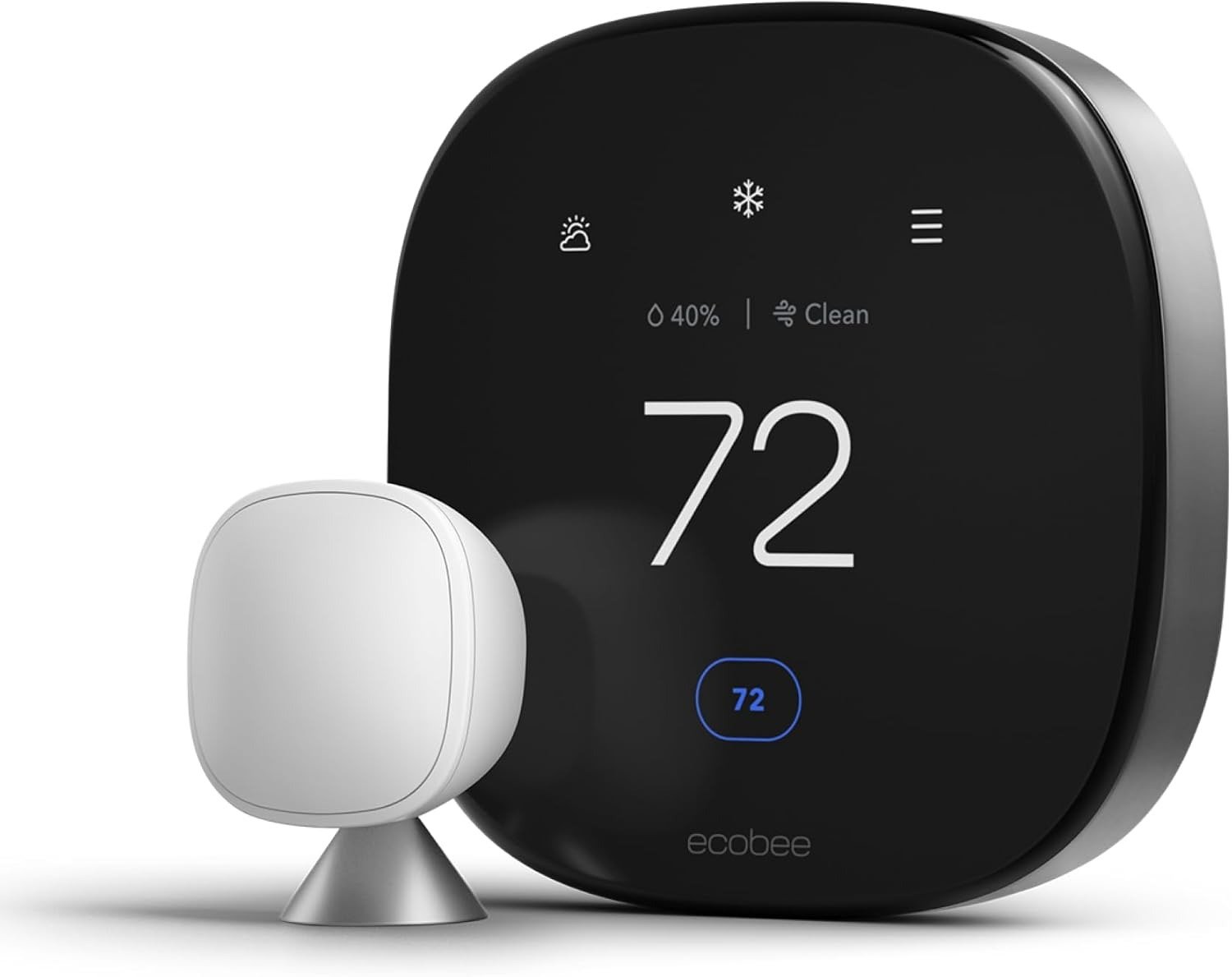
ECOBEE SMART THERMOSTAT PREMIUM
It’s 11 p.m. Your phone says the bedroom is sitting right at your setpoint. Your partner just walked past you to grab a second blanket from the closet — again. Nothing on the screen looks wrong. The room still feels wrong.
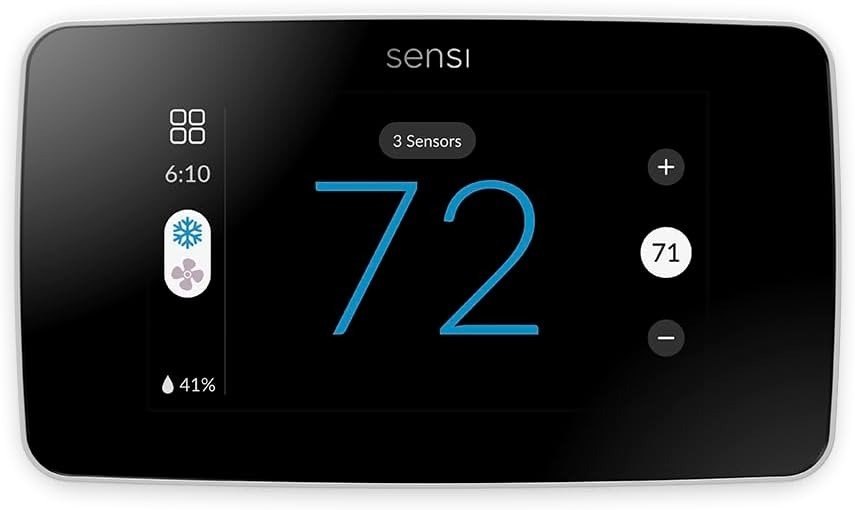
That gap, between what a thermostat reports and what a room actually feels like, is the whole story of the Ecobee Smart Thermostat Premium. Not because it’s a bad device. Because most people buy it assuming a number on a glass screen equals comfort. It doesn’t, and the distance between those two things is exactly where this review lives.
I spent days pulling apart long-term ownership accounts, independent lab testing, HVAC forum threads, and ecobee’s own support documentation, hunting for where the pitch and the lived experience stop lining up. One mechanical detail explained most of the “I bought a smart thermostat and my bill barely moved” complaints I kept running into. We’ll get there.
Ecobee Smart Thermostat Premium Accuracy: The Result Looks Fine, The Problem Isn’t
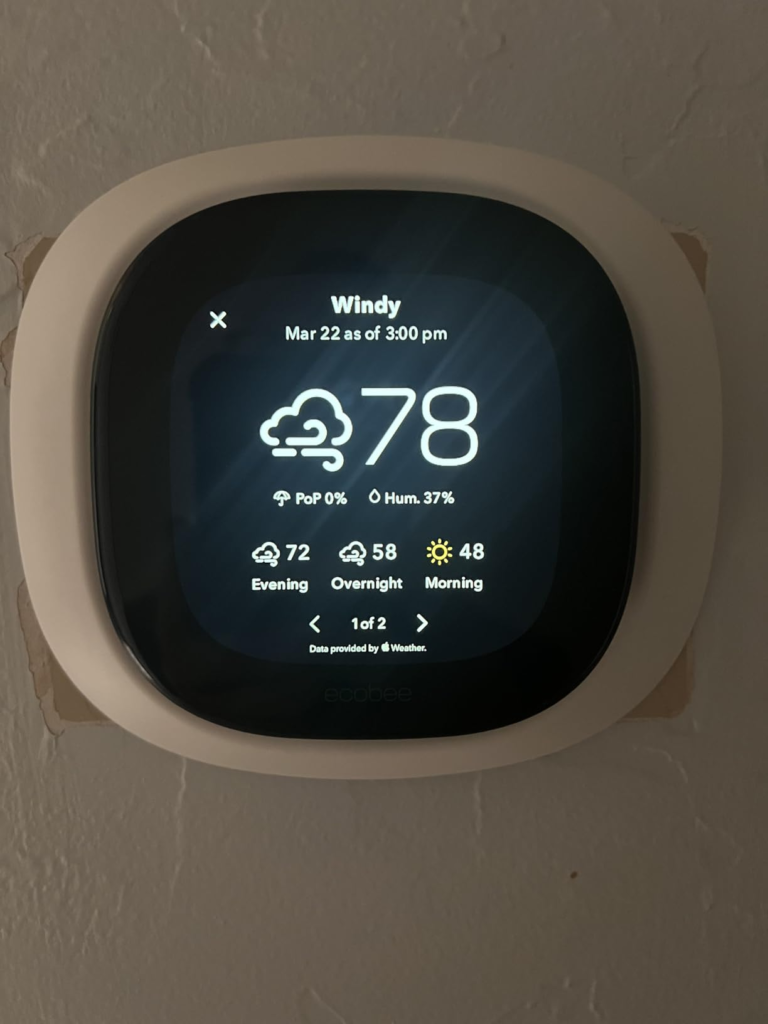
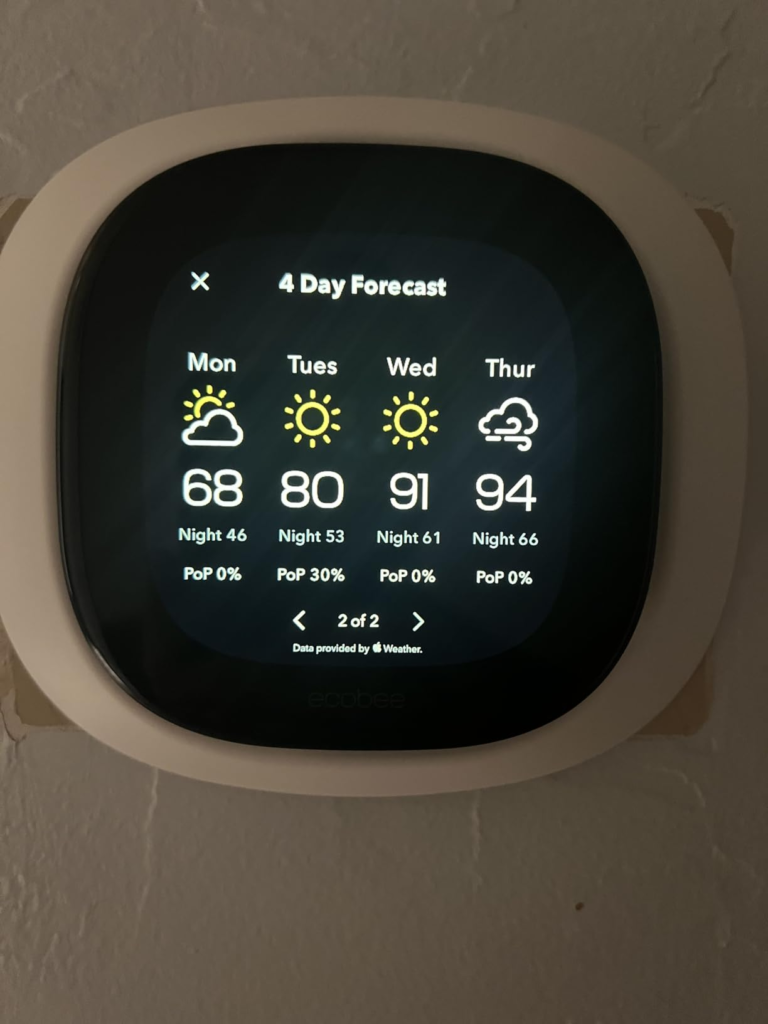
The touchscreen itself tests as accurate. Reviewers who ran it for a couple of weeks found it worked flawlessly the entire time, with a responsive display and heating that reliably kicked in as temperatures dropped. So why do so many owners still swear their “smart” thermostat reads wrong?
Ecobee’s own support team traces most “inaccurate” complaints back to placement, not hardware — direct sunlight, a nearby vent, or a gap behind the unit that lets the wall cavity’s air leak onto the sensor. None of that is a defect. It’s a thermostat doing exactly what it’s told, mounted somewhere that lies to it.
There’s a second cause nobody puts on the spec sheet: humidity. A room at 50% humidity and the same room at 70% can show an identical number on screen and feel completely different to the person standing in it. The display isn’t broken. Your skin just doesn’t measure in Fahrenheit.
Ecobee Smart Thermostat Premium Temperature Swings: What You’re Feeling but Not Naming
Here’s the feeling you haven’t put a name to yet: one room that’s always a little too warm, another that’s always a little too cold, and a thermostat in the hallway that insists everything is fine. You’re not imagining it. A single sensor in a hallway can only ever describe the hallway.
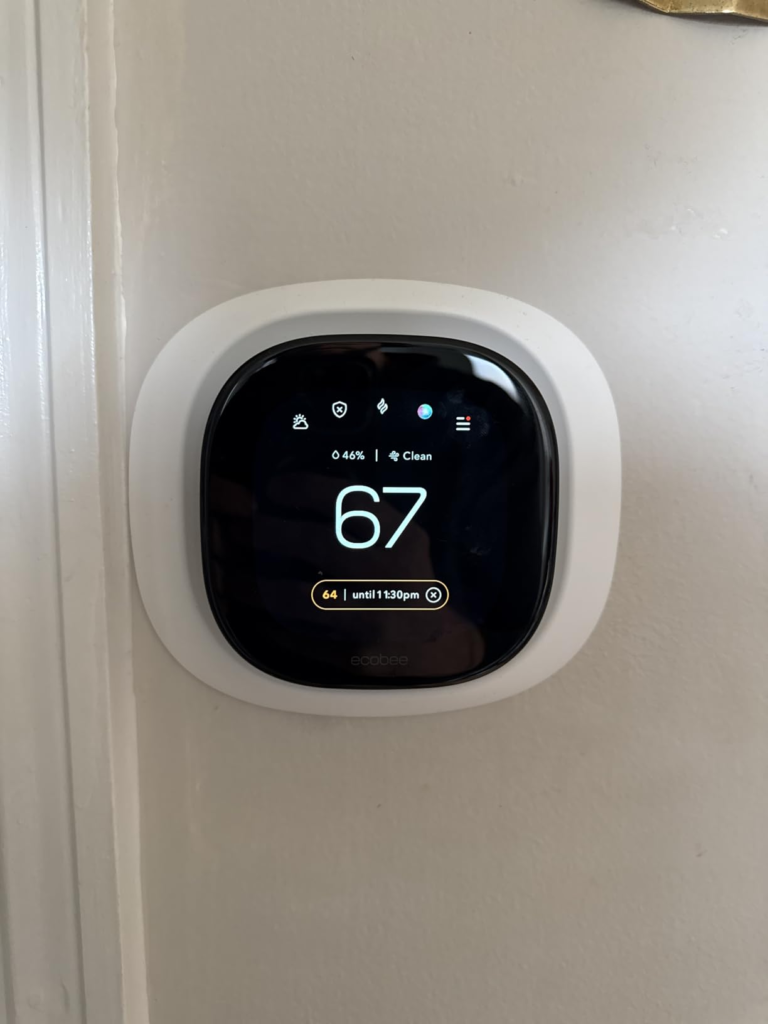
This is the actual reason ecobee builds the Premium around remote sensors instead of a single reading. The Smart Thermostat Premium works with up to 32 remote sensors, far more than the roughly six that Google Nest, GE Cync, or Wyze support — and it ships with one of those sensors already in the box, set up to average temperature and occupancy across the rooms that matter instead of just guessing from the hallway.
That’s the fix for uneven rooms. It is not, on its own, the fix for your energy bill. That’s a different mechanism — and it’s the one most reviews skip past.
Ecobee Smart Thermostat Premium Heat Pump and Aux Heat: The Hidden Mechanism Behind the Miss
If your home runs on a heat pump, here’s the part of the spec sheet nobody reads until the January bill arrives.
Out of the box, the Premium is tuned to prioritize getting to your setpoint fast over getting there cheaply. A recent roundup of expert testing notes that while the Premium supports dual-fuel heat pump configurations, it lacks the AI balance-point control that Google’s Nest Learning Thermostat uses to automatically decide when the heat pump should stop trying and let backup heat take over.
Why does that matter? Because backup heat — the electric resistance coils that kick in when the heat pump alone can’t keep up — runs two to four times more expensive than heat-pump-only heat. One engineer who logged his own system found the default logic would reach for backup heat any time it wasn’t closing the gap to setpoint fast enough, even though his heat pump alone could comfortably cover the load down to around 20°F. Left on factory defaults in a cold climate, the thermostat will quietly spend your money on the most expensive way to heat your house — and the app will never tell you that’s what happened. It’ll just show a higher bill.
Ecobee Smart Thermostat Premium Settings: The Threshold Where Savings Quietly Break
Here’s where that mechanism turns into a number you can actually act on.
By default, the Premium won’t run the compressor below 35°F outdoor temperature, and it holds the compressor and auxiliary heat to minimum 300-second run and off cycles to prevent short cycling. Most installer guides put the practical aux-heat lockout somewhere between 30°F and 40°F depending on climate and heat pump capacity — set it too high, and the system leans on expensive backup heat far more than it needs to.
That 30–35°F line is the threshold. Above it, the heat pump should be doing the work alone. Below it — or anywhere the defaults are left untouched — the math quietly tips toward backup heat, every single cycle, without an alarm or a warning screen.
| Setting | Factory Default | What It Actually Controls | Worth Adjusting If… |
|---|---|---|---|
| Compressor Minimum Outdoor Temp | 35°F | Lowest temp the heat pump alone is allowed to run | Your heat pump can safely run colder (confirm with the manufacturer first) |
| Aux Heat Max Outdoor Temp | Auto | Outdoor temp above which backup heat is blocked | Backup heat is firing on mild days |
| Compressor to Aux Temp Delta | Auto | How far off setpoint before backup heat is allowed to help | You’re getting frequent “aux heat running” alerts |
| Min Cycle Off Time (compressor/aux) | 300 sec | Prevents rapid on/off cycling | Older systems may need 5–15 min instead |
This is the one section of the app where ten quiet minutes will do more for your bill than anything the eco+ algorithm does automatically.
Ecobee Smart Thermostat Premium Reviews Online: Why Most Buyers Misread This Too Early
Most people compare smart thermostats the way they compare paper towels: by price, on a shelf, for thirty seconds. That’s the trap.
Ecobee’s own Enhanced model costs $60 less than the Premium, but it skips the included SmartSensor — and a replacement two-pack runs about $100, which means the “cheaper” option can end up costing more once you add the sensor most uneven homes actually need. The sticker price and the real price are not the same number.
The same trap shows up against Nest. In a controlled 90-day head-to-head in a Florida home, the Nest Learning Thermostat was $50 cheaper at checkout but didn’t include a room sensor — and the Premium’s included sensor closed that $50 gap within about a year through better comfort in the problem room alone. Buy on the label and you’ll miss that. Buy on the total and the calculus flips.
Here’s the assumption worth naming directly: a thermostat is not a single product. It’s a bundle — sensor, speaker, air monitor, hub — wearing one price tag. Compare bundles, not labels.
Ecobee Smart Thermostat Premium Best For: Who Is Actually Inside This Problem
You’re the buyer this thermostat was built for if any of this sounds like your house:
- A multi-story or multi-zone home where one room always runs hot or cold compared to the rest
- An existing heat pump, multi-stage system, or whole-home humidifier you want one device to manage
- A household already leaning on Alexa, Siri, HomeKit, or SmartThings and tired of juggling separate hubs
- A willingness to spend ten minutes in a settings menu once, in exchange for not overpaying for backup heat all winter
| Quick Fit Check | Premium Fits | Premium Doesn’t Fit |
|---|---|---|
| Home layout | Multiple rooms with uneven temps | Small, single-zone apartment already even |
| HVAC type | Heat pump, multi-stage, or humidifier-equipped | Very old 2-wire heat-only system with no plan for a C-wire |
| Smart home setup | Already using Alexa/HomeKit/SmartThings | No interest in any smart-home ecosystem at all |
| Patience for settings | Fine tuning a menu once for real savings | Wants zero configuration, ever |
Ecobee Smart Thermostat Premium Problems: Where Wrong-Fit Begins
The honest counter-cases, named plainly:
If you want a thermostat that automatically manages the heat-pump-to-backup-heat handoff with no input from you, Nest’s Learning Thermostat is the one model in recent testing built specifically around that automatic balance-point feature — the Premium can do the same job, but only if you go in and set it.
If you’re renting short-term or can’t permanently rewire a wall, a hardwired touchscreen thermostat with a glass front isn’t the right category for you regardless of brand. One Best Buy reviewer dropped theirs and chipped the glass — ecobee replaced it under warranty, but a cracked screen is still a real risk a battery-powered dial doesn’t carry.
And if you specifically want zero settings menus, ever, the feature density that makes the Premium powerful is the same density that makes the first setup run 30–45 minutes instead of ten. That’s not a flaw. It’s a mismatch, for a specific kind of buyer.
Is the Ecobee Smart Thermostat Premium Worth It: The One Situation Where It Becomes Logical
If you recognized your own house in the uneven-room section, or you’re already running a heat pump and you’re willing to spend those ten minutes in the threshold settings once, this is where the math actually closes.
Ecobee’s own figures put potential savings at up to $284 a year against a constant 72°F hold, and independent numbers land lower but still real: a 90-day controlled test measured a 14.2% cut in cooling energy versus a baseline programmable thermostat, while one long-term owner tracked an 18% drop against utility bills from their prior schedule-based thermostat, with the cost of the unit covered in about 14 months.
On price: MSRP sits at $249, though retailers commonly list it closer to $259.99 before sales. Manufacturer rebates have knocked $25–$50 off at retailers and utility rebates of $50–$125 are available in 40-plus states through providers — worth checking before you pay full price anywhere.
Ecobee Smart Thermostat Premium Pros and Cons: What It Solves, Reduces, and Still Leaves to You
| What It Solves | What It Reduces | What’s Still on You |
|---|---|---|
| Hot/cold rooms via included SmartSensor | HVAC runtime through scheduling + occupancy | Tuning aux-heat thresholds for real savings |
| Need for a separate smart speaker — Alexa/Siri built in | Manual schedule-adjusting | Checking your specific HVAC compatibility first |
| No clear read on indoor air quality | Guesswork on filter timing | Protecting a glass screen from drops |
| Juggling multiple smart-home hubs | Backup-heat overuse, once configured | Placing/replacing sensor batteries (~yearly) |
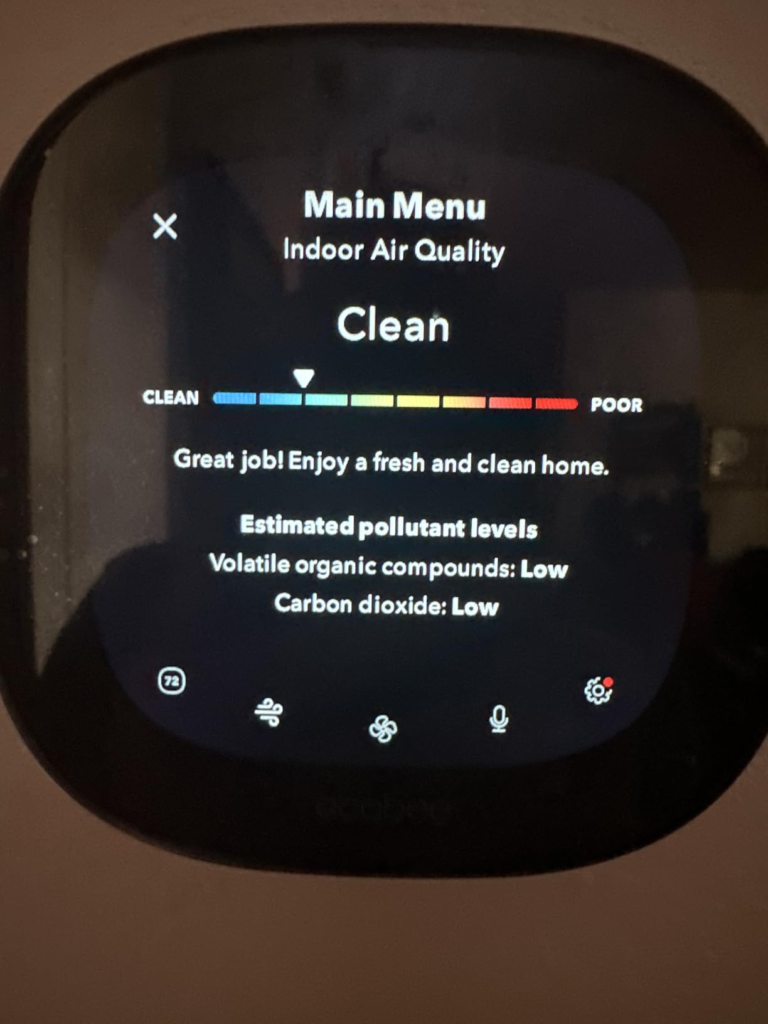
Worth naming plainly: the indoor air-quality reading is a general Clean-to-Poor scale with VOC and CO2 categories, not exact particulate counts — useful as an early warning, not a lab-grade reading. Don’t expect it to replace a dedicated air monitor.
Ecobee Smart Thermostat Premium FAQ: Fast Answers Before You Decide
| Question | Answer |
|---|---|
| Does it require a monthly subscription? | No. Core features — scheduling, geofencing, SmartSensor averaging, energy reports, and built-in Alexa — work with no recurring fee. A separate, optional security-monitoring add-on exists if you want it, with its own monthly cost — the thermostat itself never forces that decision on you. |
| Will it work without a C-wire? | Yes — it includes a Power Extender Kit that creates one at the furnace board in most homes. If your wiring is unusual, budget for an HVAC tech. |
| How is Premium actually different from Enhanced? | Enhanced shares most of the same core hardware but skips the air-quality monitor, built-in Alexa/Siri speaker, and included SmartSensor. You’re paying the difference for those three things specifically. |
| Will it actually lower my bill if I have a heat pump? | Real-world numbers run lower than the marketing headline — closer to 14–18% than the “up to 26%” figure — and how close you get depends heavily on whether you tune the aux-heat threshold settings for your climate. |
| Is the air-quality sensor accurate enough to trust? | Treat it as a heads-up, not a measurement. It tells you Clean, Moderate, or Poor — not an exact number. |
| How long do the SmartSensors last? | They run on a single coin-cell battery that typically lasts close to a year before needing a swap. |
Ecobee Smart Thermostat Premium Review: Final Verdict
The app was never lying to you. It was just answering a question — “what’s the setpoint?” — that isn’t the same question as “does this room feel right?” The Premium closes that second gap better than almost anything else on the market, but only for the buyer willing to open the settings menu once and actually look at it.
If your house has the uneven-room pattern, or a heat pump quietly eating your winter bill on factory defaults, this is where the decision stops being vague: ECOVEE SMART THERMOSTAT PREMIUM.
From our analytics lab: More top-rated reviews
Transparency Note:
This analysis is built on aggregated real-world experience.
It extracts what repeatedly holds, what breaks, and what users uncover only after living with the system—then shapes it into a clear model you can use immediately.
Think of it as structured experience, refined and presented so you don’t have to learn it the hard way.
“A quick note: Don’t believe the star ratings, but trust personal experience. This article is a compilation of collected experiences.”