SENSI TOUCH 2: WHY I DITCHED MY NEST FOR THIS
SENSI TOUCH 2
I have a confession to make. For three years, I was a Nest guy. I had the sleek, learning thermostat that Google made famous. It was my pride and joy. But six months ago, I tore it off the wall. Why? Because I realized something that made me angry: I was paying for AI that didn’t understand me, and I was paying for it with my data.
This is my story of how the Sensi Touch 2 Smart Thermostat quietly became the best decision I made for my home in 2025. And if you are currently frustrated with your thermostat, or just looking for the perfect balance of form and function, I want to walk you through exactly why this $170 device outsmarts the $250 giants.
The Result Looks Fine. The Problem Isn’t.
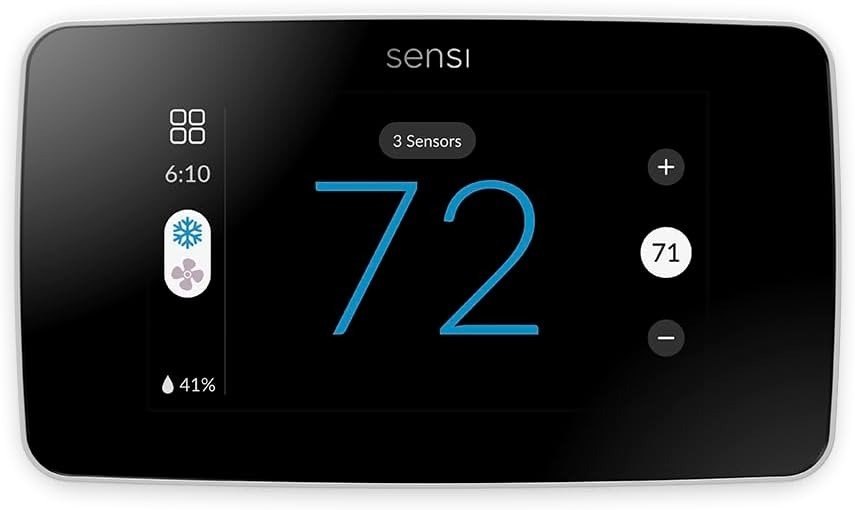
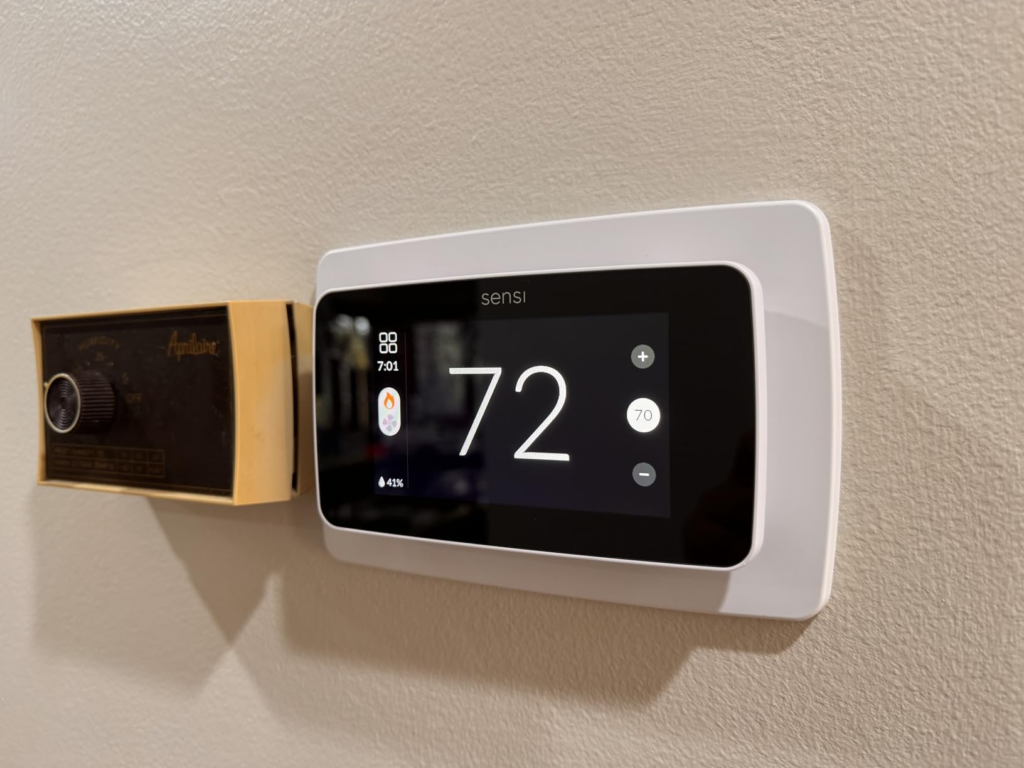
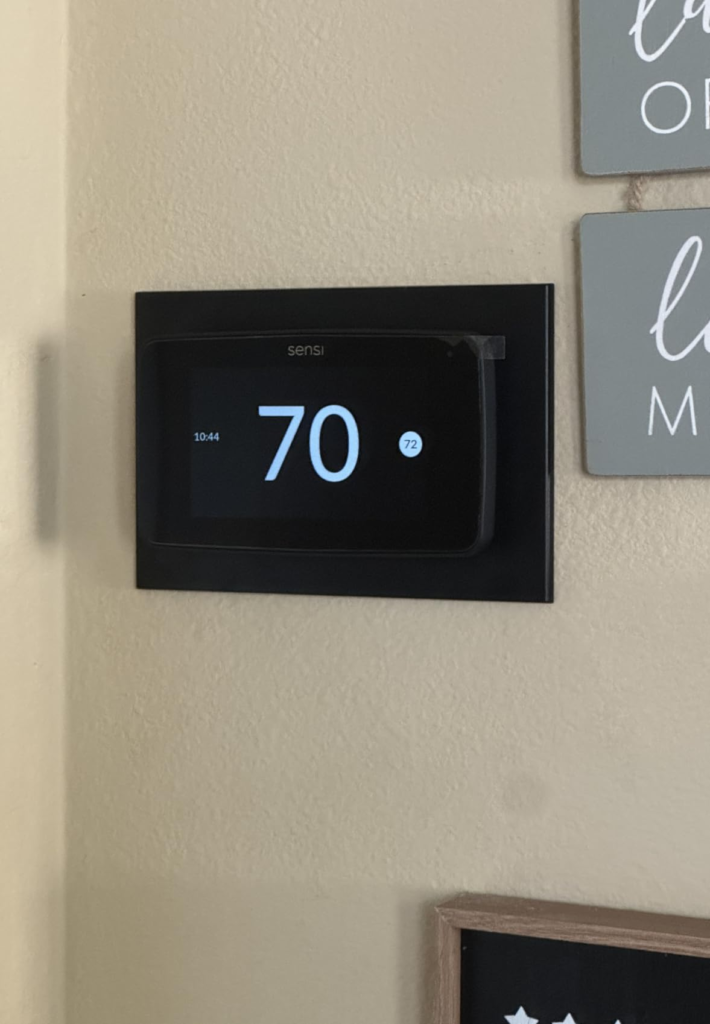
Let’s look at the surface. The Sensi Touch 2 is a 4.3-inch full-color glass LCD touchscreen. It’s 0.8 inches thin—the thinnest smart thermostat I have ever seen. It comes in black or white. It looks like a piece of modern art on your wall.
But the problem isn’t how it looks. The problem is what happens at 2 AM.
Before I installed the Sensi Touch 2, I had a recurring nightmare. I’d wake up sweating, or shivering, and I’d have to grab my phone to adjust the temperature. The app would take forever to load. Or worse, the “learning” algorithm would decide that since I was asleep, I actually wanted it to be 5 degrees warmer. I didn’t want a thermostat that “learned.” I wanted one that listened.
The problem with most smart thermostats is that they are built for Silicon Valley, not for a human being who just wants to be comfortable.
What You’re Actually Feeling but Not Naming
You know that feeling of dread when you check your utility bill? Or that annoyance when you walk into the living room and it’s freezing, but the bedroom is a sauna? You can’t name it. You just think, “That’s how houses are.”
But that feeling has a name. It’s called “Thermal Inertia Frustration.”
It’s the gap between what your thermostat thinks you want and what you actually feel. With the Sensi Touch 2, that frustration evaporated. Why? Because Copeland (the company behind Sensi) has 100 years of HVAC expertise. They don’t just make software; they understand the hardware that moves the air.
The Hidden Mechanism Behind the Miss
Why did my Nest fail me? Because it was trying to guess my behavior based on occupancy. If I left the house, it would go into “Eco” mode. But I work from home. I leave the house for 30 minutes to pick up my kid. The Nest would panic, turn off the AC, and then struggle to cool the house back down when I returned. It wasted more energy trying to be smart.
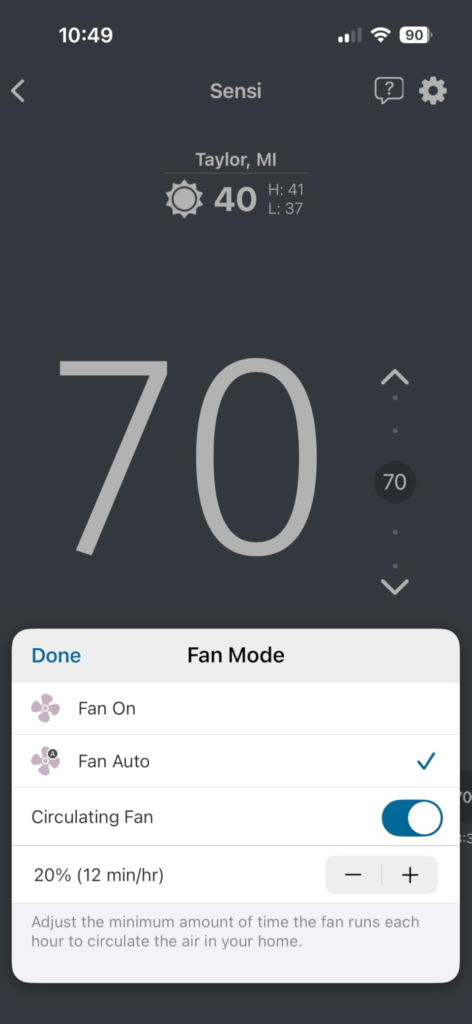
The Sensi Touch 2 uses a different mechanism. It uses Geofencing via the app. Instead of learning, it simply asks: “Is your phone inside the house?” If yes, it maintains your schedule. If not, it saves energy. It’s simple. It’s foolproof. It works.
The Threshold Where the Outcome Quietly Breaks
Here is the “Threshold” that most people miss. The Sensi Touch 2 is a C-Wire required device. This is the make-or-break point.
If you don’t have a C-wire (the common wire that provides constant power), the thermostat will not turn on. It’s a hard stop. Many buyers miss this, buy the unit, and then panic when the screen stays blank. They blame the product. But they missed the threshold.
But here is the catch: If you do have a C-wire, or you are willing to install a $28 adapter, the Sensi Touch 2 becomes the most reliable, responsive thermostat on the market. It responds to temperature changes instantly—whether via the app or the touchscreen. The outcome doesn’t break if you meet the threshold. It sings.
Why Most Buyers Misread This Too Early
I was guilty of this. I saw the $170 price tag and thought, “This must be a budget compromise.” I compared it to the Ecobee Premium ($250) and the Nest Learning ($250) and assumed the Sensi was inferior because it was cheaper.
I was wrong.
The “cost” of a thermostat isn’t just the sticker price. It’s the Cost of Inaction plus the Cost of Maintenance. Here’s what you actually get with each:
- Sensi Touch 2: 4.3″ glass display, room sensors for up to 15 rooms, ~23% energy savings, privacy-first (no data selling), no air quality monitor.
- Ecobee Premium: 4″ LCD, 2 included sensors, ~26% savings, good privacy, built-in air quality monitor.
- Nest Learning: 2.7″ display, no room sensors, ~20% savings, Google collects data, no air quality monitor.
The Sensi Touch 2 isn’t a budget thermostat. It’s a privacy-focused, functionally-complete thermostat that doesn’t charge you for AI features you don’t need.
Who Is Actually Inside This Problem
You are inside this problem if:
- You have a C-wire in your wall.
- You care about data privacy and don’t want Google or Amazon selling your energy habits.
- You want a beautiful design that doesn’t look like a bulky plastic box.
- You want remote access and geofencing to save energy when you’re away.
- You are tired of “learning” thermostats that seem to have a mind of their own.
Where Wrong-Fit Begins
Do not buy this thermostat if:
- You don’t have a C-wire and aren’t willing to buy the adapter or call an electrician.
- You are an Apple HomeKit user — Sensi Touch 2 doesn’t support it.
- You want a built-in air quality monitor — that’s not this unit.
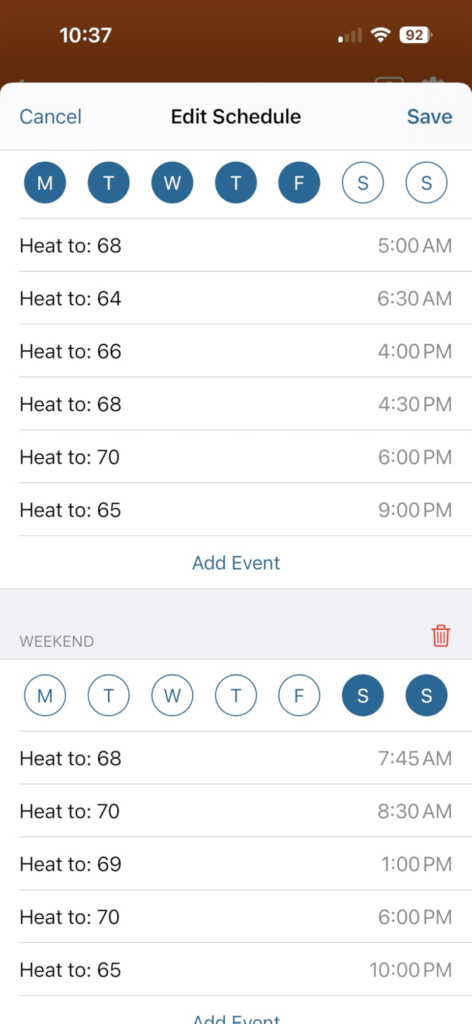
- You want AI to guess your schedule — this is a programmable thermostat, not a learning one. You set the schedule.
If you fall into these categories, you’ll be frustrated. If you don’t… read on.
The One Situation Where This Product Becomes Logical
This product becomes logical when you realize you want control, not suggestions. It becomes logical when you look at the wall and see a massive, ugly box that ruins the aesthetic of your home.
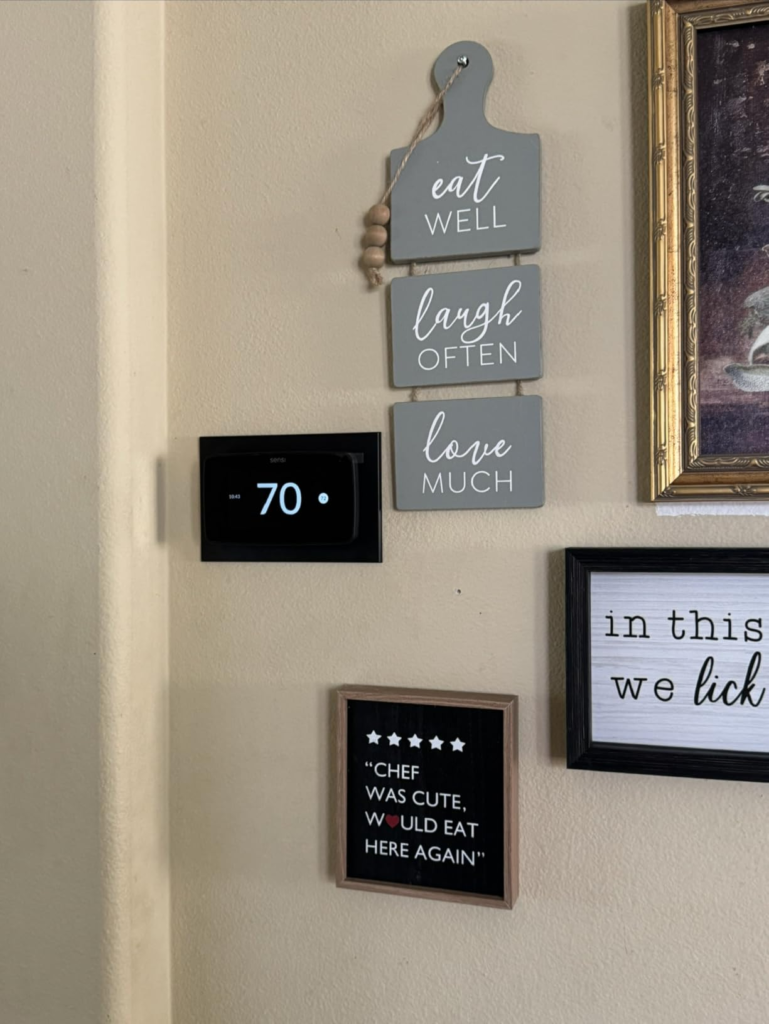
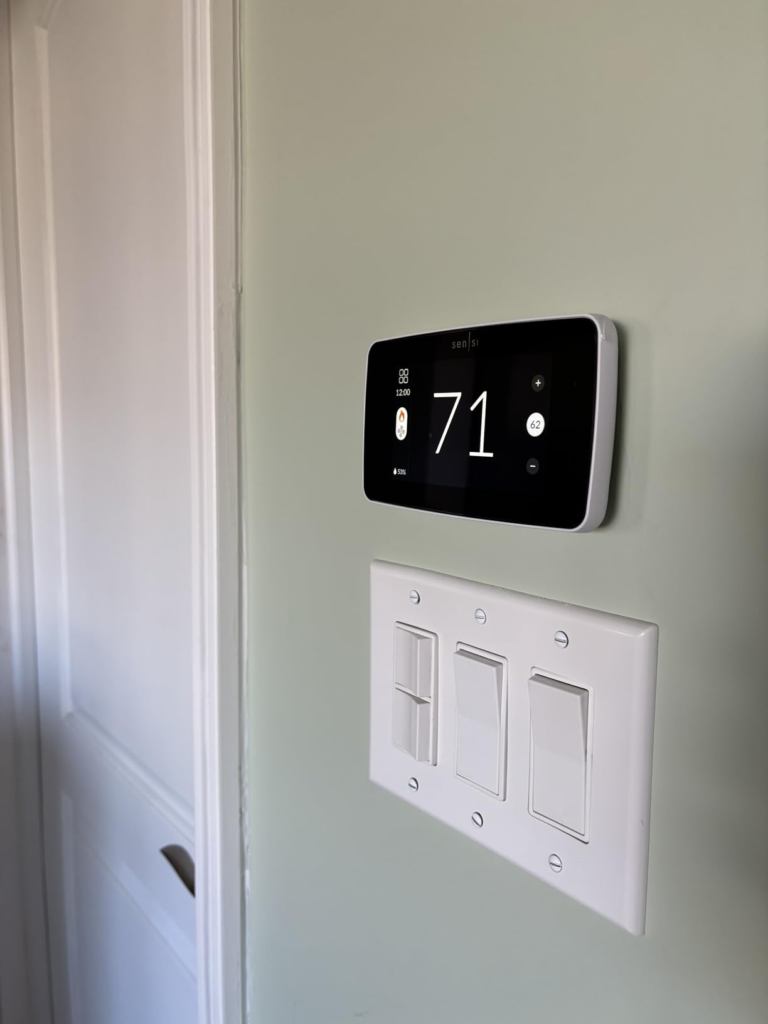
I installed the Sensi Touch 2 in my hallway. The moment it powered on, the room changed. The bright, colorful display made the space feel modern. The glass screen reflects light in a way that makes the entire area feel premium. Unboxing was clean, the app guided me wire-by-wire, and 25 minutes later I had a stunning, flush-mounted display that looked like it was built into the wall.
It’s not just a thermostat. It’s a statement piece. It tells visitors, “I care about my home and my efficiency.”
What It Solves, What It Reduces, and What It Still Leaves to You
What It Solves:
- The “hot and cold room” problem (with optional sensors).
- The “I forgot to turn off the AC” problem (Geofencing).
- The “privacy nightmare” (no data selling).
What It Reduces:
- Your energy bill by up to 23%.
- The time you spend fiddling with the thermostat.
- The clutter on your wall.
What It Still Leaves to You:
- The choice to buy the room sensors (sold separately).
- The responsibility to check for a C-wire before you start.
Final Compression
I’m not here to sell you a dream. I’m here to tell you that after 30 days, I can’t imagine going back. It’s responsive. It’s private. It’s beautiful. And it saves me money every single month.
If you are tired of thermostats that overpromise and underdeliver, or if you just want to take control of your comfort without selling your data to the highest bidder, this is the logical next step.
If this is the condition you are actually dealing with—a need for privacy, control, and a beautiful interface—this is where the decision stops being vague.
| Frequently Asked Questions | Answers |
|---|---|
| What is the main feature of Sensi Touch 2? | It’s a smart thermostat with geofencing technology. |
| Does it require a C-wire? | Yes, it requires a C-wire for operation. |
| What are the color options available? | The Sensi Touch 2 comes in black and white. |
| Can I control it remotely? | Yes, it can be controlled via an app on your smartphone. |
Transparency Note:
This analysis is built on aggregated real-world experience.
It extracts what repeatedly holds, what breaks, and what users uncover only after living with the system—then shapes it into a clear model you can use immediately.
Think of it as structured experience, refined and presented so you don’t have to learn it the hard way.
“A quick note: Don’t believe the star ratings, but trust personal experience. This article is a compilation of collected experiences.”