AUDIO-TECHNICA ATH-M30X REVIEW: THE STUDIO HEADPHONE THAT PERFORMS EXACTLY WHERE YOU NEED IT — AND QUIETLY FAILS EVERYWHERE YOU DON’T
You plug them in. The sound is clean. The isolation is solid. You tell yourself: this is what $69 is supposed to feel like.
Then three weeks later, you’re mixing a vocal track at 2am and something feels off. The mids are slightly recessed. There’s an edge in the upper frequency you can’t quite name. You turn up the volume trying to chase more detail — and the detail doesn’t really arrive.
That’s not a defect. That’s the M30x telling you something about itself it couldn’t say on the product page.
This review is about what that sound signature actually means for your specific workflow — not whether these headphones “are good,” but whether they belong in your setup at this exact stage of your work.
The Result Looks Fine. The Problem Isn’t.
The ATH-M30x measures impressively for its price category. Forty-millimeter neodymium drivers. Copper-clad aluminum wire voice coils. Frequency response from 15Hz to 22kHz. Impedance at 47 ohms. Sensitivity at 96 dB/mW. Maximum input power of 1,300 mW.
On paper, these numbers compete with headphones at twice the price.
And in use? The result looks fine. You hear the kick drum. You hear the vocal. You hear the hi-hat crisp in the upper register. Everything seems present.
The problem isn’t in what’s missing from the frequency chart. It’s in what the chart can’t show you: the 6–8kHz spike that colors the sound just enough to affect how you judge upper-midrange decisions. The slightly recessed low-midrange that makes your mixes feel cleaner than they are until you check them on speakers. The narrow soundstage that compresses the spatial picture just enough to mislead you on reverb decisions.
These aren’t catastrophic flaws. They are directional biases. And understanding their direction is what separates people who get value from this headphone from people who feel disappointed three months in.
What You’re Actually Feeling but Not Naming
If you’ve used the M30x for more than a few weeks, there’s a specific kind of friction you start to sense during longer mixing sessions. You’re making decisions confidently — then checking them on speakers and finding that the upper mids read slightly hot, or that the low end is thicker than you thought.
What you’re feeling is the difference between monitoring and reference. The M30x is a monitoring headphone in the truest sense: it is designed to let you hear what you’re recording with enough clarity to catch technical errors. It is not designed to give you a perfectly flat picture of your mix.
The 6–8kHz emphasis adds apparent brightness and transient presence — great for catching sibilance in vocals, useful for identifying harsh consonants in dialogue recording. Less ideal as your primary mixing reference, because that same brightness makes the high-end of your mix sound more resolved than it may actually be.
The bass sits moderately present and controlled — not boosted, not thin. You’ll hear low-end problems. You won’t necessarily hear low-end balance with precision.
This is not a failure. It’s a tuning philosophy. Audio-Technica positioned the M30x below the M40x in their lineup for a reason, and the reason is measurable: the M40x delivers a flatter frequency response tuned specifically for mixing accuracy. The M30x is tuned for clarity in the midrange and tracking intelligibility — a subtly different job.
The Hidden Mechanism Behind the Miss
The most common mistake buyers make with the M30x is treating it as a universal studio solution. They see “professional monitor headphone,” read the specs, and assume the workflow coverage is full-circle: tracking, mixing, mastering, casual listening. All four.
The mechanism behind the miss is this: at 47 ohms and 96 dB/mW sensitivity, the M30x is accessible from any source — phone, laptop, audio interface, portable recorder. That accessibility breeds a false sense of versatility. Because it works everywhere, you begin to use it for everything.
But accessible ≠ neutral. The ease of driving these headphones is a feature that removes a barrier to entry, not a statement about their tonal balance.
Here’s what the mechanism looks like in practice:
| Workflow | M30x Performance | Reality Check |
|---|---|---|
| Vocal tracking | Excellent | Closed-back isolation prevents bleed into microphone; midrange clarity catches pitch issues immediately |
| Dialogue editing | Strong | Upper-mid emphasis helps identify sibilance and mouth noise |
| Field recording monitoring | Strong | Long fixed cable, good isolation, lightweight (220g) |
| Casual listening | Solid | Enjoyable sound with modest bass presence and clean highs |
| Budget mixing (tracking rough edits) | Acceptable | Works for level-checking and structural editing; not for final mix decisions |
| Critical mixing / mastering | Weak | 6–8kHz coloration introduces judgment errors at the mix decision stage |
| Long listening sessions (3h+) | Marginal | Earpads are firm vinyl; heat builds in under an hour on closed-back; some clamp force from factory |
The M30x does four of those seven jobs well. Three, it handles with noticeable compromise. Knowing which three matters more than any number of spec comparisons.
The Threshold Where the Outcome Quietly Breaks
There is a specific listening threshold where the M30x stops being a productive tool and starts introducing error.
That threshold is: final mix referencing under critical playback conditions.
Below that threshold — rough edits, tracking sessions, field monitoring, dialogue review, casual listening — the M30x performs honestly and above its price point.
At or above that threshold — equalizer decisions, level balancing for release, mastering passes, spatial mix judgments — the 6–8kHz coloration begins to distort your judgment. You’ll make treble decisions based on a slightly brighter picture than your listeners will hear on neutral playback systems.
This is not a theory. It’s the mechanism behind why professional engineers consistently recommend the M40x over the M30x for mixing, even though the frequency responses look similar on paper. The M40x’s flatter response in the treble range — particularly in that 6–12kHz region — gives you a more reliable reference for the decisions that matter most at the finish line.
For the M30x, the threshold where it breaks is not a volume threshold or a fatigue threshold. It’s a decision-type threshold.
Why Most Buyers Misread This Too Early
The most frequent comparison you’ll see online: the M30x versus the M40x.
The comparison usually goes: the M40x is $30 more, has a detachable cable, and sounds more neutral. Therefore, if you can afford the M40x, buy the M40x.
That conclusion is accurate. But the logic behind it is incomplete, and the incompleteness is what sends people to the M30x for the wrong reasons or the M40x for the wrong reasons.
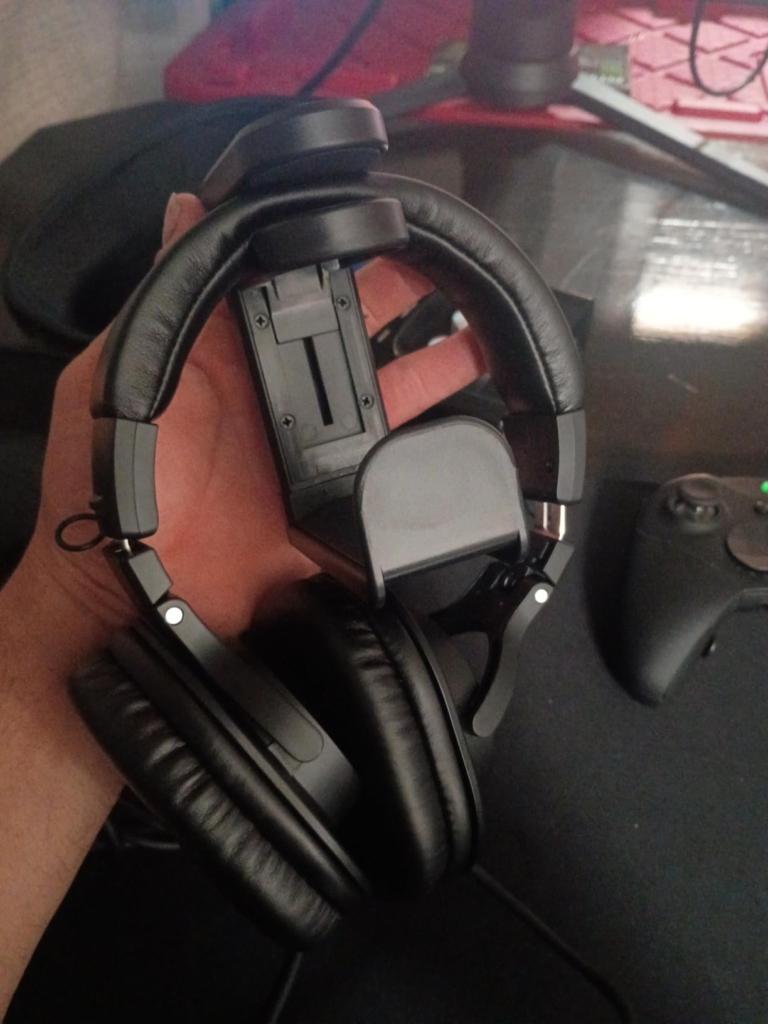
Here’s what gets missed: the M40x’s detachable cable is not a luxury feature. It is a long-term reliability feature. A non-detachable cable — like the M30x’s permanently attached 3-meter straight cable — is a single point of failure. If the cable develops a short near the jack (the most common failure point), the headphone becomes unusable. With the M40x, you replace a $15 cable. With the M30x, you replace the entire headphone.
For a studio tool that may be used daily, that distinction compounds over two or three years of ownership.
The comparison table below puts the actual decision variables in clear view:
| Factor | ATH-M30x | ATH-M40x |
|---|---|---|
| Price | ~$69 | ~$99 |
| Driver | 40mm Neodymium, CCAW | 40mm Neodymium, CCAW |
| Frequency Response | 15–22,000 Hz | 15–24,000 Hz |
| Impedance | 47 ohms | 35 ohms |
| Sensitivity | 96 dB/mW | 98 dB/mW |
| Weight | 220g | 240g |
| Cable | Fixed, 3m straight | Detachable (3 cables included) |
| Earcup swivel | Limited fold | 90° swivel for single-ear monitoring |
| Frequency tuning | Mid-forward, 6–8kHz spike | Flat, accurate reference |
| Best use case | Tracking, field recording, dialogue | Mixing, tracking, critical reference |
| Long-term reliability | Lower (non-replaceable cable) | Higher (detachable cable system) |
The $30 gap is not between a good headphone and a great headphone. It’s between two headphones tuned for meaningfully different jobs. Buying the M30x to save $30 and then using it as a mixing reference is the expensive mistake.
Who Is Actually Inside This Problem
The M30x has a real, specific user. That user is not “anyone who wants studio headphones under $100.” That description is too wide, and it’s why the disappointment reviews exist alongside the enthusiastic ones.
The M30x makes genuine sense for:
- Home recording artists tracking vocals, acoustic guitar, or electronic drums — who need isolation to prevent microphone bleed and clarity to catch timing and pitch problems in real time.
- Podcasters and voice-over artists — who need a closed-back headphone for monitoring their audio feed without the monitoring sound bleeding into the microphone. The upper-mid emphasis actually helps here, making sibilance and plosive problems more audible.
- Video editors and content creators doing rough cuts and dialogue reviews — where the midrange clarity is useful and the coloration is not yet a precision problem.
- Electronic drummers using these with a drum module — the isolation is effective, the fit stays secure during active playing, and the sound is musically enjoyable without requiring flat reference.
- Beginners entering the studio world — who need a legitimate closed-back headphone that won’t require a headphone amplifier, will survive daily use, and costs less than most of the competition in this price class.
The M30x is also a reasonable secondary pair for a studio that already owns a reference headphone. In that context, the tracking and isolation qualities become primary — and the mixing limitations become irrelevant.
Where Wrong-Fit Begins
There is a clear profile for who will feel regret after buying the M30x, usually around the three-to-six month mark when the use pattern settles.
Wrong-fit begins when:
- You are using these as your only mixing reference. If the M30x is the final judge of every equalizer and level decision you make, the 6–8kHz coloration will cost you accuracy. Mixes will translate inconsistently to speakers and other playback systems.
- You are mixing bass-heavy music professionally. The low-midrange is adequate, not precise. Hip-hop, EDM, and electronic music production require more accurate low-end reference than the M30x consistently provides.
- You plan to use these for 4+ hour continuous sessions. The firm vinyl earpads generate heat within the first hour of closed-back use. By hour three, comfort becomes a variable that affects your decision-making — not dramatically, but noticeably. Most users who find these uncomfortable are sitting in four-hour sessions.
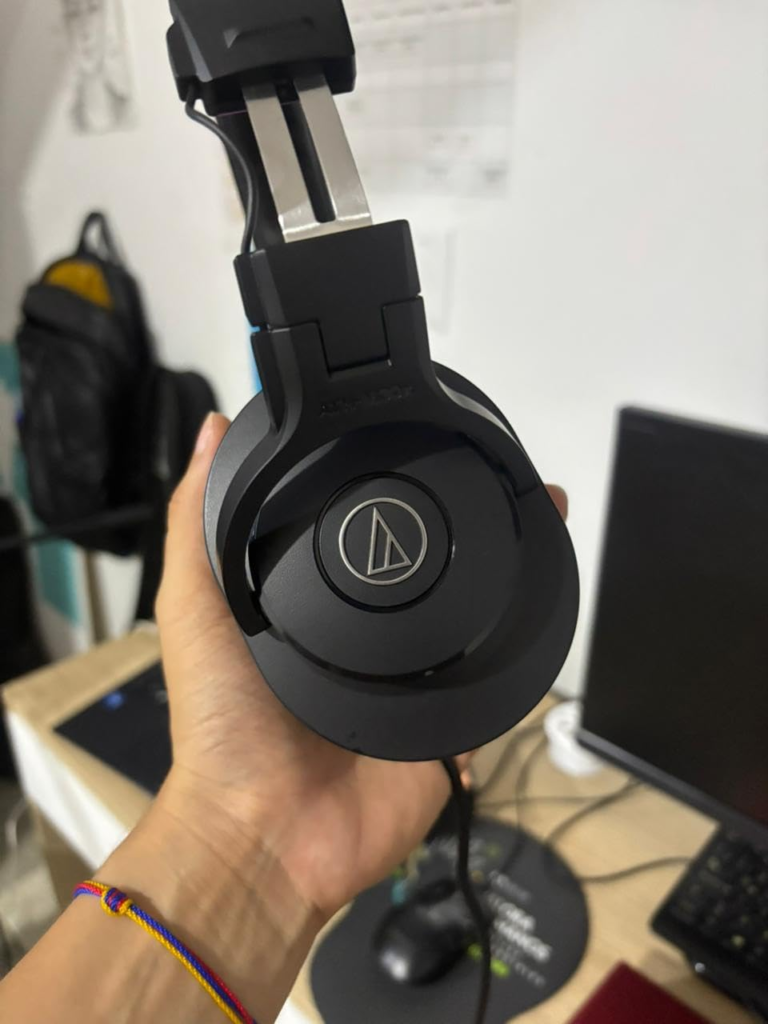
- You have a larger-than-average head. The clamping force out of the factory runs firm. For standard head sizes, this settles into a secure fit. For larger head sizes, it becomes uncomfortable before the break-in period completes.
- Your cable situation requires flexibility. The 3-meter fixed cable is excellent for a recording studio desk. It is excessive for mobile use and irreplaceable when it fails. If you move between locations, the inability to swap a shorter cable for field work creates ongoing inconvenience.
The One Situation Where This Product Becomes Logical
After clearing the above: if you are recording in an environment where microphone bleed is a live concern, you need closed-back isolation, you are monitoring for technical accuracy rather than mix balance, and you are working within a budget under $80 — the ATH-M30x becomes one of the most logically justified purchases in its category.
At $69, it competes directly against the Sennheiser HD 280 Pro (~$87) and the Sony MDR-7506 (~$89 for the equivalent), while coming in lighter (220g versus the Sony’s 230g), with a less fatiguing treble response than the Sony’s prominent 10kHz peak, and with Audio-Technica’s well-documented M-Series build reliability.
The M30x is not the best headphone you can buy. It is the most justifiable tool for a specific, well-defined job at a price that removes the barrier to entering that job properly.
No amplifier required. No driver pairing required. Plug it into your interface, your phone, or your laptop and it produces sound that serves the task it was designed for — cleanly and consistently.
That is not a small thing at $69.
What It Solves, What It Reduces, and What It Still Leaves to You
What the M30x solves:
- Microphone bleed during recording sessions — the closed-back circumaural design seals effectively and leaks minimally
- Source accessibility — 47 ohms, 96 dB/mW, driven cleanly from any standard output
- Budget barrier to entry — sub-$70 with a legitimate monitoring-grade sound signature
- Field monitoring reliability — lightweight, foldable, durable enough for travel and location use
- Midrange tracking clarity — vocals, dialogue, and acoustic instruments sound defined and easy to evaluate
What it reduces but does not eliminate:
- Mixing accuracy — usable for rough mix decisions and level checks, but not for final reference judgments
- Comfort during extended sessions — acceptable up to 60–90 minutes before heat and clamp force become variables; manageable, not absent
- Competitive low-end clarity — bass is present and controlled, not analytically precise
What it still leaves to you:
A reference playback system for final mix checks. The M30x cannot replace this. If you make every mix decision exclusively through these headphones, you will develop a calibration bias toward brighter treble that your listeners will not share.
| Decision Stage | M30x Reliability |
|---|---|
| Is the vocal in tune? | High |
| Does the plosive need filtering? | High |
| Is the reverb room size appropriate? | Moderate |
| Is the high-shelf EQ accurate? | Low |
| Is the low-end balanced correctly? | Moderate |
| Is the mix ready for mastering? | Do not rely on this headphone alone |
Final Compression
The ATH-M30x is a tracking headphone. A field monitoring headphone. A dialogue-review headphone. A beginner’s first professional-grade closed-back.
It is not a mixing reference. It is not a mastering tool. It is not the only headphone a serious producer needs.
The people who feel let down by it are almost always people who asked it to be the last word on every decision in their workflow. The people who recommend it consistently are people who know exactly what it’s for.
If you record vocals in a room with a live microphone, need isolation that works without a separate amplifier, and want a durable closed-back headphone that sounds honest enough for the job — the decision stops being complicated at this price.
If you are still deciding whether you’re actually inside that use case, the M40x is $30 more and removes most of the compromises. That $30 difference buys you a detachable cable, a flatter frequency response for mixing, and a more complete long-term tool. For many users, that is the more accurate trade.
For those who know exactly where the M30x belongs in their setup, it belongs there cleanly.
Frequently Asked Questions
| Question | Answer |
|---|---|
| Does the ATH-M30x need a headphone amplifier? | No. At 47 ohms impedance and 96 dB/mW sensitivity, it drives cleanly from any standard output — audio interface, laptop headphone jack, smartphone, or portable recorder. You may find yourself pushing the volume slightly higher than with a higher-sensitivity headphone like the Sony MDR-7506 (106 dB/mW), but no dedicated amplifier is required for comfortable listening levels. |
| Is the ATH-M30x good for mixing? | It is acceptable for rough mix editing, level checking, and structural decisions. It is not reliable as your final mixing reference due to a noticeable emphasis in the 6–8kHz range that makes the upper midrange and lower treble sound brighter than it will be on neutral playback systems. If mixing is your primary use, the ATH-M40x is a better investment at $30 more. |
| Can I replace the cable on the ATH-M30x? | No. The 3-meter straight cable is permanently attached. This is one of the most significant practical disadvantages compared to the ATH-M40x, which ships with multiple detachable cables. If the M30x cable develops a fault, the entire unit must be replaced. |
| How does the ATH-M30x compare to the ATH-M40x? | The M40x has a flatter, more neutral frequency response — specifically more accurate in the treble region — making it substantially more useful for mixing and critical monitoring. It also offers detachable cables, 90-degree swiveling earcups, and slightly lower impedance (35 ohms vs. 47 ohms). The M30x’s primary advantages are price (~$30 cheaper) and lighter weight (220g vs. 240g). For tracking and field monitoring, the gap is smaller. For mixing, the M40x is the more reliable tool. |
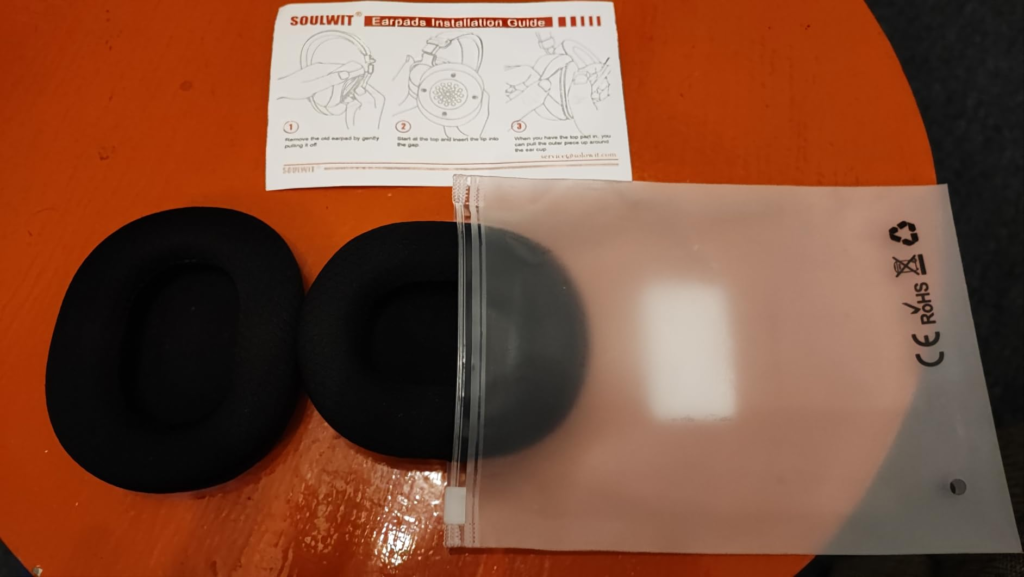
| Is the ATH-M30x comfortable for long sessions? | Comfort is adequate for sessions up to 60–90 minutes without significant issues. Beyond that, two factors apply: the vinyl earpads generate heat (common to most closed-back headphones), and the clamping force from the factory runs firm, which some users with larger head sizes find uncomfortable before the break-in period completes. Aftermarket ear pad upgrades are widely available and improve long-session comfort noticeably. |
| Does the ATH-M30x have a microphone? | No. The M30x is a monitoring headphone only, with no built-in microphone. |
| Who should buy the ATH-M30x? | Home recording artists doing vocal and instrument tracking, podcasters monitoring their feed, video editors doing rough dialogue review, electronic drummers, content creators, and beginners who need their first professional closed-back headphone without requiring a headphone amplifier. Those who need a primary mixing reference, or who plan to use one headphone for every stage of production, should look at the M40x. |
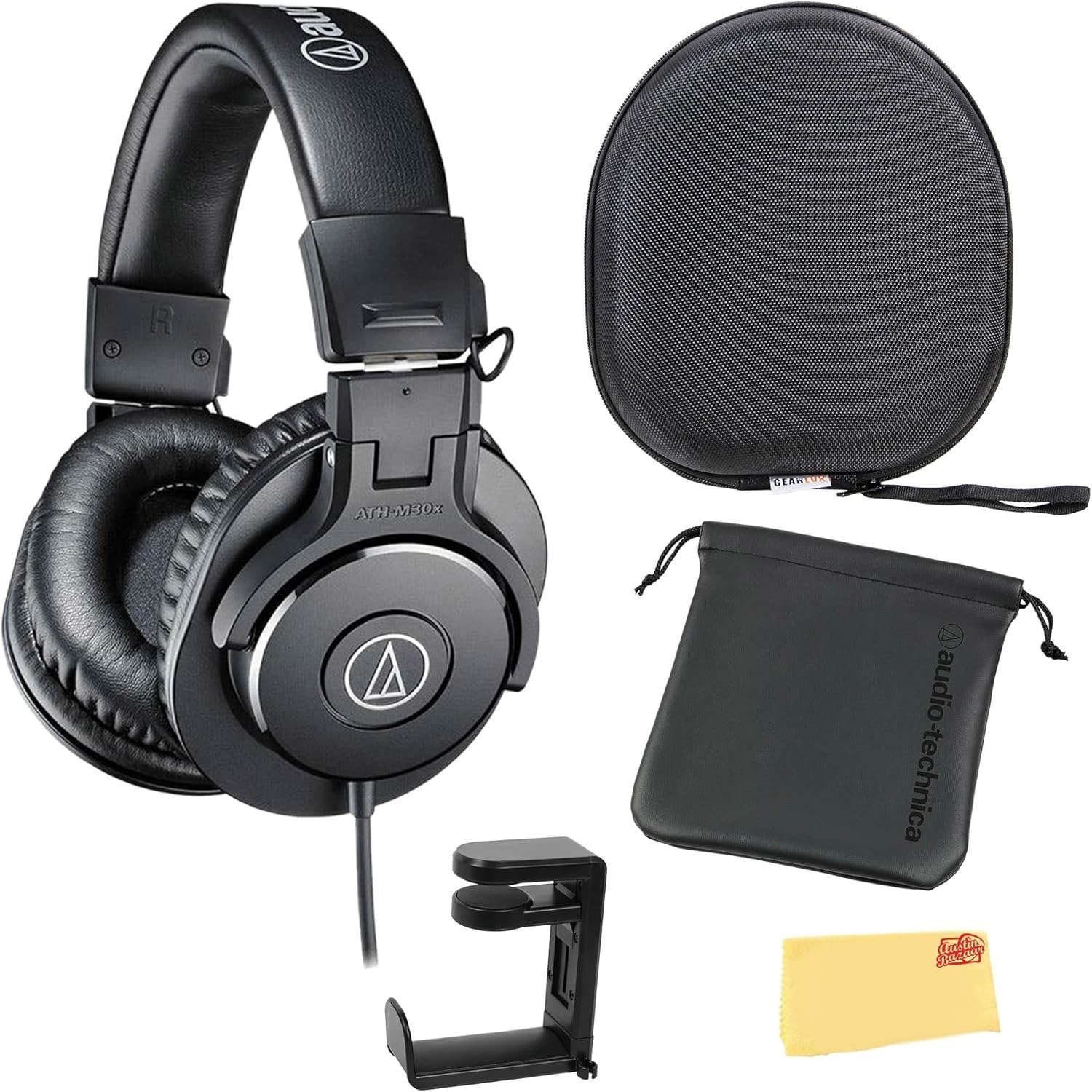
| What does the ATH-M30x come with? | A 3-meter permanently attached straight cable (3.5mm plug), a 6.3mm screw-on adapter for quarter-inch outputs (standard for audio interfaces), and a vinyl cinching carrying pouch. No additional cables are included. |
Transparency Note:
This analysis is built on aggregated real-world experience.
It extracts what repeatedly holds, what breaks, and what users uncover only after living with the system—then shapes it into a clear model you can use immediately.
Think of it as structured experience, refined and presented so you don’t have to learn it the hard way.
“A quick note: Don’t believe the star ratings, but trust personal experience. This article is a compilation of collected experiences”