FiiO K7 Review: Your Headphones Sound Fine. That’s the Problem.
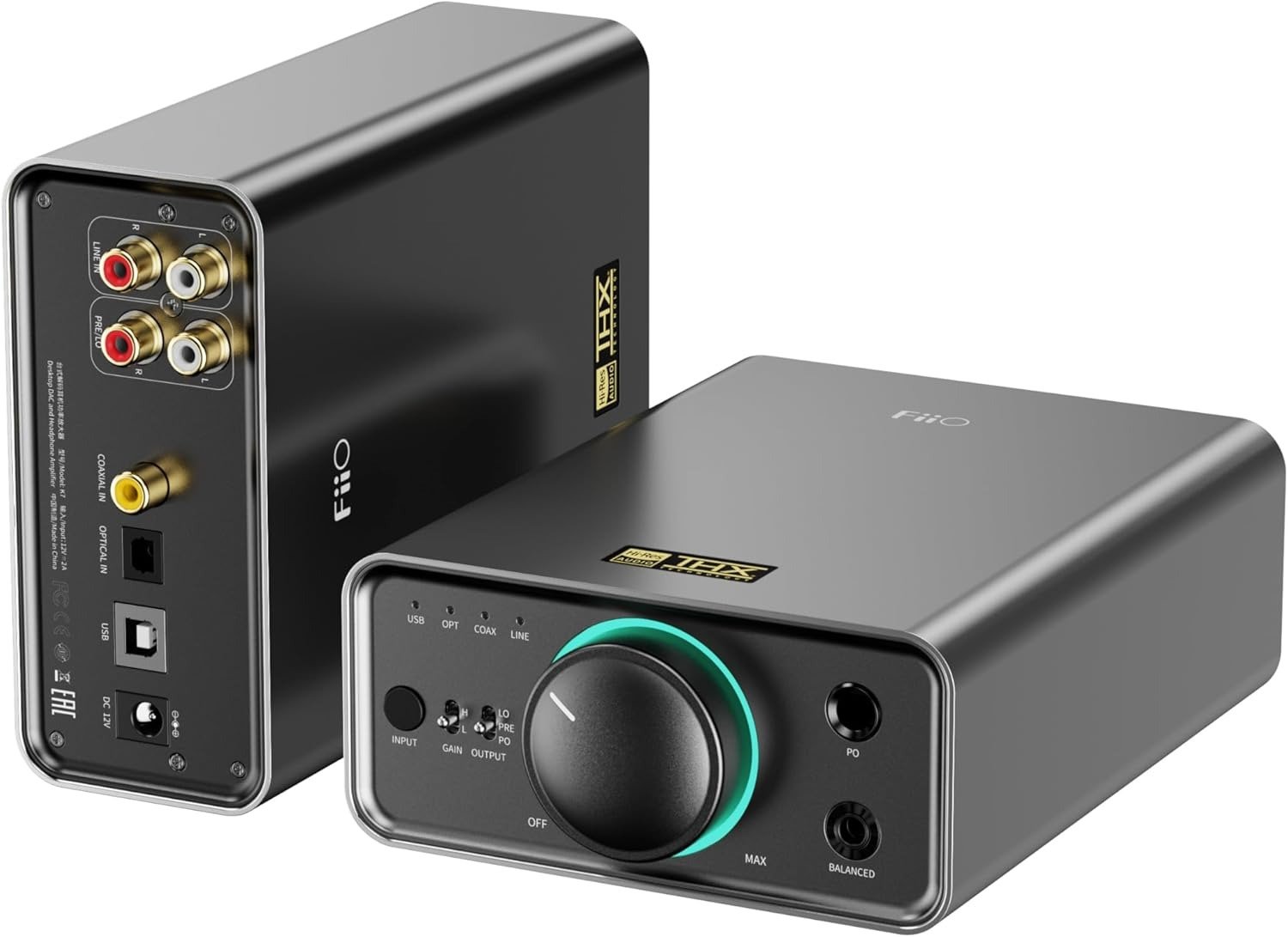
FIIO K7
The Result Looks Fine. The Problem Isn’t.
You plug in your headphones. Music plays. Volume reaches where you need it. Nothing distorts. Nothing buzzes.
And yet something feels slightly incomplete — not broken, not obviously wrong, just not quite the experience you imagined when you invested in serious headphones.
That gap between acceptable and realized is exactly where the FiiO K7 operates. And most buyers never name it correctly before they either miss it entirely or buy the wrong solution.
The K7 is not a device that fixes audible damage. It does not rescue broken audio. It is a device that unlocks a ceiling you didn’t know existed — but only under one specific condition that most reviews bury in the third paragraph, if they mention it at all.
What You’re Actually Feeling but Not Naming
You bought quality headphones. Maybe HD600s, maybe a planar magnetic, maybe a premium IEM with an aftermarket cable. The spec sheet said they’d sound remarkable. They do sound good. But the word “remarkable” stays slightly out of reach.
You’ve already ruled out the obvious. The files are lossless. The cable is fine. The source is clean. And still — the image isn’t as wide as the reviews described, the bass isn’t as controlled as you expected, the sense of space doesn’t quite open up the way audiophile forums promised.
What you’re feeling is output path compression. Not in the technical DSP sense. In the electrical sense: your headphones are receiving a single-ended signal through a circuit that was never designed to extract their full potential because that potential was engineered around a different termination standard entirely.
Your headphones have a balanced design inside them. You’ve been driving them through a single-ended exit.
The Hidden Mechanism Behind the Miss
Here is the mechanism most product listings skip entirely.
Balanced headphone output is not simply “more power.” It is a fundamentally different electrical architecture. In a single-ended circuit, both audio channels share a common ground return path. In a balanced circuit, each channel has its own fully independent signal path — positive and negative legs driven separately, with the headphone driver receiving a push-pull differential signal.
The K7 adopts a fully balanced architecture to achieve better crosstalk performance and boost output power to a much higher extent. That architectural choice is not a spec-sheet decoration. It means the left channel has no electrical interaction with the right channel at the amplifier stage. Crosstalk collapses. Noise floor drops. The stereo image sharpens because the channels are genuinely, electrically separated.
The SNR has been enhanced by 5dB compared to the K5 Pro ESS, reaching 123dB, which is quite impressive. That 5dB delta is not audiophile mythology. It is measurable electrical separation — the distance between the signal you intend to hear and the noise floor it sits on top of. At this price, that number does not appear in a single-ended circuit.
The DAC architecture reinforces this. The K7 features a Dual AK4493SEQ DAC chip setup, creating one chip per channel in a fully balanced dual-mono configuration. One chip per channel. No cross-contamination at the conversion stage. The balanced signal is preserved from digital input all the way to the headphone jack — not reconstructed at the output, but maintained throughout.
The Threshold Where the Outcome Quietly Breaks
There is one specific threshold in this product category where the K7 separates from everything else at its price.
No other unit at this price delivers a genuine fully balanced output path from a properly specified amp circuit.
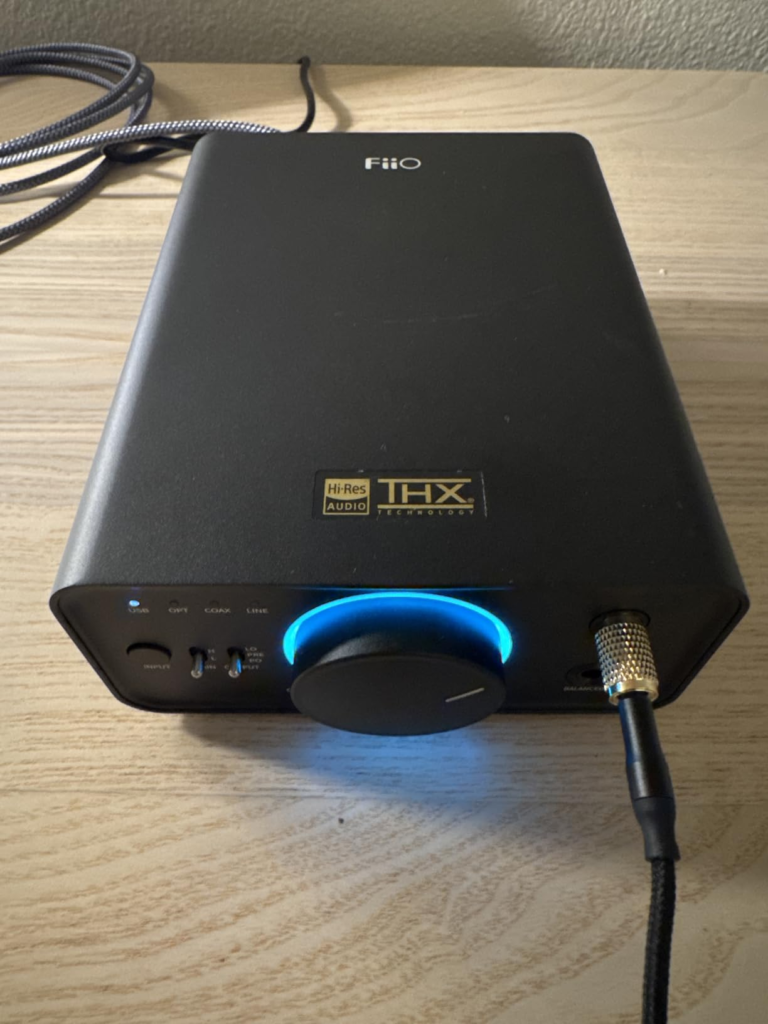
The K7’s 4.4mm balanced output delivers up to 2000mW at 32Ω and 560mW at 300Ω, all with just 1% distortion. The single-ended output delivers 1,220mW at 32Ω. That difference — 2,000mW versus 1,220mW — is not why you buy the K7. You buy the K7 because the 2,000mW arrives through a circuit that maintains channel separation from DAC chip to headphone driver.
| Output Type | Power @ 32Ω | Power @ 300Ω | Circuit Architecture |
|---|---|---|---|
| 4.4mm Balanced | 2,000mW | 560mW | Fully balanced dual-mono |
| 6.35mm Single-Ended | 1,220mW | 140mW | Single-ended |
| THD+N (BAL) | — | — | <0.0003% @ 1kHz/32Ω |
| SNR | — | — | >123dB (A-weighted) |
| Output Impedance | — | — | <1Ω |
The threshold is this: if your headphones terminate in 4.4mm balanced, or if you are willing to re-cable them to do so, the K7 is the correct and only logical purchase under $250. If they do not, and you have no intention of changing that, the threshold does not apply to you — and the K7 is the wrong device for your situation.
Why Most Buyers Misread This Too Early
The first error most buyers make is comparing the K7 to everything at the same price using the same metric: wattage.
On paper, several units around $200 deliver comparable single-ended power. Some buyers look at the K7’s 1,220mW single-ended figure, compare it to a competitor’s 1,800mW single-ended figure, and conclude the K7 loses.
That comparison is structurally incorrect. The single-ended output of the K7 delivers exactly the same 1.2W at 32Ω as the K5 Pro ESS, while the balanced output nearly doubles to 2W at 32Ω. The K7 was not engineered to win the single-ended power race. It was engineered to be the reference-class balanced unit at this price tier — which it is, without meaningful competition.
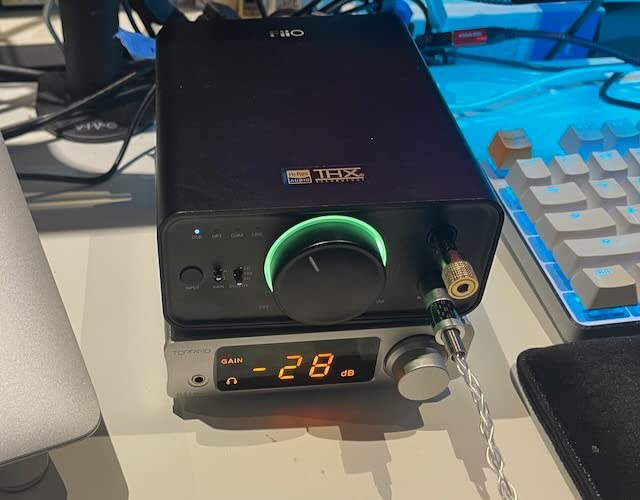
The second error is the feature-count comparison. The K7 has no Bluetooth. No remote. No EQ. No app control. The K7 is not compatible with the FiiO control application, and you cannot dim or disable the RGB light. Some buyers treat these absences as deficiencies. They are not deficiencies. They are the result of engineering budget being directed at the balanced amplifier circuit rather than peripheral features. Every dollar that did not go into Bluetooth went into the THX AAA 788+ dual-amplifier stage.
The third error is misidentifying the amplifier technology. The K7 is the cheapest device using the THX AAA 788+ amplifier chips in dual configuration for FiiO — the same chips used in the flagship M17 DAP, the Q7, and the K9 Pro. Buying a competing unit with a proprietary amp stage and calling it equivalent is a category error. The amplifier chips in the K7 are not entry-level components wearing a mid-range price tag.
Who Is Actually Inside This Problem
The K7 is the correct purchase for a specific, identifiable listener. Not for everyone who owns headphones. Not for everyone who wants better audio. For this listener:
| Listener Profile | K7 Fit |
|---|---|
| Owns headphones with 4.4mm balanced termination option | ✅ Primary use case |
| Planning to re-cable premium headphones to balanced | ✅ Correct forward investment |
| Drives planars (HiFiMAN, Audeze, etc.) needing clean high power | ✅ Strong match |
| Uses sensitive IEMs and wants zero noise floor | ✅ <4.1µV noise floor handles this |
| Wants DAC + amp + preamp in one unit | ✅ RCA line-in and line-out both present |
| Has powered speakers and wants to run both systems | ✅ RCA line-out supports this |
| Plans to upgrade DAC later and keep the amp | ✅ RCA line-in bypasses internal DAC |
The K7 is especially great if you are looking for a DAC and amp for your IEMs or headphones and want the full benefits of the fully balanced architecture.
If you’ve acquired a good pair of wired headphones, the FiiO K7 will help you get the most out of your investment, featuring dramatic stereo separation and an impressively wide soundstage.
Where Wrong-Fit Begins
This is the part most reviews skip because it reduces conversion. I am including it because wrong-fit purchases create the most damage to long-term confidence in the category.
Do not buy the K7 if:
You own single-ended-only headphones and have no intention of changing that. If you are not going to use the balanced output for your headphones and really want a remote control, there is little reason to choose the K7 over alternatives at a lower price. The K5 Pro ESS at approximately $50 less delivers the same single-ended output power with a remote option. The K7’s advantage is exclusively in the balanced path.
You are trying to drive 300-ohm headphones exclusively through the single-ended output at reference listening levels. The K7 isn’t the kind of device you’d necessarily try to drive 300 Ohm headphones with in single-ended mode. The balanced output at 560mW into 300Ω is adequate. The single-ended output at 140mW into 300Ω may leave you turning the volume knob further than expected.
You want volume control at a distance. The K7 has no remote. The volume knob is physical and front-panel only. If your desk-to-speaker distance creates an ergonomic problem, this unit will not solve it.
You expect Bluetooth input. It does not exist on the K7. If your primary source is a phone without a cable, this is not your device.
| Wrong-Fit Scenario | Why It Fails |
|---|---|
| Single-ended-only headphones, permanent | K7’s advantage disappears entirely |
| 300Ω headphones, single-ended only | 140mW at 300Ω may require near-maximum volume |
| Needs wireless/Bluetooth input | Not present |
| Wants volume control without approaching desk | No remote |
| Seeks warm, colored sound character | THX AAA 788+ is transparent/neutral — won’t add warmth |
| Needs FiiO app control | K7 not compatible with FiiO control application |
The One Situation Where This Product Becomes Logical
After everything above: if you are a listener with 4.4mm-terminated headphones or a clear plan to re-cable, sitting at a desk, wanting the cleanest possible balanced signal from a unit that will not be outclassed until you spend $400 or more — the K7 is not one of several options. It is the only structurally correct option at this price.
The FiiO K7 is the unit you buy when you want balanced headphone output and are not willing to spend $400 or more to get it. At this price, no other unit delivers a genuine fully balanced output path from a properly specified amp circuit.
The technical foundation is complete. Dual AK4493SEQ DAC chips, XMOS XUF208 decoder, dual THX AAA 788+ amplifiers, NJU72315 volume control, with USB, Optical, Coaxial, and RCA inputs, plus both 6.35mm and 4.4mm outputs. This is not a device built to look impressive on a comparison chart. It is a device built around a single engineering priority — delivering a technically correct balanced signal to the listener who needs one.
Full Specifications:
| Specification | Value |
|---|---|
| DAC Chips | Dual AKM AK4493SEQ (one per channel) |
| Amplifier | Dual THX AAA 788+ |
| Volume Control | NJU72315 + OP (ADC-based, no channel imbalance at low volume) |
| USB Decoder | XMOS XUF208 |
| Max Resolution | PCM 384kHz/32-bit, DSD256 |
| Balanced Output Power | 2,000mW @ 32Ω / 560mW @ 300Ω |
| Single-Ended Output Power | 1,220mW @ 32Ω / 140mW @ 300Ω |
| THD+N (Balanced) | <0.0003% @ 1kHz/32Ω |
| SNR | >123dB (A-weighted) |
| Noise Floor | <4.1µV (headphone output) |
| Output Impedance | <1Ω |
| Inputs | USB, Optical Toslink, Coaxial S/PDIF, RCA Line-In |
| Outputs | 6.35mm SE, 4.4mm Balanced, RCA Line-Out |
| Sampling Rate Indicator | Blue ≤48kHz / Yellow >48kHz / Green DSD |
| Dimensions | 120 × 168 × 55mm |
| Weight | 610g |
| Price | ~$219.99 |
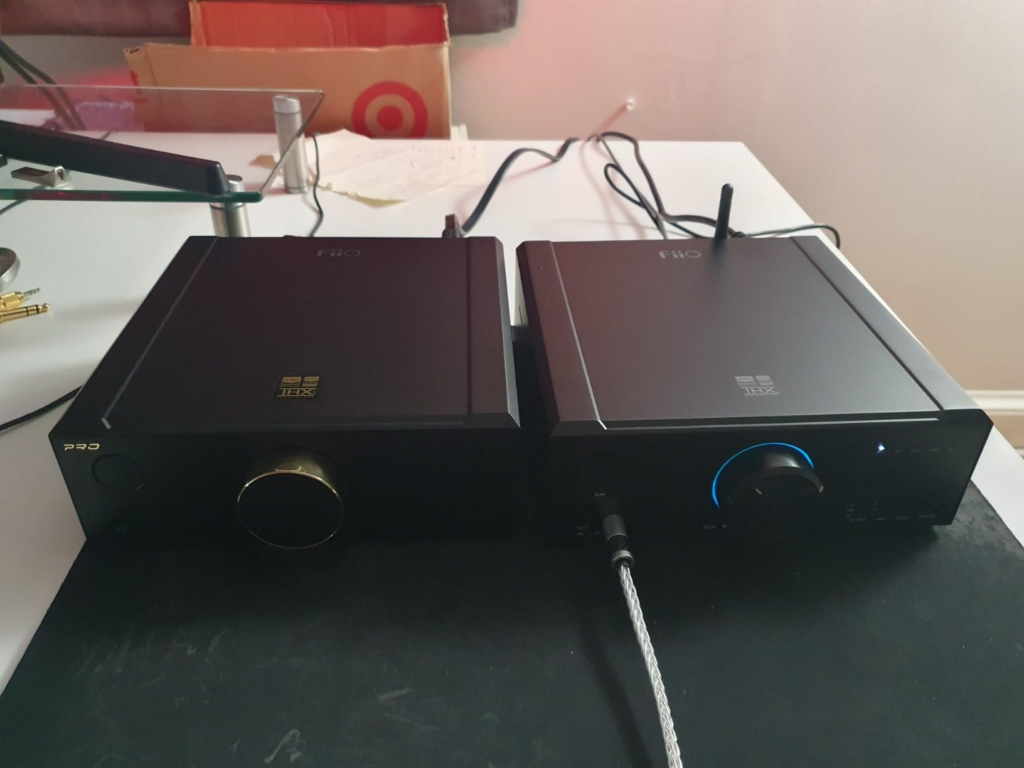
What It Solves, What It Reduces, and What It Still Leaves to You
What it solves:
The electrical separation problem. If you have been driving balanced headphones through a single-ended output, the K7 ends that. Channel crosstalk goes to a level that single-ended circuits at this price cannot match. The noise floor drops below audibility on any headphone with reasonable sensitivity.
The power adequacy problem for planars. Most planar headphones are current-hungry and respond to the push-pull balanced drive in a measurable way — tighter bass control, less compression at high SPLs, more stable imaging.
The source fragmentation problem. One unit handles DAC, headphone amplification, and preamp duties simultaneously. A second output path allows powered speakers alongside headphones without a switcher.
What it reduces but does not eliminate:
The K7 is fuller sounding than the K5 Pro ESS, especially in the bass department, with the whole frequency range conceived as more intense and weightier, and the timbre slightly more realistic with a larger, grander soundstage. But the K7 does not transform an average recording into a great one. Compression in the source file stays compressed. A poorly mastered album stays poorly mastered.
What it still leaves to you:
Headphone selection. The K7 amplifies transparently — the THX AAA 788+ delivers near-zero distortion and functions as an extremely clean, neutral amplification stage. If your headphones have a sonic character you find fatiguing, the K7 will not add warmth. It will not soften treble. It will not reshape frequency response. It reveals what your headphones actually do without coloring the result.
Cable quality. The included USB cable is functional but not premium. One buyer noted the included USB cable was not high grade, though that was easily remedied. A replacement USB-B cable costing under $15 closes that gap.
Driver setup on Windows. The K7 requires custom drivers, which can sometimes be problematic, though in most cases it works correctly once installed. macOS and Linux use native USB audio class drivers without additional installation.

Final Compression
The FiiO K7 is a single-use case device — not because it lacks features, but because its entire engineering logic is constructed around one output: the 4.4mm balanced connection.
If that output serves you, the K7 is the highest-performing unit available at this price with no credible challenger in its category. The THX AAA 788+ dual amplifier, the dual-mono AK4493S configuration, the 123dB SNR, and the 2W output figure are not the product of compromises. They are the result of a deliberate engineering choice to build the best balanced desktop unit under $250 rather than a generalist device that does everything moderately well.
If that output does not serve you — if your headphones are single-ended and will remain so — the K7 solves a problem you do not have. The K5 Pro ESS at $50 less is the structurally correct alternative in that case, and no amount of specification reading changes that logic.
The decision is not between good and better. It is between matched and mismatched. Know which side you are on before the purchase, and the K7 either becomes the obvious answer or the obvious wrong choice — nothing in between.
If your headphones support 4.4mm balanced termination and you are ready to hear what they were actually designed to produce, the FiiO K7 is available here.
Frequently Asked Questions
| Question | Answer |
| Does the FiiO K7 make a real difference if I only use single-ended headphones? | In single-ended mode, the K7 delivers the same 1,220mW at 32Ω as the K5 Pro ESS and offers marginally better noise performance. The sound is slightly fuller and more resolved than its predecessor. However, the K7’s primary engineering advantage — the fully balanced dual-mono architecture — is bypassed entirely when using the 6.35mm output. If you have no balanced headphones and no plans to change that, the performance gain over similarly priced single-ended units does not justify the premium over the K5 Pro ESS. |
| Can the FiiO K7 drive 300-ohm headphones like the Sennheiser HD650 or HD800? | Yes, but with an important qualification. Through the 4.4mm balanced output, the K7 delivers 560mW into 300Ω — sufficient for the HD600/HD650 series and most 300Ω dynamics at reasonable listening levels. Through the single-ended output, 140mW into 300Ω is workable but leaves limited headroom, requiring the volume knob well past 12 o’clock. For 300Ω headphones, balanced termination is strongly recommended with this unit. |
| Is the FiiO K7 compatible with IEMs (sensitive in-ear monitors)? | Yes. The ADC-based volume control uses NJU72315 chips specifically to eliminate the channel imbalance problem that affects many budget units at low volume settings. The noise floor is rated below 4.1µV at the headphone output, which is low enough for even sensitive IEMs with high efficiency ratings to hear no audible hiss at listening volumes. |
| Does the FiiO K7 work as a preamp for powered speakers? | Yes. The RCA line output delivers a fixed-level signal that can feed powered bookshelf speakers. This allows simultaneous desktop use — headphones through the front outputs, speakers through the rear RCA — without a separate switcher. The K7 effectively consolidates the DAC, headphone amplifier, and speaker preamp functions into one unit. |
| What is the difference between the FiiO K7 and the K7 BT? | The K7 BT adds Bluetooth 5.0 input with LDAC, aptX HD, and aptX Adaptive support, allowing wireless source connection from a phone or DAP. The core DAC and amplifier circuit is identical. If your source is always wired, the standard K7 at a lower price is the correct choice. If you want to stream directly from a phone without a cable, the K7 BT closes that gap. |
| Does the FiiO K7 require drivers on Windows? | Yes. FiiO provides proprietary ASIO/WASAPI drivers for Windows that enable bit-perfect output at full resolution. Without them, Windows will use its own USB audio driver, which may limit resolution or introduce resampling. On macOS and Linux, the K7 operates as a native USB audio class device with no driver installation required. |
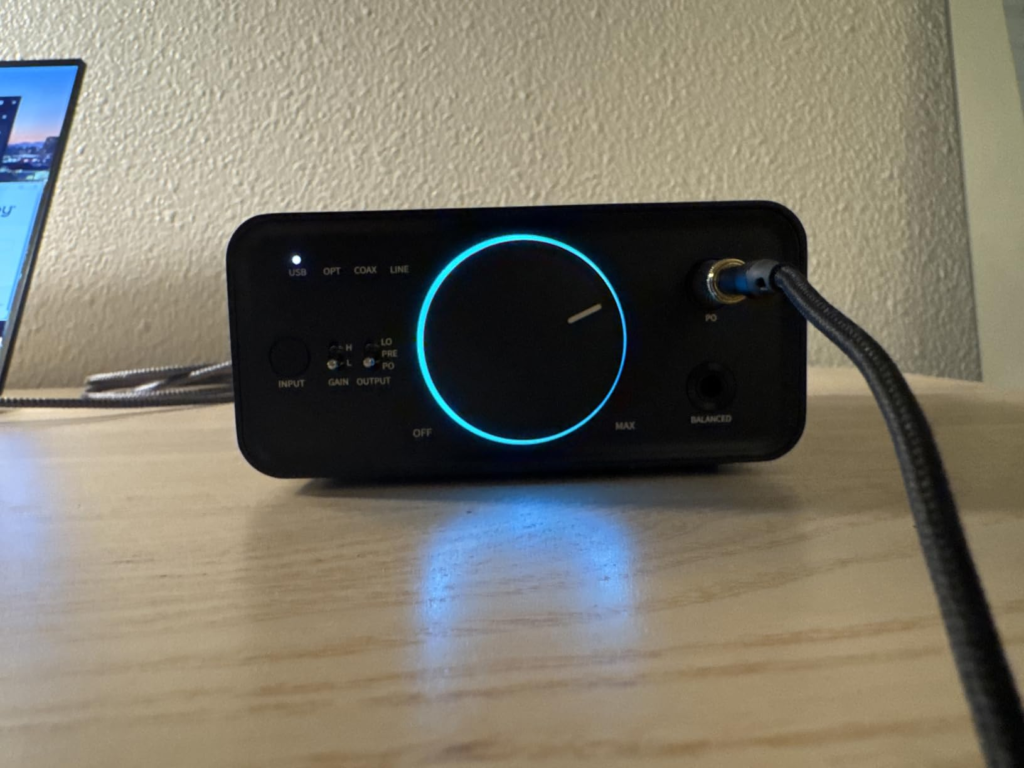
| Why can’t I adjust or turn off the RGB indicator light? | The LED indicator on the K7 serves a functional purpose — displaying the active sampling rate (blue for ≤48kHz, yellow for >48kHz, green for DSD). FiiO did not include a dimming or disable option in this version. This is a genuine limitation acknowledged across multiple independent reviews. If ambient LED light is a concern for your setup, this is worth considering before purchase. |
| Is the FiiO K7 the same as the K9 Pro inside? | Not entirely, but closer than the price gap suggests. Both use the dual THX AAA 788+ amplifier configuration and the six-stage audio circuit. The K9 Pro ESS adds Bluetooth, an XLR balanced output, three gain levels (versus two on the K7), and FiiO app control. The amplification topology is architecturally shared — the K7 is the closest thing to K9 Pro amplifier performance available at under $250. |
Transparency Note:
This analysis is built on aggregated real-world experience.
It extracts what repeatedly holds, what breaks, and what users uncover only after living with the system—then shapes it into a clear model you can use immediately.
Think of it as structured experience, refined and presented so you don’t have to learn it the hard way.
“A quick note: Don’t believe the star ratings, but trust personal experience. This article is a compilation of collected experiences”