The Anker Soundcore Motion+ Sounds Better Than It Should — Until You Hit the Wall
ANKER SOUNDCORE MOTION+
The Result Looks Fine. The Problem Isn’t.
You set it up. It sounds impressive. The bass is present, the mids are clean, and for a speaker at this price, the breadth of sound feels almost suspicious.
So you tell yourself you made the right call.
And for a while — maybe weeks — you actually did. The speaker handles your desk, your kitchen, your afternoon in the backyard with no drama. It earns its reputation the way quiet competence usually does: by not failing you loudly.
Then one day it does.
Not because it breaks. Not because the Bluetooth drops. But because you pushed past a specific invisible threshold — volume, distance, environment, use case — and the outcome that felt guaranteed stopped feeling guaranteed. The bass that was satisfying at 60% becomes strained above 80%. The sound that filled your living room thins noticeably the moment the crowd gets louder than the speaker. You start to notice what was always structurally true but was easy to overlook when conditions were cooperating.
This is not a flaw in the Soundcore Motion+ specifically. It is a flaw in how most people evaluate speakers before buying them — at ideal conditions, inside, at medium volume, with quiet expectation. The speaker performs exactly as designed in those conditions. The question is whether your conditions match that design.
What You’re Actually Feeling but Not Naming
There’s a specific kind of low-level annoyance that’s hard to articulate until someone names it precisely.
It feels like: this is good, but something is slightly off when I push it.
It’s not distortion exactly. It’s not silence. It’s the sense that the performance you expected doesn’t scale with the volume you want, or the outdoor distance you’re standing at, or the density of the environment you’re in.
What you’re actually experiencing is a threshold collision — the point where a speaker optimized for indoor near-field listening meets the physics of a larger, noisier, more demanding space.
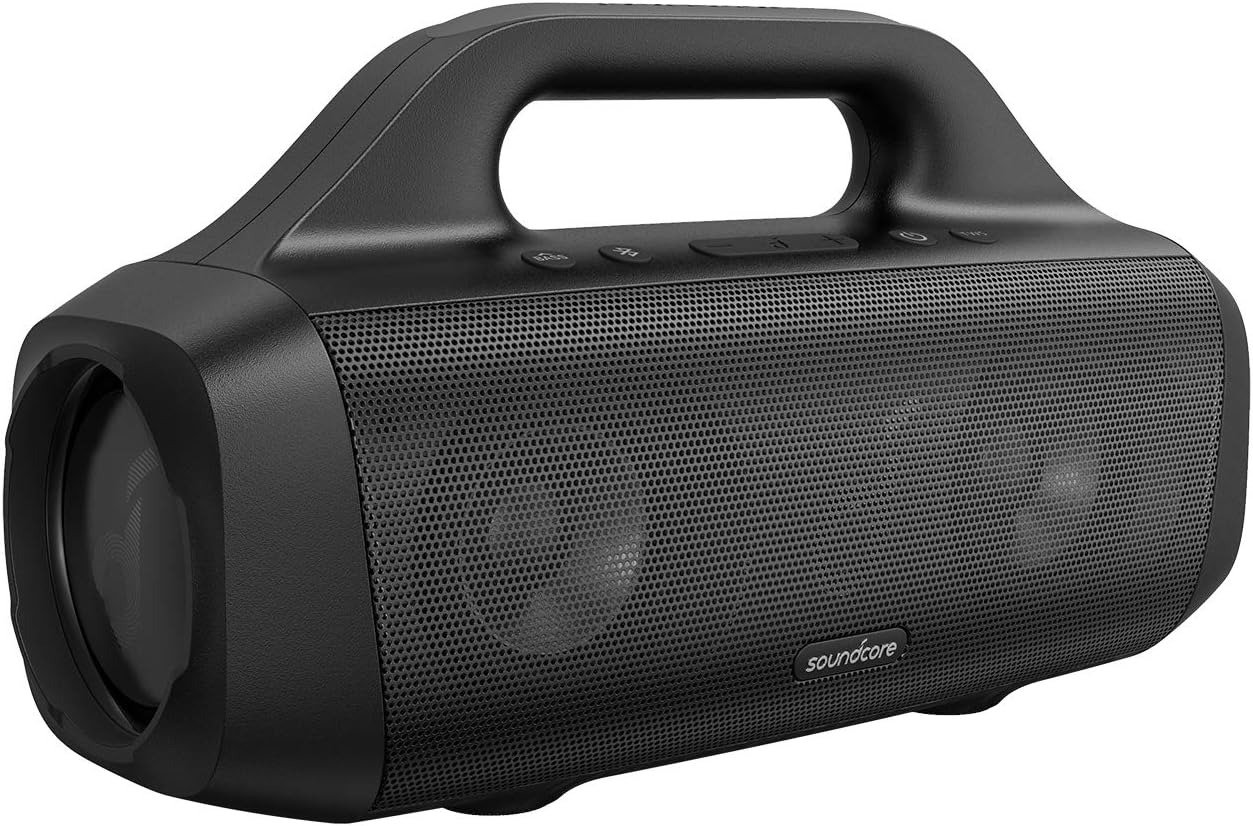
The Soundcore Motion+ is engineered with a 15-degree upward tilt, directional front-firing drivers, and a DSP tuned to sound precise and balanced in controlled settings. These are thoughtful choices that produce genuinely impressive results in those settings. But they are also design commitments — and every design commitment has a corresponding boundary.
The midtones that sound clean and detailed at 55% can become notably harsh above 80%. One reviewer who tested extensively noted that 50–60% volume was where the speaker genuinely sang, and that higher levels introduced a harshness that worked against the clarity it was praised for. Battery life rated at 12 hours is a conservative figure at moderate volume — real-world testing at louder, more demanding playback can bring that closer to six hours. And without a physical battery indicator on the unit itself, you don’t know where you stand until the speaker goes quiet.
None of this is hidden. But none of it appears in the first paragraph of any product listing, either.
The Hidden Mechanism Behind the Miss
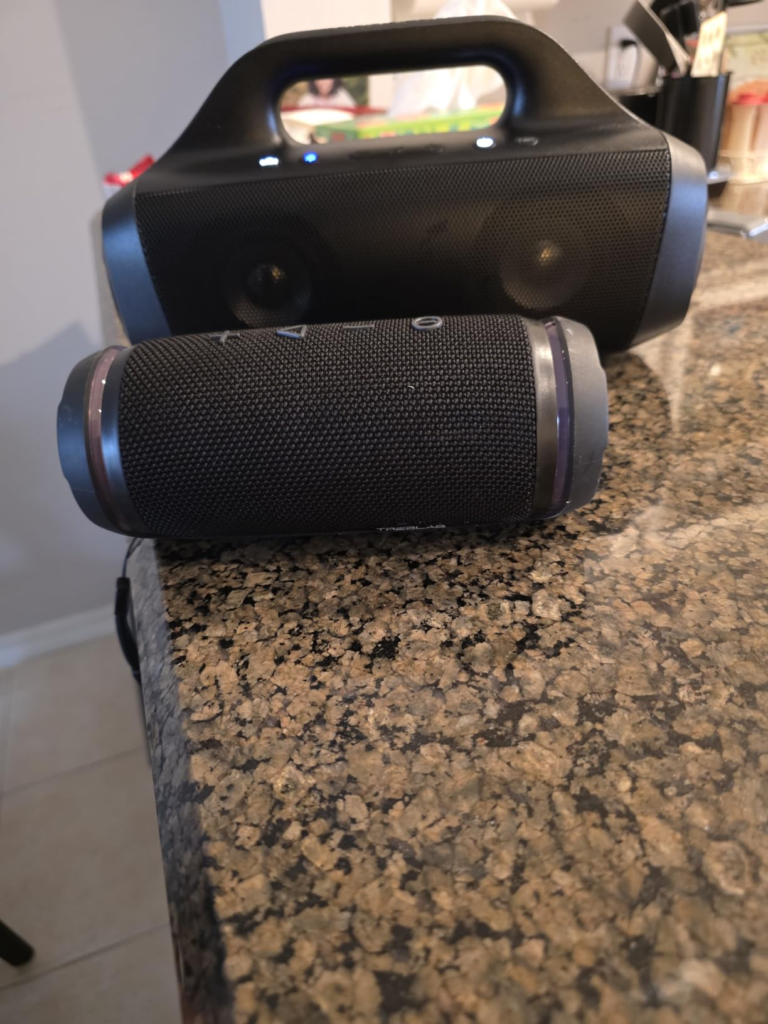
The Soundcore Motion+ achieves something technically unusual for its price. It uses an active crossover — a dedicated DSP that allocates signal to each driver independently — rather than the passive crossovers found in most competitors at this tier. This, combined with dual neodymium woofers, two ultra-high frequency tweeters, and two passive radiators, produces a frequency response stretching from 50 Hz to 40 kHz on paper.
That’s not marketing language. The hardware architecture is genuinely more sophisticated than what similarly priced speakers typically offer.
But here’s the mechanism that most buyers miss: the gap between a speaker’s frequency range on paper and its ability to produce those frequencies with authority at volume in open environments is not a small gap. It is a fundamental physics constraint.
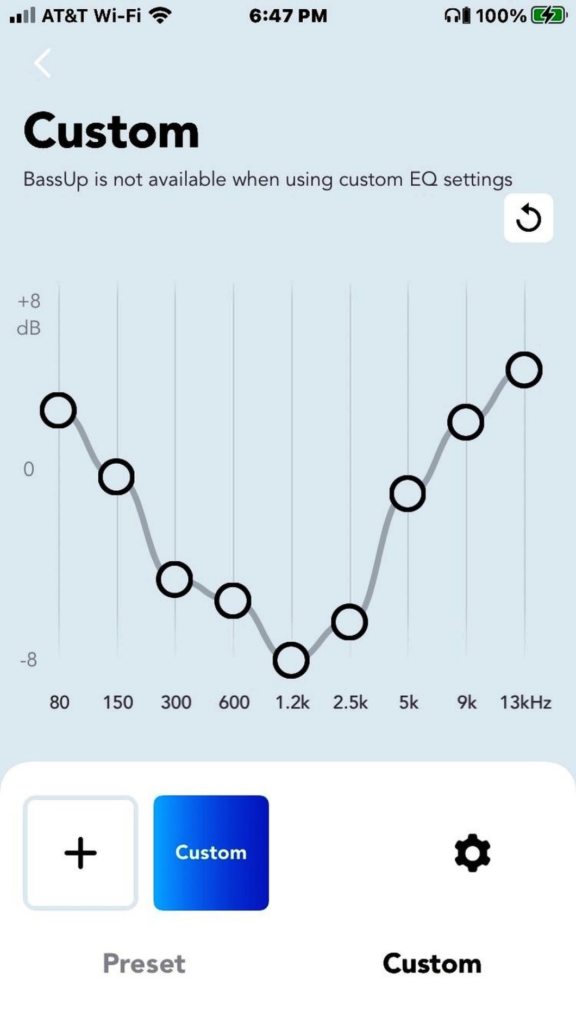
The passive radiators and 30W output create bass presence that is satisfying and real in a room. In an open outdoor space — a patio with ambient wind, a backyard with any competing sound source, a beach — that bass energy dissipates rapidly. The sub-bass frequencies below 55 Hz, which the speaker already handles modestly (SoundGuys measured a measurable drop in low-end output out of the box, correctable only through the app’s custom EQ), simply don’t carry outdoors the way they do indoors.
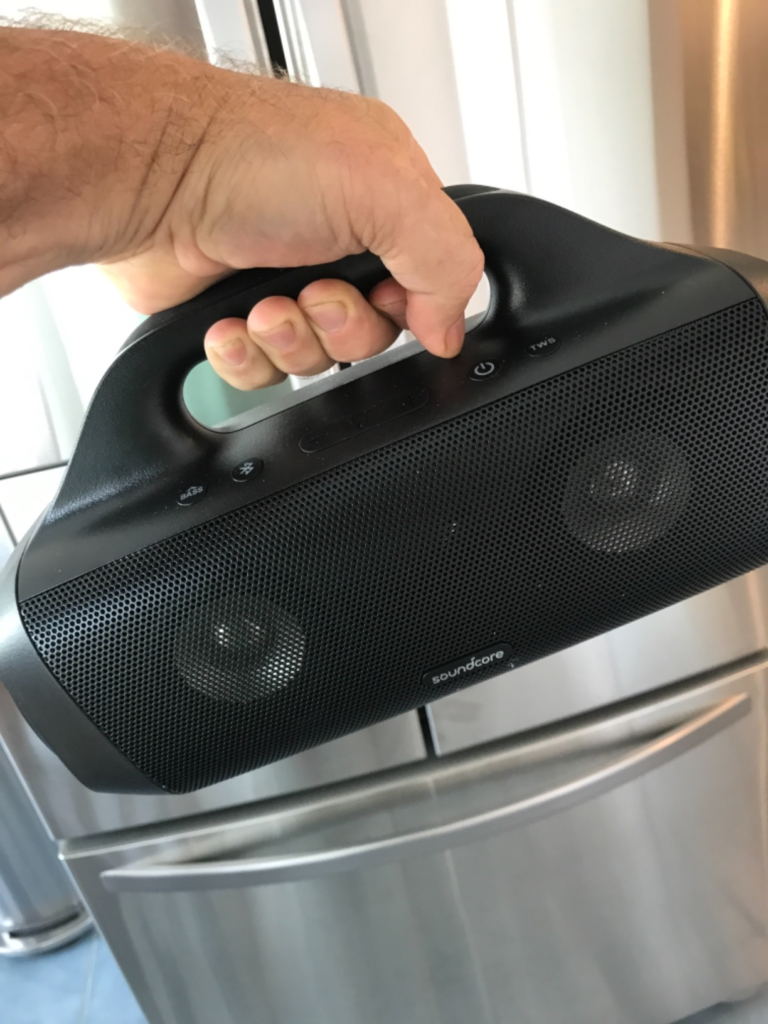
The design is also unidirectional. Unlike 360-degree speakers that project sound across a social circle regardless of orientation, the Motion+ requires deliberate placement. If you’re facing the wrong direction relative to the speaker, you’re not in its primary listening zone.
The aptX codec support — which enables near-lossless audio transmission from compatible Android devices — is real and functional. On an iPhone, you’re limited to SBC. The quality difference is audible in direct comparison but unlikely to determine satisfaction in most everyday contexts.
The EQ customization through the Soundcore app is genuinely valuable and not a token feature. Applied correctly, it transforms the out-of-box sound profile meaningfully. But it requires intentional setup. Buyers who don’t download the app, don’t spend time tuning the EQ, and don’t know that the out-of-box profile underrepresents the low end — those buyers are using a fraction of what the hardware can actually do.
The Threshold Where the Outcome Quietly Breaks
Call this the Motion+ Operating Ceiling.
Below it, the speaker is excellent. Above it, the gap between expectation and experience opens.
| Condition | Below Ceiling | Above Ceiling |
|---|---|---|
| Volume | 50–70% | 80–100% (midrange harshness increases) |
| Battery mode | Moderate volume, no BassUp active | Max volume + BassUp active (battery shrinks toward 6 hrs) |
| Environment | Indoor room, sheltered patio | Open outdoor, beach, competing ambient noise |
| Listening position | Front-facing, within ~5 meters | Surrounding social circle, varying angles |
| Codec | Android with aptX enabled | iPhone without aptX (SBC only) |
| Dust exposure | Rain, water, pool use | Beach sand, dusty trail, outdoor worksites (no dust rating) |
| Bass expectations | Warmed, present bass with EQ tuning | Sub-bass depth of a larger or higher-watt speaker |
The ceiling is not low. For a large segment of buyers, they will never reach it. But for buyers who don’t know the ceiling exists, reaching it feels like product failure when it is actually design expectation.
Why Most Buyers Misread This Too Early
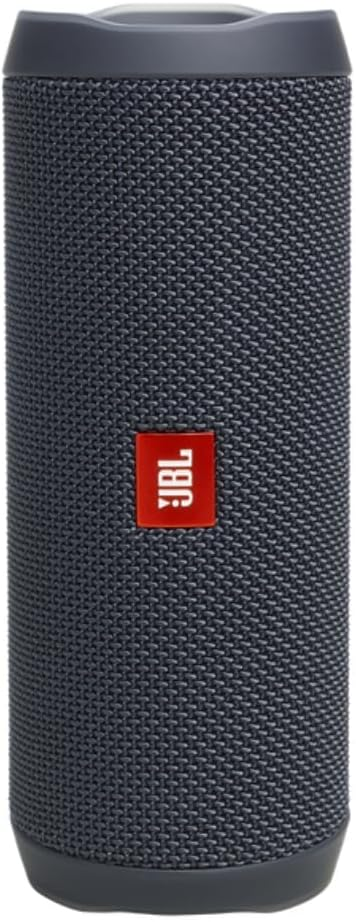
The comparisons that get made most often against the Soundcore Motion+ are the JBL Charge 5 and JBL Flip series. These are fair competitors on paper. They share a price tier, a use case category, and a target audience.
But the comparison gets made with the wrong metric as its anchor.
Most buyers compare on brand familiarity. JBL is a recognized name; Soundcore is less immediately trusted outside of enthusiast circles. This leads to a systematic misjudgment: buyers assume the recognized brand must offer superior hardware, and buyers assume the value option must involve compromise.
RTINGS.com — one of the most measurement-rigorous speaker testing sources available — found the Soundcore Motion+ to be the technically superior performer in a direct comparison with the JBL Charge 5. The JBL wins on IP67 dust and waterproof certification (versus IPX7 water-only on the Motion+), on battery life (20 hours versus 12 hours), and on rugged outdoor build for extreme environments. The Motion+ wins on sound quality metrics, frequency accuracy, codec support, and EQ customizability.
This is not a case of one product being objectively better. It’s a case of two products being designed for different primary environments — and the comparison only being useful if you start with an honest answer to the question: where will I actually use this?
For a buyer who genuinely lives outdoors — beach, trails, dusty fields, rain-heavy environments requiring 20-hour battery sessions — the JBL’s IP67 rating and battery headroom are not convenience features. They are structural requirements. The Motion+ will not satisfy them at that level of demand.
For a buyer whose “outdoor use” means a shaded patio, a park table, a dorm room window, or a desk — the Motion+ outperforms the JBL by a measurable margin at the same or lower price.
The error is not choosing the wrong speaker. The error is using brand confidence as a proxy for fit.
| Feature | Soundcore Motion+ | JBL Charge 5 |
|---|---|---|
| Output power | 30W | 30W |
| Frequency range | 50 Hz – 40 kHz | ~65 Hz – 20 kHz |
| Water resistance | IPX7 (immersion-rated) | IP67 (dust + water) |
| Dust resistance | None | Full (IP67) |
| Battery life (rated) | 12 hrs (tested: 16+ at 75dB) | 20 hrs |
| Codec support | SBC, aptX | SBC, AAC |
| EQ customization | Full 9-band via app | Basic app EQ |
| Stereo pairing | Yes (TWS, 2 units) | Yes (JBL PartyBoost) |
| AUX input | Yes (3.5mm) | No |
| USB power bank function | No | Yes |
| Directional audio | Front-firing, 15° tilt | Omnidirectional |
| Price range | $70–$100 | $100–$130 |
Who Is Actually Inside This Problem
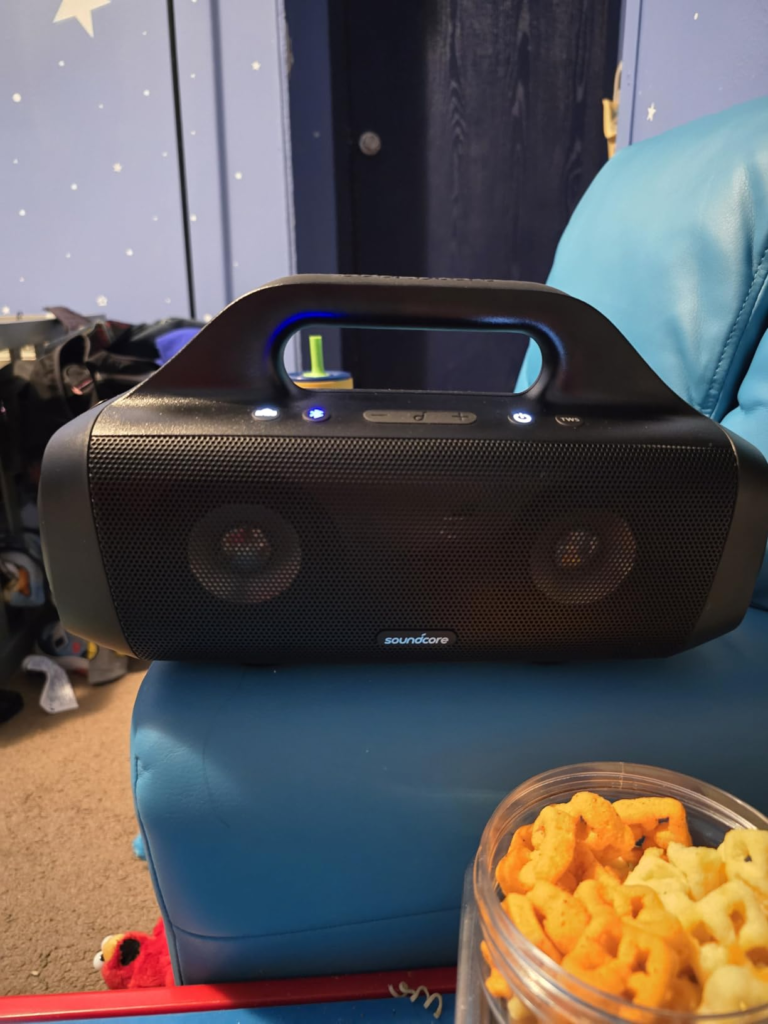
The Soundcore Motion+ is designed for a buyer who wants genuinely good audio reproduction in a portable format, at a price point where most competitors make compromises that are immediately audible.
That buyer: spends most of their listening time indoors or in semi-sheltered environments, cares about sound accuracy and not just volume, uses an Android device or has the patience to use the companion app on iOS, values the ability to tune EQ rather than accept a manufacturer-imposed sound profile, and listens at moderate-to-high volume without expecting arena-filling output.
They are not a casual buyer who will never download an app. They are not a buyer who needs 20 hours of uninterrupted outdoor battery life. They are not a buyer taking a speaker to a beach where sand will find its way into every surface. And they are not a buyer who needs 360-degree sound for a social circle that surrounds the speaker.
Within that actual profile, the Motion+ is not a compromise. It is the correct answer.
Where Wrong-Fit Begins
There is a specific buyer who will be disappointed by the Soundcore Motion+. Not because the speaker underperforms — but because their requirements fall outside its structural design.
| Wrong-fit scenario | Why the mismatch occurs |
|---|---|
| Primary use is beach, trail, dusty worksites | IPX7 protects against water; has no dust resistance rating |
| Needs 15–20 hours of battery consistently | Real-world heavy-use battery is 6–12 hrs depending on volume and BassUp |
| Expects sub-bass depth of a 50W+ speaker | 30W passive radiator design has physical sub-bass limits |
| Uses iPhone and won’t tune EQ | Limited to SBC codec; out-of-box bass response is underwhelming without app |
| Needs omnidirectional coverage for groups | Front-firing unidirectional design; group listening requires deliberate placement or a second unit |
| Wants a power bank built in | No USB output for charging other devices |
| Judges speakers by loudness at 100% volume | Midrange harshness increases significantly at maximum volume |
If more than one of these scenarios describes your actual use pattern, the Motion+ will eventually create friction. Not catastrophically — but enough to cause the specific low-grade dissatisfaction that comes from buying a product that wasn’t wrong exactly, but wasn’t right for you specifically.
The One Situation Where the Soundcore Motion+ Becomes Logical
After all of the above — the thresholds, the mismatches, the design commitments — there is one specific situation where the Motion+ stops being a conversation and becomes a conclusion.
You want the best-sounding portable Bluetooth speaker under $100. You will use it primarily indoors or in sheltered outdoor settings. You are willing to spend 20 minutes in the Soundcore app tuning the EQ to your preference. You don’t need it to function as a power bank. You don’t need IP-rated dust protection. You are not expecting it to fill a football field at maximum volume.
In that situation — which describes a significant majority of buyers researching in this category — the Motion+ is not a trade-off. It is structurally, technically, and sonically the stronger choice at its price tier. Its DSP architecture, aptX support, active crossover, full custom EQ, IPX7 rating, and real-world battery overperformance relative to its own spec sheet combine into a product that has been on the market since 2019, been tested by thousands of buyers across Reddit, professional review outlets, and enthusiast communities, and consistently returns the same verdict: excellent sound for the money, operating within its real range.
The Anker Soundcore Motion+ is available on Amazon, currently priced between $70–$100 depending on promotions.
What It Solves, What It Reduces, and What It Still Leaves to You
| Category | What the Motion+ delivers |
|---|---|
| Solves | Flat, tinny sound from cheap portable speakers in the same price range |
| Solves | Inability to customize sound profile without third-party apps |
| Solves | Poor water resistance at sub-$100 price points |
| Reduces | The codec quality gap for Android users (aptX support) |
| Reduces | The compromise between portability and output power |
| Still requires from you | App download and EQ setup for full performance |
| Still requires from you | Intentional speaker placement for directional listening |
| Still requires from you | Honest assessment of your volume and environment needs |
| Does not solve | Sub-bass depth of a physically larger speaker |
| Does not solve | Battery longevity at maximum volume and BassUp active |
| Does not solve | Dust resistance for outdoor worksites or sandy environments |
The regret that tends to follow this speaker does not come from the speaker failing. It comes from a buyer who needed IP67 dust protection, or 20-hour battery, or omnidirectional sound — and chose the Motion+ because the price was right and the reviews sounded good, without checking whether their specific use case lived inside or outside the speaker’s operating boundary.
Adjusting expectations before purchase costs nothing. Adjusting them after costs both money and time.
Final Compression
The Soundcore Motion+ is not trying to be everything. It is trying to be the best-sounding portable speaker under $100 for a buyer who primarily listens indoors or in sheltered conditions, wants real EQ control, and doesn’t need dust protection or a 20-hour battery.
It succeeds at exactly that. By a meaningful margin.
The question was never whether the speaker is good. It is. The question was always whether your use case lives inside the ceiling where it performs as promised — or above it, where the physics quietly take over and the outcome doesn’t match the expectation you formed from reading the spec sheet at your desk.
If you are within that range, the decision has already been made. You’re just delaying acting on it.
Frequently Asked Questions
| Question | Answer |
|---|---|
| Does the Soundcore Motion+ sound good without the app? | It works without the app, but the out-of-box EQ underrepresents the low end. The real performance — especially bass balance — requires at least a basic EQ adjustment through the Soundcore app. Buyers who skip the app are using a noticeably flatter version of the speaker’s capability. |
| How loud does the Soundcore Motion+ actually get? | At 30W it gets loud enough for rooms, small gatherings, and sheltered outdoor settings. Above 80% volume, midrange harshness becomes noticeable. It is not a speaker for filling large open outdoor spaces at high volume — the output ceiling is real and consistent across testing. |
| Is the battery life really 12 hours? | SoundGuys tested it at 16+ hours at 75dB. At high volume with BassUp active, real-world usage drops toward 6 hours. The 12-hour spec is a conservative moderate-volume figure that real-world use will vary around significantly depending on how you listen. |
| Can I use the Soundcore Motion+ at the beach? | It is IPX7-rated, meaning it survives rain and submersion in water. It has no dust or sand resistance rating. Sand particles can damage the driver components and grille over time. For regular beach use, a speaker with an IP67 or higher rating is more appropriate. |
| Does it work well with iPhone? | Yes, but the iPhone doesn’t support aptX. You’ll use SBC codec, which is audibly lower quality than aptX on a compatible Android device in a direct comparison. The EQ app still works fully on iOS and compensates significantly — but the codec difference is real. |
| What happens if you pair two Soundcore Motion+ speakers together? | True Wireless Stereo pairing creates a significantly wider soundstage and increases the effective output meaningfully. Many users who pushed past the single-speaker volume ceiling found the dual-speaker setup resolved the limitation cleanly. The maximum pairing is two units. |
| Is the Soundcore Motion+ good for outdoor parties? | For smaller gatherings — a patio, a deck, a camping site — yes, within its volume range. For larger open-air events expecting to fill significant outdoor distance or compete with high ambient noise, the physical output ceiling will be reached. It is not a party speaker at scale. |
| How does it compare to the JBL Flip 6? | The Motion+ generally offers broader frequency response, more EQ flexibility, and aptX support. The Flip 6 is smaller, more portable, IP67-rated for dust and water, and easier to carry. The right choice depends entirely on whether portability and dust resistance outweigh sound quality customization for your use. |
Transparency Note:
This analysis is built on aggregated real-world experience. It extracts what repeatedly holds, what breaks, and what users uncover only after living with the system—then shapes it into a clear model you can use immediately. Think of it as structured experience, refined and presented so you don’t have to learn it the hard way.
“A quick note: Don’t believe the star ratings, but trust personal experience. This article is a compilation of collected experiences”