YOU ADDED A SOUNDBAR AND A SUBWOOFER. WHY DOES SOMETHING STILL FEEL OFF?
The TV sounds better. Noticeably better. Dialogue is crisp, bass is present, and the room no longer feels acoustically dead. You made the right move upgrading — and yet, some nights, you sit there wondering if you heard what a $900 home theater system was supposed to sound like.
You’re not imagining it. And the answer isn’t what most reviews will tell you.
The Result Looks Fine. The Problem Isn’t.
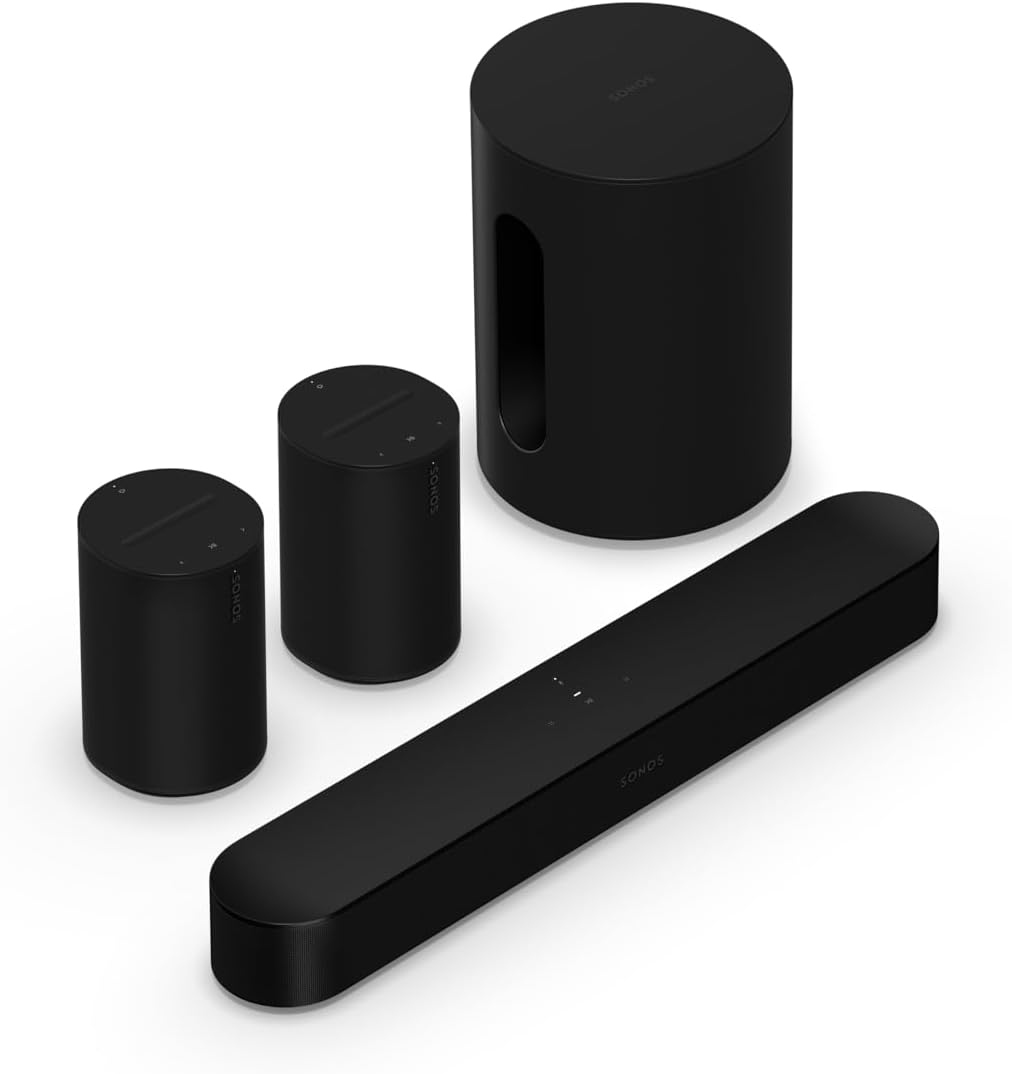
The Sonos Beam Gen 2 + Sub Mini bundle does everything it promises on the box. It produces Dolby Atmos. It wirelessly pairs in under 15 minutes. It fills your room with layered, balanced sound that is measurably superior to any TV speaker you’ve owned.
But “Dolby Atmos” on this setup isn’t the same Dolby Atmos you’ve heard described.
There are no upward-firing drivers in the Beam Gen 2. The height effects — the rain falling around you, the helicopter passing overhead — are simulated through digital processing, not physical speaker placement. The system uses software to convince your ears that sound is coming from above. In the right room, at the right distance, it works impressively well. In the wrong room, or from the wrong seat, it collapses back into directional front-stage sound that happens to have decent bass underneath it.
The bundle doesn’t hide this. But the gap between the label and the lived experience is wide enough that buyers frequently close it with money they haven’t planned for.
What You’re Actually Feeling but Not Naming
There’s a specific type of dissatisfaction that doesn’t have a name in most buying guides.
You’re not disappointed in the sound quality — it’s genuinely good. You’re not experiencing hardware failure — everything works. What you’re experiencing is expectation displacement: the setup performs exactly as designed, but the design targets a room you may not have.
It shows up in three recurring patterns:
- You sit directly in front of the TV and the experience is full, immersive, and exactly what you hoped for. You shift to the side of the couch and something flattens. The width of the soundstage narrows noticeably.
- You watch a film with heavy Atmos mixing — a Marvel sequence, a war film, a dense sci-fi score — and you feel the bass but not the height. The Sub Mini is doing its job. The Beam is reaching the ceiling of what virtual processing can produce.
- You play music. Good music, well-recorded. The sound is balanced, full, and competent. But it doesn’t move you the way you expected a Sonos system to move you.
None of these are bugs. They are the natural boundaries of this specific product architecture, activated by specific listening conditions.
The Hidden Mechanism Behind the Miss
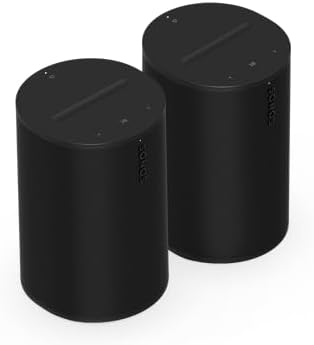
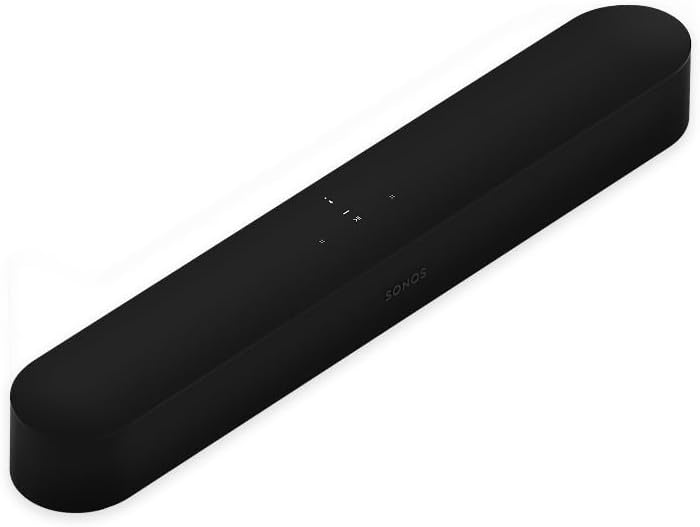
The Beam Gen 2 runs five drivers: four front-facing elliptical mid-woofers and one center tweeter, supported by three passive radiators for low-end reinforcement. All of them face forward.
The Sub Mini runs two force-cancelling woofers inside a cylindrical enclosure, operating below the frequencies the Beam handles. When paired, the Sub Mini takes the low-frequency burden off the Beam — which then frees the soundbar’s processing to focus on mids and highs with more precision.
| Component | Drivers | Function | Atmos Delivery |
|---|---|---|---|
| Beam Gen 2 | 5 active + 3 passive | Mids, highs, virtual surround | Software-simulated (no upfiring) |
| Sub Mini | 2 force-cancelling woofers | Deep bass, below 80Hz | N/A |
| Bundle combined | 7 active drivers | Full-range stereo + virtual 5.1 | Dolby Atmos via processing |
The key word is virtual. Dolby Atmos on this setup is a software interpretation of height data, not a hardware execution. The Arc Ultra — Sonos’ larger flagship — uses dedicated upward-firing drivers to bounce sound off your ceiling. The Beam Gen 2 doesn’t have those. It reads the same Atmos metadata and redistributes it through forward-facing arrays with clever timing and EQ curves.
This works. But it has a ceiling — literally and figuratively.
The Threshold Where the Outcome Quietly Breaks
The Beam + Sub Mini system has a performance threshold that most buyers discover after purchase rather than before.
| Condition | Within Threshold | Past Threshold |
|---|---|---|
| Room size | Up to ~200 sq ft enclosed | 250+ sq ft open-plan |
| Seating distance | 6–10 feet from TV | 12+ feet, or off-axis |
| Listening mode | Movies, TV shows, gaming | Critical music listening |
| Atmos content | Streaming (Netflix, Disney+) | Physical Atmos Blu-ray, DTS |
| TV connection | HDMI eARC | ARC-only or optical (Atmos disabled) |
| Calibration | Trueplay via iOS device | No iOS device available (Android-only) |
The Trueplay line deserves emphasis. Sonos’ room calibration feature — which uses your phone’s microphone to analyze acoustics and optimize speaker output for your specific space — requires an iPhone to run. Android users cannot access Trueplay in surround mode. This is not a small footnote. In untreated rooms with hard floors, reflective surfaces, or irregular shapes, the absence of Trueplay is the difference between the system sounding tuned and the system sounding raw.
If you own an Android phone and live in a hard-surfaced room, this calibration gap is your single biggest performance variable — and it’s invisible in every product listing.
Why Most Buyers Misread This Too Early
The comparison that kills most purchasing decisions is the wrong one: Beam + Sub Mini versus a single Arc Ultra.
This comparison isn’t meaningless — but it’s structurally misleading for most buyers. The Arc Ultra is a single-unit solution designed for larger, more open spaces where its 14-driver array can spread sound across a wide soundstage. The Beam + Sub Mini is a two-unit system designed for enclosed, small-to-medium rooms where the Sub Mini’s tight bass reinforcement compensates for what the Beam can’t physically deliver alone.
Tested side by side in an open-plan showroom, the Beam + Sub Mini held up impressively at the primary listening position. At wider angles, the experience softened. The Arc Ultra maintained more consistent immersion across the room.
| Metric | Beam Gen 2 + Sub Mini | Arc Ultra (standalone) |
|---|---|---|
| Best room size | Up to ~200 sq ft | 250+ sq ft, open plan |
| Atmos type | Virtual (software) | Physical (upfiring drivers) |
| Bass source | External Sub Mini | Internal SoundMotion™ |
| Price (approx.) | ~$900 bundle | ~$999 |
| Expansion path | Surrounds, Sub 4 possible | Sub 4, Era 300 rears |
| Trueplay (Android) | Limited (surround mode) | Limited (same restriction) |
| Best listening position | On-axis, 6–10 ft | On-axis and off-axis |
The buyers who walk away disappointed bought the Arc Ultra for a small bedroom, or bought the Beam bundle for a large open-concept living room. Product mismatch is not a product failure. It’s a spatial error that happens before the purchase is made.
Who Is Actually Inside This Problem
The Sonos Beam Gen 2 + Sub Mini bundle is genuinely the correct choice for a specific profile — and it fits that profile with uncommon precision.
You are this buyer if:
- Your TV room is enclosed, between 120 and 200 square feet, with a ceiling of 8 to 9 feet
- You sit between 6 and 10 feet from the screen, mostly centered
- Your primary content is streaming: Netflix, Disney+, Apple TV+, HBO Max
- You want the option to expand — surrounds, full sub — without replacing the foundation
- You’re an iOS user, or have reliable access to an iPhone for initial Trueplay calibration
- You want a system that disappears aesthetically and works reliably within a broader Sonos home
| Use Profile | Beam + Sub Mini Fit |
|---|---|
| TV + Movie streaming (primary) | Excellent |
| Gaming (PS5, Xbox) | Very good |
| Critical music listening (audiophile) | Moderate |
| Large open-plan room | Below threshold |
| Android-only household with hard floors | Compromised |
| Budget-conscious with expansion plans | Strong |
| One-and-done buyer, no future upgrades | Good — with spatial match |
Where Wrong-Fit Begins
There are buyers who will spend this money and feel the regret threshold before month three.
If your room is larger than 250 square feet with an open layout — connected kitchen, dining area, no rear wall behind the couch — the Sub Mini will feel adequate and the virtual Atmos will feel thin. The bass will be present. The height dimension will not. You’ll spend time adjusting EQ levels in the Sonos app trying to close a gap that the hardware can’t close.
If you listen to music more than you watch video content, the Beam’s forward-facing array and the Sub Mini’s tight low end will produce a balanced but emotionally flat result for genres that depend on width and imaging. Jazz, classical, and acoustic recordings particularly expose the limits of the virtual soundstage.
If you are an Android user in an acoustically difficult room — wood floors, high ceilings, glass windows — and you cannot run Trueplay, the system will work but it will not be optimized. The difference between calibrated and uncalibrated on this hardware is significant enough to move the experience from impressive to acceptable.
If you own a DTS-heavy Blu-ray library, note that DTS support on the Beam Gen 2 has a complicated history. Atmos delivered over Dolby TrueHD via eARC is fully supported. DTS decoding has seen firmware changes over time, and source-dependent behavior can produce inconsistent results.
The One Situation Where This Bundle Becomes Logical
After everything above, one buyer profile exists where this bundle is not a compromise — it is the architecturally correct answer.
You have a 150–180 square foot TV room. The layout is enclosed: walls behind the couch, ceiling under 9 feet, carpeted or mixed flooring. You stream your content — Netflix, Disney+, Apple TV+. You sit centered, 7 to 9 feet from a 55 to 65 inch screen. You own an iPhone or have easy access to one for Trueplay setup. You want real bass, not the polite suggestion of bass that soundbar-only setups produce. And you want the option — not the obligation — to add Era 100 surrounds later and turn this into a full 5.1 system when the budget allows.
For that buyer, in that room, the Sonos Beam Gen 2 + Sub Mini bundle is not one of the best choices available. It is the most justified choice available at this price point.
The Sub Mini’s force-cancelling dual woofers produce tight, clean bass without the boominess that plagues ported subwoofer designs in enclosed rooms. The Beam’s virtual Atmos processing, once calibrated via Trueplay, produces genuine height perception in compact spaces where ceiling bounce is predictable. The wireless pairing is stable. The app integration is the best in class. And the expansion path — add Era 100s, upgrade to Sub 4 — is modular rather than replaceable.
| Setup Stage | What You Gain |
|---|---|
| Beam Gen 2 alone | Dolby Atmos, dialogue clarity, music streaming |
| + Sub Mini | Full-range bass, freed midrange processing in Beam |
| + Era 100 pair | True 5.1 surround, Beam switches off virtual surround |
| + Sub 4 (future) | Reference-level bass for larger/upgraded rooms |
What It Solves, What It Reduces, and What It Still Leaves to You
What it solves:
The complete absence of low-frequency extension that makes modern cinematic audio feel like it’s missing a floor. The Beam + Sub Mini combination restores the full-range sound that film mixing engineers intended — a range that TV speakers cannot approach and that single soundbars approximate with polite bass boost.
What it reduces:
Dialogue fatigue in dense action scenes. The Sub Mini, by absorbing the low-end load, allows the Beam’s drivers to operate in their optimal frequency range — producing cleaner vocal reproduction with less compression under high-volume conditions.
What it still leaves to you:
| Remaining Variable | Your Responsibility |
|---|---|
| Room calibration | Requires iOS for Trueplay in surround mode |
| Surround immersion | Requires Era 100 or Era 300 rear speakers |
| True height Atmos | Not achievable — inherent to hardware architecture |
| DTS content compatibility | Verify firmware and source settings before purchase |
| Large room performance | Consider Arc Ultra instead |
The system will not make your room feel like a cinema. It will make your room feel like the best version of what it is. That’s a different promise — and for the right room, it’s a better one.
Final Compression
The Sonos Beam Gen 2 + Sub Mini bundle performs at a specific level, within a specific spatial envelope, for a specific listener.
That envelope is: a room under 200 square feet, an on-axis seating position, streaming-first content habits, an iOS device for calibration, and a willingness to accept virtual Atmos as a genuine — if bounded — approximation of height audio.
Inside that envelope, the bundle is coherent, expandable, and deeply capable of transforming a TV into something that feels like an intentional home theater rather than a screen with audio attached.
Outside that envelope — large rooms, off-axis seating, music-critical listening, DTS-heavy collections, Android-only households in hard-surface spaces — the system still functions. But the gap between what you paid and what you feel closes in the wrong direction.
If your room fits the geometry, your habits fit the streaming-first model, and you can run Trueplay on at least one iOS device: the decision stops being vague at this point. The bundle’s logic is complete, and the next step is straightforward.
Transparency Note:
This analysis is built on aggregated real-world experience.
It extracts what repeatedly holds, what breaks, and what users uncover only after living with the system—then shapes it into a clear model you can use immediately.
Think of it as structured experience, refined and presented so you don’t have to learn it the hard way.
“A quick note: Don’t believe the star ratings, but trust personal experience. This article is a compilation of collected experiences”