SONY BRAVIA PROJECTOR 8 LOOKS EXPENSIVE. THE REAL SHOCK IS HOW EASILY CHEAPER PROJECTORS EXPOSE THEMSELVES BESIDE IT.
There is a specific kind of disappointment projector buyers rarely name correctly.
The image is huge. The room is dark. The specs looked safe. And yet the picture never quite settles into something believable. Faces seem a little waxy. Highlights flare, then flatten. Dark scenes are not black so much as dark gray with ambition. You keep adjusting settings, moving seats, dimming lights, blaming the source, blaming the wall, blaming yourself.
That is the trap.
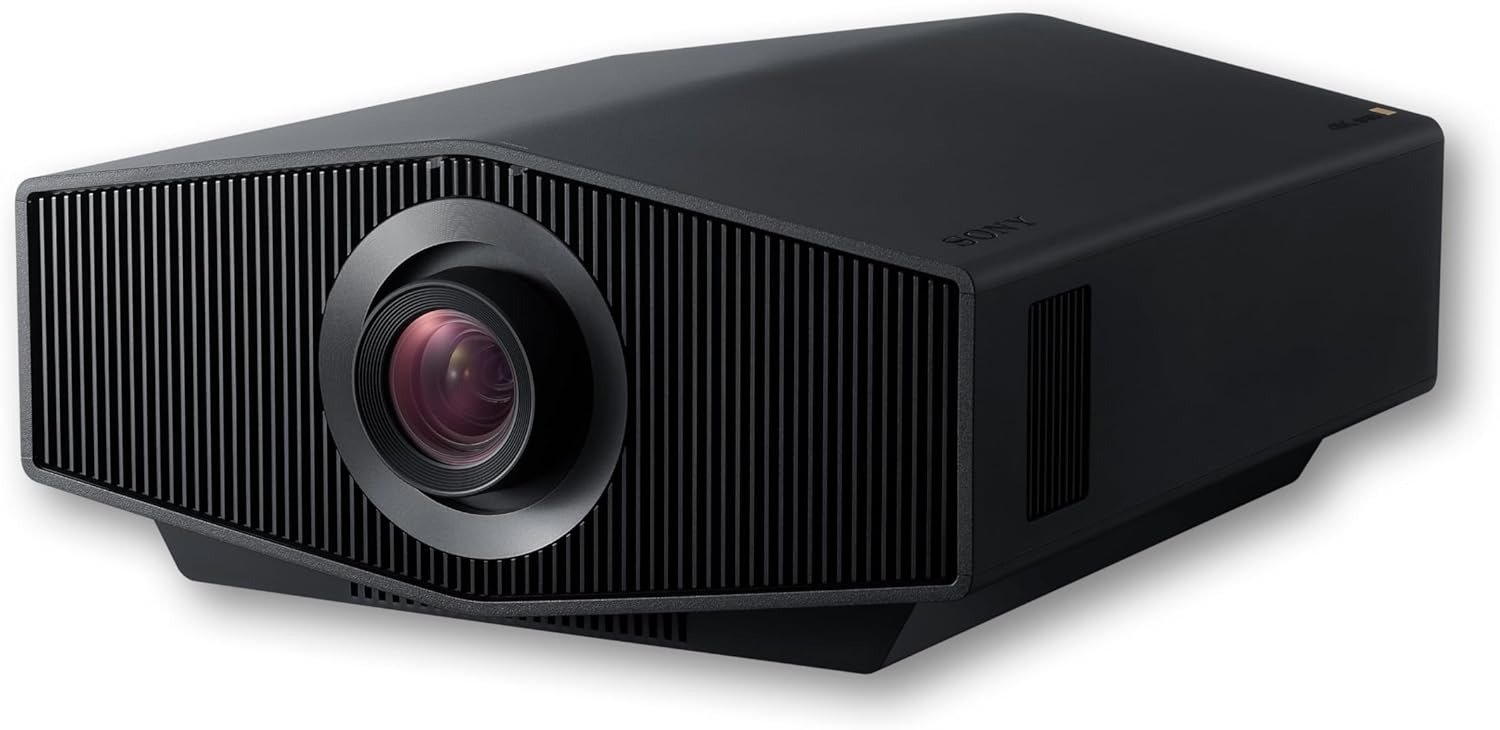
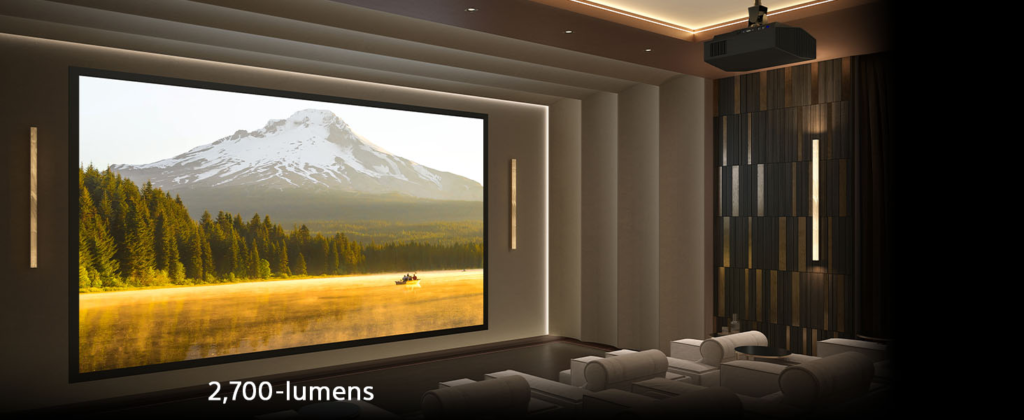
The Sony BRAVIA Projector 8, the VPL-XW6100ES, is not a projector I would describe as “for everyone,” and the price alone makes that obvious at $18,999.99. But after pulling apart the official spec sheet, Sony’s own technical notes, and multiple serious reviews, the pattern is unusually clear: this is not a machine built to impress people with raw size alone. It is built to rescue the moment where big-screen projection usually starts to look synthetic. Native 4K SXRD, 2,700 lumens, XR dynamic tone mapping, XR Deep Black, HDMI 2.1 with 4K/120 and ALLM, measured low input lag, and a motorized lens system all point in the same direction. The point is not “more picture.” The point is controlled picture.
THE RESULT LOOKS FINE. THE PROBLEM ISN’T.
A mediocre projector can fool you for ten minutes.
Put on a bright demo reel, feed it saturated color, keep the scene moving, and almost anything expensive can look respectable. The failure begins later, quietly, when the image has to carry weight. A dim hallway. Skin under mixed light. A fast camera pan during sports. A shadowy scene where you need separation, not just darkness. That is where review after review keeps circling back to the BRAVIA Projector 8: strong contrast by projector standards, crisp detail, convincing dimensionality, excellent motion, and HDR that feels more controlled than merely loud. What Hi-Fi highlighted its contrast, detail resolution, black depth, and improved HDMI spec; StereoNET praised its dimensionality and film-like image; Projector Reviews emphasized the improvement over the prior generation and the way brightness and black performance combine to make images pop in a dark room.
WHAT YOU’RE ACTUALLY FEELING BUT NOT NAMING
Most people think they are shopping for brightness.
They usually are not.
What they are really reacting to is image authority: the sense that the picture has enough composure to stay convincing when the scene becomes difficult. That feeling is built from three things at once—contrast control, tonal restraint, and edge-to-edge clarity. Sony’s own literature leans hard on XR Dynamic Tone Mapping, XR Deep Black, XR Triluminos Pro, and XR Clear Image, while third-party reviewers keep describing the same outcome in human language: cleaner textures, more believable depth, sharper details, solid black levels, and colors that look rich without turning gaudy. When several sources with different editorial styles keep landing on the same picture behavior, I pay attention.
THE HIDDEN MECHANISM BEHIND THE MISS
The miss usually starts with the wrong buying metric.
People compare projectors as if the decision lives inside a short row of spec bullets: lumens, “4K,” maybe contrast, maybe laser. That is exactly how you end up with a big image that never feels expensive once the movie starts. The BRAVIA Projector 8’s stronger case is not a single bragging-rights figure. It is the stack: three 0.61-inch native 4K SXRD panels, XR Processor for projector, frame-by-frame tone mapping, laser dimming for dark-scene control, over 95% DCI-P3 coverage, a 70 mm Advanced Crisp-Focused lens, and support for 4K/120 over HDMI 2.1. In other words, it is trying to solve the image as a moving system, not as a still image in a brochure.
| What matters in practice | Sony BRAVIA Projector 8 |
|---|---|
| Native imaging | 3-chip SXRD, 3840 × 2160 native 4K |
| Brightness | 2,700 lumens |
| Color coverage | Over 95% of DCI-P3 according to Sony materials/review reporting |
| HDR / black control | XR Dynamic Tone Mapping + XR Deep Black |
| Lens / installation | Powered lens, approx. 2.1x zoom, ±85% vertical and ±36% horizontal shift, 5 picture positions |
| Gaming path | HDMI 2.1, 4K/120, ALLM, 12 ms at 4K/120 and 21 ms at 4K/60 on Sony’s sheet; reviewers reported similarly low results |
| Maintenance profile | Laser light source rated up to 20,000 hours |
THE THRESHOLD WHERE THE OUTCOME QUIETLY BREAKS
Here is the threshold.
If you are spending at a level where the room, screen, seating, source chain, and viewing habits already expose weaknesses in HDR tone handling, shadow separation, motion, and lens quality, then “a projector” stops being the category. You are no longer buying projection. You are buying failure resistance.
That is where the BRAVIA Projector 8 starts to make sense.
Below that threshold, the price looks absurd. Above it, the price starts behaving like a filter. You are paying to avoid the death-by-small-defects that cheaper units normalize: softness toward the edges, HDR that needs constant compromise, gaming lag that feels just slow enough to be irritating, blacks that lose structure, or colors that turn theatrical in the wrong way. Sony’s own design emphasizes lens quality, object-based image analysis, tone mapping, and low-latency HDMI 2.1 support; outside reviewers repeatedly describe the result as more refined, more natural, and more stable in difficult material than the average premium projector.
WHY MOST BUYERS MISREAD THIS TOO EARLY
Because they compare too soon.
They compare before they isolate the room. Before they admit they care about gaming. Before they admit they are sensitive to motion artifacts. Before they understand that “bright enough” and “cinematic enough” are not the same sentence. And before they separate envy from fit.
You might think, at first glance, that this is just another ultra-premium projector padded with prestige markup. The uncomfortable part is that Sony did not simply dress up the old formula. Reviews and specs point to real additions: HDMI 2.1 on both inputs, 4K/120 support, ALLM, XR-based processing, improved HDR handling, and measurable gaming responsiveness. At the same time, the criticism is real too: it is expensive, it drops 3D support, and some reviewers still place JVC-style black-level performance ahead of it in the absolute sense. That makes the buying decision cleaner, not messier. This is not a universal throne. It is a very specific kind of superior fit.
WHO IS ACTUALLY INSIDE THIS PROBLEM
You are inside this problem if your room or habits create any of these three pressures:
You watch films that live or die on shadow structure, texture, and gradation rather than pure spectacle.
You want one projector to handle cinema and serious gaming without turning one use case into a compromise for the other.
You care about how the machine integrates into the room physically—powered lens, picture memories, broad shift range, compact chassis for its class, black or white finish, home automation support—because this is not going into a dorm wall setup; it is going into a considered space.
And yes, the room matters visually.
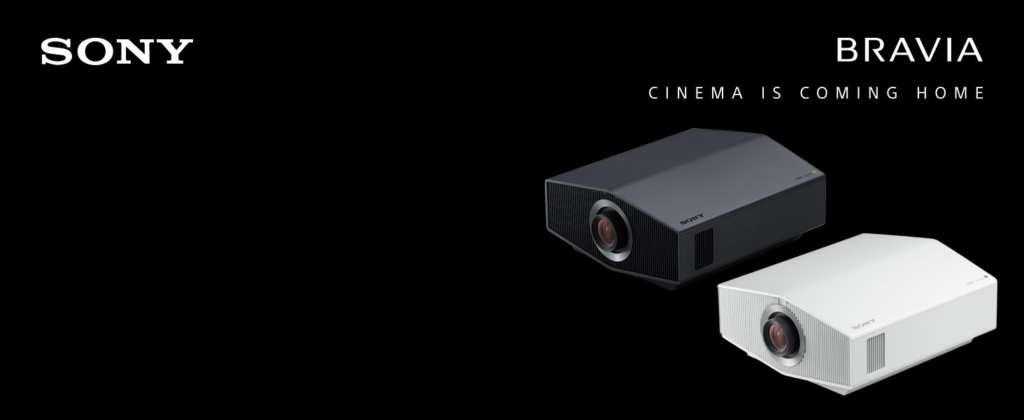
In black, the projector reads like a deliberate piece of theater hardware—serious, recessive, meant to disappear when the lights drop. In white, it is easier to blend into a pale ceiling or bright media room. That is not marketing fluff; it is a practical aesthetic choice noted in review coverage and Sony’s color options. My inference is simple: in a refined room, ceiling-mounting the black model above a dark screen wall makes the space feel more intentional, while the white version is the cleaner move if you refuse to let the projector visually dominate the room during daylight hours.
WHERE WRONG-FIT BEGINS
Wrong-fit begins faster than most people expect.
This projector is wrong for you if you are still solving the basics. Wrong if your room is casual and multipurpose and you are mainly chasing size for the money. Wrong if you want maximum black-floor obsession above all else and are already leaning toward JVC territory. Wrong if 3D is still part of your wishlist. Wrong if the price makes you tense before the crate even arrives, because that tension does not disappear after installation; it sharpens every doubt. The BRAVIA Projector 8 does not erase budget pain. It demands that you already know why you are buying it.
THE ONE SITUATION WHERE THIS PRODUCT BECOMES LOGICAL
It becomes logical when you want one ceiling-mounted native 4K laser projector that can carry premium movie nights, difficult HDR, and real gaming performance without feeling like a compromise machine wearing a luxury badge. That is the lane.
In that lane, the Sony BRAVIA Projector 8 stops looking like indulgence and starts looking like system integrity. The powered lens and picture positions help if you are switching formats. The generous lens shift and compact-for-class body help in real installations. The XR stack matters because it addresses the precise places projection usually breaks down: dark-scene control, highlight mapping, object clarity, color nuance, and motion coherence. The HDMI 2.1 feature set matters because it removes the usual “great for films, awkward for gaming” excuse. And the low acoustic noise matters more than spec shoppers admit, because a projector that visually disappears but audibly nags you is not premium. Sony rates noise at 26 dB, and several reviewers describe the platform as quiet in use.
WHAT IT SOLVES, WHAT IT REDUCES, AND WHAT IT STILL LEAVES TO YOU
What it solves is not “having no screen.”
It solves the more expensive problem: having a large image that never fully escapes projection’s usual tells. It reduces softness, HDR awkwardness, sluggish gaming behavior, installation friction, maintenance anxiety from lamp replacement, and some of the room-integration pain that bulkier high-end models create. It also gives you a long-life laser engine, strong color coverage, dual HDMI 2.1 inputs, and a picture pipeline that serious reviewers consistently describe as refined and cinematic.
What it still leaves to you is the grown-up part.
You still need a worthy room. A worthy screen. Proper placement. Sensible expectations about how projectors behave versus emissive displays. And enough honesty to admit whether your use case actually lives above the threshold this product was built for. Sony gives you the hardware headroom. It does not install judgment in the ceiling.
FINAL COMPRESSION
The Sony BRAVIA Projector 8 is not persuasive because it is expensive.
It is persuasive because the evidence around it keeps collapsing toward the same conclusion: this is a projector for buyers who are no longer fooled by size alone. They want control. They want texture. They want movement that stays clean, HDR that stays composed, installation that stays civilized, and gaming that does not feel like an afterthought. Officially, it delivers native 4K SXRD, 2,700 lumens, over 95% DCI-P3 coverage, a powered lens with broad shift, 4K/120 and ALLM over HDMI 2.1, 12 ms input lag at 4K/120, and a 20,000-hour laser light source. In review coverage, the same machine is described with different words but the same verdict: sharp, deep, dimensional, punchy, refined, and costly—but costly in a way that starts to make sense once your break point is no longer “Can I get a big picture?” and becomes “Can I stop compromising the picture every time the material gets hard?”
If that is the condition you are actually dealing with, this is where the decision stops being vague.
Transparency Note:
This analysis is built on aggregated real-world experience.
It extracts what repeatedly holds, what breaks, and what users uncover only after living with the system—then shapes it into a clear model you can use immediately.
Think of it as structured experience, refined and presented so you don’t have to learn it the hard way.
“A quick note: Don’t believe the star ratings, but trust personal experience. This article is a compilation of collected experiences”