The Yaber T2 Plus GTV Feels Convenient Fast
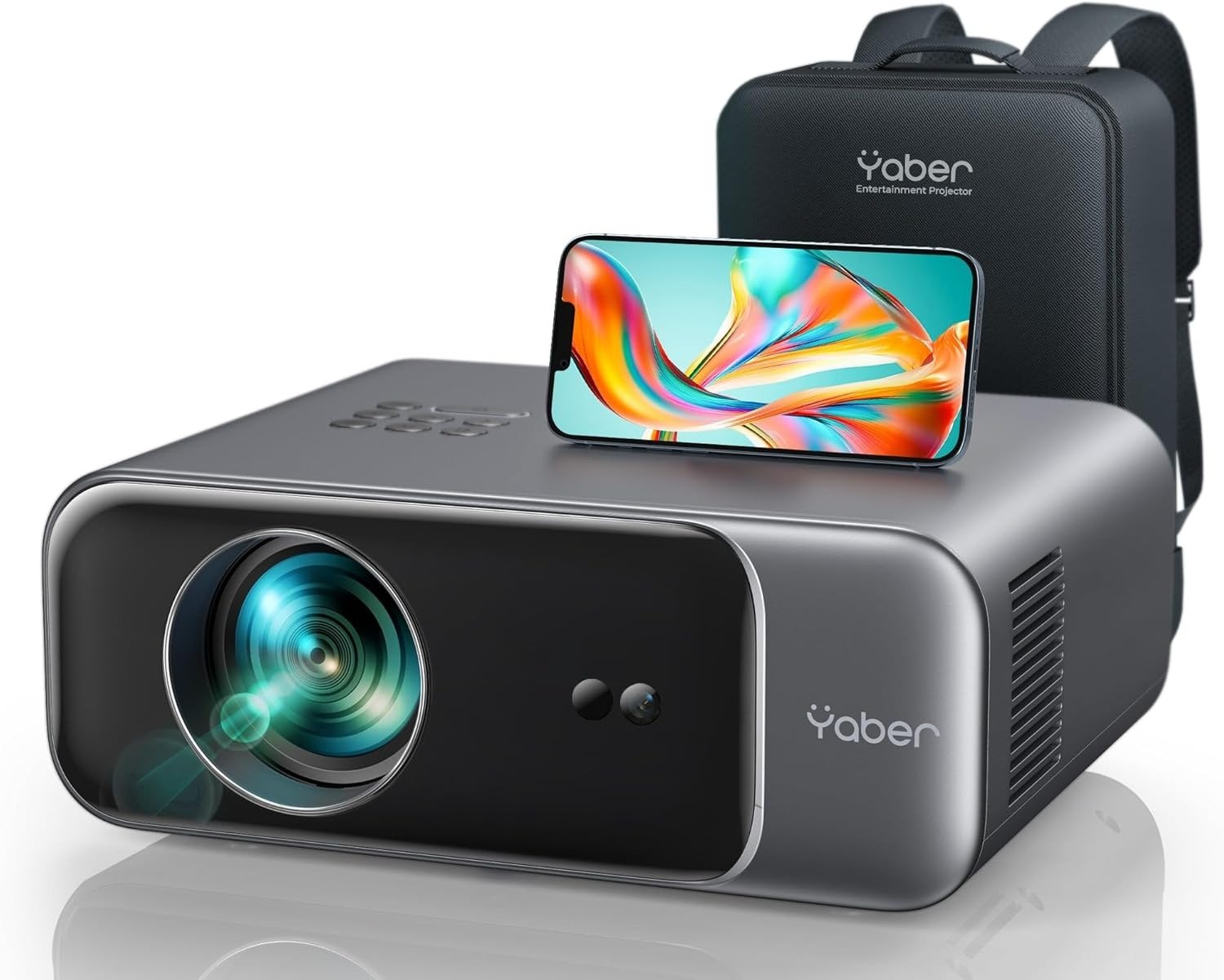
YABER T2 PLUS GTV
I kept running into the same pattern with the Yaber T2 Plus GTV.
On paper, it gives you almost everything people want from a grab-and-go projector: native 1080p, a built-in battery rated for about 2.5 hours of video, Google TV access, auto focus, auto keystone, dual 8W JBL-tuned speakers, Wi-Fi 6, Bluetooth 5.0, and a handle that turns into a stand. That is a very clean promise for a portable unit.
The problem is that this product does not really live or die on its feature list. It lives or dies at one quiet line most buyers do not draw early enough: the moment convenience stops compensating for limited light output and middling dark-scene performance.
The Result Looks Fine. The Problem Isn’t.
This is the kind of projector that can fool you in the first ten minutes.
You set it down.
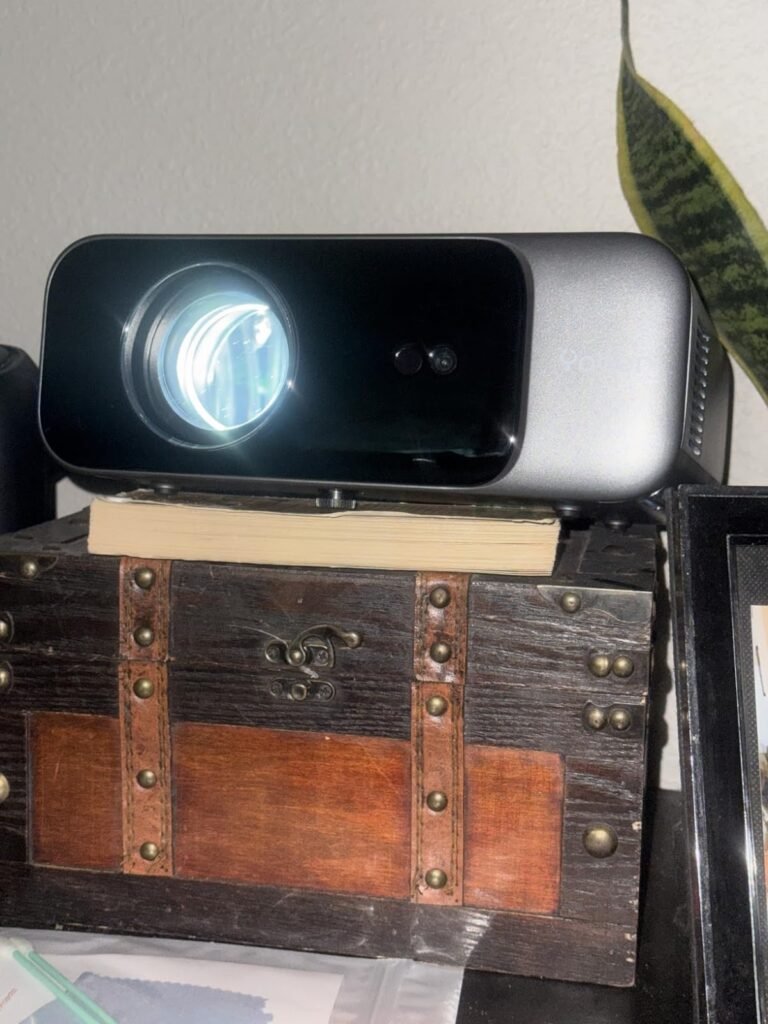
The handle becomes a stand.
The setup is easy.
The speakers sound fuller than people expect from something this size.
Google TV removes one of the usual portable-projector annoyances because you are not fighting a half-broken app situation from the first night.
That is the visible result.
The less visible part starts later, when the room is not quite dark enough, when the image gets larger, when the scene turns dim, or when you expect “portable projector” to cover the same emotional ground as “small TV replacement.” Several third-party impressions land in the same zone: it is far more comfortable in low light and after sunset than it is in daytime or bright-room use, and darker material exposes its limits faster than bright content.
That is the hidden friction here.
It does not fail as a portable projector first.
It fails as an expectation manager.
What You’re Actually Feeling but Not Naming
Most people do not say, “This projector crossed its image threshold.”
They say something looser.
The picture looks a little washed.
Dark scenes feel flat.
The movie is technically visible, but it does not feel settled.
You start nudging blinds, moving lamps, shrinking the image, or telling yourself it is “good enough for tonight.”
That last sentence matters. Because once you start making environmental excuses for a display product, you are already inside the real buying condition. The device is no longer serving the room. The room is serving the device.
That is what I would call the compensation phase.
It is the stage where a projector still works, but only because you are now helping it work.
The Hidden Mechanism Behind the Miss
The miss is not hard to explain. It is just easy to ignore.
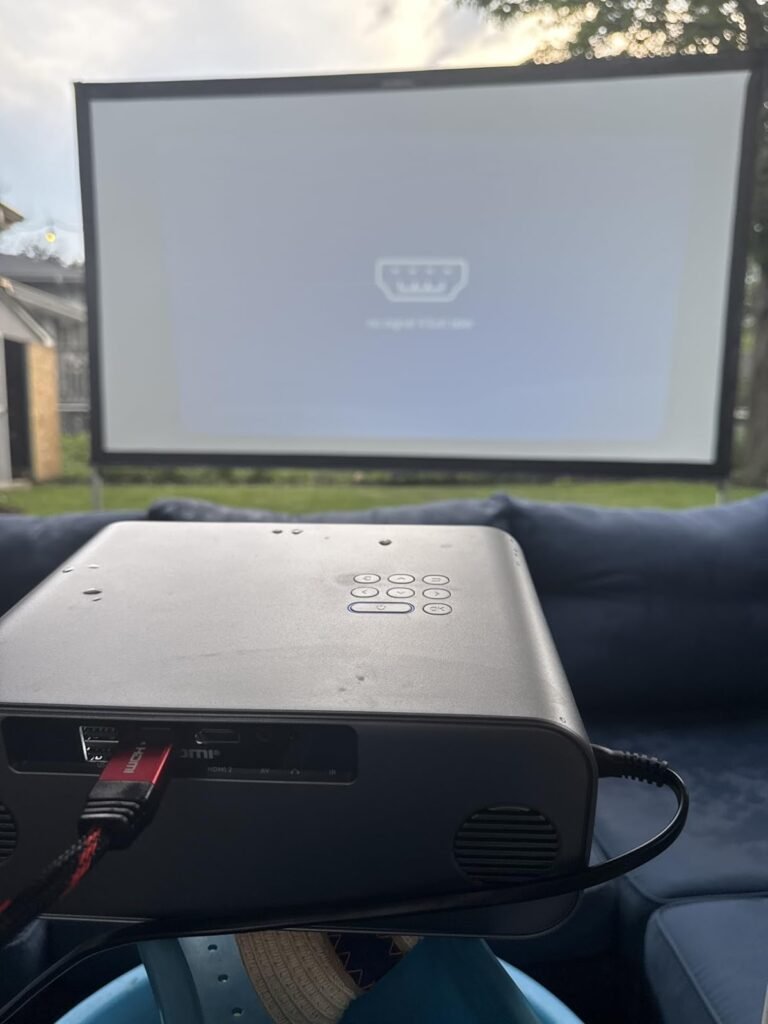
Portable projectors in this class are almost always sold by stacking convenience layers on top of a modest brightness foundation. The Yaber T2 Plus GTV does exactly that. Official materials describe it as a 1080p portable projector with auto alignment tools, sealed optical engine, Google TV access, and a battery built for one movie session. Review coverage and user commentary make the more important point: the picture can be pleasing in darker conditions, but ambient light and darker scenes expose the ceiling quickly.
There is also a clue in the brightness story itself. Yaber’s own materials have described the T2 series at 350 ISO lumens in one place and 450 ANSI lumens in others, while ProjectorCentral’s T2 Plus spec page lists 290 ISO lumens. These are not directly interchangeable numbers, but they all point in the same practical direction: this is not a bright-room machine. It is a dim-room, darker-evening, expectation-controlled machine.
That is the mechanism.
The product wins by reducing setup friction.
It does not win by overpowering the environment.
The Threshold Where the Outcome Quietly Breaks
The useful threshold is not a spec-sheet number. It is a use condition.
For this projector, the break point starts when one or more of these happen at the same time:
| Condition | What happens to the experience |
|---|---|
| Ambient light is still present | Contrast feels weaker and the image loses punch |
| You push toward larger screen sizes | Brightness spreads thinner and the picture feels softer emotionally, even when still “sharp enough” |
| You watch dark, shadow-heavy content | Weak shadow detail becomes easier to notice |
| You want it as a daily living-room TV | Convenience stops covering for display limitations |
| You care more about picture depth | The trade-off starts feeling expensive |
That is not theory. It lines up with the official portability-centered design, with review comments that bright content fares better than dark material, and with commentary stressing how dim this class feels once brightness becomes the main criterion.
Here is the operating envelope as I see it from the available evidence:
| Core spec envelope | Practical meaning |
|---|---|
| Native 1080p | Enough detail for casual movie nights and streaming at sane sizes |
| Battery rated around 2.5 hours video / 18 hours music | Built for one session, not endless unplugged use |
| 1.25:1 throw, 40″–120″ image | Flexible enough for portable placement, but not magic |
| Dual 8W speakers with JBL tuning and Dolby Audio | Better self-contained sound than many cheap portable projectors |
| Google TV / 7,000+ apps / Netflix access | Much lower streaming friction than generic smart-projector software |
| Auto focus, keystone, screen alignment, obstacle avoidance | Fast setup is a real part of the value proposition |
The threshold is simple: once you need brightness to rescue the experience, this projector is already outside its best logic.
Why Most Buyers Misread This Too Early
Because they buy the stack, not the bottleneck.
The stack looks irresistible:
- portable body
- battery
- built-in stand
- Google TV
- Netflix access
- easy setup
- good onboard sound
That is a very modern stack. It makes people feel like they are buying freedom. And in a narrow sense, they are. But the bottleneck is still light performance and scene depth, not convenience. That is why the same projector can feel excellent in one setup and underwhelming in another without either impression being dishonest.
This is where buyers misread it:
| What buyers focus on too early | What actually decides satisfaction later |
|---|---|
| “It has Google TV” | Will you mostly watch in a properly dim space? |
| “It has a battery” | Will one movie of runtime actually cover your routine? |
| “It has Dolby and JBL speakers” | Are you buying it for sound convenience or picture quality first? |
| “It does 1080p” | Are you expecting depth, punch, and shadow performance beyond its class? |
| “It is portable” | Is portability the main problem you are solving, or just a nice extra? |
That is the real correction. Features explain attraction. Fit explains regret.
Who Is Actually Inside This Problem
The right buyer here is narrower than the product page makes it feel.
This projector makes sense for people who value self-contained movie portability more than they value absolute image authority. It also makes sense for someone who hates accessory clutter. There is real appeal in having the stand built in, the streaming layer sorted, the auto adjustments working, and the sound good enough that you do not immediately need another device.
Review coverage and customer comments repeatedly praise the ease of setup, decent sound, and the convenience of having a functional smart layer instead of a junky one.
This is the fit map:
| Need | Fit |
|---|---|
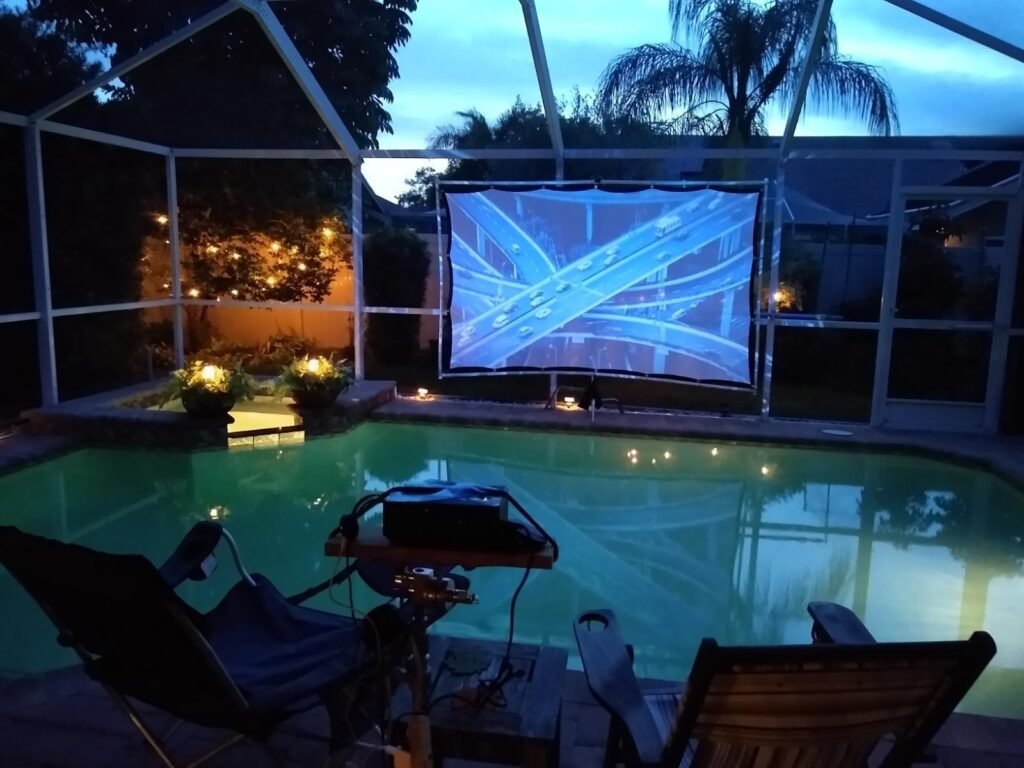
| Backyard movies after sunset | Strong |
| Bedroom ceiling or wall viewing in controlled light | Strong |
| Travel or temporary setups where cables are a burden | Strong |
| Family streaming with minimal setup friction | Strong |
| Workshop/demo use in low light | Good |
| Daily bright-room TV replacement | Weak |
| Dark-scene movie obsessives | Weak |
| Buyers who judge value mainly by picture quality per dollar | Borderline to weak |
| People who expect support quality to be part of the premium feeling | Borderline |
That last line matters because the hardware conversation is not the whole conversation. Customer sentiment around the projector family is mixed in a predictable way: product experience often gets praise for convenience and sound, while broader support and warranty complaints appear in external review channels like Trustpilot. That does not automatically invalidate the product, but it does change the risk profile if post-purchase support matters to you.
Where Wrong-Fit Begins
Wrong-fit begins the moment you say one of these sentences to yourself:
“I want something portable, but I also want it to behave like my main screen.”
“I mostly watch in the day, though I can probably make it work.”
“I care a lot about picture quality, but the smart features are such a good deal.”
“I know it is not that bright, but I do not think it will bother me.”
That last one is the trap.
Brightness rarely bothers people in the abstract.
It bothers them in use.
It bothers them when curtains stay open.
When sports start before sunset.
When the wall is not ideal.
When the movie is darker than the trailer looked.
When the image gets bigger because bigger felt more cinematic.
And then the compromise stops feeling elegant.
There is another wrong-fit boundary here: if you are the kind of buyer who reads projector reviews mainly to find image performance, contrast behavior, shadow detail, and value-per-picture-dollar, this machine is probably solving the wrong problem for you. Even one favorable hands-on review that liked its color and usability still stressed low-light use, while harsher criticism was blunt that the battery and decent audio matter more here than class-leading picture quality.
The One Situation Where This Product Becomes Logical
The Yaber T2 Plus GTV becomes logically strong in one specific situation:
You want an all-in-one portable projector for dark-room or after-dark casual viewing, and you care more about low-friction streaming, built-in sound, and cable-free convenience than about squeezing the most image performance possible out of your budget.
That is the narrow, honest case.
Inside that case, the product starts making sense very quickly. You get a genuinely convenient physical design, a battery that is actually long enough for a typical movie session, auto-setup features that remove friction, speakers that reviewers and owners consistently describe as a strength, and a smarter streaming experience than the generic Android mess that drags down a lot of portable projectors.
And that is exactly why this product is easy to misbuy. Its good qualities are real. They are just real inside a tighter circle than most people draw at checkout.
If this is the condition you are actually dealing with, the product page belongs here
What It Solves, What It Reduces, and What It Still Leaves to You
I would summarize the trade like this:
| It solves | It reduces | It still leaves to you |
|---|---|---|
| Streaming friction | Setup hassle | Light control |
| Extra speaker dependency in casual use | Cable clutter | Expectation control on picture depth |
| Short-session portability problems | Placement frustration | Honest screen-size discipline |
| Generic smart-projector app pain | Minor alignment fuss | Support-risk tolerance |
The most useful way to read that table is not as praise or criticism. It is as a boundary.
You gain convenience.
You trade off image authority.
You gain self-contained usability.
You trade off environmental flexibility.
You gain a better portable lifestyle product.
You do not automatically gain a better projector in the purest sense of the word.
That distinction is the entire article.
Final Compression
After pulling together the official specifications, third-party reviews, user comments, and broader buyer feedback, I would not frame the Yaber T2 Plus GTV as a projector that wins on raw picture performance. I would frame it as a projector that wins when portability friction is your real problem and loses when brightness and image depth are your real problem.
That is the clean threshold.
If you want a neat, battery-powered, easy-streaming, easy-sounding movie box for darker spaces, this becomes easy to justify. If you want a portable projector to behave like a confident living-room display, the doubt will not show up on the product page. It will show up on the wall.
If your break point starts there, this is where the decision stops being vague.
Transparency Note:
This analysis is not based on quick personal impressions.
It is derived from documented system behavior, verified user patterns, and the physical constraints of storage capacity.
The goal is to translate complex technical behavior into a realistic performance model that helps you make a clear decision.
“A quick note: Don’t believe the star ratings, but trust personal experience. This article is a compilation of collected experiences”