SWANN 1080P DVR SECURITY SYSTEM REVIEW: THE FOOTAGE LOOKS FINE UNTIL YOU ACTUALLY NEED IT
SWANN 1080P DVR SECURITY SYSTEM
You typed “Swann Master Series 8-Channel NVR” into the search bar. Somewhere around the sixth result, a listing that says “Business Security,” “8 Channels,” and “24/7 Recording” looked close enough, so you clicked. That’s not a criticism — that’s just how buying a security system usually goes. Nobody researches sensor specs for fun. You want cameras on the wall and a recorder that won’t lie to you later.
Here’s the part worth knowing before you finish that purchase: what’s sitting in that listing isn’t the Master Series. It isn’t even an NVR. It’s Swann’s 1080p wired DVR kit — a real, capable, budget-tier system with its own genuine strengths — surfacing under search terms built for a different, pricier product line. That’s not a scam. It’s just how keyword matching works on Amazon. But it’s exactly the kind of gap where people end up disappointed with a perfectly decent camera, simply because they were expecting a different one.
Swann DVR Picture Quality: The Result Looks Fine. The Problem Isn’t.
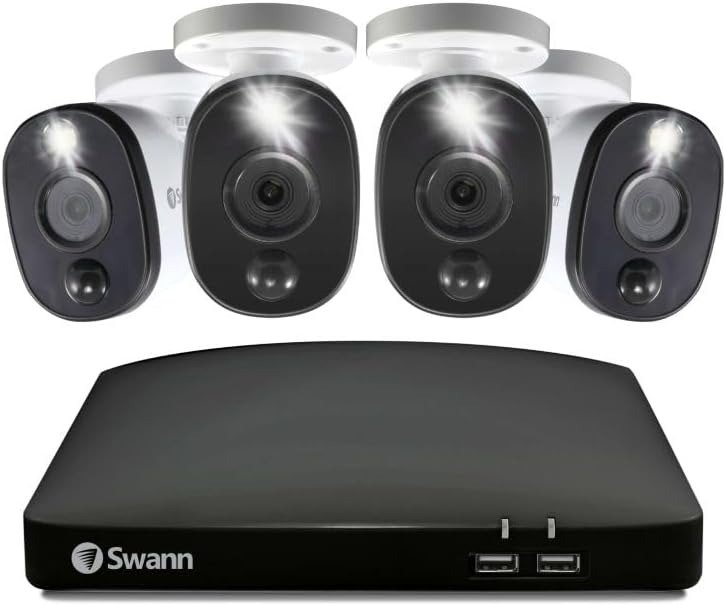
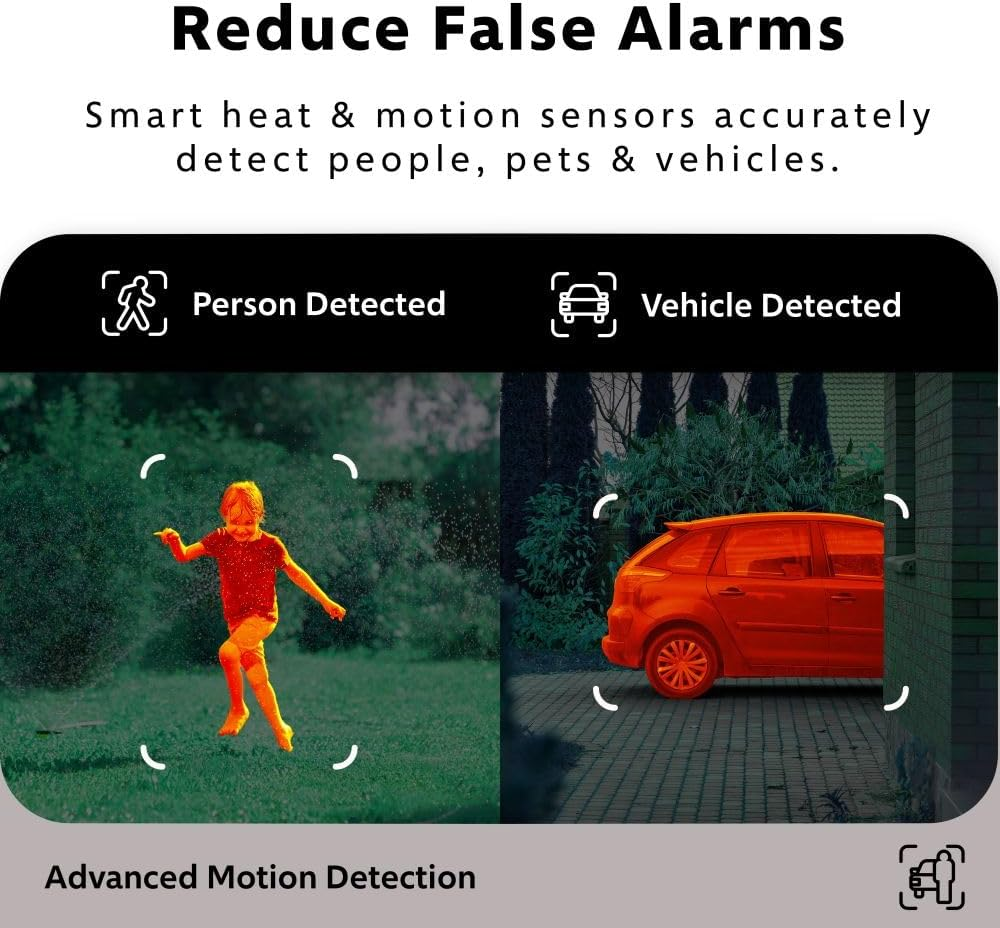
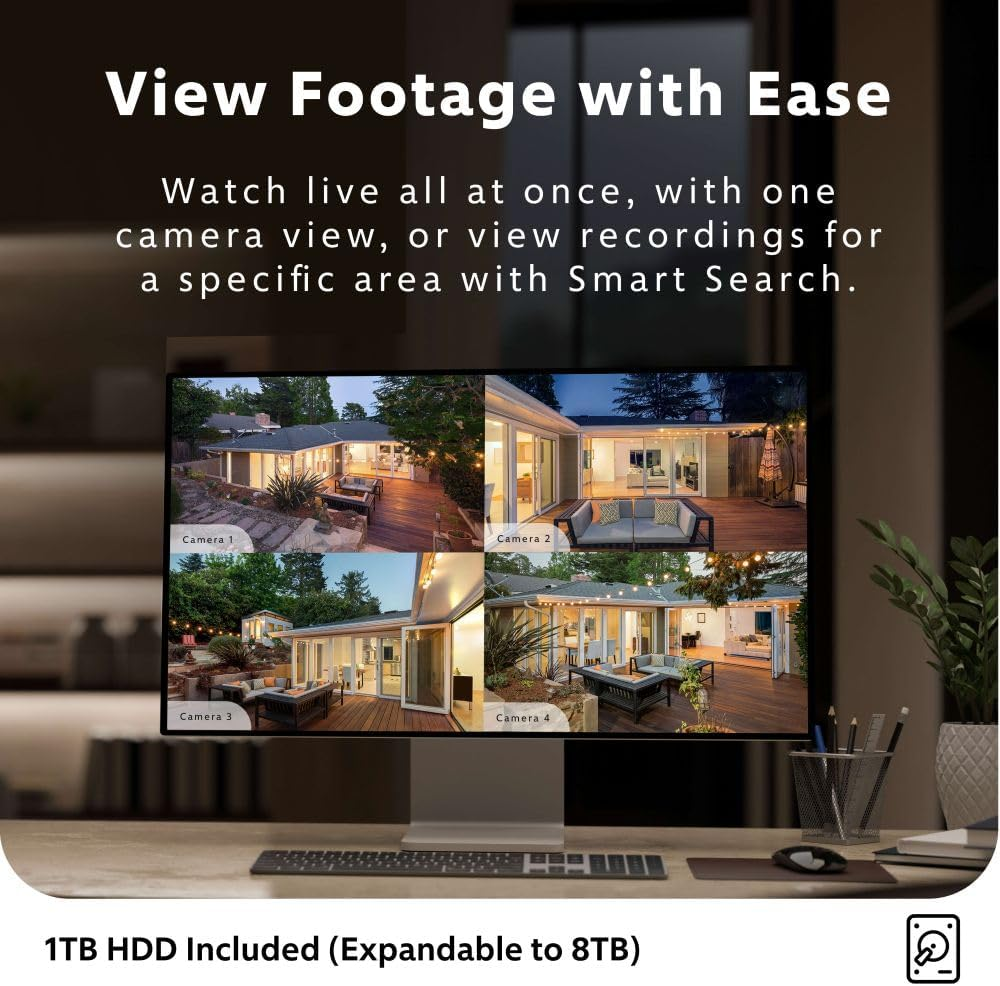
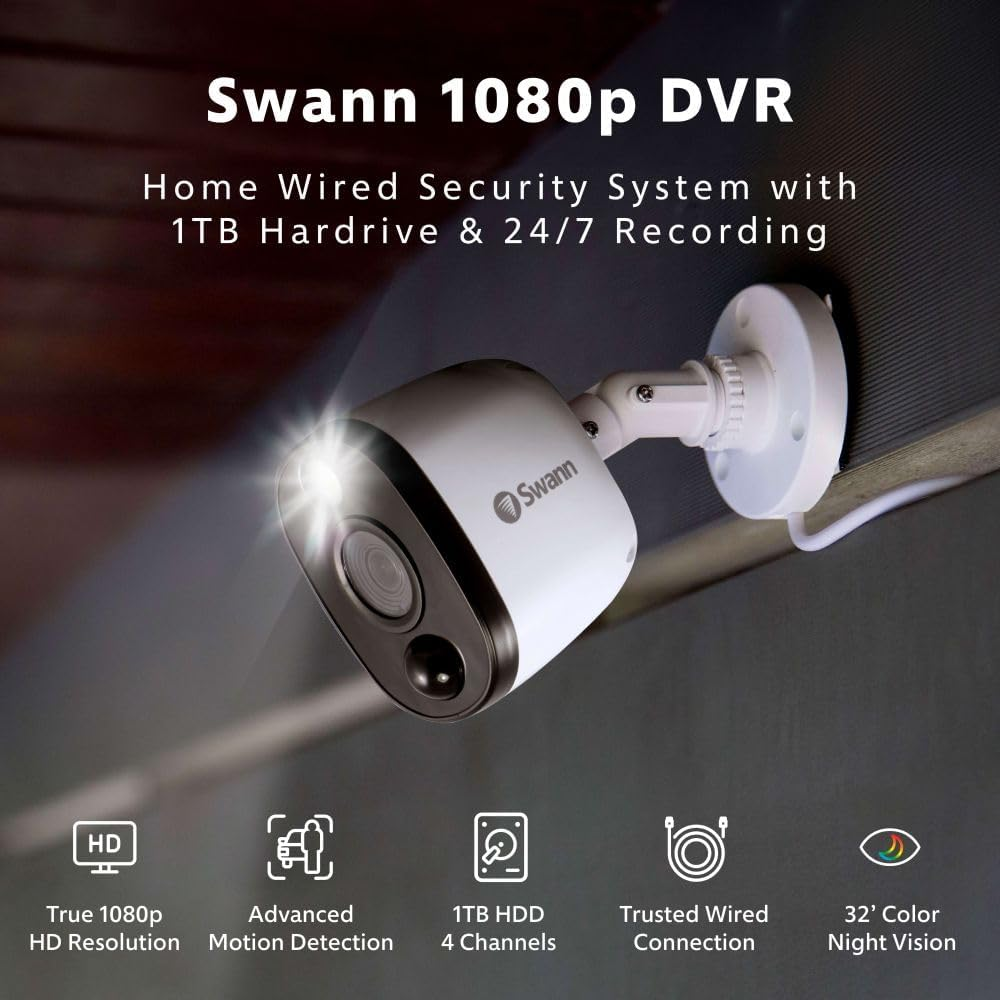
On paper, this kit does a lot right. You get a wired DVR with four bullet cameras (expandable to eight), a 1TB hard drive already installed, and no monthly bill attached to any of it. The cameras carry an IP66 weatherproof rating, record in 1080p Full HD, and use True Detect — Swann’s heat-plus-motion PIR sensing — to trigger recording and push alerts instead of relying on motion detection alone. At night, the built-in spotlight kicks on and gives you color video up close; past that, infrared takes over in black and white.
Play back a clip the next morning and it looks clean. Someone walks up the driveway, the spotlight fires, you can see a jacket color and a general shape. That’s the part that looks fine. The problem shows up later — the first time you actually need to identify a face or a plate, not just confirm that a person was there.
| Spec | What You Get |
|---|---|
| Recorder | Wired DVR (Swann’s DVR-4680 platform), 8 channels |
| Cameras included | 4 bullet cameras, expandable to 8 |
| Resolution | 1080p Full HD |
| Storage | 1TB HDD, pre-installed |
| Night vision — color | Up to 32 ft / 10 m with spotlight active |
| Night vision — infrared | Up to 100 ft / 30 m in full darkness |
| Detection | True Detect PIR (heat + motion) |
| Weatherproofing | IP66 |
| Connectivity | BNC coax cameras, Ethernet to router for app access |
| App | Swann Security (live view, playback, push alerts) |
| Subscription | None required; optional Secure+ cloud add-on |
| Warranty | 1 year standard; up to 36 months with product registration |
Wired Security Camera Blind Spots: What You’re Actually Feeling but Not Naming
If you already own one of these, some of this will sound familiar. You open the app after getting an alert, and the live feed takes a beat too long to load — long enough that whoever tripped it is already gone. Some weeks the notifications arrive instantly. Other weeks they go quiet for days, then start again with no explanation. You mow the lawn right past a camera and it doesn’t blink. A bird lands on the power line at the edge of the frame and it fires off three alerts in a row.
None of that means the system is broken. It means the sensitivity was never tuned to your yard, and the app’s refresh behavior isn’t something most people think to troubleshoot on day one. Named clearly, this is a calibration problem, not a defect — but nobody tells you that when you’re unboxing cameras on a Saturday.
1080p vs 4K Security Camera: The Hidden Mechanism Behind the Miss
Here’s why the face-ID problem happens, and it isn’t a Swann-specific flaw — it’s arithmetic. A 1080p sensor has a fixed number of pixels spread across the entire frame. The wider the shot, the fewer of those pixels land on any one face. Zoom out to cover a driveway and a front door in one frame, and a face at the far end of that driveway might be rendered in a few dozen pixels — not enough for a confident ID, even though the overall picture looks sharp on your TV.
This is exactly what shows up in real owner feedback: several users report that identifying a face clearly gets difficult once someone is more than about four or five meters from the lens, even though the marketing copy promises “faces, license plates, and important activity.” Both things are true at once. The system captures the scene. It doesn’t necessarily resolve a face at range. Why does this catch people off guard? Because “1080p Full HD” sounds like a resolution spec, when for identification purposes it’s really a distance spec — and nobody puts that on the box.
Swann DVR Cable Range and Storage Limits: The Threshold Where the Outcome Quietly Breaks
Two numbers matter more than anything else in the spec sheet, and neither one is advertised loudly.
| Where It’s Set | The Real Number | What Happens Past It |
|---|---|---|
| Coax cable run per camera | ~300 ft / 90 m (Swann’s own installation guidance) | Video quality visibly degrades — this isn’t a soft limit |
| Continuous 24/7 recording, all channels | Owners of this recorder line report roughly a week before the drive cycles | The “up to 12 months” claim assumes motion-triggered clips, not round-the-clock capture on every channel |
| Color night vision (spotlight on) | 32 ft / 10 m | Beyond it, color drops back to black-and-white infrared |
| Reliable face ID distance | Roughly 4–5 m, per real owner reports | Past it, pixel density per face falls below what 1080p resolves clearly |
That cable threshold matters more than people expect. If your plan involves a detached garage, a back lot, or a driveway gate a long way from the house, measure the actual cable run before you buy — not the straight-line distance, the real path the cable will travel through walls and around corners. And that storage threshold matters just as much: if you’re picturing true 24/7 recording on every channel filling up a drive that lasts “up to a year,” recalibrate that expectation now, not after installation.
Swann Master Series vs This DVR Kit: Why Most Buyers Misread This Too Early
Swann sells several completely different recorder families under overlapping language — “8 channel,” “NVR,” “business security” — and that overlap is exactly why this listing surfaces for Master Series searches. The Master Series and AdvancedX lines use a different recorder (NVR-8580), Power-over-Ethernet cameras, and 4K resolution. This kit uses a DVR recorder, coax cameras with separate power cabling, and 1080p resolution. They are not the same product wearing different price tags — they’re built on different hardware from the ground up.
| This Listing (1080p DVR) | Swann Master Series (4K NVR) | |
|---|---|---|
| Recorder | DVR-4680 | NVR-8580 |
| Resolution | 1080p Full HD | 4K Ultra HD |
| Camera cabling | Coax (BNC) + separate power | Single Ethernet cable (PoE) |
| Cable distance limit | ~300 ft / 90 m before degrading | Extendable further via network switches |
| Typical use | Fixed near-field coverage, entry points, yards | Detail-critical coverage — plates at distance, larger commercial sites |
| Price tier | Budget | Mid-to-premium |
Treating this DVR kit as “the Master Series, just a bit blurrier” is the misread. It isn’t a scaled-down version of that system. It’s a different tool, built for a different job — and once you see it that way, the rest of this review gets a lot easier to apply to your own situation.
Who Should Buy a Budget Wired DVR System: Who Is Actually Inside This Problem
| You’re Probably a Fit If… | Because… |
|---|---|
| You’re replacing an aging analog CCTV setup | The jump to 1080p, color night vision, and app access is a real upgrade with no learning curve worth worrying about |
| You want deterrence and general awareness, not courtroom-grade detail | Spotlight-triggered footage and PIR alerts do exactly that job well |
| You refuse to pay a monthly fee for something a hard drive can do for free | Local recording here genuinely has no subscription requirement |
| Your cameras will sit within roughly 100–150 ft of the recorder | You’ll stay comfortably inside the coax distance threshold |
| You’re comfortable spending a weekend running cable | Installation is described consistently as simple, not effortless |
When Not to Buy This Swann System: Where Wrong-Fit Begins
A few situations make this the wrong tool before you even open the box. You’re renting and can’t drill or run cable through walls — this system assumes a homeowner’s freedom to install permanently. You need plate-level detail across a long driveway, parking area, or perimeter — that’s a 4K/PoE conversation, not a 1080p one. You want the flexibility to move cameras around seasonally — wired systems don’t do that gracefully. And if a camera needs to sit past that ~300 ft coax threshold, from a detached structure or back building, this isn’t the kit for that run.
None of that makes the product bad. It makes it specific — and buying it for the wrong distance or the wrong expectation is where the regret starts, almost every time.
Swann 1080p DVR Security System: The One Situation Where This Product Becomes Logical
Put the pieces together and one buyer profile falls out clearly: a fixed property, cameras realistically within range of a central recorder, a priority on catching activity and deterring it rather than reading a plate from sixty feet away, and zero interest in adding another monthly bill to the pile. If that’s the actual shape of what you need, this kit stops being “the thing that showed up in search” and becomes the logical, unglamorous right answer — not because it’s flashy, but because nothing about your situation asks for more than it delivers.
Swann DVR Pros and Cons: What It Solves, What It Reduces, and What It Still Leaves to You
| Solves | Reduces | Still on You |
|---|---|---|
| No recurring subscription for local recording | False alerts from wind and shadows, via heat-based PIR | Tuning motion sensitivity to your specific yard |
| Reliable footage of near-field activity, day or night | Blind spots at entry points, once spotlights are positioned well | Measuring real cable-run distance before installing |
| Weatherproof, always-recording coverage without Wi-Fi dropouts | The setup guesswork, via the app’s startup wizard | Realistic expectations for footage at distance |

Swann 1080p DVR Security System FAQ: Common Questions Before You Buy
Does it need Wi-Fi or internet to record?
No. Recording to the local hard drive happens over the wired connection regardless of internet status. You only need the DVR connected to your router for remote viewing through the app.
Is there a monthly fee?
Not for the core system. Local recording to the 1TB drive is free indefinitely. Swann’s optional Secure+ plan adds cloud backup and extra smart alerts if you want them, but it’s not required to use what’s in the box.
How much footage can the 1TB drive actually hold?
Less than the “up to 12 months” figure suggests if you’re recording continuously on every channel — expect that scenario to fill the drive in roughly a week, based on real owner reports. The multi-month estimate applies to motion-triggered recording, not round-the-clock capture.
Can I add more cameras later?
Yes. The DVR supports up to 8 channels; this kit ships with 4, leaving room to expand as long as new cameras stay within the coax distance limit.
What does the IP66 rating actually mean?
Dust-tight and rated for powerful water jets and rain — solid for eaves, walls, and soffits. It’s not a submersion rating, so don’t bury it or mount it somewhere it could sit underwater.
Is 1080p still good enough in 2026?
For general activity, deterrence, and near-field detail, yes. For reading a face or plate at real distance, no — that’s a 4K/PoE job, and Swann sells that separately under its Master Series and AdvancedX lines.
Will the motion alerts be accurate out of the box?
Reasonably, but plan on adjusting detection zones and sensitivity in the first week. Heat-based PIR cuts down on false triggers from wind and shadows better than plain motion detection, but default tuning rarely matches your exact yard on the first try.
Can I run a camera to a detached garage or back lot?
Only if the actual cable path measures under roughly 300 ft / 90 m. Past that, coax signal quality degrades — measure the real route, not the straight-line distance, before you commit to that placement.
Swann DVR Security System Review: Final Compression
Strip away the search-result confusion and the decision is simple. This is a 1080p wired DVR kit, not the Master Series — solid for fixed, near-field coverage with no subscription attached, and genuinely the wrong choice if your priority is long-range detail or cable runs past 300 feet. If your situation matches the first description, the picture quality question that opened this review has its answer: the result looks fine because, for this job, it is fine.
If your cameras will sit within real range of the recorder and what you actually need is honest, always-on coverage without a monthly bill, this is where the decision stops being vague:
Transparency Note:
This analysis is built on aggregated real-world experience.
It extracts what repeatedly holds, what breaks, and what users uncover only after living with the system—then shapes it into a clear model you can use immediately.
Think of it as structured experience, refined and presented so you don’t have to learn it the hard way.
“A quick note: Don’t believe the star ratings, but trust personal experience. This article is a compilation of collected experiences.”