SOFUCOR CEILING FAN REVIEW: THE REAL REASON A "POWERFUL" FAN CAN STILL LEAVE A ROOM STuffy
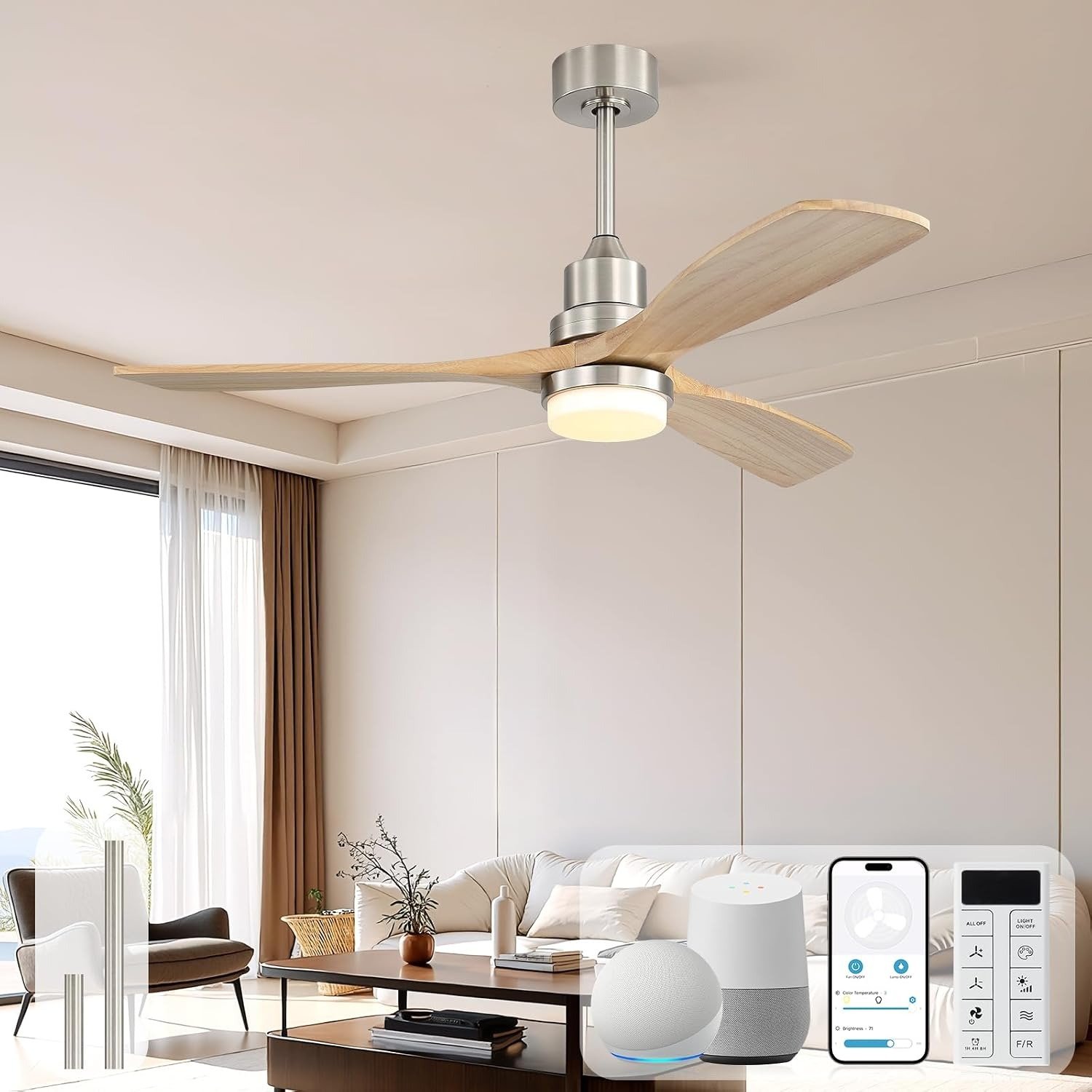
SOFUCOR CEILING FAN
You install it on a Saturday. The blades line up, the light dims exactly how you pictured it, the app finds the fan on the first try. For two weeks, it feels like a real upgrade. Then a warm night hits, you flip it to the highest of the six speeds, and you catch yourself eyeing the old box fan you were supposed to throw out.
That gap — between how good a ceiling fan looks on the listing and how it actually feels in your room — is where most ceiling fan shopping goes wrong. Not because the fan is broken. Because the number that sold you on it was never the number that mattered.
| Sofucor 52″ Smart Ceiling Fan — At a Glance | |
|---|---|
| Blade span | 52 inches |
| Mount type | Low-profile / flush mount (short 5″–10″ downrods included) |
| Motor | 6-speed, reversible DC motor |
| Airflow | Manufacturer-rated 5,000–6,500 CFM (varies by exact listing) |
| Noise | Manufacturer-rated high-20s to high-30s dB |
| Light | Dimmable LED, 3 color temperatures, memory function |
| Controls | Remote, iOS/Android app, Alexa/Google voice (2.4GHz Wi-Fi only) |
| Rated for | Indoor + covered outdoor (not direct rain exposure) |
| Certifications | ETL, FCC |
| Warranty | Lifetime on motor, 2 years on electrical parts |
Low Profile Ceiling Fan Not Cooling Room: The Result Looks Fine, The Problem Isn’t
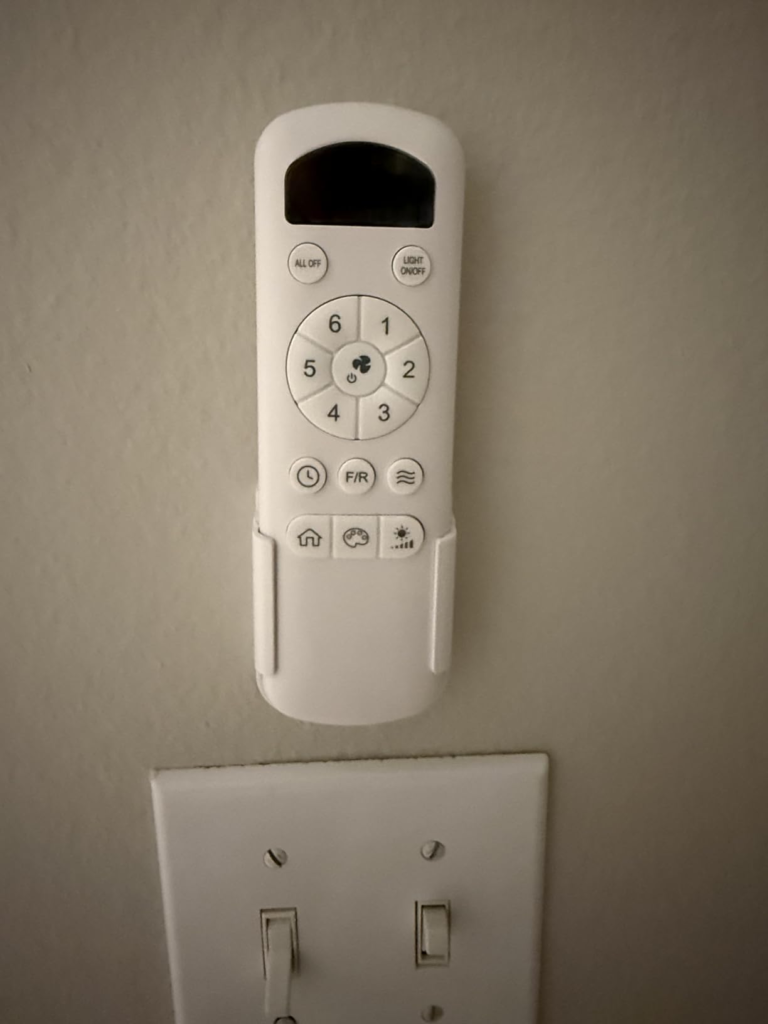
Everything about the install goes right. The finish matches the room. The remote’s little screen shows the speed number, which feels satisfyingly modern. The light dims low for movie night and jumps to daylight-white for cleaning. On paper and in the room, it looks exactly like what a mid-range upgrade should look like.
Then you actually need the fan to work — cool a room on a real afternoon, clear the stuffiness out of a bedroom before sleep — and something doesn’t add up. The blades are moving. You can hear the air, faintly. But you’re not getting the wall-of-air feeling the listing seemed to promise.
Nothing here is defective. That’s exactly what makes it easy to miss.
Ceiling Fan Feels Weak on High Speed: What You’re Actually Feeling but Not Naming
Why do you keep reaching for a box fan when the ceiling fan is already on speed 6?
Because it isn’t quiet-and-strong. It’s quiet-and-adequate. In a small bedroom, that’s plenty. In a bigger living room, or a room with an open sightline into a kitchen, speed 6 starts to feel like speed 3.
Most people don’t name this directly. They just quietly start supplementing — a box fan in the corner, the AC running two degrees colder than they’d like. The ceiling fan isn’t the thing they blame. It’s the reason they reach for something else without noticing they’re doing it.
Flush Mount vs Downrod Ceiling Fan Airflow: The Hidden Mechanism Behind the Miss
Why would the exact same motor, on the exact same blades, move less air just because of where it’s bolted to the ceiling?
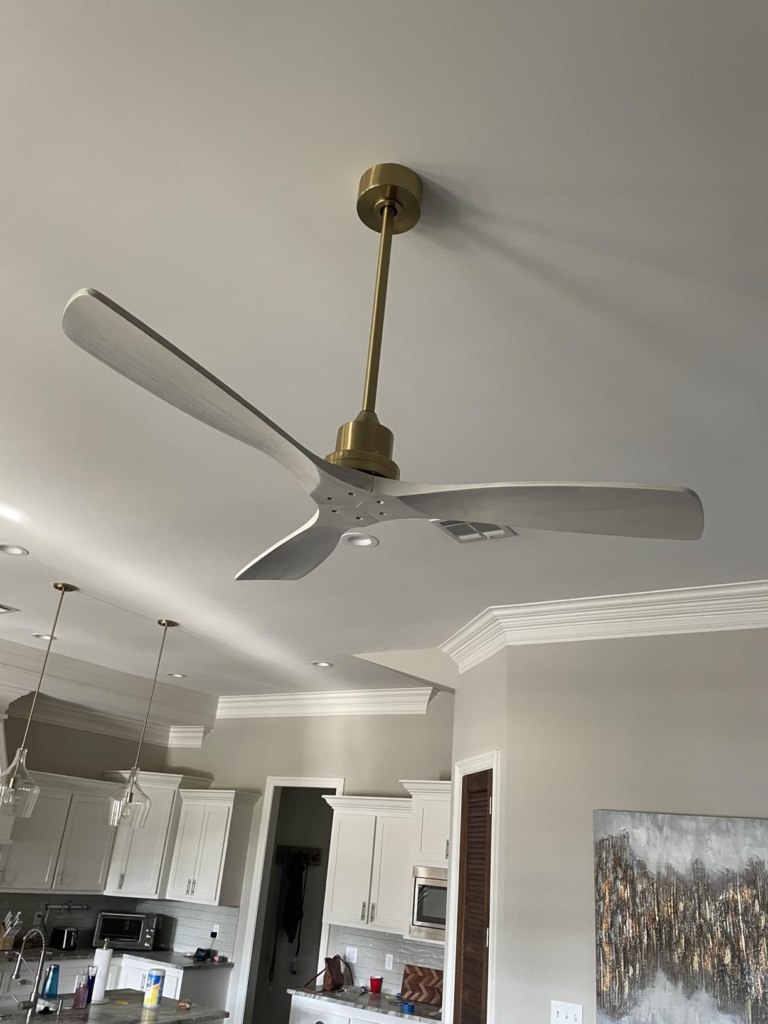
Simple physics, not a brand-specific flaw: a ceiling fan pulls air down and sweeps it outward. When the blades sit inches from the ceiling — which is exactly what a low-profile, flush-mount design is built to do — that sweep has less room to develop before it drags against the ceiling surface. The identical motor on a longer downrod moves measurably more air.
This model ships with two short downrods — 5″ and 10″ — and no long-rod option. That’s not an oversight. It’s built for standard 8-to-9-foot ceilings, where flush mounting is the sensible choice. The CFM figure on the listing is real, measured under test conditions. It just doesn’t tell you that the same motor, three inches from a low ceiling, will always move a little less air than that number implies.
52 Inch Ceiling Fan Room Size Chart: The Threshold Where the Outcome Quietly Breaks
There’s a publishable threshold here, and it’s the same one ceiling fan sizing standards have used for years: a 52-inch blade span is built for rooms up to roughly 18 by 20 feet — around 360 square feet. Under that, you’re fine. Right at it, you’re fine but not overpowered. Past it — an open-concept living room, a great room — a 52-inch flush-mounted fan is working at the edge of what it can physically do.
| Symptom you notice | What’s actually happening | The threshold |
|---|---|---|
| “It’s on but I don’t feel it” | Flush mount reduces airflow vs. a downrod at the same speed | Any room; more noticeable in open layouts |
| “Speed 6 feels like speed 3” | Room square footage exceeds the fan’s rated range | Rooms larger than ~360 sq ft |
| “Fine in the bedroom, weak in the living room” | Room size varies room to room | Great rooms, open-concept spaces |
| “The corner never cools” | Airflow sweep doesn’t reach far corners at low mount height | Oddly shaped or sectioned rooms |
Ceiling Fan CFM Rating Explained: Why Most Buyers Misread This Too Early
Why do so many people compare ceiling fans by CFM alone, the same way they’d compare blenders by horsepower?
Bigger number, better product — it’s a reasonable instinct, just the wrong metric to anchor on by itself. The buyers who end up happiest matched blade span to room size first, mount type to ceiling height second, and only then used CFM as a tiebreaker between two fans that already fit their space. Skipping straight to the CFM number is comparing engines without checking whether the car fits the garage — and Amazon listings put the biggest number in bold while burying the room-size guidance in a bullet nobody expands.
Best Ceiling Fan for Low Ceilings and Small Bedrooms: Who’s Actually Inside This Problem
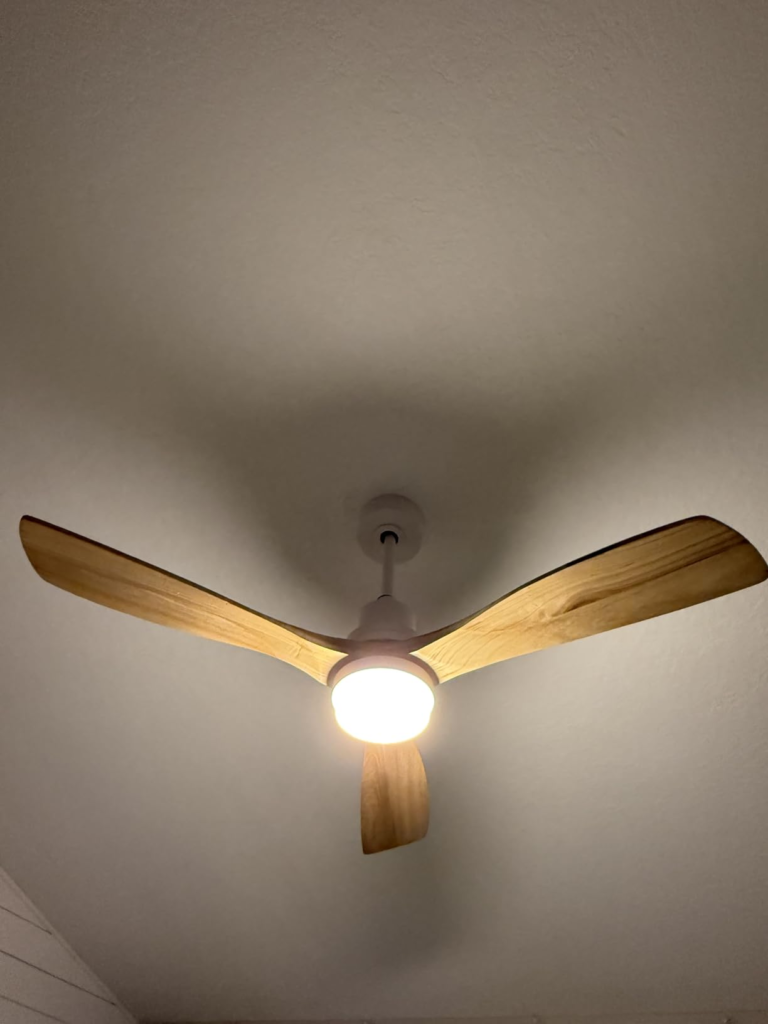
This fan is built for a specific person: a standard-height ceiling (roughly 8–9 feet), a bedroom, office, den, or covered patio that tops out around medium-room size, and someone who wants app and voice control without wiring in a separate smart switch.
If you’re a light sleeper tired of a rattly old AC-motor fan, this is squarely your upgrade — the DC motor is genuinely quieter, and the reported noise figures land well below most builder-grade fans. Flat ceiling, bedroom-or-smaller-living-room sized: you’re exactly who this was engineered for.
Sofucor Ceiling Fan Sloped Ceiling and Outdoor Rating: Where Wrong-Fit Begins
Two boundaries matter more than any star rating.
First: this low-profile version isn’t built for sloped or vaulted ceilings. Sofucor sells downrod models elsewhere in its range that handle slope — up to roughly 15 degrees, sometimes more with an added adapter — but this flush-mount smart model isn’t one of them. Real pitch in your ceiling means this specific listing is the wrong one.
Second: “outdoor-rated” means covered outdoor — a porch, a roofed patio, a gazebo. It doesn’t mean direct rain exposure.
| Buy it if | Skip it if |
|---|---|
| Flat ceiling, 8–9 ft standard height | Sloped, vaulted, or cathedral ceiling |
| Bedroom, office, or medium living room (up to ~360 sq ft) | Great room or open-concept space over 360 sq ft |
| Covered patio, porch, or gazebo | Fully open, rain-exposed outdoor space |
| Home network has a 2.4GHz option | Router is 5GHz-only |
| You value quiet over maximum wind speed | You want the strongest possible airflow above all else |
Sofucor 52” Smart Ceiling Fan Review: The One Situation Where It Becomes Logical
Once the room fits — flat ceiling, standard height, bedroom to medium living room — the decision stops being complicated. A genuinely quiet DC motor, a light that remembers its last brightness and color setting, six real speed steps, a reverse mode that earns its keep every winter, and three ways to control it without adding a wall switch.
It’s not the fan for a great room or a vaulted ceiling. Inside its actual lane, it does the job cleanly and quietly.
Sofucor Ceiling Fan Pros and Cons: What It Solves, What It Reduces, What’s Still on You
| What it solves | What it reduces | What’s still on you |
|---|---|---|
| Loud, rattly AC-motor fan noise | Energy use vs. a traditional AC fan | Confirming your ceiling is flat, not sloped, before buying |
| Juggling separate controls for fan, light, and mode | Manual light adjustments (memory holds your last setting) | Measuring your room against the ~360 sq ft guideline |
| Winter heat pooling uselessly at the ceiling | Guesswork on bedtime shutoff (built-in sleep timer) | Setting up a 2.4GHz connection if your router defaults to 5GHz |
Said plainly: some buyers do report the app or voice pairing hiccupping occasionally, and printed instructions have been called confusing more than once — though the install videos consistently score better. Sofucor’s customer service, though, has a strong and repeated track record of shipping free replacement remotes, motors, or wiring when something arrives faulty, and that pattern shows up across independent review platforms, not just their own site.
Sofucor Ceiling Fan FAQ: Your Real Questions, Answered Straight
| Question | Answer |
|---|---|
| Does it work on a 5GHz Wi-Fi network? | No. Like most budget smart-home devices, it connects to 2.4GHz networks only. You may need to set up a separate 2.4GHz network name if your router broadcasts a combined or 5GHz-only signal. |
| Can I install this on a vaulted or sloped ceiling? | No. This low-profile, flush-mount version is designed for flat ceilings only. Sofucor’s downrod models handle slope, but that’s a different product line. |
| Is it safe over an uncovered deck? | It’s rated for indoor use and covered outdoor spaces — porches, gazebos, roofed patios — not direct rain exposure. |
| What’s the actual warranty? | Lifetime coverage on the motor, two years on electrical accessories like the remote and light driver. |
| What room size is this really good for? | Up to about 18 by 20 feet (roughly 360 square feet). Larger, open-concept rooms will feel underserved by a 52-inch fan at any mount height. |
| Does the reverse mode actually matter in winter? | Yes — basic physics, not marketing. Warm air pools near the ceiling; reversing the blades pulls it back down along the walls instead of blowing cold air on you. |
| What if a part arrives damaged? | Based on a consistent pattern across Amazon, Walmart, Home Depot, and Trustpilot reviews, Sofucor typically ships free replacement parts within a few days of being contacted. |
Sofucor Ceiling Fan Review: Final Verdict
This isn’t the right fan for every ceiling — no 52-inch fan is. What’s clear is which ceiling it’s right for: flat, standard-height, bedroom-to-medium-room, indoor or covered outdoor. Inside that lane, the quiet motor, three-way control, and lifetime motor warranty add up to a fan that solves the exact problem it was built to solve. Outside that lane — vaulted ceilings, great rooms, open decks — the mismatch isn’t the fan’s fault, but it’ll feel like one you paid for.
If your ceiling and your room match what’s above, this is where the decision stops being vague — you can check current pricing and details on the listing here:
Transparency Note:
This analysis is built on aggregated real-world experience. It extracts what repeatedly holds, what breaks, and what users uncover only after living with the system—then shapes it into a clear model you can use immediately. Think of it as structured experience, refined and presented so you don’t have to learn it the hard way.
“A quick note: Don’t believe the star ratings, but trust personal experience. This article is a compilation of collected experiences.”