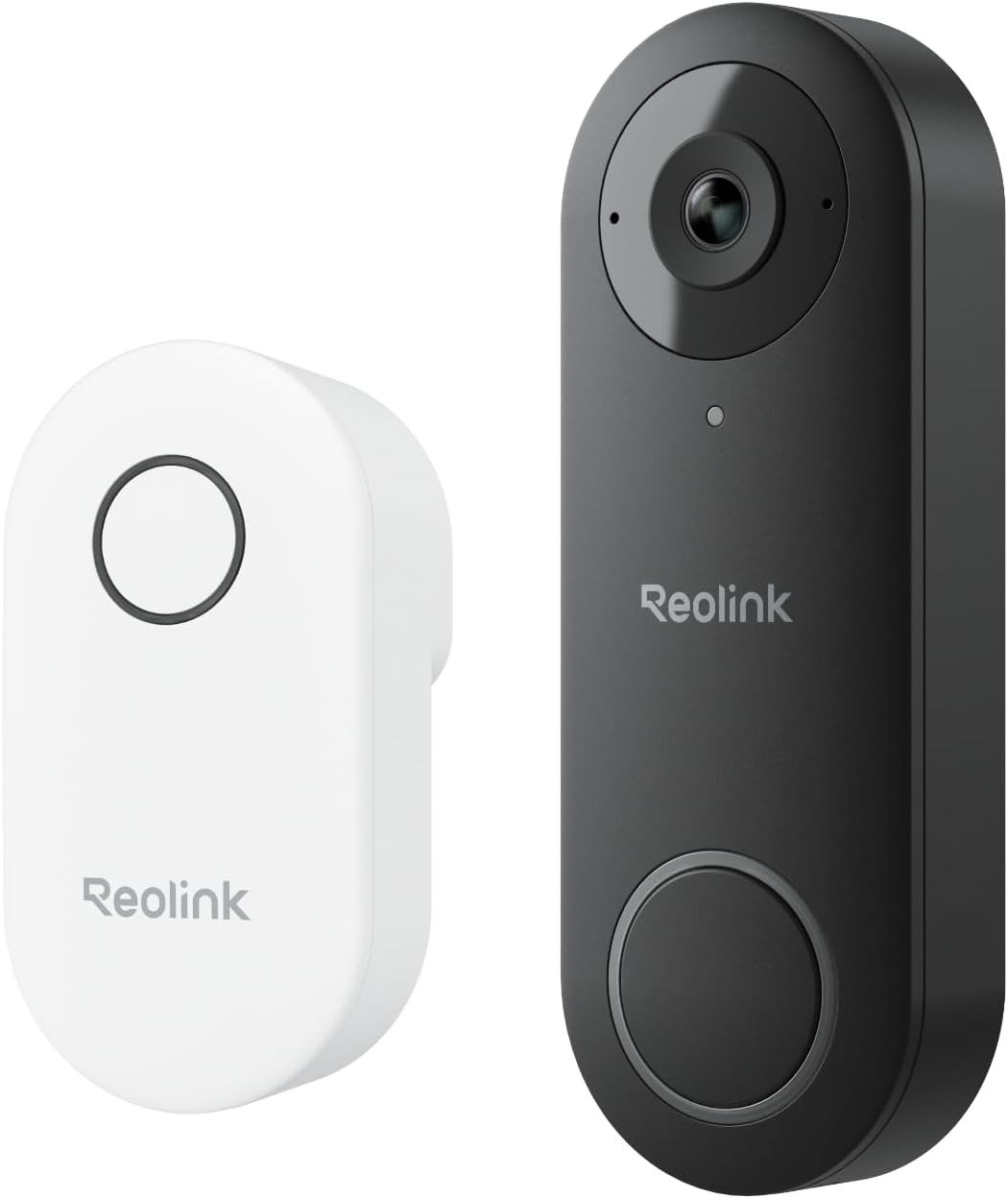
The Ring Battery Doorbell Plus (2nd Gen)
You do not notice the miss until the package is already gone.
The most expensive mistake at a front door is rarely total failure. It is partial visibility. A face in frame. A box out of frame. A motion alert that arrives just late enough to feel useful and just incomplete enough to leave you uneasy. That is the trap. The footage looks fine. The outcome does not.
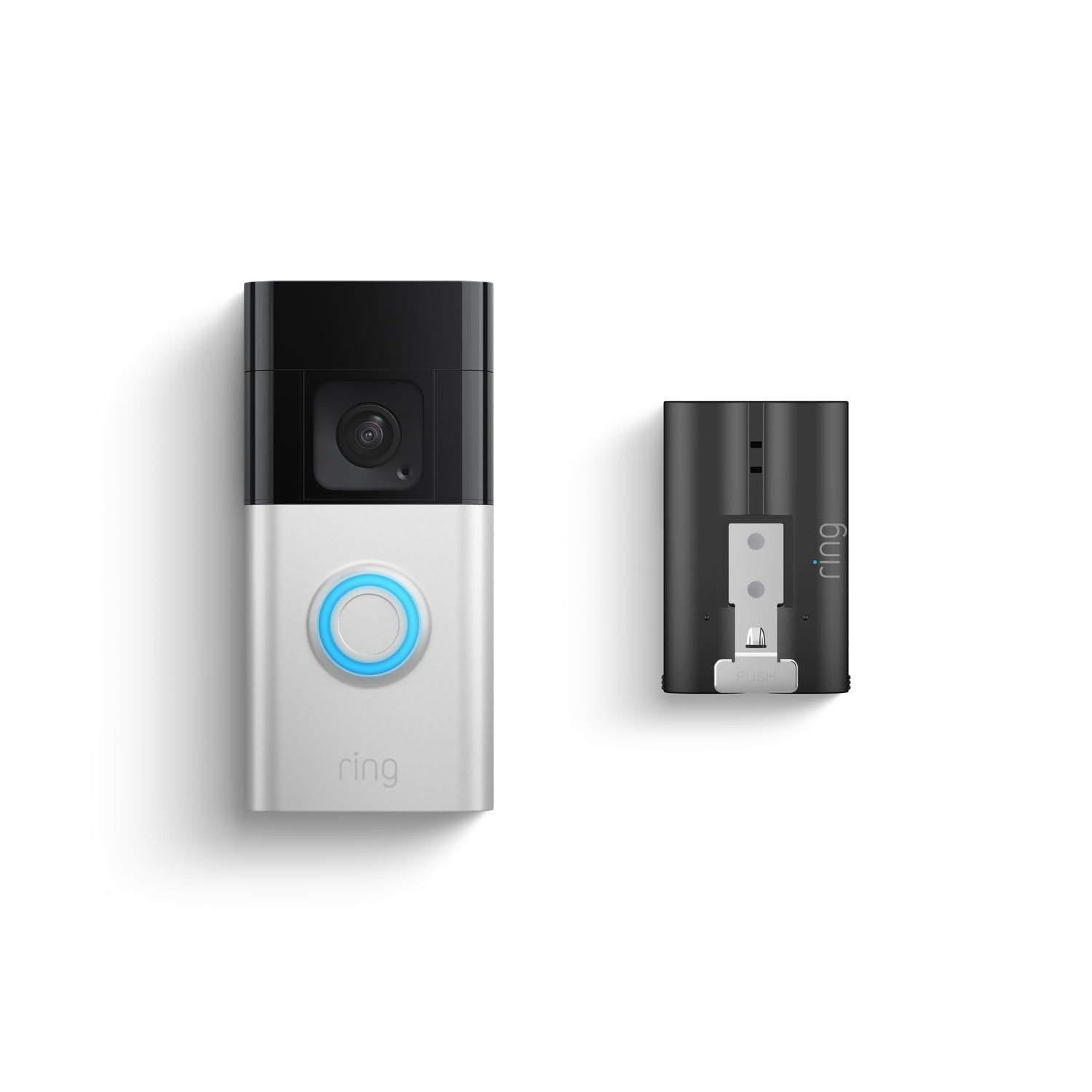
The more I pulled apart the Ring Battery Doorbell Plus (2nd Gen), the clearer the real story became: this is not fundamentally about “having a smart doorbell.” It is about whether your break point starts at the threshold itself—where deliveries sit low, visitors lean out of center, dusk turns details into guesswork, and recharging friction quietly kills consistency. Ring’s newest Plus is built around that exact pressure point: 2K video, a 1:1 head-to-toe frame, up to 6x zoom, low-light and adaptive night modes, a quick-release battery, and optional trickle charging instead of mandatory wiring. That is a very specific answer to a very specific kind of annoyance.
The Result Looks Fine. The Problem Isn’t.
A lot of doorbells fail politely.
They give you a person. They miss the parcel. They show movement. They blur the reason. They create the illusion of awareness while leaving the most actionable detail hanging just below the frame. That is why so many buyers think they need “better resolution” when what they actually need is a different shape of visibility.
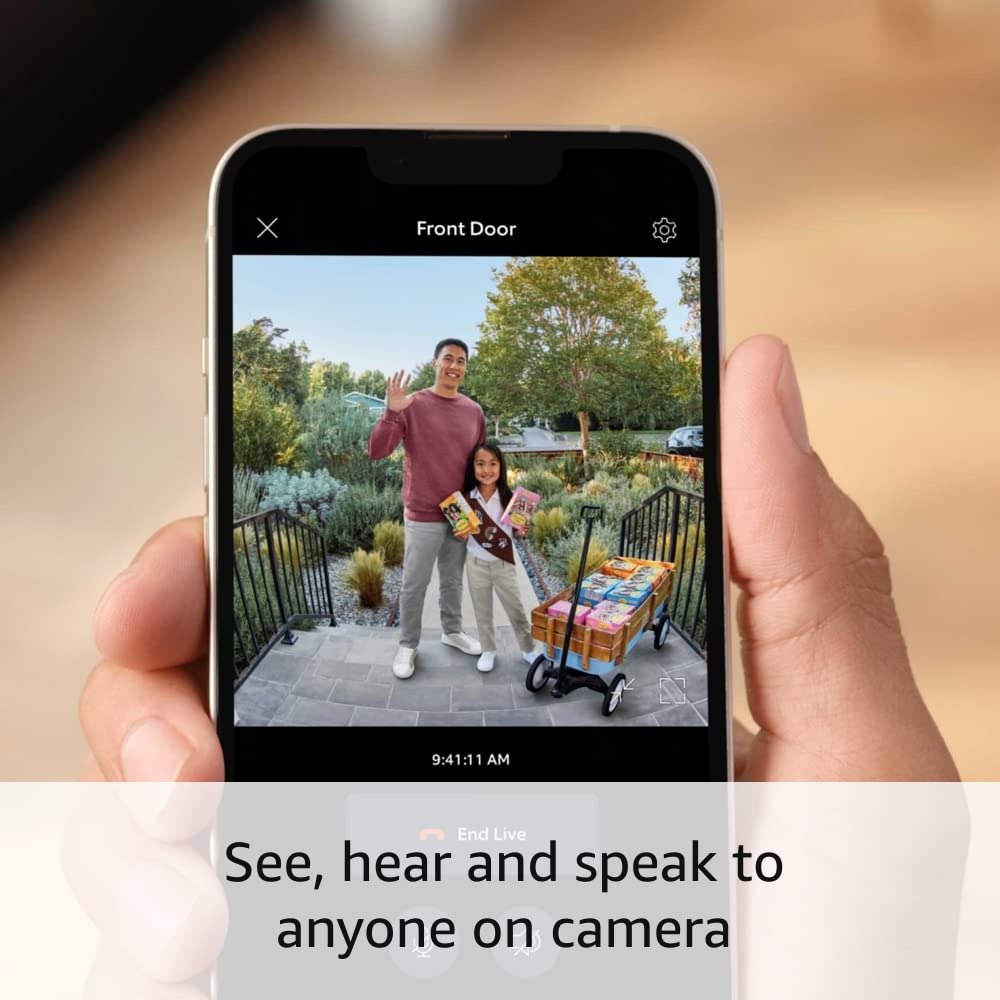
Tom’s Guide singled out the earlier Battery Doorbell Plus as the best video doorbell for head-to-toe vertical view, precisely because it could see packages at the base of the door, while The Verge praised the model line for combining excellent video quality with a strong head-to-toe view and quick response times for a battery unit. Ring’s new 2nd-gen Plus pushes that idea further with Retinal 2K, a 1:1 aspect ratio, 140° by 140° field of view, and up to 6x enhanced zoom. The point is not prettier footage. The point is catching the part that usually falls outside the story.
What You’re Actually Feeling but Not Naming
It usually gets called “peace of mind.” That phrase is too soft.
What you are really trying to escape is a low-grade tax on attention:
checking the porch twice,
replaying a fuzzy clip,
wondering whether the driver dropped it, hid it, or never came,
hearing the alert and still not knowing enough.
That is why owners keep praising the same things in plain language. On Best Buy, the recurring pattern is sharp video, easy installation, strong overall performance, fast motion detection, and the head-to-toe view; the complaints cluster around connectivity hiccups, night performance in some conditions, and setup instructions that are not always elegant. On Amazon, the current bundle is sitting at 4.7/5 from 45 global ratings, with 86 percent of ratings at five stars. That is not proof of perfection. It is proof that the device solves a narrow, familiar irritation well enough that people immediately feel the difference.
The Hidden Mechanism Behind the Miss
Here is the hidden variable: doorstep relevance.
Most buyers judge a doorbell by the same lazy trio—resolution, brand, app. But front-door failure is usually a geometry problem first, a timing problem second, and a maintenance problem third.
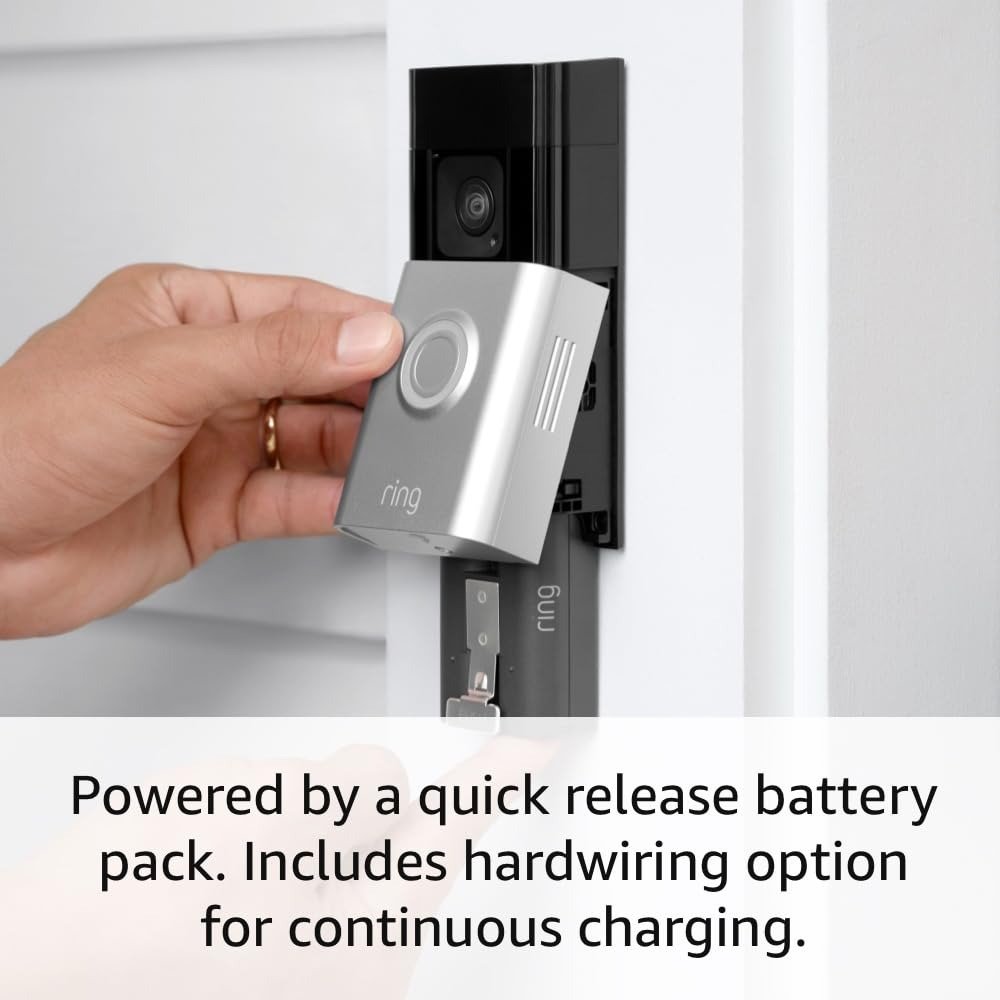
Ring’s newest Plus attacks all three. The 1:1 frame and 140° x 140° view are designed to pull the lower doorstep into the story instead of treating it like dead space. The 2K sensor and 6x zoom try to preserve usable detail when you need to inspect rather than merely glance. Low-Light Sight and Adaptive Night Vision exist because darkness does not remove events; it removes confidence. Then there is the battery design: a quick-release pack means you remove the battery, not the whole unit, and Ring explicitly allows a spare pack or trickle charging through existing wires to avoid dead periods. That last part matters more than spec sheets admit. A doorbell with irritating charging behavior slowly trains owners to tolerate downtime.
| What usually gets blamed | What is often actually broken |
|---|---|
| “The video isn’t clear enough.” | The frame is not showing the doorstep where the decision point sits. |
| “I missed the delivery.” | The alert was not paired with useful visual context. |
| “Battery doorbells are annoying.” | The recharge workflow is clumsy, so consistency decays over time. |
This is the quiet shift in logic: not Can it record? but Does it keep the exact failure zone inside view without creating a maintenance penalty I will eventually resent?
The Threshold Where the Outcome Quietly Breaks
This category has a threshold, and most people cross it before they name it.
I would define it this way: the package threshold begins the moment the lower third of your doorway matters as much as the visitor’s face.
Once you are inside that threshold, old assumptions start cracking fast. Standard front-facing footage becomes too flattering. A basic battery model with a built-in battery becomes less convenient than it first looked. A cheaper unit may still show motion, but not enough of the scene to settle anything cleanly.
Here is the practical threshold map:
| Condition | Outcome |
|---|---|
| Packages regularly sit close to the door | Head-to-toe framing stops being a nice extra and becomes core. |
| You cannot or do not want to wire a doorbell | A removable battery starts mattering more than people expect. |
| Your entryway gets dim but not fully dark | Low-light color detail becomes more valuable than headline resolution alone. |
| You want meaningful alerts, not just pings | Subscription-gated person/package intelligence becomes part of the real cost. |
Ring states that certain advanced functions require a Ring Home plan, including up to 180 days of event history and person/package alerts. That means the purchase is not just hardware; it is hardware plus your tolerance for cloud-first ownership. If that irritates you, the threshold may exist—but the fit may still fail.
Why Most Buyers Misread This Too Early
Because they buy the brochure version of the problem.
They compare 1080p to 2K. They compare list price to discount price. They compare “battery-powered” to “wired” as if those are lifestyles rather than trade-offs. Then they act surprised when the real friction shows up later: dead battery on a busy week, package zone not covered cleanly, spotty package detection, or a subscription they treated like an optional footnote.
The earlier Battery Doorbell Plus reviews expose this pattern nicely. Tom’s Guide loved the vertical view, the 1536p clarity, and the easy install, but found package alerts inconsistent and real battery life closer to a little over six weeks in one test than the much broader maximum claims people tend to remember. TechRadar liked the jump in quality and field of view, but noted trade-offs such as missing pre-roll and 5GHz on that generation. The new 2nd-gen Plus answers some of that by moving to dual-band Wi-Fi 6 and 2K on the official spec sheet, but it still does not erase the deeper buying mistake: people keep shopping for “a camera,” when the real purchase is a cleaner decision at the doorstep.
Who Is Actually Inside This Problem
This product becomes unusually logical for a narrow group of people.
You are likely inside the problem if:
- deliveries matter more to you than decorative curb shots,
- you want wire-free installation without the nuisance of removing the whole device to recharge,
- your home already leans toward Alexa or Ring,
- you value fast access, adjustable motion zones, and a sharper low-light picture more than local-first independence.
The Verge’s guide favored the Battery Doorbell Plus line as the battery-powered option to buy because it balances price, image quality, removable batteries, and responsiveness well. PCWorld was even blunter: Ring makes strongest sense for people already living in the Ring or Alexa ecosystem, and much less sense if your smart home centers on Google Assistant or Apple HomeKit. That ecosystem reality is not a side note. It is part of the fit.
Where Wrong-Fit Begins
This is where regret starts.
Not with bad hardware. With bad match.
You are probably outside the fit if you want any of the following:
- full value without a subscription,
- a HomeKit-first or Google-first experience,
- the most advanced motion intelligence in Ring’s own lineup,
- a set-it-and-forget-it expectation in a very high-traffic area.
Why? Because Ring is upfront that some of the smarter features live behind Ring Home. Reviewers also keep drawing the line between the Plus and the more expensive Pro-tier battery models: if you care deeply about radar-style motion improvements, pre-roll context, or reducing nuisance alerts at a harder property edge, the Pro class exists for a reason. And if you hate subscriptions on principle, alternatives with local storage will continue to tempt you more, even if their app polish or package framing is weaker.
| Wrong assumption | Likely regret later |
|---|---|
| “I only need a cheap smart doorbell.” | You keep missing packages or useful lower-frame detail. |
| “Battery is battery; they’re all the same.” | Removing the whole unit to charge starts feeling primitive. |
| “I’ll decide on subscriptions later.” | The best alerts and recorded history turn out to be part of the experience, not a side dish. |
| “Any ecosystem will do.” | The product works, but never feels native in your home. |
The One Situation Where This Product Becomes Logical
It becomes logical when your front-door problem is not surveillance in general, but uncertainty at the doorstep.
That is the exact lane this product is built for.
If you want a battery-powered doorbell that is easy to mount, easy to keep alive, better at showing the full threshold area, more credible in dim conditions, and deeply integrated with Ring/Alexa, the Battery Doorbell Plus (2nd Gen) stops looking like an upgrade and starts looking like the cleanest answer in its class. Officially, it combines Retinal 2K, 6x enhanced zoom, low-light color handling, adaptive night vision, real-time notifications, two-way talk, customizable motion zones, quick-release battery charging over USB-C, optional trickle charging, and dual-band Wi-Fi 6. Those are not random features. They all point at one job: reduce the distance between alert and certainty.
And that is where the product earns permission.
Not because it is magical. Not because it is for everyone. Because it solves the exact kind of miss that cheap doorbells normalize and most spec sheets hide.
What It Solves, What It Reduces, and What It Still Leaves to You
Here is the honest compression.
| It solves | It reduces | It still leaves to you |
|---|---|---|
| Missing low-placed deliveries | Recharge friction versus built-in battery models | Choosing whether Ring Home is worth ongoing cost |
| Weak visibility at the threshold | Ambiguity in dim entry conditions | Tuning motion zones and sensitivity correctly |
| Wire-free install pain | Downtime if you keep a spare battery or use trickle charge | Accepting cloud-centric ownership if you want full value |
| Slow, awkward interaction at the door | Guesswork about who or what is there | Living inside the Ring/Alexa ecosystem for best fit |
That balance is why the strongest owner praise tends to sound practical, not poetic: easy install, sensitive alerts, excellent picture quality, useful angle piece, better-than-expected performance. It is also why the recurring criticisms do not vanish: some connectivity friction, less-than-ideal instructions, and—on the prior model line at least—package alerts that were not flawless in every setup. A good front-door device does not erase reality. It just narrows the number of times reality catches you flat-footed.
Final Compression
Most people do not buy the wrong video doorbell because they want the wrong thing. They buy it because they describe the right thing badly.
They say they want security.
What they really want is certainty.
At the threshold. In the dark. Without hassle.
If that is the condition you are actually dealing with, the Ring Battery Doorbell Plus (2nd Gen) is the point where the decision stops being vague. It is not the cheapest path. It is not the most ecosystem-neutral path. It is not the no-subscription path. But if your real problem is package-level visibility plus battery convenience without turning the device into a maintenance chore, this is the first Ring battery doorbell where the logic feels tight instead of compromised.
Transparency Note:
This analysis is built on aggregated real-world experience.
It extracts what repeatedly holds, what breaks, and what users uncover only after living with the system—then shapes it into a clear model you can use immediately.
Think of it as structured experience, refined and presented so you don’t have to learn it the hard way.
“A quick note: Don’t believe the star ratings, but trust personal experience. This article is a compilation of collected experiences”