Levoit Core300S-P Review: Why Clean-Looking Air Isn’t Enough
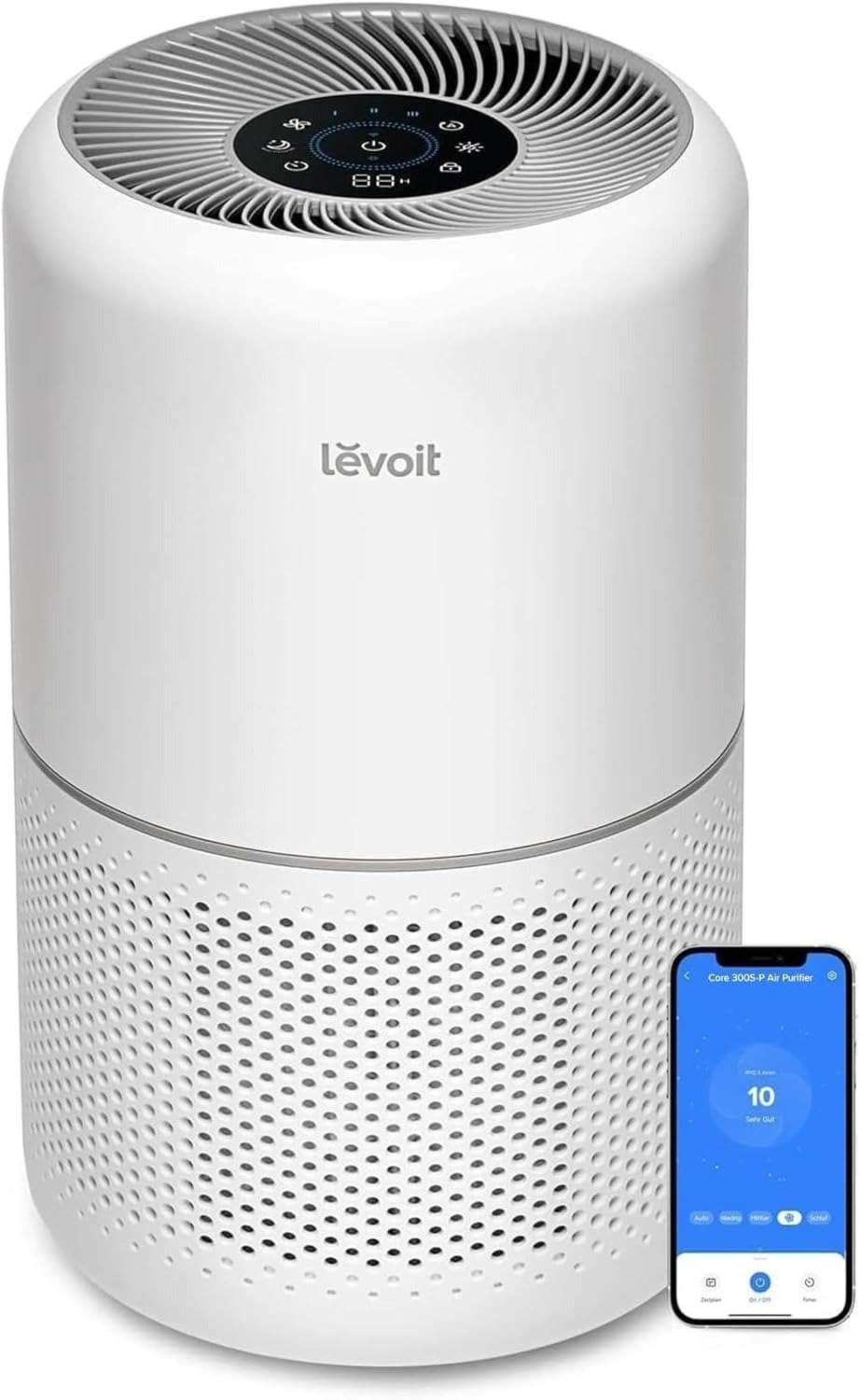
PRODUCT NAME: LEVOIT CORE300S-P
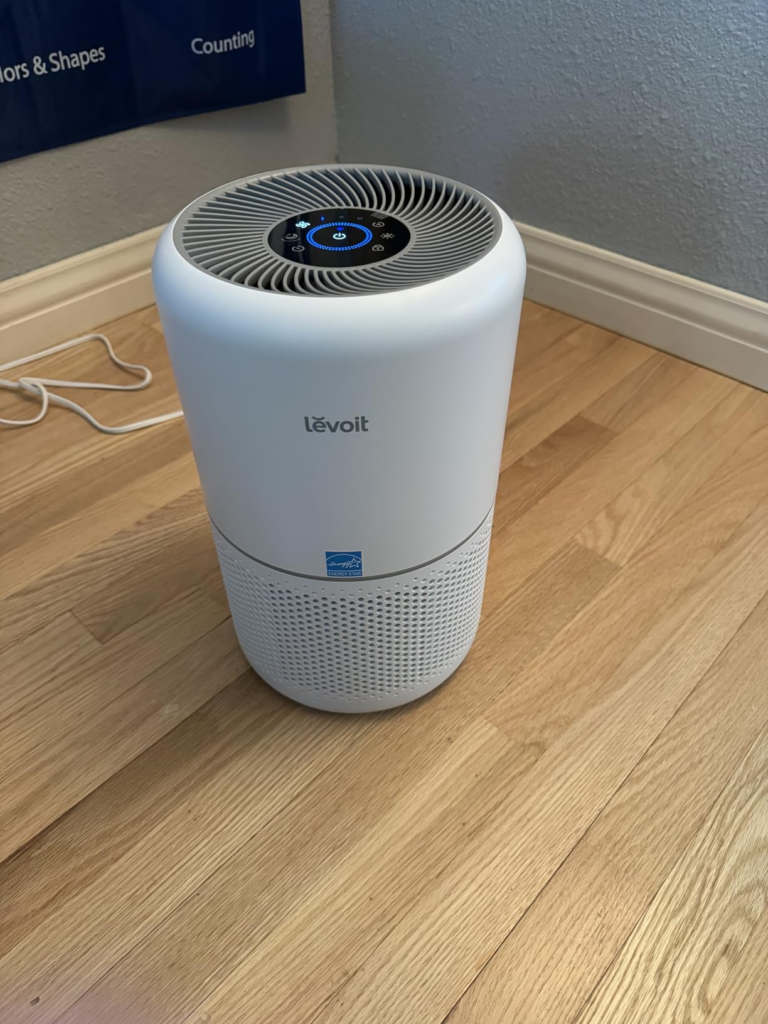
You buy the Core300S-P because the bedroom smelled like the dog again, or because pollen season turned your mornings into a sneezing ritual, or because someone in the house quietly started asking whether the air in here is actually okay. You plug it in. The light goes blue, then green. The room smells better within the hour. And that’s usually right where people stop paying attention — at the exact moment the real question should start.
Levoit Core300S-P Air Quality: The Room Looks Fine, the Problem Isn’t
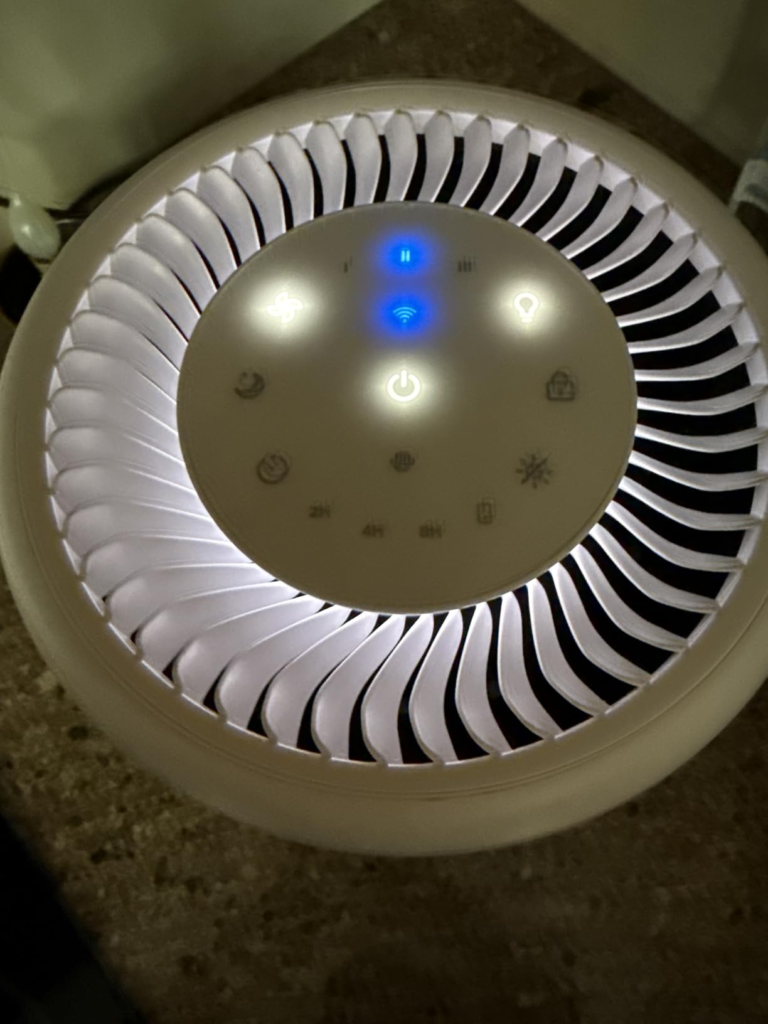
A green ring on the display feels like an answer. It isn’t, not entirely. That ring is tracking PM2.5 — a specific category of fine particle — relative to a baseline the unit set when you turned it on. It says nothing about the size of the room it’s sitting in, how long the door’s been open, or whether what’s bothering you is even a particle problem at all. Most people never learn this, because the purifier never tells them. It just glows green and hums, and green feels like “handled.” The gap between what the light is measuring and what you’re actually hoping it fixes is where most of the disappointment in this category quietly starts.
Levoit Core300S-P Symptoms: What You’re Actually Feeling but Not Naming
Before anyone calls a purifier “not working,” what they usually have is a specific, nameable mismatch. A few of the common ones:
| What You Notice | What’s Actually Going On |
|---|---|
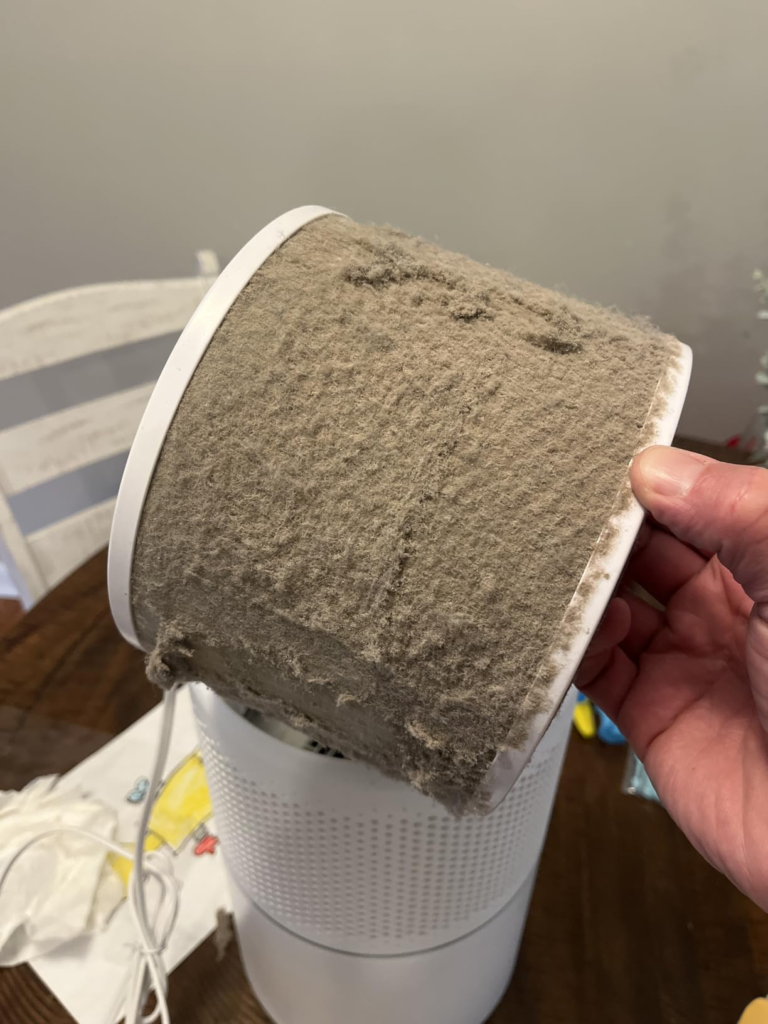
| Dust seems to resettle within a day or two | The pre-filter needs a quick vacuum, or the room is bigger than the unit’s efficient range |
| Sneezing eases in the bedroom, not anywhere else | One unit covers one room — it isn’t filtering the hallway or the room next door |
| A faint hum keeps registering at the edge of sleep | Auto Mode may be sitting on Low or Medium overnight instead of true Sleep Mode |
| The ring glows green, but the room still feels stuffy | PM2.5 sensors read particles, not humidity, VOCs, or CO2 — green isn’t the whole picture |
| The unit smells faintly of plastic for the first few days | Normal off-gassing from a fresh filter and housing; it typically fades with runtime |
None of these mean the unit is broken. They mean it’s being asked a question it was never built to answer on its own.
Levoit Core300S-P Coverage Explained: The Hidden Mechanism Behind the Miss
Here’s something worth knowing before you click buy: you won’t find the phrase “True HEPA” anywhere in Levoit’s current marketing for this line. That’s not an oversight. In August 2023, Dyson challenged Levoit’s “True HEPA” claims — on the EverestAir, the Core 300, and the Core 300S — through the National Advertising Division, the industry’s self-regulatory ad-truth body. Levoit didn’t concede the original claims were wrong. It pulled the wording anyway while it updated its testing data, and the board never actually ruled on whether the original claims held up.
What didn’t change is the filter itself. Independent lab testing on this same three-stage design — nylon pre-filter, dense particulate layer, activated carbon — still shows it capturing 99.97% of particles down to 0.3 microns, which is HEPA-grade performance by any measure that matters in a bedroom. You’re not buying a lesser filter than the one people bought in 2022. You’re buying one that lost a marketing word, not a percentage point. It’s a fair thing to know, and almost nobody selling you this purifier is going to bring it up.
Levoit Core300S-P Room Size Threshold: Where Coverage Quietly Breaks
Here’s the number that actually decides whether you’ll be happy with this thing: Levoit rates the Core300S-P for up to 1,058 sq ft — but only at 1 air change per hour, which is the weakest useful exchange rate there is. The number that reflects real, felt, allergy-grade cleaning — close to 5 air changes per hour — drops to 219 sq ft. Call the first one the box number. Call the second one the real number. Almost every complaint about “weak performance” traces back to someone shopping off the box number and living with the real one.
| Room Type | Square Footage | Real-World Fit |
|---|---|---|
| Nursery or small bedroom | Up to ~150 sq ft | Strong fit — fast, quiet, thorough |
| Primary bedroom, door closed | ~150–250 sq ft | Good fit — right at the unit’s efficient ceiling |
| Home office or studio apartment | ~250–350 sq ft | Workable, but Auto Mode will lean on Medium/High more often |
| Open living-dining combo | ~350–600 sq ft | Undersized — treat it as a supplement, not the whole answer |
| Whole small apartment, open plan | 600+ sq ft | Past its realistic range — this is a job for two units or a bigger Levoit model |
Core300S-P, Core 300-P, Core 300S: Why Most Buyers Misread This Too Early
Levoit’s naming is where most bad purchase decisions actually get made — not on the review page, but a tab over on the listing grid, where four nearly identical names sit next to four different price tags.
| Model | Auto Mode & App | What You’re Actually Buying |
|---|---|---|
| Core 300 (original, no “S”) | No | Manual fan speeds only — no app, no voice control |
| Core 300-P | No | Same manual-only core, sold under a different retail listing |
| Core 300S | Yes | The smart upgrade — onboard sensor, Auto Mode, VeSync app, Alexa/Google |
| Core300S-P (this review) | Yes | The same smart core as the 300S, under Levoit’s “-P” listing — Auto Mode, app, and voice control included |
The single letter that matters is the “S.” Everything about automatic sensing, the app, and voice control lives behind it. Buyers who grab whichever listing is a few dollars cheaper that week are usually the ones back on Amazon a month later asking why their purifier doesn’t “know” when the air gets worse — it’s not a defective unit, it’s the non-S model doing exactly what it was built to do: nothing, until you touch it.
Who the Levoit Core300S-P Is Actually Built For
| Reader | What They Actually Want | Fit |
|---|---|---|
| Light sleeper with dust or pollen sensitivity, single bedroom | Quiet, automatic, “set it and forget it” | True fit |
| Pet owner tired of that low, constant animal smell in one main room | Odor and dander control without redecorating their life around it | True fit |
| Someone furnishing a nursery, wants visibility into air quality | An app-readable PM2.5 number, without complexity | True fit |
| Renter with an open studio or a large shared living room | “Whole apartment” coverage from one small unit | Near fit — you’ll want a second unit or a larger model |
| Household with a smoker, heavy VOC exposure, or a doctor-specified certified-HEPA requirement | Documentation-grade filtration, not HEPA-grade performance | False fit — look at a certified medical-grade purifier instead |
Levoit Core300S-P Drawbacks: Where the Wrong Fit Begins
It’s worth being blunt about the edges here, because the edges are where regret happens:
- It only connects on 2.4GHz WiFi. If your router broadcasts a combined or 5GHz-first signal, your phone will happily connect to the wrong band during setup and you’ll swear the unit is defective. It isn’t — this is the most common complaint in the entire product line, and it’s a router setting, not a hardware fault.
- Auto Mode is conservative. It won’t necessarily snap to High the second you start cooking or someone lights a candle. Independent testers have flagged a real lag between a spike in the air and the fan actually responding.
- The activated carbon layer helps with everyday odor, but it isn’t enough carbon mass to meaningfully handle heavy tobacco smoke, wildfire smoke, or strong chemical VOCs on its own. Take any “removes smoke and VOCs” marketing line as a helpful reduction, not a guarantee.
- Past roughly 300 sq ft, you’re not getting the quiet, thorough feeling this unit is known for — you’re getting a fan that’s technically doing its job once an hour.
Levoit Core300S-P Review Verdict: The One Situation Where It Becomes Logical
Strip away the marketing and this is a straightforward tool for a specific job: one room, up to around 250 square feet, where you want the air handled without thinking about it — sensor watching, fan adjusting itself, app telling you when the filter’s due. If that’s the room you’re actually trying to fix, this is a sensible, well-tested way to fix it. If you’re trying to clean an open floor plan or a room a doctor has strong requirements about, it’s the wrong tool no matter how many green rings it shows you.
What the Core300S-P Solves, Reduces, and Still Leaves to You
| Solves | Reduces | Still On You |
|---|---|---|
| Constant recirculation of dust, pollen, and pet dander in one room | Lingering cooking and pet odor, gradually, via the carbon layer | Matching the unit to a room at or under ~250 sq ft — it can’t fix a floor plan |
| Manual fan-fiddling, once WiFi is set up correctly | Overnight allergy flare-ups, once Sleep Mode is dialed in | The first 2.4GHz WiFi setup — budget five minutes, not thirty seconds |
| Guesswork about air quality, via a visible PM2.5 number | The anxiety of “is this actually doing anything” | Filter changes every 6–8 months — set your own reminder, don’t rely on the app to nag you in time |
Levoit Core300S-P Review: Common Questions Before You Buy
| Question | Answer |
|---|---|
| Is the Core300S-P a true HEPA air purifier? | Not by name anymore. It runs the same three-stage, H13-grade filter, and independent tests still show around 99.97% capture at 0.3 microns. Levoit dropped the “True HEPA” label across the line in 2023 after Dyson’s advertising challenge. The performance held up; the wording didn’t survive. |
| What room size does it actually cover well? | Levoit lists 1,058 sq ft at 1 air change per hour, and 219 sq ft at closer to 4.84 air changes per hour. For allergy-grade relief, plan around the smaller number — a bedroom, nursery, or home office, not an open living area. |
| How often do I replace the filter, and what does it cost? | Every 6–8 months under normal use. Genuine Core 300-RF filters typically run in the $25–$35 range, so plan on roughly $35–$50 a year depending on how hard you run it. |
| Why won’t it connect to my WiFi? | It only supports 2.4GHz networks. If your router broadcasts a combined or 5GHz-first signal, your phone may be quietly attaching to the wrong band during setup — by far the most common setup complaint on this unit. |
| Should I just leave it on Auto Mode? | For daily upkeep, yes. But Auto Mode reacts conservatively. After cooking, a candle mishap, or a smoky day outside, switch to High or Turbo yourself instead of waiting for the sensor to catch up. |
| Core300S-P vs. Core 300-P — what’s the real difference? | Auto Mode and app or voice control. The plain Core 300-P is manual-only, with no WiFi and no Alexa or Google integration. If you want the purifier to think for itself, the “S” isn’t optional — it’s the whole point. |
Final Verdict: Levoit Core300S-P Review Compression
Everything above comes down to one line: know your square footage before you know your opinion of this purifier. Inside its real range, it’s quiet, consistent, and mostly invisible in the way a good appliance should be. Outside that range, no amount of green light will fix it.
If this is the room you’ve been quietly tolerating, this is where the decision stops being vague.
Transparency Note:
This analysis is built on aggregated real-world experience.
It extracts what repeatedly holds, what breaks, and what users uncover only after living with the system—then shapes it into a clear model you can use immediately.
Think of it as structured experience, refined and presented so you don’t have to learn it the hard way.
“A quick note: Don’t believe the star ratings, but trust personal experience. This article is a compilation of collected experiences.”