I Reviewed the Ring Alarm 5-Piece Kit 2nd Gen Bundle: What "Complete Security" Actually Covers — and Where It Quietly Ends
RING ALARM 5-PIECE KIT 2ND GEN BUNDLE
The System Looks Complete. The Coverage Is Not.
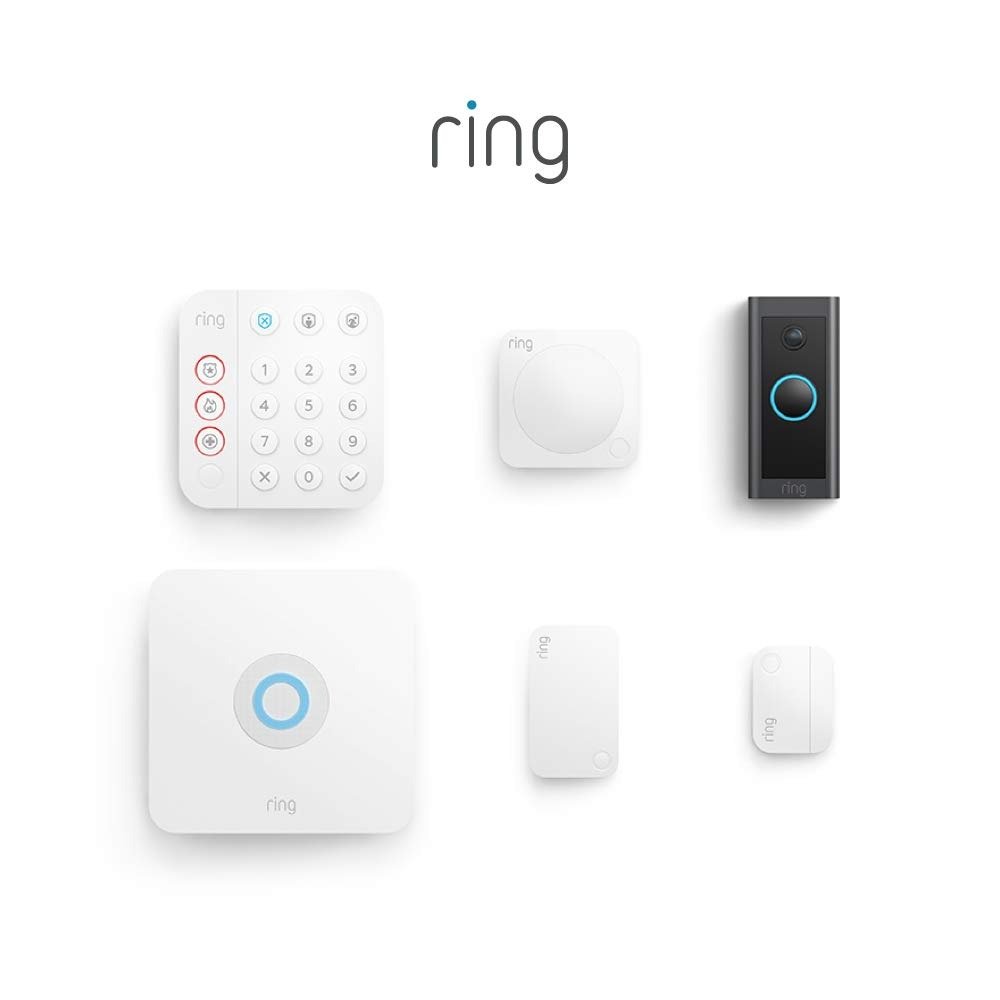
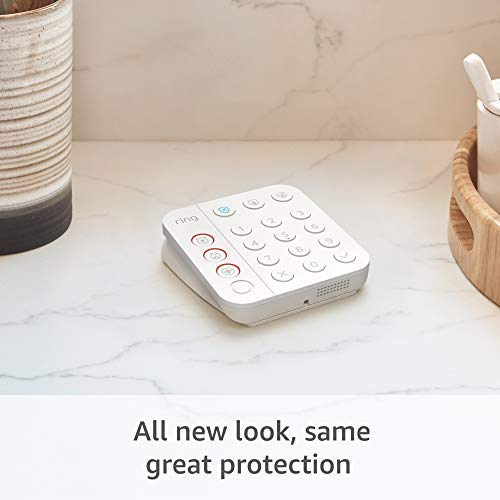
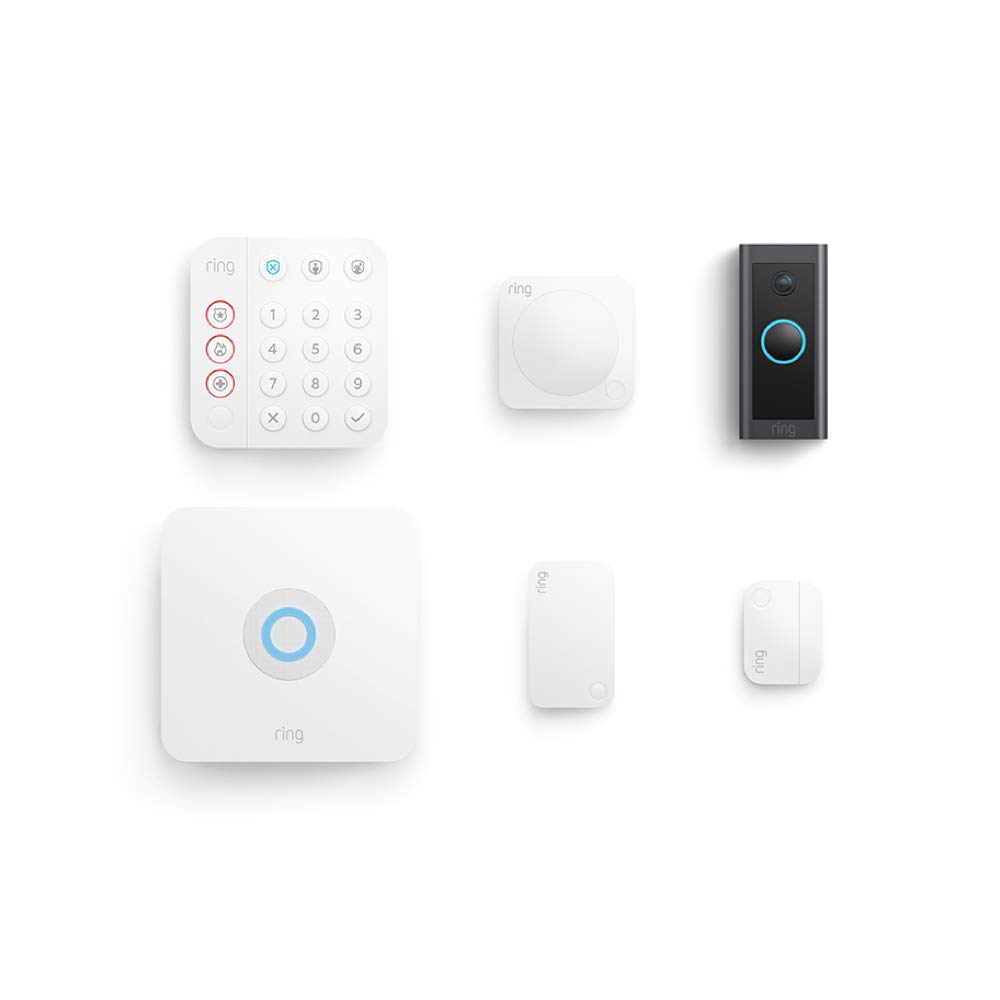
Five components arrive in clean packaging. A base station, keypad, contact sensor, motion detector, and range extender — plus a wired video doorbell. On paper, this reads like a full security setup. And for certain living situations, it genuinely is.
For others, it isn’t — and that distinction only becomes clear after installation.
| Component | Qty | Primary Function | Key Limitation |
|---|---|---|---|
| Base Station | 1 | System hub, 104dB siren, 24-hr power backup | Requires AC power; Z-Wave hub, not WiFi |
| Keypad | 1 | Arm/disarm locally | Remote disarm requires paid subscription |
| Contact Sensor | 1 | Alerts when a door or window opens | Covers one entry point only |
| Motion Detector | 1 | Indoor motion detection | Detects movement inside a zone, not at a specific entry |
| Range Extender | 1 | Extends Z-Wave signal to sensors | Not a WiFi range extender |
| Video Doorbell Wired | 1 | 1080p front-door camera | 2.4GHz only; no chime; no battery; requires existing doorbell wiring |
One contact sensor. One motion zone. One doorbell.
The “5-Piece” name counts hardware components, not protected entry points. That’s the number that matters most to the decision you’re about to make.
What You’re Actually Feeling but Not Naming
You’ve seen enough package-theft videos or heard enough from neighbors to take this seriously. The $200–$250 bundle price felt like relief — a recognizable brand, fast shipping, solid reviews. You set it up in under an hour. Everything confirmed in the app. The siren test rattled the walls.
Then you stood in the hallway and looked at your back door.
The side entrance. The ground-floor window by the kitchen. The garage entry you use more than the front door. None of them trigger anything. The motion detector would catch someone already inside the zone. The contact sensor is on the one door you chose during setup.
That gap between “I have a security system” and “my home is actually monitored” is what no product listing names clearly. It’s the friction you felt but couldn’t name. Now you have a name for it.
The Hidden Mechanism Behind the Miss
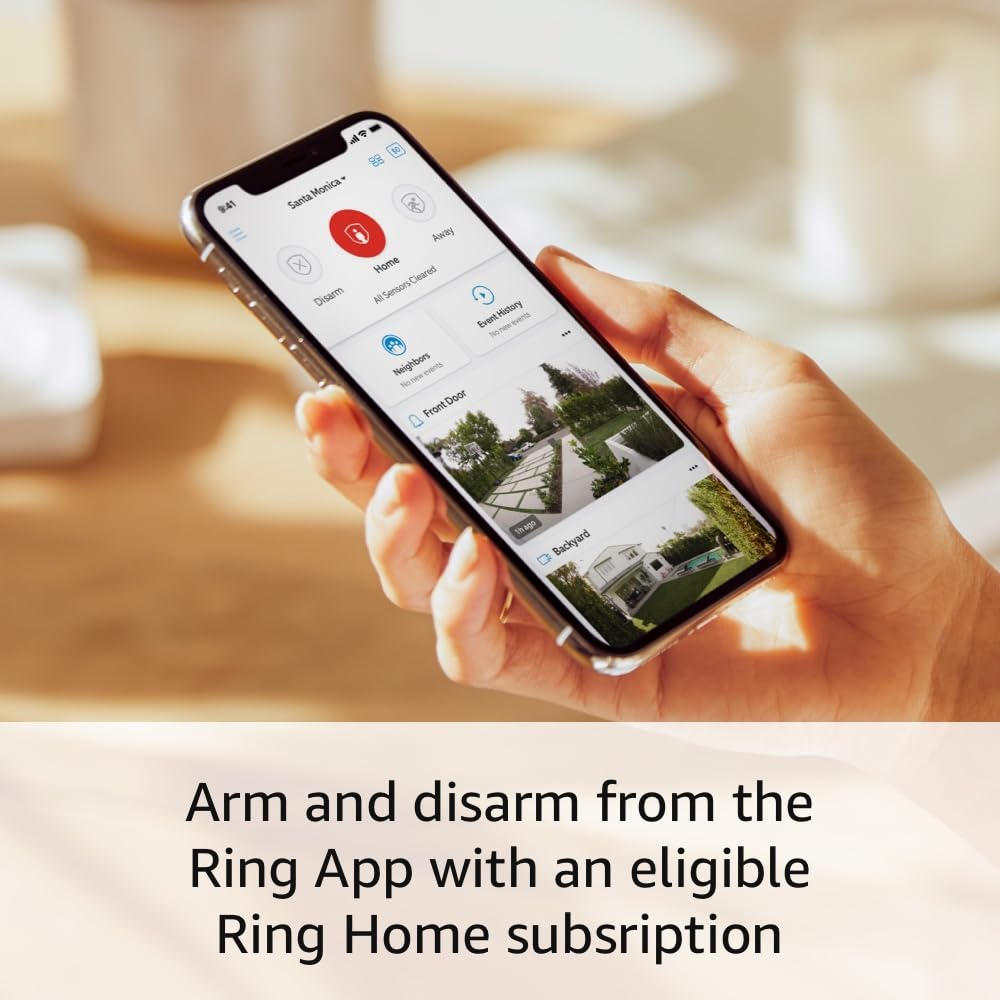
The engineering here is solid. The base station keeps the system running for up to 24 hours if your power goes out — that’s meaningful, not just a spec. The 104dB siren causes physical disorientation in a confined space. The Ring app is one of the cleaner multi-device dashboards in residential security: doorbells, cameras, and sensors all live in one view, with a panic button built into the upper-right corner that triggers the siren instantly.
The mechanism behind the miss isn’t a defect. It’s a product scope decision the marketing never states directly.
This bundle is designed for a single-primary-entry home. The Video Doorbell Wired — the entry-level model in Ring’s wired lineup — records in 1080p, operates only on 2.4GHz networks, has no battery backup, produces black-and-white infrared night vision without HDR, and will not activate your existing mechanical chime. It requires low-voltage AC doorbell wiring. If your home doesn’t have it, you need Ring’s Plug-In Adapter ($29.99, sold separately) to power the device from an indoor outlet.
The word “complete” in the bundle description refers to the system being operationally functional — not to it covering every entry point in your home. That distinction is the entire premise of this review.
The Threshold Where the Outcome Quietly Breaks
There is a specific point at which this bundle transitions from appropriate to structurally underpowered. I call it the three-entry threshold.
If your home has more than two or three entry points — front door, back door, garage entry, ground-floor windows, side entrance — the single contact sensor and single motion detector leave all additional points unmonitored unless you purchase add-on sensors separately ($19.99–$24.99 each).
The motion detector reads movement inside a zone, not at a specific door. A burglar who bypasses your front door and enters through an unmonitored rear entry won’t trigger the contact sensor. They’ll only trigger the motion detector once they’re already inside.
The doorbell integration is one of the genuinely smart features here: when the Ring Alarm is triggered, the Video Doorbell Wired starts recording automatically — no configuration required. But it records what it sees. That’s your front entrance. The breach may have happened elsewhere.
| Covered Entry Points | Contact Sensors Included | Additional Sensors Needed | System Integrity |
|---|---|---|---|
| 1 door (studio / 1BR apartment) | 1 | 0 | ✅ Fully covered out of box |
| 2 doors | 1 | 1 (~$20) | ⚠️ Second entry unmonitored |
| 3 entries | 1 | 2 (~$40) | ⚠️ Two unmonitored points |
| 4+ entries | 1 | 3+ (~$60+) | ❌ Significant structural gaps |
The fix is modular and affordable. But it costs extra, and most buyers don’t budget for it because no listing surface makes the gap explicit.
Why Most Buyers Misread This Bundle Too Early
The comparison logic usually runs: Ring is backed by Amazon, reviews are strong, the price is competitive, it comes with a doorbell. That reasoning isn’t wrong. It’s also not the right question.
The right question is whether the coverage surface of this system matches the entry surface of your actual home. Most buyers don’t ask it before purchase.
The second misread is the subscription structure. Ring Alarm requires a paid plan for features most buyers assume come standard with the hardware.
| Feature | Free (No Sub) | Standard — $9.99/mo | AI Pro — $19.99/mo |
|---|---|---|---|
| Live camera view | ✅ | ✅ | ✅ |
| Door and motion alerts | ✅ | ✅ | ✅ |
| Video recording and cloud storage | ❌ | ✅ Up to 180 days | ✅ Up to 180 days |
| Remote arm/disarm via phone | ❌ | ✅ | ✅ |
| Cellular backup (if WiFi goes down) | ❌ | ✅ | ✅ |
| 24/7 professional monitoring | ❌ | ❌ | ✅ |
| SOS emergency response | ❌ | ❌ | ✅ |
Digital arming and disarming from your phone requires a subscription. Video recording on the bundled doorbell camera requires a subscription. Cellular backup — which keeps your system online if someone cuts your internet — requires a subscription. The alarm siren fires regardless. But the system’s intelligent functions are gated.
At $19.99/month, Ring’s professional monitoring through the AI Pro plan is competitively priced — SimpliSafe starts at $22.99/month, ADT at $39.99/month. That context matters only if professional monitoring was already in your budget.
| Subscription Scenario | Hardware Cost | 3-Year Subscription Total | True 3-Year Cost |
|---|---|---|---|
| No subscription | ~$249 | $0 | ~$249 (limited functionality) |
| Standard plan | ~$249 | ~$360 | ~$609 |
| AI Pro (professional monitoring) | ~$249 | ~$720 | ~$969 |
That’s the honest math before committing.
Who Is Actually Inside This Problem
This bundle solves a specific security problem and solves it well.
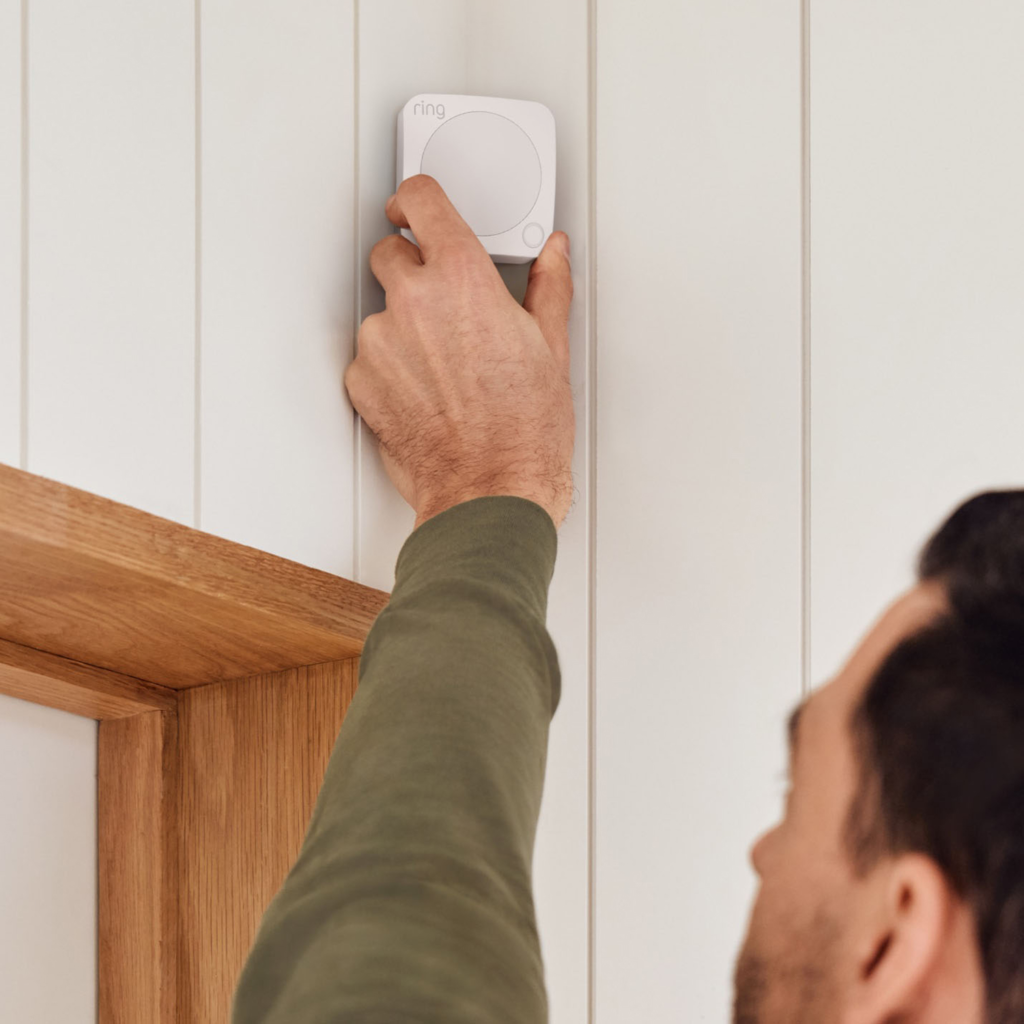
The person it’s built for lives in a studio, one-bedroom, or small two-bedroom apartment or condo with a single primary exterior entry point. They already use Alexa or Amazon Echo devices. They want setup completed in under an hour without drilling into concrete or pulling new wiring — alarm sensors mount with adhesive strips and sync through the Ring app. They’re comfortable paying $10–$20 per month for full functionality. They don’t need Google Home or Apple HomeKit compatibility.
If that paragraph accurately describes your situation, this bundle performs reliably. The app is clean and fast. Alexa voice commands work without friction — “Alexa, arm Ring” arms the system immediately. The siren test is convincing. The automatic doorbell recording when the alarm is triggered is a well-executed integration that doesn’t require any additional setup.
For this situation, the bundle isn’t a compromise. It’s a deliberate match.
Where Wrong-Fit Begins
Wrong-fit begins when any of the following are true.
Your home has more than one exterior door that needs monitoring. You don’t have existing low-voltage doorbell wiring — the Video Doorbell Wired runs on hardwired power only and requires Ring’s Plug-In Adapter if no wiring exists. Your primary smart home ecosystem is Google Home or Apple HomeKit — Ring operates natively on Alexa only, has no HomeKit support on any plan, and requires third-party workarounds for Google. You want to arm and disarm the system from your phone without a paid subscription. You have privacy concerns about video data stored on Amazon’s servers — Ring reached a $5.8M FTC settlement in 2023 related to employee access to user footage, and Amazon retains the ability to share video with law enforcement under emergency conditions or valid legal orders even after 2024 policy changes.
| Scenario | Fit Assessment |
|---|---|
| 1BR condo, one exterior door, Alexa user, subscription-ready | ✅ Strong fit — this bundle is designed for exactly this |
| 2BR apartment, two entry doors | ⚠️ Buy one additional contact sensor (~$20) before setup |
| House with 3–4 exterior entry points | ❌ Step up to the 8-Piece or 14-Piece Ring Alarm kit |
| Google Home as primary ecosystem | ❌ Compatibility gap — Alexa only natively |
| Apple HomeKit household | ❌ Not supported on any Ring plan |
| No existing doorbell wiring at front door | ⚠️ Requires Ring Plug-In Adapter, sold separately |
| Full app control without a subscription | ❌ Core features — remote arm/disarm, recording — gated behind plan |
| Privacy-sensitive users | ⚠️ Review Ring’s current data and law enforcement policies before purchase |
None of these scenarios make the system poorly built. They define who it isn’t designed for.
The One Situation Where This Bundle Becomes Logical
If your home is an apartment or small condo under 1,000 square feet, with one primary exterior entry, already running Amazon or Alexa devices, with existing doorbell wiring at your front door, and with a budget that accounts for $10–$20 per month — this bundle is the most integrated, lowest-friction path to a functional security setup in this price range.
The Video Doorbell Wired links directly into the Ring Alarm so that any triggered event starts doorbell recording without manual configuration. The app brings every sensor, camera, and alert into a single dashboard. The keypad arms and disarms without requiring your phone. The 24-hour battery backup on the base station means a power failure doesn’t knock the system offline. In independent testing, Ring’s professional monitoring center responds within approximately 30 seconds of an alarm trigger on average — competitive with systems that charge significantly more per month.
For this living situation specifically, the decision stops being complicated.
What It Solves, What It Reduces, and What It Still Leaves to You
| What It Solves | What It Reduces | What Stays on You |
|---|---|---|
| Zero front-door visibility | Surprise intrusion at your primary entry | Monitoring additional entry points beyond the front door |
| No real-time alert on door open | Delayed awareness of motion or entry events | Calling 911 yourself unless subscribed to AI Pro plan |
| Blind front entry, no camera | Gap in front-of-home video coverage | Providing an indoor chime sound (Ring Chime or Echo, sold separately) |
| No remote system awareness while traveling | Anxiety when away from home | Monthly subscription cost for full functionality |
| Multiple disconnected device apps | Manual switching between doorbell and alarm tools | Amazon/Ring data policy considerations if privacy matters to you |
The siren handles deterrence. The doorbell handles front-entry visibility. The app handles awareness. What stays with you is coverage beyond the front door, the subscription you’ll need for the system to function as expected, and the data tradeoff that comes with any Amazon-connected product.
That’s not a reason to avoid this system. It’s the complete picture of what you’re choosing.
Final Compression
This is a single-entry apartment security system with a front-door camera, a loud siren, a 24-hour power backup, and one of the cleaner security apps in the category — at a price that makes sense when you know exactly what it covers.
The threshold is concrete: one contact sensor, one motion zone, one doorbell. Add-on contact sensors expand coverage at approximately $20 each. Full app functionality requires a subscription at $9.99–$19.99/month. Professional monitoring at $19.99/month is among the most competitively priced in this segment.
If your home is under 1,000 square feet with a single primary entry and you’re inside the Amazon/Alexa ecosystem — this is where the decision becomes straightforward.
If you have three or more entry points, no existing doorbell wiring, or depend on Google Home or HomeKit — the Ring Alarm 8-Piece Kit or 14-Piece Kit is the more structurally honest starting point for your home’s actual layout. The system scales. The entry point is just not this bundle.
Frequently Asked Questions
| Question | Answer |
|---|---|
| Does the Ring Alarm 5-Piece Kit 2nd Gen work without a subscription? | The alarm siren fires, and you get live camera view and basic door and motion alerts — all at no cost. Remote arming and disarming from your phone, video recording and storage on the doorbell, and cellular backup all require a paid plan. The Standard plan at $9.99/month unlocks those. Professional monitoring requires the AI Pro plan at $19.99/month. |
| Will the Video Doorbell Wired ring my existing doorbell chime? | No. The Ring Video Doorbell Wired does not activate your home’s existing mechanical chime. To hear doorbell alerts inside your home, you need a Ring Chime (sold separately, $29.99–$49.99) or an Amazon Echo smart speaker already connected to your account. |
| Does the Video Doorbell Wired support 5GHz WiFi? | No. This model supports 2.4GHz only. Ring’s higher-tier doorbells — the Plus and Pro models — support dual-band 2.4GHz and 5GHz. If your router broadcasts primarily on 5GHz, confirm your 2.4GHz band is active before starting setup. |
| What if my home has no existing doorbell wiring? | The Video Doorbell Wired has no onboard battery and cannot operate without a wired power source. If you don’t have existing low-voltage AC doorbell wiring, you’ll need Ring’s Plug-In Adapter (approximately $29.99, sold separately) to run power from an indoor outlet. |
| Can I expand this system to cover more doors later? | Yes. Ring sells individual contact sensors and motion detectors separately at $19.99–$24.99 each. The Ring Alarm base station supports up to 100 connected devices. Expansion is fully modular and requires no professional help — each sensor pairs through the Ring app. |
| Is Ring compatible with Google Home or Apple HomeKit? | No. Ring integrates natively with Amazon Alexa only. Google Home compatibility requires third-party workarounds. Apple HomeKit is not supported on any Ring plan or device. |
| What are the privacy implications of using Ring? | Ring stores all video footage on Amazon’s cloud servers. In 2023, Ring settled an FTC case for $5.8M related to employee access to customer footage. Amazon can share video with law enforcement under emergency conditions or valid legal orders, even following 2024 policy updates that ended direct police requests through the Neighbors app. In 2025, Ring introduced a new Flock Safety integration allowing law enforcement to send voluntary footage requests to Ring users. If data privacy is a material consideration, read Ring’s current privacy notice and Terms of Service before purchase. |
| How accurate is the 1,000 sq. ft. coverage claim? | The 1,000 sq. ft. figure reflects signal range for alarm sensors — not the number of rooms or entry points simultaneously monitored. With one contact sensor included, only one door or window is covered regardless of your home’s square footage. The motion detector covers one indoor zone. |
Transparency Note:
This analysis is built on aggregated real-world experience.
It extracts what repeatedly holds, what breaks, and what users uncover only after living with the system—then shapes it into a clear model you can use immediately.
Think of it as structured experience, refined and presented so you don’t have to learn it the hard way.
“A quick note: Don’t believe the star ratings, but trust personal experience. This article is a compilation of collected experiences”