PHILIPS 3200 LATTAGO REVIEW: WHEN ONE-TOUCH CONVENIENCE HITS ITS EXTRACTION CEILING
The Cup Looks Fine. The Problem Starts Below the Surface.
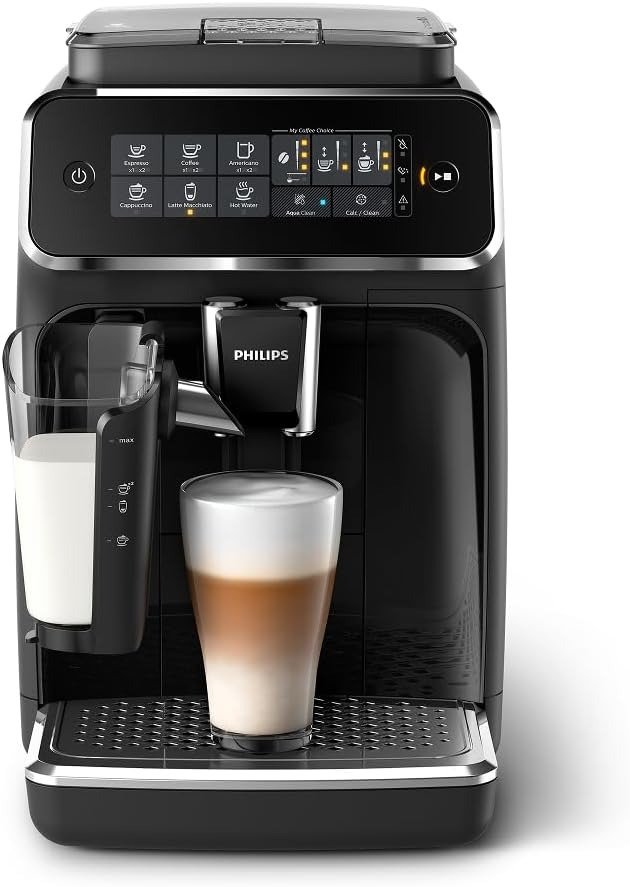
You press a button. In under two minutes, a cappuccino appears. The foam is thick. The milk is warm. The machine rinsed itself, noted the grounds count, and scheduled its own maintenance. It looks correct in every visible way.
And yet, if you’ve been living with a semi-automatic before, or if you’ve ever tasted what espresso is supposed to feel like on the back of your palate, something reads off. Not wrong enough to send back. Not obvious enough to name immediately. Just slightly thinner than it should be. A little faster than it should have been. Crema present but fragile.
That feeling isn’t a brewing accident. It is the machine performing exactly as designed — and you encountering the structural ceiling where its engineering philosophy ends.
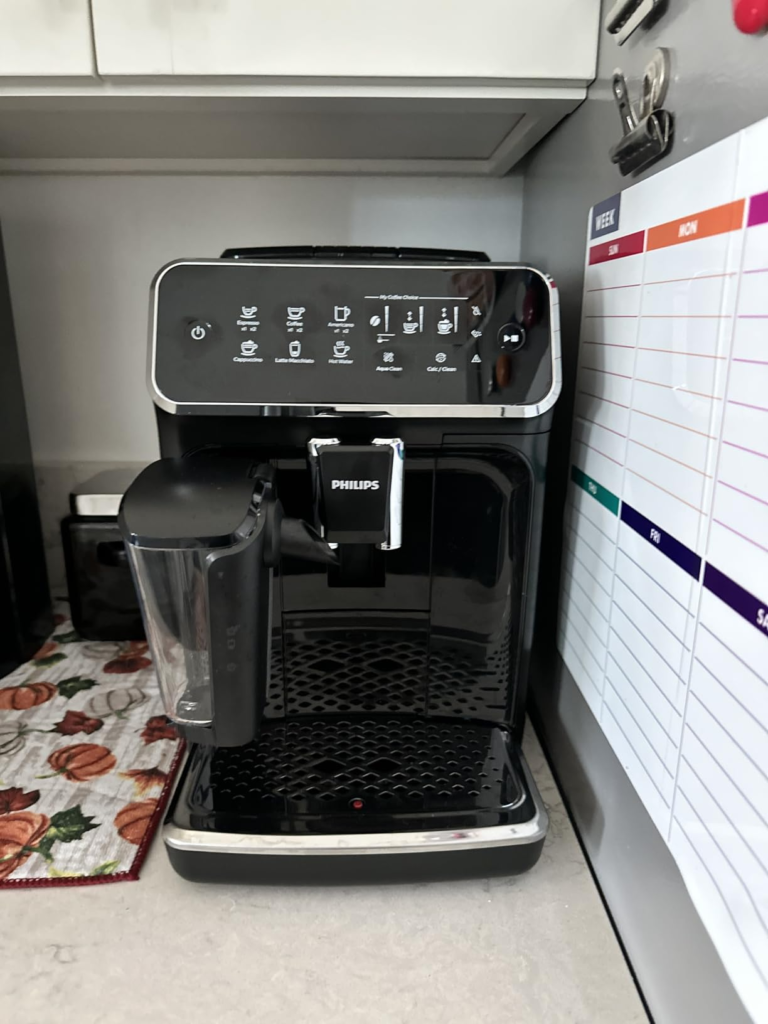
The Philips 3200 LatteGo is a real machine with real strengths. Its ceramic flat burr grinder is, by most expert accounts, an extraordinary feature for this price bracket — the kind of component you typically find on machines that cost significantly more. Its LatteGo milk system is genuinely clever engineering. Its maintenance architecture is among the simplest in the super-automatic category. But understanding exactly where it succeeds and where it structurally cannot deliver is the difference between a purchase you use daily for a decade and one you regret within thirty days.
This article does not distribute stars. It maps the threshold.
What You’re Actually Feeling But Haven’t Named Yet
The mild disappointment most people experience with the Philips 3200 LatteGo isn’t a product defect. It is an extraction speed problem built into the machine’s mechanical design.
Standard espresso extraction takes approximately 30 seconds. The Philips 3200 pulls a shot in roughly 15 seconds. The cause is structural: the filter basket contains larger holes than typical espresso equipment, allowing water to pass through the coffee puck too quickly — before full extraction of soluble compounds and oils can occur.
The result is espresso that carries some crema and reasonable aroma, but lacks the viscosity and intensity that defines a true espresso shot. In a milk drink, the extra milk density absorbs and partially compensates for this. In a straight espresso or double shot, the under-extraction is more exposed.
This is the friction that most buyers cannot name during the consideration phase because no spec sheet lists extraction time, and no product page describes filter basket hole diameter. The machine’s marketing describes the experience it facilitates. It does not describe the mechanism it uses to get there — and those two things are not identical.
| What the Spec Sheet Shows | What It Doesn’t Mention |
|---|---|
| 15-bar pump pressure | ~15-second extraction time (vs. 30-second standard) |
| Ceramic flat burr grinder | Large filter basket holes reducing puck resistance |
| Aroma strength settings (1–3) | Strength adjustments modify dose, not extraction dynamics |
| 12 grind settings | Finest grind partially compensates but doesn’t fully close the gap |
| 5 drink varieties | All built on the same extraction chassis |
Understanding this doesn’t disqualify the machine. It tells you precisely who this machine was built for.
The Hidden Mechanism Behind the Miss
The Philips 3200 LatteGo is engineered around a specific philosophy: maximum consistency at the lowest possible user burden. That goal, executed faithfully, requires certain structural decisions.
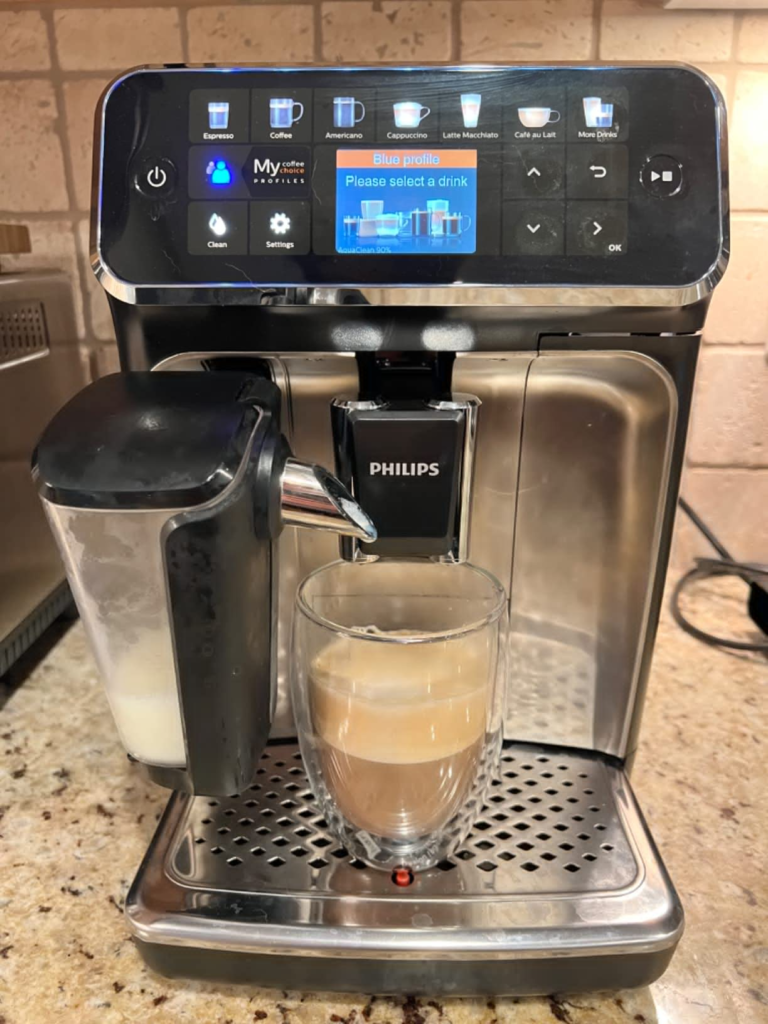
The grinder automates dose selection. The brew group automates tamping. The AquaClean filter automates descaling intervals up to 5,000 cups. The LatteGo system automates milk temperature and foam density. Every variable that could cause human error has been removed from the equation.
The cost of that removal is adaptability. When you automate tamping, you standardize puck pressure. When you standardize puck pressure, you commit to a specific extraction profile. And that profile, in the Philips 3200’s case, prioritizes speed and cleanliness of operation over the slow, resistant extraction that produces espresso with dense body and pronounced crema.
The extraction process is a bit too fast, which is a sign of insufficiently compacted puck or other shortcomings in the way that coffee grounds are automatically processed. This isn’t a defect in individual units. It is the designed trade-off of the entire platform.
The machine can be partially dialed in. Setting the grinder to a finer position (3–4 on the dial), increasing water temperature to the high or max setting, and raising aroma strength above coffee volume can move espresso quality from roughly 50% of ideal to approximately 80%. That’s a real and meaningful improvement. But 80% of ideal, at this machine’s price, is the honest ceiling — and knowing that ceiling changes everything about whether this purchase is logical for your situation.
The Threshold Where the Outcome Quietly Breaks
There is a specific threshold in this machine’s performance profile. Below it, the machine is excellent at what it does. Above it, it cannot deliver what is being asked.
Call it the Extraction Demand Threshold: the point at which your coffee preference requires genuine espresso body — the kind built by slow, high-resistance extraction — rather than espresso-flavored coffee made at speed.
| User Coffee Behavior | Position Relative to Threshold |
|---|---|
| Daily latte or cappuccino drinker | Below threshold — machine performs well |
| Americano or long black drinker | Near threshold — acceptable with grind adjustments |
| Straight double espresso drinker | At threshold — perceivable under-extraction |
| Pour-over or manual espresso enthusiast | Above threshold — outcome mismatch confirmed |
| Barista-trained or specialty coffee oriented | Structurally incompatible — different machine category needed |
The Philips 3200 LatteGo is the epitome of convenience. Anyone who wants to avoid the hassle and hardship of making espresso drinks at home will love this fully automatic espresso machine. That sentence is accurate, and the qualifier inside it is everything. Convenience is the primary product. Coffee quality is the secondary output.
If your daily ritual is a cappuccino or latte macchiato — a drink where milk carries significant flavor responsibility — you may never encounter this threshold in a way that bothers you. If your daily ritual is a 25mL espresso measured in grams extracted over time, you will hit this ceiling within the first week.
Why Most Buyers Misread This Machine Too Early
The Philips 3200 LatteGo sits at approximately $543 on Amazon and is positioned alongside machines like the De’Longhi Dinamica at comparable pricing. The comparison looks obvious: same category, similar price point, choose the better one.
The comparison is structurally misleading.
| Comparison Point | Philips 3200 LatteGo | De’Longhi Dinamica |
|---|---|---|
| Grinder type | Ceramic flat burr (12 settings) | Stainless steel conical burr (13 settings) |
| Milk system | Automatic LatteGo (tube-free) | Manual steam wand |
| Foam texture control | Fixed automatic (thick only) | Full manual control, microfoam capable |
| Latte art capability | No | Yes, with practice |
| Maintenance complexity | Exceptionally low | Moderate (wand cleaning required) |
| Extraction speed | ~15 seconds | Closer to standard 25–30 seconds |
| Designed for | Convenience-first user | Control-available user |
One drawback of the Philips 3200 is it doesn’t have a milk frother that allows you to get the microfoam for milk drinks. Therefore, you cannot manually control the milk foam to make latte art. The LatteGo system produces one texture: thick, stable, consistent foam. For a cappuccino, this is a feature. For a flat white, a cortado, or any drink requiring textured microfoam, it is a structural limitation.
The buyer who compares the Philips 3200 to a semi-automatic on extraction quality is not making an unfair comparison — they are asking the wrong question. The Philips 3200 does not compete on espresso intensity. It competes on total friction reduction. Those are different categories that happen to share a price range.
The early comparison trap works like this: the buyer sees ceramic flat burr grinder, reads “premium grinding technology,” assumes this translates to premium espresso quality, purchases, discovers the extraction speed issue, and then attributes disappointment to the machine being “bad.” The machine is not bad. The comparison was structurally incorrect.
Who Is Actually Inside This Problem
The buyer this machine serves well is specific, and it’s worth naming exactly.
This machine fits you if:
- You currently spend $3–$7 per day on café lattes or cappuccinos and want to recapture that expense at home
- Your morning routine involves speed over ritual — the machine should be ready before you finish your shower
- You drink predominantly milk-based espresso drinks (cappuccino, latte macchiato, flat white with thick foam)
- You live alone or share with one other person who has similar drink preferences
- You have previously owned a Nespresso and want better flavor without more complexity
- You regard cleaning coffee equipment as a minor daily inconvenience you want to minimize, not as part of the ritual
- You are not — and have no intention of becoming — a coffee geek
Super automatic coffee machines dominate the global market with a 43% value share in 2025, and the Philips 3200 LatteGo sits squarely inside the category that is driving that growth: accessible, low-friction, bean-to-cup for consumers who want café outcomes without café complexity.
Automatic coffee machines which prepare coffee with the touch of a button — grinding beans and frothing milk automatically — are especially sought after by working professionals and busy families. That is the precise demographic for whom the Philips 3200 LatteGo was engineered, and for whom it delivers genuine, sustained value.
Where Wrong-Fit Begins
Wrong-fit with this machine is not about budget or general taste. It is about where your satisfaction threshold lives relative to extraction quality.
| Wrong-Fit Signal | What It Means |
|---|---|
| You currently pull shots on a Breville Barista Express | You’re used to extraction control — this machine removes that control permanently |
| You’ve described espresso as “too weak” in coffee shops before | Your baseline is already above this machine’s output ceiling |
| You want latte art capability | The LatteGo system cannot produce controllable microfoam |
| You prefer oat milk or almond milk as default | Plant-based milks produce highly variable texture results — soy runs dense, cashew foam runs very thin — the system was optimized for dairy |
| You expect a “shot” to feel like a shot | Under-extraction will be immediately perceptible |
| You find machine noise disruptive early in the morning | This is a loud espresso maker — the grinder and LatteGo milk frother are both noisier than average |
The Philips 3200 offers push-button cappuccino convenience, but it is lacking in the taste department. If you are not fussy about how your coffee tastes, it may be a worthwhile purchase. The honest version of that observation: the machine’s output is not poor. It is calibrated to a convenience standard rather than an extraction standard — and those two standards produce different cups.
The One Situation Where This Product Becomes Logical
After all of the above: there is one situation where the Philips 3200 LatteGo is not just acceptable but structurally the correct choice.
You drink milk-based espresso beverages daily. You currently buy them outside or make them with significant effort. You want that outcome with zero ongoing friction. You are not comparing this to what a trained barista produces on a La Marzocco — you are comparing it to what you currently do every morning and whether this produces something better, faster, and with lower total cost.
On those terms, the machine wins clearly.
Since $800 is only 200 lattes from a chain coffee store, this machine could save you money within a year. Nothing feels cheap either — the milk container is sturdy, easy to clean, and has no small parts that might fail. The AquaClean filtration system extends descaling intervals to 5,000 cups. The ceramic flat burr grinder is rated for 20,000 grinding cycles — over 13 years at 4 cups per day.
The frother made fantastic frothed milk each and every time — it never scorched or burned the milk, and produced the exact quantity required at the press of a button.
The machine is also exceptionally easy to maintain. The LatteGo frother is just two plastic parts — a milk container and a frother attachment — which can be easily cleaned by hand and are also dishwasher safe. The milk container can be removed and stored in the fridge between brewing sessions.
For the buyer inside this specific situation, the Philips 3200 LatteGo is not a compromise. It is the appropriate tool.
What It Solves, What It Reduces, and What It Still Leaves to You
| Category | Honest Assessment |
|---|---|
| Solves completely | Daily effort of making milk-based espresso drinks |
| Solves completely | Maintenance complexity (tube-free frother, removable brew group) |
| Solves completely | Descaling burden — 5,000 cups between cycles |
| Reduces significantly | Total cost vs. daily café spending |
| Reduces significantly | Decision fatigue at drink preparation |
| Reduces partially | Espresso quality gap vs. semi-automatic machines |
| Does not solve | Microfoam control or latte art capability |
| Does not solve | Espresso intensity for straight-shot drinkers |
| Does not solve | Noise — grinder and frother run loud |
| Still requires from you | Grind setting adjustment during first two weeks of use |
| Still requires from you | Regular emptying of grounds container (holds 12 pucks) |
| Still requires from you | Correct bean selection — dark to medium roast performs better than light roast |
The machine does not disguise what it leaves undone. Those gaps are structural, and they are consistent. The buyer who enters knowing them will not be surprised. The buyer who enters assuming “fully automatic” means “fully equivalent to a trained barista” will be.
Final Compression
The Philips 3200 LatteGo is a precision convenience instrument that is frequently purchased by people who should not own it, and sometimes avoided by people it would serve perfectly.
The extraction ceiling is real. The filter basket’s large holes allow water to pass through too quickly, producing espresso that is consistently thinner and lighter than what a semi-automatic machine achieves with the same beans. This is not a fixable firmware issue. It is the mechanical identity of the platform.
For straight espresso drinkers, specialty coffee enthusiasts, manual froth artists, or plant-based-milk-primary households: the Philips 3200 LatteGo is structurally the wrong purchase. No adjustment compensates for its extraction architecture.
For daily latte and cappuccino drinkers who want freshly ground, consistently frothed, automatically maintained espresso-based drinks with the minimum possible morning friction: this machine is not a compromise. It is the logically correct choice.
If you have read this far and your daily drink is a cappuccino or latte macchiato — if you currently make it with significant effort or buy it outside, and you are ready to stop doing either — the decision is no longer vague.
Frequently Asked Questions About the Philips 3200 LatteGo
| Question | Answer |
|---|---|
| Is the Philips 3200 LatteGo espresso as strong as a café espresso? | No. The espresso tends to come out weaker than café or semi-automatic output because the machine extracts in approximately 15 seconds rather than the standard 30 seconds. You can partially close this gap by using the finest grind setting, maximum temperature, and highest aroma strength — but the ceiling remains below what a trained barista produces on dedicated equipment. |
| Can the Philips 3200 LatteGo make latte art? | No. The LatteGo system does not produce the microfoam needed for latte art — it creates consistently thick foam suited for cappuccinos and lattes but not for the controlled texture required for art. If latte art is important to you, a machine with a manual steam wand is required. |
| How often does the Philips 3200 LatteGo need descaling? | With the AquaClean filter installed, the machine can brew up to 5,000 cups before requiring descaling — roughly five years at three cups per day. |
| Does the Philips 3200 LatteGo work with oat milk or almond milk? | It works, but with inconsistent results. Plant-based milks produce highly variable foam texture — soy milk runs dense while cashew milk foam comes out very thin. For best non-dairy results, use milks labeled “Barista Edition,” which are formulated to mimic dairy frothing behavior. |
| Is the Philips 3200 LatteGo loud? | Yes. The grinder runs louder than many conical burr counterparts, and the LatteGo milk system also makes more noise than expected. If early morning quiet is a priority, this should be a considered factor before purchase. |
| What is the difference between the Philips 3200 and 5400 LatteGo? | All Philips LatteGo models share the same internal components and drink quality. The 5400 adds a full-color LCD display, 12 drink options versus 5, and four user profiles — but the underlying coffee and milk performance is identical across the lineup. |
| How long does the Philips 3200 LatteGo last? | Philips rates the grinder at 20,000 grinding cycles. At 4 cups per day, that is over 13 years of grinder life. Users report 15-year-old super automatics still in operation. The machine is built to outlast most kitchen appliances when maintained correctly. |
| Can it use pre-ground coffee? | Yes. The 3200 handles pre-ground coffee through a dedicated chute at the top of the machine, accepting one measured scoop per brew cycle. However, the ceramic flat burr grinder performs well enough that using whole beans consistently produces better results. |
Transparency Note:
This analysis is built on aggregated real-world experience.
It extracts what repeatedly holds, what breaks, and what users uncover only after living with the system—then shapes it into a clear model you can use immediately.
Think of it as structured experience, refined and presented so you don’t have to learn it the hard way.
“A quick note: Don’t believe the star ratings, but trust personal experience. This article is a compilation of collected experiences”