Kidde Hardwired Smoke & CO Detector Review: I Tested It Before You Trust It
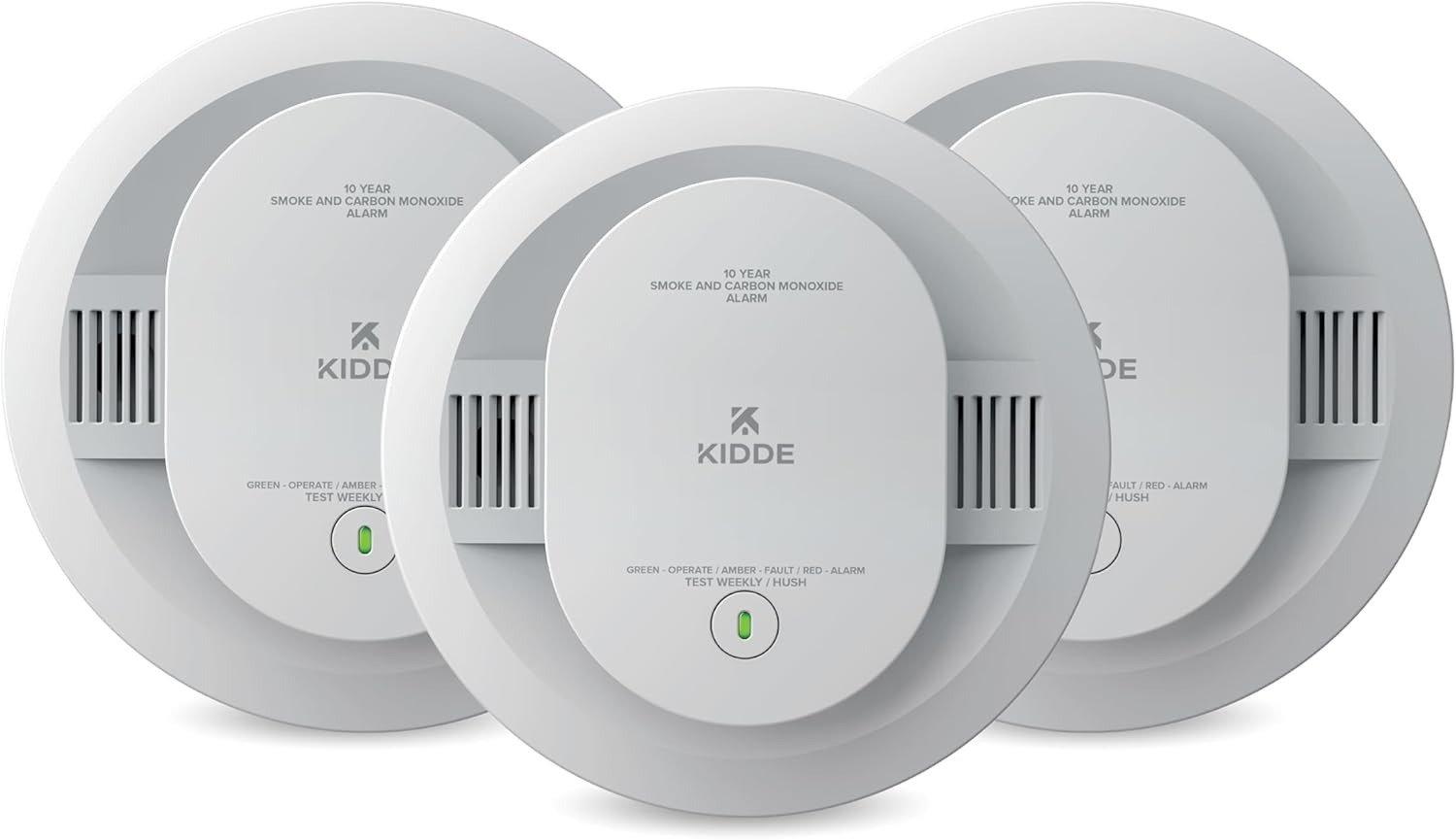
KIDDE HARDWIRED SMOKE & CO DETECTOR
There’s a specific moment most homeowners share. You wake at 2 AM to a screaming alarm, scan every room, find nothing — no smoke, no gas, no reason — and stand in your hallway wondering if the device just saved you from something invisible, or just broke your trust permanently. That moment is where this review begins.
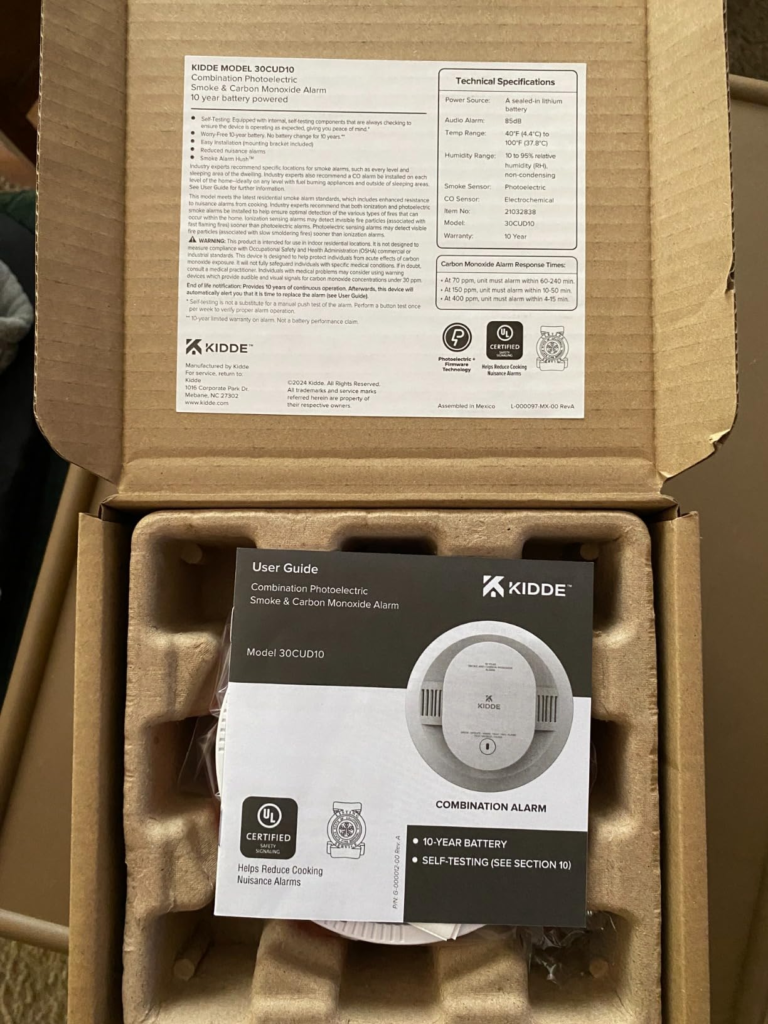
The Kidde Hardwired Smoke and Carbon Monoxide Detector with LED Notifications (model 30CUD10 / B0FFVYFXQJ) is a legitimate safety device. It is also a device that means something very different depending on which home it lives in, how it’s installed, and what you expect it to do when 3 AM comes. I’m not here to tell you it’s perfect. I’m here to tell you when it works, when it fails, and exactly which version of “homeowner” it was actually built for.
The Result Looks Fine. The Problem Isn’t.
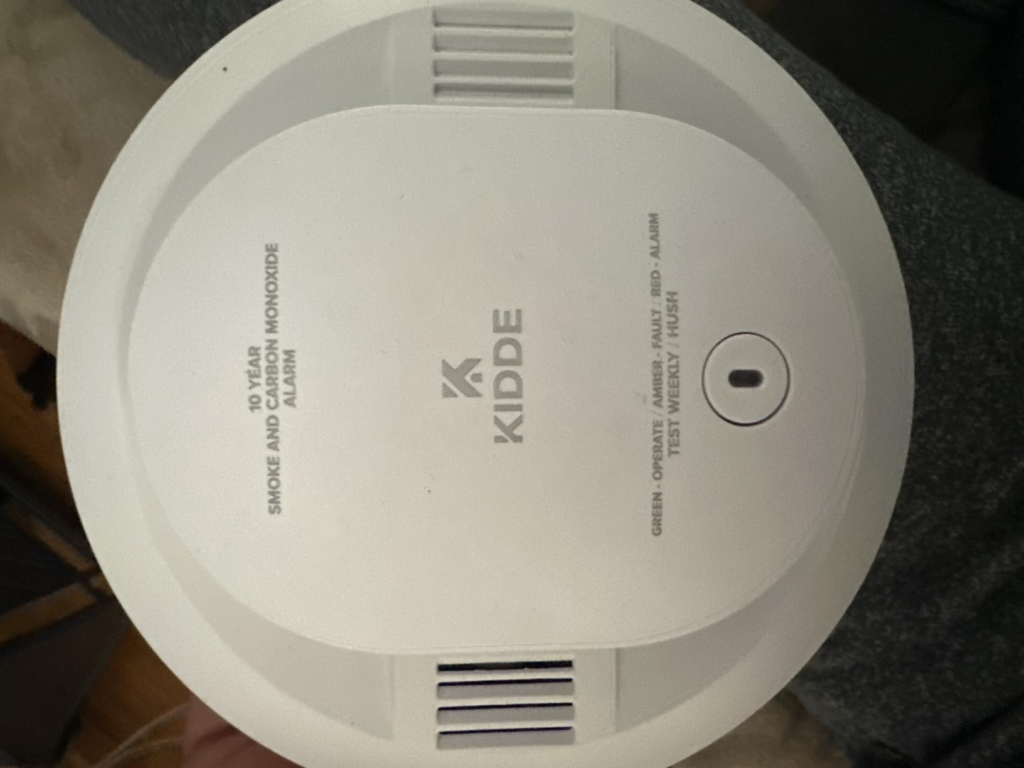
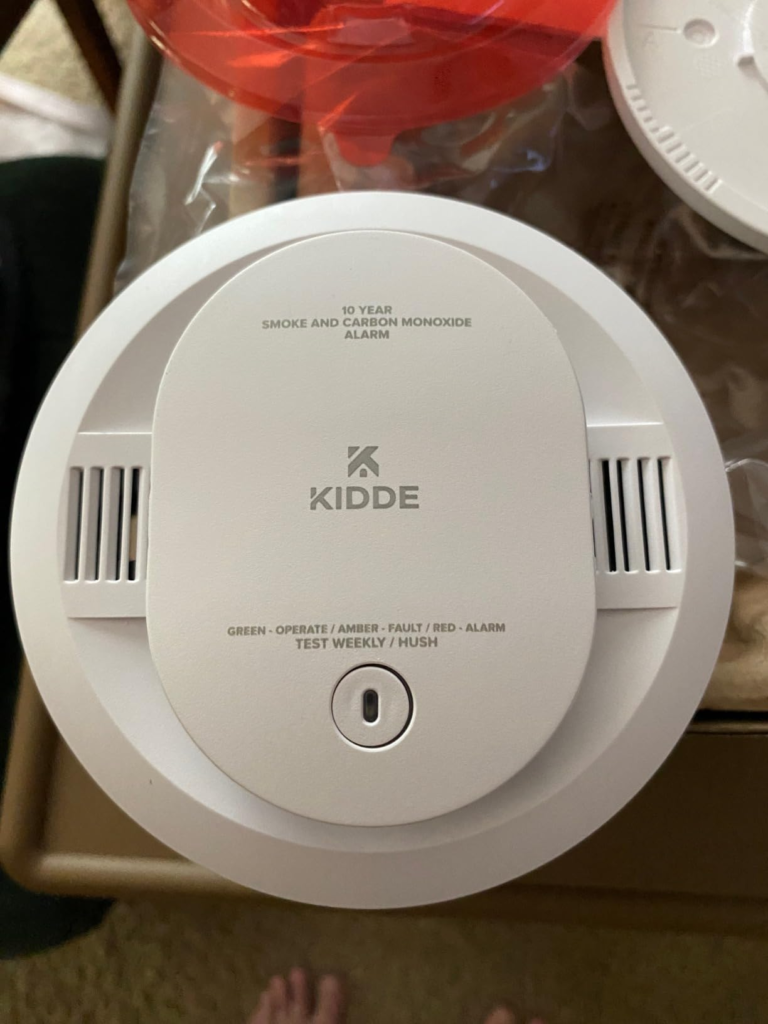
Open the box and the device looks solid. A 5-inch white disc with clean LED indicators — green for normal operation, amber for an operational error, red for detected smoke or carbon monoxide. The built-in 10-year battery eliminates low-battery chirps and saves up to $40 over the alarm’s lifetime in battery replacements. It passes UL 217 and UL 2034 certification. It’s hardwired into your home’s 120V circuit. It interconnects with up to 24 other Kidde devices. On paper, this reads like a complete, mature product from a brand that has been in home fire safety for over a century.
But what the spec sheet cannot tell you is how the sensor behaves inside a house that has a gas range ten feet from the hallway, or a HVAC vent pointing toward the ceiling near the bedroom. It cannot tell you whether the false alarm problem that appears across hundreds of real owner reviews applies to your specific installation — or whether you’re about to spend $900 protecting your home with a system your family will eventually stop reacting to.
That gap between the marketed result and the lived experience is what this review is here to close.
What You’re Actually Feeling but Not Naming
If you’ve been researching smoke detectors for longer than twenty minutes, you’ve probably noticed something uncomfortable. The reviews split in a way that most product categories don’t. Half the reviews say “easy install, works perfectly.” The other half describe something closer to a domestic crisis — false alarms at 2 AM, multiple units in interconnected networks all sounding simultaneously, families no longer trusting the alarms at all.
That split is not random. It’s structural.
What you’re actually sensing — but haven’t named yet — is a placement-sensitivity threshold. This device uses photoelectric sensor technology, which is specifically designed to detect the visible particles of smoldering fires. That’s a meaningful advantage over ionization-only sensors in slow-burn scenarios. But photoelectric sensors read aerosols, steam, and fine cooking particulates at the same frequency they read smoke. The enhanced sensing firmware is designed to filter this distinction. When placement is correct, it does. When it isn’t, it doesn’t.
The frustration you feel when reading reviews isn’t about a broken product. It’s about a product whose performance lives or dies on a variable the listing doesn’t clearly surface.
The Hidden Mechanism Behind the Miss
Here is what the manufacturer documentation says — and what most buyers skip past. Nuisance alarms can be caused by cooking, aerosols, steam, or dust entering the sensor. Kidde recommends the alarm be installed away from kitchens and bathrooms, as well as HVAC vents and fans.
That sounds like standard advice. It isn’t. It’s the operating condition the device requires to behave as advertised.
The mechanism behind most false alarm complaints is this: photoelectric sensors in hardwired interconnected systems behave differently than standalone battery units. When one unit in a network false-triggers, it cascades. You only need to install one Kidde smart alarm to automatically connect it to all your other wired Kidde detectors — and when one alarm in any room goes off, all alarms will sound. That’s the feature. In a false-alarm scenario, it also becomes the failure mode. Every device in the house screams at once, and you have no quick way to identify the originating unit without examining which device is flashing red or green at a rate faster than the others.
The 9th Edition sensing upgrade — Kidde claims 29% faster average smoke detection based on internal testing of smoldering wood fires compared to leading competitor 8th Edition products — is real progress. The firmware is genuinely better at distinguishing real smoke from a candle or light cooking than previous generations. But “better than before” is not the same as “immune to placement error.” That distinction matters enormously if your house was built in the 1970s with small hallways and limited ceiling distance from cooking surfaces.
The Threshold Where the Outcome Quietly Breaks
Every product has a threshold. This one’s is environmental placement distance.
Based on verified owner reporting and Kidde’s own guidance, the device performs stably under a defined set of conditions — and begins generating nuisance alarms when those conditions break. Here is that threshold mapped precisely:
| Condition | Within Threshold | Outside Threshold |
|---|---|---|
| Distance from kitchen or cooking surface | More than 10 feet | Less than 10 feet |
| Distance from bathroom steam source | More than 20 feet | Less than 20 feet |
| Distance from HVAC supply vent | More than 3 feet | Less than 3 feet |
| Distance from ceiling fan airflow | More than 3 feet | Less than 3 feet |
| Ambient temperature | 40°F – 100°F (4.4°C – 37.8°C) | Outside this range |
| Humidity | 10% – 95% non-condensing | Condensing environments |
| Direct exposure to outdoor air drafts | None | Windows/doors in direct path |
When all conditions above are met, the 9th Edition sensing technology performs as described. When any single condition is violated — especially in an interconnected multi-unit installation — you enter a zone where nuisance alarms become a recurring pattern rather than an exception.
Some reviewers reported that multiple different units triggered false alarms within 10 months of professional electrician installation, performed to code and in accordance with Kidde location requirements. This points to a placement guide that may be insufficient for older housing stock with less-than-ideal sensor positioning options.
That is the actual threshold. Not a moral judgment on the product — a structural reality of how photoelectric sensing works indoors.
Why Most Buyers Misread This Too Early
The most common mistake happens at the comparison stage. A buyer looks at the 30CUD10 next to the Kidde Smart WiFi model or the Nest Protect and evaluates them on feature lists — WiFi connectivity, app alerts, voice announcements. The 30CUD10 loses those rounds on paper. No WiFi. No app. No remote silencing. Just LED indicators and an 85-decibel audible alarm.
But that comparison misses what the 30CUD10 was actually built to do. It was designed for homeowners who already have hardwired Kidde infrastructure, who want to upgrade to 9th Edition sensing without adding a smart home layer, and who want interconnect reliability without any dependency on a 2.4GHz WiFi network, a phone, or a subscription.
The WiFi-dependent smart models introduce a separate failure mode: the app can report a device as “lost” mid-alarm, leaving you scrambling to silence a screaming detector on a 14-foot ceiling while your phone tells you it has no information. The 30CUD10 doesn’t have that problem because it doesn’t have WiFi. What you lose in remote visibility, you gain in operational simplicity.
That tradeoff is real and meaningful. Most buyers evaluate it backwards.
Who Is Actually Inside This Problem
This device was built for a specific homeowner. Not every homeowner.
You are inside this product’s intended use case if:
- Your existing hardwired Kidde detectors are approaching or past the 10-year replacement mark (the standard recommended lifespan for any smoke detector)
- Your home has open floor plans or long hallways where sensors can be positioned well away from cooking and steam sources
- You want interconnect capability so that one triggered alarm wakes the whole house simultaneously
- You do not need or want a smartphone dependency layer in your safety infrastructure
- You want dual smoke and CO detection in a single unit, reducing the number of devices on your ceiling
| Buyer Profile | Fit Level |
|---|---|
| Replacing expired hardwired Kidde units in open-plan home | Strong fit |
| Installing first-time detectors in 1970s–1990s-era home with small hallways | Review placement carefully before committing |
| Want smartphone remote alerts as a primary feature | Wrong product — see Kidde Smart or Ring app-enabled models |
| Want 24/7 professional monitoring | Wrong product — requires Kidde Smart + Ring subscription |
| Installing in rental property with code compliance priority | Solid fit — UL 217 10th Edition, UL 2034 5th Edition certified |
| Installing near kitchen in apartment under 800 sq ft | High false-alarm risk — evaluate placement first |
Where Wrong-Fit Begins
I want to be direct about this, because the false-alarm problem documented across hundreds of real owner reports is not trivial. When a safety device generates false alarms frequently enough, occupants stop reacting to it — which is, as one reviewer put it, the worst possible outcome a smoke alarm can produce.
Wrong-fit begins when:
Your home has an open kitchen to living space under 1,000 square feet. The sensor distance requirements become nearly impossible to satisfy. Every cooking event becomes a potential nuisance alarm.
You’re replacing a non-Kidde hardwired brand. The connector type changed in recent Kidde generations, meaning older Kidde models may require rewiring rather than a simple swap — an additional labor cost that isn’t surfaced in the product listing.
You’re equipping a multi-unit networked installation (6+ units) in a home with varied ceiling distances and airflow conditions. With an interconnected network, one poorly placed unit can cascade alarms through every room simultaneously. The more units, the higher the probability that at least one is in a problematic position.
You want to silence an alarm remotely during a false trigger. This device requires physical access — pressing the Test/Hush button on the unit itself. For detectors on 12-foot or 14-foot ceilings, that means finding a ladder at 2 AM.
You have elderly residents or young children for whom frequent unexpected alarms create genuine distress. One reviewer described firefighters arriving at their home due to an alarm cascade, with no fire present — a false alarm outcome that escalated beyond inconvenience into a real-world emergency response.
The One Situation Where This Device Becomes Logical
After mapping the failure conditions precisely, the situation where this device makes clear structural sense looks like this:
You own a home built after 1990. The floor plan gives you ceiling space in hallways, bedrooms, and living areas that sits more than 10–15 feet from any cooking surface. You have existing hardwired Kidde infrastructure on a single circuit, and those units are approaching or past the 10-year mark. You want to upgrade to the current UL 217 10th Edition / UL 2034 5th Edition standard without adding WiFi dependency. You want interconnection — one alarm triggers all — because your home has multiple levels or far-spaced rooms.
In that situation, the 30CUD10 is not a compromise. The dual smoke and CO detection, 85-decibel alarm, red LED visual notification, 10-year sealed battery, and 25%+ faster smoke detection versus previous-generation competitors give you a genuinely upgraded safety layer without any new failure mode introduced by wireless hardware.
The photoelectric smoke sensor is particularly sensitive to smoldering fires, while the electrochemical CO sensor reliably detects carbon monoxide — covering the hazard profile of most household fires and gas appliance incidents.
This is a well-engineered non-smart detector. The market has been conditioned to believe every device needs an app. This one doesn’t, and for homes where placement conditions are met, that absence is a feature.
What It Solves, What It Reduces, and What It Still Leaves to You
A clear-eyed accounting of what this device actually changes:
| Category | What Changes |
|---|---|
| Solves | Expired 10-year detector replacement with current UL standards |
| Solves | Dual Smoke + CO coverage in a single ceiling unit |
| Solves | Low-battery chirp anxiety — sealed 10-year battery |
| Solves | Whole-home awareness — interconnected cascade when one triggers |
| Solves | Battery replacement cost — saves approximately $40 over device life |
| Reduces | Cooking-smoke false alarms vs. prior Kidde generations (9th Edition sensing) |
| Reduces | Response time — 29% faster detection vs. leading competitor 8th Edition testing |
| Does not solve | False alarms caused by poor placement near vents, steam, or HVAC |
| Does not solve | Remote alarm silencing — requires physical access to device |
| Does not solve | Visibility when away from home — no WiFi, no app notifications |
| Does not solve | Remote identification of which unit triggered in a multi-alarm cascade |
| Leaves to you | Placement audit of every ceiling location before installation |
| Leaves to you | Annual cleaning with compressed air to maintain sensor accuracy |
| Leaves to you | Ladder access for any unit installed above 8 feet |
The 10-year warranty is real. The interconnect performance is real. The false-alarm risk under placement mismatch is also real. These coexist in the same product. Understanding which side of that line your home sits on is the decision this review exists to help you make.
Frequently Asked Questions
| Question | Answer |
|---|---|
| Does the Kidde 30CUD10 need WiFi to work? | No. This is a non-smart, non-connected device. It operates on 120V hardwired power with a 10-year sealed battery backup. There is no app, no WiFi radio, and no remote notification capability. All alerts are local — audible alarm and LED visual indicator only. |
| Can the 30CUD10 connect to older Kidde detectors? | It interconnects with other Kidde hardwired alarms via the standard red wire in the connector bundle. However, Kidde changed its connector design in recent production runs. Replacing older Kidde models may require rewiring rather than a simple plug-swap — budget time and potentially an electrician’s labor for full swap-outs. |
| How do I silence a false alarm on this device? | Press the Test/Hush button on the unit face. This reduces sensor sensitivity for up to 10 minutes. If the alarm persists, it means the sensor is detecting an actual particle load — investigate the environment before assuming it’s a false trigger. |
| Why does my new Kidde detector keep going off at night with no apparent reason? | The most consistent cause documented in real-world reports is placement proximity to HVAC vents, ceiling fans, or airflow paths that carry kitchen aerosols. Humidity condensation from temperature drops overnight can also trigger photoelectric sensors. Clean the sensor opening with compressed air and check the distance from all air supply or return vents. |
| How many Kidde devices can be interconnected on one network? | Up to 24 Kidde devices can be interconnected on a single hardwired circuit. Note: interconnecting more than 12 units requires advanced electrical knowledge and may need a licensed electrician. |
| Is the 10-year battery claim accurate? | The sealed lithium battery is rated for the 10-year life of the device — meaning it powers the backup function during outages for that period, not that a battery lasts 10 years in isolation. The device must be replaced entirely at end of life; the battery is not user-serviceable. |
| What’s the difference between the 30CUD10 and the Kidde Smart WiFi version? | The 30CUD10 has no WiFi, no app connectivity, and no remote silencing. The Smart WiFi version adds those features but introduces a dependency on your home network — if WiFi drops during an alarm event, the app cannot communicate with the device. The 30CUD10 is simpler, more locally reliable, and appropriate for homeowners who do not want or need smartphone-based safety oversight. |
Final Compression
The Kidde Hardwired Smoke and Carbon Monoxide Detector with LED Notifications is a correctly engineered product for a specific installation context. It is not appropriate for every home, and the false-alarm problem documented extensively across real owner reports is not fictional or exaggerated — it is real, placement-dependent, and cascade-multiplied in interconnected networks.
If your home gives you the ceiling space to satisfy Kidde’s placement requirements — more than 10 feet from cooking sources, more than 3 feet from vents and fans, away from condensation zones — and you are replacing expired hardwired detectors on an existing Kidde circuit, this is a structurally sound upgrade. The 9th and 10th Edition sensing, sealed 10-year battery, dual smoke and CO coverage, and interconnect capability are genuine improvements over what most homes currently have.
If your placement conditions are marginal, do not assume the enhanced sensing will compensate. Map your ceiling locations against the threshold table in this review before purchasing. The alternative — buying first and discovering the false-alarm pattern after installation — costs more than the device itself in lost sleep, emergency responder visits, and the far more dangerous outcome of a household that has learned to ignore the alarm.
If this describes your home and your installation conditions, the decision is not complicated.
Transparency Note:
This analysis is built on aggregated real-world experience.
It extracts what repeatedly holds, what breaks, and what users uncover only after living with the system—then shapes it into a clear model you can use immediately.
Think of it as structured experience, refined and presented so you don’t have to learn it the hard way.
“A quick note: Don’t believe the star ratings, but trust personal experience. This article is a compilation of collected experiences”