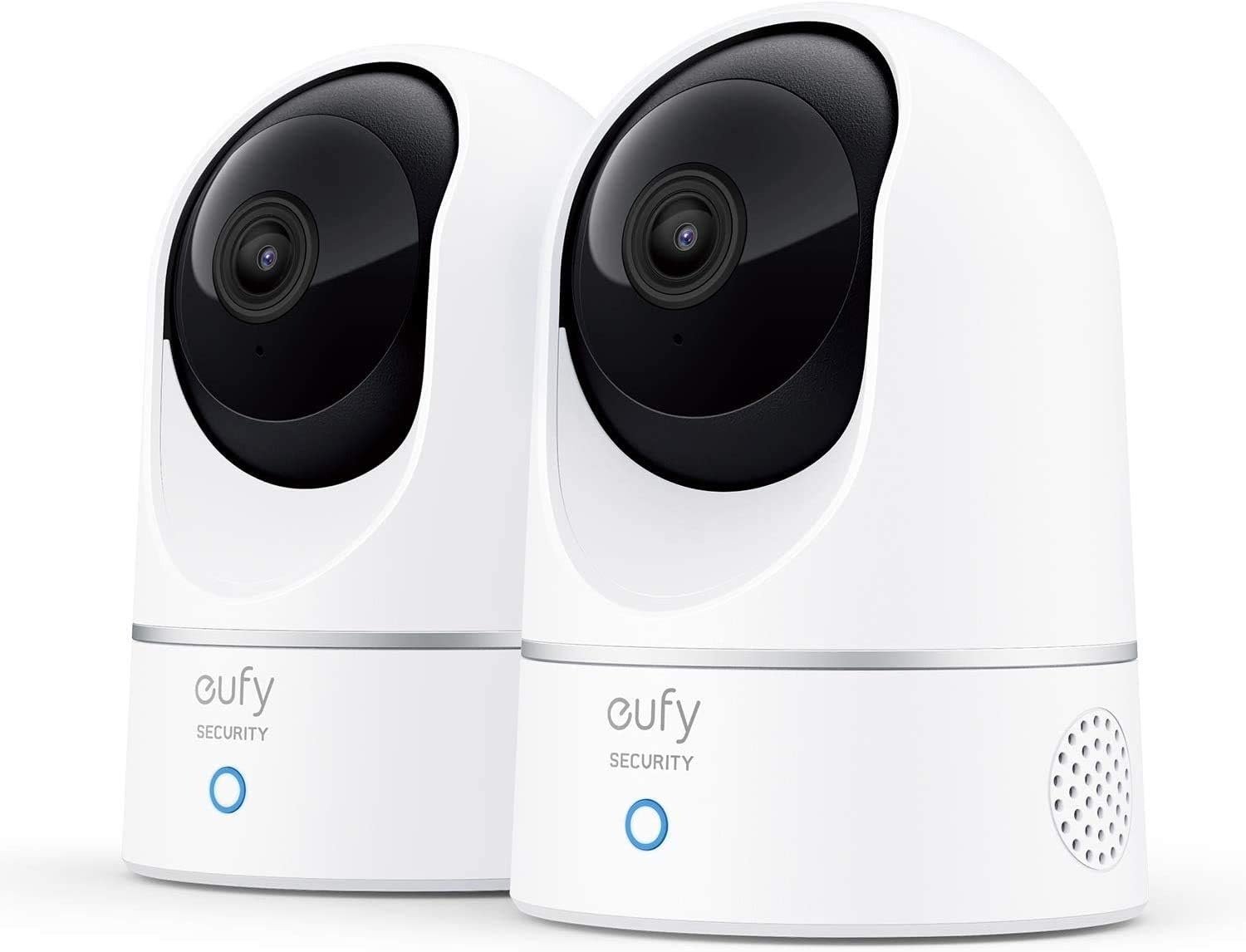
EUFY SOLOCAM S220 REVIEW: THE CAMERA THAT RUNS ON SUNLIGHT UNTIL IT QUIETLY DOESN’T
The Result Looks Fine. The Problem Isn’t.
You mount it. You scan the QR code. The app shows a clean 2K feed. The battery reads 87%. The solar icon is green.
Three weeks in, everything still looks fine. No subscription charge. No ladder. No notification to swap batteries. The camera just sits there, doing what it promised.
Then — somewhere between month four and month eight — it starts to slip. Not dramatically. Not in a way that triggers an alert. The charge percentage stops climbing after a cloudy stretch and never fully recovers. The motion clips load a half-second late. The panel’s surface starts to look faintly dull. You clean it. It doesn’t improve.
The camera didn’t fail in any way the spec sheet would predict. It just stopped behaving the way you expected when you bought it — and that gap between expectation and actual performance is exactly where this review lives.
What You’re Actually Feeling but Not Naming
There is a specific frustration that brings people to a solar security camera. It is not about 2K resolution. It is not about AI detection. It is about the maintenance burden of cameras that need charging every six weeks — the notification arrives at the worst time, the ladder comes out, the camera goes offline for an hour, and the cycle starts again.
The Eufy SoloCam S220 speaks directly to that frustration. Its promise is architectural: a 0.9W integrated solar panel that, under three hours of daily sunlight, generates between 200 and 400 mAh per day, while the camera consumes only 100 to 130 mAh in typical operation. On paper, that math produces a camera that never needs you.
That feeling — of a camera system that runs without you — is what people are actually buying. Not a sensor. Not a chip. Relief from a specific recurring interruption.
The question this review answers is: how long does that feeling last, and under what conditions does it stop being accurate?

The Hidden Mechanism Behind the Miss
The S220’s solar efficiency claim is precise: the integrated panel converts up to 25% of available sunlight into stored energy. Eufy positions that as a 51% efficiency gain over competitors in laboratory conditions. That number is real — under optimal direct sunlight, the math works.
The mechanism that breaks the promise is not the conversion rate. It is the word optimal.
The 0.9W panel is physically small and fixed to the camera body. That means its orientation is determined by where you aim the lens, not by where the sun is. In most real-world installations, those two directions are not the same. You aim the camera at a driveway, a door, a fence line — rarely at true solar south with a 30-degree tilt. The panel works with what angle you give it, not the angle that maximizes harvest.
In regions with consistent summer sun, this compromise is invisible. The 200-to-400 mAh daily generation absorbs the efficiency loss and still covers the camera’s daily consumption. But in northern climates, in winter months, on north-facing walls, or through extended overcast stretches, the margin disappears. The buffer battery — rated at 6,500 mAh — carries the load, but it cannot carry it indefinitely. Once it drops to a low state of charge without a recovery day, users report it never returns to its previous baseline without a manual USB charge.
That is not a failure. That is a physics-level constraint the product does not explain in its marketing language.
There is a second mechanism: the panel itself is integrated, not modular. When it degrades — and degradation from UV exposure is not a question of whether, but when — you cannot replace it. The solar panel is the camera. Replacing the panel means replacing the unit.
The Threshold Where the Outcome Quietly Breaks
The S220 operates without friction inside a specific performance window. That window has measurable edges.
| Condition | S220 Behavior |
|---|---|
| 3+ hours of direct daily sun, optimal angle | Battery stays above 80–90%, camera runs indefinitely |
| 2–3 hours of partial or angled sun | Battery holds but does not fully recover from active days |
| Fewer than 2 hours of sun, or extended overcast | Battery drains progressively; manual charge required within weeks |
| North-facing installation | Panel harvests fraction of rated wattage; threshold reached faster |
| High motion-event frequency | Each recorded clip draws extra power; solar margin narrows further |
| 18+ months of operation | Panel degradation begins; some users report visible film peeling, lens hazing, reduced charge acceptance |
The camera does not alert you when you cross from the first row to the second. The app shows a battery percentage. It does not show a “your solar input is below threshold” warning. That silence is where expectations collapse.
Why Most Buyers Misread This Too Early
The majority of early reviews are written within the first two to three months of ownership. During that period, the S220 performs at or near its stated claims. Battery stays high. Motion detection catches most events. The app works without friction.
This creates a publication bias in which the positive signal dominates the visible review record, while the threshold problems — which emerge at six months, twelve months, eighteen months — are reported in forum threads, deal communities, and scattered one-star updates that arrive long after the initial review cycle.
There is also a comparison trap that operates before purchase. Buyers evaluate the S220 against subscription-based cameras like Ring or Arlo and correctly identify that no monthly fee represents real long-term savings. That comparison is accurate on day one. It becomes less accurate if the camera requires replacement at eighteen months rather than lasting the four-to-five years that would justify the calculation.
A third misread comes from treating the PIR motion sensor’s 30-foot detection range as a detection guarantee. Real-world reports from multiple independent users document significant missed events — particularly for objects moving parallel to the camera axis, at angles the PIR sensor reads as low-heat or low-contrast, or in areas with competing thermal sources like nearby HVAC units. One user running an S220 alongside an older EufyCam 1 reported the S220 missing three out of four motion events the older camera captured. That is not a rare edge case; it is a structural limitation of PIR-based detection at this price point.
Who Is Actually Inside This Problem
The S220 is the right camera for a specific type of installation, not a universal outdoor camera.
| User Profile | Fit |
|---|---|
| Sun-belt homeowner, south or west-facing wall, moderate activity zone | Strong fit |
| User replacing a perpetually-dead battery camera on a good sun exposure | Strong fit |
| Renter who needs zero-wire, temporary installation | Good fit with limitations |
| User in Pacific Northwest, northern states, or heavy tree canopy | Marginal — solar math fails seasonally |
| User wanting motion coverage of a high-traffic driveway or street | Weak fit — missed events and notification lag compound here |
| User expecting 4–5 year maintenance-free operation | Risky — panel degradation timeline conflicts with that horizon |
| User with older HomeBase 2 ecosystem | Not compatible — HomeBase 3 only |
The camera is also 2.4 GHz only. In environments with congested 2.4 GHz networks or where the router is distant, connectivity lag at clip-load time is a documented and recurring complaint. This is not a camera for weak-signal zones.
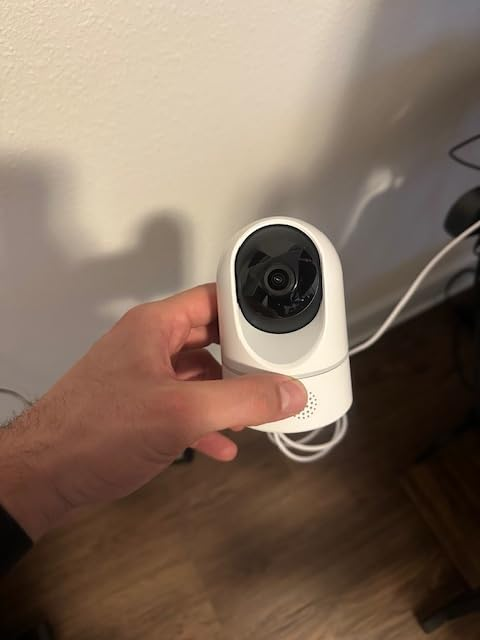
Where Wrong-Fit Begins
Wrong-fit is not always a dramatic mismatch. Sometimes it is a one-degree difference between where you aim the lens and where the sun actually is.
Wrong-fit begins when the installation location serves the security need but penalizes the solar harvest. A north-facing garage camera monitoring a side door makes perfect security sense. It is a poor solar angle. The buyer who installs it will not feel the wrong-fit until month three of winter.
Wrong-fit also begins when the 8GB onboard storage — the only available local storage — fills up with high-frequency clips. The S220 has no NAS support, no cloud backup by default, no expandable storage. When the 8GB fills, older clips overwrite. In high-activity zones, that overwrite cycle can be less than a week. The user who needed footage from ten days ago will not have it.
Wrong-fit is confirmed when the camera is stolen. Because all footage lives on the device, theft of the camera means loss of the evidence. There is no cloud copy, no offsite redundancy, unless the user has added HomeBase 3 with an SSD — an additional cost the base price does not include.
And wrong-fit becomes regret when the app injects product advertisements — a practice Eufy introduced through app updates in 2025 that caused significant user backlash across forums. A camera marketed on privacy and local storage serving ads inside its own security interface is a trust signal many buyers did not anticipate.
The One Situation Where This Camera Becomes Logical
If you own a home in a consistently sunny climate, you have a south, southwest, or west-facing outdoor wall that sees uninterrupted direct sun for at least four hours daily, you want zero subscription fees, you are covering a low-to-moderate activity zone — a side gate, a backyard, a secondary entry point — and you have accepted that local-only storage means footage lives on the device, then the Eufy SoloCam S220 delivers exactly what it promises.
In that situation, the 2K image quality is genuinely good. The f/1.6 aperture and infrared LEDs produce usable night vision without a spotlight. The human detection, while imperfect, reduces notification noise compared to pure motion cameras. The IP67 weatherproofing is rated for genuine outdoor exposure. Setup takes under fifteen minutes. And the battery does, in fact, stay above 80% without you touching it.
That is a real product delivering a real result for a real person. The problem is only that the product’s marketing does not specify which person that is.
| Specification | Value |
|---|---|
| Resolution | 2K (2560 × 1440) |
| Frame Rate | 15 fps |
| Field of View | 135° |
| Night Vision | Infrared + Color Night Vision |
| Aperture | f/1.6 |
| Solar Panel | 0.9W integrated, fixed |
| Daily Solar Harvest | 200–400 mAh (optimal sun) |
| Daily Power Consumption | 100–130 mAh (average use) |
| Battery Capacity | 6,500 mAh |
| Local Storage | 8GB eMMC (built-in, non-expandable) |
| Cloud Storage | Not supported |
| Wi-Fi | 2.4 GHz only |
| PIR Detection Range | Up to 30 ft (10 m) |
| Weather Rating | IP67 |
| Operating Temp | −4°F to 122°F (−20°C to 50°C) |
| Voice Assistant | Alexa, Google Assistant |
| HomeKit | Not supported |
| Subscription | None required |
| HomeBase 3 | Compatible (HomeBase 2: not compatible) |
What It Solves, What It Reduces, and What It Still Leaves to You
What it solves: The recurring battery maintenance cycle, under correct solar conditions. The subscription fee, permanently. The wiring requirement, completely.
What it reduces: Notification noise, via PIR-based human detection that filters out most non-human motion. Installation friction, via a single-mount wireless setup. Night-vision darkness, via the f/1.6 aperture and infrared array.
What it still leaves to you: Placement judgment — the most critical variable the product cannot make for you. Storage management — 8GB fills, and you are responsible for knowing when. Solar recovery — one extended overcast period requires you to manually charge if the buffer is depleted. App tolerance — if the ads introduced in 2025 bother you, there is no opt-out path documented at time of writing.
Where regret lives: The buyer who installs the camera on a north-facing wall in January in Minnesota, expects the same results as the buyer on a Phoenix south wall in July, and measures the gap at month six when the battery sits at 41% and the solar icon is no longer green.
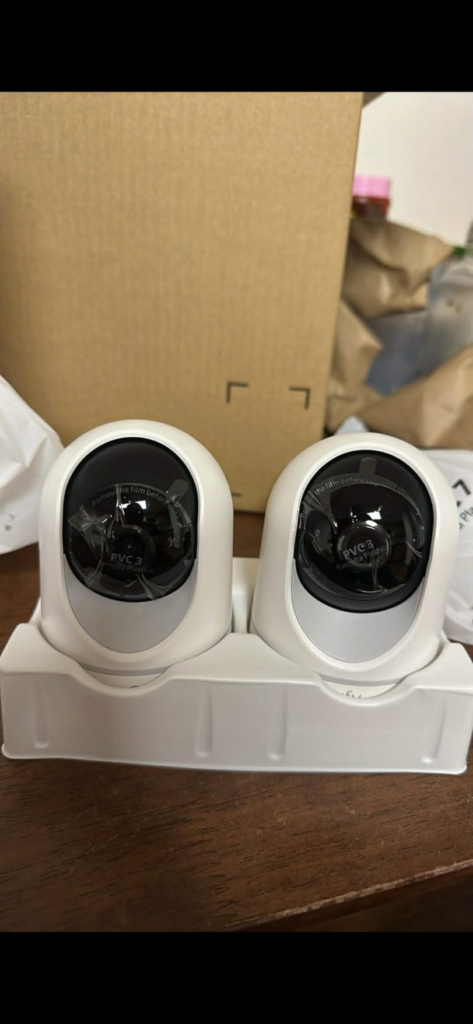
Final Compression
The Eufy SoloCam S220 is a competent, subscription-free, wire-free outdoor camera that works well inside a narrow environmental window and quietly fails outside it. The failure is not dramatic. It is slow, invisible, and arrives after the return window has closed.
The solar promise is real — but it is conditional. The local storage is genuine — but it is finite and non-redundant. The human detection works — but it misses more than the spec sheet implies at oblique angles and high traffic volumes. The price is fair — but only if the camera lasts long enough for the no-subscription math to work in your favor.
| Decision Factor | Verdict |
|---|---|
| Sunny climate, south/west facing wall | Buy with confidence |
| Overcast-heavy or northern climate | Reconsider — solar math fails seasonally |
| High-traffic driveway coverage | Consider dual-camera overlap or a different model |
| Long-term 4–5 year expectation | Risky — panel and lens degradation documented at 18+ months |
| HomeBase 2 existing ecosystem | Incompatible — upgrade required |
| Privacy-first buyer | Acceptable, with awareness of cloud thumbnail behavior and app ads |
| Theft-risk high-crime area | Add HomeBase 3 with SSD or reconsider — on-device storage goes with the camera |
If your wall faces the sun and your zone is quiet, this camera will run without you for longer than you expect. That is the product working exactly as designed. If your wall does not face the sun, that same product will quietly start needing you — and it will not tell you when it crossed that line.
The decision is not whether the S220 is good. It is whether your installation matches the conditions under which it is good.
If you are inside that threshold, the S220 is available here on Amazon — and the decision is straightforward. If you are reading this because you are already outside it, the correction is a placement change, a HomeBase 3 addition, or a different model entirely.
Frequently Asked Questions
| Question | Answer |
|---|---|
| Does the Eufy SoloCam S220 work without any sunlight? | Yes — it has a 6,500 mAh battery that provides up to three to four months of standalone operation without solar input. However, once the battery drains, it requires manual USB charging to recover. |
| Will the S220 work in winter or cloudy climates? | Partially. In low-sun conditions, the solar panel’s 0.9W output cannot reliably offset daily consumption. Battery percentage will decline progressively. Users in northern states and cloudy regions consistently report needing manual charges during winter months. |
| Does the S220 have cloud storage? | No. By default, all video is stored on the built-in 8GB eMMC chip. Push notification thumbnail previews require temporary cloud access — a distinction that matters if privacy is a primary concern. |
| Is the S220 compatible with HomeBase 2? | No. It is only compatible with HomeBase 3. Existing HomeBase 2 users must upgrade to integrate the S220 into their ecosystem. |
| Can the solar panel be replaced if it degrades? | No. The solar panel is integrated into the camera body. There is no field-replaceable panel. Degradation of the panel over time means the camera must be replaced as a unit. |
| How accurate is the motion detection? | The PIR sensor detects movement up to 30 feet in its field. In practice, real-world user reports document missed events in high-traffic zones, especially for movement parallel to the camera axis or in areas with competing heat sources. Overlapping camera coverage is commonly recommended for critical zones. |
| Does the app show ads? | As of 2025, Eufy introduced in-app advertisements within the EufySecurity app, redirecting users toward the Eufy store. This has generated significant user complaints across deal forums and social platforms. |
| Is the Eufy SoloCam S220 compatible with Apple HomeKit? | No. It supports Amazon Alexa and Google Assistant only. HomeKit users will need to look at other options. |
Transparency Note:
This analysis is built on aggregated real-world experience.
It extracts what repeatedly holds, what breaks, and what users uncover only after living with the system—then shapes it into a clear model you can use immediately.
Think of it as structured experience, refined and presented so you don’t have to learn it the hard way.
“A quick note: Don’t believe the star ratings, but trust personal experience. This article is a compilation of collected experiences”