YOUR ROBOT VACUUM RUNS EVERY DAY. THE DREAME X60 MAX ULTRA COMPLETE STILL MISSES WHAT YOU STOPPED NOTICING
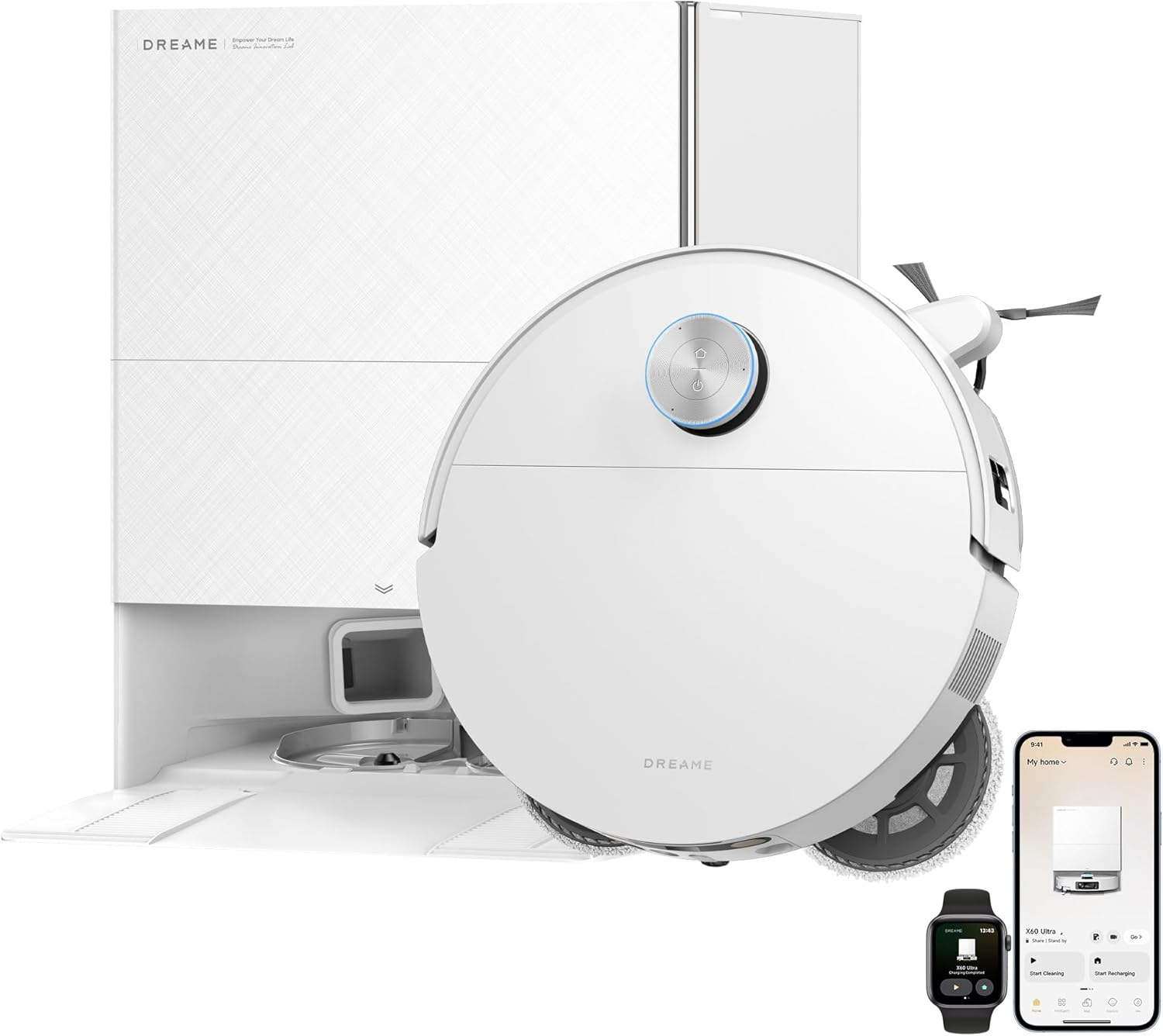
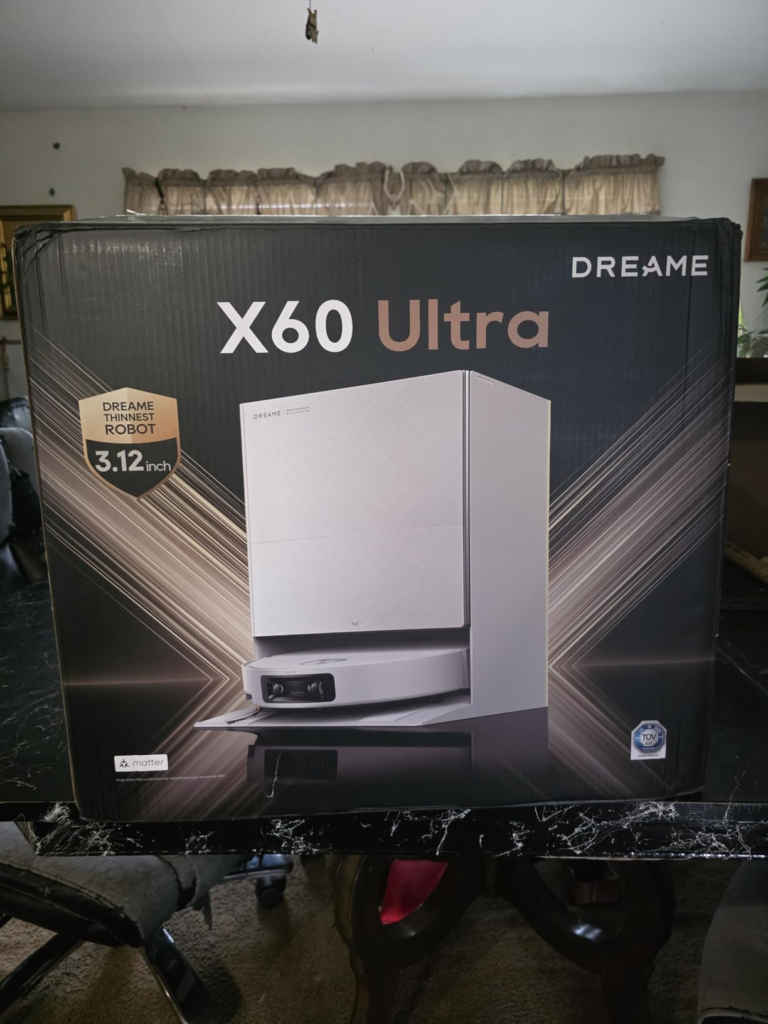
dreame x60 max ultra
The floor looks fine. The robot did its job. The countertop routine is done.
And yet — something in the kitchen still smells faintly of last night. The sofa base still has that grayish film around the legs. The bedroom carpet looks clean until the afternoon light hits it sideways and you see the embedded layer no machine has ever actually touched.
You stopped noticing these things. Not because they disappeared. Because you adapted.
This is the friction the Dreame X60 Max Ultra Complete was built around. Not the obvious mess. The persistent sub-threshold residue that your current robot reports as “cleaned.”
The Result Looks Fine. The Problem Isn’t.
A standard robot at 10,000–20,000 Pa picks up loose debris — crumbs, visible dust, surface pet hair. The floor passes the visual test. The schedule runs. The bin empties. The maintenance metrics all show green.
What doesn’t register: the 2–3mm gap under your sofa frame that your current robot’s sensor cluster physically cannot enter. The embedded carpet fiber where pet dander has compacted past the surface layer. The kitchen tile where a mop pad at room temperature rolls over a grease film instead of lifting it.
The robot did clean. It cleaned what it could reach, with the friction it could generate, at the temperature physics allowed.
The miss wasn’t a malfunction. It was an architecture limit.
What You’re Actually Feeling but Not Naming
There’s a specific kind of home fatigue that isn’t about visible mess.
It’s the faint awareness that you’ve been running a robot vacuum for months — maybe years — and you still find yourself spot-mopping the kitchen on weekends. You still run a handheld under the couch every few weeks. You still notice a particular corner near the pet bowl that the robot circles but never actually cleans.
This isn’t lazy automation. This is coverage debt — the accumulated residue in zones that your robot consistently bypasses, not because it malfunctions, but because its physical constraints exclude them by design.
The zones that generate coverage debt in most homes follow a predictable pattern:
| Zone | Why It Accumulates |
|---|---|
| Under sofas, beds, low cabinets | Robot sensor cluster too tall to enter (>80mm body height) |
| Door threshold transitions | Robot gets stuck or avoids the crossing entirely |
| Carpet fiber below 3mm depth | Suction insufficient to pull embedded debris up |
| Kitchen tile near stove/sink | Mop at ambient temperature skims grease film, doesn’t dissolve it |
| Room-edge corners | Fixed side brush reaches perimeter but not the corner vertex |
| Pet zones (food bowls, rest spots) | Standard AI misidentifies debris type; avoids the zone or treats it as obstacle |
You haven’t failed to maintain the robot. The robot’s architecture has never reached these zones.
The Hidden Mechanism Behind the Miss
The under-furniture problem is not a software issue. It’s a geometry problem.
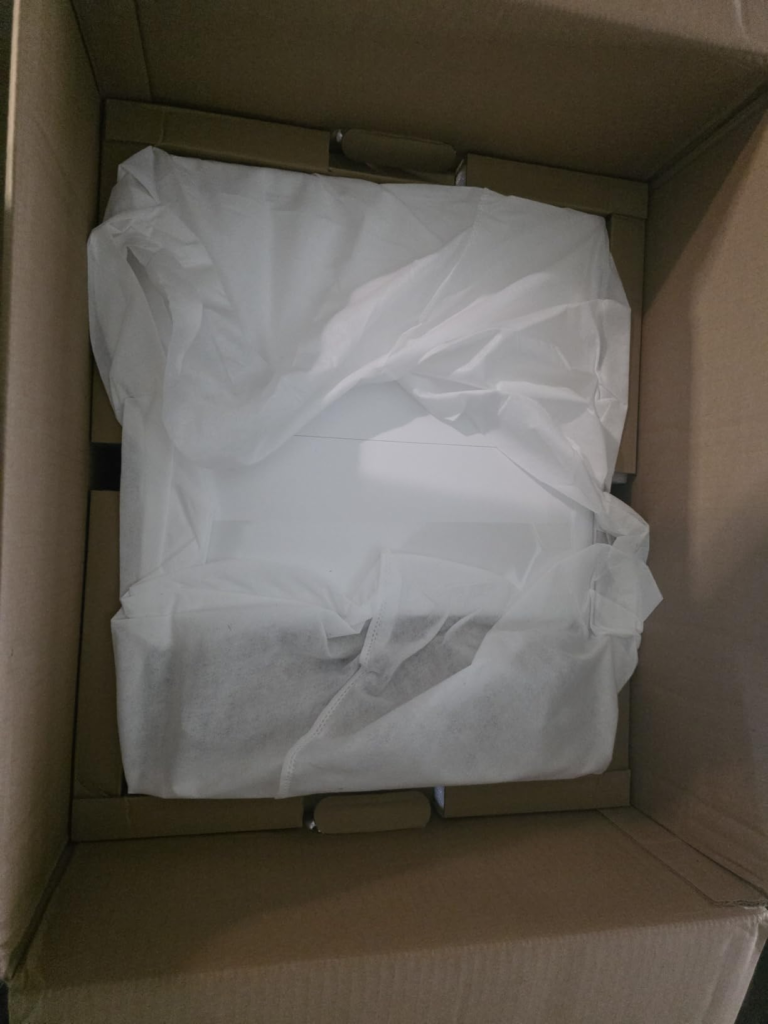
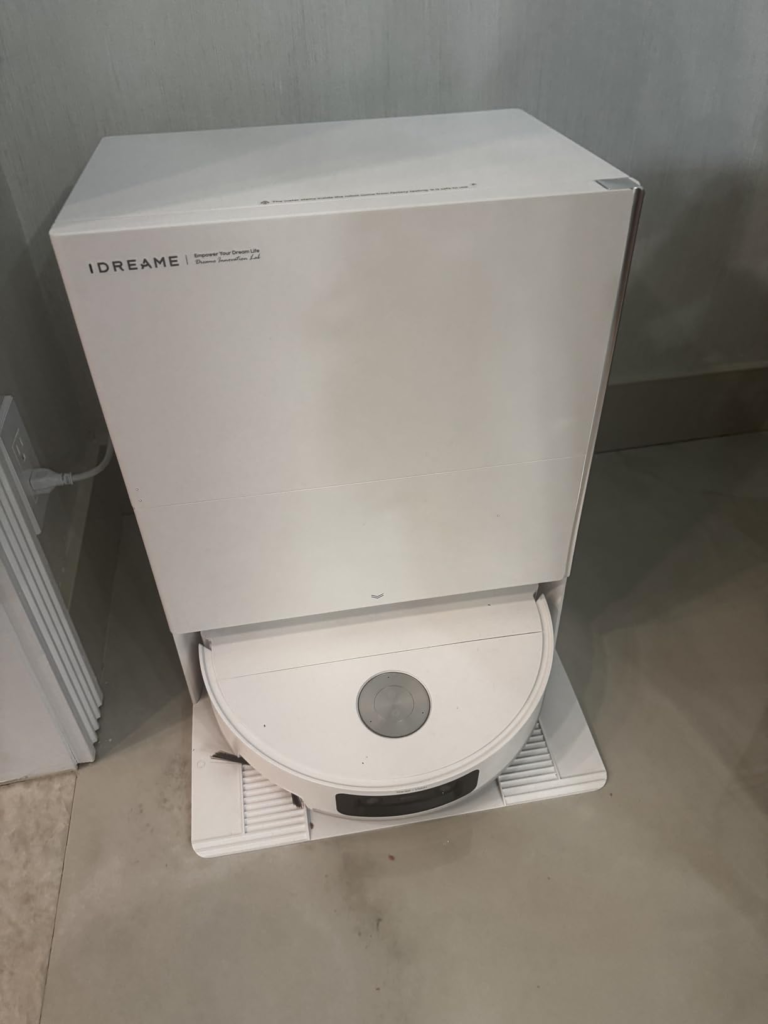
The Dreame X60 Max Ultra Complete measures just 79.5mm (3.13 inches) tall — down from the X50/X40’s approximately 89mm. That 10mm reduction is not cosmetic. It is the difference between a robot that cannot enter a space and one that can. Most antique furniture, low-platform beds, and older sofa frames sit between 80–90mm off the floor. At 3.13 inches, the X60 glides under sofas and beds with ease, reaching hidden dust in low spaces where traditional cleaners get stuck.
The carpet penetration problem is a pressure-physics issue. Suction alone doesn’t pull embedded fiber debris to the surface — it requires containment. The X60 features a Pressure-Seal Carpet Cleaning system with a retractable pressure plate above the brush cover. When the robot detects carpet, the plate lowers to form a semi-sealed chamber with the carpet surface. This helps contain dust, reducing scatter, and directs suction more effectively to pull out deeply embedded particles.
The mopping residue problem is a thermodynamics issue. Grease and oil compounds on tile and hardwood do not dissolve under mechanical friction at ambient temperature. The X60 heats mop water to approximately 40°C (104°F) during cleaning. Additionally, the dock washes mop pads with water up to 100°C (212°F) and dries them with hot air to support hygiene and reduce odor.
Three separate architectural solutions to three separate accumulation mechanisms. None of them are features you tick off a spec sheet. They are physical prerequisites for closing the coverage debt your current robot left open.
The Threshold Where the Outcome Quietly Breaks
Every robot vacuum has a sufficiency threshold — the point at which its specifications match your floor’s actual demand.
Below that threshold, you get maintenance cleaning. Above it, you get structural cleaning — the kind that doesn’t require weekend corrections.
Here is where the sufficiency threshold typically breaks for common home configurations:
| Home Condition | Sufficiency Threshold | Below the Threshold |
|---|---|---|
| Hard floors only, no pets, no cooking | 15,000–20,000 Pa | Maintenance mode — most mid-range robots qualify |
| Mixed floors + low furniture | 3.13in body + 25,000+ Pa | Current X50/X40 class begins to fall short |
| Carpet + embedded pet hair | 30,000+ Pa + pressure seal | Surface clean only — fiber residue remains |
| Kitchen tile + regular cooking | Heated mop (40°C+) | Room-temp mop = grease film redistribution |
| Multi-room with door thresholds | 45mm+ single / 88mm+ tiered crossing | Robot avoids transitions — zones become isolated |
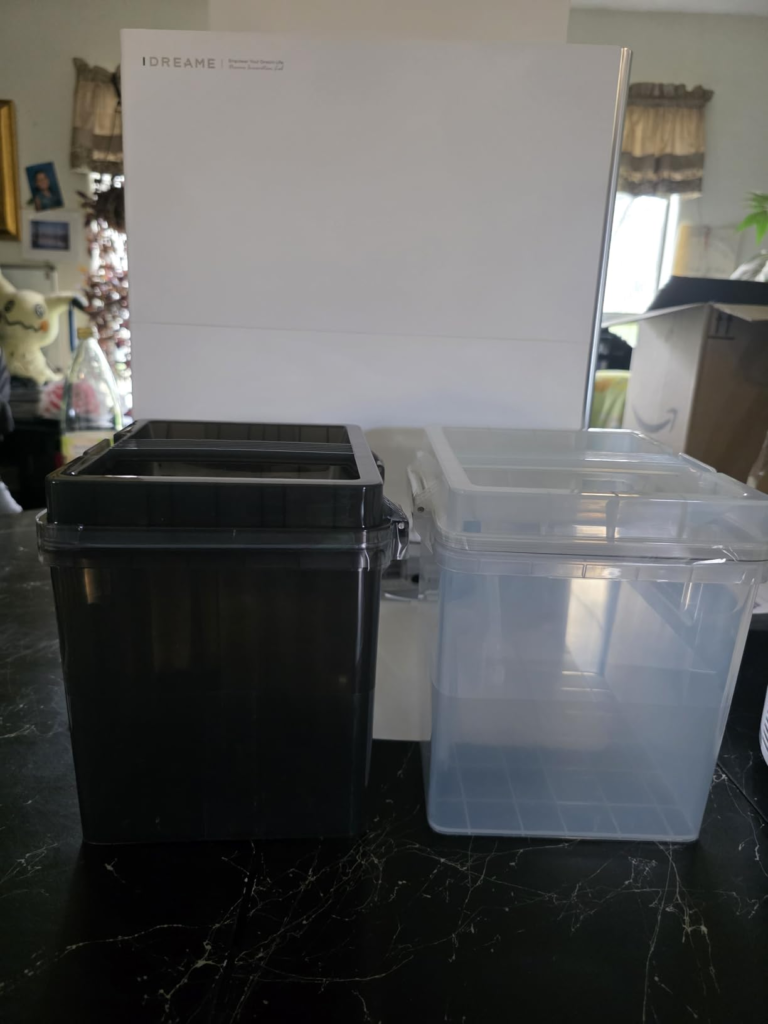
| Multiple pets + daily shedding | Dual solution tanks + Pet Care AI | Single-solution systems miss odor compounds |
In laboratory testing, the X60 Max Ultra Complete achieved an 89% carpet deep-clean score and a rare 100% score in flattened pet-hair pickup. These are not headline numbers for marketing — they are the functional consequence of crossing the sufficiency threshold on carpet.
The X60 Max Ultra Complete is rated for 45mm single-layer and 88mm dual-layer thresholds. In lab testing, it exceeded expectations by successfully clearing a 51mm single threshold — tying for first place in single-threshold tests.
If your home contains two or more conditions from the middle and lower rows of that table, your current robot is working below its sufficiency threshold for your specific environment. Not malfunctioning — operating as designed, for a home configuration it wasn’t designed for.
Why Most Buyers Misread This Too Early
The common entry point for comparing robot vacuums is the spec comparison: suction Pa, battery capacity, number of obstacle avoidance categories, dock features.
This creates a systematic misread.
Pa numbers are not directly comparable across architectures. A robot with 20,000 Pa and no pressure containment chamber delivers less actual embedded-carpet extraction than a 35,000 Pa system with a semi-sealed brush chamber. The number is real. The cleaning equivalence is not.
Obstacle avoidance category counts are similarly misleading. The X60 Max Ultra Complete is equipped with dual AI cameras and proactive illumination — it detects obstacles, adapts cleaning modes, and navigates with precision. Its OmniSight system avoids over 280 types of objects. But the category count doesn’t measure the system that matters most: proactive light detection of pale debris, pet hair on dark floors, and light-colored spills that most AI cameras classify as floor surface.
The mop cleaning spec is the most consistently misread. Dock wash temperature is not the same as active mop temperature. Many robots clean mop pads at high temperature in the dock — the X60 maintains approximately 40°C during actual mopping on the floor. That is the temperature that determines whether grease releases from tile. The dock cycle cleans the pad. The active mop temperature cleans your floor.
The third misread is feature overload. Depending on how you configure the X60 Max Ultra Complete, the robot can fail to vacuum at all while leaving wet carpet in its wake. It can be noisy, wasteful of water, and susceptible to getting lost — and a lot of that only happens when you try to use its fanciest-sounding features.
This is a real finding. The X60’s advanced features — chassis lift, automatic mopping mode switching, carpet detection logic — require deliberate configuration to work correctly for your specific floor plan. Users who activate every automated mode simultaneously without mapping their rooms and setting zone exclusions will reproduce exactly the problems that critical reviewers documented. The architecture is not the problem. The default-on feature combination for non-configured homes is.
Who Is Actually Inside This Problem
The sufficiency gap the X60 was built to close is specific. Not every home has it.
You are inside this problem if:
- Your home has furniture under 90mm clearance and you have never successfully automated cleaning beneath it
- You have mixed flooring — carpeted bedrooms and tiled kitchen/bathroom — and your robot either avoids thresholds or drags a wet pad across carpet
- You have pets that shed and you can still visibly see pressed-down hair on carpet after a full cleaning cycle
- You cook regularly and your kitchen floor requires manual mopping after the robot runs because the tile surface still feels tacky
- Your home has door transitions — step thresholds, raised door sills, transition strips — that your current robot navigates around rather than over
- You have run a schedule for months and still find yourself doing corrective spot cleaning 2–3 times per week
You are probably outside this problem if:
- Your home is primarily hard floors with no area rugs or carpets
- Your furniture sits above 90mm clearance and all rooms are accessible without thresholds
- You have no pets and your floor mess is primarily loose debris — crumbs, dust, light soil
- Your current robot already handles your home without generating coverage debt
The architecture of the X60 solves specific structural problems. Owning it when those problems don’t exist in your home produces no additional benefit over a well-performing mid-range robot at a fraction of the cost.
Where Wrong-Fit Begins
There is a category of buyer who will experience significant disappointment with the X60 regardless of its engineering quality.
Wrong-fit profile 1: The light-floor home. If your home is primarily hard floor — laminate, hardwood, vinyl — with no carpets, the pressure-seal carpet system, the 35,000 Pa suction architecture, and the heated active mopping are all real, but they target problems your floor doesn’t generate. A robot at half the price will produce visually identical results on flat hard surfaces.
Wrong-fit profile 2: The simple-room home. If your X50 Ultra already meets your needs, the improvement may feel incremental rather than transformative. Users who upgraded from X50 to X60 in homes without threshold problems or carpet coverage debt reported satisfaction — but not the structural shift in cleaning outcome that justifies the price delta. The X60 earns its premium in complex home environments. In simple ones, it is an expensive version of a problem you don’t have.
Wrong-fit profile 3: The feature-activation buyer. The X60 has a steep configuration requirement. For a device that’s meant to help keep things tidy, the Dreame app is a cluttered junk drawer of an app. The robot rewards users who invest in mapping, zone definition, and mode selection per room. It punishes users who expect high-end automation to mean “turn it on and it figures everything out.” It does not. It figures everything out inside the parameters you define. If you do not define those parameters, it applies defaults that were not optimized for your floor plan.
Wrong-fit profile 4: The $1,700 tolerance test. At full MSRP, the X60 Max Ultra Complete is only logical for the home configuration it was designed to serve. Early promotions dropped the price to around $1,359 during pre-order phases, so timing matters. At the right price point, the value calculation shifts significantly. At full retail, the decision must be anchored in which structural problems from the table above exist in your home — not in the spec comparison.
The One Situation Where This Product Becomes Logical
The Dreame X60 Max Ultra Complete becomes a structurally justified purchase when three or more of the following are simultaneously true in your home:
| Condition | X60 Response |
|---|---|
| Furniture under 90mm clearance | 79.5mm body with retractable LiDAR enters zones no competitor reaches |
| Carpet + embedded debris / pet hair | 35,000 Pa + pressure-seal chamber + DuoBrush 2.0 — 89% deep-clean test score |
| Door thresholds 30mm+ | Confirmed 51mm single / 88mm tiered crossing in independent lab testing |
| Kitchen tile + regular cooking | 40°C active mop temperature dissolves grease rather than redistributing it |
| Multiple pets / odor management | Dual-tank solution system — standard and pet-odor formula automatically selected by zone |
| Large floor plan (150m²+) | 6,400 mAh battery, whole-home mapping, missed-spot memory — returns to unfinished zones |
| Daily debris accumulation | 10-in-1 dock: 100-day dust capacity, self-wash at 100°C, hot-air dry, auto-refill |
When three or more of these conditions are present, the X60 is not a luxury purchase. It is the only robot vacuum architecture that closes the coverage debt those conditions generate.
The X60 Max Ultra Complete operates at an ultra-quiet 55 dB(A) in standard mode — comparable to a quiet conversation — while delivering 35,000 Pa suction. It supports direct voice commands, works with third-party assistants, and supports the Matter protocol for smart home integration.
What It Solves, What It Reduces, and What It Still Leaves to You
Precision in expectation setting is not a disclaimer. It is the protection against the most expensive outcome of all: a $1,700 robot that you stop using in three months because it didn’t match a fantasy.
What the X60 Max Ultra Complete structurally solves:
| Problem | Resolution |
|---|---|
| Low-furniture dust accumulation | Enters spaces below 80mm — eliminates the zone entirely from your correction routine |
| Embedded carpet fiber / pet hair | Pressure-seal suction + 35,000 Pa — closes the gap between visual clean and structural clean |
| Greasy kitchen floor maintenance | Heated active mop at 40°C — grease and oil compounds lift on the cleaning pass, not afterward |
| Threshold isolation between rooms | 51mm–88mm threshold crossing — all rooms on the same cleaning cycle, no zone exclusion required |
| Mop hygiene between cycles | 100°C dock wash + hot-air dry — bacterial and odor accumulation on the pad eliminated |
| Dustbin management | 100-day auto-empty — physical bin intervention drops to once per quarter |
What it reduces but does not eliminate:
- Corner vertex debris: The extending side brush and extending mop pad materially improve edge coverage, but the physics of a circular robot near a 90° corner means occasional debris near the wall-floor junction. Spot-cleaning corners 1–2 times per month remains realistic in high-traffic rooms.
- App complexity: The Dreame app has improved across firmware cycles, but it is not simple. Initial room mapping and zone configuration require 30–60 minutes of deliberate setup. Users who skip this step will not get the performance the hardware is capable of delivering.
- Thick high-pile carpet: For thick carpets specifically, setting the robot to leave mop pads in the dock for vacuum-only jobs is the better approach. The system will auto-detect and adapt, but manual configuration per room prevents edge cases.
What it still leaves entirely to you:
- Dock maintenance: The dock manages itself at a high level, but filters, water tank refills, and quarterly cleaning of the dock’s internal components remain user responsibilities.
- Proprietary cleaning solution: Dreame approves only its own floor cleaning solution — approximately $18.99 per 1L bottle. Ongoing consumable cost should be factored into the total cost of ownership.
- Initial floor mapping session: The robot cannot build an accurate map without a deliberate first-run guided session. This is 20–30 minutes invested once, not an ongoing requirement.
Final Compression
The decision collapses to one question: does your home contain the structural conditions the X60 was engineered to resolve?
Not “do I want the best robot vacuum.” Not “would I enjoy the features.” Not “is 35,000 Pa better than 20,000 Pa.”
The specific question: are there zones in your home that your current robot systematically skips — under low furniture, across thresholds, in carpet fiber, on greasy tile — and are those zones generating ongoing correction work that you’ve normalized but haven’t eliminated?
If that correction work exists and it’s tied to two or more of the structural conditions in the table above, the X60 Max Ultra Complete is not a premium indulgence. It is the architectural answer to a problem your current robot was never designed to solve.
If that correction work does not exist — if your floors are primarily open hard surfaces, your furniture is accessible, your thresholds are low, and your robot already produces results you do not supplement — the X60’s engineering is real, but it is solving a problem you do not have.
Identify your structural conditions first. Then the decision is no longer vague.
Frequently Asked Questions
Q: Is the Dreame X60 Max Ultra Complete actually worth $1,699?
A: At full MSRP, it justifies its price specifically for homes with low furniture (under 90mm), carpet plus pet hair, door thresholds over 30mm, or greasy kitchen floors requiring heated mopping. For open hard-floor homes without these conditions, mid-range robots produce comparable results at a fraction of the cost. The value is structural, not universal.
Q: What is the difference between the X60 Max Ultra Complete and the X60 Ultra?
A: The X60 Ultra is a variant that shares the same 3.13-inch slim body and VersaLift LiDAR but is missing several features of the Max Ultra Complete, including the pressure-seal carpet system, the dual cleaning solution tanks, and certain dock automation capabilities. The X60 Max Ultra Complete is the full-featured version that was purchased and tested for independent lab reviews.
Q: Will it drag the mop pad across my carpet?
A: If configured correctly — either with mop-lift zones enabled in the app or with mop pads set to dock-only for carpet rooms — no. The system auto-lifts mop pads 21mm over detected carpet. For thick or high-pile carpet, activating the vacuum-only mode that leaves mop pads in the dock is the correct configuration. The failure case documented in critical reviews happens when users activate all automated features simultaneously without room-level configuration.
Q: How does the X60 compare to the Roborock Saros 20?
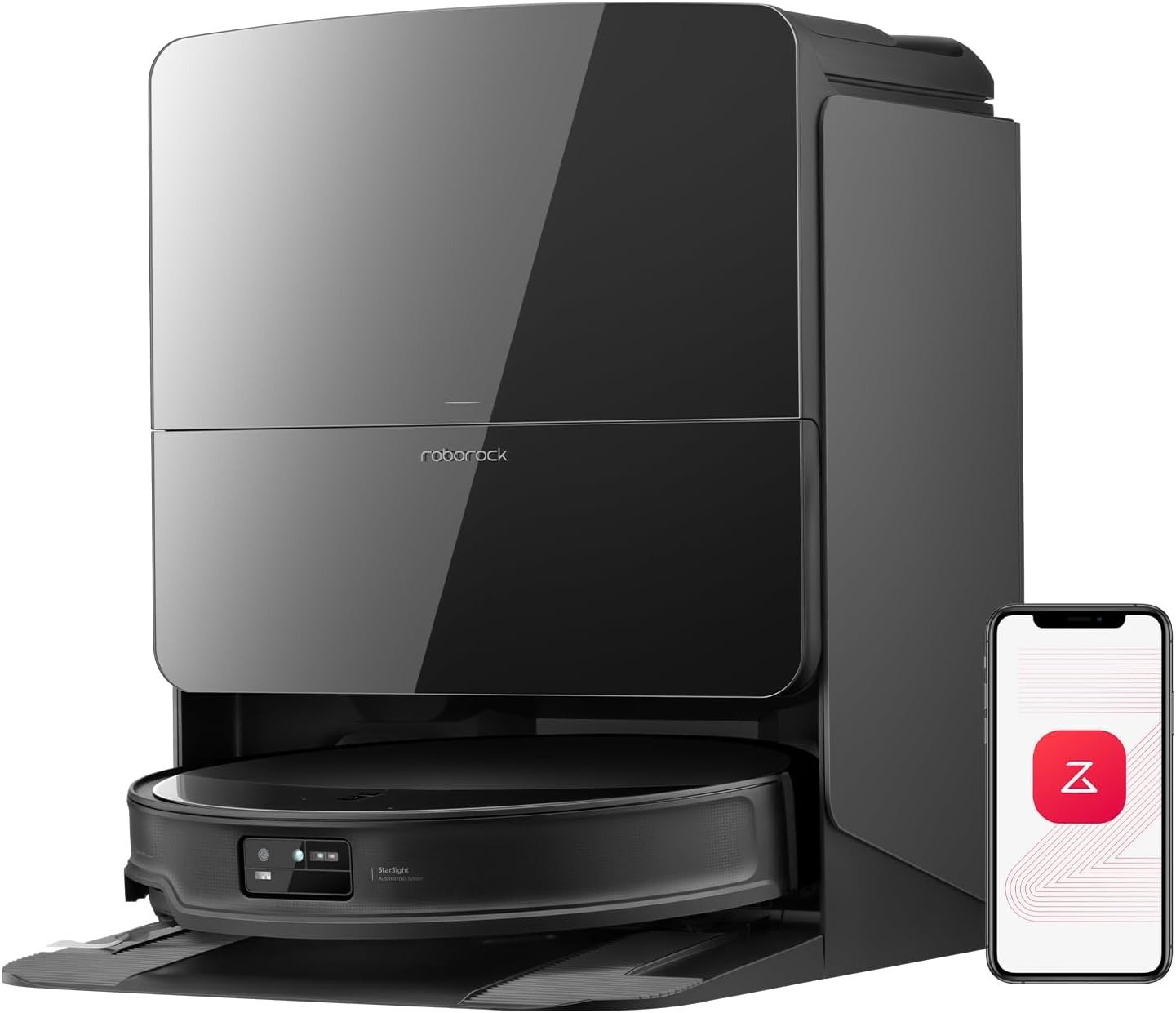
A: Both operate in the same premium tier. The Roborock Saros 20 is rated at 36,000 Pa suction and features a 3.14-inch ultra-slim profile. The primary differentiators for the X60 are the pressure-seal carpet system, the heated active mopping at 40°C (vs. dock-only hot wash), and the dual cleaning solution architecture for pet zones. For carpet-heavy or multi-pet homes, the X60’s specific engineering targets those problems more directly.
Q: Does it work with Alexa and Google Home?
A: Yes. The X60 Max Ultra Complete supports direct voice commands, works with third-party assistants including Alexa, Siri, and
From our analytics lab: More top-rated reviews
“A quick note: Don’t believe the star ratings, but trust personal experience. This article is a compilation of collected experiences”