Revolution R180S Review: What a $300 Touchscreen Toaster Actually Delivers
REVOLUTION R180S
Why does a toaster need a screen? That’s the first question everyone asks about the Revolution R180S — usually about four seconds before they see the price tag and ask a much louder one.
You know the other feeling too: bread goes in, lever goes down, and what comes out is a coin-flip. Pale on one side, scorched on the other, or a bagel that’s warm on the outside and cold in the middle. That’s not really about a broken toaster. It’s about nearly every budget toaster running on the same one-speed heating coil design, guessing instead of adjusting. Revolution Cooking built the R180S to remove that guesswork with a touchscreen, seven browning levels, and a patented heating system called InstaGLO. Whether that’s worth $250 to $350 for two toast slots depends on facts most listings never spell out. Here’s what actually holds up, and where it doesn’t.
First Impressions: The Touchscreen That Changes How You Toast
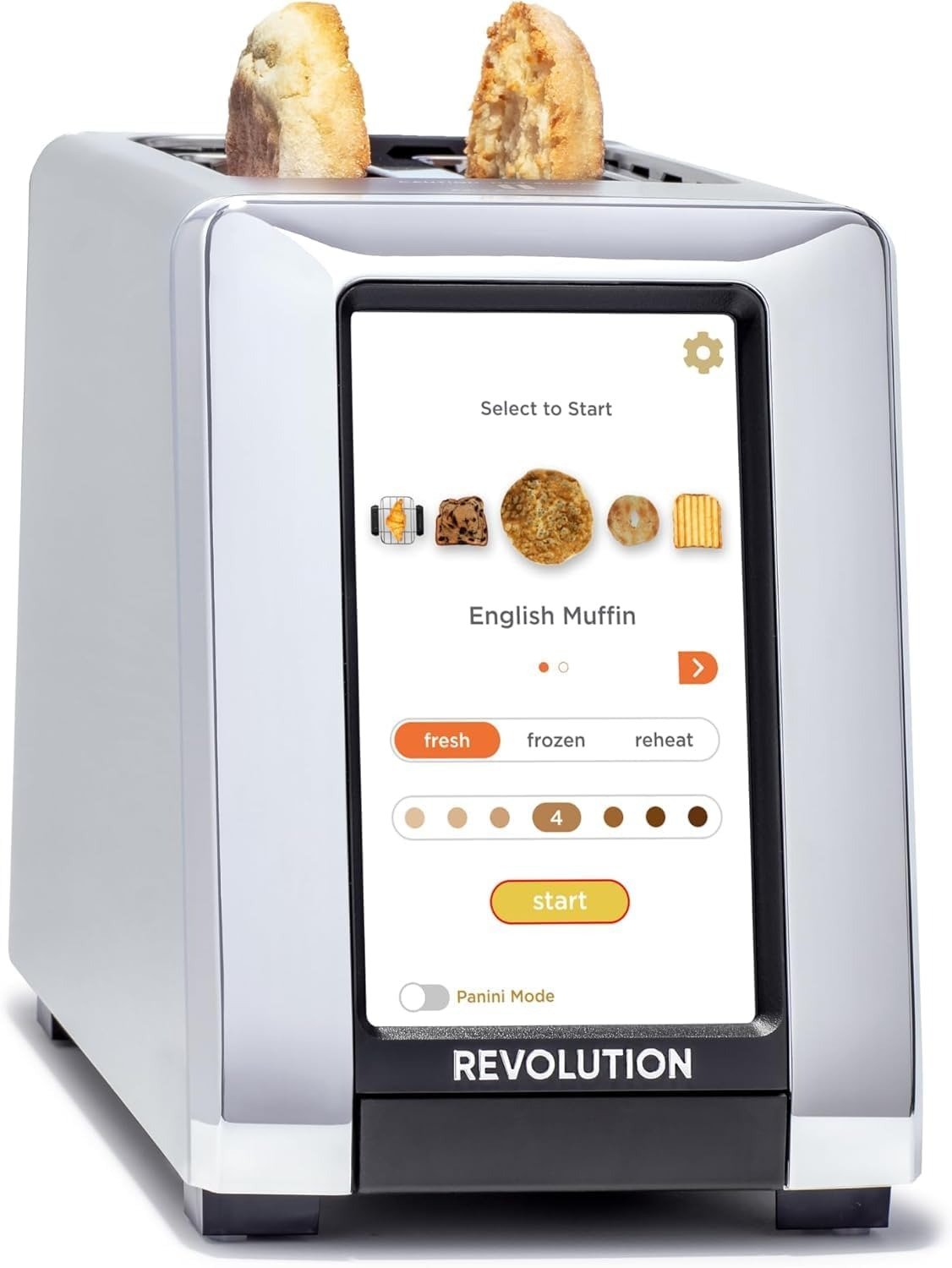
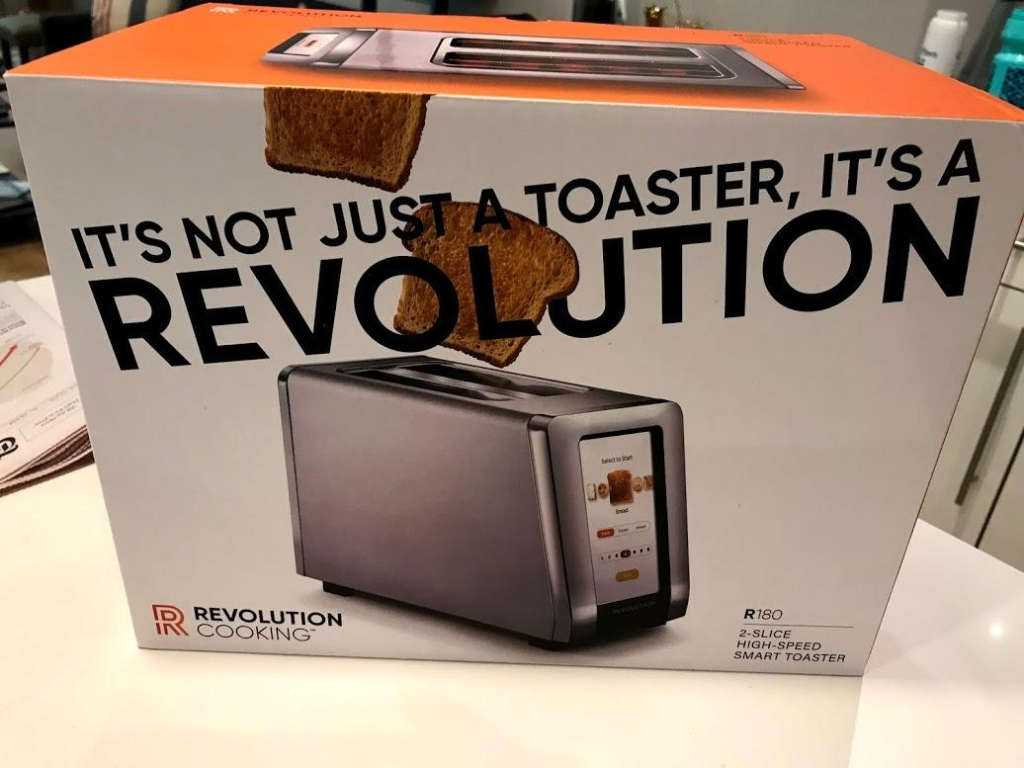
Open the box and the R180S doesn’t look like a toaster so much as a small kitchen tablet with two slots cut into the top. A bright touchscreen sits embedded in the front of the appliance, and there’s no dial or lever in sight.
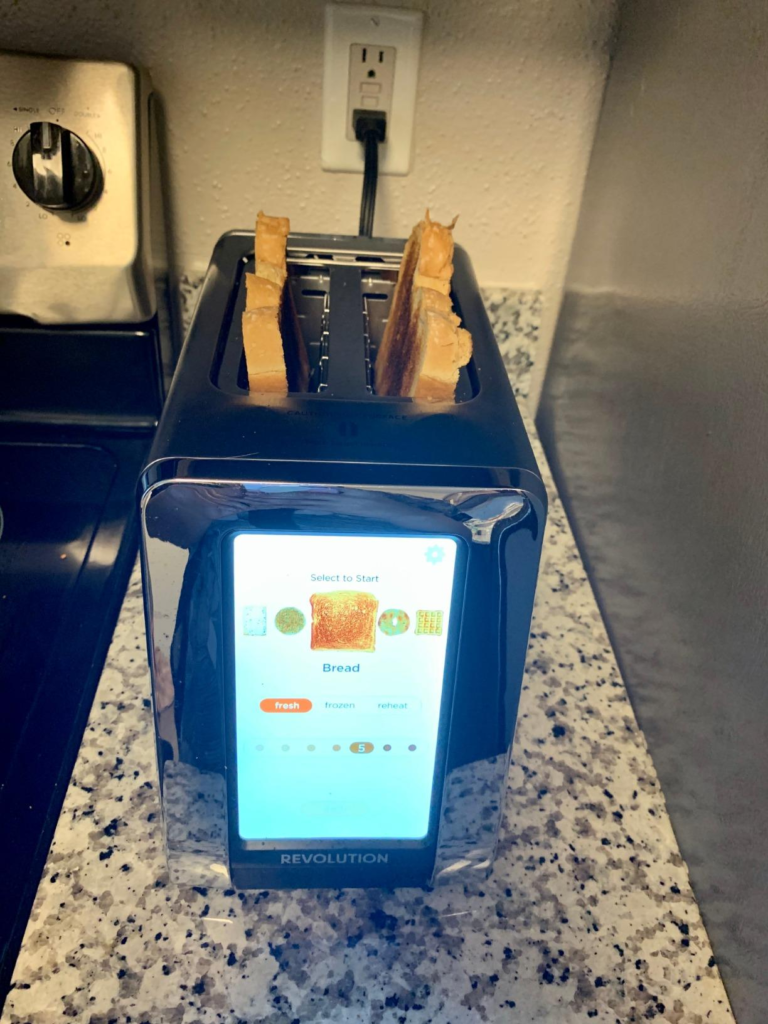
You tap a food type — bread, bagel, waffle, pastry, or English muffin — pick from seven shade levels, and the screen shows a live preview image of how dark that setting will actually toast your bread, tell it the bread is fresh, frozen, or just needs reheating, and hit start. The bays lower and lift the bread on their own once it’s done, with a countdown timer so you’re not standing there guessing.
Here’s why that matters more than it sounds: “medium” on an old toaster dial means something different every morning, depending on bread thickness or how long it sat out. The screen removes that guesswork by showing you the result before it happens.
| Spec | Detail |
|---|---|
| Slots | 2, approx. 1″ wide x 5.25″ long |
| Display | Touchscreen, no manual dial |
| Browning levels | 7 shades |
| Modes | Fresh / Frozen / Reheat |
| Presets | Bread, bagel, waffle, pastry, English muffin |
| Heating system | Patented InstaGLO (first-generation) |
| Connectivity | None — WiFi is exclusive to the Connect/Connect Plus models |
| Power | 120V only |
| Warranty | 1 year |
| Panini/sandwich mode | Preset only — requires the separate Toastie Press accessory |
| Typical price | ~$250–$350, varies with sales |
InstaGLO Technology Explained: What’s Really Heating Your Bread
It’s easy to dismiss “InstaGLO” as a made-up marketing word — because it is one. But the mechanism behind it is real, and it’s the actual reason this toaster earns its price more than the touchscreen does.
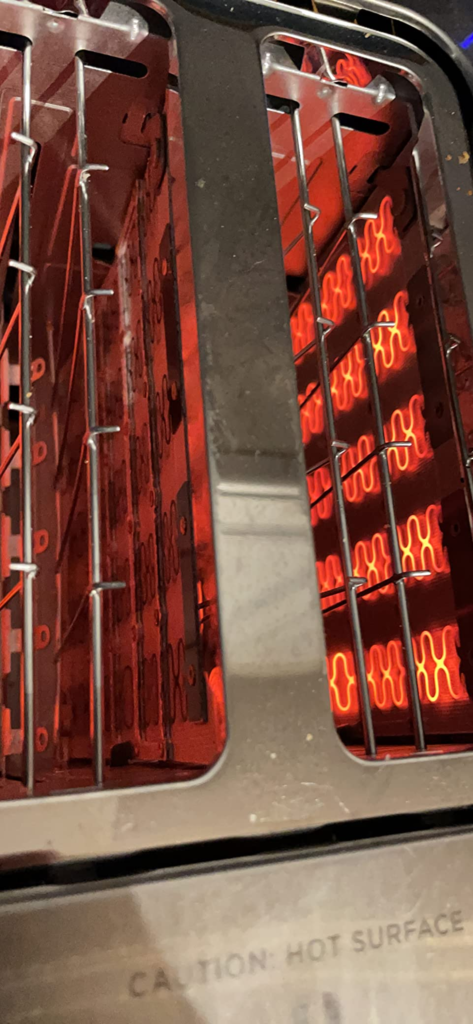
Standard toasters rely on thin wire coils that heat unevenly, while InstaGLO is a patented system built to heat faster, hotter, and more consistently, locking in moisture instead of drying the bread out. Revolution compares the effect to searing a steak — high heat crisps the outside fast while the inside stays soft, instead of slowly baking all the moisture out.
It’s not just “heat harder,” either. The elements are programmed to cycle on and off differently depending on what’s toasting — on the bagel setting, for instance, the outer elements pull back so the cut side gets crisped without overcooking the outside. That’s the “algorithm” the marketing keeps mentioning, and independent testing found the heating elements did produce even toasting across the different bread types tried, with the reheat option in particular saving a slice from going cold without redoing the whole cycle.
Why should you care about the mechanism and not just the result? Because it explains why this toaster can do something a $30 model genuinely can’t: hit the same setting-4 result every time, whether the bread is fresh, cold, or half-frozen from the back of your freezer.
Slot Size and Bagel Fit: Where the Toasting Quietly Breaks Down
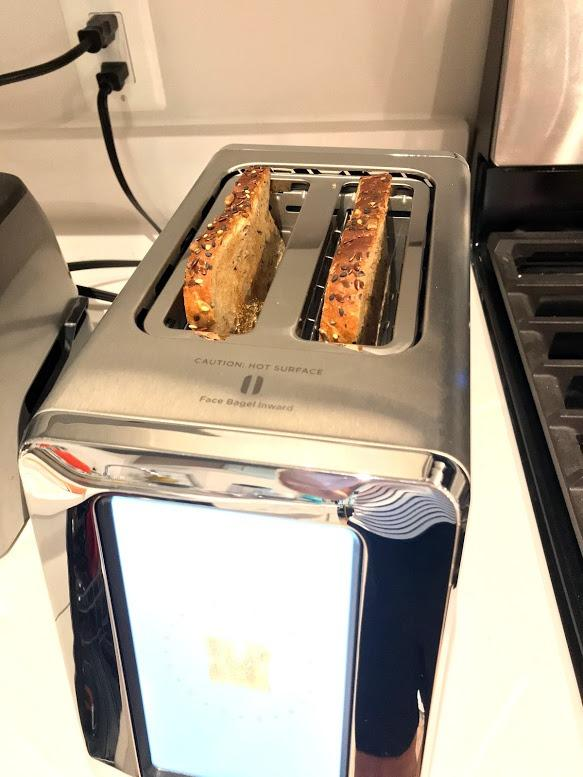
No product is flawless, and this one has a real physical limit: the slots measure roughly 1 inch wide by 5.25 inches long. That’s enough for standard bread, English muffins, and most bagels — but if you’re loyal to an oversized bakery bagel, you’ll notice it the first morning it sits a little proud of the slot.
One reviewer testing the R180 daily found the bays weren’t the widest and had to gently push the larger half of an oversized bagel down to make sure it toasted evenly on both sides — not a dealbreaker, but not “drop it in and forget it” either.
There’s a smaller second wrinkle: a separate hands-on review after several days of daily use found most slices toasted evenly, but the very bottom of the slice occasionally came out slightly less browned than the rest. Minor on a $30 toaster. Worth knowing on one that costs ten times as much.
Neither issue undoes what InstaGLO does well. They’re just the honest edge cases — the exact spot where “perfect toast every time” quietly becomes “very good toast, almost every time.”
Panini Mode: The Hidden Cost Nobody Mentions Before You Buy
This is the detail that trips up the most buyers, and it’s sitting right in the product name. Read “Panini Mode” as “this toaster makes paninis” and you’ll be disappointed the day it arrives.
Panini Mode is a pre-programmed setting on the touchscreen — making an actual panini, grilled cheese, or quesadilla requires pairing the toaster with Revolution’s Toastie Press accessory, which is sold separately. One reviewer who bought the press on top of the toaster paid close to $80 for it, and rated the sandwich results as decent, not exceptional — the cheese didn’t melt through completely on the first try.
Why mention this before you buy instead of after? Because it’s exactly the gap between what the box implies and what’s actually in the box that turns a good purchase into a frustrated return. If sandwiches are the feature selling you on this toaster, budget for the press separately — the toaster alone won’t do it.
| Included with the R180S | Sold separately |
|---|---|
| Toaster + touchscreen | Toastie Press (required for actual panini/grilled cheese results) |
| 7 browning levels, fresh/frozen/reheat | Warming Rack (for pastries, pizza, leftovers) |
| Bread, bagel, waffle, pastry, muffin presets | — |
| 1-year warranty | — |
No WiFi, No App: Smart Toaster or Just a Toaster With a Screen?
Reviewers testing the R180 independently raised the same complaint: for a toaster this expensive, there’s no WiFi or Bluetooth, so nothing controls it remotely and the clock has to be set by hand since there’s nothing to sync it automatically. One called the lack of connectivity their single biggest complaint about the entire toaster.
That’s a fair criticism if part of what you’re paying for is a connected device. But it’s worth separating two different things “smart” is doing here. The touchscreen and InstaGLO algorithm are the smart part that actually changes your toast. WiFi and an app are a different kind of smart — convenience, not toasting.
Revolution sells a WiFi-connected sibling, the R180 Connect, for buyers who want the auto-clock and weather widget. The R180S skips that entirely. If you want your toaster doubling as a countertop smart display, this isn’t that toaster. If you’d rather not hand a kitchen appliance your WiFi password or worry about an app going away, the missing connectivity isn’t a flaw. It’s one less thing that can break.
Revolution R180S Price: Is a $250–$350 Toaster Worth It?
Let’s name the number directly. This toaster line has historically sold anywhere from about $249 to $299 depending on sales, with list pricing reported as high as $349 before discounts. That’s five to ten times a name-brand basic toaster. Prices shift with promotions, so check the live listing — but plan on premium small-appliance territory, not impulse-buy territory.
Why would anyone pay that for two slices of bread? Because you’re not really paying for toast — you’re paying for a result you set once and stop thinking about. Testing found it toasts faster than a standard toaster, and because browning is visual instead of a numbered dial, you’re not sacrificing a slice while you dial it in.
If you toast occasionally and uneven results have never bothered you, this price will feel hard to justify — and it is. If you make toast or bagels daily and you’re done with the coin-flip, the math changes.
| Pros | Cons |
|---|---|
| Fast, consistent toasting via InstaGLO | Expensive — 5–10x a basic toaster |
| Visual browning preview removes guesswork | No WiFi, app, or auto clock sync |
| Strong bagel results in hands-on testing | Panini/sandwich results need a separate accessory |
| Fresh/frozen/reheat modes match real bread states | ~1″ slots can be tight for jumbo bagels |
| Simple touchscreen, no dial guesswork | 120V only — won’t work on 220–240V power |
| 1-year warranty included | Occasional uneven bottom-of-slice browning reported |
Who Should Actually Buy the Revolution R180S
This toaster makes sense for a specific household, not everyone with a bread habit.
You’re the right buyer if you make toast or bagels daily and you’re tired of babysitting a dial. You’re the right buyer if frozen bread on the wrong setting has burned you before. You’re the right buyer if you live alone or as a couple, since two slots is plenty, and if $300 on something you’ll touch every morning doesn’t feel reckless.
You’re also the right buyer if simplicity matters to you as much as speed — no app, no account, no update nagging you mid-breakfast. That absence of smart-home overhead is a real feature for the right person, even though it reads as a missing one to someone else.
Who Should Skip It: The 120V Rule and Other Dealbreakers
A few situations rule this out immediately, regardless of budget.
The R180S runs on a 120-volt outlet only, and Revolution confirms there’s currently no 220–240V compatible version. If you’re outside North America on a 220–240V grid, this toaster won’t work for you, and no adapter fixes that.
Skip it if you’re feeding a family of four and need to toast several slices at once — this is a 2-slot toaster built for precision, not volume. Skip it if you want built-in sandwich-making with nothing extra to buy. And skip it if your budget is genuinely tight; a $30–$50 toaster will still make acceptable toast, and the gap between “acceptable” and “excellent” is exactly what the premium buys.
| Buy it if… | Skip it if… |
|---|---|
| You toast daily and want consistent results | You’re on a 220–240V electrical grid |
| You want visual, no-guesswork browning | You need to toast 4+ slices at once |
| You live alone or as a couple | You expect built-in panini-making, no extra purchase |
| You’d rather skip app/WiFi dependency | Your appliance budget is tight |
Revolution R180S FAQ: Quick Answers Before You Buy
| Question | Answer |
|---|---|
| Does the Revolution R180S have WiFi or a companion app? | No. WiFi, an auto-set clock, and a weather display are exclusive to the higher-tier R180 Connect and Connect Plus models. The R180S is fully offline; you set the clock by hand. |
| Can I use the R180S in the UK, EU, or Australia? | No. Revolution’s own support page confirms the toaster only works on a 120-volt outlet, with no 220–240V compatible version currently available, and a power converter doesn’t fix that. |
| Does Panini Mode mean it makes sandwiches by itself? | No. Panini Mode is a toasting preset — an actual grilled sandwich or quesadilla requires the separately sold Toastie Press accessory. |
| What size bagels actually fit? | Slots run about 1 inch wide and 5.25 inches long. Standard bagels fit fine; oversized bakery bagels may need a light push to toast evenly on both sides. |
| How long is the warranty? | This listing includes a 1-year manufacturer’s warranty. |
| What if mine arrives faulty? | Revolution explicitly advises against replacing parts yourself, since that can void the warranty — contact their support directly, though Amazon’s own return window is usually the faster fix for a dead-on-arrival unit. |
Final Verdict: Is the Revolution R180S Worth Buying?
Strip away the touchscreen and the marketing language, and this comes down to one honest trade: a premium price for a heating system that actually solves the guesswork basic toasters never fixed, in exchange for real limits — no WiFi, an accessory you’ll need to buy separately for sandwiches, and a plug that only works in North America.
Neither side of that trade is exaggerated here. The toasting holds up under repeated daily use. The gaps are specific and easy to plan around once you know they exist — which is the point of reading this before your card gets charged, not after.
If steady, no-guesswork toast is the actual problem you’re solving, this is where the decision stops being complicated.
Transparency Note:
This analysis is built on aggregated real-world experience.
It extracts what repeatedly holds, what breaks, and what users uncover only after living with the system—then shapes it into a clear model you can use immediately.
Think of it as structured experience, refined and presented so you don’t have to learn it the hard way.
“A quick note: Don’t believe the star ratings, but trust personal experience. This article is a compilation of collected experiences.”