FOODSEALER ELITE ALL-IN-ONE REVIEW: THE SOUP TEST MOST BUYERS FAIL FIRST
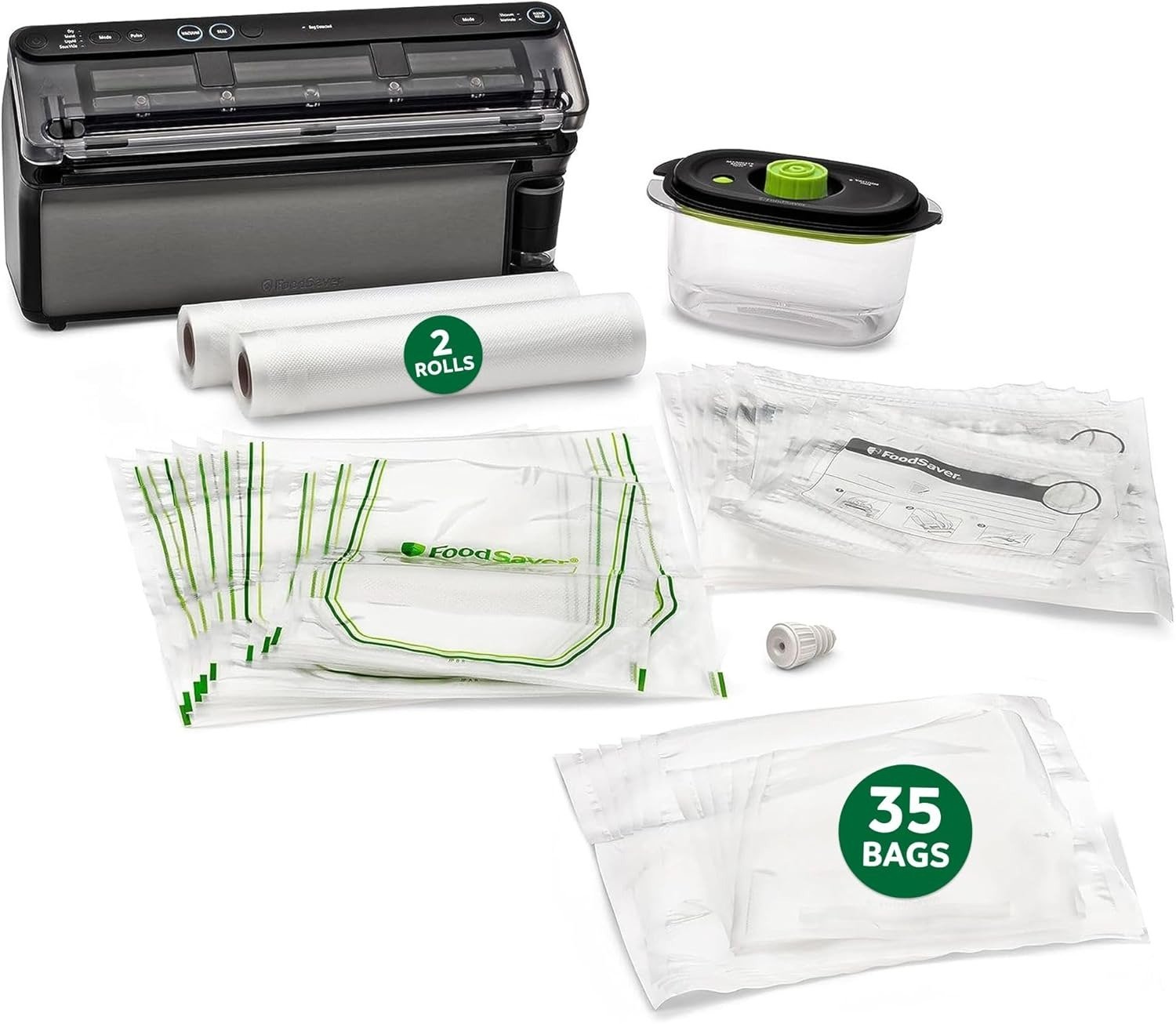
FOODSEALER ELITE ALL-IN-ONE
FoodSaver Elite All-in-One Review: The Seal Looks Fine. The Leak Isn’t.
Every vacuum sealer story starts the same way. You pull a bag out of the freezer, it looks tight, the plastic is hugging the food the way it’s supposed to. Then you notice the ice — not on the food, around it. A thin skin of frozen broth along the bottom seam, outside the bag. Somewhere between the pot and the freezer, the seal let something through.
This isn’t a defect story. It’s the oldest complaint in vacuum sealing: the machines are built to pull air, and liquid doesn’t know the difference between “air” and “itself.” Any moisture that crosses the bag lip during the pull has a chance of riding into the seal strip before the heat bar closes, and a wet seal strip doesn’t fuse plastic the way a dry one does. It’s physics, not bad luck.
That’s the exact problem FoodSaver built the Elite All-in-One Liquid+ to solve — a dedicated liquid-sealing path on a mainstream countertop machine, something the brand had never fully cracked before. So the test isn’t “does it seal a bag of rice.” Any sealer does that. The test is soup. Sauce. Marinade with real volume behind it. That’s where I pointed it.
FoodSaver Elite All-in-One Problems: What You’re Actually Losing Isn’t the Seal
Here’s the part people don’t name correctly. The real cost of a bad seal was never really the one ruined bag of chili. It’s what happens after — you stop trusting the freezer. You start double-bagging things “just in case.” You hesitate to freeze the extra pot of soup at all, because if it leaks, you’ve got a cleanup and a lost meal both. So it goes down the drain instead. That hesitation is the actual expense, and it’s a quiet one, because nobody writes “I stopped freezing soup” on a receipt.
If you’ve owned any vacuum sealer before this, that hesitation is probably why you’re reading a review instead of just buying the cheapest model on the shelf again.
How Vacuum Sealers Fail With Liquid: The Hidden Mechanism Behind the Miss
Why does liquid break a seal in the first place? On a standard machine, there’s one channel doing two jobs — pulling air out and, if you’re not careful, pulling liquid along with it. Once moisture reaches the sealing strip, three things can happen: the heat bar closes on a wet surface and the seal never fully bonds, the liquid travels further into the machine and trips a “tray full” safety shutoff, or — worse, on older units without a good drip tray — it reaches the pump itself.
That’s why longtime FoodSaver owners will tell you the real trick with older machines was keeping the seal area “clean and dry,” almost like a mantra. It worked, but it put the burden entirely on the user to catch the mistake before it happened.
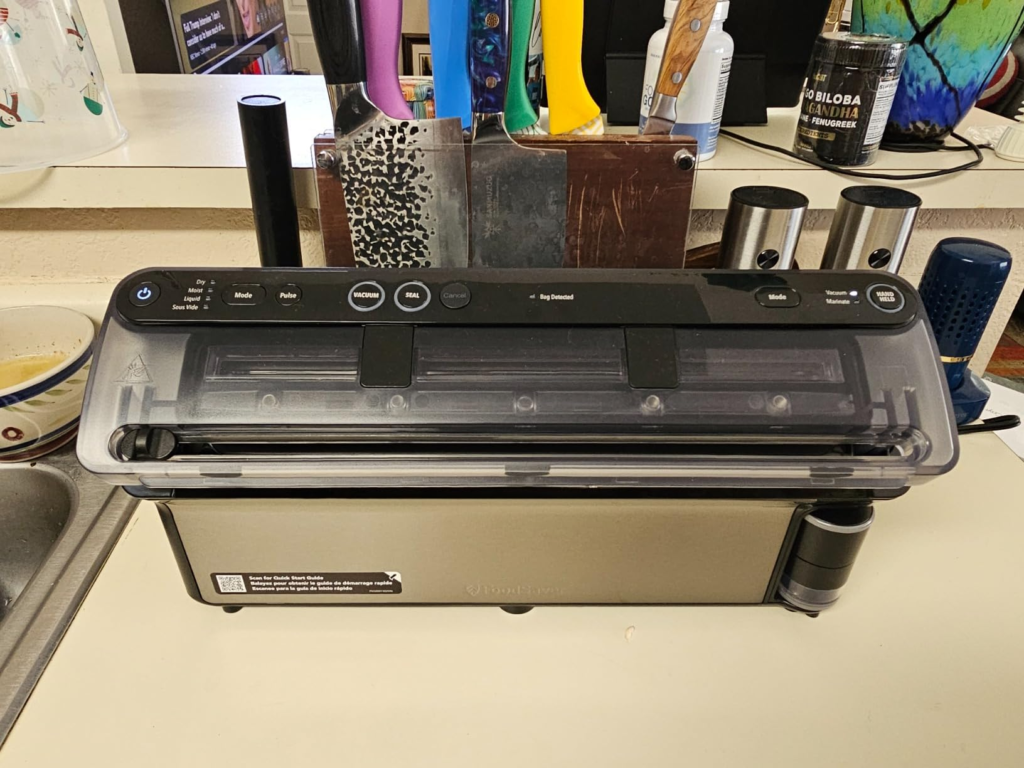
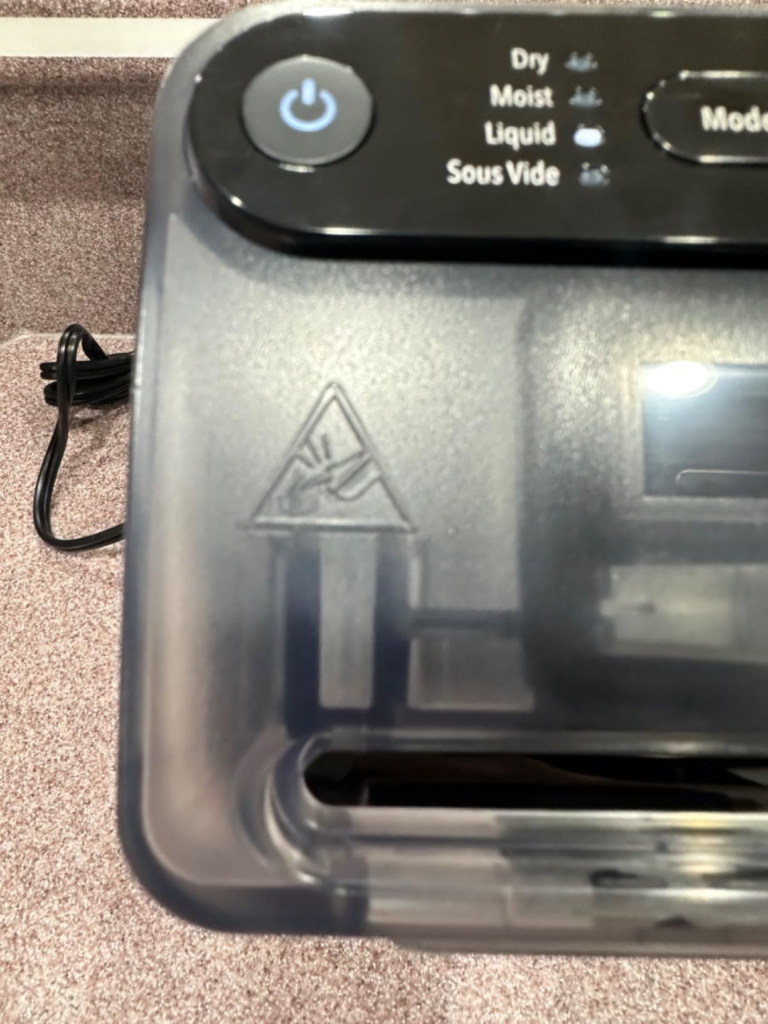
The Elite All-in-One approaches this differently. It has liquid-detection sensors built into the removable drip tray, and instead of one setting for everything, it gives you six: Dry, Moist, Liquid, Sous Vide, Marinate, and Pulse. Choosing Moist or Liquid doesn’t just change a label — it changes the pull itself, pacing the vacuum so liquid doesn’t rush the seal line the way it would on a Dry-mode pull built for a bag of almonds.
FoodSaver Liquid+ Threshold: Where the Seal Quietly Breaks
Here’s the honest part most listings skip. The Liquid+ system isn’t magic — it’s a much wider net, not a bottomless one. On sauces, marinades, and single-portion soups, it does exactly what it promises: clean pull, dry strip, solid seal, no babysitting required. I’ve run it on everything from leftover bolognese to a marinade for a Tuesday-night flank steak without a second thought.
The threshold shows up with volume. FoodSaver’s own guidance says it plainly: on large amounts of thin liquid, it’s normal for some air bubbles to stay trapped, and you’re advised to let the bag hang lower than the machine and hit the Seal button by hand once the liquid climbs near the top — rather than trusting the automatic cycle to know when to stop. That’s not a workaround for a broken feature. That’s the actual edge of what any liquid-sealing vacuum can do without turning your kitchen counter into a spill zone.
| What You’re Sealing | Best Setting | What Actually Happens |
|---|---|---|
| Dry goods (rice, coffee, snacks) | Dry | Full-strength pull, fastest cycle, crisp seal |
| Marinades, sauces, small soup portions | Moist / Liquid | Paced pull, sensor-guided, clean seal hands-free |
| Raw meat before sous vide | Sous Vide | Gentle pull calibrated to avoid crushing the food |
| Delicate items (berries, baked goods) | Pulse | Manual stop-start so nothing gets crushed |
| Large batches of thin soup or stock | Liquid + manual technique | Some trapped air is normal; hang the bag low, hit Seal by hand near the top |
FoodSaver Elite All-in-One vs Older FoodSaver Models: Why Most Buyers Misread This Too Early
The comparison trap is easy to fall into. You put this next to a basic $70 sealer, or your old FoodSaver, and the price gap looks hard to justify — until you remember the older unit can’t touch liquid at all without the exact failure this review opened with.
The other misread is suction speed. A handful of reviewers describe the pull as weaker or slower than machines they’ve used before, and on paper that reads like an underpowered pump. It almost never is. Moist and Liquid modes are deliberately throttled — a slower, gentler pull is what keeps liquid from racing ahead of the seal bar. Switch back to Dry on a bag of vegetables and the same machine pulls at full strength. Judging the motor by the liquid setting is like judging a car’s top speed while it’s parked in a school zone.
Who Needs the FoodSaver Elite All-in-One: Who’s Actually Inside This Problem
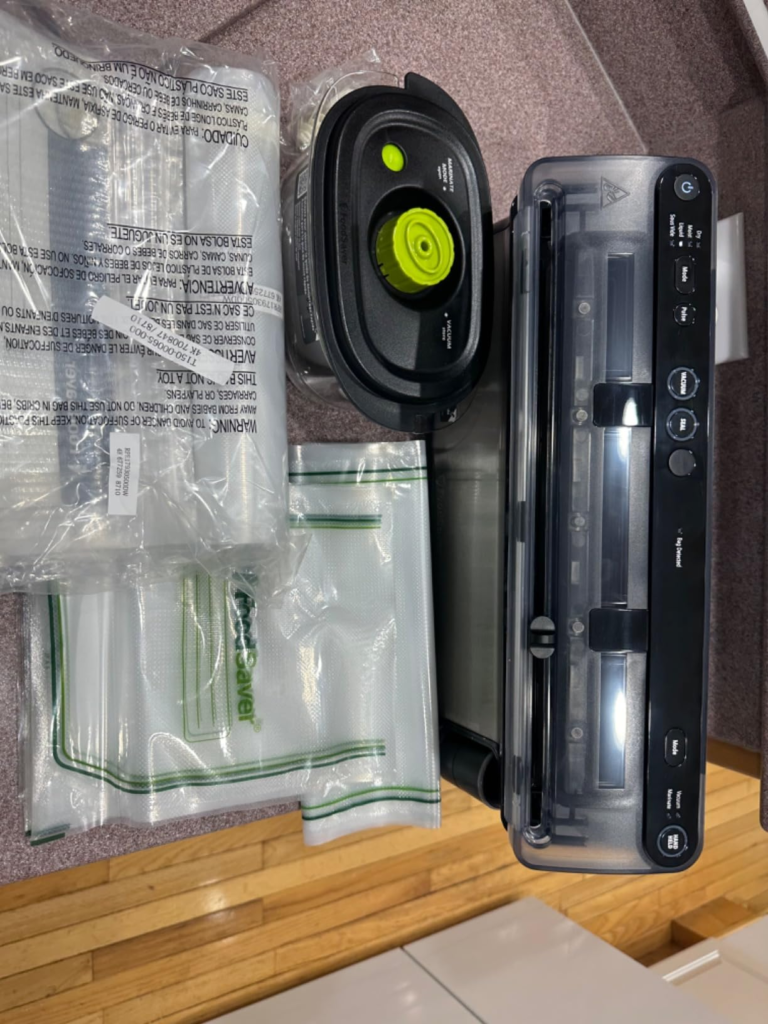
This machine earns its price with people who cook in volume and store in liquid: the Costco-run household portioning meat and produce for the month, the batch cook whose freezer is half soup and half stew, anyone who marinates on a real schedule instead of a rushed thirty minutes, home sous-vide cooks, and hunters or anglers processing game or fish that always comes with some moisture attached. If liquid is a regular part of your kitchen — not an occasional accident — this is built around exactly that.
Who Should Skip the FoodSaver Elite All-in-One: Where Wrong-Fit Begins
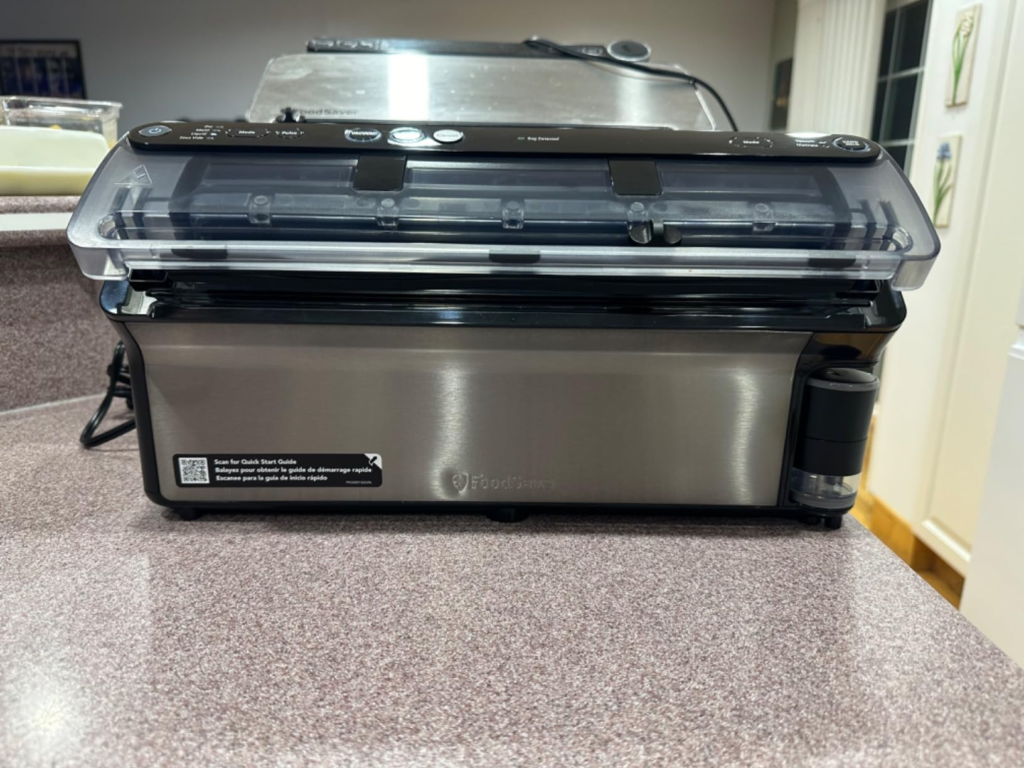
If your sealing life is coffee beans, rice, nuts, and the occasional bag of chicken breast with no marinade involved, you’re paying for a feature set you’ll rarely open. A simpler Dry-only sealer will do that job for less money and less counter space. Speaking of which — this is not a small appliance. At roughly 23.6 x 9.8 x 10.9 inches and about 6.4 pounds, it wants a permanent spot on the counter, not a squeeze into a crowded cabinet between uses.
And if you want zero learning curve, know this going in: the automatic bag detection is sensitive to how straight and flat the bag sits. Insert it slightly crooked and the machine can start its cycle before you’re ready — several owners mention needing a few tries before it clicks. It’s a short learning curve, not a steep one, but it is one.
| You’re a Good Fit If… | You Should Skip It If… |
|---|---|
| You regularly freeze soups, stews, or sauces | You only ever seal dry goods |
| You marinate meat on a real schedule | You want the smallest possible footprint |
| You batch-cook and portion in bulk | You want zero learning curve on day one |
| You already own a vacuum sealer that can’t handle liquid | You’re on a tight budget and rarely deal with moisture |
FoodSaver Elite All-in-One Review — Final Verdict: The One Situation Where It Becomes the Logical Choice
Strip away the feature list and it comes down to one question: does liquid show up in your kitchen often enough that a machine which handles it properly would actually get used? If you already own a sealer and the one thing it can’t do is exactly what you need done, upgrading isn’t indulgence — it’s closing the one gap that’s been costing you bags, time, or wasted soup. If you’re buying your first sealer and you already know soup, stock, or marinade is a recurring part of how you cook, starting here means you skip the “wish it did liquids” phase entirely.
What the FoodSaver Elite All-in-One Solves, What It Reduces, and What Still Depends on You
It solves the liquid-sealing gap that’s frustrated FoodSaver owners for years, with a dedicated sensor system instead of a “keep it dry and hope” approach. It reduces freezer burn, wasted marinade prep, and the pile of mystery bags nobody wants to open. What it doesn’t do is remove your judgment from the process entirely — large liquid batches still want the hang-low, seal-by-hand technique, the drip tray needs emptying and cleaning after wet sealing, and like any appliance ordered online, a small number of buyers report units arriving with a missing drip tray or a dead unit on arrival, so it’s worth testing yours the day it shows up rather than weeks later.
| Comes in the Box | You’ll Keep Buying |
|---|---|
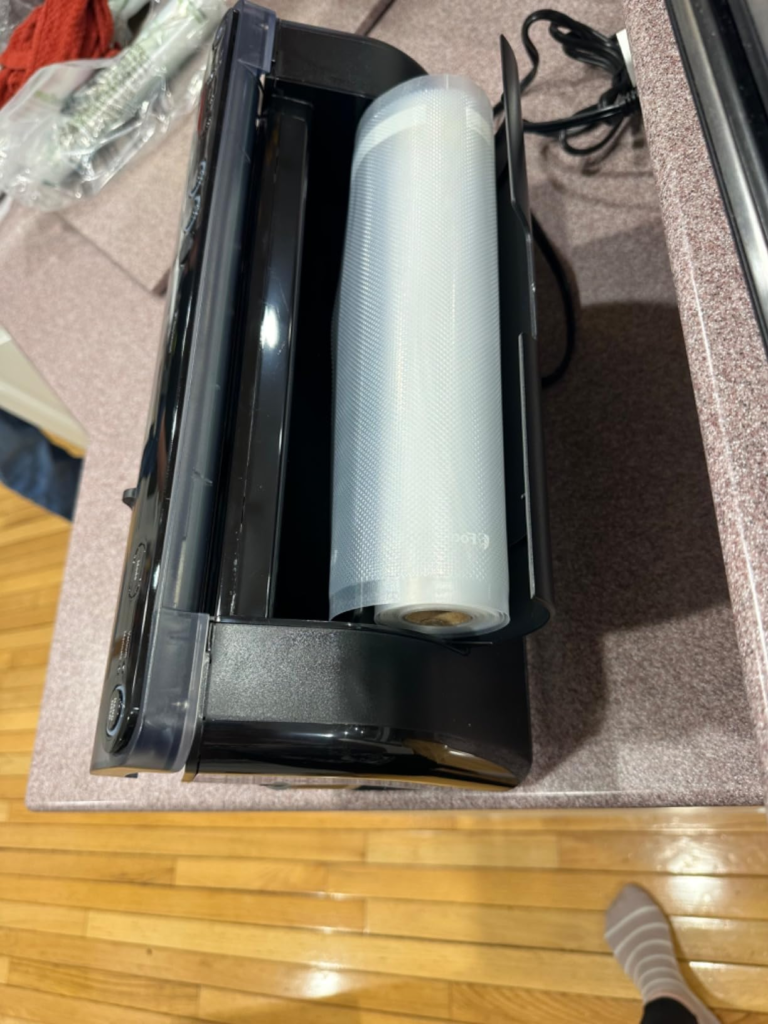
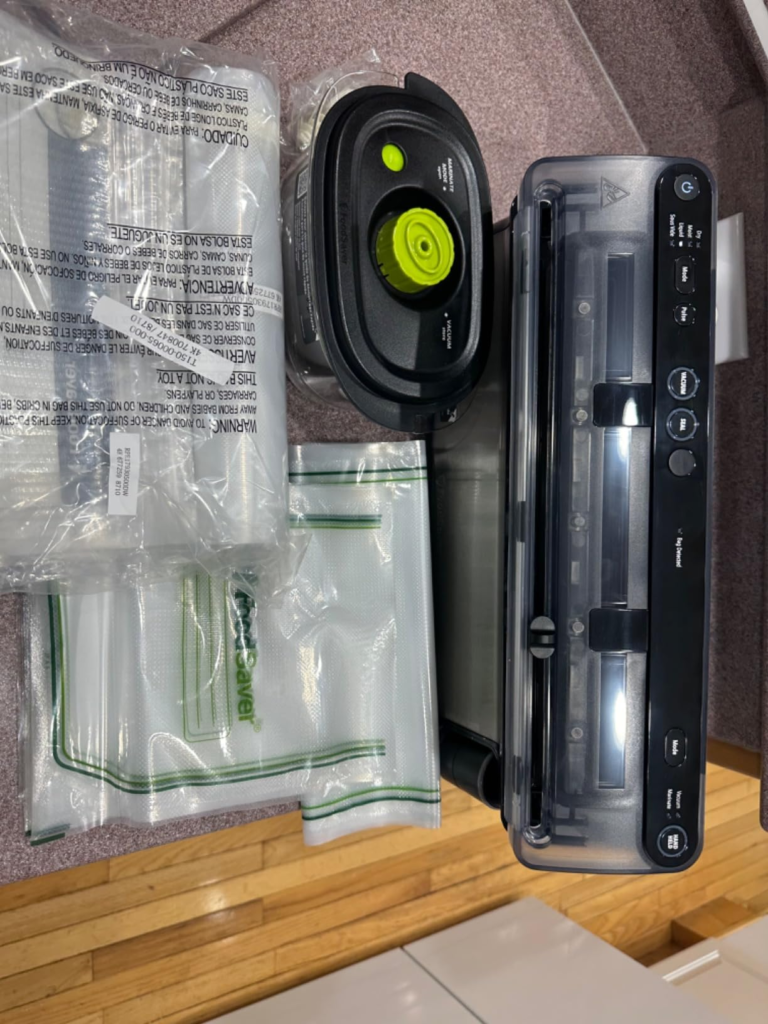
| The sealer unit, two 11″x10′ rolls | FoodSaver-brand rolls or precut bags |
| 10 quart + 5 gallon Easy-Fill bags | Replacement rolls sized to your habits |
| 5 precut quart + 5 precut gallon bags | — reusable zipper bags cut this cost |
| 5 quart + 5 gallon zipper bags (reusable) | over time if you lean on them |
| 5-cup Marinate & Preserve container, wine stopper, retractable handheld sealer | Occasional drip-tray/gasket replacements |
Rated around 4.3 out of 5 across major retailers, from several hundred verified buyers — solid for a countertop appliance in this price range, with the complaints clustering around the bag-detection learning curve and the price point rather than the core liquid-sealing claim.
FoodSaver Elite All-in-One FAQ: Quick Answers Before You Buy
| Question | Answer |
|---|---|
| Can it actually seal a full bag of soup, or just damp foods? | Yes, including full liquid volumes — but for large amounts, use the manual technique: hang the bag lower than the unit and hit Seal by hand once the liquid nears the top. Some trapped air bubbles are normal on big batches, not a sign of failure. |
| Does it need special FoodSaver bags, or will generic ones work? | It comes with FoodSaver rolls, precut bags, and reusable zipper bags, and it’s built around that ecosystem. Generic vacuum bags often fit the format, but FoodSaver’s own bags are what the sensors and seal width are calibrated for. |
| Is it loud? | Like essentially every vacuum sealer, no — it isn’t silent. Expect a vacuum-cleaner-level hum for the twenty to forty seconds each cycle takes, not background-appliance quiet. |
| How long until it feels intuitive? | Most of the learning curve is the bag-detection sensor — get the bag flat and centered and it locks and seals on its own. A handful of uses is usually enough to stop thinking about it. |
| Are the bags reusable? | The zipper bags included in the kit are designed for repeat use. Standard roll and precut vacuum bags are made for one seal per use, though many owners rinse and reuse them for dry, non-messy items. |
| What’s the warranty like? | FoodSaver backs it with a manufacturer’s warranty available through customer service; exact terms can vary slightly by retailer, so it’s worth confirming at checkout. |
FoodSaver Elite All-in-One Review: Final Compression
If the leak you’re tired of is soup, sauce, or marinade — not rice or coffee — this is the machine built for that exact gap, not a general upgrade for its own sake. If that’s the condition you’re actually dealing with, here’s the FoodSaver Elite All-in-One Vacuum Sealer on Amazon.
Transparency Note:
This analysis is built on aggregated real-world experience.
It extracts what repeatedly holds, what breaks, and what users uncover only after living with the system—then shapes it into a clear model you can use immediately.
Think of it as structured experience, refined and presented so you don’t have to learn it the hard way.
“A quick note: Don’t believe the star ratings, but trust personal experience. This article is a compilation of collected experiences.”