THERMOMAVEN G2 REVIEW: YOUR THERMOMETER SAID DONE. YOUR MEAT WASN’T.
ThermoMaven G2
Wireless Meat Thermometer Accuracy: The Result Looks Fine. The Problem Isn’t.
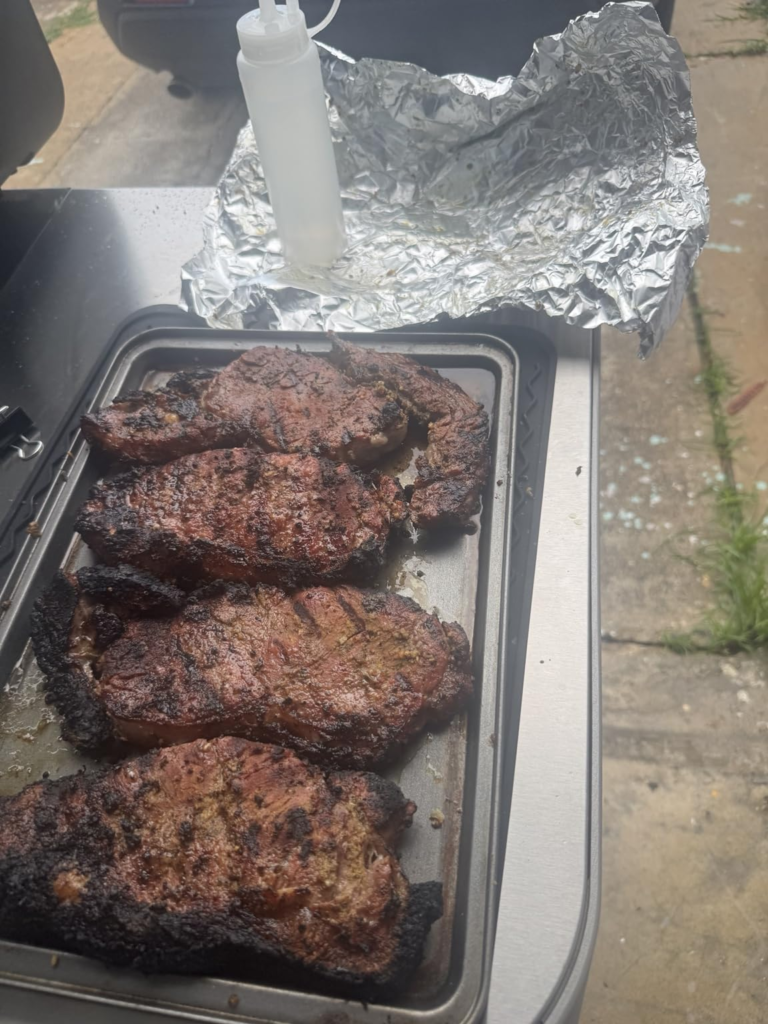
You pulled the turkey, the brisket, the prime rib at the exact number you were told to trust. It rested under foil like it was supposed to. Then you cut in, and something was off — a little dry near the bottom, a little tighter than it should have been, a shade past where you wanted it.
Nobody blames the thermometer in that moment. People blame the oven, the cut, bad luck. But a reading that looks perfectly fine on a screen can still be the wrong answer, because doneness was never a single point. It’s a number that keeps moving after you’ve already stopped watching it.
That gap — between “the screen said done” and “the meat was actually done” — is the real subject of this review. Not the app. Not the range. The timing underneath both.
ThermoMaven G2 Signal & Alerts: What You’re Actually Feeling but Not Naming
Nobody says “I have a probe-placement problem.” They say things closer to: I keep checking my phone every four minutes. I got a “disconnected” alert and had no idea if it meant the food or the battery. I walked inside for one drink and lost the reading entirely.
Those aren’t separate complaints. They’re the same friction wearing different clothes: not knowing, without looking, whether things are still on track. Add greasy, rub-covered hands and a phone you don’t want to touch, and most of the “smart thermometer” conversation stops being about technology and starts being about simply wanting to stand somewhere other than next to the grill.
Why Meat Thermometers Read Wrong: The Hidden Mechanism Behind the Miss
Two things cause most of the misses, and neither is user error in the way people assume.
First: carryover cooking. Meat keeps cooking after it leaves the heat, sometimes climbing several more degrees as residual warmth pushes toward the center. A thick roast or whole bird carries over more than a thin cutlet. If you pull at the final number instead of ahead of it, you’ve already overshot before you’ve even set the knife down.
Second: a single reading only tells you about one point. Basic probes — wired or wireless — report the spot they happen to touch. If that spot isn’t the true center, or if the meat is cooking unevenly, the number on the screen can be technically accurate and still meaningless to what’s happening two inches away. This is also why a “NIST certified” label is worth reading carefully: it typically means the calibration reference used to check the sensors traces back to NIST standards, not that a government lab put its stamp on the exact unit in your kitchen. It’s a real, meaningful claim — just a narrower one than the phrase implies.
And the range issue people blame on “cheap Bluetooth”: 2.4GHz Bluetooth signals genuinely struggle to pass through metal smoker lids and exterior walls. That’s physics, not a manufacturing flaw. It’s also exactly why walking from the yard to the kitchen is the moment most wireless probes quietly give up.
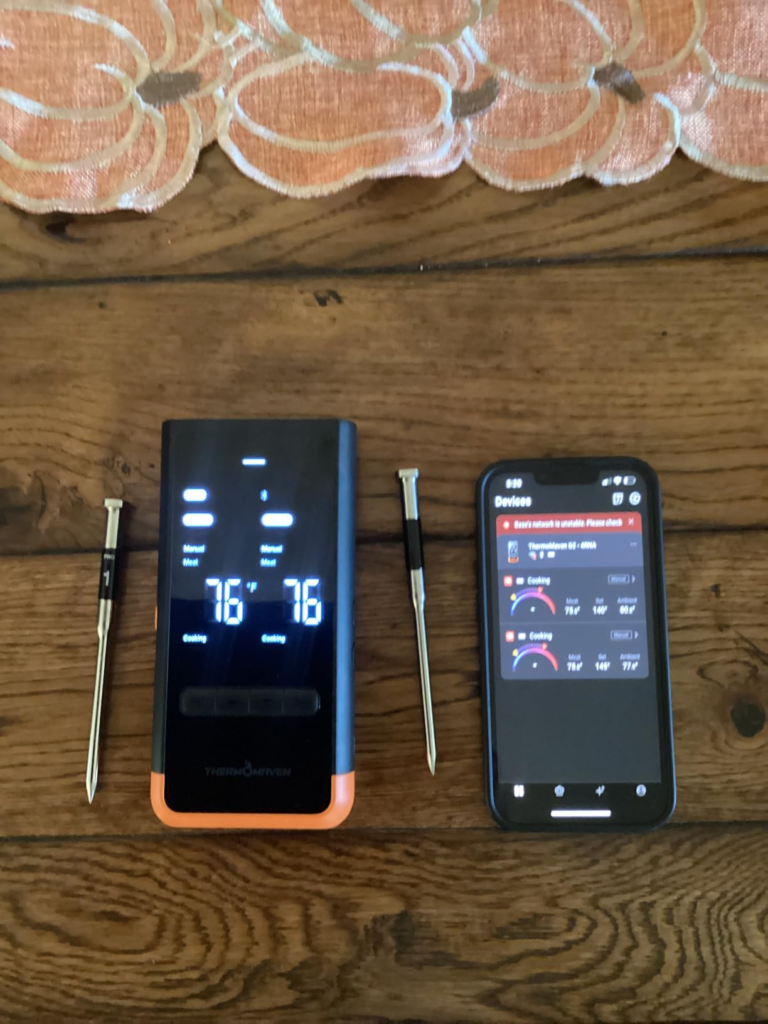
The Pull Temperature Mistake: Where the Outcome Quietly Breaks
Call it the pull threshold: the point before the target number where you should actually act, because carryover is going to close the rest of the gap on its own. A thick roast might climb another five to eight degrees after it leaves the heat. A thin chop barely moves at all.
Most thermometers — including plenty of expensive ones — only alert you at the final number. By the time you hear the beep, the outcome is already decided. Nothing dramatic happens. Dinner just quietly becomes “fine” instead of what it could have been, and almost nobody traces it back to this exact half-minute.
ThermoMaven vs MEATER Assumptions: Why Most Buyers Misread This Too Early
Most people shopping this category make one of a few lazy comparisons, and each one skips the part that actually matters.
| What People Assume | What’s Actually True |
|---|---|
| “Any wireless probe app is basically the same” | The range that matters most is probe-to-base, not app polish — Bluetooth-only units are the ones losing signal through walls and metal lids |
| “More expensive always means more accurate” | ±0.5°F accuracy shows up on several thermometers well under $150, this one included — price gaps are mostly about app ecosystem, not raw sensor quality |
| “A wireless probe replaces an instant-read” | It replaces the guessing during a long, unattended cook — it doesn’t replace a five-second check on a burger |
| “Six sensors means six times more accurate” | The extra sensors read a gradient along the probe, tip to surface, so you can see uneven cooking — not just repeat one number six times |
Best Wireless Meat Thermometer For: Who Is Actually Inside This Problem
The person this actually fits: whole turkeys, brisket, pork shoulder, prime rib, anything running six-plus hours on a smoker. Someone who steps away from the yard to host, prep sides, or answer the door. Someone juggling two things at once — two proteins, or meat plus ambient grill temperature — who’s tired of threading a wired probe through an oven door.
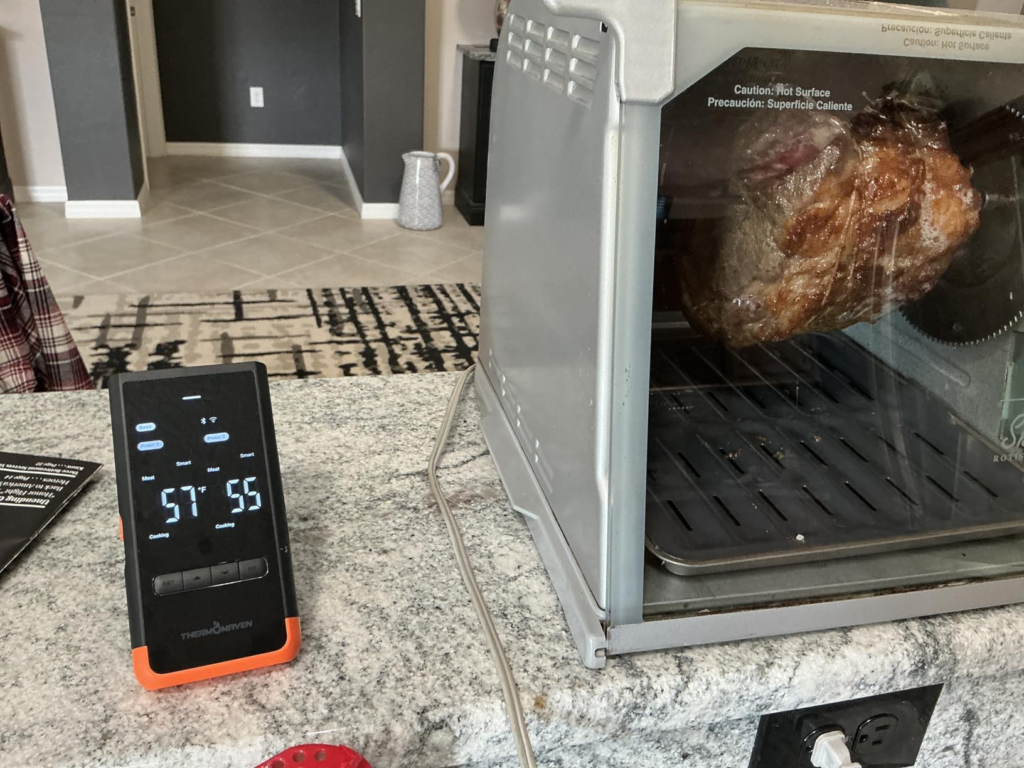
When Not to Buy a Smart Probe: Where Wrong-Fit Begins
| This Fits You If… | Look Elsewhere If… |
|---|---|
| You cook whole birds, brisket, shoulder, or anything past the two-hour mark | You mostly cook burgers, chicken breasts, or thin cuts a $15 instant-read handles in three seconds |
| You’ve lost a Bluetooth signal walking away from the grill before | You genuinely never leave the grill during a cook |
| You want a screen you can read without unlocking a greasy phone | The single most refined app in the category matters more to you than anything else |
| You’re monitoring two things at once | Your router setup makes adding a 2.4GHz network a real headache |
ThermoMaven G2 Specs & Features: The One Situation Where This Product Becomes Logical
If you recognized yourself two sections ago, here’s what you’re actually buying — not a marketing sheet, the mechanism behind it.
| Spec | What It Actually Means for You |
|---|---|
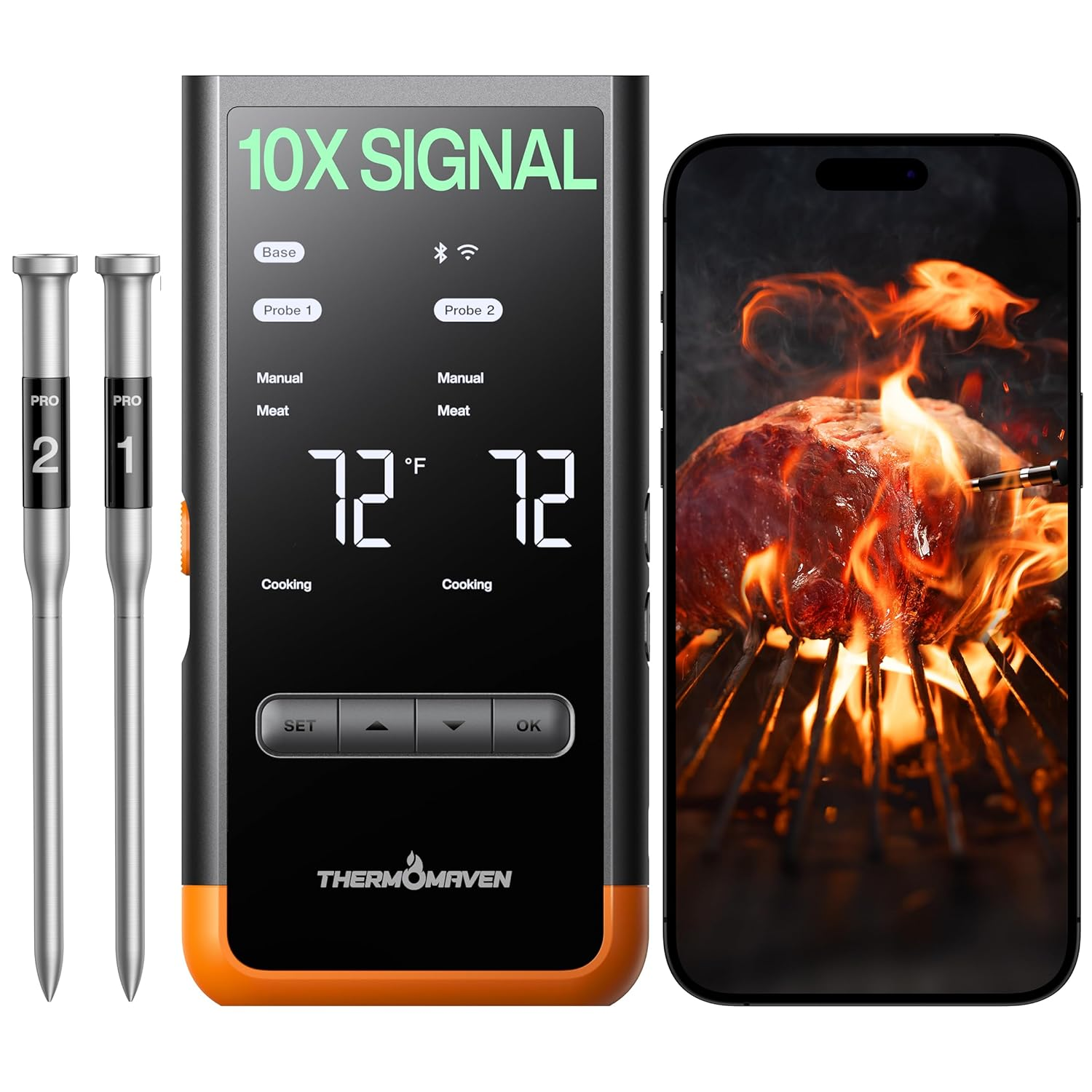
| 2 probes, 6 sensors each (5 internal + 1 ambient) | Reads a gradient inside the meat plus grill or oven air temp — not just one spot |
| Sub-1GHz probe-to-base link (~3,000 ft open, ~700 ft through walls) | The part that actually stops signal drop-out, more than any app redesign would |
| ±0.5°F calibration accuracy, 0.01°F resolution | Tight enough that any remaining debate is academic, not practical |
| Standalone base display + separate WiFi app bridge | Runs with zero app open, or checks from another room — needs a 2.4GHz network specifically, which trips up more people than the hardware does |
| IPX8 probes, dishwasher-safe; base is splash-resistant only | Clean the probes freely; wipe the base, don’t submerge it |
| Roughly a 30-minute charge for close to a day of cook time | Built around the long, slow cooks this thing exists for |
The base itself is about the size of a phone, with a kickstand — a small detail, but it’s the difference between propping it up on a rail during an eight-hour smoke and holding it.
ThermoMaven G2 Pros and Cons: What It Solves, What It Reduces, and What Still Leaves to You
| What It Solves | What It Reduces | What’s Still on You |
|---|---|---|
| Losing signal when you step away from the grill | Constant phone-checking — the base alerts on its own | Placing the probe in the actual thickest part, clear of bone or fat |
| Guessing whether “done” already happened | Overcooking from reading the final number too late | Keeping the probe contacts clean so charging and pairing stay reliable |
| Running two zones or proteins on one system | Battery anxiety mid-cook | Registering the unit right away — standard coverage runs about 1.5 years, sometimes extended with a running promotion |
Worth knowing before it arrives: some owners find the app’s graph cramped once all six sensor lines are on screen at once, the printed manual is small, and a few have needed to pull a probe from the base to wake the screen rather than tapping the power button. None of it is dealbreaking. All of it is real.
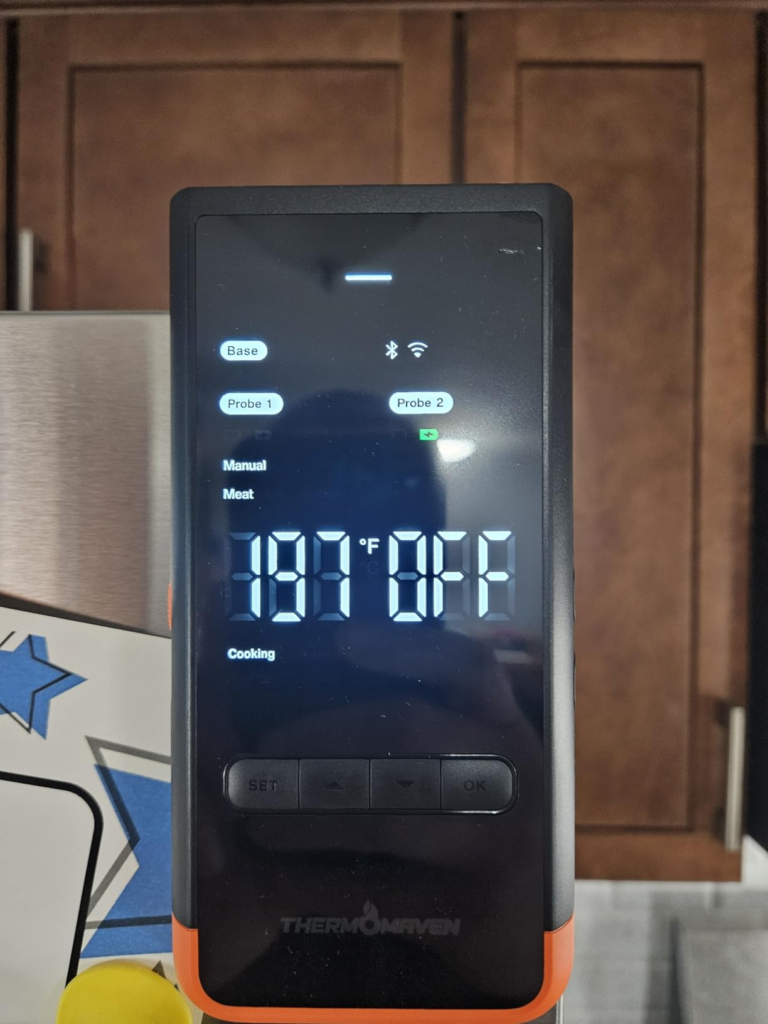
ThermoMaven G2 FAQ: Quick Answers Before You Decide
| Question | Answer |
|---|---|
| Does it need WiFi or an app to work at all? | No. The base displays temperature and alerts on its own once the probes are paired. WiFi only matters if you want to check readings from your phone while you’re away from the base. |
| Does it need 2.4GHz or 5GHz WiFi? | 2.4GHz specifically. If your router only broadcasts a combined or 5GHz-first network, you may need to split out a separate 2.4GHz name in the settings before pairing finishes — a five-minute fix that causes more frustration than the thermometer itself. |
| Is the whole unit waterproof, or just the probes? | Just the probes — IPX8-rated and dishwasher-safe. The base is splash-resistant, not submersible. Wipe it down instead of rinsing it. |
| How long is the warranty, really? | Registering the unit (quick, online) typically gets you about 1.5 years of coverage. ThermoMaven has run promotions extending that to 3 years at registration, so it’s worth doing the same day the box arrives rather than later. |
| Is the accuracy claim believable? | In informal side-by-side checks against other trusted probes, owners have measured it within roughly half a degree to a full degree — close enough that the gap matters more on a lab bench than on a cutting board. |
| Can both probes track two different things at once? | Yes — that’s the actual reason to buy the 2-probe version over a single-probe model: one probe in the bird, one in a second dish, or one in the meat and one reading ambient smoker temperature. |
ThermoMaven G2 Review Verdict: Final Compression
If you recognized yourself as the long-cook, walk-away reader and not the quick-burger-check reader, this tool matches the actual problem instead of just the marketing around it. If you’re the second reader, keep the money and grab a $15 instant-read instead — this would be more thermometer than the job needs.
If your next cook runs longer than you’re willing to stand next to it, this is where the decision stops being vague:
Transparency Note:
This analysis is built on aggregated real-world experience.
It extracts what repeatedly holds, what breaks, and what users uncover only after living with the system—then shapes it into a clear model you can use immediately.
Think of it as structured experience, refined and presented so you don’t have to learn it the hard way.
“A quick note: Don’t believe the star ratings, but trust personal experience. This article is a compilation of collected experiences.”