EUFY SOLOCAM S40 SOLAR REVIEW: ‘NEVER CHARGE AGAIN’ HAS ONE CONDITION
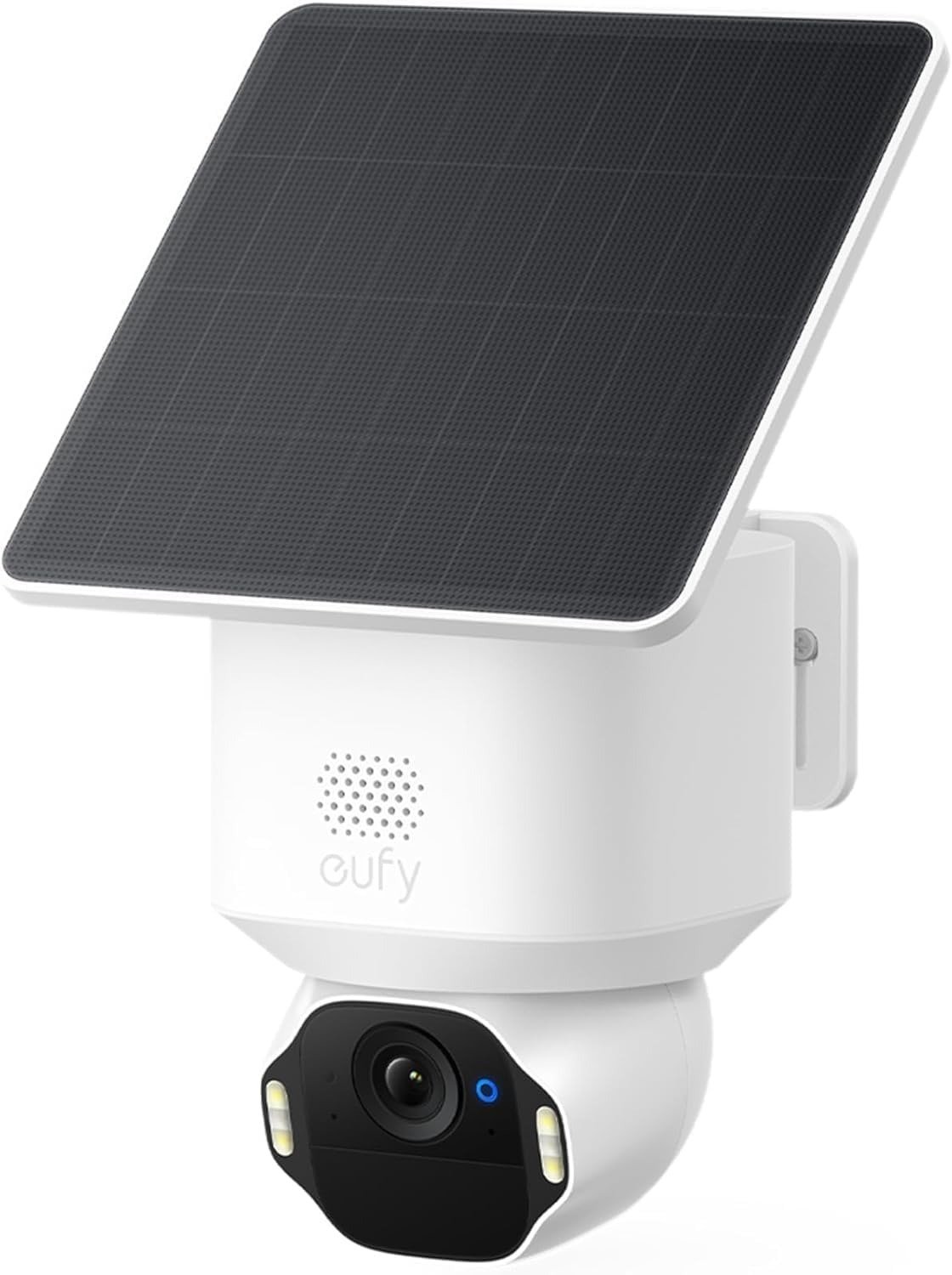
EUFY SOLOCAM S40 SOLAR
You mount it once. You watch the app hit 100%. For the first few weeks, the eufy SoloCam S40 Solar behaves exactly like the box promised — no cable, no ladder, no monthly bill. Then, somewhere around month four or five, a small number appears in the battery graph that wasn’t supposed to be there: a slow, steady decline.
Why does a camera engineered to run forever sometimes end up needing a charging cable in someone’s hand at 11 p.m.?
Quick specs
| Spec | Detail |
|---|---|
| Resolution | 2K (2560×1440), 130° field of view |
| Battery | 13,400mAh built-in, non-removable |
| Solar minimum | 2 hours direct sunlight/day (eufy’s own stated floor) |
| Storage | 8GB built-in eMMC, AES-128 encrypted, not expandable |
| Subscription | None required for local storage |
| Night vision | Color, via 600-lumen spotlight, up to 8m/26ft |
| Connectivity | 2.4GHz Wi-Fi only, no hub required |
| Voice control | Alexa, Google Assistant (no Apple HomeKit) |
| Weatherproofing | IP67, -4°F to 122°F operating range |
eufy SoloCam S40 Solar Review: The Result Looks Fine, The Problem Isn’t
Here’s what nobody tells you at setup: the first month is not a test of the solar panel. It’s a test of a battery that was just charged to 100% over eight straight hours on a USB-C cable, exactly as the manual instructs. Of course it looks flawless. A full tank always does.
The real test doesn’t start until that initial charge runs out and the panel has to carry the whole load by itself, day after day, through whatever weather actually shows up.
eufy SoloCam S40 Solar Battery Drain: What You’re Actually Feeling but Not Naming
The unease that creeps in later isn’t really “will this camera work.” It’s quieter and more specific than that: will it still be working in the exact spot I mounted it, in the exact light that spot actually gets, five months from now?
That feeling has a name, and owners have already described it in plain terms. Across eufy’s own community forum and retailer Q&A pages, a recurring thread shows up: the app reports 0 mAh of solar input on days that looked sunny from the ground, while the battery percentage keeps sliding down regardless.
Solar Charging Explained: The Hidden Mechanism Behind the Miss
By eufy’s own published numbers, the math should be forgiving. Under optimal sun, the panel can collect roughly 600–800mAh a day. Average daily use — motion clips, spotlight, night vision — burns only about 150–202mAh. On paper, that’s a three-to-four-times buffer.
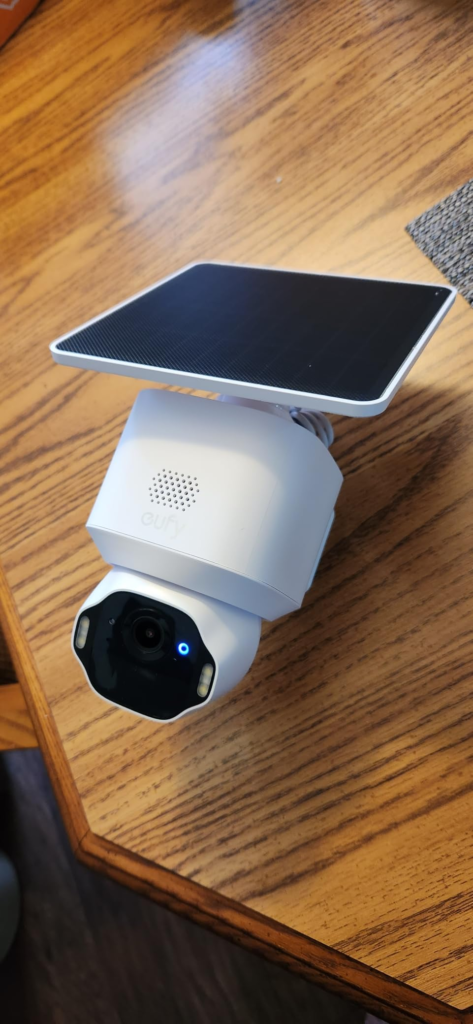
The gap between that buffer and a draining battery comes down to one word most people skim past: direct. Not daylight. Not bright shade. Not sun filtered through leaves or glass. Direct means the panel’s flat face needs unobstructed line-of-sight to the sun itself, for a sustained window, every day — and because the panel is fixed to the camera body rather than separately adjustable, it can’t be re-angled as the sun’s position shifts with the seasons the way a detached panel could.
Sunlight Threshold: Where the Battery Quietly Breaks
The real threshold isn’t “installed outdoors.” It’s two uninterrupted hours of direct, unfiltered sun hitting the panel’s face — every day, in every season, including the shortest day of the year. Fall short of that consistently, even by twenty minutes, and the camera doesn’t fail on the spot. It just spends down a reserve you can’t see until it’s already gone.
Several things quietly erode that number: a tree that’s bare in January but leafs out by June, a north-facing wall in the Northern Hemisphere, an overhanging eave, a light film of dust or pollen, or — as one two-year owner described it in eufy’s own community forum — a solar surface that had faded and turned rough “like sand,” charging far less efficiently than it did new.
| Mounting exposure | Typical summer direct sun | Typical winter direct sun | Likely outcome |
|---|---|---|---|
| South-facing, no overhang | 4–6 hrs | 2–3 hrs | Comfortably clears the threshold |
| East/west-facing, partial shade | 2–4 hrs | 1–2 hrs | Borderline — watch the app’s trend line |
| North-facing or heavy tree cover | Under 1 hr | Under 30 min | Under threshold — expect manual recharging |
Treat this as a rough self-check, not a lab measurement — but it’s the single most useful five minutes you can spend before mounting.
Solar Security Cameras: Why Most Buyers Misread Them Too Early
The most common mistake isn’t a bad purchase — it’s a premature verdict. Someone mounts the camera in June, right after that mandatory eight-hour full charge, when days are long and the battery has zero deficit to make up. Everything checks out. They stop thinking about it.
But a full battery in peak summer proves the battery works. It proves nothing about the panel’s ability to keep pace once that reserve is the only thing standing between the camera and a dead screen in December.
Who the eufy SoloCam S40 Solar Is Actually Built For
This camera is built for a specific, sun-drenched reality: a mount point that gets genuine, unobstructed direct light most of the year — a south-facing eave-free wall, an open driveway post, a garage without a big roof overhang. It’s also built for someone who values the trade eufy is actually offering: no subscription, no hub to buy, footage that stays on the device instead of a cloud server.
If 2K resolution and digital-only zoom are enough — and for most driveways, porches, and side yards, they are — the S40 Solar removes an entire category of chore from a homeowner’s list.
eufy SoloCam S40 Solar Drawbacks: Where Wrong-Fit Begins
Wrong-fit starts the moment “outdoors” gets confused with “sunny.” A covered porch, a carport, a heavily wooded lot, or a long gray winter climate all put real strain on a fixed, non-adjustable panel — and because the battery and panel are sealed into one unit, there’s no swapping either one out when they underperform.
| Good fit | Think twice |
|---|---|
| South-facing, unobstructed mount | North-facing wall or deep porch shade |
| Wants zero subscription, ever | Needs 4K, optical zoom, or HomeKit |
| Comfortable checking the app occasionally | Wants continuous 24/7 recording |
| Fine with on-device-only footage | Needs cloud backup as a stolen-camera safety net |
What It Solves, What It Reduces, and What Still Depends on You
| It solves | It reduces | Still on you |
|---|---|---|
| No monthly subscription, ever | Physical battery swaps | Picking a genuinely sun-soaked mount point |
| No hub or HomeBase to manage | False alerts (AI filters people from animals) | Wiping dust, pollen, or snow off the panel occasionally |
| Color night vision + spotlight deterrent | Cloud storage costs and exposure | Glancing at the battery trend before winter, not after |
| On-device, AES-128 encrypted footage | Wiring and mains-power limits on placement | Accepting 2K and digital zoom over 4K/optical |
One boundary worth naming plainly: because storage lives on the camera itself with no forced cloud backup, footage is gone if the unit is physically taken. That’s not a flaw so much as the flip side of the same design that keeps your data off someone else’s server.
Frequently Asked Questions: eufy SoloCam S40 Solar
| Question | Answer |
|---|---|
| Does the eufy SoloCam S40 Solar require a subscription? | No. Storage is local to the 8GB built-in eMMC, and both the camera and app work fully without a monthly fee. Cloud backup exists only as an optional add-on. |
| How much sunlight does it actually need? | eufy states a minimum of two hours of direct, unobstructed sunlight daily to sustain normal use. Less than that, sustained over weeks, is the pattern behind most reported battery drain. |
| What happens to my footage if the camera is stolen? | It’s lost. Recordings are stored on the device itself, not automatically backed up to the cloud, so a stolen unit takes its footage with it. |
| Can I add a microSD card for extra storage? | No. Storage is a fixed 8GB built-in eMMC and isn’t expandable, per eufy’s own documentation. |
| Does it work with Apple HomeKit? | No. It supports Amazon Alexa and Google Assistant, but not HomeKit. |
| Does the solar panel lose efficiency over time? | Some long-term owners report reduced charging performance after roughly two years, describing visible wear on the panel’s surface — worth factoring in if you’re planning for multi-year use. |
| Does it record continuously? | No. It records motion-triggered clips (10–120 seconds, adjustable), not 24/7 continuous video — a deliberate trade-off to protect battery life. |
Final Verdict: eufy SoloCam S40 Solar Review, Compressed
Everything above compresses into one test you can run before you buy anything: stand at your intended mount point today, and count how many hours of real, direct, unblocked sun hit that exact spot in the dead of winter — not summer. If that number comfortably clears two, this camera is likely to disappear into the background of your life exactly the way it’s supposed to. If it doesn’t, no spec sheet changes that math.
Transparency Note:
This analysis is built on aggregated real-world experience.
It extracts what repeatedly holds, what breaks, and what users uncover only after living with the system—then shapes it into a clear model you can use immediately.
Think of it as structured experience, refined and presented so you don’t have to learn it the hard way.
“A quick note: Don’t believe the star ratings, but trust personal experience. This article is a compilation of collected experiences.”