GOOGLE NEST CAM OUTDOOR WIRED REVIEW: THE DAY I LEARNED WHAT ‘WIRED’ DOESN’T MEAN
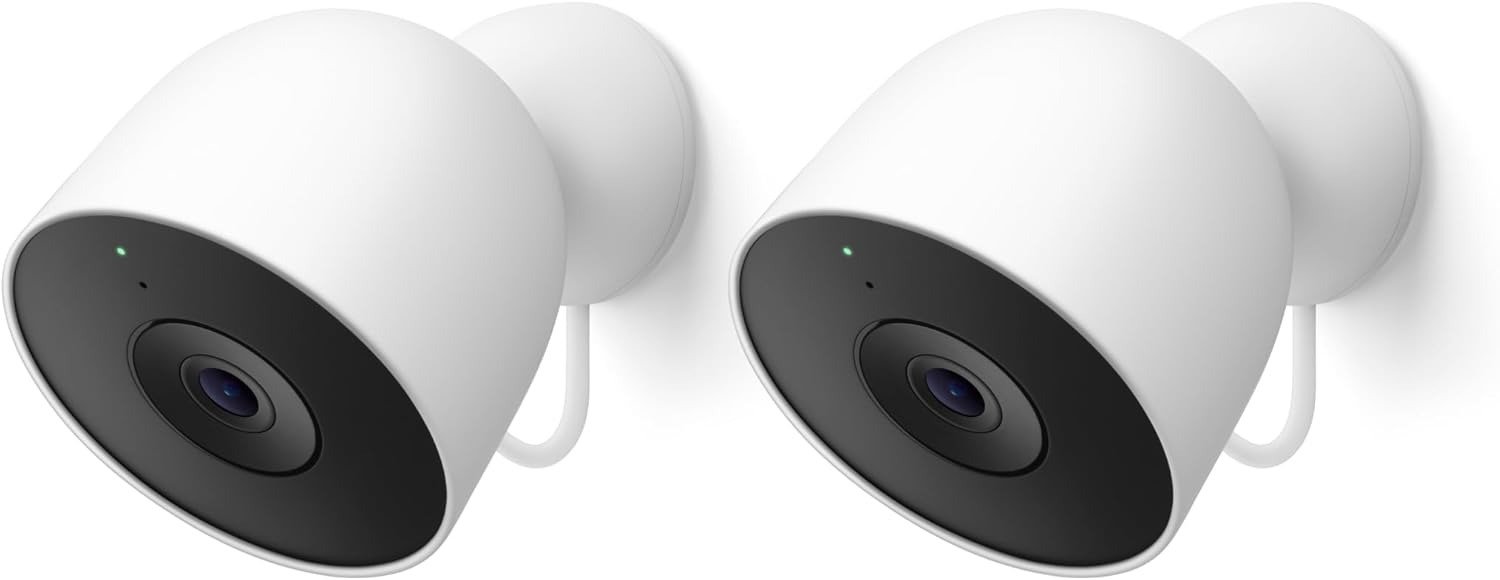
GOOGLE NEST CAM OUTDOOR WIRED
I want to start with the exact moment I stopped trusting the word “wired.” It was late, a raccoon was working over a neighbor’s trash cans, and I picked up my phone to check the feed — expecting a camera that never needed a second thought once it was plugged in. What I got instead was a spinning loading icon and a small, honest realization: “wired” had solved exactly one problem I owned, and left three others sitting exactly where they were.
That’s the real story of this camera. If you’re staring at the Amazon listing trying to decide whether the word “wired” makes this purchase safe, here’s what that word actually buys you — and what it quietly doesn’t.
Night Vision and Video Quality: The Result Looks Fine. The Problem Isn’t.
On paper, this is a strong spec sheet. 2560×1440 resolution — Google calls it 2K HDR — a 152-degree diagonal field of view, and 6x digital zoom that genuinely holds up in daylight. Point it at a driveway and the footage is sharp: faces, uniform colors, license plates, all readable.
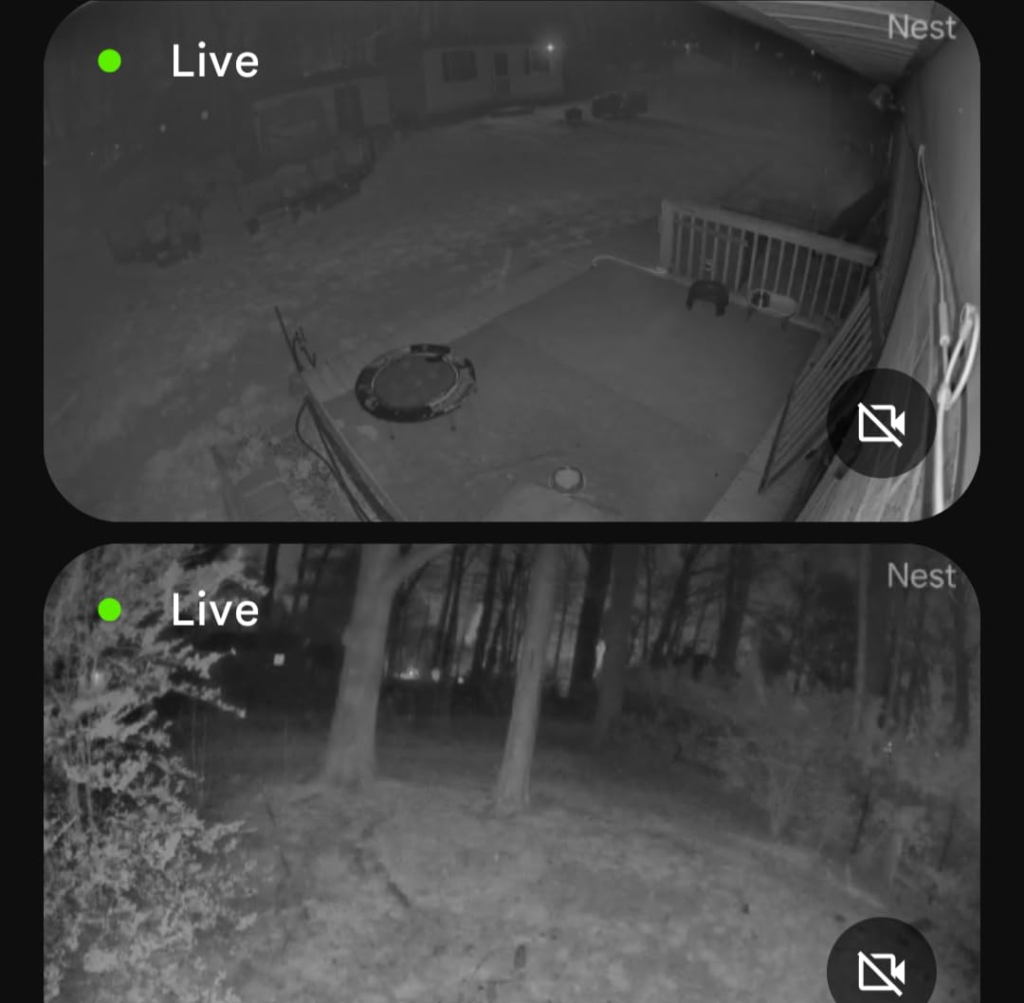
Here’s where the gap opens. Independent lab testing calls the daytime picture “fairly sharp” — a half-step below the class leaders, not the top of the pack the marketing photos imply. Nighttime is the bigger letdown: that same testing rated low-light video as noticeably behind top competitors, despite the “color night vision” language on the listing. In practice, once it’s fully dark, you’re back to the familiar grainy, IR-lit picture most outdoor cameras have always had — enough to confirm someone was there, not always enough to confirm who.
None of that makes it a bad camera. It makes the listing a little generous with itself.
| What the Listing Says | What You Actually Get |
|---|---|
| “2K HDR video” | Sharp, clear daytime footage — one tier below the best in class |
| “Color night vision” | Color only with help from a porch or street light; true darkness still falls back to standard IR |
| “152° field of view” | Wide enough for most single-angle driveway, yard, or porch coverage |
| “Continuous power, no battery” | Accurate — but means a permanent cable, not a battery-free camera you can put anywhere |
| “Weather resistant, IP65” | Genuinely rain- and dust-rated; not rated for submersion or direct high-pressure spray |
Notifications and Detection: What You’re Actually Feeling but Not Naming
If you already live with a camera like this, you know the feeling even if you’ve never named it. It’s not fear. It’s a low hum of doubt every time your phone buzzes — is this the alert that matters, or is it a moth again?
Why does a camera that’s permanently plugged into the wall still leave you feeling like you’re the one keeping watch? Because detection, not power, is what actually does the watching. Leave the default “motion” setting on and you’ll learn this fast — it reacts to wind, shadows, insects drifting past the lens at night. The camera’s on-device intelligence, telling a person apart from a car apart from your dog, works without any subscription, and it genuinely cuts the noise down. But it isn’t flawless. Long-term owners and reviewers consistently note that the AI-written descriptions of what it saw are good, not certain — right most of the time, occasionally confidently wrong, especially when telling similar-looking animals apart. That gap between confident and correct is the real feeling behind the extra glance you give the footage yourself.
Subscription and Google Home Premium: The Hidden Mechanism Behind the Miss
Here’s the mechanism nobody puts in the headline: the camera’s eyes are wired. Its memory is rented.
Every unit ships with six hours of free event history — ten-second clips, no subscription required. That’s double what Google used to offer, and it’s genuinely useful for “what just happened five minutes ago.” It’s not useful for “what happened while I was out Tuesday,” which is the actual reason most people buy an outdoor camera in the first place.
Real history means subscribing to what Google now calls Google Home Premium — it was called Nest Aware until October 2025, and a lot of what you’ll read online still uses the old name. Standard runs $10 a month or $100 a year for 30 days of event clips. Advanced is $20 a month or $200 a year, stretching that to 60 days plus 10 days of continuous, always-on recording. One detail that actually works in your favor: it’s one subscription per Google account, not per camera — add a second or third Nest device later and you don’t pay twice.
Buy the camera and you’ll likely get a free month bundled in. Use it — and calendar it, because like most trials, it renews into a paid plan automatically unless you cancel first.
| Plan | Cost | What You Actually Get |
|---|---|---|
| No subscription | Free | 6 hours of event clips, on-device person/animal/vehicle alerts |
| Standard | $10/mo or $100/yr | 30 days of event history, familiar-face + package + garage alerts |
| Advanced | $20/mo or $200/yr | 60 days of event history, 10 days of 24/7 recording, AI descriptions & searchable history |
Installation and the Power Cable: The Threshold Where the Outcome Quietly Breaks
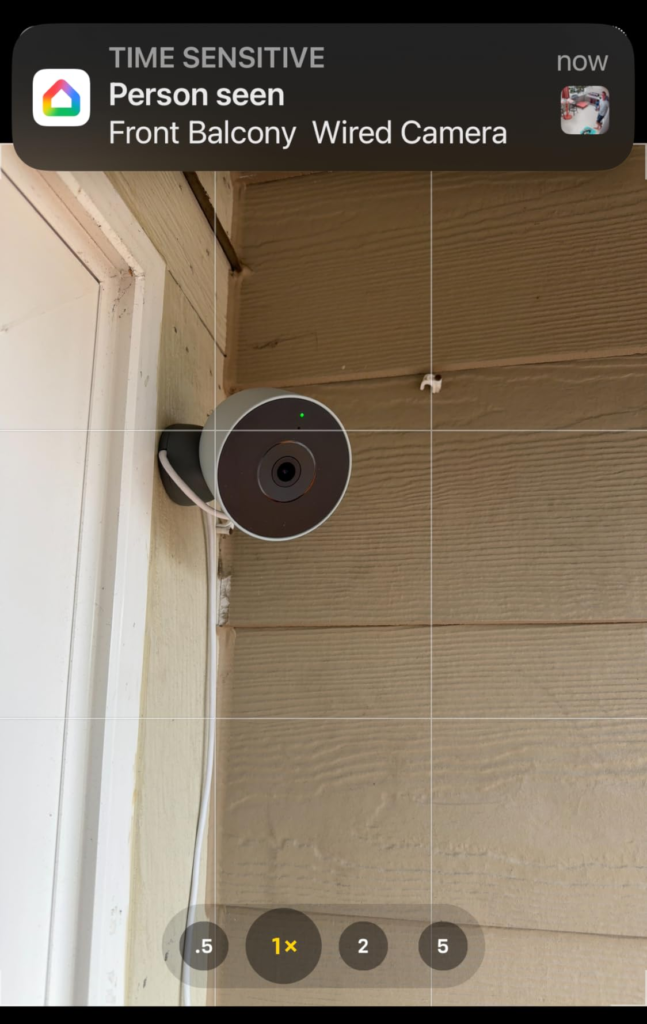
This is the one buyers misjudge most, and it’s an honest, understandable mistake: “wired” sounds like it means hardwired, the way a doorbell or floodlight ties into your home’s existing electrical. It doesn’t. It means the camera has a fixed, non-removable cable that needs to reach a standard power outlet — yours, or one you create.
In the box: a magnetic mount, wall plate, anchors, screws, cable clips, and an 18-foot outdoor-rated power cable. Eighteen feet sounds generous until your ideal angle is a detached garage or the far corner of a porch and the nearest outlet is on the other side of a wall. Then you’re drilling a small hole to route the cable through, running it along the exterior with clips, or accepting an outlet in plain view. There’s no shorter or longer replacement cable sold separately — the length you get is the length you’re working with.
The threshold is simple, and almost nobody checks it before buying: measure the real distance, wall included, from your mounting spot to the nearest usable outlet. Under 18 feet with a clean path, installation really is the twenty-minute job the listing promises. Over that, it’s a small home-improvement project, not a plug-and-go purchase. And if you’re upgrading from an older Nest Cam Outdoor or Battery model, don’t expect the old mount or cable to fit — the connector changed with this generation, so existing wiring doesn’t carry over.
Nest vs. Ring vs. Arlo: Why Most Buyers Misread This Too Early
Most people compare outdoor cameras the way they compare toasters — resolution here, price there, star rating on top. That’s how you end up disappointed by a camera that’s doing exactly what it was built to do.
Why do so many buyers end up let down by a product performing precisely as designed? Because they compared the wrong things. The real question isn’t Nest versus Ring versus Arlo on a features chart — it’s what you already own and what you’re willing to keep paying for. Already living inside Google Home, with a Nest thermostat or a Pixel phone in the house? This slots in with almost no friction, and the subscription math is fairer than some rivals, since one plan covers every camera on the account instead of billing per device. Outside that ecosystem, you’re paying the same subscription for integration you’ll never touch.
It’s also worth knowing what this camera skips that some similarly priced outdoor cameras include: no built-in siren, no privacy zones to black out a neighbor’s window, and no local storage option at all — no microSD slot, no local hub, nothing that works if you decide, on principle, that your driveway footage shouldn’t live on someone else’s server. Independent testing has also rated Google’s data-privacy practices here as middling rather than best-in-class. None of this is a dealbreaker alone. It’s a reason to stop comparing spec sheets and start comparing what you actually need this camera to promise you.
Who Should Buy It: Who Is Actually Inside This Problem
You’re who this camera was built for if most of this sounds familiar: you already use Google Home or Assistant somewhere in the house, you’d rather never think about a battery percentage again, you have — or don’t mind creating — a power source within reasonable cable distance of the mount, and you’ve already mentally budgeted for a subscription instead of hoping to dodge one. You want to know when a person, a car, or your dog walks into frame, and you’re comfortable trusting Google’s AI to describe it well, not perfectly.
If that’s you, everything else in this review is just detail. You’ve already found your camera.
Who Should Walk Away: Where Wrong-Fit Begins
Walk away — not because it’s a bad product, but because it will quietly annoy you — if any of this is your situation: you’re renting and can’t drill or route a cable through a wall; you’ve decided, firmly, that you’ll never pay a monthly fee for a camera no matter what it unlocks; your mounting spot is genuinely far from any outlet and you don’t want a visible cord as part of the deal; or you specifically need a local microSD card, a built-in siren, or the ability to mask off a neighbor’s window.
None of these are edge cases. They’re common, reasonable positions. The camera isn’t wrong for having limits — you’d just be wrong for pretending they don’t apply to you.
| You’re a Good Fit If | Look Elsewhere If |
|---|---|
| You already use Google Home / Nest devices | You want zero subscription, ever |
| You have (or can create) power within ~18 ft of the mount | You’re renting and can’t run a cable or drill |
| You want person/vehicle/animal alerts, not a DVR archive | You need local (microSD) storage on principle |
| You’re fine paying $100–$200/year for full history | You need a built-in siren or privacy-zone masking |
Google Nest Cam Outdoor Wired Verdict: The One Situation Where This Product Becomes Logical
Here’s where this camera stops being “one option among many” and becomes the logical answer: you want a permanently powered outdoor camera, sharp daytime video, and alerts that already know the difference between your mail carrier and a stranger — and you’re not trying to dodge a subscription so much as trying to know exactly what you’re paying for before you commit. At $150 full price, and it’s been discounted into the $95–$120 range often enough that waiting for a sale is worth it, that’s a fair, honestly-priced trade for what it delivers.
It’s not the cheapest outdoor camera on the market, and it isn’t trying to be. It’s the one that stops feeling like a gadget once it’s mounted, because the parts that matter — power, video, alerts — quietly do their job.
| Spec | Detail |
|---|---|
| Resolution | 2560×1440 (2K HDR) |
| Field of view | 152° diagonal |
| Night vision | IR-assisted; color only with ambient light |
| Weather rating | IP65 (rain, dust — not submersion) |
| Operating temp | -4°F to 104°F (-20°C to 40°C) |
| Power | Fixed 18-ft outdoor-rated cable |
| Storage | Cloud only — 6 hrs free, up to 60 days with subscription |
| Colors / packs | Snow, Hazel — 1-pack or 2-pack |
| List price | $150 (frequently discounted to $95–$120) |
Real-World Trade-Offs: What It Solves, What It Reduces, and What It Still Leaves to You
What it solves: battery anxiety, completely. No recharging, no dead camera during the one week you actually needed it. What it reduces: false-alert fatigue, once you move past the default “motion” setting into person/animal/vehicle-specific alerts — noticeably, though not perfectly. What it still leaves to you: the cable-routing job on install day, the ongoing subscription decision, and the habit of double-checking the AI’s description against your own eyes before you act on it. Go in expecting a smart, capable set of eyes rather than a fully independent judgment call, and the parts still left to you won’t come as a surprise.
GOOGLE NEST CAM OUTDOOR WIRED REVIEW: FREQUENTLY ASKED QUESTIONS
| Question | Answer |
|---|---|
| Do I need a subscription to use it? | No. You get live view, on-device person/animal/vehicle alerts, and six hours of event history for free. A subscription only adds longer history, familiar-face alerts, and AI-written event descriptions. |
| Is “wired” the same as hardwired into my house’s electrical system? | No — the most common mix-up. It means a fixed cable that plugs into a standard indoor or outdoor outlet, not a connection an electrician needs to wire in. |
| How long is the included power cable, and can I get a longer one? | Eighteen feet, outdoor-rated. There’s currently no official shorter or longer replacement sold separately, so measure your cable run before buying. |
| Does it hold up in extreme weather? | IP65-rated for rain and dust, specified for -4°F to 104°F. Outside that range, expect reduced performance or a temporary shutdown until it returns to range. |
| Is Nest Aware the same thing as Google Home Premium? | Yes. Google renamed Nest Aware to Google Home Premium in October 2025. Existing subscribers kept their features — only the name and a few Gemini additions changed. |
| Can I use it with the old Nest app? | No. It only works through the Google Home app and a Google Account — the legacy Nest app and home.nest.com aren’t supported on this generation. |
GOOGLE NEST CAM OUTDOOR WIRED: FINAL COMPRESSION
Strip away the spec sheet and the subscription tiers, and the decision comes down to one honest question: are you buying continuous power, or hoping it also buys you continuous peace of mind? The camera only promises the first one. The second is a separate purchase, billed monthly, worth deciding on before the box arrives — not after.
If that trade-off already sounds fair to you, this is the exact version worth getting:
Transparency Note:
This analysis is built on aggregated real-world experience.
It extracts what repeatedly holds, what breaks, and what users uncover only after living with the system—then shapes it into a clear model you can use immediately.
Think of it as structured experience, refined and presented so you don’t have to learn it the hard way.
“A quick note: Don’t believe the star ratings, but trust personal experience. This article is a compilation of collected experiences”