The Week It Stopped Feeling Automatic — And Why That Matters
ANALYSIS FRAMEWORK
We didn’t buy an automatic litter box because we love technology.
We bought it because we were tired.
Tired of the smell creeping into the hallway.
Tired of scooping
before coffee.
Tired of pretending it “wasn’t that bad.”
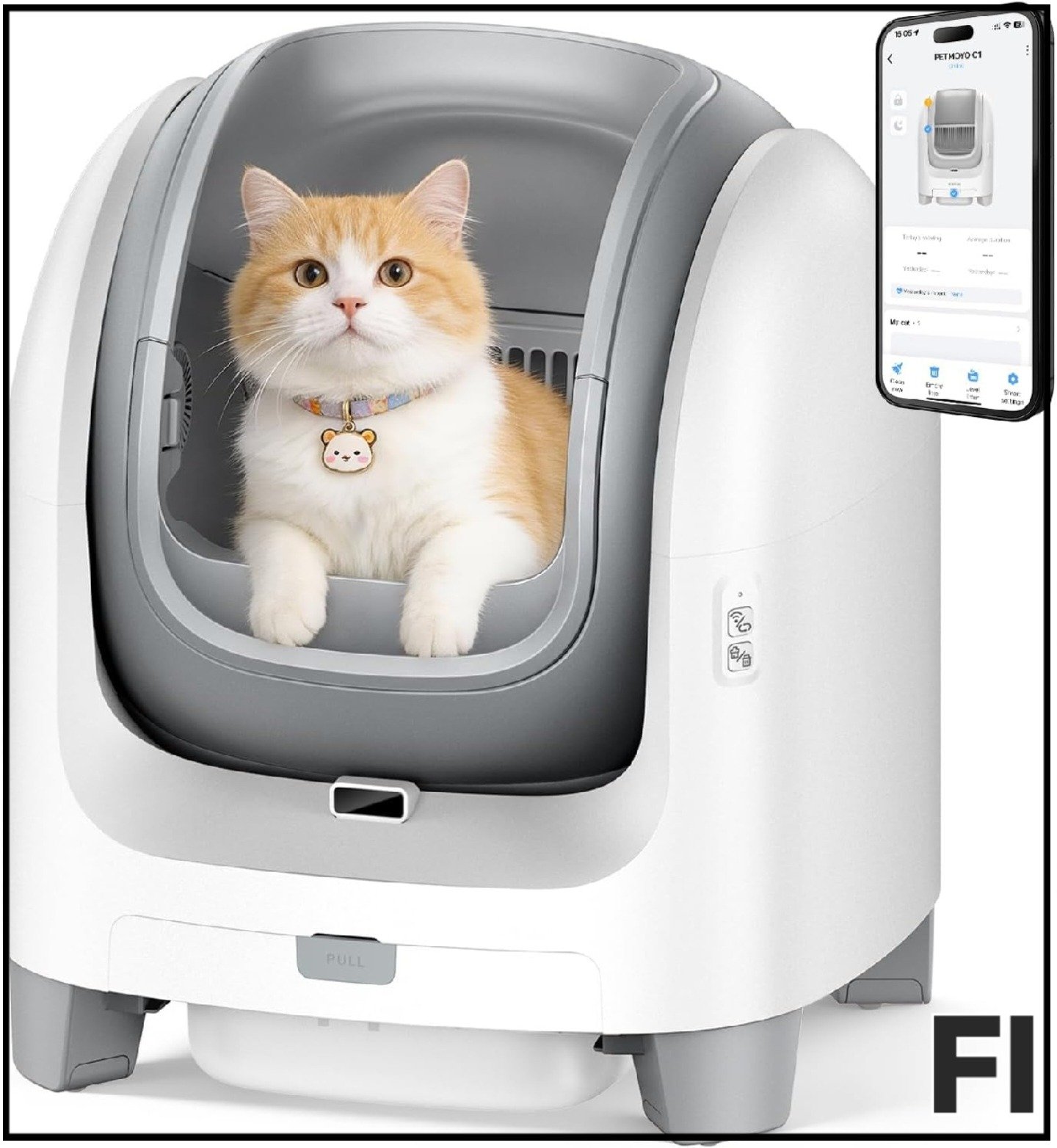
So when we brought home the Petmoyo self-cleaning litter box, it felt like relief in a box.
For the first few days, it was almost beautiful.
The cycle turned.
The clumps disappeared.
The house felt lighter.
Then one night, something small changed.
And that’s when we understood the real question isn’t:
“Does it clean?”
It’s:
Why does it sometimes stop feeling automatic?
Executive Signal Layer (Key Takeaways)
If your cat hesitates around movement, the first cycle after use becomes a psychological test—not a cleaning feature.
If litter texture shifts even slightly, residue drift starts before you notice it.
When waste bin capacity meets peak usage, stability breaks faster than the spec sheet suggests.
Unless you test the box under stress conditions, you’re evaluating the honeymoon phase—not long-term behavior.
If predictability matters more than novelty, the decision depends on your household rhythm, not the product page.
If you want the full conditional purchase filter, we break it down here 🔗 [LINK: /decision/petmoyo-self-cleaning-litter-box]
The Hidden Stability Parameter Nobody Talks About
Why do some owners swear by it while others quietly uninstall it from their lives?
Because automation isn’t binary.
It’s conditional.
The Petmoyo model promises large internal space and a sealed waste compartment. On paper, that sounds like margin. In real life, margin means this:
How does it behave when three small variables shift at the same time?
- Slightly wetter clumps
- Two visits within 20 minutes
- A cat that steps back inside mid-cycle
That’s where stability is tested.
Not in perfect use.
In disturbance.
And disturbance is normal life.
Failure Doesn’t Happen Suddenly — It Cascades
The first week feels clean.
The second week feels efficient.
Then the edge cases start.
A clump sticks slightly to the wall.
A thin dust layer builds under the grate.
The bin fills faster during one heavy day.
Nothing dramatic.
Until the cycle pauses.
And when automation pauses, our tolerance drops instantly.
That’s not about engineering.
That’s about psychology.
We didn’t buy a helper.
We bought a promise.
And when the promise stutters, trust drops faster than odor spreads.
The Real Trade-Off — Convenience vs. Control
Why does this category create divided opinions?
Because the more it handles for you, the less control you feel when it hesitates.
Manual scooping is annoying.
But it’s predictable.
Automation removes effort.
But introduces dependency.
When it works, it feels like progress.
When it stalls, it feels like betrayal.
That emotional swing is stronger than any feature list.
Two Homes, Two Completely Different Outcomes
We tested this mentally against two realities.
Home A:
One confident cat.
Consistent litter.
Owner empties bin before overflow.
Result? Smooth.
Home B:
Two cats.
One cautious.
Usage clusters in mornings.
Owner expects “set and forget.”
Result? Friction.
Why?
Because the threshold isn’t capacity.
It’s rhythm.
And rhythm is invisible on product pages.
The Boundary Conditions That Decide Everything
Before deciding, ask:
- Is your cat sensitive to mechanical noise?
- Does your home have stable daily patterns?
- Are you willing to deep-clean monthly instead of scoop daily?
- Can you tolerate rare but real pause events?
If the answer leans yes to stability and structured routine, the system aligns.
If your household is chaotic, the probability of interruption rises.
Not dramatically.
But enough to matter.
Conditional Verdict — Not Hype, Not Fear
Why do we hesitate to say “buy it” or “skip it”?
Because it depends on thresholds.
If your priority is odor control and reduced daily effort, and you accept occasional system management, the Petmoyo can genuinely change your routine.
If you expect zero friction and perfect autonomy, you’re placing emotional weight on a mechanical system.
And mechanical systems have limits.
The question is not:
Is it good?
The question is:
Will it remain stable under your specific disturbance pattern?
Answer that honestly.
And the decision becomes obvious.