My BLACK+DECKER DustBuster CHV1410L Review: The Threshold Nobody Names Before You Buy
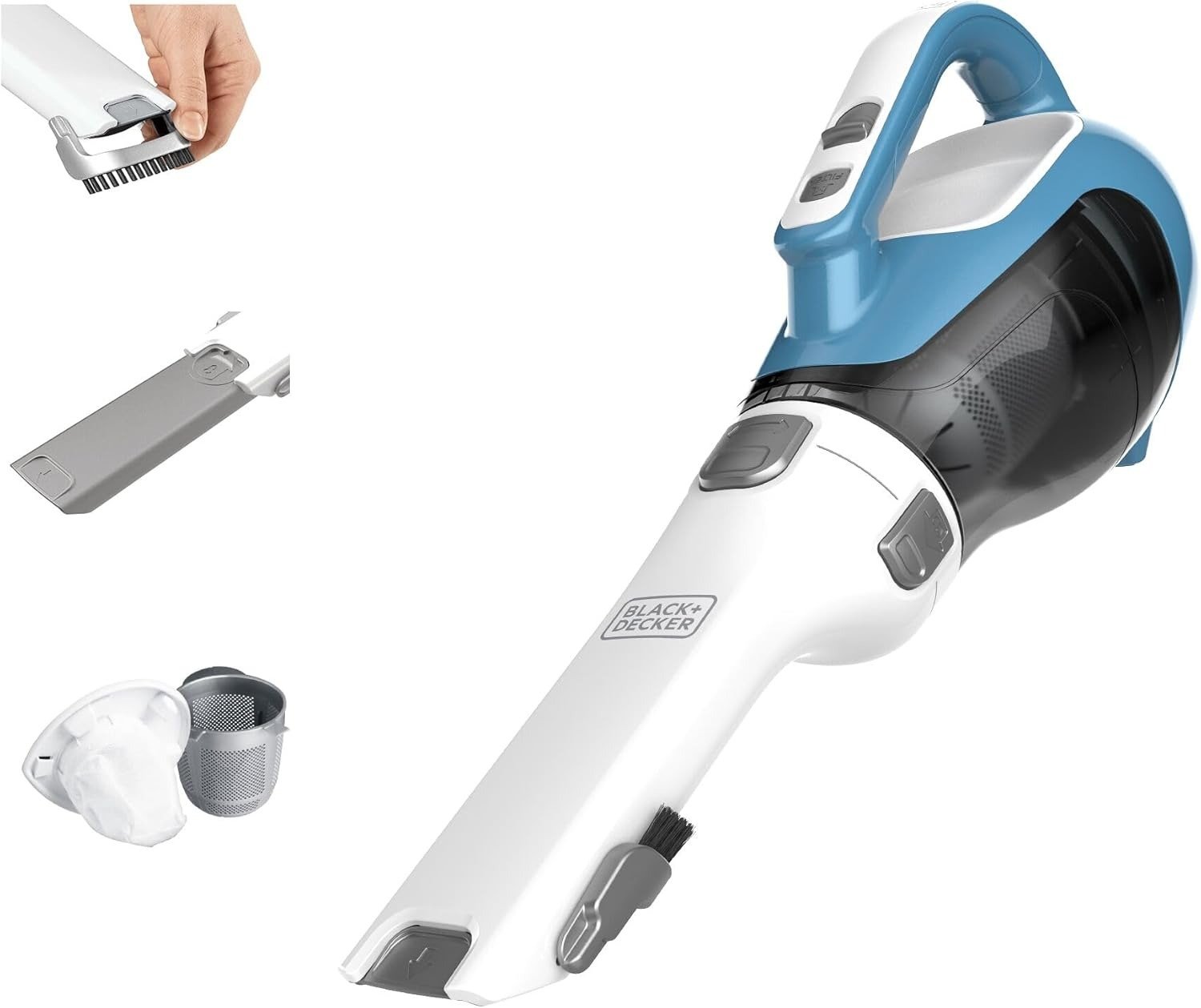
BLACK+DECKER DUSTBUSTER CHV1410L
The Result Looks Fine. The Problem Isn’t.
You pick it up. It feels light, purposeful, ready. The translucent bowl shows you exactly what it captures. The nozzle rotates. The crevice tool pulls out clean. The machine hums. Crumbs disappear from the counter.
And for the first three uses, everything the box promised seems to deliver.
Then the fourth use comes around.
Maybe it’s a car seat scattered with pet hair. Maybe it’s fine dust from the bathroom shelf. Maybe it’s the living room carpet after the dog. The machine runs — the sound is there, the motion is there — but the mess stays. Not all of it. Enough of it to make you run the same pass twice, then a third time, and quietly wonder whether you’re doing something wrong.
You aren’t.
| Situation | What You Expect | What Actually Happens |
|---|---|---|
| Crumbs on counter | Full capture in one pass | ✅ Delivers |
| Car seat debris | Clean run under 5 min | ✅ Delivers |
| Fine dust on shelf | Complete pickup | ⚠️ Scatters, partial pickup |
| Pet hair on couch | Strong lift | ❌ Consistently fails |
| Carpet after heavy use | Deep extraction | ❌ Struggles beyond surface |
| Battery at 8 min mark | Still running strong | ❌ Suction drops, then stops |
The vacuum didn’t fail because it was defective. It failed because it was used outside its real operating window — a window the marketing doesn’t draw clearly.
What You’re Actually Feeling but Not Naming
There’s a specific frustration that handheld vacuum users report in their own words, across thousands of reviews on Amazon, Walmart, and Home Depot, and it almost never gets named precisely:
The vacuum works until it matters.
It handles what is already easy to handle. The light stuff, the dry crumbs, the fresh spill on a hard surface. But when the situation has any friction to it — embedded hair, fine particle dust, surface area larger than a dinner plate — the performance slips below what felt promised.
This isn’t a feeling. It is a structural condition built into the CHV1410L’s design choices. And until you name it, you keep rerunning the same passes and blaming yourself.
What users are actually feeling is scope misalignment: a tool designed for a narrow task window being used across a wider one. Every use inside the window is satisfying. Every use outside it is quietly degrading.
The Hidden Mechanism Behind the Miss
The CHV1410L runs on a 16V MAX lithium-ion battery — technically labeled as 16 volts but operating at a nominal 14.4V. This matters because the gap between rated voltage and working voltage is where suction performance lives.
Despite producing a measurable amount of airflow in anemometer testing, that airflow doesn’t translate into reliable cleaning performance across all surface types. This is not a contradiction — it reveals the actual mechanism of the miss.
Airflow at the motor level and suction at the nozzle are different events. Between them sits the filter, the dust bowl geometry, and the cyclonic action channel. Very fine dust sometimes scatters rather than being pulled in completely. That scatter behavior is a nozzle velocity problem, not a motor problem. The airflow exists — it just isn’t concentrated or dense enough at the pickup point to lift statically charged fine particles.
In dusting tests, the vacuum lacked the suction to pick up statically charged flour and instead moved it around.
This is the hidden mechanism: the CHV1410L generates enough draw to move air and lift loose debris, but not enough concentrated vacuum pressure to overcome surface adhesion on fine particles or embedded fibers. The cyclonic action — which the brand accurately describes as a way to keep debris away from the filter — helps maintain what suction exists, but cannot manufacture pressure the motor wasn’t built to produce.
| Performance Variable | CHV1410L Behavior | Root Cause |
|---|---|---|
| Loose crumbs | Strong | Easy mass, no surface adhesion |
| Fine dust / flour | Scatter | Insufficient nozzle pressure density |
| Pet hair on upholstery | Near-zero | Fiber adhesion exceeds suction pull |
| Car carpet debris | Moderate | Hard surface, low adhesion |
| Cereal / larger particles | Consistent | Mass and gravity assist pickup |
| Sustained run time | 10–12 min max | Battery and motor size trade-off |
The Threshold Where the Outcome Quietly Breaks
Every handheld vacuum has a break threshold — a point past which the cleaning session becomes something the tool was not built for. With the CHV1410L, that threshold is precise:
The CHV1410L breaks down when the cleaning session requires more than 12 minutes of runtime, involves embedded or adhesive debris, or crosses from hard surfaces into upholstered or carpeted ones.
Battery life tests showed the vacuum running for around 10 minutes before dying, and recharging takes roughly four hours. That is not a complaint about a single bad unit. It is the design specification of the battery and motor combination. Eleven minutes of max runtime is the manufacturer’s own listed figure.
The main drawback is that the charge only lasts about 10 minutes, and then you literally have to charge it for hours if you want to use it again.
Below the threshold — small, hard-surface, dry, loose mess, under ten minutes — this vacuum is genuinely competent. At or beyond it, the machine exposes its structural ceiling.
| Cleaning Scenario | Within Threshold? | Expected Outcome |
|---|---|---|
| Counter crumbs after cooking | ✅ Yes | Clean result, one charge |
| Car cup holders and dashboard | ✅ Yes | Effective, nozzle helps |
| Whole car interior, seats + floor | ❌ No | Battery dies mid-session |
| Daily pet hair (dog or cat) | ❌ No | Pickup fails on upholstery |
| Post-cooking kitchen surface | ✅ Yes | Solid performance |
| Bathroom shelf dust accumulation | ⚠️ Borderline | Fine particles may scatter |
| Weekly full apartment touch-up | ❌ No | Runtime and suction both insufficient |
Why Most Buyers Misread This Too Early
The number is the problem. 4.4 stars across more than 105,000 ratings on Amazon is not a fabricated signal. More than 40,000 units were purchased in a single recent month, and the model clearly resonates with users seeking practical cleaning solutions.
But aggregate ratings average across all users, including those using the tool correctly. When someone rates 5 stars after using it for car crumbs after a road trip, and someone else rates 2 stars after failing to clean a couch covered in dog hair, those ratings sit in the same pool and produce a number that describes neither experience accurately.
Most buyers misread this early because they compare the price and the rating, assume the rating applies universally, and skip the question that would actually predict their outcome: What exactly am I cleaning, and for how long?
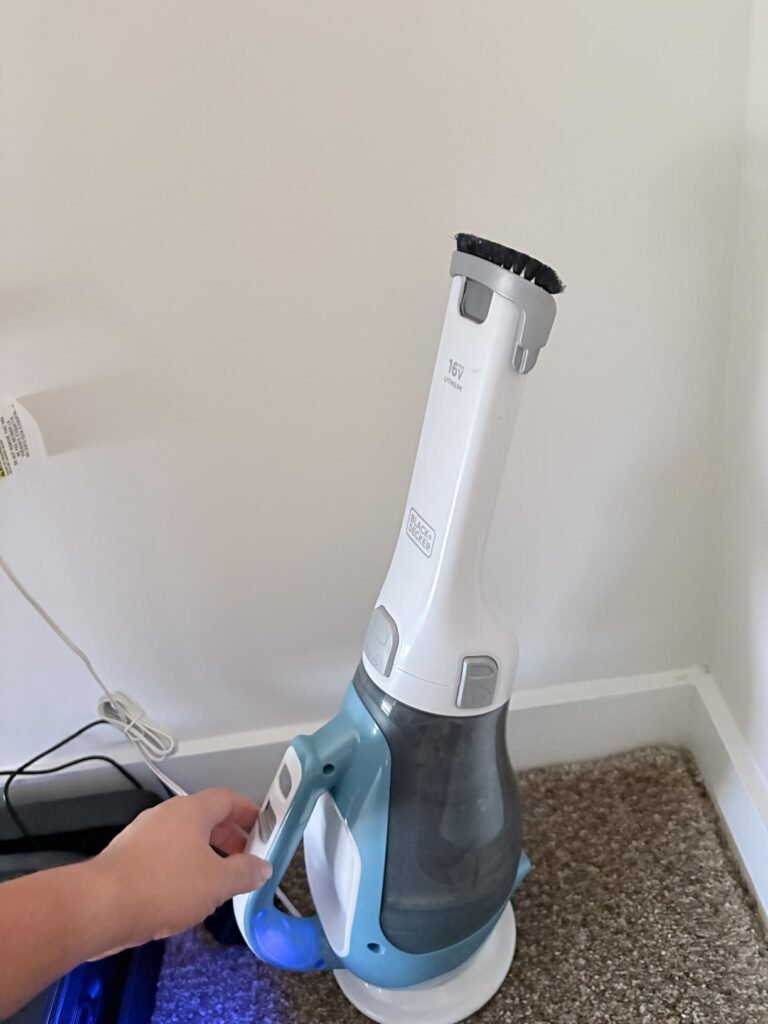
The brush bristles seem to make the vacuum much less effective on upholstery, even though the vacuum looks nearly identical to better-performing models.
The visual similarity between this model and higher-performing DustBuster variants is itself a misread trap. The form factor is consistent across the line. The internal specifications are not.
Who Is Actually Inside This Problem
The CHV1410L has a genuine, real, well-defined audience. It is a smaller audience than the marketing implies, but within it, the tool earns its place without apology.
You are inside the real use case if:
- You need a secondary, supplementary vacuum — not a primary one
- Your dominant mess is crumbs, light debris, and dry spills on hard or semi-hard surfaces
- Your cleaning sessions are short: five to ten minutes maximum
- You clean a car interior regularly and need reach into cup holders and seat gaps
- You do not have pets that shed heavily, or you manage pet hair with a different tool
- You live in a small space where a full-size vacuum is impractical for daily spots
One user reported buying this as their fourth DustBuster, giving it as gifts, and appreciating the strong reach and power adjustment for smaller spaces. That user is exactly inside the correct use window.
Where Wrong-Fit Begins
Wrong-fit begins when the expectation crosses any one of these lines:
You have pets that shed. The CHV1410L fails to clean both a couch cushion and automotive carpet after being covered in pet hair — on both surface types, in direct testing. This is not an occasional failure. It is consistent.
You need extended sessions. A 10–12 minute battery with a four-hour recharge window means one short session per use cycle. If your cleaning habit requires continuity, this machine interrupts it structurally.
You want to reduce your main vacuum use. This tool is designed to complement a full vacuum, not substitute for it. Those needing a primary vacuum cleaner should look elsewhere.
You are cleaning fine dust regularly. In dusting tests, the vacuum moved statically charged particles rather than capturing them. If your primary need is fine dust removal from shelves, electronics, or furniture surfaces, the pickup mechanism here will leave residue.
You expect silence. At arm’s length, the CHV1410L registers 83.5 decibels. That is meaningful noise in a quiet apartment or shared space.
| Wrong-Fit Signal | Why It Matters |
|---|---|
| Heavy pet hair daily | Pickup mechanism structurally insufficient |
| Sessions over 12 minutes | Battery architecture not built for it |
| Fine dust as primary need | Nozzle scatters rather than captures |
| Replacing main vacuum | Not designed for that role |
| Noise-sensitive environment | 83.5 dB is louder than perceived at purchase |
| Expecting no filter maintenance | Filter clogs reduce suction, washable but critical |
The One Situation Where This Product Becomes Logical
If you own a car, cook regularly, and want a compact tool that lives on a charging dock near the kitchen or in the garage — ready for a quick, targeted clean that takes under ten minutes, on hard or semi-hard surfaces, without pet hair — the CHV1410L is the logical answer at its price point.
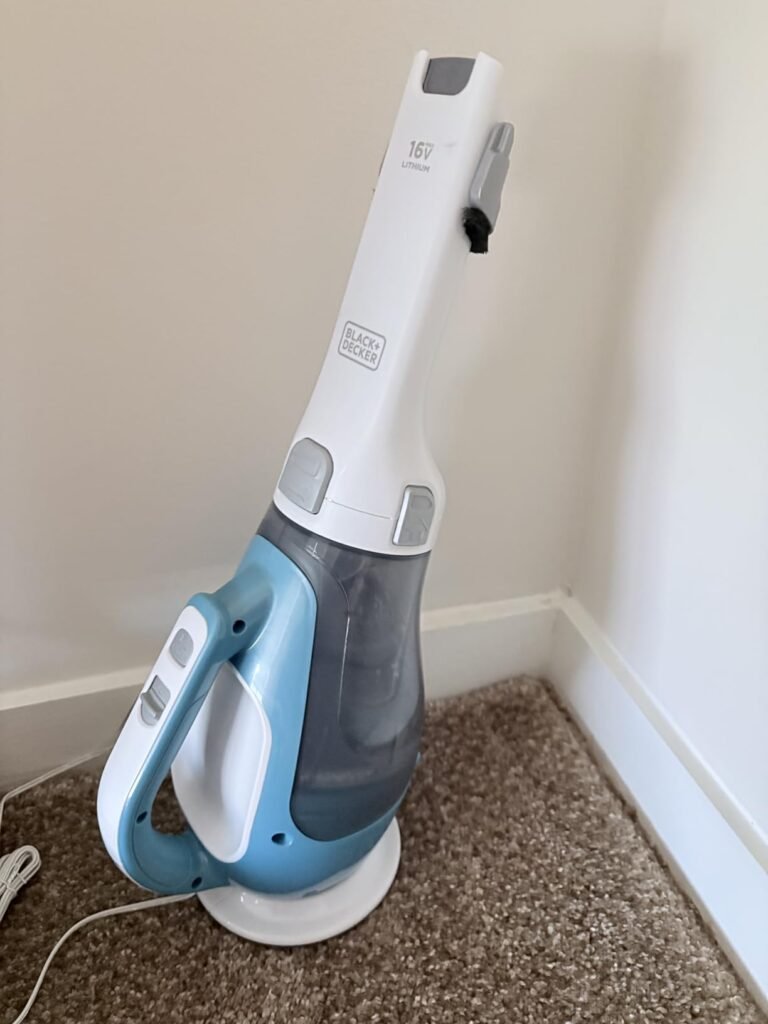
Its compact size and crevice tool make it excellent for cleaning tight spaces inside cars, reaching between seats, cup holders, and dashboard areas.
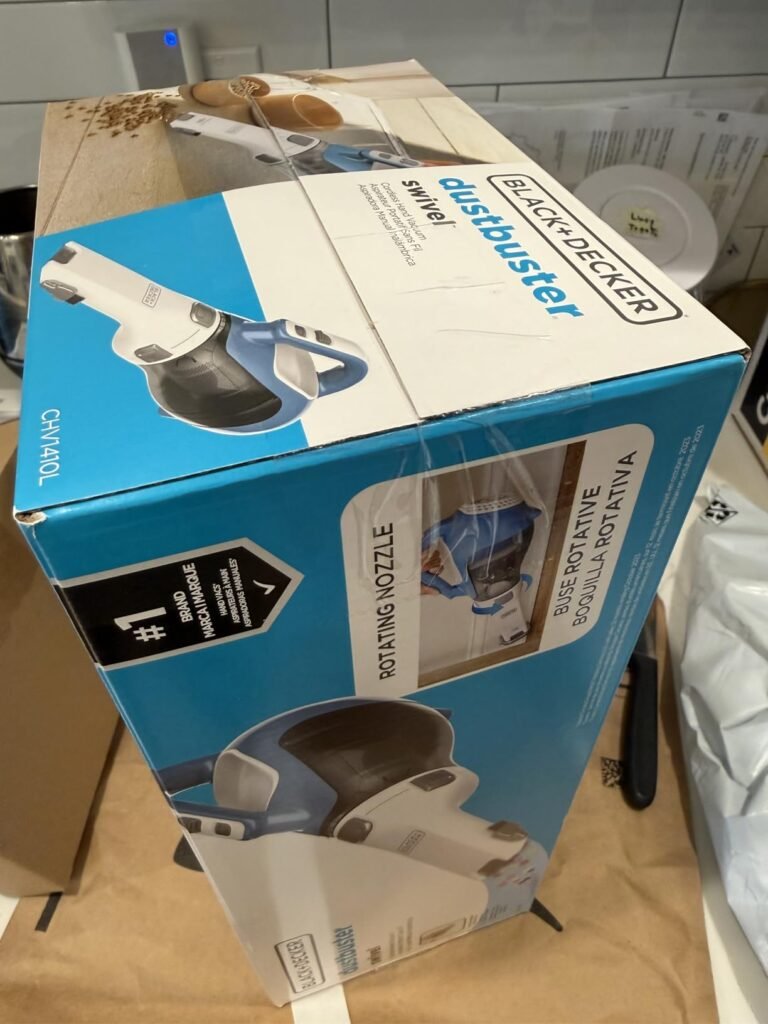
The rotating slim nozzle rotates 180 degrees for hard-to-reach areas, while the pull-out crevice tool and flip-up brush add real versatility for targeted cleaning tasks.
At roughly $40, it does not compete with the Bissell Pet Hair Eraser or premium Shark cordless models. It does not need to. It competes in a different session type: the two-minute kitchen counter run, the pre-passenger car clean, the sudden spill on a tile floor. In those moments, the CHV1410L is fast, ready, and correctly sized.
No other tool in this price window gives you a rotating nozzle, built-in crevice tool, washable filter, and translucent bowl in a package under three pounds.
What It Solves, What It Reduces, and What It Still Leaves to You
| Category | What the CHV1410L Does |
|---|---|
| Solves | Quick hard-surface crumb and debris pickup |
| Solves | Car interior touch-ups and tight-space reach |
| Solves | Keeping a charged, ready tool near high-traffic spots |
| Reduces | The frequency you need to pull out a full vacuum for small messes |
| Reduces | Kitchen after-cooking cleanup time |
| Does NOT solve | Pet hair on upholstery or carpet |
| Does NOT solve | Fine dust on shelves or electronics |
| Does NOT solve | Extended cleaning sessions in one charge |
| Still requires you | To maintain the filter regularly — dirty filter kills suction fast |
| Still requires you | To manage pet hair with a dedicated tool |
| Still requires you | To run a full vacuum for carpeted areas |
The filter is washable. That is genuinely useful. But a clogged filter is the fastest way to turn a competent little vacuum into a machine that sounds busy while doing almost nothing. Emptying the dust bowl after each use and cleaning the filter regularly is critical — cyclonic action helps, but routine maintenance is what keeps suction performing correctly.
Final Compression
The CHV1410L review conversation is loud online and often imprecise. The 4-star average tells you it works. The 1-star reviews tell you it failed. Neither tells you why both are accurate.
I reviewed this vacuum with a clear premise: the tool performs inside its real session window and fails outside it. That window is narrow. The marketing doesn’t draw it. This article did.
| Verdict Dimension | Assessment |
|---|---|
| Build quality | Solid plastic, adequate for the price |
| Suction on loose debris | Competent |
| Suction on fine dust | Insufficient |
| Pet hair performance | Poor to none |
| Battery life | 10–12 minutes, 4-hour recharge |
| Noise level | 83.5 dB — notably loud |
| Accessories | Rotating nozzle, crevice tool, flip-up brush — genuinely useful |
| Filter maintenance | Required, washable — manageable |
| Value for correct use | Strong at ~$40 |
| Value for incorrect use | Zero — frustration purchase |
If your mess is small, dry, on a hard surface, and over in under ten minutes — this is where the decision stops being vague. The CHV1410L is the correct, logical, and cost-justified tool for that exact situation.
If your mess involves pets, carpet, fine dust, or sessions that run long — this tool will frustrate you on a schedule, and the frustration will arrive before the refund window closes.
Buy it knowing what it is. Do not buy it imagining what you need it to become.
Frequently Asked Questions
| Question | Answer |
|---|---|
| Q: Is the BLACK+DECKER CHV1410L good for pet hair? | No. In lab testing and across consistent real-world reports, the CHV1410L fails to pick up pet hair reliably on upholstery or carpet. The nozzle suction is insufficient to lift embedded fiber-adhesive hair. If pet hair is your primary cleaning need, this vacuum will disappoint within the first week. |
| Q: How long does the battery last on a full charge? | Realistically, 10 to 12 minutes of continuous use. The manufacturer lists a maximum of 11 minutes. Recharging takes approximately four hours. This makes it a single-session tool per charge cycle, not a multi-room cleaning device. |
| Q: Can I use the CHV1410L as my only vacuum? | No. It is designed as a supplementary, spot-cleaning tool. It cannot replace a full-size upright or canister vacuum for any regular whole-home cleaning routine. |
| Q: Why does my DustBuster suction feel weaker over time? | Almost always a dirty or clogged filter. The washable filter is the suction lifeline of this machine. If you haven’t cleaned it, clean it before concluding the vacuum is defective. Empty the dust bowl after every use and rinse the filter regularly. |
| Q: Is it good for car cleaning? | Yes — for targeted, hard-surface car cleaning. Cup holders, dashboard, between seats, and door pockets: the rotating nozzle and crevice tool are genuinely effective here. For the full car carpet and upholstery, the battery life and suction depth will limit you. |
| Q: Why does it get such high ratings if the performance is limited? | Because most buyers use it inside its real session window — short, hard-surface, loose debris — and it delivers there. The ratings are honest. They’re just incomplete without knowing the use case behind them. |
| Q: Is the 16V battery as powerful as it sounds? | The label says 16V MAX, which is the peak initial voltage. Nominal working voltage is 14.4V. For light debris, this is sufficient. For anything requiring sustained draw — carpet, pet hair, fine dust — the gap between rated and working voltage becomes the performance ceiling. |
Transparency Note:
This analysis is built on aggregated real-world experience.
It extracts what repeatedly holds, what breaks, and what users uncover only after living with the system—then shapes it into a clear model you can use immediately.
Think of it as structured experience, refined and presented so you don’t have to learn it the hard way.
“A quick note: Don’t believe the star ratings, but trust personal experience. This article is a compilation of collected experiences”