BOSE SOUNDLINK MICRO 2 REVIEW: THE SOUND IS REAL. THE 12-HOUR BATTERY PROMISE HAS A HIDDEN CONDITION NOBODY WARNS YOU ABOUT.
The Result Looks Fine. The Problem Isn’t.
You carry a speaker for one reason: music that follows you without friction. Not music you plan around, not music you keep half-quiet to preserve battery, not music that stops midway through a beach afternoon because the volume you actually want kills the runtime you were promised.
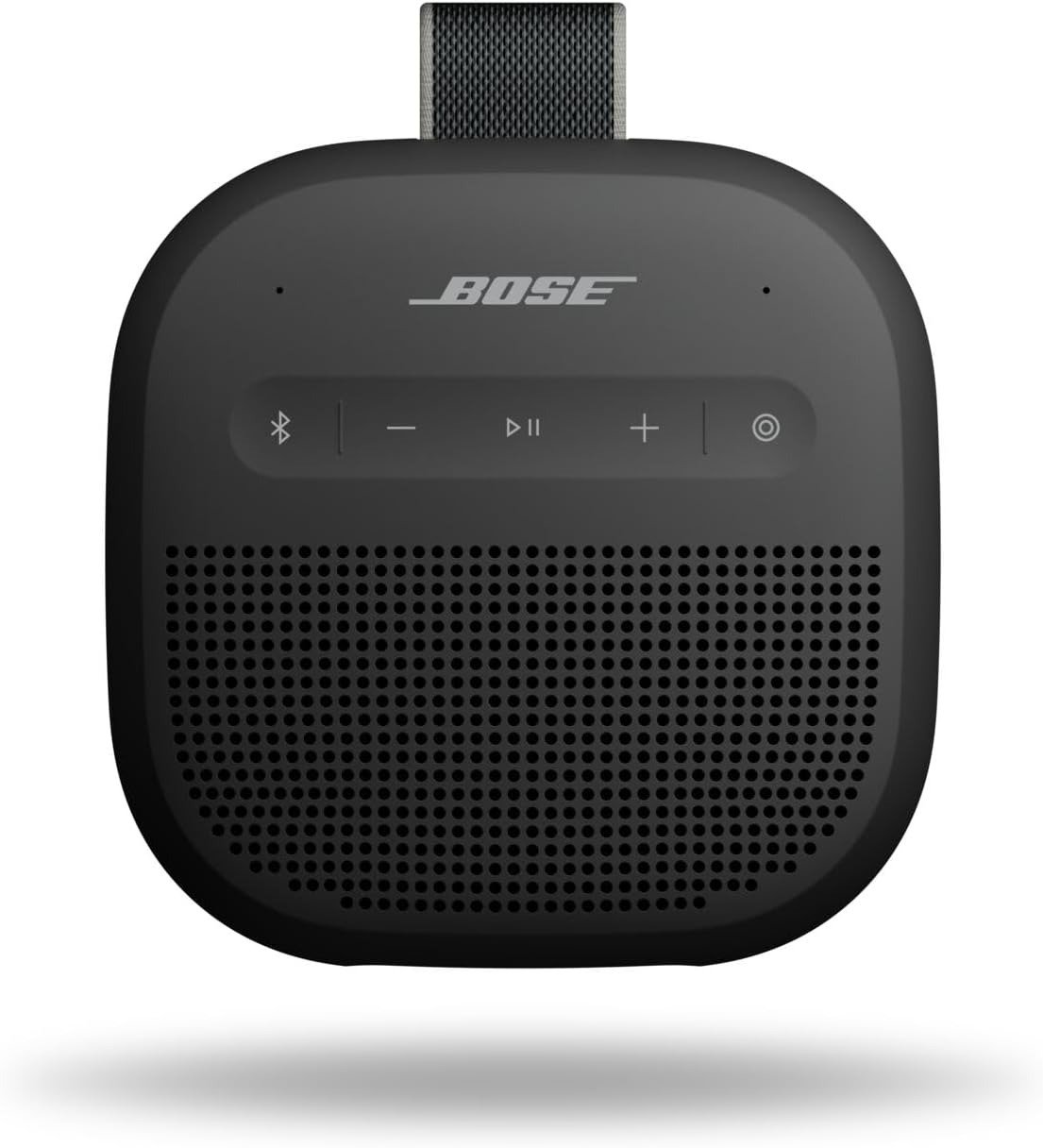
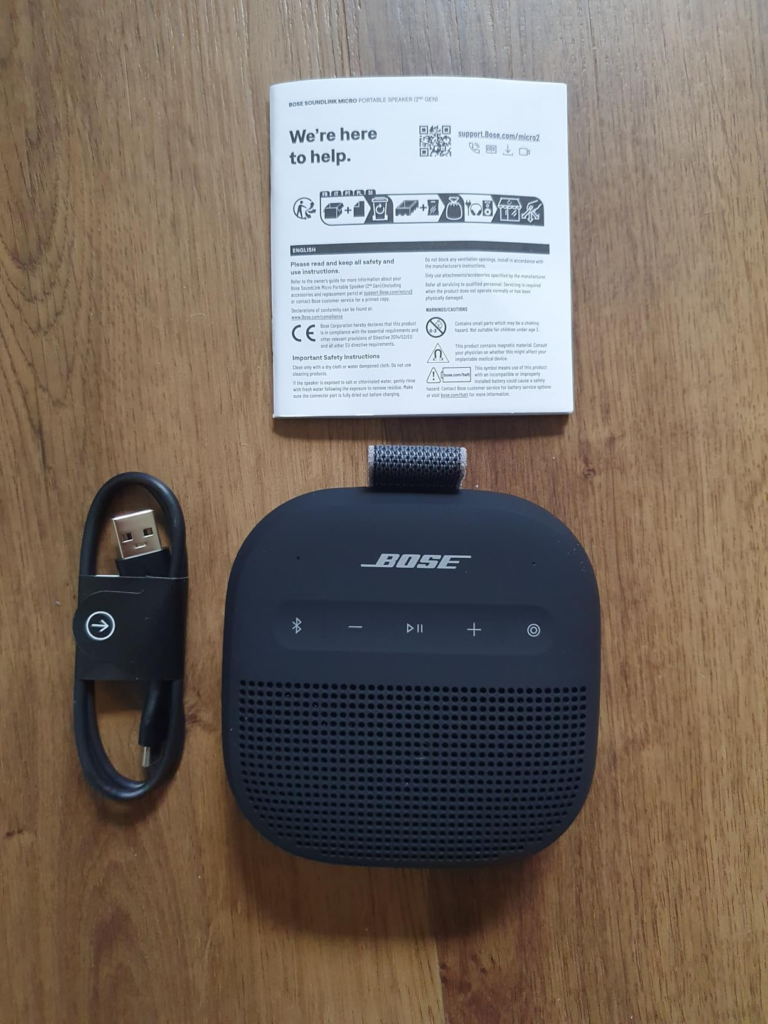
The Bose SoundLink Micro 2 is, by every surface metric, the right speaker. It is, confirmed by CNET after hands-on testing, a substantial and genuine upgrade — not a cosmetic refresh. It is palm-sized, IP67-rated, strap-equipped, and sounds noticeably better than anything else in its footprint class. Most reviews stop there. The problem lives one layer deeper.
Bose claims 12 hours of playback. The manual, quietly, notes around 3 hours at maximum volume. Neither number tells you what actually happens at the volume you use when you’re outdoors, in a group, at a party, or cooking with noise in the background. That volume — the real one — produces a very different result. And that gap is what this article is about.
What You’re Actually Feeling But Not Naming
The annoyance is specific. You’ve been using small Bluetooth speakers for years. You know their limitations. You don’t expect concert-hall audio from something that fits in a jacket pocket. What you expect is honesty: a runtime that holds at the volume you actually use, a feature set that doesn’t silently remove something you relied on, and sound quality that doesn’t collapse at the edges of the frequency range.
What most people feel — and don’t quite name — when shopping in this category is feature erosion anxiety. You’ve been burned before. A speaker that sounded great at low volume turned muddy at medium. A waterproof rating that failed in real rain. A battery that matched its claim only when you played at whisper level.
Reddit users flagged it clearly: the removed microphone was “a huge turnoff,” especially for those who use their speaker while cycling, where hands-free calls matter. That’s not a minor footnote. It’s a use-case elimination. If you were a Gen 1 user who took calls through your speaker or used voice assistant commands while your phone was in a bag, that workflow is gone.
The question underneath all the specs isn’t “is this a good speaker?” It’s: does this speaker match the life I actually live, at the volume I actually use, for the activities I actually do?
The Hidden Mechanism Behind the Miss
The engineering reality of palm-sized speakers is this: physical volume and acoustic output are at permanent war. The smaller the enclosure, the harder the driver has to work to push bass frequencies. The harder the driver works, the faster it drains the battery.
Bose addressed this with Active EQ — an automatic tuning system that adjusts the frequency response dynamically to match their target audio curve — alongside a single driver paired with dual passive radiators to improve performance at higher volumes. This is real engineering. It produces real results. By one tester’s estimate, the Gen 2 produces around 25% more bass than the original.
But Active EQ doesn’t change the physics of battery drain. It optimizes sound quality. It does not extend runtime at high output. The 12-hour claim is thermodynamically honest only at low listening levels — the kind you use alone at a desk or in a quiet room. The moment the speaker does what it was built to do outdoors at real-world volume, the math changes entirely.
In standardized testing at 80dB from one meter — a volume that approximates typical outdoor or social use — the SoundLink Micro 2 lasted just 4 hours and 33 minutes. That’s the mechanism. Not a flaw. Not a defect. A physical constraint that the marketing number doesn’t surface.
The Threshold Where the Outcome Quietly Breaks
There is a specific volume point — call it the Outdoor Threshold — where the SoundLink Micro 2’s battery promise detaches from reality.
Below it: the 12-hour figure is plausible. Personal listening at a desk, background music in a quiet room, solo use while cooking in silence. In those conditions, the speaker genuinely performs.
Above it: you are operating in a different product. At 80dB — the volume of a busy restaurant, a group conversation, a bike ride with wind — the speaker’s real-world stamina drops to roughly 4.5 hours, with the manual itself acknowledging approximately 3 hours at maximum volume.
The table below makes this concrete:
| Scenario | Approximate Volume | Realistic Runtime |
|---|---|---|
| Solo desk listening | ~65 dB | ~10–12 hours |
| Background music, quiet room | ~70 dB | ~7–8 hours |
| Outdoor casual use | ~75 dB | ~5–6 hours |
| Group / party / outdoor active use | ~80 dB | ~4.5 hours |
| Maximum volume | 100% | ~3 hours |
This is not a reason to avoid the speaker. It is a reason to calibrate your expectation before you buy it for a full-day music festival or a 6-hour camping trip.
Why Most Buyers Misread This Too Early
The comparison trap in this category is predictable. Buyers line up specs on a table:
| Spec | Bose SoundLink Micro 2 | JBL Clip 5 | UE Wonderboom 4 |
|---|---|---|---|
| Price | $129 | ~$80 | ~$100 |
| Rated Battery | 12 hrs | 12 hrs | 14 hrs |
| Waterproof | IP67 | IP67 | IP67 |
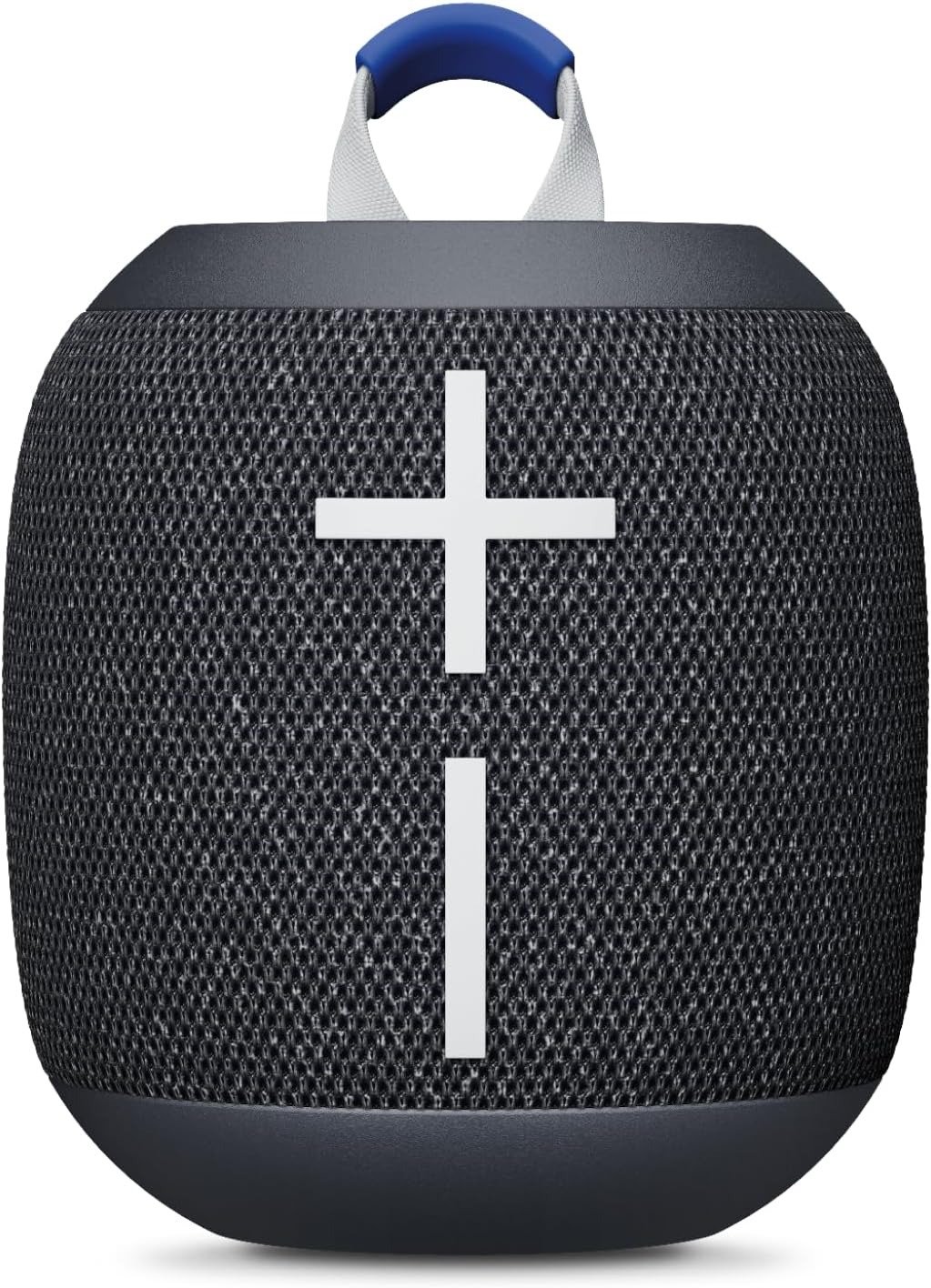
| Size | Palm / pocket | Clip-on carabiner | Cylindrical pocket |
| Microphone | ❌ None | ✅ Built-in | ✅ Built-in |
| Stereo Pairing | ✅ (same model or SoundLink ecosystem) | ❌ | ❌ |
| aptX Adaptive | ✅ Android/Snapdragon | ❌ | ❌ |
| Strap / Attachment | Fabric strap, replaceable | Fixed carabiner clip | Removable loop |
| Bluetooth Version | 5.4 | 5.3 | 5.0 |
| EQ via App | ✅ 3-band | ❌ | Limited |
On paper, the JBL and UE look competitive or superior on price. The reading error is treating battery hours as equivalent across all three. The UE Wonderboom 4 is noted for greater bass output and the ability to get considerably louder than the Clip 5 for its size — but neither competitor delivers the same tuned, structured sound profile as the Bose at equivalent volumes.
CNET’s reviewer was direct: the bigger but still compact SoundLink Flex sounds better and represents better value at $150. That’s the real comparison pressure: not the Clip or the Wonderboom, but the SoundLink Flex sitting two price points above. The Micro 2 wins on portability. The Flex wins on everything else.
The early comparison mistake is feature-led: “the Bose doesn’t have a microphone and costs $50 more than the Clip.” The correct comparison is use-case led: where is this speaker spending most of its time?
Who Is Actually Inside This Problem
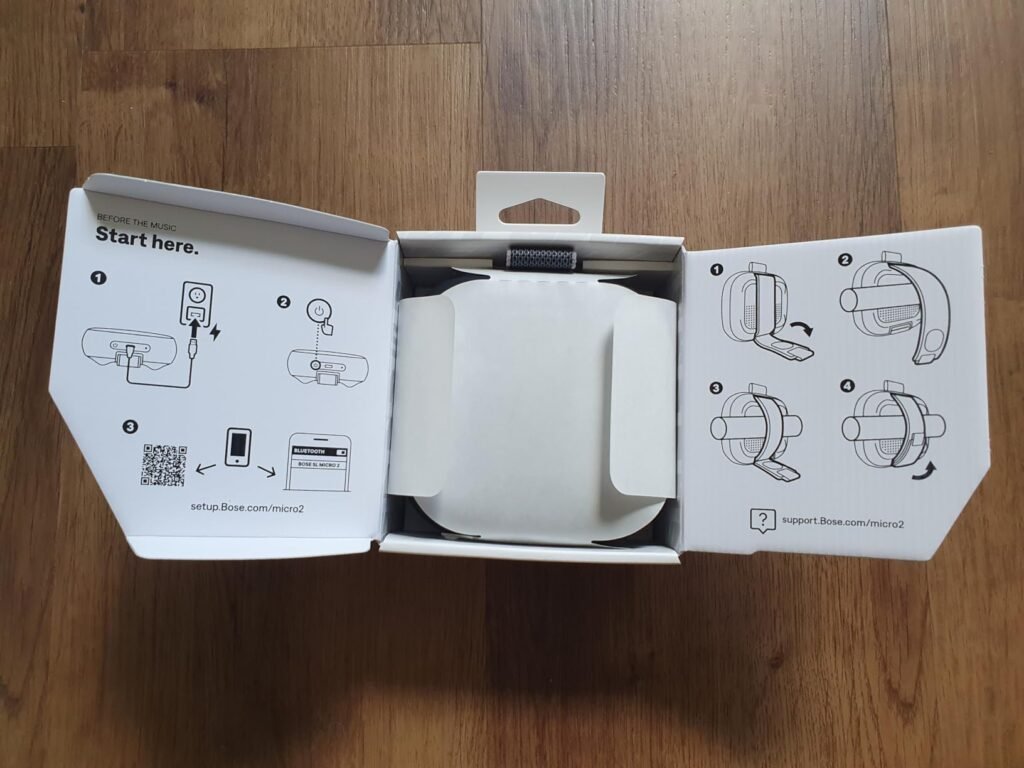
The SoundLink Micro 2 is built for a specific type of person. They carry it attached to something: a backpack strap, a handlebar, a carabiner loop on a hiking pack. The replaceable fabric strap — a deliberate upgrade from the original’s fixed rubber strap — is one of the most user-friendly design decisions Bose made in this generation, enabling easy maintenance if the strap gets damaged.
This person does not sit still with their speaker. They move. They have it on them, not placed on a shelf. They play music at volumes that clear ambient noise. They get it wet. They drop it occasionally. They want it to be there without thinking about it.
It is shock and rust resistant, IP67 waterproof and dustproof — built to bounce back in any environment.
That person is distinct from the person who wants maximum output from a small package — they need the Wonderboom. And distinct from the person who wants the convenience of clipping to almost any object without a strap — they need the Clip 5’s built-in carabiner. And distinct from the cyclist who takes calls through their speaker — that use case requires a microphone, which this speaker no longer has.
If the SoundLink Micro 2’s target user had a profile, it reads: Bose sound quality is a non-negotiable, portability is the primary constraint, and call functionality is absent or already handled through earbuds or phone.
Where Wrong-Fit Begins
| Profile | Verdict |
|---|---|
| Need built-in microphone for calls or voice assistant | ❌ Wrong fit — Gen 1 or SoundLink Flex (2nd Gen) instead |
| Need all-day battery at high volume for 8+ hour events | ❌ Wrong fit — physical constraint is real |
| Want maximum loudness for the price | ❌ Wrong fit — JBL or UE deliver more dB per dollar |
| Primarily stationary / home use | ❌ Wrong fit — the premium is for portability you won’t use |
| Need a speaker that floats for water activities | ❌ Wrong fit — the SoundLink Micro 2 will sink; it does not float |
| Want Bose-tier sound in a pocketable form | ✅ Strong fit |
| Attach speaker to bike, bag, or pack daily | ✅ Strong fit |
| Already own SoundLink ecosystem speakers | ✅ Strong fit — stereo and Party Mode integration |
| Android user on Snapdragon wanting codec quality | ✅ Strong fit — aptX Adaptive activates automatically on qualifying Snapdragon devices |
| Want to buy a pair for stereo mode | ✅ Strong fit |
The wrong-fit boundary is not about the speaker being bad. It’s about the speaker being purpose-specific in ways the marketing doesn’t foreground clearly.
The One Situation Where the Bose SoundLink Micro 2 Becomes Logical
After all the above, the product recommendation becomes structurally clear rather than emotionally pitched.
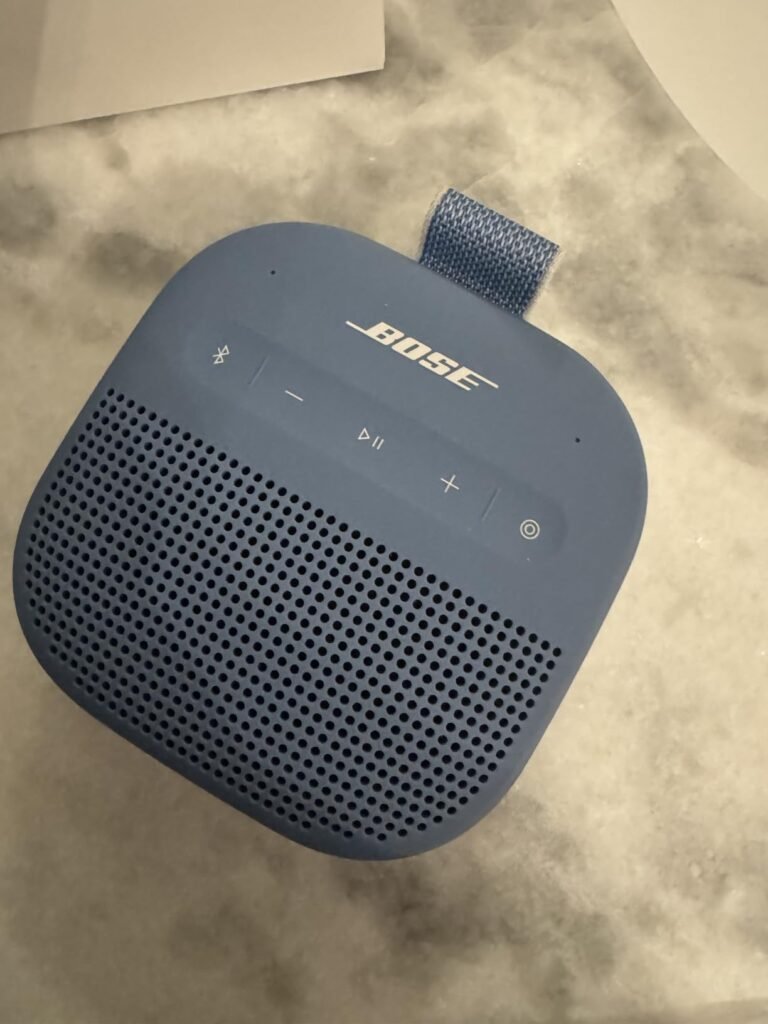
If your use case is: I need a speaker I can actually attach to my body or gear, get it genuinely wet, and have it produce real sound quality — not novelty sound quality, real Bose-class audio — in a package small enough to forget is there until I need it, then the SoundLink Micro 2 is the only product in its class that meets all four conditions simultaneously.
It was released in August 2025, eight years after the original, and represents a legitimate generational leap — available in Black, Blue Dusk, Petal Pink, Sandstone, or Twilight Blue at $129.
The USB-C charging, 12-hour rated battery at low volumes, and the new replaceable fabric strap bring it fully in line with the current portable speaker market in a way the original — with its micro-USB port and fixed rubber strap — never quite was.
Stereo Mode and Party Mode pairing work with another SoundLink Micro 2 or current SoundLink speakers like the Flex 2nd Gen, the Plus, or the Max. If you already own anything in that ecosystem, this extends it rather than starting a parallel one.
At $129, it is not a value buy. It is a precision buy.
What It Solves, What It Reduces, and What It Still Leaves to You
| Category | What the SoundLink Micro 2 Delivers |
|---|---|
| Sound quality at size | Best in class at the palm-sized form factor |
| Durability | IP67, shock-resistant, rust-resistant, strap-equipped |
| Connectivity | Bluetooth 5.4, multipoint (2 devices), aptX Adaptive on Android |
| Ecosystem | Full SoundLink family stereo/party integration |
| Charging | USB-C, approximately 2 hours to full |
| Customization | 3-band EQ, programmable shortcut button via Bose app |
| Category | What It Does Not Solve |
|---|---|
| All-day high-volume runtime | 4.5 hours at 80dB is the honest number |
| Speakerphone / voice calls | No microphone — this use case requires a different speaker |
| Floating | Will sink in water |
| Maximum loudness per dollar | JBL and UE deliver more volume for less money |
| Battery replaceability | The battery is soldered directly to the circuit board, requiring complete disassembly and special tools to replace — worth knowing for long-term ownership |
The honest ownership picture: this speaker will serve you well for 3–5 years if you use it within its fit zone. It won’t serve you well if you need all-day festival battery life or hands-free calling. Knowing the difference before buying is the only thing standing between a satisfying purchase and a frustrating one.
Final Compression
The Bose SoundLink Micro 2 does not disappoint people who understand what it is. It disappoints people who buy it based on the 12-hour headline without reading what 12 hours requires.
The correct decision framework is not “is this a good speaker?” It is “does my actual use case fit inside the zone where this speaker performs as described?”
If you attach a speaker to a bike, a backpack, or a belt loop — and Bose sound quality matters to you and not just volume output — and you are not dependent on a built-in microphone — this purchase compresses cleanly into one decision.
If your outdoor sessions run longer than 4–5 hours at party volume, add a portable charger or plan a mid-session charge. The inconvenience is real. It is also manageable.
If any single condition above does not match your life, the speaker one size up — the SoundLink Flex 2nd Gen at $150 — solves the runtime and adds the microphone back, at the cost of pocketability.
The SoundLink Micro 2 is the best palm-sized speaker Bose has ever made. It is only the right purchase if your use case fits its actual performance window — not the one on the box.
Frequently Asked Questions — Bose SoundLink Micro 2
| Question | Answer |
|---|---|
| Does the Bose SoundLink Micro 2 have a microphone? | No. There are no microphones in the SoundLink Micro 2nd Gen. Bose removed it from this generation. If you need speakerphone or voice assistant access, consider the SoundLink Flex 2nd Gen instead. |
| Does the Bose SoundLink Micro 2 float? | No. The SoundLink Micro 2nd Gen will sink; it does not float. It is IP67 waterproof, meaning it survives submersion, but it will not float at the pool or on a lake. |
| How long does the battery actually last? | At 80dB — a realistic outdoor or group listening volume — it lasted just 4 hours and 33 minutes in standardized testing. The 12-hour rated figure applies at low listening volumes. At maximum volume, the manual notes approximately 3 hours. |
| Can you pair two Bose SoundLink Micro 2 speakers together? | Yes. Two SoundLink Micro 2nd Gen units can be linked for Stereo Mode or Party Mode. Party Mode also works with other compatible Bose SoundLink speakers. |
| What codecs does the Bose SoundLink Micro 2 support? | It supports SBC, AAC, and aptX Adaptive. The aptX Adaptive codec activates automatically on Android devices with Snapdragon chipsets, delivering higher-quality wireless audio for compatible users. |
| Is the battery replaceable? | Technically yes, but not practically. The 3.6V lithium-ion battery is soldered directly to the circuit board, requiring complete disassembly and special tools. This is not a user-serviceable replacement. |
| How does it compare to the JBL Clip 5? | The Bose lasts a little longer at matched volumes, but the JBL gets louder. The JBL’s defining structural advantage is its large built-in carabiner, while the Bose’s advantage is sound tuning quality and Bose ecosystem integration. |
| Is the strap replaceable? | Yes. The fabric strap is completely removable and replaceable if damaged, sold separately — a deliberate user-friendly design choice Bose made in the second generation. |
| Which colors is it available in? | Black, Blue Dusk, Petal Pink, Sandstone, and Twilight Blue. |
| Should you upgrade from the Gen 1? | The 2nd Gen is a clear improvement in nearly every measurable way — better sound, USB-C, longer battery at low volumes, IP67 dust resistance, and broader Bose ecosystem integration. The only real loss is the built-in microphone. If you used that feature, the upgrade removes something you had. If you didn’t, the upgrade is straightforward. |
Transparency Note:
This analysis is built on aggregated real-world experience.
It extracts what repeatedly holds, what breaks, and what users uncover only after living with the system—then shapes it into a clear model you can use immediately.
Think of it as structured experience, refined and presented so you don’t have to learn it the hard way.
“A quick note: Don’t believe the star ratings, but trust personal experience. This article is a compilation of collected experiences”