The Flair PRO 2 Espresso Maker Promises Café Shots at Home — But There’s a Variable the Price Tag Doesn’t Include
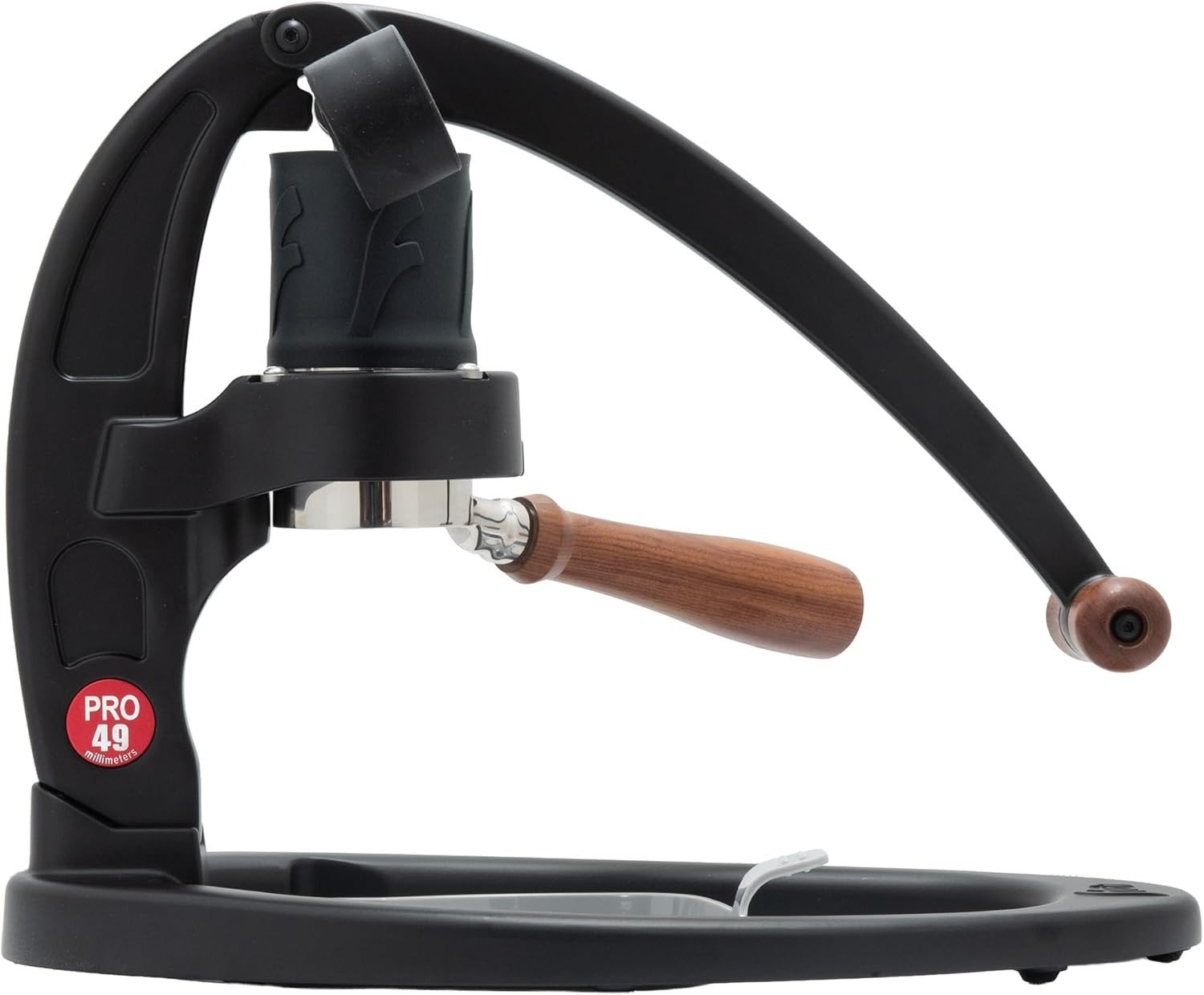
THE FLAIR PRO 2 ESPRESSO MAKER
The Shot Looks Right. The Problem Isn’t the Machine.
You pulled the lever. Water went through. Liquid came out.
It doesn’t taste like the espresso you were hoping for.
You check the pressure gauge — it read somewhere in the green zone. You used fresh beans. You followed the steps. And still, the shot is thin, slightly sour, or just flat.
This is the most common first experience with the Flair PRO 2, and almost none of the reviews explain why it happens or what it actually reveals about the machine’s real operating logic.
The problem isn’t defective hardware. The problem is that the PRO 2 is not a standalone device. It is the output half of a two-part system — and most buyers arrive with only half of what it actually requires.
What You’re Actually Feeling But Not Naming
There’s a specific frustration that shows up in forum threads, Amazon reviews, and community posts about the Flair PRO 2 — and it’s rarely described accurately in the moment.
It sounds like this: “I thought I was doing everything right, but I couldn’t pull a consistent shot for weeks.”
Or this: “The machine is beautiful. I just couldn’t get it dialed in.”
Or this: “I almost gave up and then one thing changed and everything clicked.”
What they’re describing isn’t a product flaw. It’s a misread of what category of object the PRO 2 actually belongs to.
Most espresso machines absorb your variables — an inconsistent tamp, a slightly off grind, an impatient pour. They have enough automated resistance built in to catch your errors. The Flair PRO 2 does not absorb anything. It amplifies. Every variable you introduce — grind consistency, dose, tamp evenness, preheat depth, lever speed — appears directly in the shot. Nothing is smoothed over. Nothing is hidden.
This is not a flaw. It is the precise design choice that makes the PRO 2 capable of espresso quality that outperforms machines costing multiples of its price — when the input conditions are right.
The frustration isn’t with the machine. It’s with arriving at a high-feedback instrument while expecting a forgiving appliance.
The Hidden Mechanism Behind the Miss
The PRO 2 has no boiler, no pump, no heating element, and no electronic temperature regulation. This is explicit in the product description. What isn’t described explicitly is what that absence requires from the user to compensate.
Because the brew head is made of dense stainless steel — a design choice that improves thermal stability once heated — it demands substantial preheating before each shot. One flush of hot water through the chamber isn’t enough. A single preheat cycle brings the cylinder to roughly 68.5°C (193°F), which is not sufficient for proper extraction. The brew temperature will land around 85°C (185°F) — below the optimal range. The PRO 2 needs two full preheat cycles to reach extraction-ready temperature.
This matters more than it sounds. Extraction temperature is not a minor tuning variable in espresso — it is a primary driver of flavor. Under-temperature extraction produces sour, underdeveloped shots regardless of how precise everything else is.
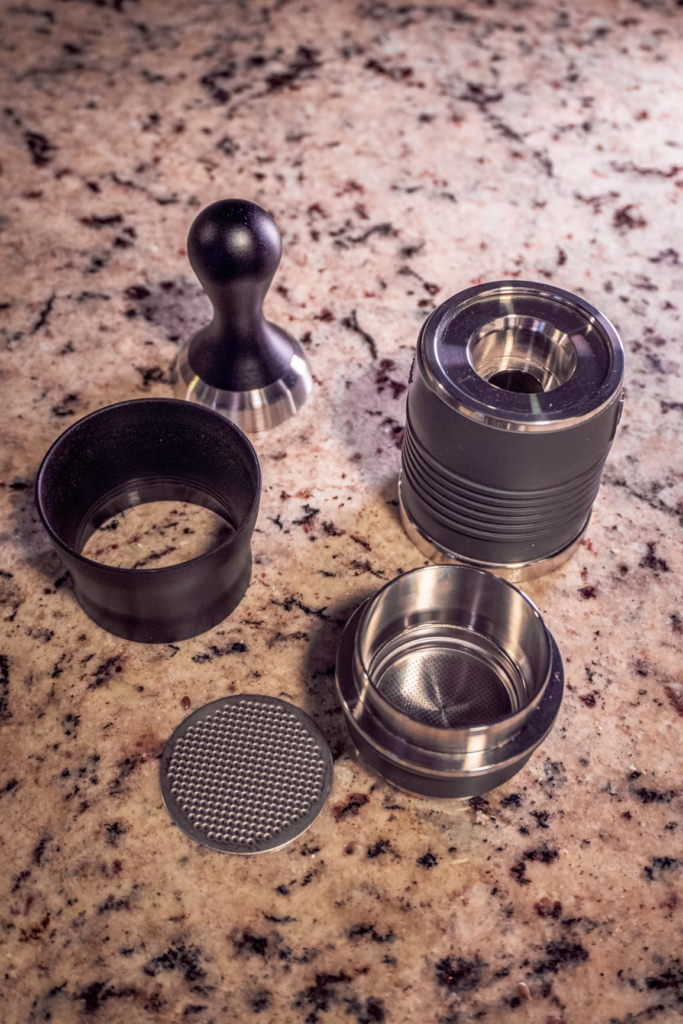
There’s a second hidden mechanism that almost every early PRO 2 user discovers the hard way: the basket is tapered, which means the tamper binds before fully compressing the dose at higher dose levels, introducing a volume variable that doesn’t exist in flat-bottomed commercial portafilters. It’s the kind of design detail that only becomes visible after you’ve chased inconsistency for a few weeks without knowing what to look for.
The mechanism of failure is almost never pressure. It’s almost always temperature management, grind quality, or dose-and-tamp interaction — three variables the pressure gauge cannot display.
The Threshold Where the Outcome Quietly Breaks
There is a clear boundary condition for the PRO 2’s performance, and it sits at the grinder.
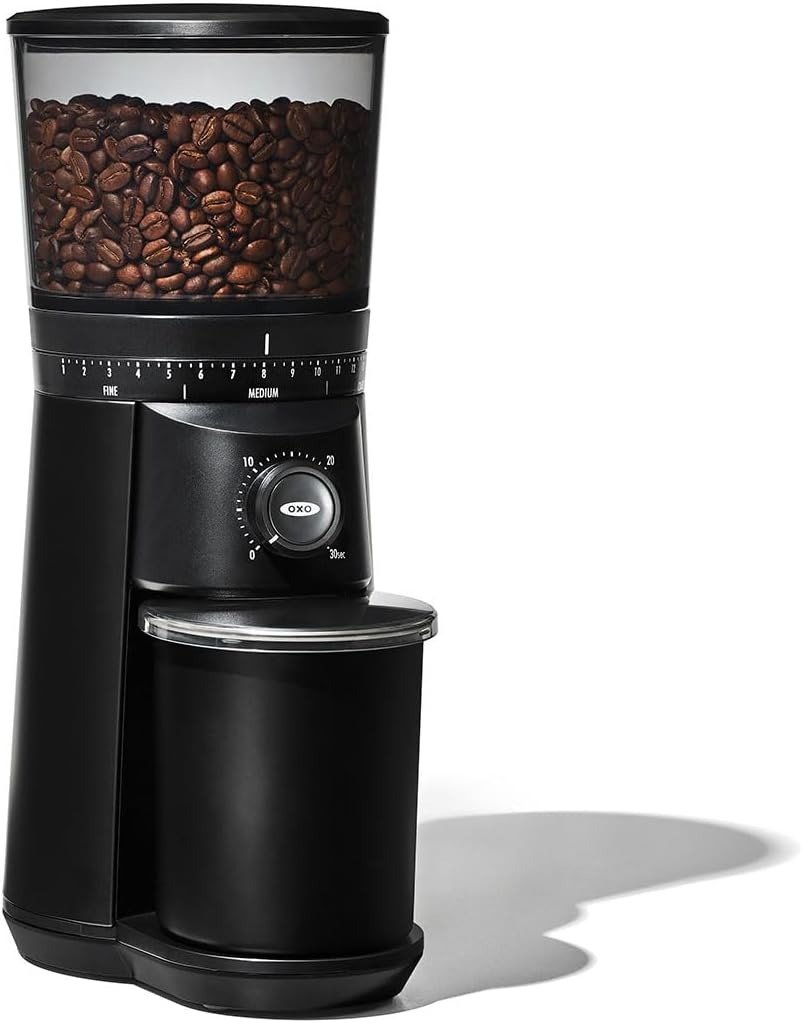
To get properly set up with the PRO 2, budget $500 to $600 total — the machine itself plus a quality grinder and accessories. This isn’t an upsell. It’s a structural requirement.
Espresso extraction depends on grind uniformity at a level that pour-over or drip methods do not require. Inconsistent grind particle size creates uneven water flow through the puck — some areas extract too fast, others too slow — producing simultaneous over- and under-extraction in the same shot. No amount of lever technique compensates for this at the source.
The following table shows how grinder quality changes the PRO 2’s actual output ceiling:
| Grinder Tier | Example Models | PRO 2 Output |
|---|---|---|
| Entry-level blade grinder | Generic blade grinders | Poor — channeling, inconsistency, flat taste |
| Budget burr (non-espresso capable) | Baratza Encore (stock) | Marginal — usable but limited ceiling |
| Mid-tier espresso burr | 1Zpresso JX Pro, Timemore S3 | Good — consistent, dialed, repeatable |
| High-tier espresso burr | Comandante C40, Eureka Mignon Silenzio | Excellent — extraction matching café standards |
One user pairing the PRO 2 with a 1Zpresso JX Pro reported pulling espresso at the level of commercial machines. The machine’s ceiling is genuinely high. But the ceiling only becomes accessible when the grinder beneath it is capable.
Below this grinder threshold, the PRO 2 will consistently produce disappointing shots — not because it is broken, but because it is doing exactly what a transparent, feedback-amplifying instrument does when fed inconsistent input.
Why Most Buyers Misread This Too Early
The comparison that kills the PRO 2 in early evaluation is this: “My [semi-automatic] machine cost twice as much and pulls shots more consistently.”
This comparison is structurally incorrect, but it’s the one most people reach for.
A mid-range pump machine with a pressurized portafilter basket is engineered to produce acceptable espresso from a wide range of grind qualities and tamp pressures. That is its design purpose. It forgives inconsistency. The result is reliable mediocrity — the same shot, more or less, regardless of what you do.
The PRO 2 doesn’t compete in that category.
Manual pressure control — which looks like an added variable — actually functions as a layer of forgiveness in pressure profiling, allowing you to respond to what the puck is doing in real time. This is the capability that electric machines at $800 and below do not have. Pre-infusion is typically only available on machines in the $800-and-above range. With the manual Flair, controlling pressure by hand makes it easy to pre-infuse the espresso grinds for 5–10 seconds, dramatically improving shots.
The feature comparison chart that most buyers use doesn’t capture this. They’re comparing number of buttons, whether it steams milk, whether it has a built-in grinder. The PRO 2 has none of those things by design. What it has is pressure transparency — the ability to feel and adjust the extraction as it happens. That capability doesn’t appear in a spec sheet row.
| Feature | Typical Semi-Auto ($300–600) | Flair PRO 2 ($325) |
|---|---|---|
| Pressure feedback during extraction | None | Live gauge, 0–12 BAR |
| Pre-infusion control | Rare below $800 | Manual, adjustable every shot |
| Grinder requirement | Moderate | Demanding |
| Milk steaming | Built-in | Requires separate frother |
| Temperature management | Automated | Manual preheat (2 cycles) |
| Shot consistency ceiling | Moderate — consistent mediocrity | High — requires dialing in |
| Portability | Fixed countertop | Full travel kit included |
| Electricity required | Yes | No |
The comparison only works in the PRO 2’s favor once the input conditions are met. Below those conditions, it appears to underperform. That appearance is accurate — and it’s entirely reversible.
Who Is Actually Inside This Problem
The Flair PRO 2 is not for someone who wants good espresso conveniently.
It is specifically for someone who is dissatisfied with the ceiling of their current setup and is willing to engage with the process of making espresso — not just the output. The distinction matters more than any specification.
The user who gets serious, lasting value from the PRO 2 typically matches several of these:
| Signal | What It Indicates |
|---|---|
| Already owns or plans to buy an espresso-capable burr grinder | The other half of the system is in place |
| Primarily drinks espresso straight or with a separate frothing setup | Not depending on the machine for milk drinks |
| Interested in pressure profiling and pre-infusion | Will use the manual control as a feature, not fight it as a friction |
| Has time and patience for a 2–3 week dialing-in period | Will reach the machine’s ceiling rather than quitting at week one |
| Values portability — travel, camping, small kitchen, no access to power | Unique advantage no pump machine offers |
| Primarily uses medium-to-dark roasts | More forgiving of slight temperature variation during preheat |
Light roast espresso requires high extraction temperature to develop its fruity flavor notes fully. Because no power is going to the manual machine, the clock starts ticking on temperature control as soon as the brew chamber is preheated — a shortfall for light roast users who need sustained high temperature. Dark and medium roasts are far more forgiving of the temperature drop that happens between preheat and shot completion.
Where Wrong-Fit Begins
There is a specific buyer profile for whom the PRO 2 will almost certainly produce regret, regardless of the machine’s actual quality.
| Wrong-Fit Signal | Why It Fails Here |
|---|---|
| Wants espresso fast, without steps | Preheat, dose, tamp, pre-infuse, lever — this is a 5–8 minute ritual minimum |
| Currently using a blade grinder with no plan to upgrade | The system ceiling is defined by the grinder, not the lever |
| Expects consistent shots within the first week | The dialing-in period is real and unavoidable |
| Needs lattes and cappuccinos as the primary drink | No steam wand; requires a separate frothing solution |
| Wants one device that does everything | The PRO 2 is deliberately a single-task precision tool |
| Travels light and doesn’t want to manage fragile parts | The pressure gauge and stainless components are durable but require careful packing |
The Flair has a steeper learning curve with more parts to manage. It is hot and requires a cloth to handle safely during reassembly. The press does not completely push out all the water, requiring attention during cleaning.
None of this is fatal. But for a user who didn’t expect it, each of these becomes a reason to stop using the machine — and that outcome has nothing to do with the PRO 2’s actual capability.
The One Situation Where the Flair PRO 2 Becomes the Logical Choice
After the above localization, the PRO 2’s ideal buyer is no longer ambiguous.
You already own — or are willing to invest in — an espresso-capable burr grinder. You drink espresso primarily black or with separately frothed milk. You want pressure profiling and pre-infusion without paying $800 or more for a pump machine that offers them. You have a small kitchen, travel regularly, or simply don’t want a machine that requires electricity and a dedicated countertop footprint.
In that configuration, the quality of espresso shots the PRO 2 produces rivals machines that cost ten times as much — particularly with medium and dark roasts.
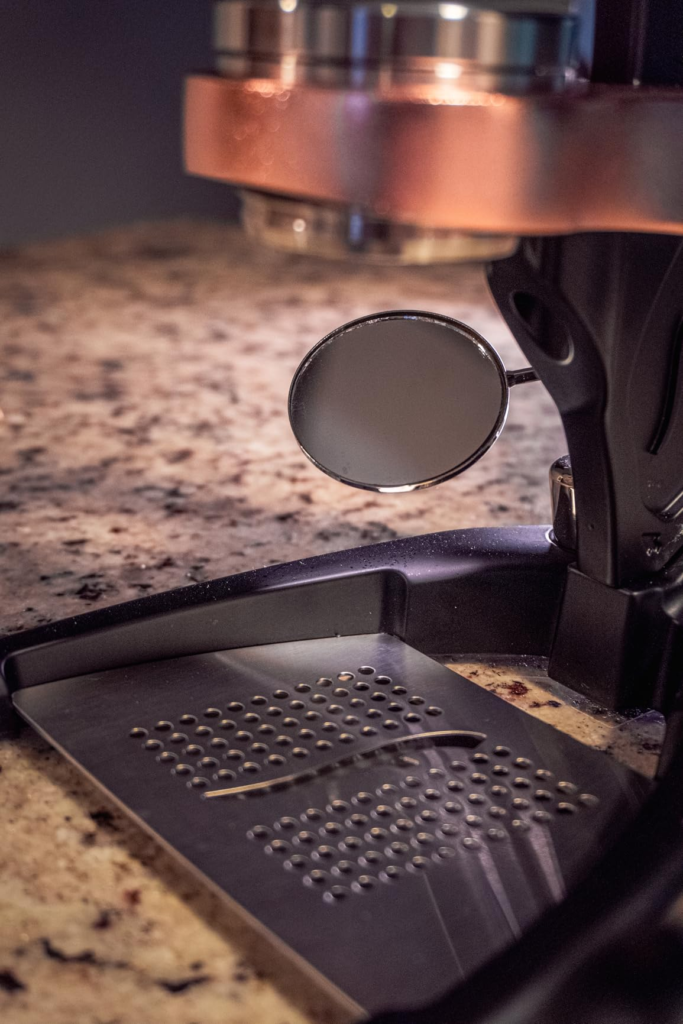
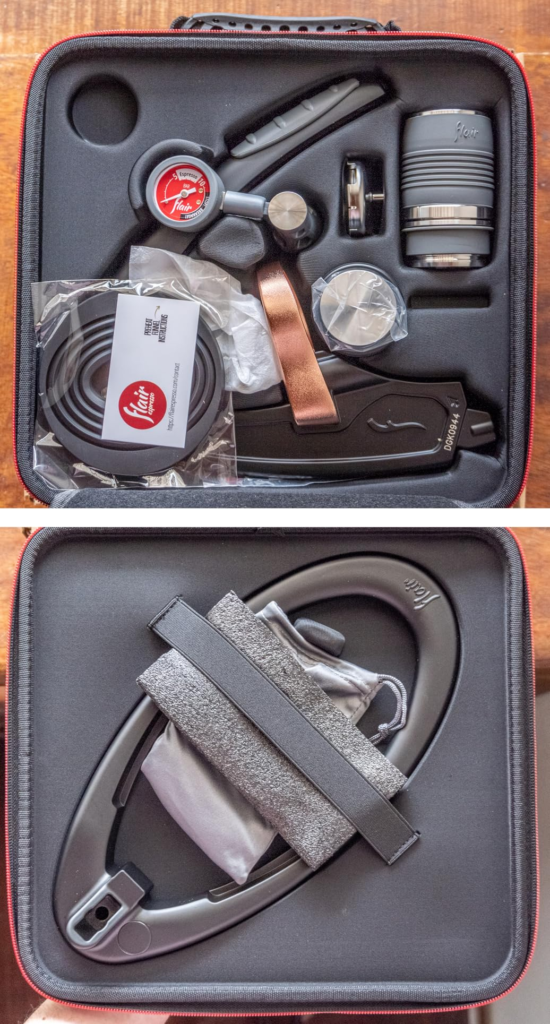
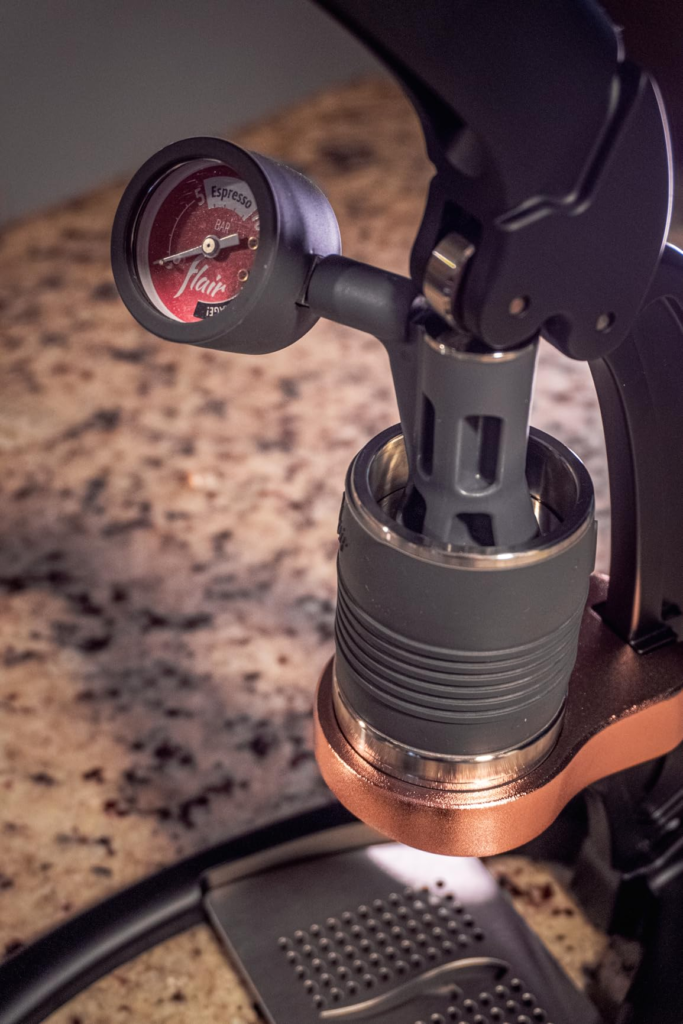
The PRO 2 adds a stainless brew path, a larger 70ml reservoir with up to 56ml yield, a pressure gauge with a clear 6–9 bar espresso zone, and a bottomless portafilter with a removable spout. The kit includes a travel case and a full set of tools. It rewards disciplined preheating with sweet, dense espresso and consistent pressure profiling wherever you brew.
There is no pump machine at $325 with live pressure feedback, manual pre-infusion, full portability, and no electricity requirement. That combination doesn’t exist at this price in any other form. The PRO 2 doesn’t win on convenience. It wins on control ceiling per dollar — but only when the grinder is real and the user understands what they’re operating.
What It Solves, What It Reduces, and What It Still Leaves to You
Before committing, this table should be read honestly:
| Category | What the PRO 2 Delivers |
|---|---|
| Solves completely | Shot quality ceiling — capable of café-grade espresso when dialed in |
| Solves completely | Electricity and pump dependency — fully off-grid capable |
| Solves completely | Portability — full travel case, no countertop commitment required |
| Solves completely | Pressure profiling and pre-infusion access below $800 |
| Reduces significantly | Total cost versus equivalent-quality pump machines |
| Does not solve | Milk steaming — requires a separate frother |
| Does not solve | Grinder quality — you supply this independently |
| Does not solve | The learning curve — two to three weeks of dialing in is realistic |
| Leaves entirely to you | Temperature management — preheat discipline is your responsibility every shot |
| Leaves entirely to you | Consistency — the machine reflects your inputs, not a fixed automation |
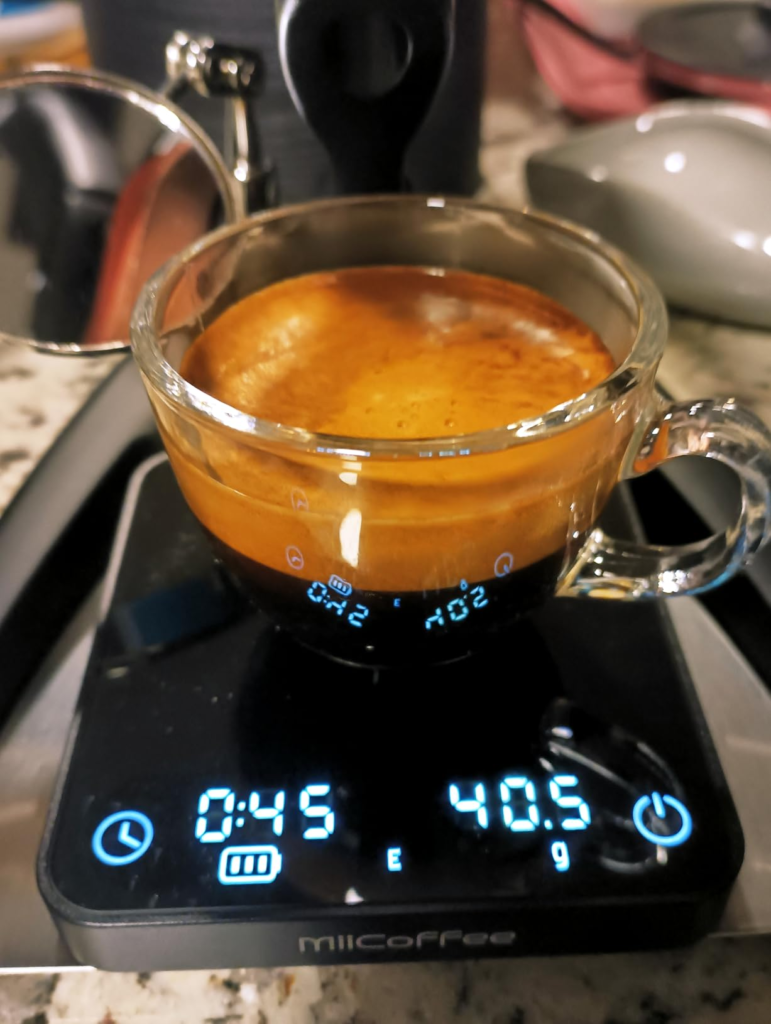
The shots pulled with the PRO 2 are better across the board when properly dialed in — extraction is higher, output is hotter, and there is significantly more range in brewing ratio compared to entry-level manual machines. That range is real. So is the investment required to reach it.
Final Compression
The Flair PRO 2 is not the right first espresso machine for someone who wants espresso made easier.
It is the right machine for someone who already grinds well, wants to control every variable in the shot, and is done accepting the consistent mediocrity that mid-range pump machines deliver.
The machine costs $325. The grinder that makes it perform costs $150–250 additionally. Budget $500–600 total to get properly set up. At that number, you are operating a system capable of pressure profiling, manual pre-infusion, and shot quality that competes with machines above $2,000.
If you are inside that profile — grinder in hand, process-oriented, no need for automation — the decision has already been made. Waiting doesn’t improve it.
If you are not yet inside that profile, buying the PRO 2 first and hoping the results follow is the one path most likely to end with a beautiful machine sitting unused on a shelf.
Frequently Asked Questions
| Question | Answer |
|---|---|
| Does the Flair PRO 2 require electricity? | No. It is fully manual and requires no power source — only boiling water, which can come from a kettle, stovetop pot, or any other source. This makes it genuinely portable. |
| What grinder do I need for the Flair PRO 2? | An espresso-capable burr grinder is required. Entry-level options like the 1Zpresso JX Pro (~$150) work well. Blade grinders and most low-cost burr grinders will not produce the consistency the machine needs to perform. |
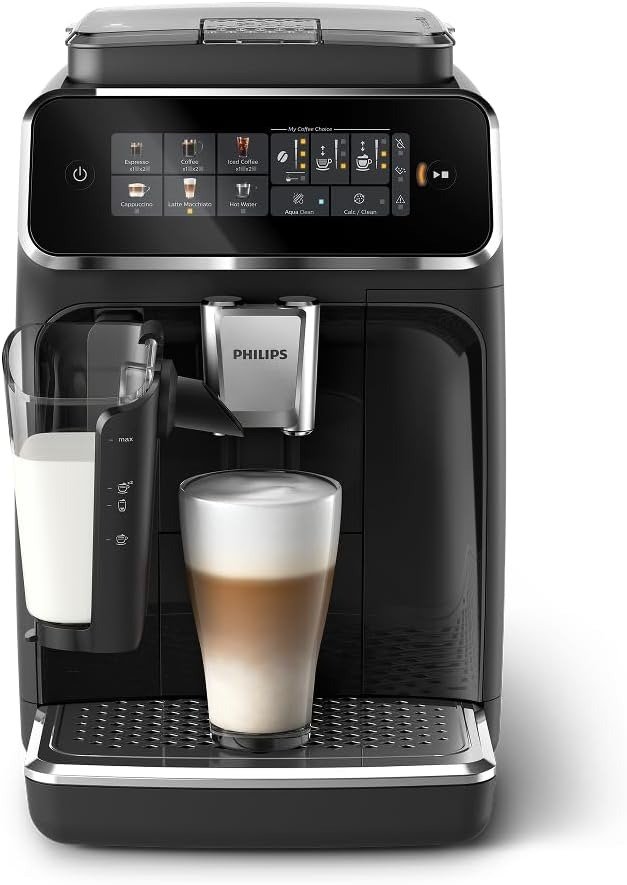
| Can the Flair PRO 2 make lattes or cappuccinos? | The machine produces only espresso — it has no steam wand or milk frothing capability. Many users pair it with a separate handheld or electric frother for milk drinks. |
| How long does it take to make a shot? | The full workflow — preheat (two cycles), dose, tamp, pre-infuse, and pull — takes approximately 5 to 8 minutes. It is not a fast-morning device for most users until the process becomes habitual. |
| How steep is the learning curve? | Most users report needing two to three weeks of consistent practice before pulling reliably good shots. Users with prior espresso dialing-in experience typically shorten this period significantly. |
| Does the PRO 2 work well with light roast beans? | With discipline. Light roasts require higher and more stable extraction temperatures. Because the machine loses heat between preheat and shot completion, lighter roasts are more demanding to pull correctly. Medium to dark roasts are more forgiving of this thermal behavior. |
| Is the PRO 2 worth the upgrade over the Flair Classic or Signature? | For users planning to dose 16–20g consistently and wanting live pressure feedback during extraction, yes. The stainless brew head, larger 70ml chamber, and built-in gauge justify the price difference for anyone serious about dialing in shots rather than pulling casually. |
Transparency Note:
This analysis is built on aggregated real-world experience.
It extracts what repeatedly holds, what breaks, and what users uncover only after living with the system—then shapes it into a clear model you can use immediately.
Think of it as structured experience, refined and presented so you don’t have to learn it the hard way.
“A quick note: Don’t believe the star ratings, but trust personal experience. This article is a compilation of collected experiences”