UE WONDERBOOM 4 REVIEW: THE SPEAKER THAT SOUNDS PERFECT — UNTIL IT DOESN’T
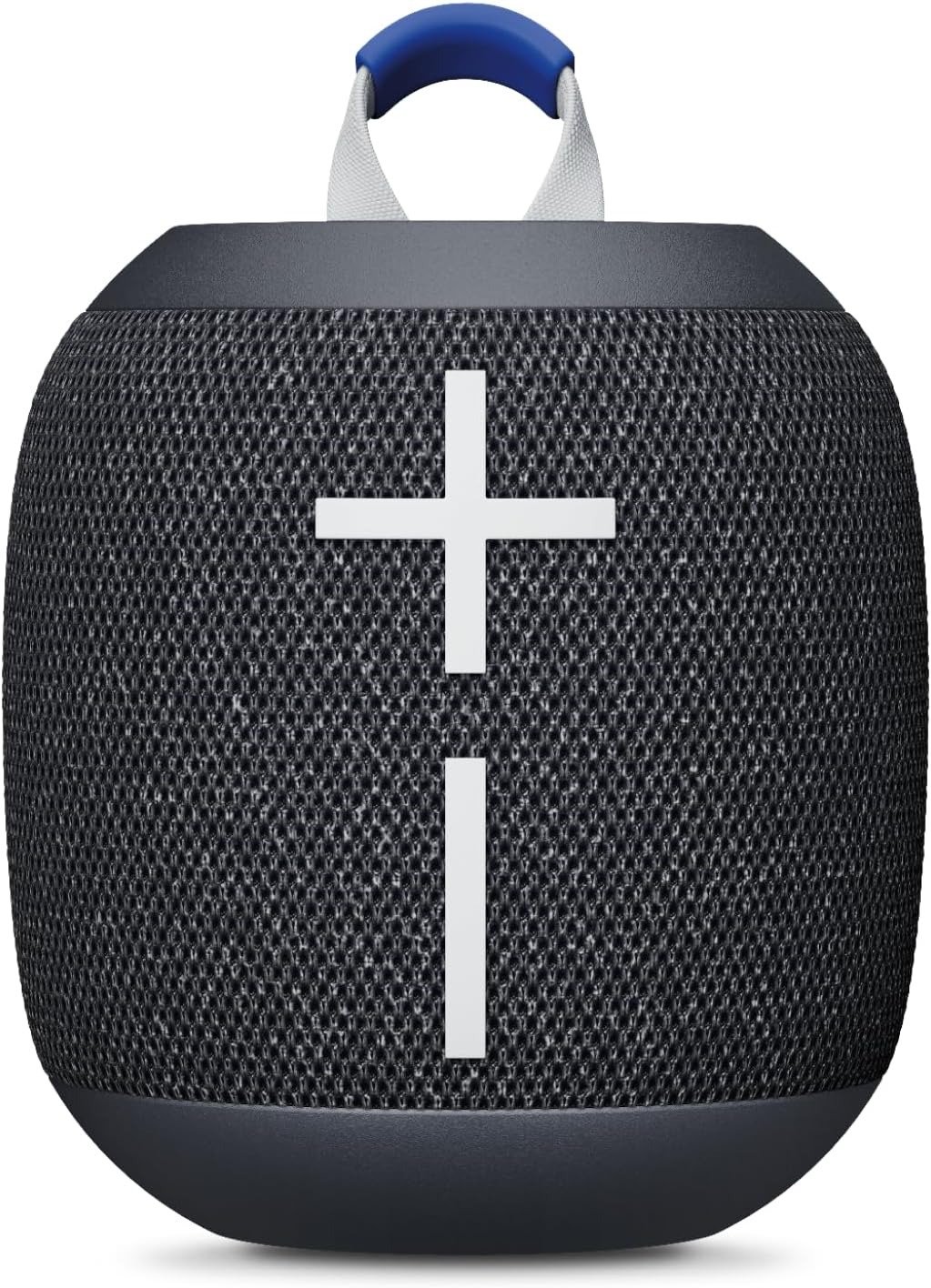
You put the Wonderboom 4 on the shelf. You play something. It sounds good — notably good, even. You think: okay, I get it now. Then someone arrives, the room gets louder, you push the volume up past the comfortable zone, and the character of the speaker subtly shifts. The bass you were relying on retreats. The highs get edgy. The thing still plays. But it’s no longer the speaker you agreed to.
That shift isn’t a defect. It’s a structural boundary — built into the physics of the driver, enforced by the DSP, and rarely disclosed clearly in the specs. Understanding exactly where that boundary sits, and why it exists, is the only honest way to evaluate whether the Wonderboom 4 is the right object for your situation or a very convincing wrong answer.
THE RESULT LOOKS FINE. THE PROBLEM ISN’T.
The Wonderboom 4 sounds exceptional at moderate volumes. At around 25% phone volume, there’s a solid pulse from the kick drum, decent layering of synths, and clean separation of instruments cutting through the mix with ease.
For that range of listening — bathroom, kitchen counter, desk, small outdoor table, a few people gathered — the speaker delivers more than its size implies.
Bass is bold without overwhelming the mids and trebles. There’s impressive separation for a portable Bluetooth speaker, with a richness to the output that isn’t commonly found in speakers of similar size.
The problem doesn’t appear in the spec sheet. It appears somewhere around the 60–75% volume mark.
After 60% volume, the DSP kicks in to reduce the bass frequencies and prevent the unit from distorting. The snare drum and vocals become harsh in the upper mids. Increasing treble frequencies affect the hi-hats.
The driver hasn’t failed. The DSP is doing its job — protecting the hardware from damage. But the listener who bought this speaker expecting a consistent sound across all volumes is encountering a character they didn’t audition.
WHAT YOU’RE ACTUALLY FEELING BUT NOT NAMING
There’s a specific frustration that doesn’t get described accurately in most Wonderboom 4 discussions. People say it’s “great for its size.” They say it’s “surprisingly loud.” Both are true. Neither explains the moment where the character changes.
What actually happens: you build a mental model of the speaker at moderate volume. That model becomes your expectation. Then you use the speaker in a louder environment — a pool afternoon, a backyard with ambient noise, a beach where wind competes with the signal — and you push it harder to compensate. The speaker you reach for isn’t quite the speaker that answers.
There’s a sweet spot at about ¾ volume. If you go beyond that, the music begins to fall apart at the seams.
That’s the honest ceiling. It isn’t silence — the speaker keeps playing. But the sound changes in a way that feels like a betrayal of what the quieter version promised. For the listener who only operates in the comfortable zone, this boundary is invisible and irrelevant. For the listener who regularly needs to push a small speaker hard in a loud outdoor environment, it’s the most important thing about the product.
THE HIDDEN MECHANISM BEHIND THE MISS
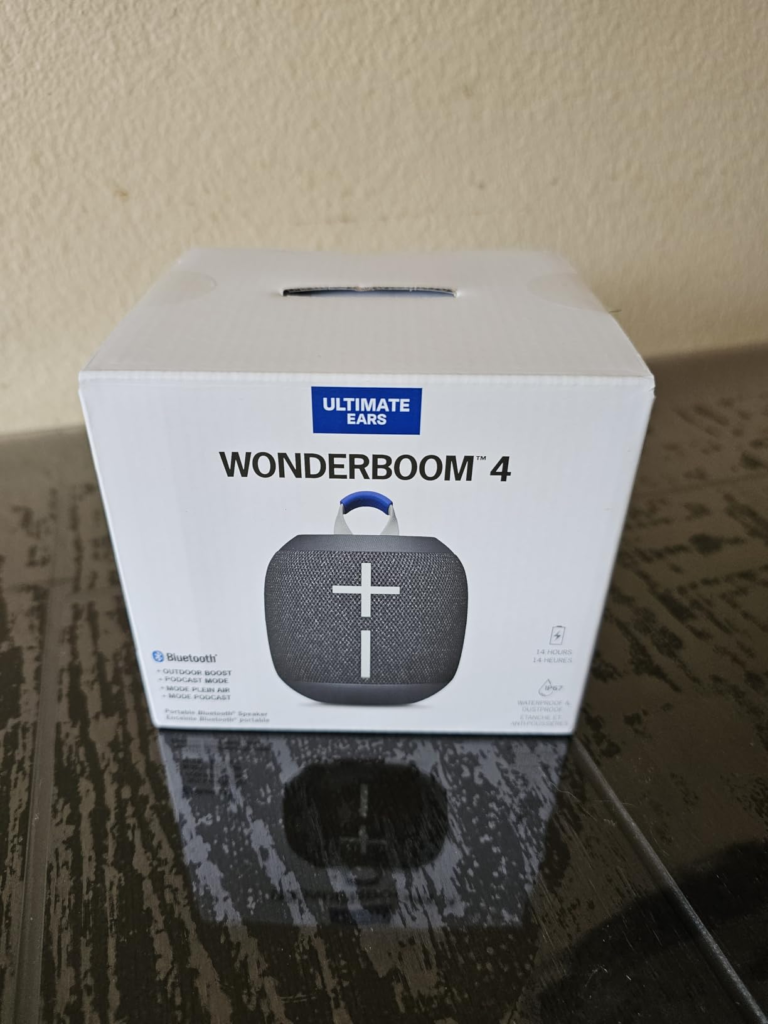
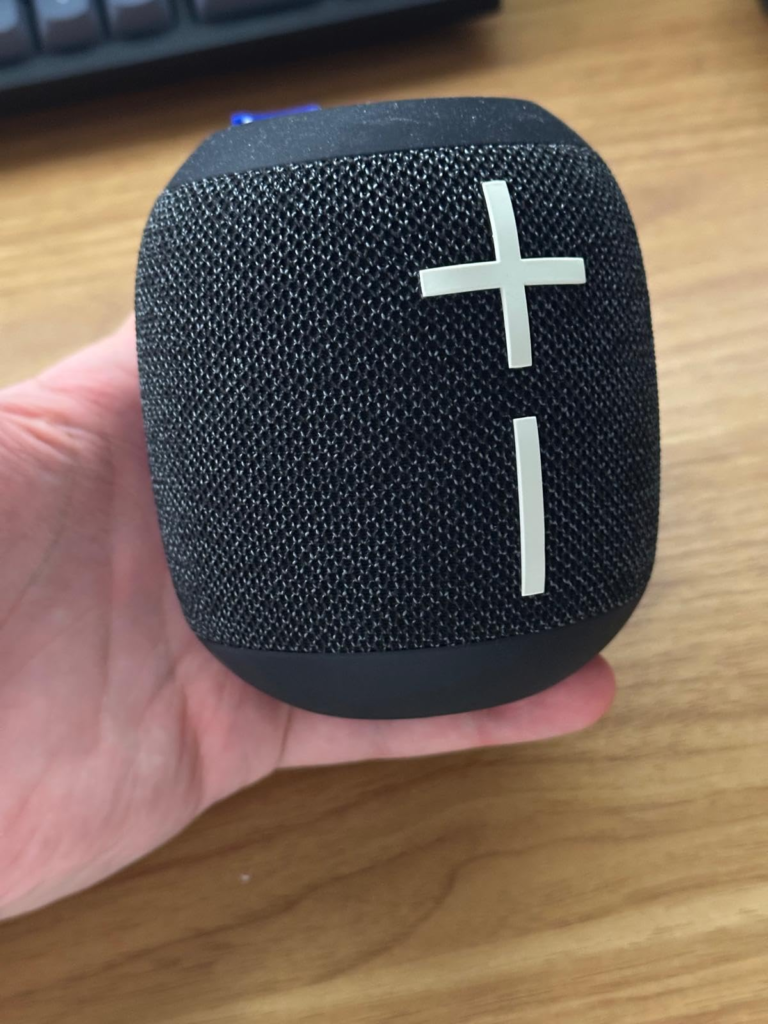
The Wonderboom 4’s driver configuration is unchanged from its predecessor. It uses two active 40mm drivers and two 46.1 x 65.2mm passive radiators for 360-degree sound, with a maximum volume of 86 dBC in Standard mode and 87 dBC with Outdoor Boost activated.
One decibel of overhead between modes. That’s the full range of the Outdoor Boost — not a dramatic volume expansion, but a tonal adjustment for open spaces.
The mechanism that controls high-volume behavior is DSP: digital signal processing that monitors the driver load and adjusts the frequency output to prevent physical distortion. The DSP kicks in to reduce bass frequencies when volume crosses the threshold, and both vocals and drums take on a harshness in the upper-mids as a result.
This is not a unique flaw to the Wonderboom 4. Every small speaker with a physics-limited driver does this at some point. The question is where the threshold sits, and whether it sits inside or outside your real use pattern.
Below the threshold: exceptional for the category.
Above the threshold: competent, but noticeably compressed.
The bass is primarily limited by the speaker’s size and driver diameter — the lows are good rather than outstanding when pressure is applied.
The speaker doesn’t hide this. The physics don’t allow it to. The marketing, however, doesn’t name it either.
THE VOLUME THRESHOLD TABLE: WHAT CHANGES AND WHEN
| Volume Zone | Bass Response | Vocal Clarity | Instrument Separation | Character |
|---|---|---|---|---|
| 0–50% | Full, punchy | Clean | Excellent | As advertised |
| 50–75% | Slightly reduced | Warm | Good | Still pleasant |
| 75–90% | DSP-compressed | Harsh upper-mids | Degraded hi-hats | Noticeably shifted |
| 90–100% | Thin | Edgy | Collapsed | Functional, not enjoyable |
The usable window is real and wide. For most personal listening contexts — indoors, semi-outdoors, small group — it never becomes a problem. For anyone expecting a consistent outdoor party-level experience from a single unit, this table is the disagreement.
THE THRESHOLD WHERE THE OUTCOME QUIETLY BREAKS
The Wonderboom 4 has a practical outdoor limit that the “Outdoor Boost” label obscures. The Outdoor Boost mode essentially just raises the volume by one decibel — given the speaker already gets plenty loud enough for personal use, it isn’t meaningfully different from Standard mode for most situations.
Outdoor Boost pulls back on the bass and lifts the treble, helping the sound carry further in open spaces — a legitimate second sonic option, but not a volume amplifier in any meaningful sense.
The threshold where this speaker stops being adequate:
- Any outdoor environment with competing ambient noise above light wind
- A group of more than 5–6 people expecting room-filling energy from one unit
- A pool setting where the speaker is positioned more than 3–4 meters from the primary listening area
- Anyone who purchased expecting the “big bass” marketing to hold at max volume
Below those conditions, the Wonderboom 4 performs exactly as described. Above them, it continues to function — just not at the level the quieter audition implied it would.
KEY SPECS AT A GLANCE
| Specification | Detail |
|---|---|
| Drivers | 2× 40mm active + 2× passive radiators |
| Max Volume | 86 dBC (Standard) / 87 dBC (Outdoor Boost) |
| Battery Life | Up to 14 hours (USB-C) |
| IP Rating | IP67 — dust and waterproof, floatable |
| Bluetooth | 5.2 / 5.3 (SBC only, no hi-res codecs) |
| Wireless Range | 131 ft / 40 meters |
| Weight | 420g |
| App Support | None (no UE Boom app) |
| EQ Modes | Standard / Outdoor Boost / Podcast Mode |
| Stereo Pairing | Two Wonderboom 4 units only |
| Drop Rating | 1.5 meters |
| Price | $99.99 USD |
WHY MOST BUYERS MISREAD THIS TOO EARLY
The Wonderboom 4 gets evaluated at the wrong moment by the wrong standard. A first audition in a quiet room, at reasonable volume, with a familiar song — that’s the peak expression of what this speaker can do. Every subsequent comparison is made against that peak.
Sonically, the Wonderboom 4 is identical to the Wonderboom 3. The Wonderboom 4 differs from its predecessor in precisely two ways: the replacement of the micro-USB port with USB-C, and the addition of Podcast Mode to the EQ options.
That means anyone upgrading from a Wonderboom 3 is paying for a port change and one EQ preset. Objectively. The Wonderboom 3 can be found at steep discounts, making the Wonderboom 4 feel slightly pointless for existing owners considering an upgrade.
The second misread is the Podcast Mode. Podcast Mode reduces the bass and treble to create a vocal-focused sound — but in practice, it can make voices sound like they’re speaking through a plastic tube. Most testers recommend leaving the bottom button alone entirely.
The features are real. Their utility is narrower than the naming suggests.
The UE Boom app still doesn’t support the Wonderboom 4, which is disappointing — particularly when competitors like the JBL Clip 5 now offer app support with a customizable graphic EQ at a similar price.
Users who purchased two units for stereo pairing noted that the EQ is noticeably off, and there’s no way to correct it through the app — only the limited cycling from the bottom button.
WHO IS ACTUALLY INSIDE THIS PROBLEM
The Wonderboom 4 is correctly matched to a specific type of listener. Not a vague “outdoor music lover.” A specific situation:
| User Profile | Match |
|---|---|
| Bathroom / shower daily listener | ✅ Ideal |
| Kitchen or desk listening, 2–4m² space | ✅ Ideal |
| Beach or pool with 2–3 people | ✅ Works well |
| Backpack traveler needing durable + light | ✅ Excellent fit |
| Camping solo or small group | ✅ Strong choice |
| Podcast listener (spoken word priority) | ✅ Podcast Mode works here |
| Outdoor gathering, 6+ people | ⚠️ Single unit will strain |
| Audiophile expecting hi-res fidelity | ❌ No codec support |
| User wanting app EQ control | ❌ Not available |
| Buyer upgrading from Wonderboom 3 | ❌ Marginal justification |
| Party host needing high sustained volume | ❌ Above this product’s ceiling |
Reddit consensus from 2024–2025 consistently places the Wonderboom 4 as the top choice for quiet outdoor listening and personal use — but recommends the Boom 2 or Motion Boom Plus for anyone needing sustained loudness.
WHERE WRONG-FIT BEGINS
The Wonderboom 4 will disappoint in a predictable, specific set of conditions. Not randomly. Not occasionally.
Wrong-fit begins when: the environment is louder than the speaker’s comfortable ceiling, and a single unit is expected to fill it. Users expecting hi-fi separation between highs and lows in an outdoor context found the Wonderboom 4 sounded like “a bigger iPhone” by comparison to speakers with better driver separation.
Wrong-fit begins when: the buyer expected app-based EQ or codec support. There is no support for hi-res audio codecs — SBC only — and no Boom app compatibility, which limits tuning flexibility to the three hardware-switch EQ modes.
Wrong-fit begins when: the stereo pairing expectation includes other UE products. Stereo pairing only works with another Wonderboom 4 — not a Wonderboom 3, and not any other speaker in the UE lineup.
Wrong-fit begins when: the buyer is a Wonderboom 3 owner looking for a real sonic upgrade. The hardware is identical. The sound is identical. The argument for switching rests entirely on USB-C and one EQ mode.
THE ONE SITUATION WHERE THE WONDERBOOM 4 BECOMES LOGICAL
After clearing the above: there is a specific buyer for whom this product is the cleanest, most defensible choice in its category.
You want a single compact speaker. You need genuine IP67 waterproofing — not splash resistance, actual submersion tolerance. You move between environments frequently: bathroom to backpack to beach bag to desk. You don’t need app control. You don’t push volume past the 70% threshold in typical use. Battery across a full day matters. Weight matters. Build durability matters.
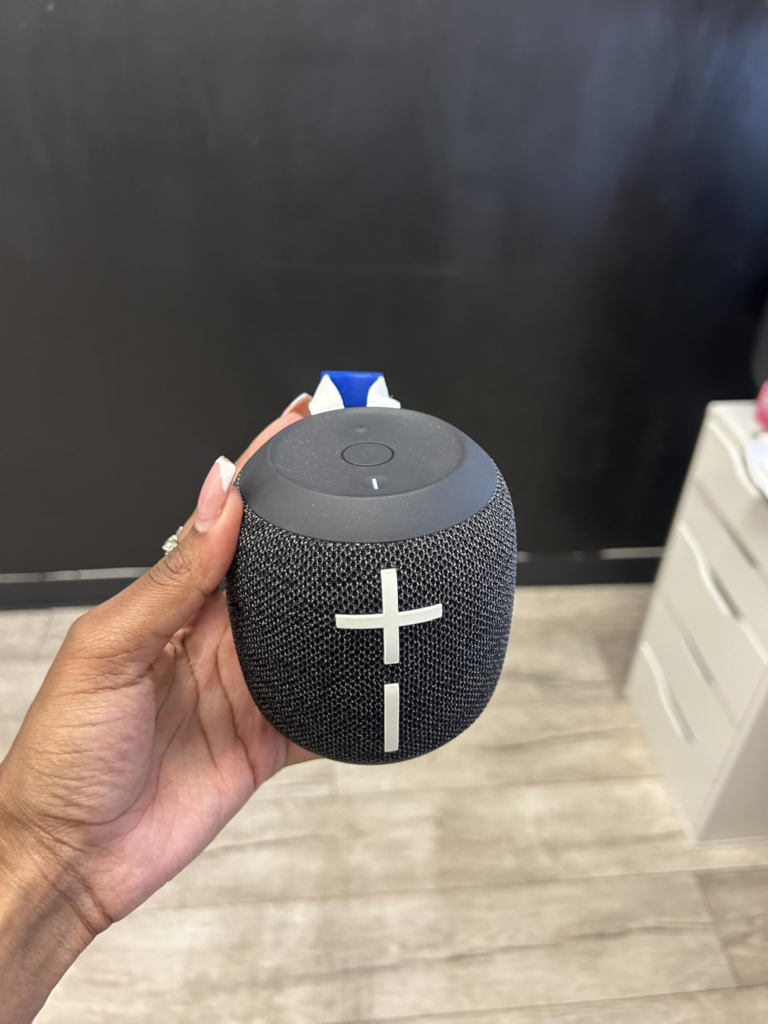
Battery life consistently exceeds the rated 14 hours in real-world testing, and the speaker simply keeps going across a full day of use. At 420g and 95mm × 104mm, it disappears into a backpack without registering as extra weight.
For that profile: there is no better-structured product at this size and price. The competitors that undercut the price sacrifice build quality or battery. The competitors that match the build exceed the size. At this size category, the Wonderboom 4 outperforms many travel companions — it embarrasses most speakers of the same physical class.
The product is not the best Bluetooth speaker. It’s the best Bluetooth speaker for a specific, bounded situation — and that’s the honest case for it.
WHAT IT SOLVES, WHAT IT REDUCES, AND WHAT IT STILL LEAVES TO YOU
| Category | What the Wonderboom 4 Delivers |
|---|---|
| Solves | Daily portable listening in wet, dusty, or rough environments |
| Solves | 14-hour battery life across a full outdoor day |
| Solves | Grab-and-go simplicity with no app dependency |
| Solves | 360-degree sound for listeners moving around the speaker |
| Reduces | Anxiety about drops, water exposure, dust, or beach sand |
| Reduces | Cable hassle (USB-C, universal) |
| Reduces | Connection friction (Bluetooth 5.2, multipoint, Google Fast Pair) |
| Still leaves to you | Managing volume ceiling in loud environments |
| Still leaves to you | EQ customization beyond three fixed presets |
| Still leaves to you | Finding a second unit if stereo pairing matters |
| Still leaves to you | The decision of whether USB-C alone justifies upgrading from a Wonderboom 3 |
The speaker does not solve everything. It solves the portability-durability-battery triangle cleanly, at a price that doesn’t require justification beyond the use case itself.
FREQUENTLY ASKED QUESTIONS
| Question | Answer |
|---|---|
| Does the UE Wonderboom 4 distort at high volumes? | Yes — above roughly 60–75% phone volume, the DSP compresses the bass and the upper-mids become harsh. The speaker keeps playing, but the character shifts noticeably. The usable sweet spot is below that threshold. |
| Is there a UE Wonderboom 4 app? | No. The Wonderboom 4 does not connect to the UE Boom app. EQ adjustment is limited to three presets: Standard, Outdoor Boost, and Podcast Mode, controlled by a physical button on the speaker’s underside. |
| Can I pair the Wonderboom 4 with a Wonderboom 3 for stereo? | No. Stereo pairing only works between two Wonderboom 4 units. It is not compatible with the Wonderboom 3, Boom, Megaboom, or Hyperboom. |
| How long does the Wonderboom 4 battery actually last? | Ultimate Ears rates it at 14 hours. Multiple independent tests confirmed this figure or exceeded it slightly at moderate volumes. |
| Is the Outdoor Boost mode worth using? | For most users: not significantly. It raises max volume by one decibel and adjusts the tonal balance for open spaces, but the difference is subtle. Most testers defaulted to Standard mode. |
| Is the Podcast Mode useful? | It narrows the EQ toward vocal frequencies but several reviewers found it made voices sound hollow or thin. Useful for audiobooks in very specific listening conditions — not a meaningful daily feature for most buyers. |
| Should I upgrade from a Wonderboom 3 to a Wonderboom 4? | Only if USB-C charging matters to your cable setup. The sound hardware is identical. The Wonderboom 3 at a discounted price currently represents better value per dollar for existing owners. |
| Is the Wonderboom 4 worth $100? | For a new buyer who fits the profile — personal use, moderate volume, wet or rough environments — yes. For a Wonderboom 3 owner or someone needing party-level output, no. |
Final Compression
The Wonderboom 4 is built for a listener who has already stopped expecting too much from it. That’s not a criticism — it’s a structural description.
The speaker rewards precision: use it inside its volume window, in the right environment, for the right group size, and it performs better than the price and footprint suggest is possible. Push it outside those conditions expecting something else, and the disappointment is predictable and avoidable.
If you listen alone or in small groups, move between environments, need genuine waterproofing, and rarely push a speaker past 70% — this is the cleanest, most durable choice in its category. The 14-hour battery, the IP67 rating, the USB-C port, the 360-degree projection: they hold.
If that description fits your actual daily pattern, the decision is straightforward. The Wonderboom 4 is the logical product for that situation — not because it’s perfect, but because nothing at this size and price handles that specific combination more reliably.
Transparency Note:
This analysis is built on aggregated real-world experience.
It extracts what repeatedly holds, what breaks, and what users uncover only after living with the system—then shapes it into a clear model you can use immediately.
Think of it as structured experience, refined and presented so you don’t have to learn it the hard way.
“A quick note: Don’t believe the star ratings, but trust personal experience. This article is a compilation of collected experiences”