PHILIPS 3300 LATTGO LOOKS LIKE A SHORTCUT. THE REAL TENSION STARTS WHEN YOU WANT MORE THAN A SHORTCUT.
A bad coffee machine does not ruin your morning all at once. It does it in layers.
First, it makes you wait. Then it makes you wipe. Then it makes you settle.
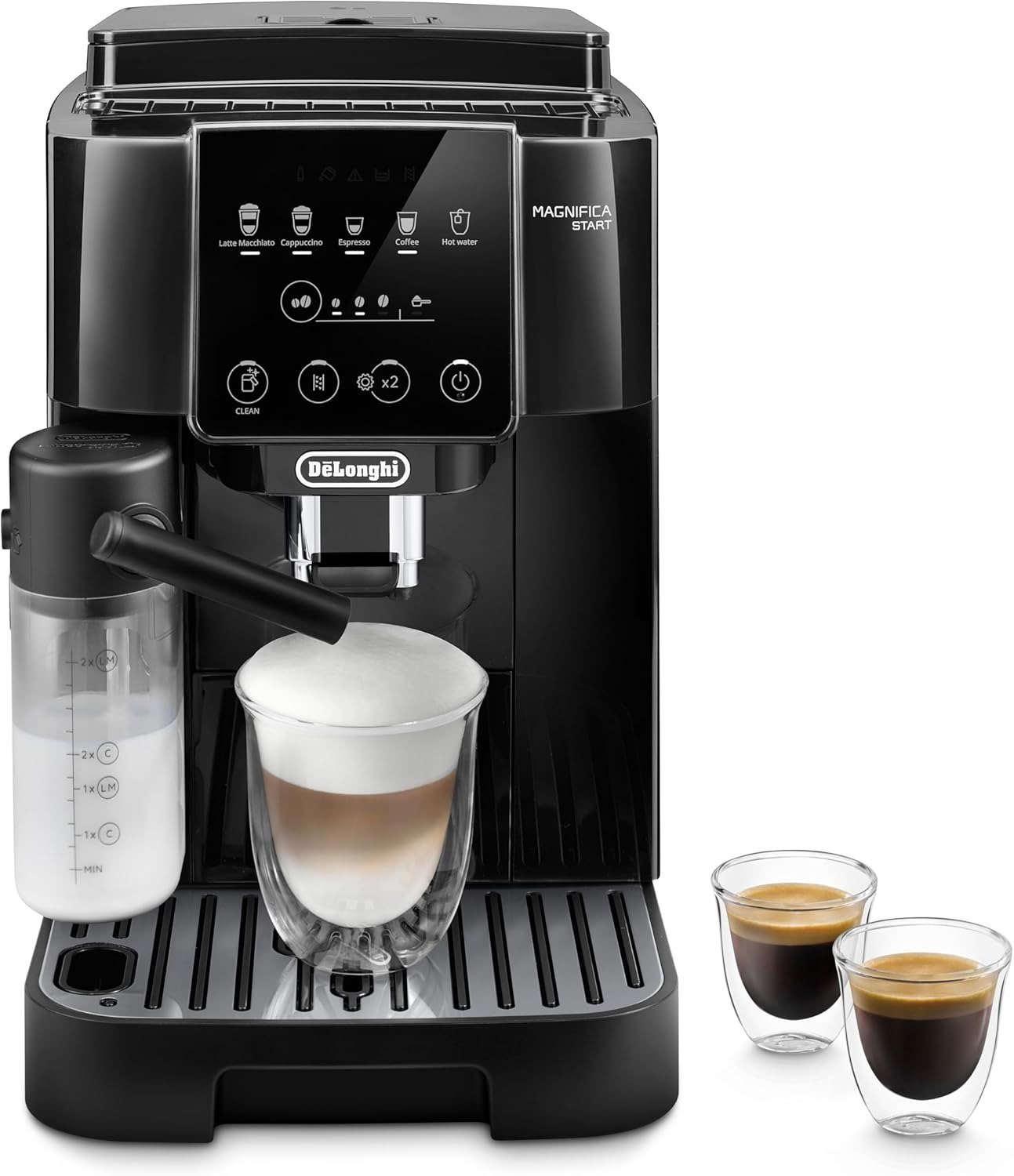
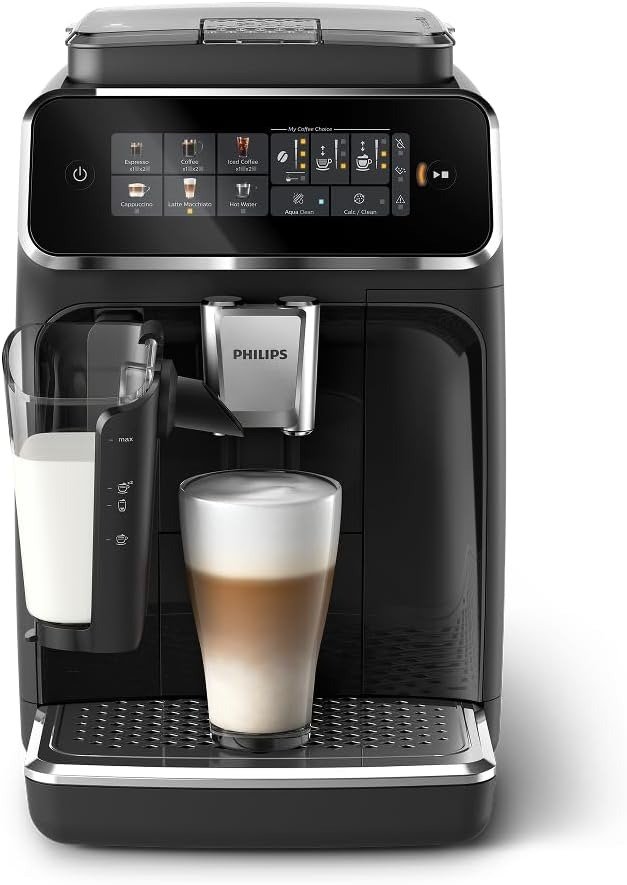
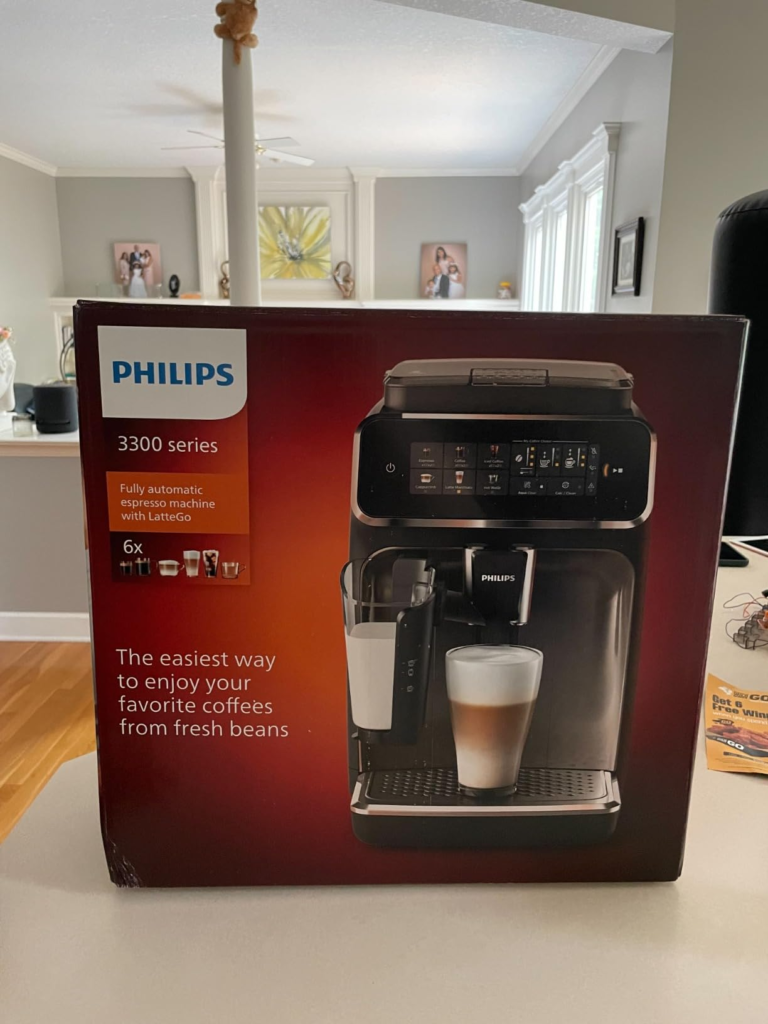
That is the trap the Philips 3300 LatteGo is clearly trying to break. On paper, it is seductive for exactly the right reasons: one-touch drinks, a milk system that does not feel like plumbing homework, a quieter brew cycle, a built-in grinder, a clean black body that looks calm rather than flashy, and a footprint that fits real kitchens instead of fantasy countertops. Philips lists six drink options, a 15-bar system, 12 grinder settings, a 275 g bean hopper, a 1.8 L water tank, and LatteGo cleanup in about 10 seconds, with dishwasher-safe parts. The machine is also physically compact enough to sit without swallowing the entire counter, at roughly 246 mm wide, 371 mm deep, and 433 mm high.
I am not writing this from the glow of a ten-minute unboxing. I am writing from the pattern that shows up when the spec sheet, reviewer tests, storefront ratings, and owner frustration finally stop contradicting each other and start telling the same story. That story is not “this machine is amazing.” It is sharper than that. The Philips 3300 is good when your pain is operational. It becomes less convincing when your pain is sensory.
The Result Looks Fine. The Problem Isn’t.
The first cup can fool you.
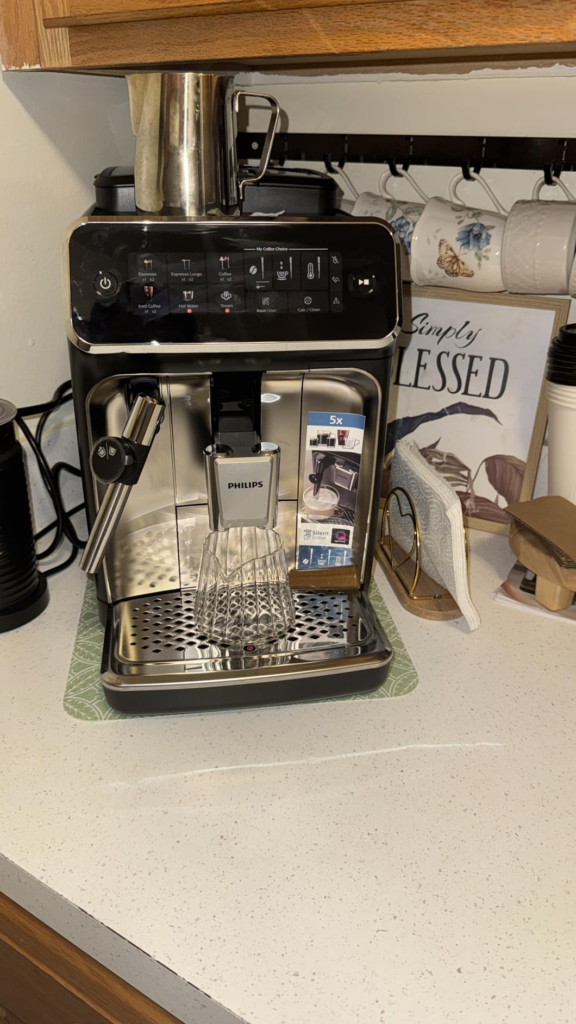
Crema appears. Milk lands softly. The interface responds. The machine hums with less drama than older superautomatics. Your kitchen suddenly feels more composed, more polished, more adult. Not louder. Not messier. Better arranged. A glossy black machine like this tends to look strongest when it sits near matte stone, pale wood, or brushed steel, with enough breathing room on both sides so the front-loading rhythm feels intentional rather than cramped. Push it into a dark corner and it becomes another appliance. Give it visible counter space and it reads like part of the room’s architecture. Philips’ own dimensions support that kind of placement logic: this is not tiny, but it is narrow enough to live cleanly on a standard counter without visual sprawl.
But a neat result is not the same as a solved problem.
Many buyers are not actually trying to buy “espresso.” They are trying to buy silence, speed, and a morning that does not ask for skill before sunrise. That is where the 3300 is strong. Review coverage repeatedly praises the ease of cleaning, approachable interface, and unusually quiet behavior for a bean-to-cup machine, while owner feedback often highlights that it looks good on the counter and asks for very little from the user once set up.
What You’re Actually Feeling but Not Naming
Most people do not say, “I need lower beverage friction.”
They say, “I’m tired.”
That matters.
Because the real appeal here is not espresso theatre. It is friction removal in three places:
| Hidden irritation | What it feels like in daily life | What the 3300 tries to remove |
|---|---|---|
| Noise fatigue | The grinder sounds like punishment before you are fully awake | SilentBrew and sound shielding |
| Cleanup dread | Milk drinks feel good until the cleanup makes you regret them | LatteGo’s minimal-part milk system |
| Decision fatigue | Too many menus, too many adjustments, too much fuss | One-touch recipes on a simple touch display |
Philips explicitly markets the machine as 40% quieter than earlier models, with Quiet Mark certification, and the LatteGo milk system as a two-part, no-tube design that rinses in about 10 seconds or goes in the dishwasher. Independent reviewers broadly agree on the practical result: this is one of the simpler and quieter superautomatics in its class.
That is the emotional core of this machine. Not luxury. Relief.
The Hidden Mechanism Behind the Miss
Now the uncomfortable part.
Machines like this are often judged by the wrong yardstick. People look at drink menus, foam visuals, and touchscreens, then assume cup depth will follow automatically. It does not.
The hidden mechanism is simple: convenience systems can reduce labor faster than they increase extraction quality. Philips gives you 12 grinder settings, a ceramic grinder, and a brew system designed around slower flow and lower temperature extraction. That helps with consistency and usability. It does not magically turn a mid-range superautomatic into a machine built for people chasing café-level body, high-dose intensity, or obsessive bean expression.
This is why user reactions split so hard. The same machine gets called “easy, quick, reliable” by one owner and “watery” by another. Those are not always contradictory reviews. Often they are reviews from two different thresholds of expectation. Amazon’s listing sits around 3.8/5 from more than 3,000 ratings, which is not a disaster signal, but it is also not the score of a universally adored machine. That kind of rating usually means the product is solving one problem very well while failing another one for a meaningful slice of buyers.
The Threshold Where the Outcome Quietly Breaks
Here is the threshold I would name for this machine:
The 3300 works best until convenience stops being your main victory condition.
Once your priority shifts from “make it easy” to “make it richer, heavier, more café-like, more tailored,” the machine’s charm starts thinning out.
That threshold usually appears in one of three moments:
- You start comparing it to stronger manual or premium superautomatic espresso rather than to pods or drip.
- You stop caring that cleanup is fast and start caring that the cup feels thinner than you hoped.
- You buy darker, better beans and expect the machine to scale upward more than it realistically can.
A useful way to see it:
| If your priority is… | The Philips 3300 usually feels like… |
|---|---|
| Quiet mornings | A real upgrade |
| Fast milk drinks | A strong fit |
| Low-maintenance ownership | A strong fit |
| Deep espresso tinkering | A weak fit |
| Maximum strength and density | A conditional fit at best |
| Saving counter space without sacrificing one-touch drinks | A strong fit |
Why Most Buyers Misread This Too Early
Because they buy the visible layer.
Milk. Buttons. presets. shine.
And they ignore the decision metric that matters: what exactly are you outsourcing to the machine?
If you are outsourcing labor, the 3300 makes sense. It grinds, doses, brews, and foams with almost no resistance from you. If you are outsourcing judgment — meaning you want the machine to decide your way into a truly dense, characterful cup every time — then you may be asking too much from a system built to compress effort first. Philips even omits user profiles on this model, which tells you something about the product philosophy. This is not a machine built around deep personalization. It is built around quick repeatability.
That is also why some reviewers love it as a step up from pod systems or basic home coffee routines, while more demanding coffee drinkers remain cooler on it. The machine is not lying. Buyers are often just listening to the wrong promise.
Who Is Actually Inside This Problem
You are the real buyer for this machine if your current routine feels like one of these:
- You are using pods, capsules, or inconsistent drip coffee and want fresher bean-based drinks without adding ceremony.
- You want milk drinks often, but you hate the cleanup burden that usually follows them.
- You live with other people, wake earlier than they do, or simply cannot stand a grinder that sounds like metal panic.
- You care how the machine sits in the room. You want it to look composed, not industrial.
- You want a machine that feels like an appliance, not a hobby.
In that context, the 3300’s value proposition gets much stronger. Especially when its Amazon price is sitting around the mid-$500s rather than closer to the official $899.99 shown on Philips’ home-appliance storefront variant. Price matters here because the machine’s logic is extremely sensitive to value positioning. At the wrong price, its compromises feel louder. At the right price, its convenience starts dominating the conversation.
Where Wrong-Fit Begins
Wrong-fit starts the moment you expect this machine to do one of three things it was never really built to do:
- Replace the sensory satisfaction of a more hands-on espresso workflow.
- Deliver unusually strong, dense shots without accepting the limits of a convenience-first superautomatic.
- Reward endless experimentation like a platform built for enthusiasts.
And there are practical red flags too. Owner reports mention weak early cups, watery drinks, stray grounds in the tray, and occasional frustration around grinder feed or maintenance prompts. Some of these complaints may be setup-related or bean-related. Some are simply the lived reality of a mass-market superautomatic. Either way, they matter because they show where romantic expectations break against daily ownership.
The One Situation Where This Product Becomes Logical
It becomes logical in one very specific situation:
You are not trying to become a home barista. You are trying to remove friction from a household that still wants real bean coffee and easy milk drinks.
That is the condition.
In that condition, the Philips 3300 stops looking like a compromise and starts looking like a clean operational decision. Quiet enough to use without announcing itself. Fast enough to trust before work. Simple enough that other people in the house can use it without a tutorial. Easy enough to clean that milk drinks remain realistic on weekdays instead of becoming “weekend only” fantasies.
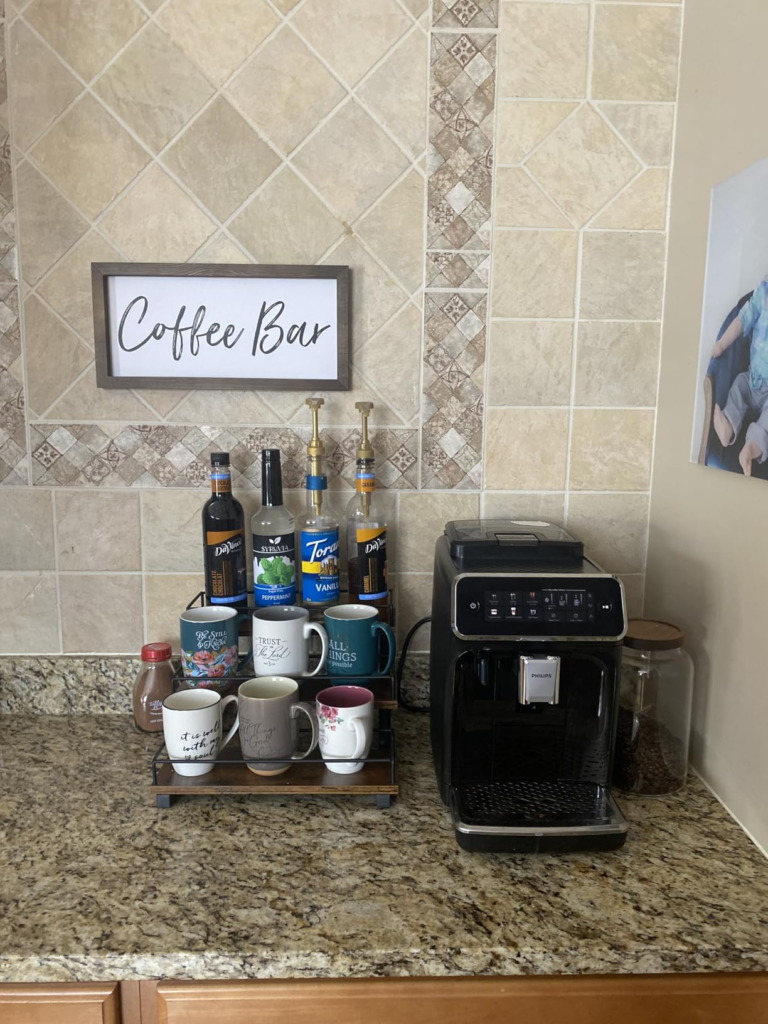
And yes, the visual side matters more than most reviewers admit. This machine suits modern kitchens that want one anchored glossy object rather than a cluttered brew station. Put it near a bean jar, two cups, and clear counter around the front. That is enough. The room feels less temporary. The coffee corner starts looking deliberate.
If this is your condition, this is the logical next step: [link]
What It Solves, What It Reduces, and What It Still Leaves to You
| Category | What the Philips 3300 genuinely solves | What it only reduces | What it still leaves to you |
|---|---|---|---|
| Morning effort | One-touch brewing, no manual tamping, no milk wand routine | Learning curve during setup | Choosing beans that suit the machine |
| Noise | Noticeably quieter operation than earlier Philips machines | Not silent, just less abrasive | Living with grinder sound at all |
| Cleanup | Very fast milk cleanup, removable parts, dishwasher-safe milk system | You still empty trays and clean internals | Regular maintenance and brew-group care |
| Drink variety | Covers the common drinks most households actually make | Does not turn into an enthusiast menu system | Accepting limited depth vs pricier or manual setups |
| Counter presence | Narrow, tidy, visually calm for a bean-to-cup machine | Plastic-heavy construction remains visible up close | Deciding whether the look matches your kitchen |
Philips includes an AquaClean filter and says you can go up to 5,000 cups without descaling if the filter is replaced when prompted. The machine has a two-year warranty, no connectivity layer, and no user profiles. Those details matter because they reinforce what this product is trying to be: low-friction, repeatable, domestic, not obsessive.
Final Compression
The Philips 3300 LatteGo is not the answer to every coffee craving. It is the answer to a narrower, more realistic one.
You want fresh-bean coffee. You want milk drinks. You want less noise, less cleanup, less hesitation. You want a machine that earns its spot by making weekdays easier, not by turning your kitchen into a hobby bench. That is where this machine has teeth.
But if what you really want is deeper control, heavier espresso presence, or the feeling that the machine is reading your taste rather than just executing a routine, this is where the illusion breaks. Wait too long to admit that, and the cost is not only money. It is the slow disappointment of realizing you bought relief when what you actually wanted was intensity.
If your break point starts with noise, cleanup, and daily friction, not extraction obsession, then the decision stops being vague here.
Transparency Note:
This analysis is built on aggregated real-world experience.
It extracts what repeatedly holds, what breaks, and what users uncover only after living with the system—then shapes it into a clear model you can use immediately.
Think of it as structured experience, refined and presented so you don’t have to learn it the hard way.
“A quick note: Don’t believe the star ratings, but trust personal experience. This article is a compilation of collected experiences”