YOUR TV DIDN’T FAIL YOU. IT SIMPLY CROSSED A SOUND THRESHOLD THE POLK MAGNIFI MINI AX WAS BUILT TO CATCH
A lot of people think they need more speaker when what they actually need is less collapse.
That is the trap.
The room looks normal. The screen looks sharp. The scene lands. Then a voice slips under the music, a door slam arrives with no body behind it, and the explosion blooms wide for half a second before the whole thing folds back into a flat strip of noise. The result looks fine. It isn’t. After tracing the MagniFi Mini AX across official specs, pro reviews, retailer feedback, and long-term owner complaints, the pattern is unusually clear: this is not a miracle bar, and it is not fake luxury in a tiny shell either. It is a compact system built to solve one very specific break point—when TV speakers are already beneath your tolerance, but a full-width soundbar or discrete surround setup still doesn’t fit your room, your furniture, or your patience.
The Result Looks Fine. The Problem Isn’t.
The first lie your setup tells you is visual.
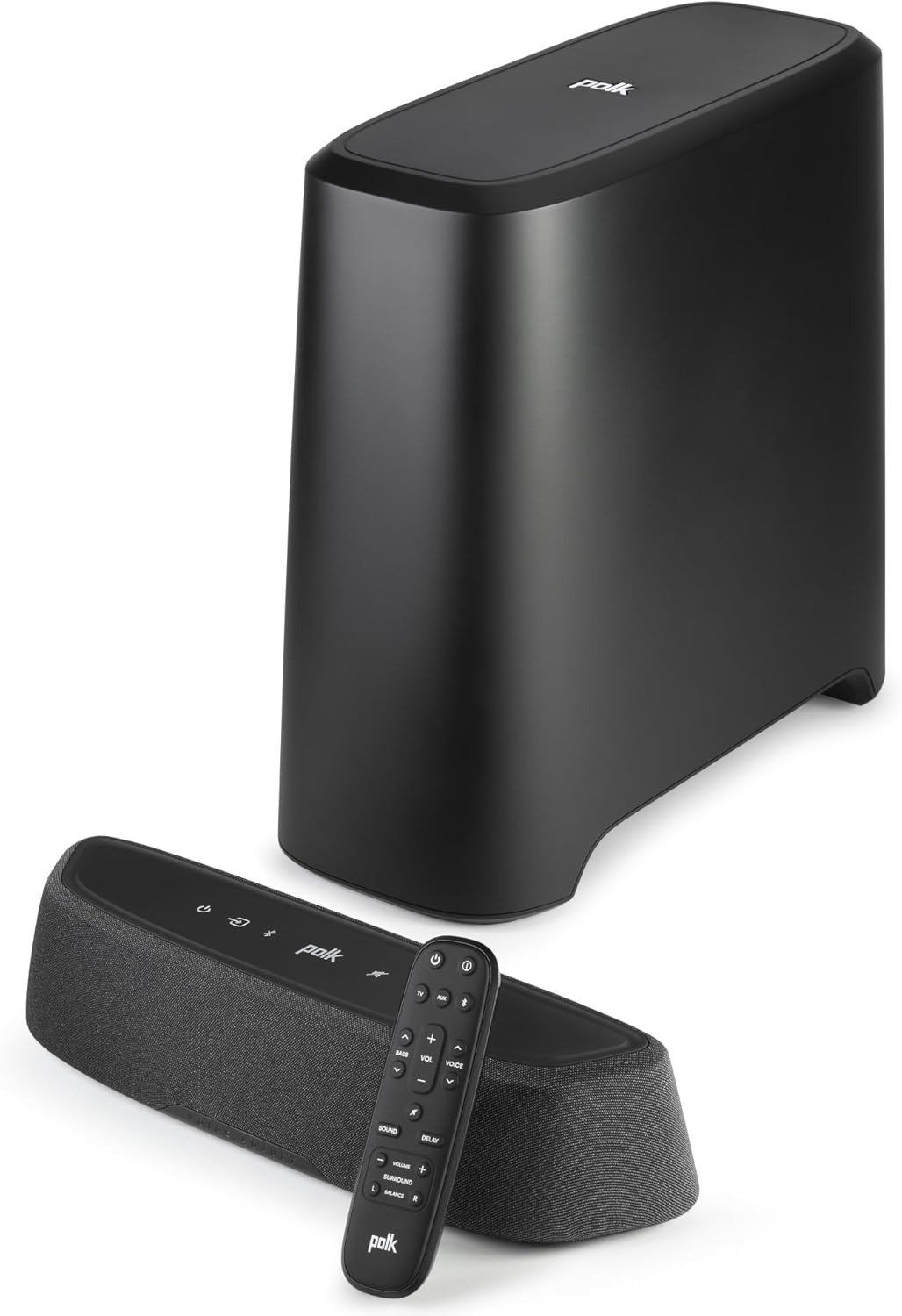
The TV gets thinner. The picture gets cleaner. The cabinet gets simpler. Everything appears upgraded. But sound does not obey the same vanity rules. Thin screens give you thin acoustic volume, weak bass displacement, and speech that gets masked the moment a soundtrack becomes busy. What I keep seeing in reviews of the Mini AX is the same emotional trigger expressed in different language: small room, minimal footprint, far better dialogue, far bigger sound than expected. That matters because the product’s entire logic starts there. Polk built the bar at roughly 15 inches wide, then paired it with a wireless down-firing subwoofer, Wi-Fi streaming, HDMI eARC/ARC, AirPlay 2, Chromecast, Bluetooth, and voice enhancement—not to imitate a full theater, but to rescue people trapped between bad TV audio and oversized home-theater ambition.
I do not read this as a “small but mighty” cliché. I read it as a threshold product. A pressure valve. A system for the moment when the daily irritation becomes repetitive enough that you stop enjoying what you paid to watch.
What You’re Actually Feeling but Not Naming
Most buyers describe the problem badly.
They say the TV is “quiet.” Or “not immersive.” Or “missing bass.” That is only the surface. What usually sits underneath is a three-part friction pattern:
| What you think is wrong | What is actually happening | Why it becomes exhausting |
|---|---|---|
| Dialogue feels weak | Voices are being masked by effects and score | You keep riding the volume instead of following the scene |
| Movies feel small | The soundstage collapses toward the screen | Big moments lose scale before they reach you |
| Bass feels absent | Low-end energy never forms physical weight | Action scenes look dramatic but never land in the body |
That is why products like this win affection so quickly in the right room. They don’t just add volume. They restore separation, width, and weight. Best Buy customer summaries repeatedly center on sound quality, bass, volume, compact size, and easy setup, while Polk itself leans on VoiceAdjust, SDA widening, and the included subwoofer as the core fix. Even long-term users on Reddit who later noticed limitations still tend to begin with the same confession: for the size, the jump over TV audio is obvious.
The Hidden Mechanism Behind the Miss
Here is the part buyers often blur: the Mini AX sounds big for its footprint because Polk did not try to squeeze a cinema wall into a shoebox by brute force alone.
The mechanism is layered.
There is an advanced five-speaker array in the bar, dedicated L/C/R handling through midrange drivers plus tweeters, a separate wireless subwoofer, and Polk’s SDA-based virtual widening. The Atmos and DTS:X story here is not driven by true up-firing hardware in the Mini AX bar. TechHive is explicit on that point: height is virtualized rather than bounced off the ceiling with up-firing drivers. That one detail changes how you should read every promise attached to the product. It explains why multiple reviewers praise the width, body, and scale while also warning that overhead effects are subtler than the marketing aura around “Atmos” might suggest.
This is not a flaw hidden in the fine print. It is the structural truth of the product.
You are buying spatial expansion and bass relief in a tiny front-stage footprint, not a physically authentic height-channel machine.
That distinction is everything.
The Threshold Where the Outcome Quietly Breaks
This is where the article stops being vague.
The Mini AX works beautifully until you ask it to cross the wrong threshold.
I would name that threshold like this: the ceiling-belief threshold.
That is the point where a buyer stops wanting “dramatically better than TV speakers” and starts expecting “convincing overhead Atmos theater.” Below that line, the Mini AX can feel shockingly capable. Above it, the illusion thins. Review after review lands in the same zone: wide sound, strong bass, refined performance for the size, but Atmos height cues that are soft, limited, or not class-leading. TechHive calls the height cues subtle. Expert Reviews says the virtual 3D soundstage could be more convincing. Tom’s Guide praises width and bass but questions value at the price. Even some user reviews that love the compact form still note that Atmos is not the star.
That is the threshold.
Not “good or bad.”
Not “worth it or not.”
Expected miracle vs. actual design.
| Expectation level | What happens with the Mini AX |
|---|---|
| “I want my TV to stop sounding thin and boxed-in.” | Very strong fit |
| “I need fuller voices, real bass, and wider movie sound in a small room.” | Strong fit |
| “I want compact hardware with modern streaming and simple setup.” | Strong fit |
| “I expect obvious overhead Atmos objects like a larger premium bar.” | Fit starts to weaken |
| “I want a true theater replacement.” | Wrong threshold |
That is why some people call it brilliant and others call it underwhelming. They are not hearing different products. They crossed different expectation lines.
Why Most Buyers Misread This Too Early
Because they shop the logo on the spec sheet instead of the failure in the room.
Dolby Atmos is a perfect example. It seduces the eye before the ear ever gets involved. The word glows on the box, and the buyer quietly upgrades the fantasy in their head. Suddenly a compact bar is no longer being judged as a compact bar with an unusually large performance envelope. It is being judged as a theater shortcut.
That is a bad metric.
The better metric is much less glamorous:
How much sound collapse can this remove from my real setup without giving me a second problem?
The Mini AX gets a lot right on that question. It offers easy TV connection through HDMI eARC/ARC, supports major wireless streaming methods, works with a TV remote, and brings bass from a separate sub without forcing a giant bar under the screen. Wirecutter has repeatedly referenced it as its all-around best soundbar, and Polk prominently cites that positioning. But the same ecosystem of reviews also flags the constraints: tall enough to interfere with some TV placement, no wall-mount freedom in at least one major review, and Atmos that depends on virtualization rather than dedicated upward-firing hardware.
The lazy comparison goes like this: Does it have Atmos? Then it should feel like Atmos.
The accurate comparison is harsher: How much physical theater can this compact architecture honestly fake before the illusion frays?
Who Is Actually Inside This Problem
I can draw the fit line very cleanly.
You are inside this problem if three things are true at once:
- You are already tired of TV-speaker thinness, swallowed dialogue, and movie scenes that look larger than they sound.
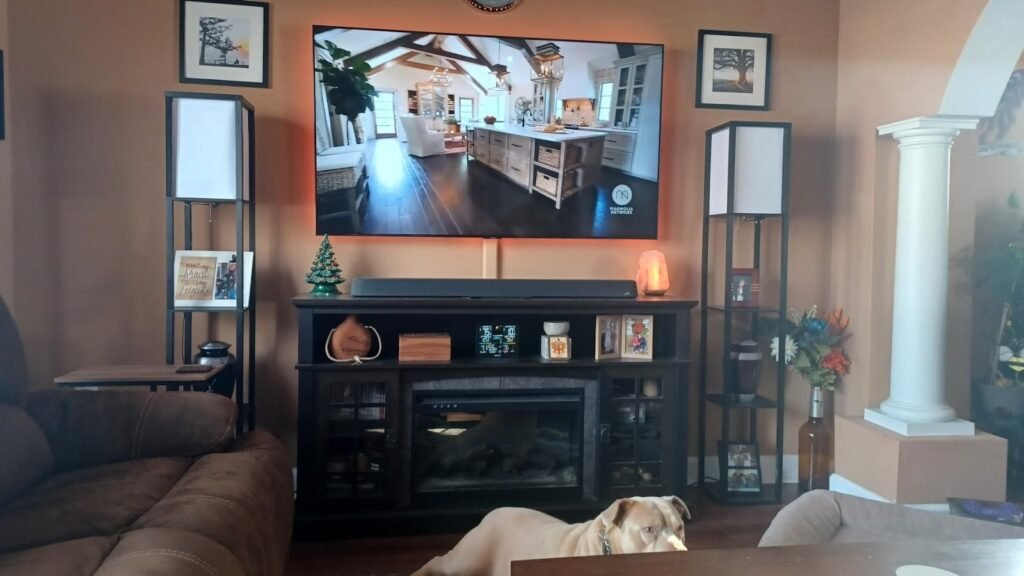
- You do not want a long soundbar dominating the furniture line or a receiver-and-speakers project taking over the room.
- You care more about believable improvement in everyday watching than about winning an Atmos spec argument on paper.
This is also a strong fit for bedrooms, apartments, secondary living rooms, compact media setups, minimalist consoles, and spaces where partner tolerance, furniture scale, or physical placement matters almost as much as sound. User feedback from retailer pages and forums keeps circling the same phrase in different forms: good for the size, small footprint, perfect where a large bar would be intrusive. That pattern is too consistent to ignore.
Where Wrong-Fit Begins
Wrong-fit does not begin when the product is “bad.” It begins when your demands stop matching the architecture.
You are drifting into wrong-fit territory if:
- you are chasing obvious overhead effects as a primary reason to buy,
- you are highly sensitive to DSP quirks in voice processing,
- you want audiophile music texture first and TV support second,
- you expect maximum upgrade flexibility beyond the proprietary included subwoofer,
- or you are trying to solve a large-room theater problem with a compact-room device.
A few owner complaints matter because they reveal the edge of the fit envelope. Some users report VoiceAdjust behavior they dislike, with dialogue processing that can fluctuate unnaturally in certain content. Others have documented Google Home/Cast-related volume or mute oddities, with forum discussions pointing to specific settings as the trigger. One long-term Reddit owner also noted the downside of the subwoofer ecosystem being tied to Polk’s own pairing path if something goes wrong. These are not universal failures, but they are real enough to shape the boundary.
| Wrong-fit signal | Why it matters |
|---|---|
| You buy mainly for “Atmos wow” | This bar virtualizes height; it does not major in dramatic overhead placement |
| You obsess over untouched, purist vocal rendering | Voice processing may help many people, but some listeners dislike how it behaves |
| You want future-proof modular freedom | The sub and ecosystem logic are more closed than a separates-based path |
| You have a large room and cinematic ambitions | Compact scale can widen and punch, but it cannot rewrite physics |
The One Situation Where This Product Becomes Logical
It becomes logical the moment you stop asking, “Is this a tiny Atmos theater?” and start asking, “Is this the cleanest way to erase the daily humiliation of TV speakers in a room that cannot absorb a full-size audio solution?”
That is the lane.
And in that lane, the MagniFi Mini AX becomes unusually compelling.
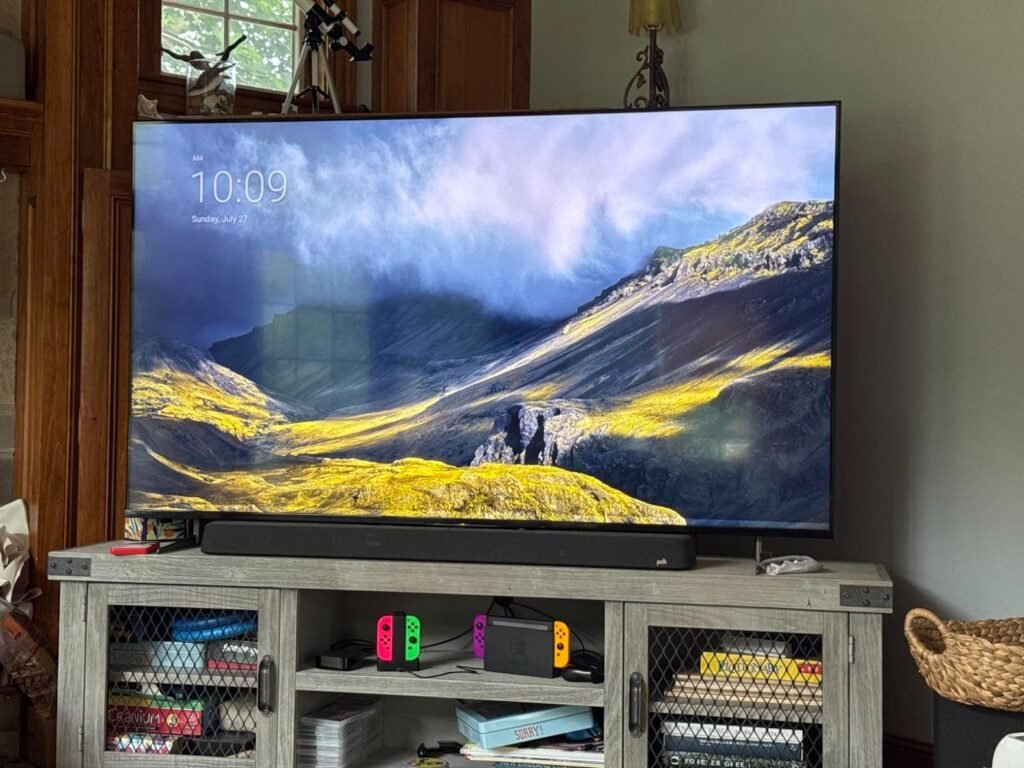
The bar is tiny. The sub does the heavy lifting where TV cabinets usually fail. Connectivity is modern. Setup is straightforward. Dialogue tools exist for people who genuinely need them. Reviewers consistently describe the system as sounding much bigger than it looks, with bass weight and width out of proportion to its footprint. Wirecutter’s repeated all-around endorsement, Polk’s emphasis on the 15-inch body and separate sub, and the broad retailer pattern around bass, volume, and compact fit all point to the same conclusion: if your real problem is spatial limitation plus TV-audio frustration, this product attacks exactly that problem without forcing the room to become an equipment showroom.
That is not hype. It is alignment.
What It Solves, What It Reduces, and What It Still Leaves to You
Here is the honest compression.
| Layer | What the Mini AX solves | What it reduces | What it still leaves to you |
|---|---|---|---|
| Dialogue | Gives speech more definition and access to enhancement tools | Fewer rewinds and volume rides in normal TV use | Some listeners may still dislike processed voice behavior in certain content |
| Scale | Expands sound far beyond built-in TV speakers | Less front-facing flatness | It cannot fully replace a larger true-surround or height-capable system |
| Bass | Adds real low-end presence through a dedicated wireless sub | Less hollow action and less thin music playback | Bass quality still depends on placement, room behavior, and your tolerance for compact-system limits |
| Setup | Keeps the path simple with HDMI eARC/ARC and streaming support | Less friction, fewer boxes | You still need sane expectations about format labels versus physical speaker reality |
| Aesthetics | Fits where larger bars become intrusive | Less furniture conflict, less visual clutter | The bar’s height can still matter under some TVs |
I would put it even more plainly.
What it really sells is not “cinema.”
It sells relief.
Relief from thinness.
Relief from clutter.
Relief from the feeling that better sound must arrive as a larger domestic negotiation.
Final Compression
After pulling together the technical design, review consensus, and owner friction, I would not frame the Polk MagniFi Mini AX as a universal recommendation.
I would frame it as a disciplined answer to one specific threshold.
If your room is compact, your TV audio is already grating on you, your patience for bulky gear is low, and your real goal is clearer speech, wider movie sound, and deeper bass without surrendering the room, this is where the decision stops being vague. The Mini AX is not the soundbar for people chasing the most dramatic Atmos trickery. It is the soundbar for people who are tired of pretending their current setup is “good enough” simply because it is clean, modern, and visually minimal. Under the right threshold, that compromise gets expensive every single night you keep living with it.
If that is the condition you are actually dealing with, this is the logical next step.
Transparency Note:
This analysis is built on aggregated real-world experience.
It extracts what repeatedly holds, what breaks, and what users uncover only after living with the system—then shapes it into a clear model you can use immediately.
Think of it as structured experience, refined and presented so you don’t have to learn it the hard way.
“A quick note: Don’t believe the star ratings, but trust personal experience. This article is a compilation of collected experiences”