Breville Oracle Review: The Shot Looks Right. The Workflow Does Too. That Still Doesn’t Mean the Decision Is Clean.
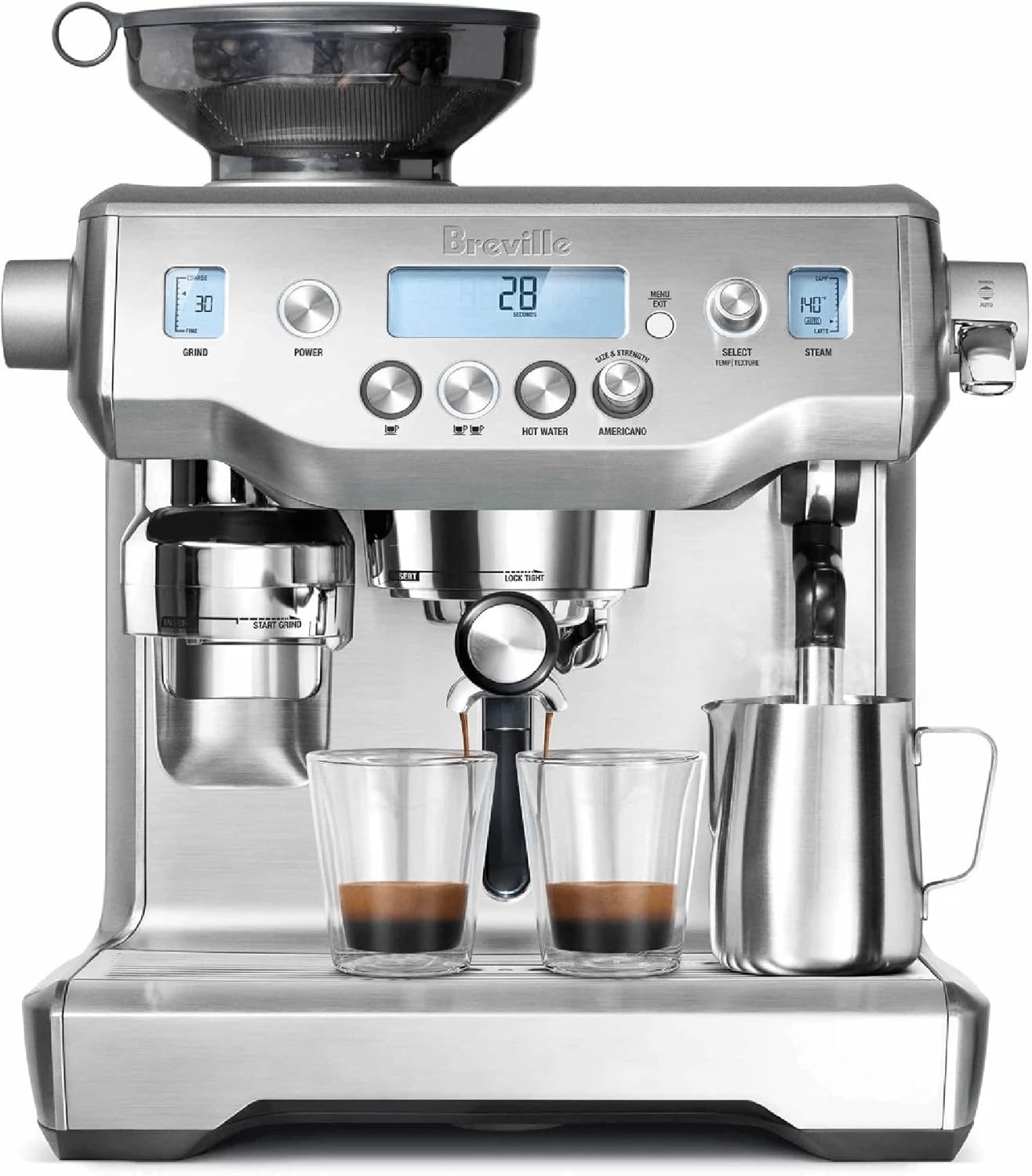
BREVILLE ORACLE
You can feel the appeal of the Breville Oracle before the first shot lands.
Not because it promises café theater. Because it removes the part that quietly wears people down. Grinding. Dosing. Tamping. Repeating the same ritual half-awake and hoping the puck is not the reason the cup tastes flat today. The Oracle was built to erase that friction with automatic puck prep, dual boilers, a heated group head, PID temperature control, a 58 mm portafilter, 45 grind settings, automatic milk texturing, and simultaneous brewing and steaming. That is not generic convenience. It is a very specific kind of relief. Breville also lists the BES980XL as discontinued on its US site, which matters if you are buying it now through remaining inventory or secondary channels rather than inside a current product cycle.
The Result Looks Fine. The Problem Isn’t.
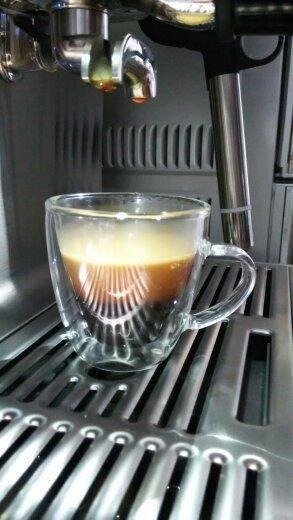
This is what the Oracle gets right immediately: it makes home espresso feel less fragile.
I understand why people get pulled toward it. Seattle Coffee Gear called the built-in grinder with automatic tamping the highlight of the machine, and that framing makes sense. The Oracle does something many machines do not: it shortens the path between “I want a latte” and “there is actually a latte in my hand” without dropping all the way into the compromise of a typical superautomatic. Review videos and retailer breakdowns keep circling the same point: it carries real espresso architecture, but trims away a large share of the user error that ruins everyday consistency.
That is the surface result.
The deeper issue starts when buyers mistake that smooth workflow for unlimited fit. The Oracle can make the process feel solved before the decision is solved. And that distinction matters more here than on cheaper machines.
What You’re Actually Feeling but Not Naming
Most people do not need help naming “bad espresso.”
They need help naming the more dangerous middle zone.
The shot is not terrible. The milk is good. The machine looks serious. Morning drinks come out fast enough that nobody in the house complains. Yet something stays unsettled. You start changing beans more often than usual. You keep revisiting grind settings. One day the shot is close. The next day it runs differently. Nothing looks obviously broken, so the machine escapes blame. That is the exact kind of product threshold that creates expensive second thoughts.
What you are feeling is not simple disappointment. It is workflow satisfaction colliding with dialing-in friction.
The Hidden Mechanism Behind the Miss
The Oracle’s hidden mechanism is not the boiler system. That part is strong.
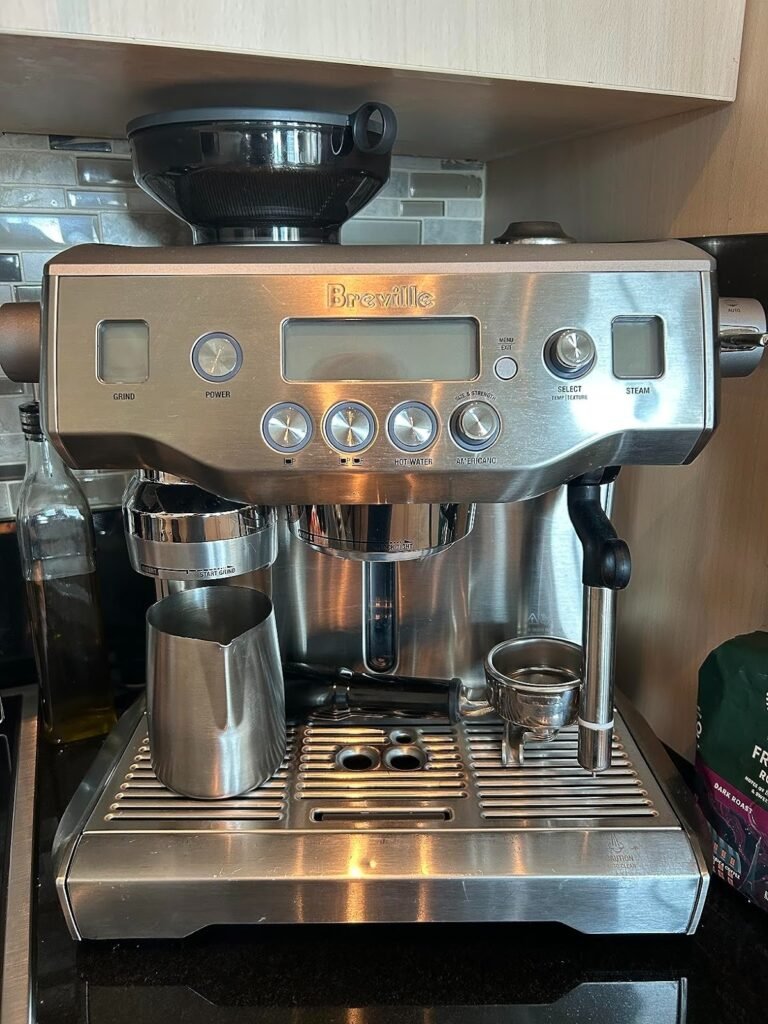
Breville’s own platform is clear about the machine’s core architecture: dual stainless steel boilers, heated group head, PID control, low-pressure pre-infusion, 9-bar extraction, 22-gram dosing into a 58 mm portafilter, and automatic milk texturing. Those are not toy specs. On paper, they point toward genuine espresso capability rather than shortcut coffee. CoffeeGeek’s coverage of the Oracle platform also highlights the patented auger-based system that automatically distributes and tamps the coffee while grinding, with a hardware adjustment for dose delivery. That is the machine’s central trick. It is trying to stabilize the puck-prep phase before the shot even begins.
But puck prep is only one side of espresso stability.
The more uncomfortable truth is that automation can standardize the wrong variable more efficiently than a manual machine. Owner discussions repeatedly point to grinder cleaning, retention, chute buildup, and inconsistent shot behavior as the place where confidence starts to wobble. In Reddit threads on inconsistent shots and grind behavior, owners and commenters keep returning to the same practical suspects: retained grounds in the chute, the need to vacuum out old coffee, and the limits of the built-in grinder when trying to dial in more precisely. Serious Eats reached a broader version of the same conclusion when testing Breville’s grinder-equipped machines: built-in grinders are convenient, but they do not match the precision of a good standalone espresso grinder.
That is the miss.
Not “the Oracle cannot make good espresso.” It can.
The miss is this: the machine removes manual inconsistency, but it cannot fully remove grinder-limited inconsistency.
The Threshold Where the Outcome Quietly Breaks
This machine breaks at a very specific point.
Not when you want better coffee than a pod machine. It clears that line easily.
Not when you want fast milk drinks without standing over a steaming pitcher every morning. It is built for that.
It breaks when your taste, beans, and expectations get just serious enough that grinder behavior becomes more important than workflow elegance.
That is the threshold.
| Threshold signal | What it usually means |
|---|---|
| You mostly drink milk drinks and want repeatable mornings | The Oracle fits well |
| You want café-style workflow without learning tamping from scratch | The Oracle fits well |
| You change beans often and expect tight shot repeatability every time | This is where friction starts |
| You obsess over small extraction differences | The built-in grinder becomes the bottleneck |
| You want one-box simplicity more than upgrade freedom | Strong fit |
| You already think in terms of retention, distribution, and grind precision | Borderline fit |
The machine’s design reinforces this threshold. It has a ½ lb hopper, an 84 fl oz water tank, replaceable water filtration, programmed hardness settings, cleaning alerts after 200 extractions, and regular filter replacement guidance to reduce descale frequency. In other words, Breville assumes the machine will live in frequent use and will need disciplined upkeep to stay stable. That is not a flaw. It is a clue. This is a convenience machine with prosumer demands hiding underneath.
Why Most Buyers Misread This Too Early
They use the wrong metric.
They buy it like a luxury shortcut when it behaves more like a managed system.
The easy mistake is to judge the Oracle by feature stacking: auto tamp, auto milk, dual boiler, 58 mm portafilter, one-touch Americano, programmable shot control. That list is impressive, and it should be. But feature-led buying blurs the real decision. What matters is not whether the Oracle does many things. What matters is which part of espresso you want the machine to solve permanently.
If what exhausts you is repetitive puck prep, the Oracle solves a real burden. If what bothers you is the last 10% of dialing-in precision, the Oracle may leave the most sensitive part of your problem alive.
That is why many buyers misread it early. They think they are choosing between convenience and quality. The harder truth is that they are choosing where compromise lives.
Who Is Actually Inside This Problem
This machine is for the buyer who wants real espresso structure without a fully manual ritual.
That includes the person who drinks milk-based coffee often enough to value automatic texturing, the household that wants repeatability across multiple users, and the buyer who is willing to maintain the machine but does not want to manually distribute and tamp every shot. The Oracle’s dual-boiler layout, simultaneous brew-and-steam capability, automatic milk settings from 104°F to 167°F with nine texture levels, and one-touch long black workflow all support that use case directly.
It also suits the person who wants a more serious cup than a superautomatic usually delivers.
That matters. The 58 mm commercial-style portafilter and 22 g basket orientation are part of why the Oracle still feels like espresso equipment rather than countertop theater.
Where Wrong-Fit Begins
Wrong-fit starts earlier than people think.
This is not for the buyer who already knows the grinder is usually the soul of the setup.
It is not for the person who likes to upgrade one variable at a time.
It is not for the drinker who mostly chases straight espresso nuance and expects the grinder to disappear as a variable.
It is also not for the buyer who hears “automatic” and imagines low-maintenance ownership. The manual is explicit about filter replacement, hardness setup, cleaning prompts, descale procedures, and water requirements. It even warns against highly filtered, demineralized, or distilled water because that can affect operation. Owner-repair discussions also show that scale and solenoid issues are not abstract possibilities on this platform.
| If your priority is… | Fit |
|---|---|
| Less morning friction | Strong |
| Better milk drinks without barista practice | Strong |
| Family-friendly repeatability | Strong |
| Grinder-first espresso optimization | Weak |
| Simple ownership with minimal maintenance attention | Weak |
| One-box elegance on the counter | Strong |
The One Situation Where This Product Becomes Logical
The Breville Oracle becomes logical when your real problem is ritual fatigue, not espresso curiosity.
That is the cleanest way I can put it.
If you want a machine that preserves much of espresso’s structure while removing the daily annoyance of grinding, dosing, tamping, and milk texturing, the Oracle earns its place. That is the narrow lane where its price, size, and complexity stop looking indulgent and start looking coherent. In that one situation, the automation is not decorative. It is structural.
And that is why the machine still has gravity years after launch. It solves the exact part of home espresso that causes many people to quietly backslide.
What It Solves, What It Reduces, and What It Still Leaves to You
The Oracle solves workflow drag.
It reduces puck-prep inconsistency.
It reduces the skill barrier for milk drinks.
It reduces the number of steps between fresh beans and a finished cappuccino.
What it does not solve is the need to understand beans, freshness, cleaning, water, and grinder behavior. It does not remove maintenance reality. It does not turn integrated grinding into standalone-grinder precision. It does not guarantee that every inconsistency is now gone. And because the BES980XL is discontinued on Breville’s US site, support and long-horizon ownership should be judged with more care than the polished front panel suggests.
| You gain | You trade off |
|---|---|
| Faster, cleaner espresso workflow | Less upgrade flexibility |
| Automatic tamping and milk texturing | More dependence on the integrated grinder’s limits |
| Dual-boiler convenience in one body | A larger, more maintenance-aware machine |
| Strong household usability | Less purity for obsessive shot tuning |
Final Compression
The Breville Oracle is not a machine I would frame as “for coffee lovers” in the vague, flattering way brands like to do.
It is for a narrower person than that.
It is for someone who wants the body of real espresso, the speed of an easier workflow, and enough automation to keep the ritual from collapsing into neglect. The break point comes when you expect the built-in grinder to behave like the one variable that never needs second-guessing. That is where the smooth surface stops matching the deeper decision.
If your problem is that espresso has become too fiddly to sustain, the Oracle is a serious answer.
If your problem is that you already notice the grinder before you taste the shot, the limit starts earlier than the machine’s price suggests.
If this is the condition you are actually dealing with, this becomes the logical next step:
Transparency Note:
This analysis is not based on quick personal impressions.
It is derived from documented system behavior, verified user patterns, and the physical constraints of storage capacity.
The goal is to translate complex technical behavior into a realistic performance model that helps you make a clear decision.