RACHIO 3 REVIEW: THE ONE PART OF THE BOX MOST BUYERS IGNORE
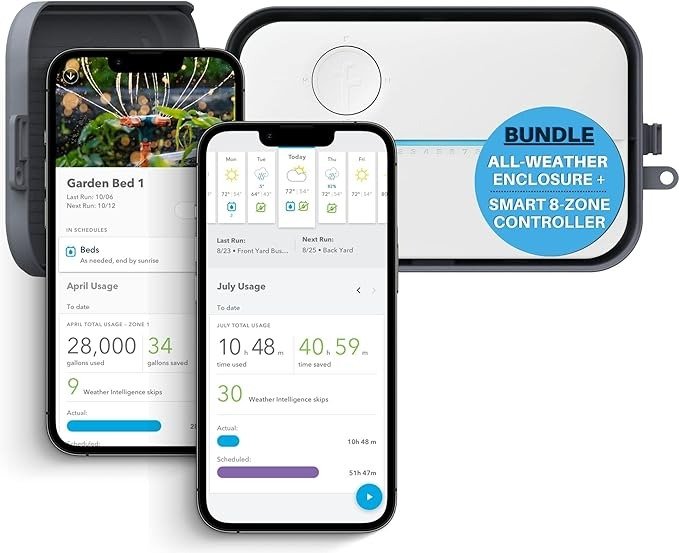
Rachio 3
I’ve stood in more garages than I can count, staring at a Rachio 3 next to its little weatherproof cousin, watching someone try to decide if they actually need both pieces or if they’re being upsold on a plastic box with a padlock tab. Short answer: it depends entirely on where your valves sit. Long answer is everything below.
Smart Sprinkler Controller Results: The Yard Looks Fine, The Bill Doesn’t
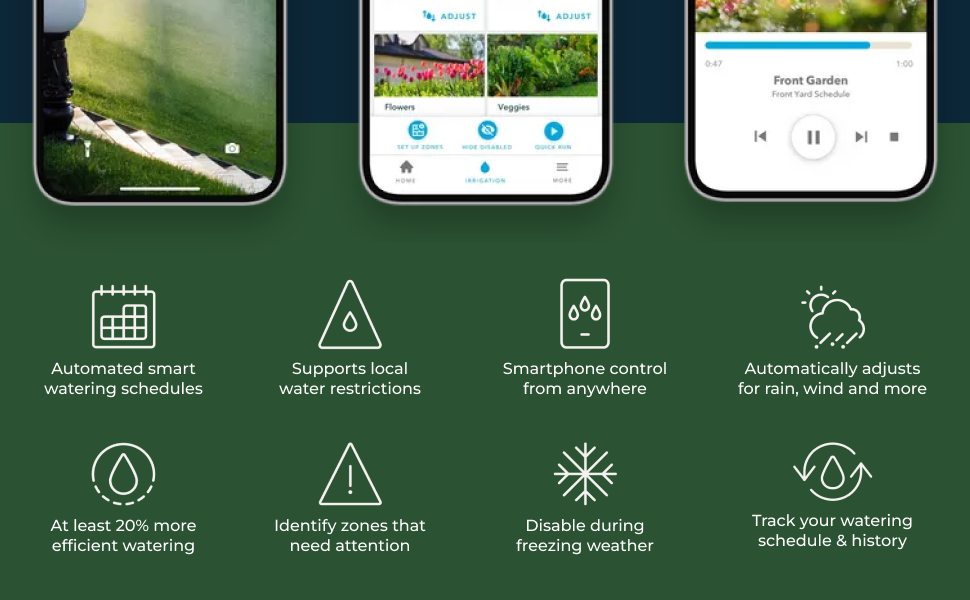
Here’s the scene I keep running into. Someone swaps their old dial timer for a Rachio 3. The app is gorgeous. It tells them it skipped watering because rain was coming. For the first time in years, the yard feels handled by something smarter than they are. Then August hits, the bill arrives, and it’s not that different — or worse, a strip by the fence goes crunchy while everything else looks fine, and the app insists every zone ran on schedule.
Nothing failed. That’s the disorienting part. The screen shows green checkmarks. The zone ran when it was told to. And the yard still didn’t match the promise on the box. Outdoor watering is often the single biggest swing in a summer bill — it typically runs over 30% of a household’s total water use and can climb to 60% in drier regions.
Sprinkler Controller Warning Signs: What You’re Feeling but Can’t Quite Name
You’re not exactly annoyed at the controller. What you’re feeling is closer to low-grade doubt. You open the app more than something marketed as “set and forget” should require. You double-check that it really skipped after last night’s rain, which quietly defeats half the reason you bought it. Some zones look lush. One or two never quite recover, no matter how you nudge the schedule.
Why does a well-reviewed controller still leave you second-guessing? Because the doubt was never really about whether it’s broken. It’s about whether you set it up like it deserved.
Smart Irrigation Setup Mistakes: The Hidden Mechanism Behind the Miss
Why do two neighbors with the identical controller get completely different results? Because “smart” here comes from two engines running under the app, and each is only as good as what feeds it.
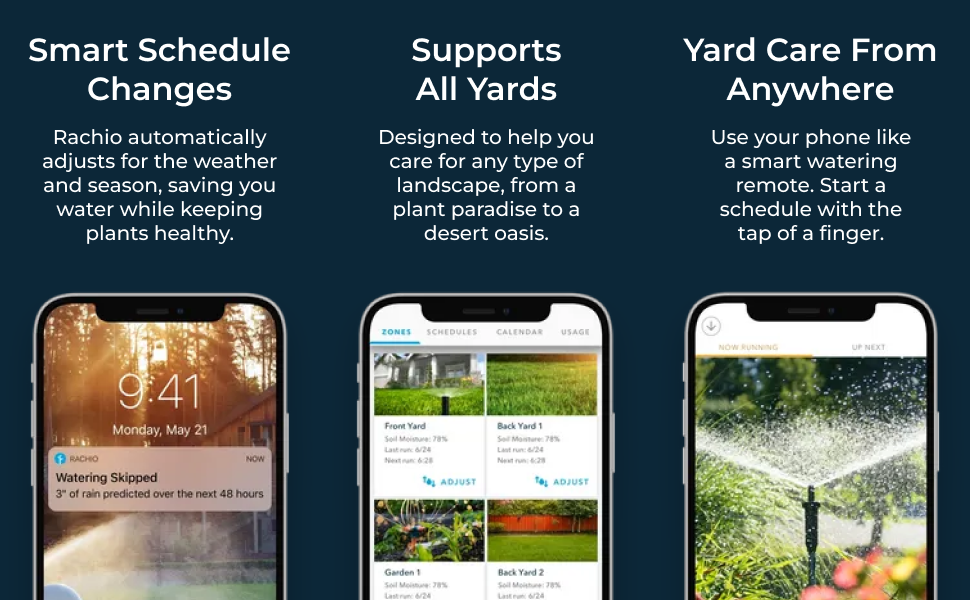
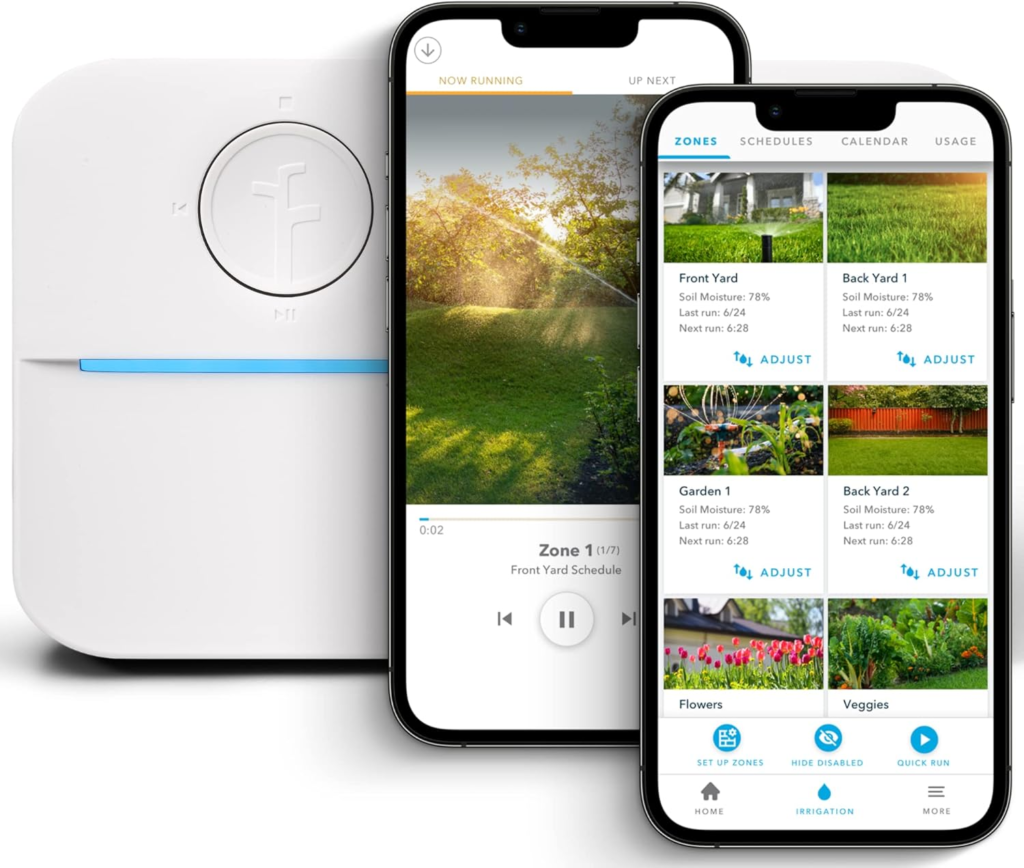
The first is weather. Weather Intelligence Plus draws on a network of more than 300,000 weather stations rather than one sensor bolted to your roof, and you choose which one it trusts. That’s a real strength, but it also means a station eight miles away can report a light drizzle while your specific block got soaked, or the reverse. It’s not the controller lying to you — it’s reporting on a weather source, not your actual yard.
The second engine is your zone data, and this is the one that actually changes outcomes. Everyone fills in the basics on day one — soil type, sun exposure, plant type — and assumes that’s the job done. It’s necessary. It’s rarely sufficient. Rachio’s own guidance points owners toward a catch-cup test to measure their real precipitation rate instead of accepting a default guess, and that one adjustment resolves a large share of the “it’s over-watering” or “it’s under-watering” complaints people trace back to the app.
Expert tip: before you touch anything else, set a few short cups around one zone, run it ten minutes, measure what landed, and enter that real number as your precipitation rate. It fixes more than any amount of app-fiddling does.
WiFi Signal and Mounting Location: The Threshold Where Rachio 3 Quietly Breaks
Here’s the threshold that decides whether this exact bundle is a smart buy or a mistake: where, physically, you’re planning to mount it.
Rachio 3 carries no radio of its own — everything runs over your home’s 2.4GHz WiFi, not 5GHz, with no proprietary long-range fallback the way some rivals use. Weak signal at the mounting spot is behind the large majority of “it keeps going offline” reports, with conflicts between 2.4GHz and 5GHz networks close behind as the next most common cause.
Now connect that to the enclosure this bundle includes: housing the controller inside a sealed metal box can itself block the WiFi antenna and trap heat, and that combination shows up most in outdoor or garage installs sitting far from the router, especially once summer temperatures climb. The enclosure solves weather exposure while quietly creating the conditions for signal loss, if you don’t check reception first.
The fix takes two minutes: stand at the planned spot with your phone and look at the WiFi bars before you drill a single hole. One bar or less, and a cheap mesh extender pays for itself the first time it saves you a rewiring afternoon.
Rachio 3 vs Cheaper Controllers: Why Most Buyers Misread This Too Early
The lazy version of this purchase is opening two tabs — Rachio, and a cheaper WiFi timer — and comparing them like the same object at different prices. They’re not. A controller with a built-in weatherproof shell and a stubborn long-range radio will genuinely outlast Rachio in a detached shed with weak WiFi. That’s a fair advantage some rivals have. What they typically don’t match is the depth of zone customization, the width of smart-home integrations, or an app that doesn’t feel bolted on.
The other early misread is zone count. Buyers count sprinkler heads instead of valve stations, then either overbuy or run out of ports. Count the wires at your existing timer, not the heads in your yard.
| Feature | Basic Timer | Rachio 3 (this bundle) |
|---|---|---|
| Weather-based skip | No | Automatic |
| Per-zone soil/sun/nozzle tuning | No | Yes |
| Remote app control | Rarely | Yes |
| Outdoor mount protection | Often built-in | Sold separately, included here |
| Ongoing cost | None | None — no subscription |
Who Needs a Smart Sprinkler Controller: Who’s Actually Inside This Problem
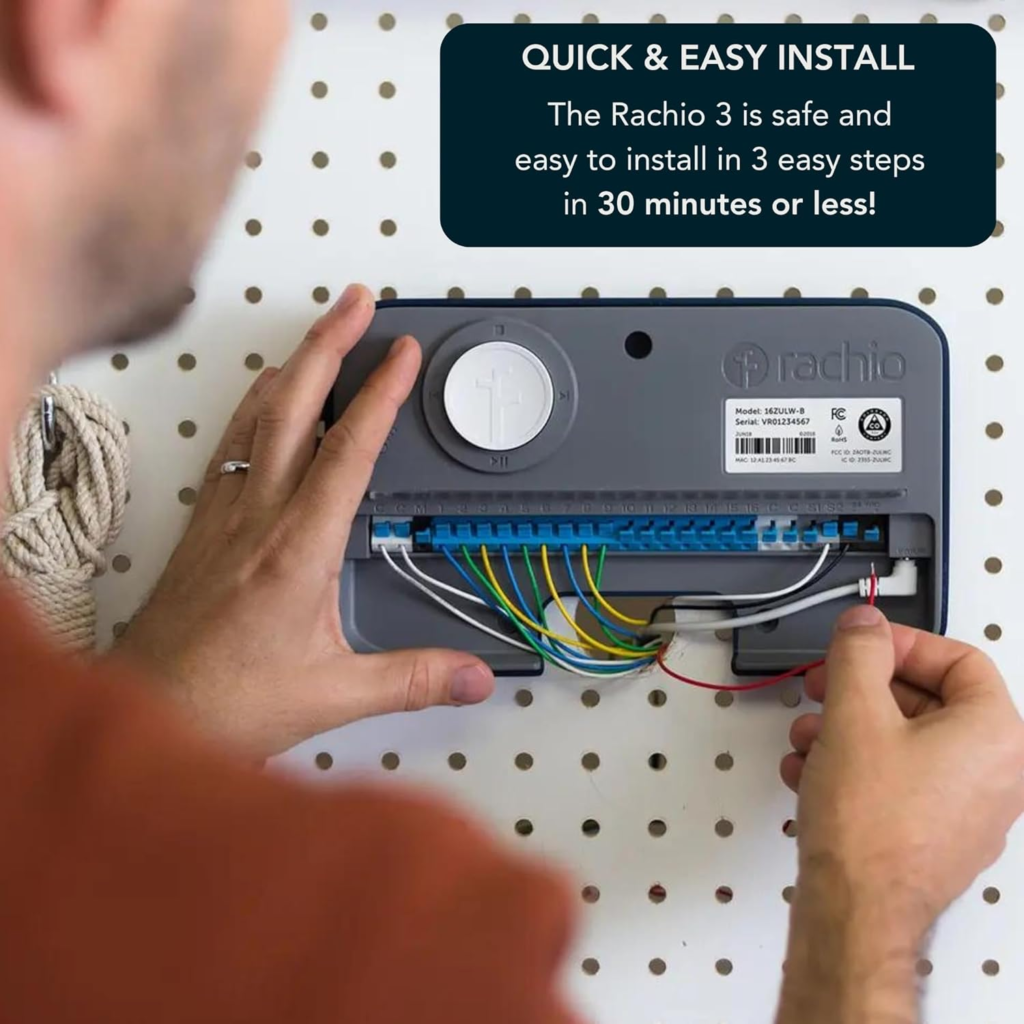
This bundle earns its price for a fairly specific person: someone with an existing in-ground system already wired to a valve box, who’s noticed a creeping water bill or a lawn that looks inconsistent despite “enough” watering, who travels or forgets seasonal adjustments, and who’s willing to spend twenty honest minutes on setup instead of trusting every default. You’ll also want decent WiFi reaching wherever it lives — or a willingness to fix that first.
When Not to Buy a Smart Controller: Where Wrong-Fit Begins
A few honest exits. One or two zones and a yard the size of a rug — a basic timer does the job, and this is overkill. Zero patience for any setup, ever — the settings that make Rachio worth the money will frustrate rather than help you; more than one owner has said the soil and water-retention settings feel like they need an agriculture background to use well, and that’s a fair complaint if you’re not willing to read one guide. No realistic path to a decent signal at the mount spot, and no interest in an extender — a rival with its own long-range radio serves you better. And if someone without a smartphone in hand — a gardener, a tenant, a parent — needs to run it, know there’s no screen or button on the unit itself. It’s app or nothing.
| You’re likely a good fit if… | You’re likely not, if… |
|---|---|
| You have an existing in-ground valve system | You’re wiring irrigation from scratch |
| WiFi reaches the mount spot well | Signal’s weak there and you won’t add an extender |
| You’ll spend ~20 minutes tuning zones | You want zero setup, ever |
| Valves sit outdoors, away from a garage | You just want an indoor unit — skip the enclosure |
| You want app + voice control | Someone without a phone needs to run it manually |
Rachio 3 8-Zone with Outdoor Enclosure: The One Situation Where It Becomes Logical
If you’re still nodding, here’s the case this exact bundle is built for: your valve manifold sits outside, away from a garage wall, and running new low-voltage wire back indoors isn’t realistic. The controller needs to physically live outdoors — a fence post, a wall near the valves, wherever the wiring already ends.
That’s the one situation where paying for the enclosure isn’t an upsell — it’s the correct engineering answer. It’s purpose-built for the Rachio 3, rated IP54 against dust and water intrusion, and sized to give the unit clearance rather than sealing it into a hot box. Two things to walk in knowing: it needs an electrical pigtail that isn’t included, and Rachio’s own installation guidance points toward a licensed electrician if that wiring isn’t something you’re comfortable doing yourself — and you’ve already checked the WiFi signal at that exact spot, since that’s the step this whole review keeps circling back to.
Rachio 3 Pros and Cons: What It Solves, What It Reduces, What’s Still On You
The controller carries Rachio’s standard 2-year warranty on new units, and there’s no recurring software fee attached to the core scheduling features — worth knowing, given how many smart-home categories have quietly added subscriptions in the last few years. Across thousands of Amazon reviews, it averages right around 4.6 out of 5 stars, and the praise is consistent: easy installation, an app that doesn’t feel like a chore, fewer “did I forget to turn it off” moments. The honest complaints cluster just as consistently around WiFi drops tied to mount location and a setup wizard that occasionally stumbles on mesh routers.
| It solves | It reduces | It still leaves to you |
|---|---|---|
| Guessing whether it rained enough to skip | Manual weekly schedule tinkering | Getting precipitation rate right (catch cup test) |
| Remote start/stop from anywhere | Overwatering runoff and waste | Choosing a mount spot with real signal |
| Voice control via Alexa/Google/HomeKit | Forgetting seasonal adjustments | Physical upkeep — clogged heads, leaks, valves |
| Zone-by-zone customization | Watering the whole yard identically | Reading one setup guide before trusting defaults |
It’s also, per EPA WaterSense data, the kind of upgrade that pays for part of itself — replacing a clock-based timer with a certified weather-based controller saves the average household somewhere close to 7,600 gallons of water a year, and depending on where you live, local utilities sometimes rebate as much as $200 toward a certified smart controller like this one — worth five minutes checking before you buy.
Rachio 3 Questions: What Buyers Ask Before They Commit
| Question | Answer |
|---|---|
| Do I need the outdoor enclosure, or can I mount it indoors? | Only if the unit genuinely lives outside, exposed to weather. A garage, basement, or covered area doesn’t need it — you’d be paying for weatherproofing you’ll never use. |
| Does the enclosure come ready to install? | Not entirely. It needs an electrical pigtail that isn’t in the box, and Rachio recommends a professional if you’re not confident doing that wiring yourself. |
| Is there a subscription fee for the weather features? | No. Weather Intelligence Plus — the rain, wind, and freeze-skip logic — comes with the hardware, no monthly charge. |
| My WiFi is spotty near the valve box. Will it still work? | It can, but that’s the single biggest risk with this product. Test your phone’s signal at the exact mount spot first. Add a mesh extender before you install, not after. |
| How many zones do I actually need? | Count valve stations at your existing controller, not sprinkler heads. This bundle covers up to 8; go 16-zone if you’re over that. |
| Is this the same as the “Rachio Pro Series” I keep seeing? | No. Pro Series is sold mainly through professional installers, with a longer 4-year warranty and hardwired flow-meter support. This bundle is the standard consumer Rachio 3. |
| Will it actually lower my water bill? | For most in-ground systems replacing a plain clock timer, yes, measurably — that’s not a brand-specific claim, it’s what EPA data shows for the weather-based controller category when it’s set up correctly. |
| What’s the single most common reason people end up disappointed? | Almost never the hardware. It’s usually accepting every default without a quick precipitation-rate check, or mounting it somewhere the WiFi was never going to hold. |
Rachio 3 Buying Decision: Final Compression
Cut through all of it and the decision comes down to two checks, not twenty. First: do your valves sit somewhere that genuinely needs an outdoor-rated box, or were you about to buy the enclosure out of habit? Second: does your WiFi actually reach that spot at a usable strength, right now, today?
If both answers point the way this bundle is built for, the app, the zone tuning, and the water savings take care of themselves with about twenty honest minutes of setup.
If your valves are outdoors and your WiFi checks out, this is the logical next step.
Transparency Note:
This analysis is built on aggregated real-world experience.
It extracts what repeatedly holds, what breaks, and what users uncover only after living with the system—then shapes it into a clear model you can use immediately.
Think of it as structured experience, refined and presented so you don’t have to learn it the hard way.
“A quick note: Don’t believe the star ratings, but trust personal experience. This article is a compilation of collected experiences.”