COSORI GOOSENECK KETTLE REVIEW: WHY YOUR COFFEE STILL TASTES A LITTLE OFF
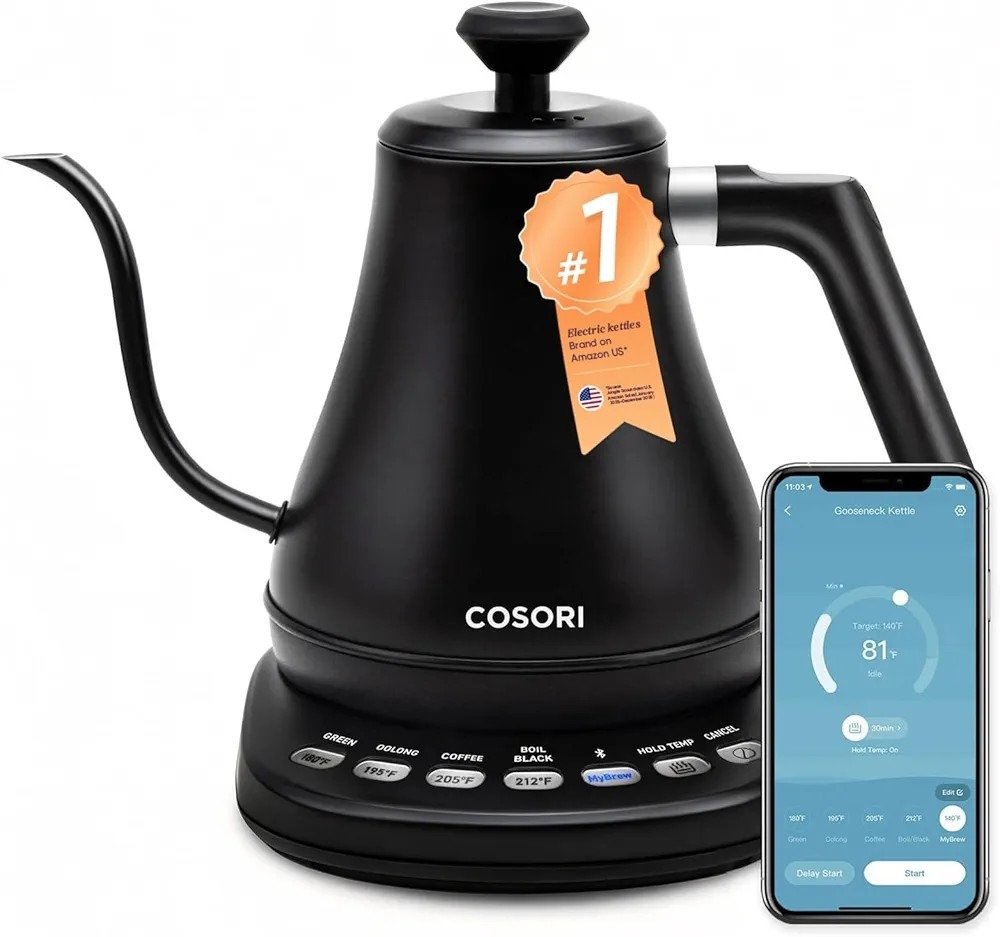
Cosori Gooseneck Kettle
Cosori Gooseneck Kettle Review: The Result Looks Fine, The Problem Isn’t
You bought decent beans. You own a grinder you actually trust. You know the difference between a rinse and a bloom. And still, some mornings, the cup just… misses.
Not badly. Not undrinkable. Just a little flat, a little sharp, a little not quite. You add a splash more milk, tell yourself the beans were a touch stale, and move on with your day.
Here’s the part nobody tells you: your process probably wasn’t the problem. Your water was.
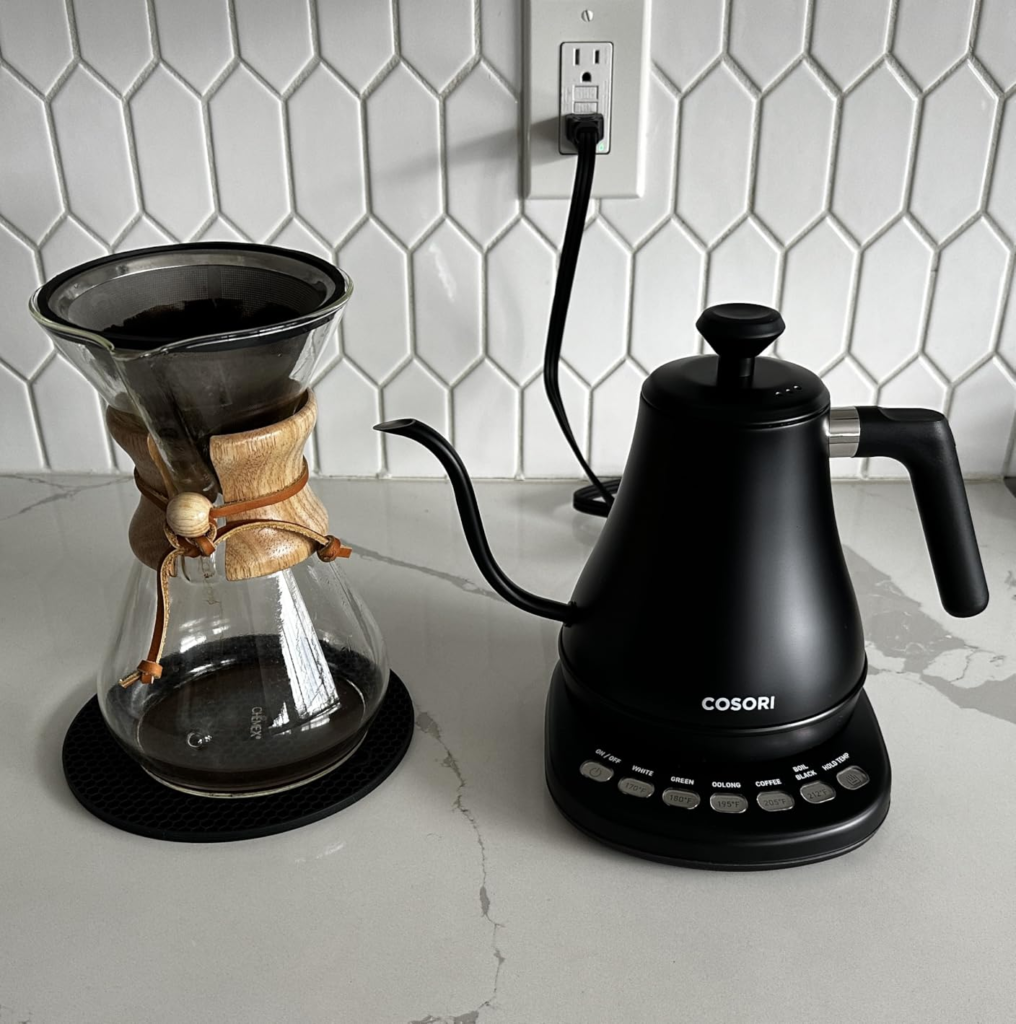
Water Temperature and Coffee Taste: What You’re Actually Feeling but Not Naming
Think about how you actually heat water most mornings. You boil it — full boil, kettle screaming or beeping — then you wait. Ten seconds, maybe thirty if you remember, maybe none if you’re already running late.
That waiting period is a guess, every single time. No thermometer, no real feedback — just vibes and a mental clock that’s usually wrong.
Why does a miss like this feel like a coffee problem instead of a kettle problem? Because the gap is small. Ten degrees, maybe fifteen. Small enough to blame on the beans instead of the number you never actually checked.
Why Water Temperature Ruins Coffee and Tea: The Hidden Mechanism Behind the Miss
Here’s the mechanism, plainly: extraction is a chemical reaction, and chemical reactions are ruled by temperature.
Pour water that’s too hot over coffee grounds, and you pull out compounds that taste bitter and ashy — flavor that should’ve stayed locked in the bean. Pour water too cool, and you don’t pull out enough — the cup tastes sour, thin, like it’s missing its middle.
Tea is even less forgiving. Full boiling water scorches green tea into something grassy and bitter in seconds. White tea turns papery and flat. Only the sturdier leaves — black tea, most tisanes — actually want the full 212°F.
So why does the exact same routine taste different two days in a row, same beans, same grind? Because a standard kettle only knows two states: heating, and done. It has no idea what’s happening in the narrow window where your drink either comes together or falls apart.
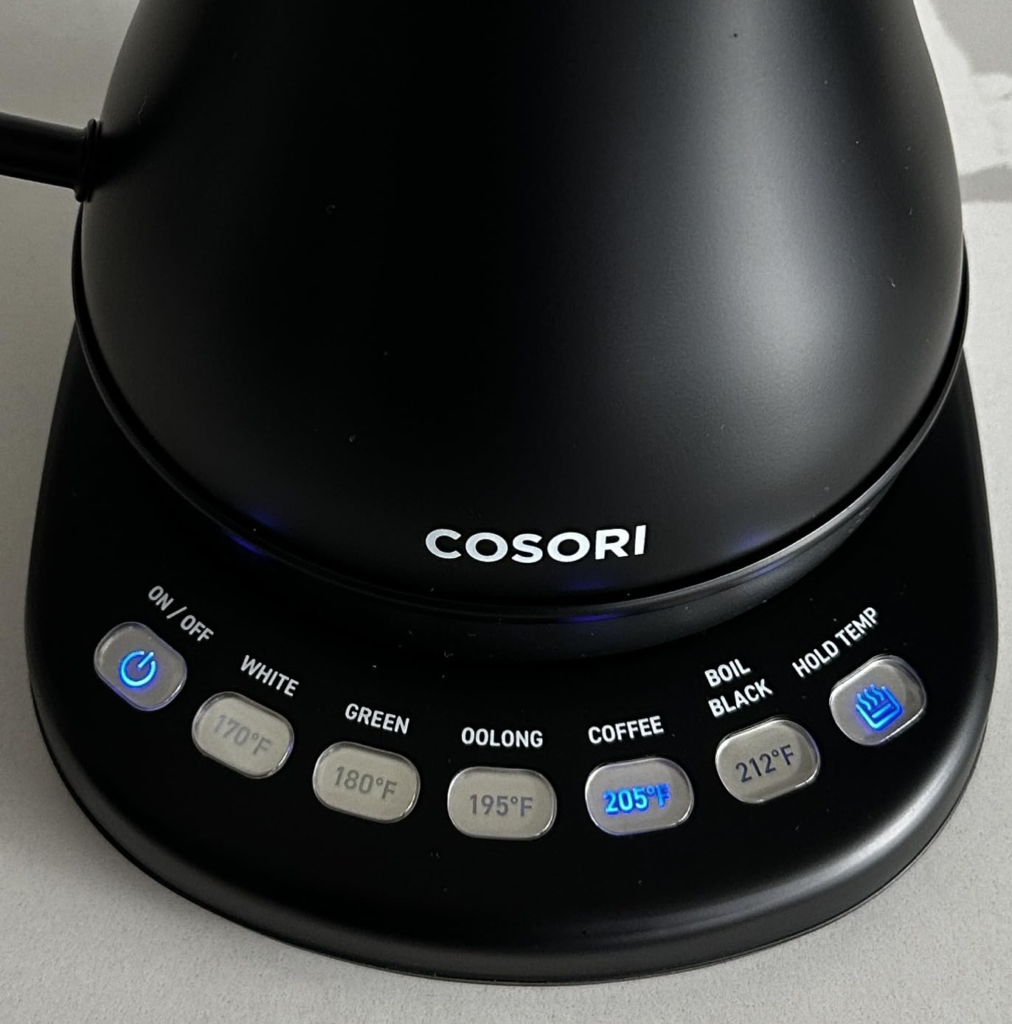
Coffee and Tea Brewing Temperature Chart: The Threshold Where the Outcome Quietly Breaks
Once you see the actual numbers, it’s hard to unsee why your cup keeps missing.
| Drink | Ideal Water Temp | Miss It and You Get |
|---|---|---|
| White tea | 170°F | Papery, bitter, flat |
| Green tea | 180°F | Grassy, scorched, harsh |
| Oolong tea | 195°F | Muted, one-note, no florals |
| Pour-over coffee | 200–205°F | Sour (too cool) or ashy-bitter (too hot) |
| Black tea / tisanes | 212°F (full boil) | Needs the full boil — this one’s forgiving |
White tea and black tea sit 42 degrees apart. Coffee’s window is barely five degrees wide. A kettle that only does “boil” is, at best, right for one row on this chart — and wrong for the rest.
That’s the actual threshold. Not “hot” versus “cold,” but a specific number, missed by ten degrees, quietly deciding whether your drink tastes intentional or accidental.
Cosori vs Fellow Stagg Kettle: Why Most Buyers Misread This Too Early
Once people learn this, they tend to swing one of two ways, and both miss the mark.
Group one decides temperature doesn’t matter that much — any kettle that boils water is basically the same kettle. We just walked through why that’s false.
Group two overcorrects and assumes the fix has to be expensive — that you need a $180 Fellow Stagg EKG+ to get this right. Why does the pricier kettle get treated as the only “real” fix? Mostly because precision gets marketed as a luxury feature, when it’s really just precision. For serious baristas chasing flow rate to the millimeter, sure. For most people making coffee or tea at home, that’s a real premium for accuracy you can get for a third of the price.
| Basic Stovetop Kettle | Cosori Gooseneck (Smart) | Fellow Stagg EKG+ | |
|---|---|---|---|
| Typical price | $20–30 | $60–78 | $150–200 |
| Temp precision | None — guess by sound | 1°F, app-monitored | 1°F, on-device display |
| Built-in presets | None | 4 + custom | None (manual only) |
| Keep-warm | No | Up to 60 min | Yes |
| App / remote control | No | Yes, via Bluetooth | No |
The middle ground most buyers skip past too fast: a kettle built specifically to hit and hold that threshold, without the professional price tag.
Who Needs a Gooseneck Kettle: Who Is Actually Inside This Problem
This isn’t for everyone, and it shouldn’t be sold like it is.
You’re inside this problem if you make pour-over coffee or loose-leaf tea more than a couple of times a week — not just the occasional instant coffee or tea-bag dunk. You’re inside it if you’ve noticed your cup is inconsistent and quietly blamed the beans, the leaf, or “just an off day.” You’re inside it if you’re currently using a basic stovetop or on/off electric kettle and have never once measured what temperature you’re actually pouring at.
You’re also inside it if you like your counter to look like you know what you’re doing. That’s not shallow — it’s just true.
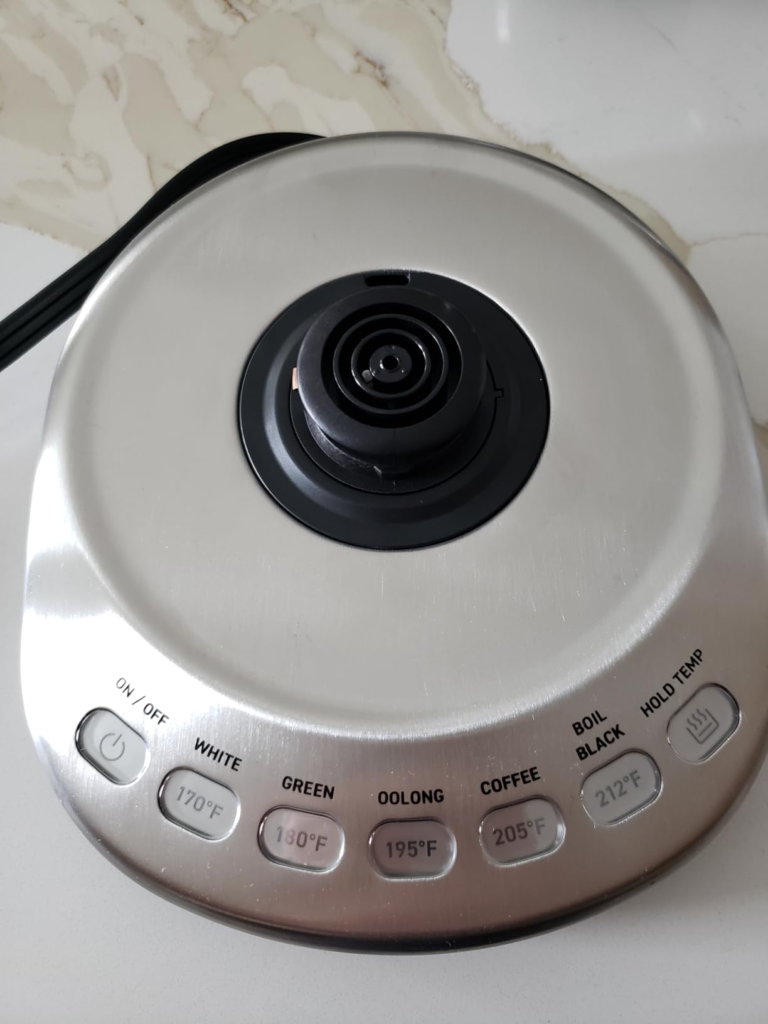
Cosori Kettle Pros and Cons: Where Wrong-Fit Begins
This is where I’d rather talk you out of it than oversell it, because a wrong-fit purchase just becomes clutter with a plug.
| What Actually Works | What to Know Before You Buy |
|---|---|
| 1°F precise control, holds the number you set | Bluetooth range is short — this isn’t a whole-house smart device |
| STRIX thermostat tech keeps readings accurate over time | Only one phone pairs at a time — awkward in a shared kitchen |
| Auto shutoff if water runs low or kettle is lifted mid-heat | 0.8L capacity — good for 1–2 servings, then you refill |
| Stainless interior, no plastic taste in the water | Full app features need an account sign-up first |
| Audible ready-beep (plenty of rivals stay silent) | Display shows Fahrenheit only, no Celsius |
| 4 presets plus unlimited custom temps via the app | A few users report app updates resetting saved custom presets |
If you regularly need four or five cups of hot water at once with no refill, look at something with more capacity. If the main draw for you is deep smart-home integration — Alexa routines, voice control — real-world reports on this specific model have been inconsistent, so don’t buy it for that reason alone.
Everyone else — the daily pour-over or proper-tea drinker who just wants the guessing gone — is exactly who this was built for.
Cosori Gooseneck Kettle Review: The One Situation Where It Becomes Logical
Here’s where it actually clicks, and it’s narrower than most reviews admit.
If you’re already making the drink correctly — good beans or good leaf, the right ratio, a grinder you trust — and the only unmanaged variable is water temperature, this kettle solves exactly that variable. Not because it’s flashy. Because it’s built around the one threshold quietly deciding your results all along.
At $60–78 depending on the sale, it sits in the gap between “kettle that just boils” and “kettle that costs as much as a nice pair of shoes.” For most people standing at that counter every morning, that gap is exactly where the sensible decision lives.
Cosori Kettle Specs and Features: What It Solves, What It Reduces, and What It Still Leaves to You
| Spec | Detail |
|---|---|
| Model | CS108-NK |
| Capacity | 0.8L (~27 fl oz) — 1–2 servings per fill |
| Power | 1200W, 120V |
| Temperature range | 104–212°F, 1°F increments |
| Presets | 4 built-in (green, oolong, coffee, boil) + custom via app |
| Hold Temp | 30 min (base buttons) / up to 60 min (app) |
| Connectivity | Bluetooth via free VeSync app |
| Materials | 304 stainless steel interior and lid; plastic base |
| Safety | STRIX thermostat, boil-dry auto shutoff, lift-off shutoff |
| Warranty | 2-year limited |
| Typical price | $60–78, often discounted |
What it solves: the guessing. You stop eyeballing a cooldown period and start pressing a button tied to an actual number.
What it reduces: the mental tax of your own morning — one less half-attended decision before caffeine.
What it still leaves to you: everything else. Bean freshness, grind size, ratio, steep time, and descaling every week or two with a splash of vinegar or lemon juice if your water’s hard. It removes one variable. It was never going to remove all of them.
Frequently Asked Questions
| Question | Answer |
|---|---|
| Was the Cosori kettle recalled? | No. Cosori’s 2023 voluntary recall involved specific air fryer models, over a fire and burn risk tied to that product’s frying mechanism. It never touched this gooseneck kettle line, which heats water through a completely different, simpler system. |
| Do I need the VeSync app to use it? | No. The four preset buttons on the base work on their own. The app adds scheduling, real-time temperature monitoring, custom presets, and the longer hold time — optional, not required. |
| Can two people connect to it from their phones? | Not at the same time. Bluetooth pairs with one phone at once, so a shared household usually ends up sharing a login or just using the physical buttons. |
| Does it work with Alexa or Google Assistant? | Inconsistently, based on real user reports. Treat any smart-home integration here as a bonus, not the reason to buy. |
| How long does it take to boil? | Roughly three to five minutes, depending on fill level and starting temperature. |
| Is it loud? | It gives three soft beeps at temperature — audible, not alarming — and you can silence it by holding the Hold Temp button for about eight seconds. |
Cosori Gooseneck Kettle Review: Final Verdict
Strip away the feature list and this is a simple decision. Your cup has been missing by ten degrees for a while. This kettle exists to close that specific gap — nothing more dramatic than that.
If you’re the person making real coffee or real tea most days and you’ve been quietly blaming the wrong thing, this is where the guessing stops.
Transparency Note:
This analysis is built on aggregated real-world experience.
It extracts what repeatedly holds, what breaks, and what users uncover only after living with the system—then shapes it into a clear model you can use immediately.
Think of it as structured experience, refined and presented so you don’t have to learn it the hard way.
“A quick note: Don’t believe the star ratings, but trust personal experience. This article is a compilation of collected experiences.”