NETATMO SMART WEATHER STATION REVIEW: GREAT NUMBERS, ONE DETAIL MOST REVIEWS SKIP
Netatmo Smart Weather Station
You buy something like this to stop guessing. Three weeks in, you’re standing in the kitchen at 11 p.m., phone in hand, staring at a humidity reading that doesn’t match how the air actually feels — wondering if the gadget on your shelf is wrong, or if you just don’t understand what it’s actually telling you. That gap between “the number is accurate” and “the number tells you the whole truth” is where almost every Netatmo review stops short. This one doesn’t.
Netatmo Weather Station Accuracy: The Result Looks Fine, The Problem Isn’t
On raw accuracy, the Netatmo earns its reputation. Independent comparisons against official meteorological data have shown deviations as tight as a few tenths of a degree, and the published spec backs that up: ±0.3°C on both modules, ±3% on humidity. Owners who’ve run one for a decade report the same thing — numbers that quietly hold up, year after year.
So why does a device with this kind of accuracy still generate a steady stream of frustrated reviews? Because “accurate” and “trustworthy long-term” aren’t the same claim. The reading on your screen can be correct right now and still belong to a system with real, documented soft spots — in what one word on the box actually means, in how long the hardware survives outside, and in whether you can still buy a replacement part next year. None of that shows up in a star rating. All of it shows up eighteen months later.
Netatmo Weather Station Problems: What You’re Actually Feeling but Not Naming
If you read enough owner reviews, a pattern repeats that never quite gets a name. It’s the small hesitation before you reset the outdoor module, because the battery cover is sealed under several screws and opening it feels like more commitment than it should be. It’s seeing a grey, disconnected icon in the app and not knowing if that means dead batteries, a WiFi hiccup, or something worse. It’s the instruction booklet — more than one reviewer has called it “charmingly minimalist” — that assumes you already know what “Big Module” and “radio pairing” mean before you’ve even opened the box.
None of this is dramatic. That’s exactly the problem. It’s low-grade enough that people don’t return the thing — they just quietly trust it a little less, one small friction at a time, until something actually breaks and they realize how little they understood about what they own.
How the Netatmo Weather Station Works: The Hidden Mechanism Behind the Miss
Here’s the part almost no review explains clearly: the two modules don’t do the same job, and one of them measures far less than most buyers assume.
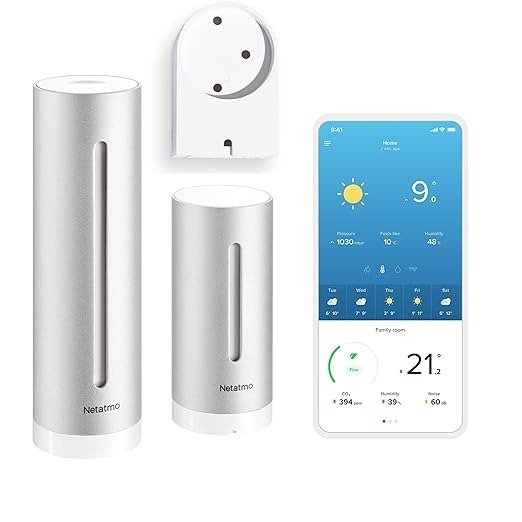
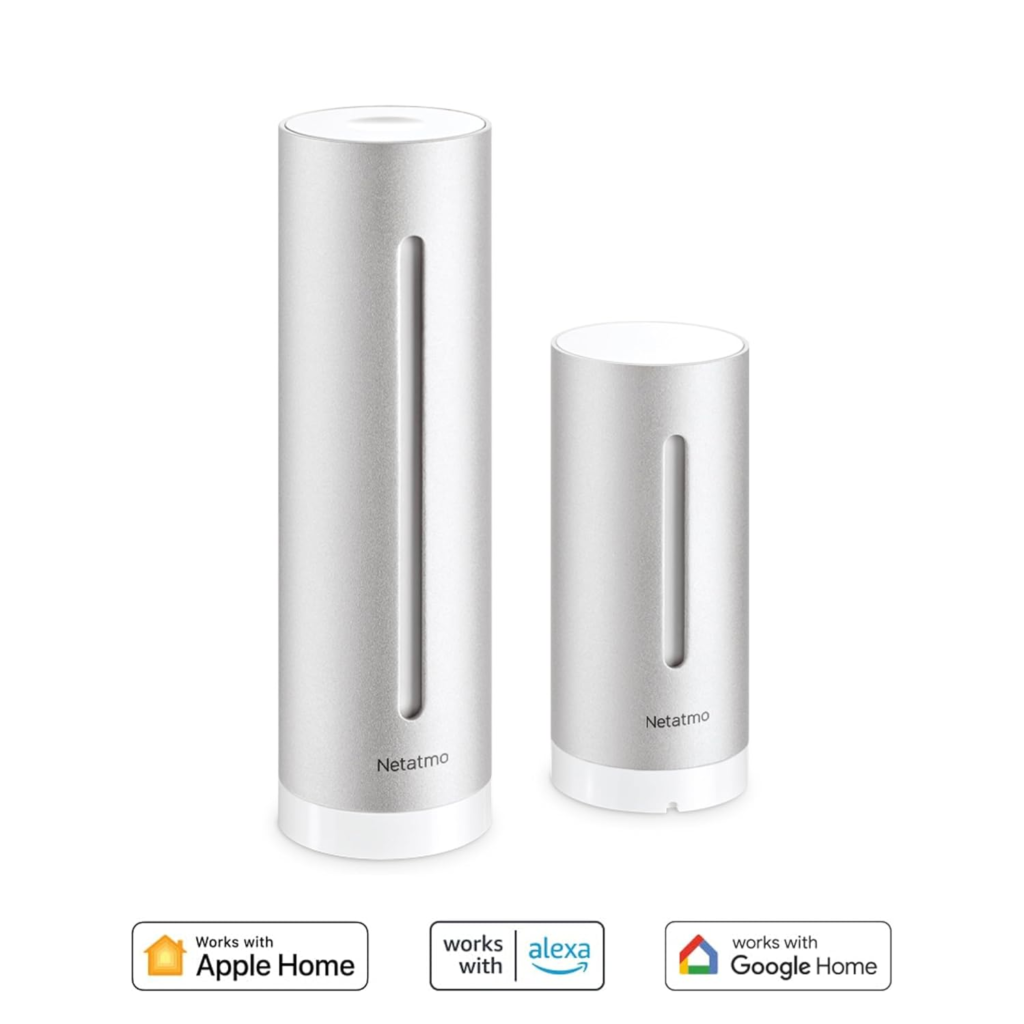
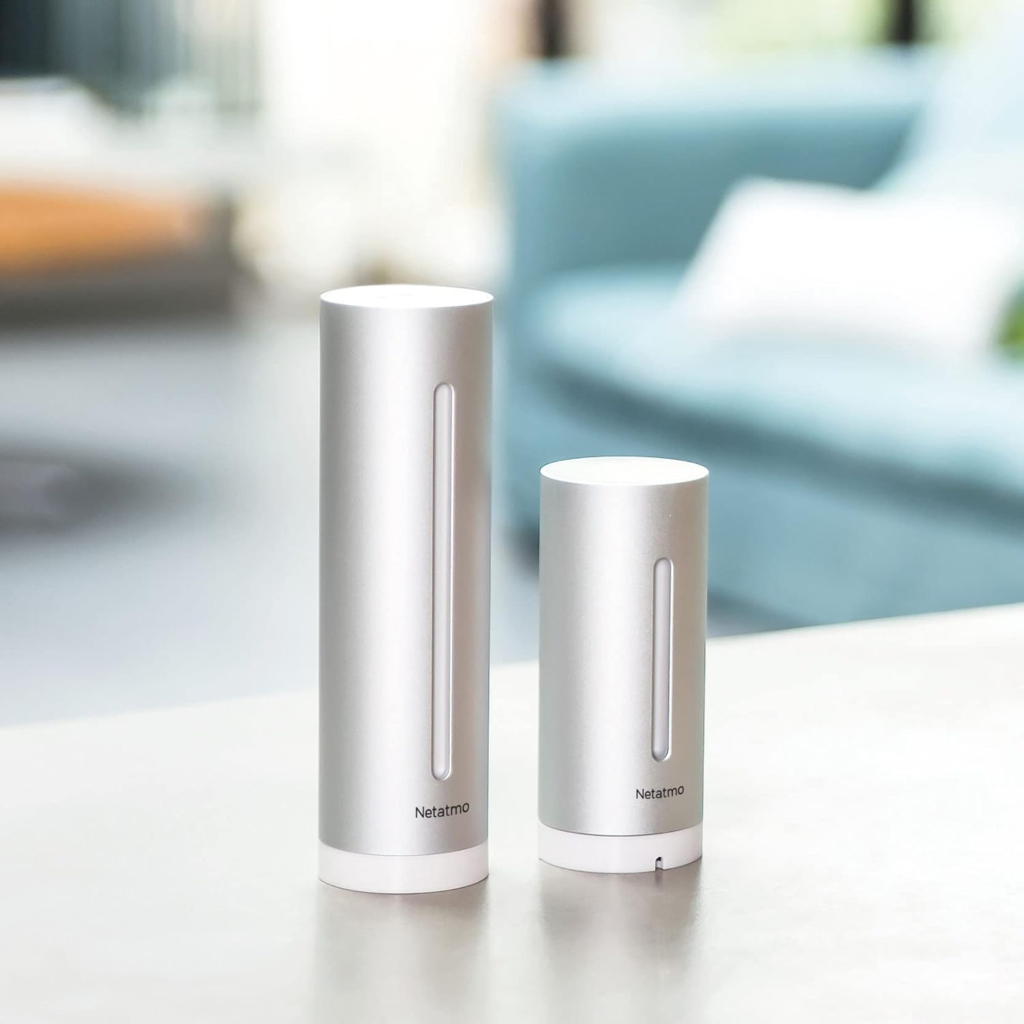
The indoor module — the tall one, plugged into the wall — is the real workhorse. It reads temperature, humidity, noise, and CO2 through a small optical sensor: a light source and an infrared receiver that measures how much light the CO2 in the room absorbs. It also handles barometric pressure for the whole system, and not because the outdoor module was too cheap to include one. Netatmo’s own engineers explain that indoor and outdoor air pressure are, for practical purposes, identical, so a second sensor outside would add cost for zero benefit. That’s a sound design decision, not a corner cut.
The outdoor module only measures temperature and humidity. That matters, because the marketing copy talks about outdoor “air quality,” and that phrase creates a false impression. There’s no outdoor pollution or particulate sensor in the box. What the app calls indoor “air quality” is a calculated comfort score built from CO2, humidity, and temperature — all measured inside, then shown as a green-to-red light on top of the indoor module.
| Measurement | Indoor Module (mains-powered) | Outdoor Module (battery-powered) |
|---|---|---|
| Temperature | 0°C to 50°C, accuracy ±0.3°C | −40°C to 65°C, accuracy ±0.3°C |
| Humidity | 0–100%, accuracy ±3% | 0–100%, accuracy ±3% |
| CO2 / air quality basis | 0–5,000 ppm, ±50 ppm | Not measured |
| Noise level | 35–120 dB | Not measured |
| Barometric pressure | 260–1,260 mbar, ±1 mbar | Shares the indoor reading |
| Power | USB mains | 2× AAA batteries, rated ~2 years |
| Connects via | WiFi, 2.4GHz only (802.11 b/g/n) | Proprietary radio to indoor module |
| Update frequency | Every 5 minutes | Every 5 minutes |
One more thing worth knowing before you mount anything: the indoor module only supports 2.4GHz WiFi, not 5GHz. On a modern mesh router that defaults to 5GHz or auto-switches bands, that’s a real, documented source of the dropped-connection complaints you’ll find in owner reviews.
Netatmo Weather Station Lifespan: The Threshold Where the Outcome Quietly Breaks
Why do two Netatmo owners describe completely different lifespans for the same hardware? One reviewer’s outdoor module is still reporting clean data after ten years. Another’s failed at four, after moisture worked its way in through a mount that took direct rain. A third replaced theirs twice in three years and gave up on the brand. Line the stories up and a pattern shows: the outdoor module’s real enemy isn’t age, it’s exposure. Units mounted in consistent shade, protected from driving rain, tend to run five to ten years. Units mounted in the open, taking weather head-on, fail sooner — sometimes within two to four years.
That threshold you can manage with careful mounting. The second one, you can’t engineer around, and it’s the detail that dates almost every other review of this product you’ll find online. As of June 1, 2026, Netatmo closed its own online store to customers in the United States and Canada, and its help center now states there are currently no certified resellers in either country. A related Legrand support page — Legrand has owned Netatmo since 2018 — already lists the US Weather Station model as discontinued.
That doesn’t mean every unit disappears overnight. Existing stock is still turning up on marketplaces, including listings outside the US. But it does mean the day your outdoor module or rain gauge finally needs replacing — and years of owner data say it eventually will — is the day you find out how hard that replacement is to source, and from whom. That’s the real threshold this product is sitting on in 2026: not a hardware failure point, but a supply one.
Netatmo vs Other Weather Stations: Why Most Buyers Misread This Too Early
The most common misjudgment happens before purchase, not after. People compare the spec sheet against two different categories of product and measure it against the wrong one. Next to a $30 plug-in thermometer, it looks expensive for “just temperature and humidity.” Next to a $400+ hobbyist rig like the Ambient Weather WS-5000 or a Tempest system, it looks underpowered — no built-in wind or rain data, no serious forecasting engine.
Both comparisons miss the actual job it’s built for. It isn’t trying to be a cheap thermometer, and it isn’t trying to be an instrument for people who track dew point trends for fun. It’s built for something narrower and more common: quiet, ambient awareness of your home’s comfort and air quality, in a device that looks good on a shelf and talks to Alexa, Google Home, and Apple Home without extra hardware.
| Netatmo Smart Weather Station | Basic Plug-In Thermometer | Pro-Grade Station (Ambient Weather / Tempest) | |
|---|---|---|---|
| Best for | Indoor comfort + air-quality awareness + smart home | Quick temp/humidity check | Serious forecasting, wind & rain tracking |
| Indoor CO2 reading | Yes | Rare | Sometimes, as an add-on |
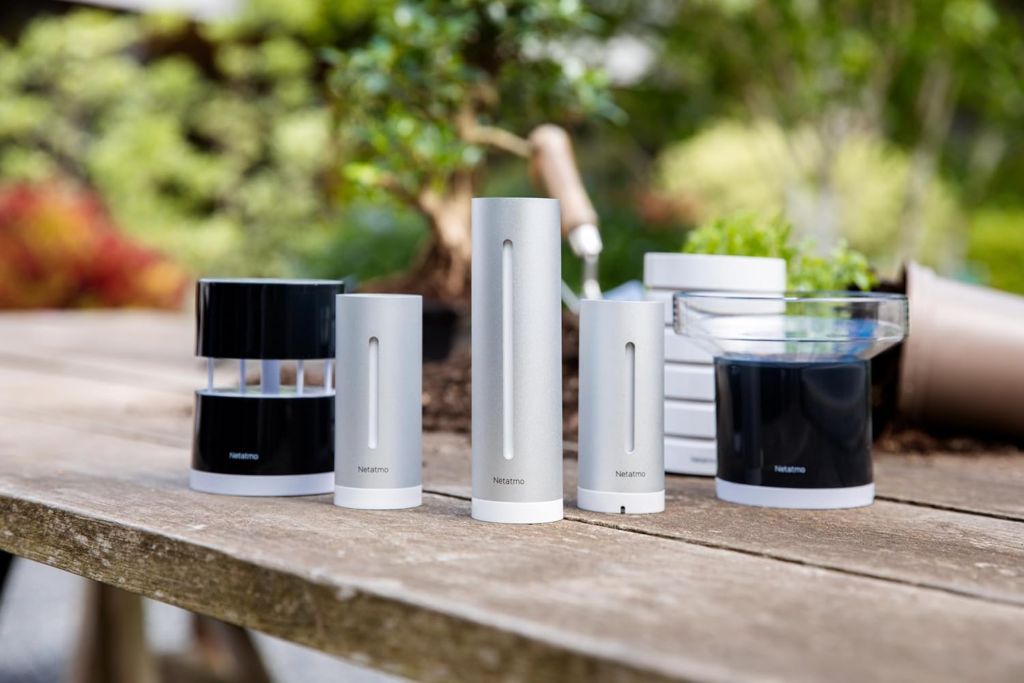
| Wind & rain data | Optional add-on modules | No | Built in |
| Voice assistant support | Alexa, Google Home, Apple Home | Rare | Alexa, sometimes Google |
| Design | Aluminum, minimalist | Plastic, utilitarian | Functional, less decor-friendly |
| Typical price (base kit) | Roughly $130–180, market-dependent | $30–60 | $300–600+ |
| Subscription required | No | Varies | Usually no |
Who Should Actually Buy the Netatmo Smart Weather Station
Strip away the spec-sheet comparisons and the real fit becomes clear fast. This tends to land well with parents who want a plain-language signal — not a chart, just a color — for whether a kid’s room needs airing out. With people managing allergies or asthma, for whom the CO2-driven ventilation nudge becomes a genuinely useful daily habit rather than a gimmick. With anyone who travels and wants a fast way to check whether the house is holding its temperature and humidity while they’re away. And with households already living inside Alexa, Google Home, or Apple Home, where asking out loud beats opening one more app.
Netatmo Weather Station Alternatives: Where the Wrong Fit Begins
It’s a mismatch for an equally common kind of buyer. If what you actually want is dependable wind speed, rainfall totals, and forecasting precision, the add-on modules here are the weakest part of the system — a station built around those measurements from day one will serve you better. If cloud dependency is a dealbreaker for you, look elsewhere: there’s no official local-only mode, so a Netatmo server outage briefly stops your live data even while the sensors keep measuring underneath. And if you’re buying in the US or Canada right now, be honest with yourself about the sourcing situation above before you commit, especially if long-term official support matters to you.
| You’re a good fit if… | You’re probably not if… |
|---|---|
| You want passive awareness of comfort and air quality, not raw meteorology | You need frequent, precise wind, rain, or forecast data |
| You already use Alexa, Google Home, or Apple Home | Any cloud dependency is a hard no for you |
| You like a device that looks intentional on a shelf | You’ve lost device history before and can’t risk it again |
| You can confirm current stock through a seller you trust | You need guaranteed long-term official US support right now |
| You’re fine replacing a $50–80 module every several years | You want to buy once and never think about it again |
Netatmo Smart Weather Station Review: The One Situation Where It Becomes Logical
Put those two groups side by side and one situation stands out. You want a smart, good-looking device that quietly tells you when to crack a window, when to worry about a nursery getting too dry, or when the yard is about to frost — without turning it into a weather hobby. You already live inside a voice-assistant ecosystem. You’re comfortable replacing a module every several years, the way you’d replace a smoke detector battery. And you’ve confirmed, before paying, that the listing in front of you is in stock through a seller you trust. If that’s where you are, the Netatmo remains a well-built answer to a real, everyday problem — not because it’s flawless, but because nothing else quite matches that combination of accuracy, design, and smart home integration without asking you to become a meteorologist.
What It Solves, What It Reduces, and What Still Stays on You
| Solves | Reduces | Still Stays on You |
|---|---|---|
| Guessing when to ventilate (CO2 color alert) | Being caught off guard by frost or sudden rain | Physically maintaining and eventually replacing modules |
| Not knowing your real indoor humidity or temperature | Anxiety about home conditions while traveling | Confirming seller legitimacy and warranty terms |
| Checking three different apps for weather data | Manual checking, since alerts push to your phone | Accepting cloud dependency — there’s no local-only mode |
| That vague “is this room too stuffy or too dry” feeling | Reliance on regional forecasts that miss your actual yard | Setting up the alerts and automations yourself |
Netatmo Smart Weather Station: Frequently Asked Questions
| Question | Answer |
|---|---|
| Does the Netatmo Weather Station need a subscription? | No. Core weather station features have been sold as subscription-free since launch, with free app updates included. |
| Is the outdoor module actually waterproof? | The current version is marketed as fully weatherproof, and most recent owners don’t report water damage. Still, multiple long-term reviews recommend mounting it in shade, away from direct, driving rain — units that take weather head-on are the ones that fail earliest. |
| How long do the outdoor module’s batteries really last? | Netatmo rates the two AAA batteries at roughly two years, and most real-world reports support that. Extreme cold can shorten it, so owners in harsh winters sometimes replace them sooner. |
| Can I run it locally, without Netatmo’s cloud? | No. Every reading routes through Netatmo’s servers before reaching your phone, even if you bridge it into something like Home Assistant. When Netatmo has had server outages, live app data stops updating even though the sensors are still measuring. |
| Is it still available to buy in the US or Canada in 2026? | This is the detail most reviews miss. Netatmo closed its own online store to US and Canadian customers on June 1, 2026, and currently lists no certified resellers in either country. Existing stock can still surface on marketplaces, so confirm who’s actually selling it and check the return policy before paying. |
| How does it compare to a “real” weather station? | For temperature and humidity, it holds up well against dedicated meteorological instruments. Wind and rain are its weakest links — those come as separate add-on modules and are noticeably less precise than what a dedicated station like Ambient Weather or Tempest offers. |
Final Verdict: Netatmo Smart Weather Station Review
Strip out the noise, and this comes down to one honest line: the Netatmo Smart Weather Station measures what it promises, close to perfectly, and the real risk was never the sensor. It’s the years after the sensor — when a module ages, a battery cover needs opening, or a part needs replacing in a market that’s currently in flux.
If that trade-off matches what you actually need — quiet, accurate, smart-home-connected awareness of your home, not a professional forecasting rig — and you can confirm current stock through a legitimate seller, this is where research stops and the decision gets simple:
Transparency Note:
This analysis is built on aggregated real-world experience.
It extracts what repeatedly holds, what breaks, and what users uncover only after living with the system—then shapes it into a clear model you can use immediately.
Think of it as structured experience, refined and presented so you don’t have to learn it the hard way.
“A quick note: Don’t believe the star ratings, but trust personal experience. This article is a compilation of collected experiences.”