Zwilling Fresh & Save Review: Why Your Food Still Spoils Even When the Bag Looks Perfectly Sealed
ZWILLING FRESH & SAVE
We’ve all done it — pulled a bag out of the fridge that looks completely fine, flat, no air anywhere in sight, and found the spinach inside already soft and grey. Why does that happen? Why does something that visibly held its vacuum still let food die early?
That gap between what a seal looks like and what it’s actually doing is where most kitchens quietly lose money every week. It’s also the exact gap the Zwilling Fresh & Save system was built to close — and, in a few specific spots, still doesn’t. This review looks at both sides honestly: where it earns its price, and where it quietly breaks down.
At a Glance: Zwilling Fresh & Save 7-Piece Glass Starter Set
| Spec | Details |
|---|---|
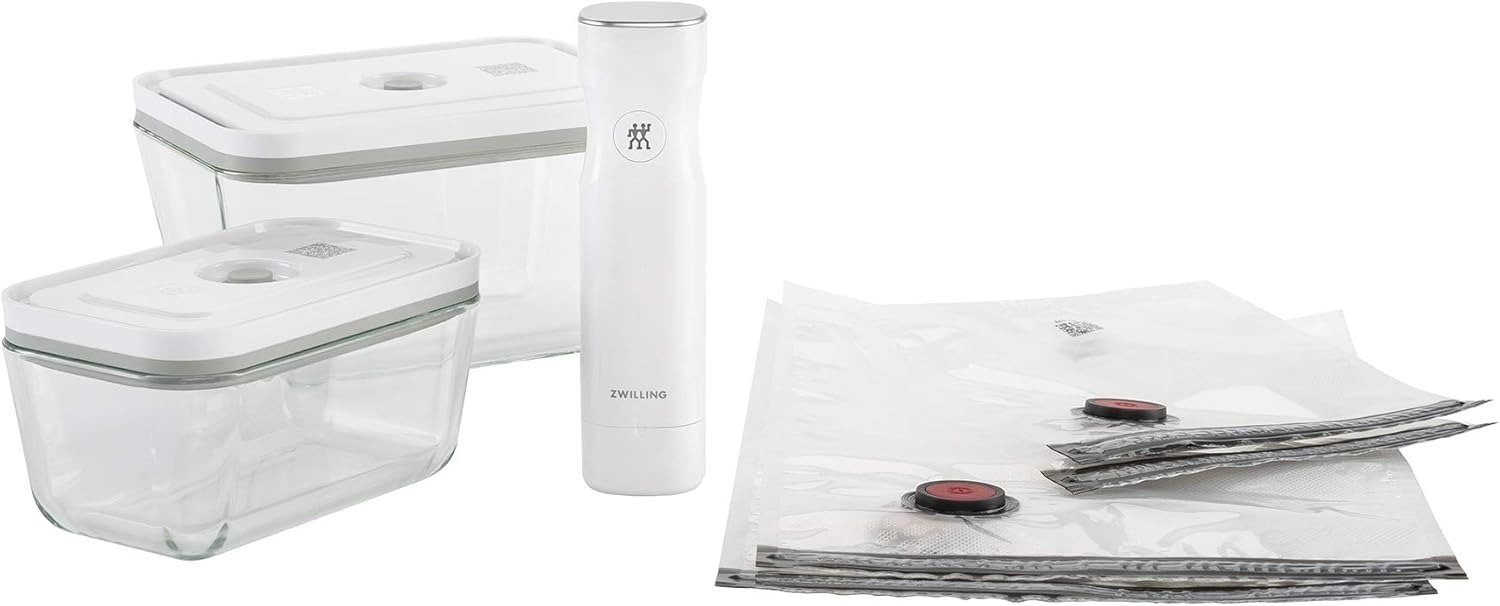
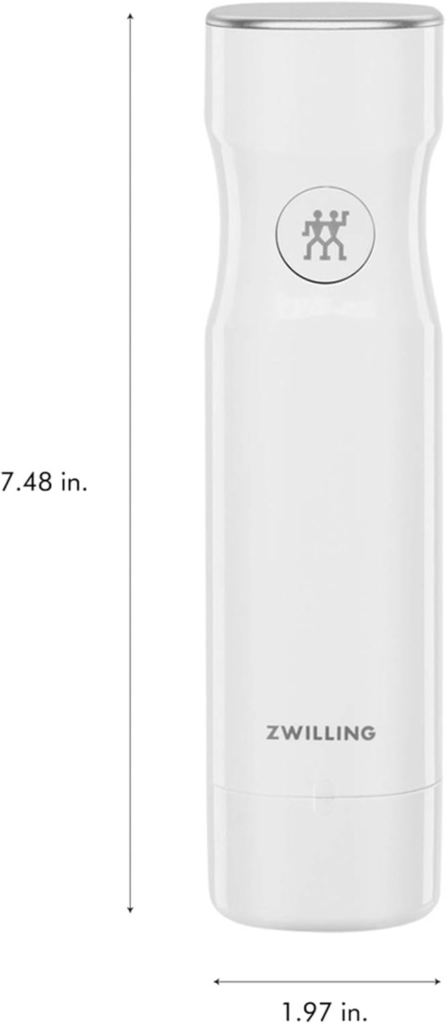
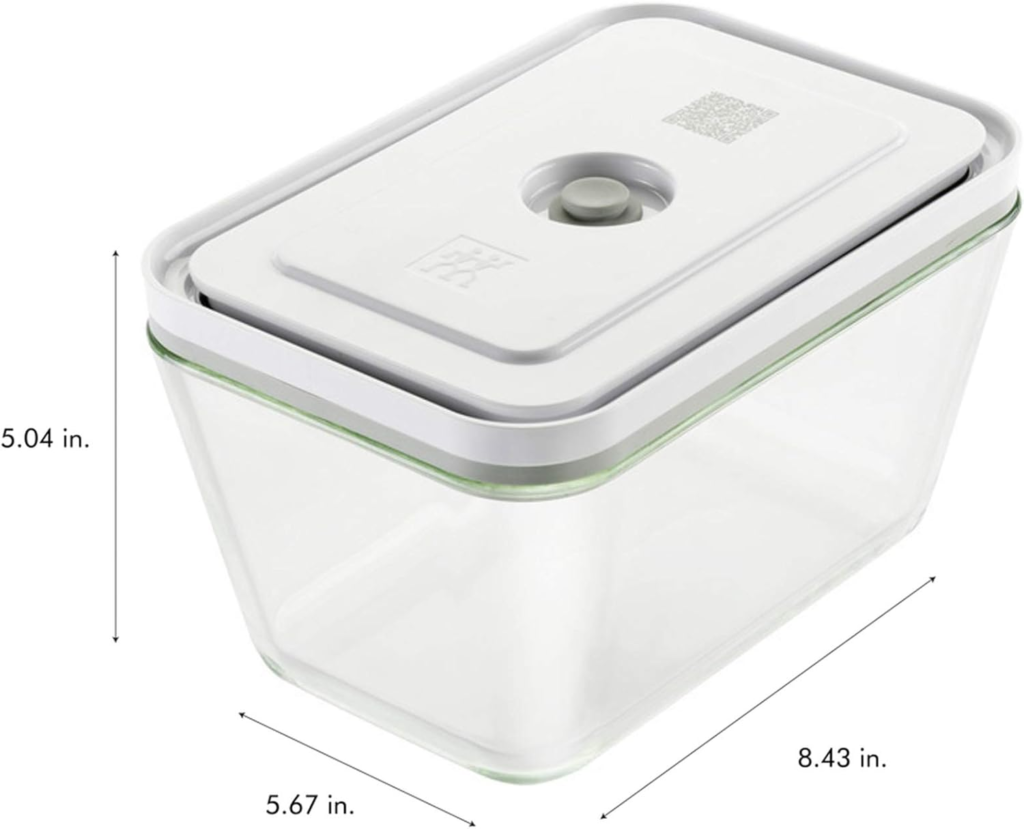
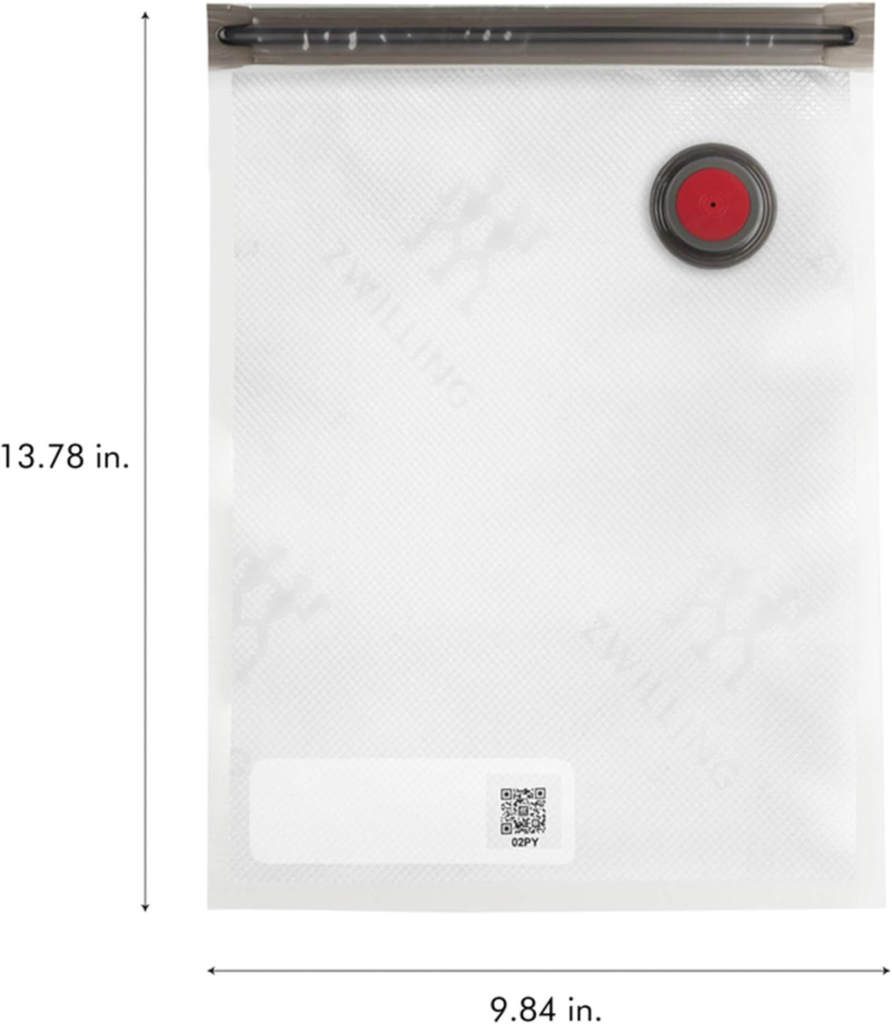
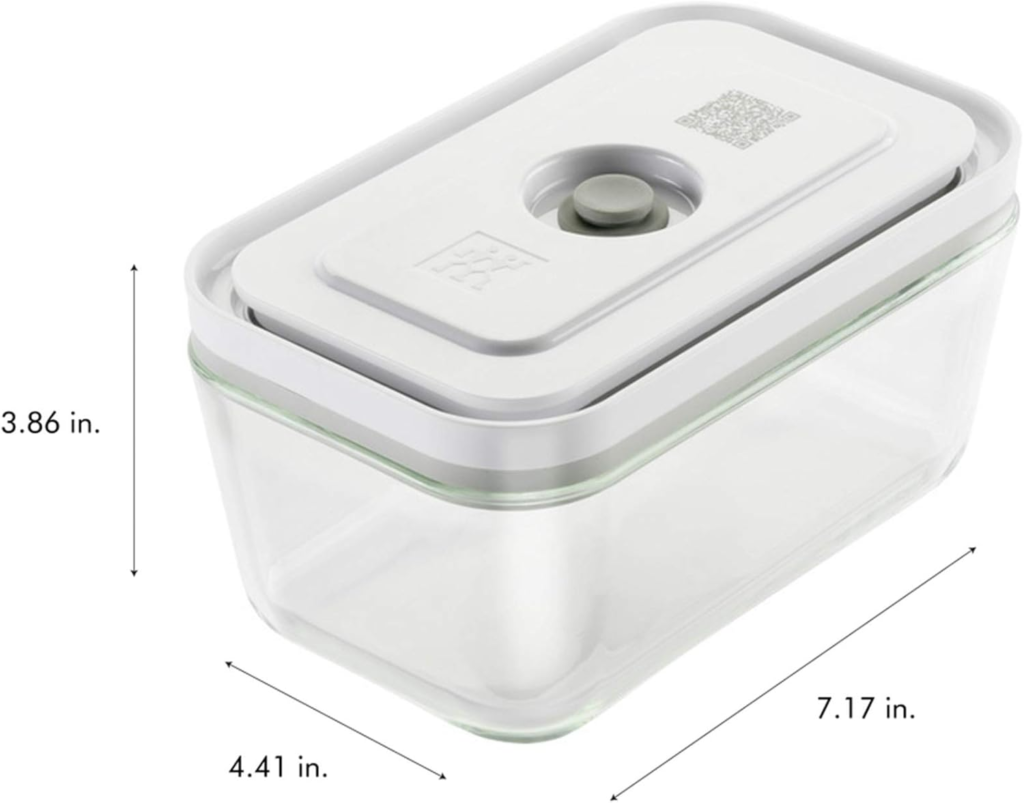
| Set includes | 1 medium + 1 large borosilicate glass container, 2 small + 2 medium reusable vacuum bags, 1 rechargeable vacuum pump |
| Materials | Borosilicate glass base, plastic lid, silicone valve/seal; bags in BPA-free plastic with silicone valve |
| Power | Built-in rechargeable lithium-ion battery, charges via USB |
| Warranty | 2 years, pump and battery |
| Dishwasher safe | Containers: yes. Bags: no — hand wash only |
| Typical price | Around $100 MSRP for this set (confirm current price at checkout) |
Zwilling Fresh & Save Review: The Result Looks Fine. The Problem Isn’t.
Here’s the contradiction worth sitting with: plenty of vacuum-sealed bags look airtight and still fail at the one job they exist for.
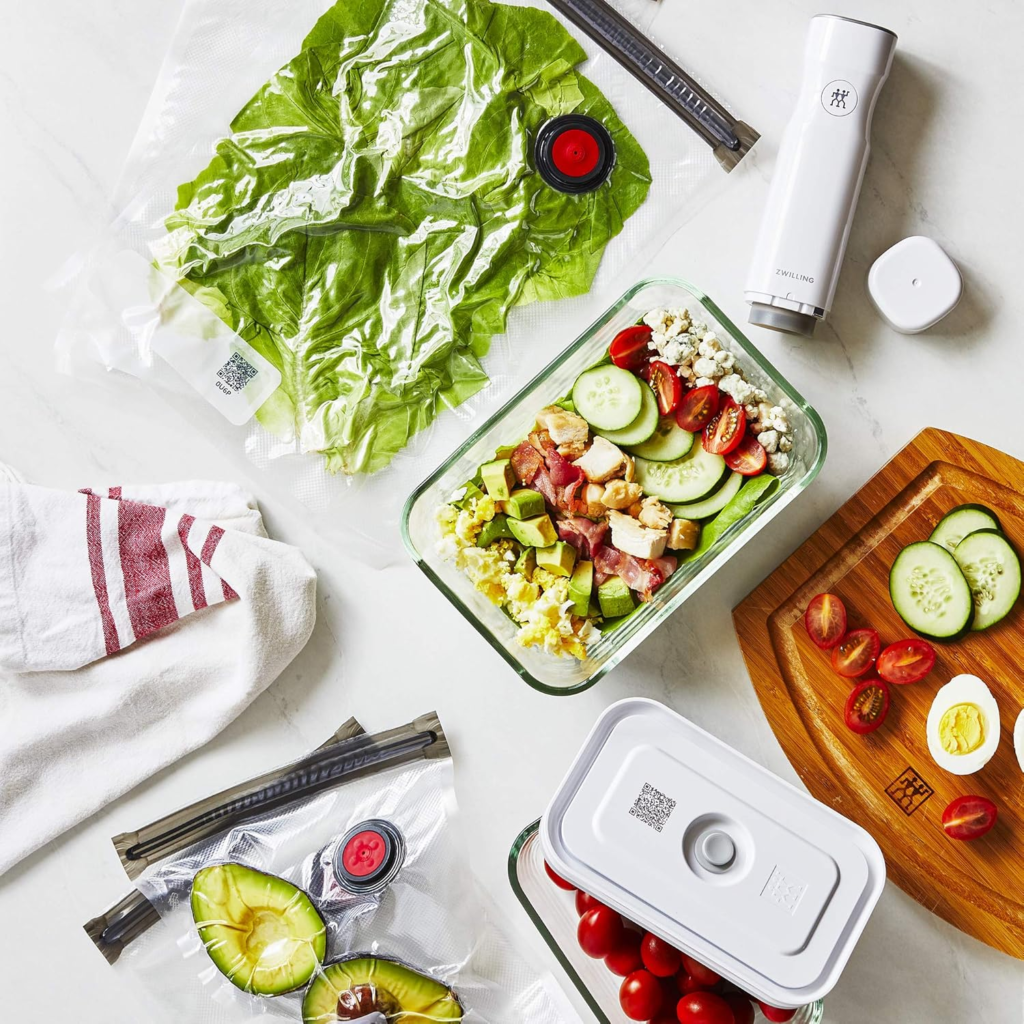
When testers ran the Zwilling pump through real fridge and freezer use, the results were genuinely strong — an avocado half held off browning for five days instead of the usual few hours, and salad mix, cooked sweet potatoes, and cilantro all stayed edible for ten days. Because of this product, testers only had to go to the grocery store twice a month, and the avocado test showed only slight browning after five whole days, with salad mix, cooked sweet potatoes and cilantro staying fresh for 10 days. That’s the seal working exactly as intended.
So why does this article exist? Because “working as intended” and “working in every situation you’ll actually use it in” are two different claims — and the gap between them is where buyers either save real money or quietly regret the purchase.
Vacuum Seal Failure Signs: What You’re Actually Feeling But Not Naming
You’ve felt this even if you’ve never said it out loud — the bag was sealed, you checked, and it still didn’t hold. Or you’re hand-washing a floppy plastic bag again, wondering if you’re actually saving anything. Or something in the fridge smells like the last thing you sealed in it, even after a wash.
None of that is in your head. Some real buyers report the bags losing their seal repeatedly, forcing them to reapply the vacuum, and they aren’t sure if it’s a bag issue or a design issue. Others note the zip-style bags retain smells even after several washes, and one reviewer summed the whole experience up as fine “if you do not mind the charging all the time.” It’s not that the system is broken. It’s that nobody tells you where the seal is fragile until you’ve already lived through it once.
How Vacuum Seals Actually Fail at Home: The Hidden Mechanism Behind the Miss
A seal doesn’t fail randomly. It fails at three specific, predictable points — and once you know them, most of the “why didn’t this work” moments disappear.
The food fights back. Certain vegetables — cabbage, beans, onions, and garlic — keep emitting gas after they’re cut, which breaks the vacuum from the inside, and Zwilling’s own guidance is to blanch them first to prevent this. Powdery foods cause a related problem: residue left on the sealing area can stop the lid from closing properly.
Liquid is the pump’s real enemy. The most common way these pumps die isn’t age — it’s suction pulling in juice, brine, or sauce. Independent repair discussion describes these pumps as prone to failing easily and often once liquid gets pulled in, and because the battery is sealed inside the housing, there’s rarely a simple fix.
The bags and the boxes are not the same product. This is where some listings get it wrong: the glass containers can go in the dishwasher, but the bags are meant to be cleaned by hand and dried completely before reuse. Skip that last step and the odor complaint above makes a lot more sense.
Zwilling Fresh & Save Limitations: The Threshold Where the Seal Quietly Breaks
Every system has a point where good design meets real-world limits. For Fresh & Save, that threshold shows up in three places.
Heavy sous vide use. Testers who tried it specifically for sous vide found the bags performed fine but weren’t meaningfully better than standard freezer bags for that job, and since the bags aren’t considered reusable once they’ve touched raw meat, the value case weakens if sous vide is your main reason for buying.
Lids age. At least one long-term user, running the same set daily since September 2023, reports that lids get noticeably fussier after about a year of regular use — and since replacement lids aren’t sold separately, that’s a real cost hiding in the fine print.
It’s a closed system. The pump only docks with Zwilling’s own bags and containers, so once you’re in, you’re buying Zwilling accessories for as long as you keep the pump.
Where Buyers Actually Run Into Trouble
| Situation | What Happens | Why |
|---|---|---|
| Sealing soup, broth, or marinade near the fill line | Pump chokes or shuts down | Liquid gets pulled toward the motor |
| Vacuum-sealing raw onion, garlic, cabbage, or beans | Seal loosens within a day | These release gas after cutting |
| Reusing a bag after raw meat | Not recommended | Food-safety, not a durability flaw |
| Skipping the full hand-dry step on bags | Lingering odor | Trapped moisture in a reused bag |
| Buying it mainly for sous vide | Underwhelming payoff | Standard bags perform comparably for that job |
Vacuum Sealer Shopping Mistakes: Why Most Buyers Misread This Too Early
Most people compare this to a countertop vacuum sealer — the kind that cuts and seals a roll of plastic — and judge it by that yardstick. That’s the wrong comparison, and it’s why some buyers feel let down within a month.
These are two different tools for two different problems. A plug-in sealer is built for high-volume, one-way sealing — someone portioning ten pounds of chicken at once. Fresh & Save is a compact, cordless system built around reuse and everyday fridge rotation. That’s consistent with how it’s reviewed: experts have called it a highly recommended option for its simplicity, ease of use, and durability, while larger dedicated machines with automatic bag detection still win out for bigger, higher-volume jobs.
Zwilling Fresh & Save vs. a Traditional Countertop Vacuum Sealer
| Zwilling Fresh & Save | Countertop Sealer (FoodSaver-style) | |
|---|---|---|
| Best for | Daily fridge/freezer rotation, meal prep, small batches | High-volume, one-time bulk sealing |
| Bags | Reusable, hand-wash | Usually single-use rolls |
| Footprint | Handheld pump, stores in a drawer | Countertop appliance |
| Liquid-heavy foods | Riskier for the pump | Generally more tolerant |
| Ongoing cost | Occasional bag/container refills | Ongoing roll purchases |
| Learning curve | Dock, press, done | A bit more setup per bag |
Who Needs the Zwilling Fresh & Save Kit: Who Is Actually Inside This Problem
This system earns its keep for a specific kind of kitchen, not every kitchen.
It’s built for the person who shops once a week and actually means to eat what they bought — the one who’s tired of finding wilted herbs and soft berries three days later. It’s built for meal preppers who want Sunday’s cooking to still taste like Sunday’s cooking on Thursday. It fits the kind of household that shops in bulk and preps, seals, and freezes produce and meat before it can spoil, and it fits anyone who’s traded a bulky countertop sealer for something that disappears into a drawer.
If that sounds like your actual week, the rest of this decision is mostly about logistics, not whether it works.
Zwilling Fresh & Save Pros and Cons: Where the Wrong Fit Begins
The honest flip side: this isn’t the right buy for everyone, and pretending otherwise is how people end up disappointed.
| Buy It If | Skip It If |
|---|---|
| You mainly store fresh produce, leftovers, and meal-prepped meals | Sous vide is your main reason for buying |
| You want fewer grocery runs and less spoiled food in the bin | You regularly seal soups, sauces, or marinades in bulk |
| You’re fine hand-washing bags and keeping liquids out of the pump | You process large batches of raw meat at once |
| You want a small, quiet, drawer-sized system | You want a fully dishwasher-safe, zero-maintenance bag system |
Zwilling Fresh & Save Starter Kit: The One Situation Where This Product Becomes Logical
If you’ve read this far and recognized your own fridge in it — the wilted greens, the soft berries, the freezer burn you didn’t expect — this stops being a gadget and starts being a fix. The 7-piece starter set gives you one medium and one large glass container plus four reusable bags and the rechargeable pump — enough to run a real week of groceries and meal prep through it before deciding whether to expand the set. It isn’t the answer for sous vide or bulk meat processing. It is the answer for the specific, ordinary problem this article opened with.
What Zwilling Fresh & Save Solves, Reduces, and Still Leaves to You
It solves the slow, invisible spoilage of everyday produce and leftovers — the five-day-old herbs, the freezer-burned chicken, the berries you meant to eat.
It reduces grocery runs, wasted money, and the small guilt of tossing food you paid for.
It still leaves to you: cooling food properly before sealing it, blanching gassy vegetables first, keeping liquids away from the pump, and hand-washing the bags instead of tossing them in the dishwasher. Vacuum sealing extends freshness — it isn’t a substitute for correct freezing, cooling, or storage practices, and Zwilling says as much in its own instructions.
Zwilling Fresh & Save FAQ: Common Questions Answered
| Question | Answer |
|---|---|
| How long does a charge last? | Zwilling doesn’t publish an exact seals-per-charge figure, but recommends recharging the pump every 3 to 6 months even without regular use. |
| Can the pump go in the dishwasher? | No — it has a built-in battery, so it should only be wiped with a damp cloth; the silicone attachment can be rinsed separately. |
| Are the bags dishwasher-safe? | No — hand wash only, dried completely before storing. |
| Is it worth buying just for sous vide? | Testers found it comparable to standard freezer bags for that specific use, so a dedicated sealer may be the better investment if that’s your main goal. |
| What’s the warranty? | Two years on both the pump and its battery. |
| Why won’t it hold a seal on onions or cabbage? | These keep releasing gas after they’re cut, which re-inflates the bag — blanching first solves it. |
Zwilling Fresh & Save Review: Final Verdict
Strip away the app and the QR codes, and the question is simple: does the seal hold where it actually matters to you? For everyday produce, leftovers, and meal prep, the answer — backed by testers, long-term users, and Zwilling’s own engineering notes — is yes. For bulk sous vide, liquid-heavy foods, or industrial-scale meat processing, the honest answer is that a different tool will serve you better.
If your kitchen is the first kind, the decision stops being vague here:
Transparency Note:
This analysis is built on aggregated real-world experience. It extracts what repeatedly holds, what breaks, and what users uncover only after living with the system—then shapes it into a clear model you can use immediately. Think of it as structured experience, refined and presented so you don’t have to learn it the hard way.
“A quick note: Don’t believe the star ratings, but trust personal experience. This article is a compilation of collected experiences.”