NUTRIBULLET DIGITAL SMART TOUCH COMBO REVIEW: WHY YOUR SMOOTHIE NEVER LOOKS LIKE THE ONE IN YOUR HEAD
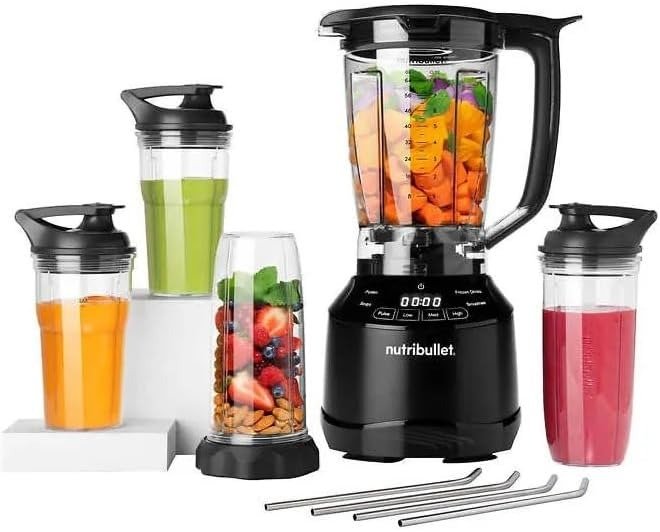
NUTRIBULLET DIGITAL SMART TOUCH COMBO
The first blend is always perfect. Thick, cold, no flecks of spinach hiding at the bottom of the glass — exactly like the photo on the box. Then real life starts: a roommate knocking on the wall at 6 a.m., a blender that refuses to power on until you twist the cup a second time, a bag of ice that turns to slush on one side and stays rock-solid on the other. None of that shows up in a product listing. I went through the independent lab tests, the owner reviews, and NutriBullet’s own support documentation to find out which of it is real, which of it is avoidable, and which is simply the cost of a 1,500-watt motor at this price.
| Quick Facts | |
|---|---|
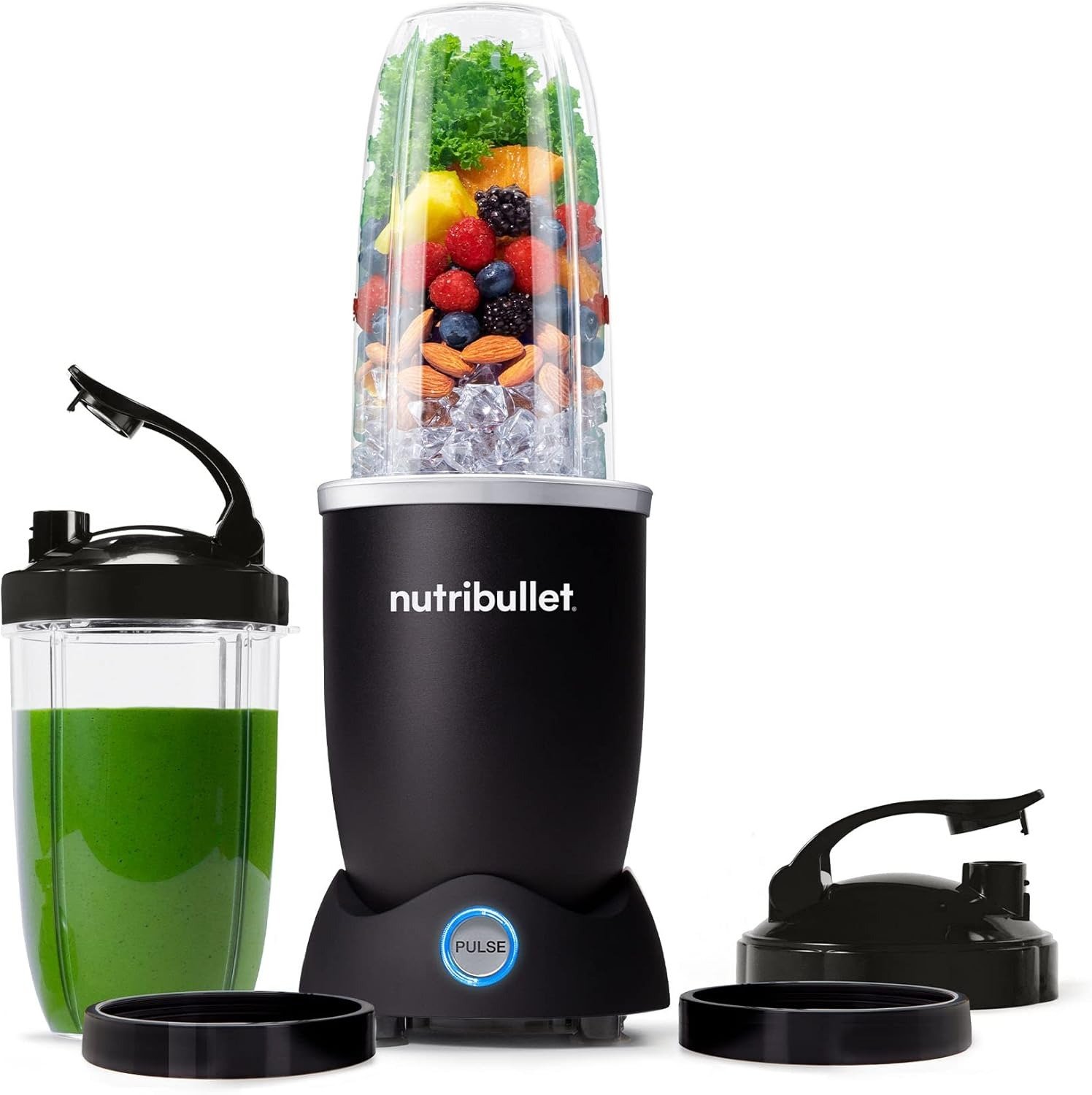
| Motor | 1,500 watts |
| Main pitcher | 64 oz, vented, BPA-free, dishwasher-safe |
| Personal cups | 32 oz and 20 oz to-go cups with lids |
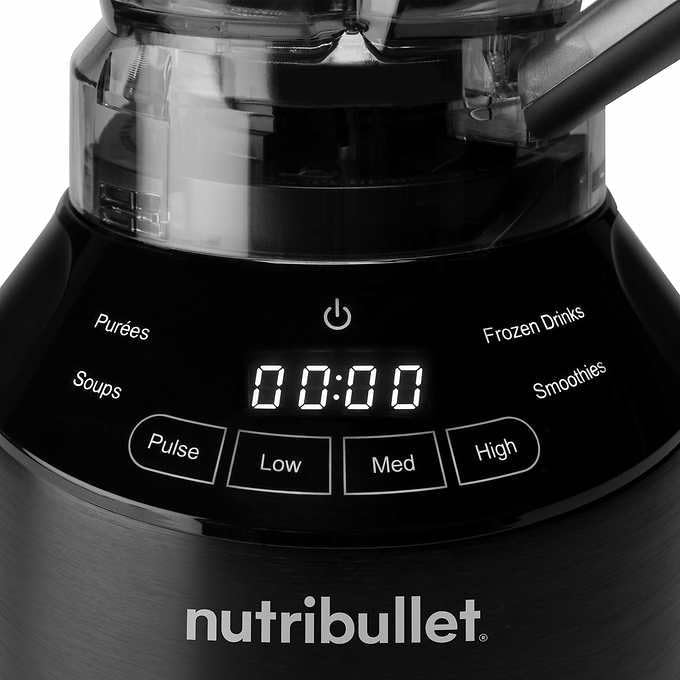
| Controls | Touchscreen — 4 auto programs, 3 speeds, pulse |
| Smart sensing | Base detects pitcher vs. cup and adjusts the menu |
| Noise (independent tests) | High 80s to low 90s dB, depending on the task |
| Warranty | 1 year standard, 3-year extension available |
NutriBullet Digital Smart Touch Combo Performance: The Result Looks Fine, The Problem Isn’t
On the thing it’s actually built to do, this blender doesn’t cut corners. Independent lab testing describes it as well-built, and side-by-side taste tests found the smoothies came out completely liquefied — no fiber from the pineapple, no flecks of spinach, a texture closer to a café blend than a home one. Frozen fruit and milk turn into a smoothie in about twenty seconds; cashews and water turn into milk in half that.
So why does a blender that performs this well still generate a steady stream of “I’m disappointed” reviews? Because the disappointment almost never shows up in the blend itself. It shows up around it — in the sound, in the cleanup, in the moment six months from now when it suddenly won’t turn on. That’s the part worth understanding before you decide anything.
NutriBullet 1500-Watt Motor Noise Level: What You’re Actually Feeling But Not Naming
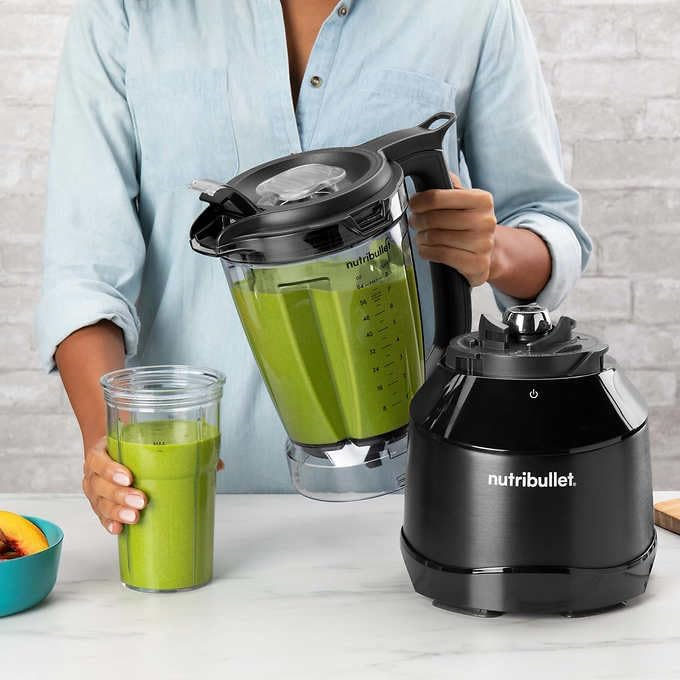
Here’s the thing nobody puts in the bullet points: this is one of the louder blenders on the market. Independent noise meters have clocked it anywhere from the high 80s to the low 90s in decibels depending on the task — ice crushing tends to sit lower than a full-speed run. Multiple outlets that tested it side-by-side with a Vitamix described the NutriBullet as noticeably louder, to the point where testers walked away from the counter rather than stand next to it.
That’s not a defect. It’s the trade-off for the price. A Vitamix that runs quieter at this power level starts around five times higher in cost. Rule of thumb: if your kitchen shares a wall with a bedroom, or your mornings start before anyone else is awake, the noise — not the power, not the price — is the variable that will actually decide whether you’re happy with this purchase.
Why NutriBullets Overheat and Die: The Hidden Mechanism Behind “It Just Stopped Working”
This is the single most common complaint attached to NutriBullet motor bases across the product line, and it’s almost never a manufacturing defect. It’s a duty cycle nobody explains at checkout.
These motors aren’t designed to run continuously for minutes at a stretch. NutriBullet’s own guidance — echoed across independent repair and troubleshooting sources — is to blend in short bursts with a rest in between, add a splash of liquid before dropping in ice or frozen fruit, and never fill past the marked max line. Skip any of those three things often enough, and you get one of two outcomes: a thermal cutoff that makes the unit “just stop,” or, over time, a genuinely burned-out motor that no longer comes back.
| What You Notice | What’s Actually Happening |
|---|---|
| It won’t power on at all | Cup or pitcher isn’t fully twisted into the locking tabs, or a safety cutoff tripped after a long continuous run |
| Liquid seeping from the base | Filled past the max line, leaving no room to cycle — or a seal worn down after months of use |
| It sounds rougher or higher-pitched than it used to | The extractor blade is overdue for replacement — NutriBullet recommends roughly every 6 months of regular use |
| Ice comes out half-crushed | Too much ice in one pass; short pulses in smaller batches outperform one long run |
| Nut butter stalls halfway | The motor is tuned for liquid-forward blends, not dry grinding — it needs a manual scrape-and-restart |
64oz Pitcher vs 32oz and 20oz Cups: The Threshold Where the Outcome Quietly Breaks
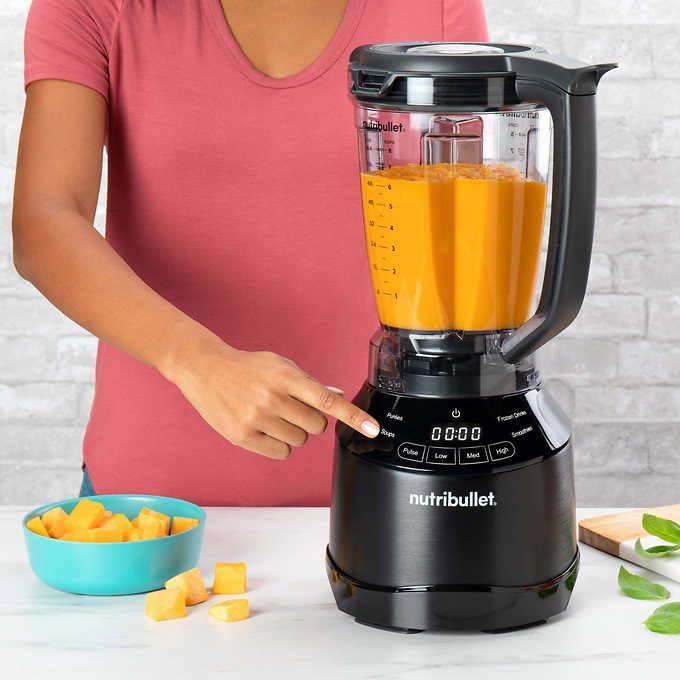
The 64 oz pitcher is the headline feature, and it earns it — roughly four tall drinks in one pass, plenty for a household rather than one person. The vented lid is also one of the only things in NutriBullet’s current lineup rated for warm ingredients, so soups and purées are genuinely on the table.
But there’s a line where the “does everything” promise gets thinner. It won’t heat soup through friction the way a $500-plus machine will — you’re still blending something you cooked separately. Large batches of ice can leave a few stubborn cubes behind rather than crushing every piece evenly. And the personal cups, unlike the pitcher, carry no printed measurement lines, which is a small but real annoyance if you like precision in a single-serve shake.
Common NutriBullet Buying Mistakes: Why Most Buyers Misread This Blender Too Early
Most of the disappointed reviews trace back to one of three comparisons that were never fair to begin with. People compare the wattage number to a $500 machine and expect $500 silence. People assume “Combo” means it replicates a stovetop the way premium blenders do. And people run it like a stand mixer — on, and left alone for five minutes — instead of the short-burst tool it’s actually engineered to be.
None of that is the buyer’s fault; it’s a gap in what the listing tells you. Correct the expectation, and the actual machine holds up well against what it’s realistically priced to do.
Best Blender for Families and Meal Preppers: Who Is Actually Inside This Problem
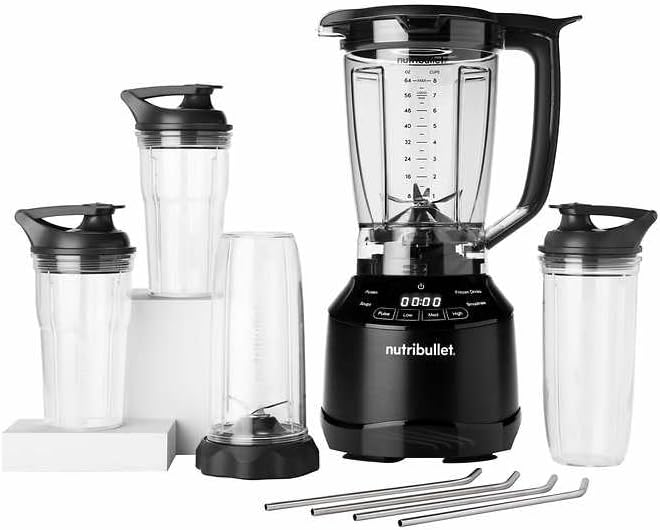
This blender makes the most sense for a specific kind of kitchen: more than one person drinking smoothies, a mix of quick personal servings and bigger weekend batches, and a household that would rather pay for a locking safety lid and real power than for whisper-quiet operation. If you’re prepping soup for the week, blending shakes for two kids before school, or replacing a blender that couldn’t keep up with frozen fruit, this is squarely built for you.
Who Should Skip the NutriBullet Smart Touch Combo: Where Wrong-Fit Begins
It’s just as important to name who shouldn’t buy this. If you live somewhere with thin walls and blend before anyone else is awake, the noise alone will sour the purchase. If you make nut butter or fine-ground flours regularly, the motor will fight you every time. If you’re picturing hot soup made entirely in the pitcher, or a machine you can walk away from for several minutes, you’re picturing a different, much pricier category of blender.
| Buy It If You… | Skip It If You… |
|---|---|
| Blend for more than one person | Live in a thin-walled apartment and blend early morning |
| Want big-batch and single-serve in one machine | Mainly need something silent and occasional |
| Value a safety lockout on the lid | Regularly make nut butter or fine-ground seeds |
| Want power without a $300+ price tag | Expect it to actively cook soup while blending |
| Are fine pulsing in short bursts | Tend to run a blender continuously for minutes |
NutriBullet Digital Smart Touch Combo vs the Alternatives: Full Comparison
Placed next to the rest of NutriBullet’s own lineup and its closest outside competitors, the Smart Touch Combo sits in a clear middle position — more capable than the brand’s cheaper combos, far less expensive than the machines that outclass it on quiet operation and seed-grinding.
| Model | Motor | Best For | Typical Price Range | Main Trade-off |
|---|---|---|---|---|
| NutriBullet Digital Smart Touch Combo | 1,500W | Families, single + big batch | ~$150–$220 | Loud; no active soup-heating |
| NutriBullet Pro 900 | 900W | Solo smoothies, small kitchens | Under $100 | No pitcher, single-serve only |
| NutriBullet Blender Combo (non-digital) | 1,200W | Budget combo buyers | Under $150 | Fewer programs, slower on fibrous blends |
| Vitamix A3500 | Variable | Seeds, hot soup, daily heavy use | $500+ | Roughly 3–5x the price |
| KitchenAid K400 | ~1,200W | Easier cleanup, seed grinding | ~$300 | Still a significant step up in cost |
The cheaper NutriBullet options feel like a real downgrade in build and program count. The pricier outside options solve problems — seed grinding, active heating, near-silent operation — that most smoothie-and-soup households never actually run into.
NutriBullet Digital Smart Touch Combo Review: The One Situation Where This Blender Becomes Logical
If you recognized your own kitchen in the “who it’s for” section above, and the noise and the short-burst habit don’t scare you off, this is the version of NutriBullet worth paying up for. Within the brand’s own range, it’s the one with the touchscreen safety lockout, the widest program selection, and enough motor to keep up with a family instead of just one glass at a time. That combination is what the price difference over the base Combo is actually buying you — not marketing, just capability.
What It Solves, What It Reduces, and What Still Depends on You
It solves raw power and flexibility — one base that handles a family pitcher and two personal cups, with a lid that won’t run half-secured. It reduces the number of gadgets on your counter and the time spent making separate batches for separate people. What it doesn’t remove is upkeep: pulsing instead of running it continuously, adding liquid before ice, respecting the max fill line, and budgeting for a new extractor blade roughly twice a year. Skip those, and even the best-built motor will eventually tell you about it.
NUTRIBULLET DIGITAL SMART TOUCH COMBO FAQ: THE QUESTIONS PEOPLE ACTUALLY ASK
| Question | Answer |
|---|---|
| Does it crush ice well? | In short pulses, yes — testers turned ice into a fine, snow-like texture in a handful of pulses. Large amounts in one continuous run are more likely to leave a few unmelted pieces. |
| Can it actually make hot soup? | It can blend soup you’ve already cooked, and the vented pitcher is rated for warm liquids — but it won’t heat cold ingredients through friction the way a Vitamix Ascent or Breville Super Q can. |
| How loud is it really? | Independent testing puts it in the high 80s to low 90s decibels depending on the task, which most reviewers describe as genuinely loud for a countertop blender. |
| Is it dishwasher-safe? | The pitcher, lid, and cups are top-rack dishwasher-safe. The motor base is wipe-clean only and should never be submerged. |
| Why do people say the motor “just died”? | In nearly every documented case, it traces back to running it continuously too long, blending ice without liquid, or overfilling past the max line — all of which strain a motor built for short bursts. |
| What’s the real difference between the pitcher and the cups? | The 64 oz pitcher is for bigger batches and is the only vessel that unlocks the Soup program; the 32 oz and 20 oz cups are for single servings on the go. |
| Is it worth it over a Vitamix? | If seed-grinding, hot-blending, or near-silent operation matter to you, no — the Vitamix earns its price. If you want strong, reliable everyday blending for a fraction of the cost, this holds up. |
FINAL VERDICT ON THE NUTRIBULLET DIGITAL SMART TOUCH COMBO
None of what’s above is a flaw hiding in fine print — it’s just the part of the listing nobody writes for you. The blends are genuinely good. The noise is genuinely real. The motor lasts as long as you respect the way it’s built to run, not a second longer.
If your kitchen matches the profile above — more than one person to feed, a preference for power over silence, and a willingness to pulse instead of run it flat-out — this is where the decision stops being vague:
Transparency Note:
This analysis is built on aggregated real-world experience.
It extracts what repeatedly holds, what breaks, and what users uncover only after living with the system—then shapes it into a clear model you can use immediately.
Think of it as structured experience, refined and presented so you don’t have to learn it the hard way.
“A quick note: Don’t believe the star ratings, but trust personal experience. This article is a compilation of collected experiences.”