KRUPS Precision Grinder Review: What the Word "Espresso" on the Box Doesn’t Tell You
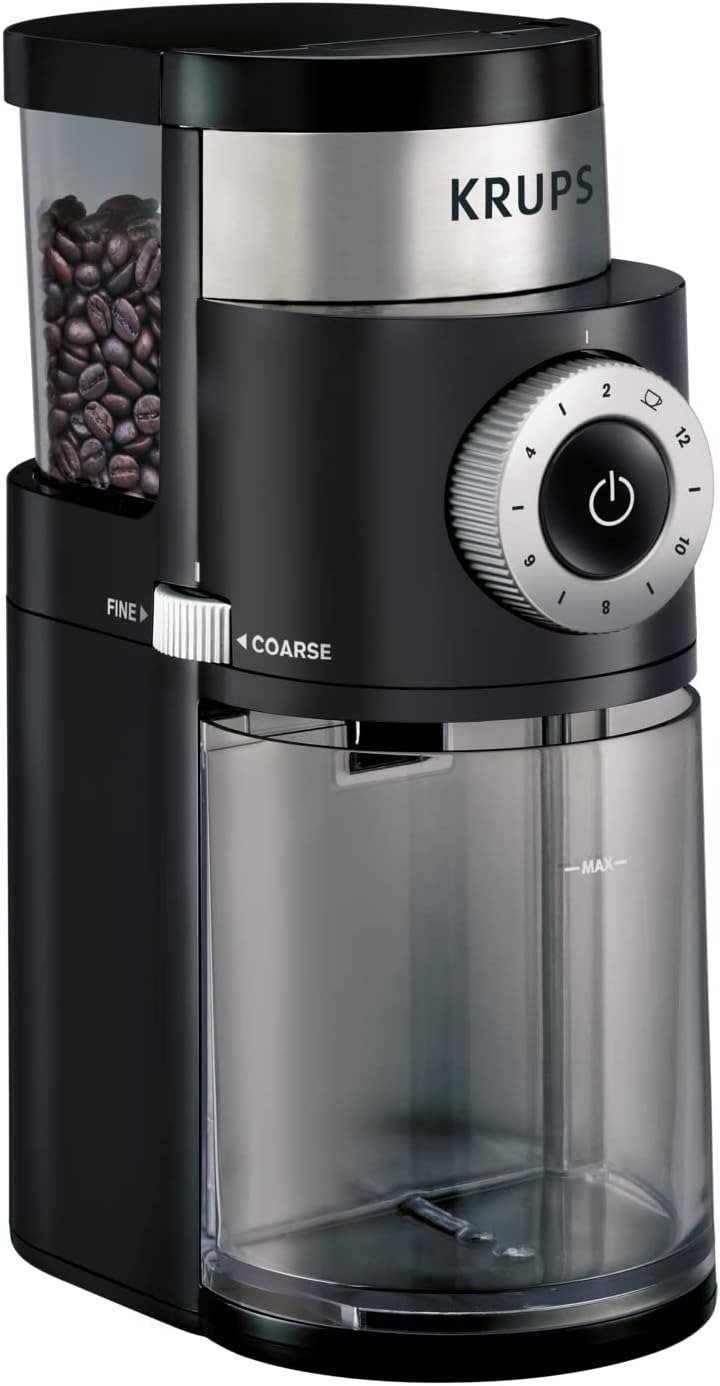
KRUPS PRECISION GRINDER
It’s 6:40 in the morning, the kettle’s just starting to tick, and you’re standing over a grinder that promises drip, pour-over, cold brew, and espresso from one machine. Twenty minutes later you’re looking at an espresso shot that pulled too fast and tastes thin — nothing like the syrupy cup from the place down the street. The grinder didn’t break. Nothing jammed. Every light did exactly what it was supposed to do.
That’s the actual problem. When an affordable grinder fails quietly instead of loudly, most people blame the beans, the machine, or themselves — before they ever question the one thing actually responsible: which setting they were told would work.
| Quick Facts | KRUPS Precision Burr Grinder (GX550850) |
|---|---|
| Burr type | Flat metal burr |
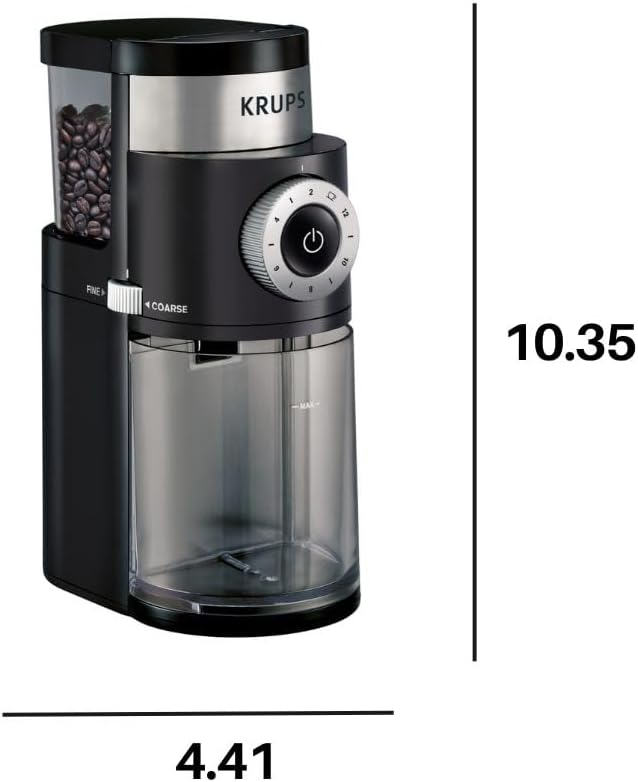
| Grind settings | 12, plus intermediary micro-adjustments |
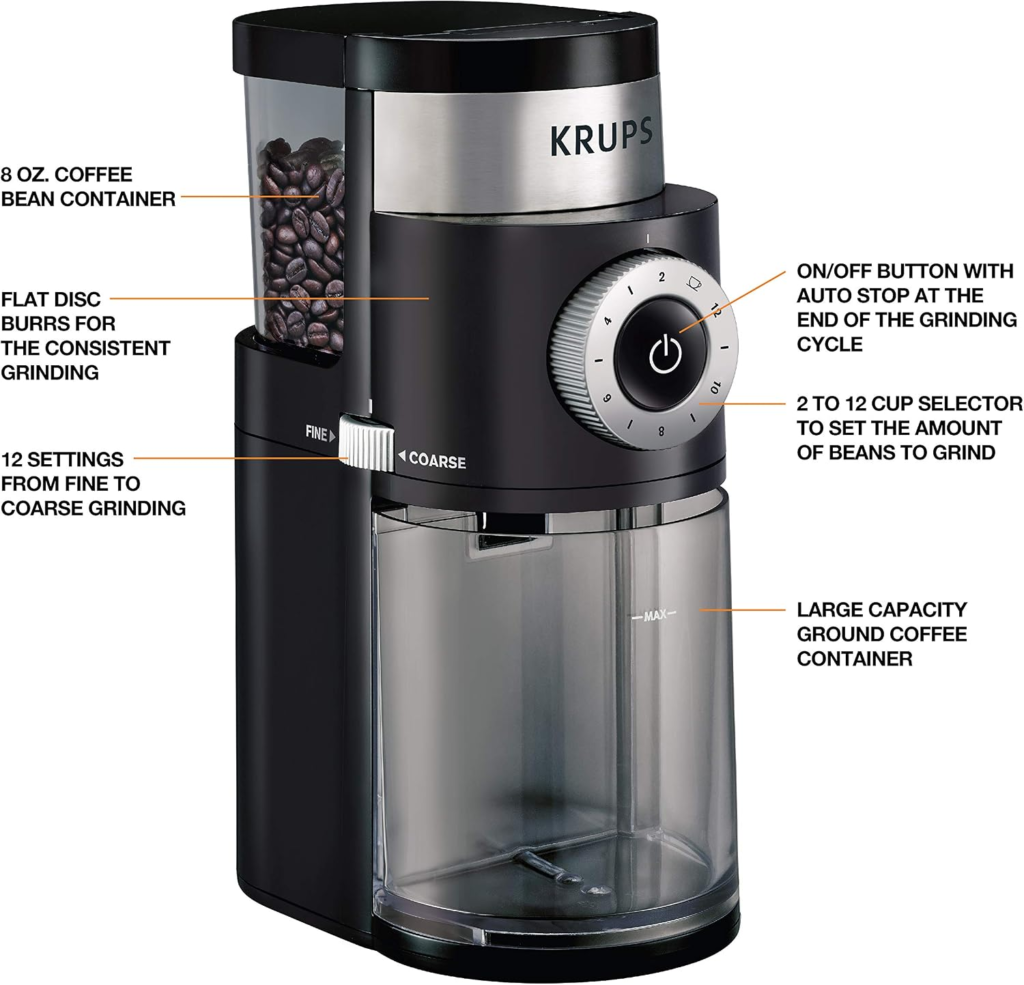
| Bean hopper | 8 oz, removable |
| Motor | 110W |
| Cup selector | 2–12 cups, auto-stop |
| Best for | Drip, pour-over, French press, cold brew |
| Weakest at | The two finest settings (espresso) |
| Cleaning | Removable top burr, brush included |
| Warranty | 2 years |
| Typical price | Roughly $50–$70 |
KRUPS Precision Grinder: The Coffee Looks Fine, the Problem Isn’t
For most of what this grinder is asked to do, it genuinely delivers. Owners moving up from a blade grinder consistently describe the same thing: less bitterness, more even color in the grounds, a noticeably cleaner cup out of a drip machine or a pour-over cone. That part of the promise holds up.
The gap shows up specifically at the fine end. Even KRUPS’ own instructions hedge here — the official guidance is to use “the two finest settings” for espresso, paired with freshly roasted beans, which is manufacturer-speak for this will work, but it isn’t the easy lane. Nothing is malfunctioning when an espresso shot comes out thin. The machine is doing exactly what a $60 flat burr grinder does at the outer edge of its range.
KRUPS Precision Grinder Noise and Mess: The Annoyance You Haven’t Quite Named
There are two small frictions that show up in almost every long-term account of this grinder, and neither is dangerous or expensive — they’re just the kind of thing nobody mentions until you’re living with it.
The first is static. Grounds cling to the lid and the walls of the container, especially with drier beans or a fuller hopper. It’s not a defect; it’s a known side effect of grinding into a plastic chamber this size, and it’s common across grinders in this price class. The second is noise — a real, noticeable, higher-pitched whir, not a jarring shriek. It won’t wake someone down the hall, but it will announce itself if anyone’s still asleep in the next room.
Flat Burr Mechanics: The Hidden Reason the Fine End Struggles
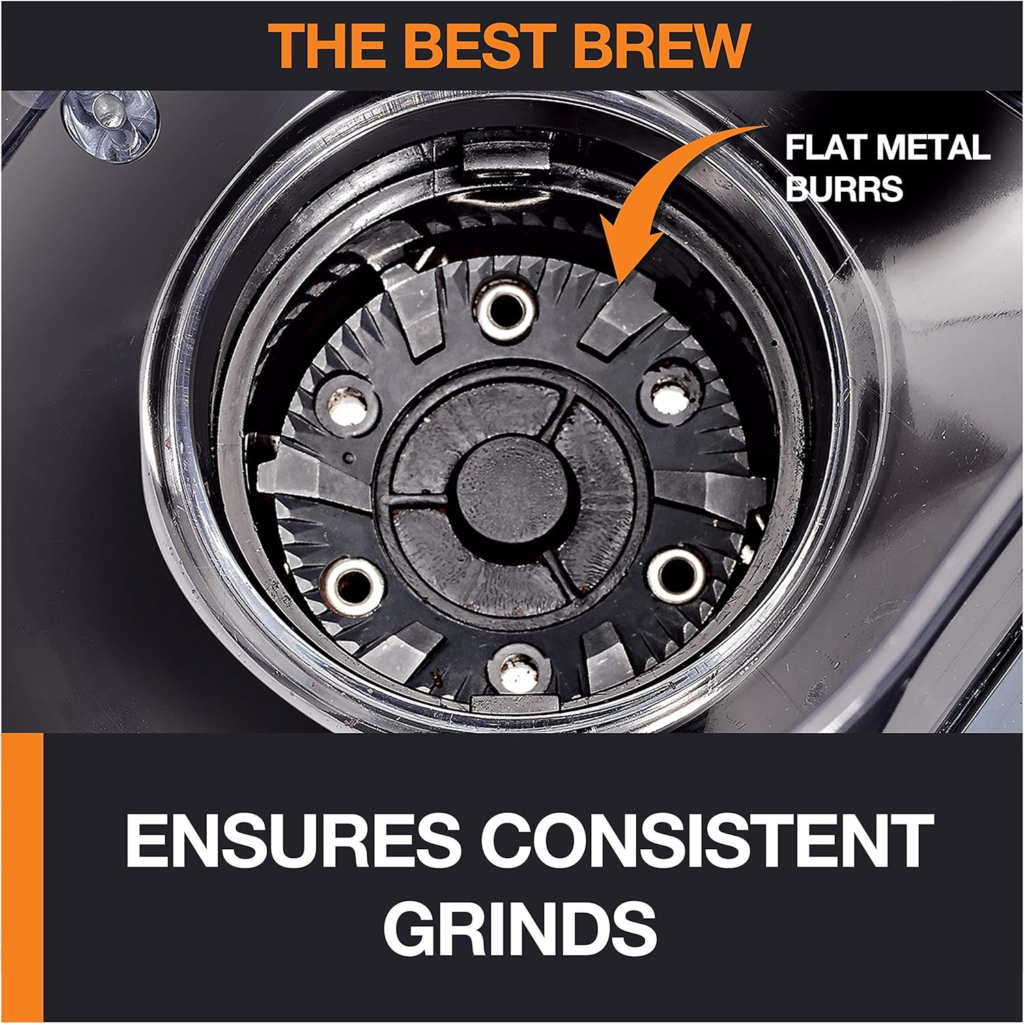
Here’s the part most reviews skip. A flat burr grinder works by pulling beans between two ridged metal discs spinning at a fixed speed. Grinders built specifically for espresso are engineered — burr size, motor torque, grind chamber shape — around producing an extremely fine, extremely uniform particle at that one end of the range. A multi-purpose grinder like this one is engineered for a range, which means the fine end gets covered, but not optimized.
The practical result: at settings built for drip, pour-over, and French press, particle size stays consistent. Push it to the outer edge for espresso, and consistency gets harder to hold — some particles land right, some land too coarse or too fine, and that mix is exactly what produces a fast, thin shot instead of a slow, rich one.
| Setting Range | Best Brew Method | What to Expect |
|---|---|---|
| 1–3 (coarsest) | Cold brew | Chunky, even, very low risk of over-extraction |
| 4–6 | French press | Consistent body, minimal fine dust |
| 7–9 | Drip / pour-over | The grinder’s comfort zone |
| 10 | AeroPress / strong drip | Noticeably finer, still steady |
| 11–12 (finest) | Espresso | Workable, not dependable — the espresso ceiling |
KRUPS Precision Grinder Settings: The Espresso Ceiling at 11 and 12
Call it what it is: an espresso ceiling. Below it, this grinder is confident and repeatable. At it, results start to depend on bean freshness, roast level, and a bit of luck. One buyer’s account sums it up well — trying a pressurized espresso basket at the finest setting and still not managing a proper pull, despite doing everything else right.
If espresso isn’t part of your routine, you may never personally reach this ceiling — settings 1 through 10 cover drip, pour-over, French press, and cold brew without drama. If espresso is why you’re buying a grinder in the first place, you’ll find the ceiling on day one.
KRUPS Precision Grinder Reviews: Why “Not a Real Espresso Grinder” Misses the Point
A common dismissal shows up in scattered reviews: this isn’t a real espresso grinder. True — and also beside the point. Putting “espresso” in a product name invites a comparison to dedicated grinders costing three to five times as much, built around a single job. That’s not a fair fight, and it was never supposed to be one.
The comparison that actually matters is against what else exists near this price: other sub-$100 multi-method grinders, and the blade grinder most buyers are replacing. Against that field, it holds up well. That’s not a flaw in the grinder. That’s a flaw in the comparison.
| What Owners Report | What’s Actually Going On | Quick Fix |
|---|---|---|
| Grinder won’t turn on | Lid or grounds-container safety switch isn’t fully seated | Reseat both firmly until each clicks into place |
| Static, grounds stuck to the lid | Normal behavior for a plastic chamber this size | Tap the chamber before opening; grind smaller batches |
| Fine dust building up | Slightly more common at coarser settings than fine | Stay closer to settings 7–9 for the cleanest results |
| Motor died after several months | A minority of units fail early, per owner reports | Register the 2-year warranty the day it arrives |
Best Grinder for Pour-Over and Drip Coffee: Who This Is Actually Built For
The clearest fit is someone currently using a blade grinder or pre-ground bags, brewing mostly drip, pour-over, or French press, who wants a real, repeatable upgrade without a three-figure investment. No app, no gram-precision dosing, no digital timer — just a dial, a cup selector, and a start button. For that person, this is exactly enough machine.
KRUPS Precision Grinder Pros and Cons: Where the Wrong Fit Begins
| This Is a Good Fit If… | This Is the Wrong Fit If… |
|---|---|
| You mostly drink drip, pour-over, French press, or cold brew | Espresso is most of what you drink |
| You’re upgrading from a blade grinder | You already own a dedicated espresso grinder |
| You want simple dial-and-go settings | You want digital timers or gram-precise dosing |
| $50–70 is your ceiling | You’ve budgeted $150+ for zero compromise |
KRUPS Precision Grinder Review: The One Setup Where This Makes Complete Sense
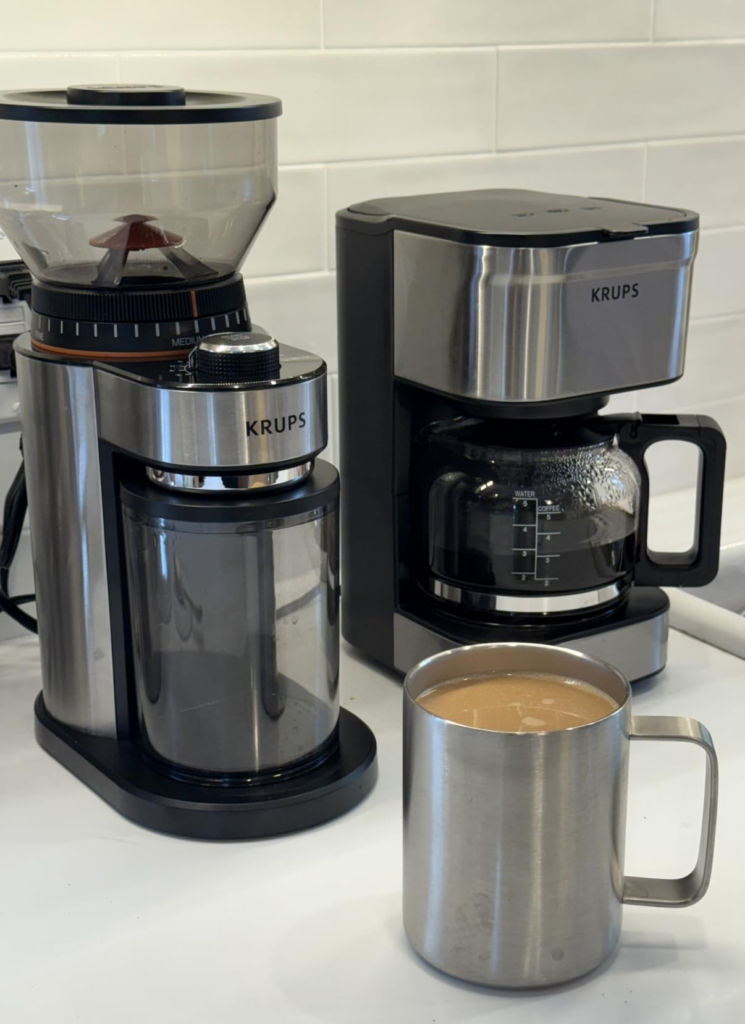
Picture one coffee maker in the house — a drip machine on weekdays, a French press or pour-over on slower weekend mornings, maybe cold brew in summer. No espresso machine on the counter. Budget capped well under $100. In that exact setup, this grinder isn’t a compromise. It’s the correct tool, priced correctly, doing the job it was actually built for.
KRUPS Precision Grinder Verdict: What Changes, What Doesn’t
What it solves: the inconsistency and bitterness that come standard with blade grinding, plus the flatness of pre-ground coffee going stale before you open the bag. What it reduces: the guesswork of dialing in a grind, since the range is genuinely wide for non-espresso brewing. What it still leaves to you: fresh beans, a reasonable dose, a habit of tapping the chamber before you open it, and — if espresso matters — realistic expectations about settings 11 and 12.
KRUPS Precision Grinder Review: Final Verdict
If drip, pour-over, French press, or cold brew makes up most of your week, and you’ve been putting off the move from blade to burr, this is a clean, low-risk place to start. If espresso is the entire reason you’re shopping, save this one for later and put the budget toward a grinder built specifically for that job.
KRUPS Precision Grinder FAQ: Common Questions Answered
| Question | Answer |
|---|---|
| Is the KRUPS Precision Grinder good for espresso? | It can produce an espresso-fine grind at settings 11 and 12, but consistency isn’t guaranteed. It’s workable for casual espresso, not built for dialing in serious shots. |
| How many grind settings does the KRUPS Precision Grinder have? | Twelve main settings, with intermediary micro-adjustments between them for finer control. |
| Why does my KRUPS Precision Grinder create static or stick to the lid? | It’s a normal side effect of grinding into a plastic chamber this size, more noticeable with drier beans. Tapping the chamber before opening it helps. |
| Why won’t my KRUPS Precision Grinder turn on? | In most cases, the lid or grounds-container safety switch isn’t fully seated. Remove both, reseat them firmly, and confirm each clicks into place. |
| Is the KRUPS Precision Grinder loud? | It’s moderately noticeable and higher-pitched, in line with most burr grinders at this price — not alarming, but not silent either. |
| How long does the KRUPS Precision Grinder typically last? | Most owners report years of reliable use; a smaller share report early motor failure within the first year. Registering the 2-year warranty on arrival is worth the five minutes. |
Transparency Note:
This analysis is built on aggregated real-world experience.
It extracts what repeatedly holds, what breaks, and what users uncover only after living with the system—then shapes it into a clear model you can use immediately.
Think of it as structured experience, refined and presented so you don’t have to learn it the hard way.
“A quick note: Don’t believe the star ratings, but trust personal experience. This article is a compilation of collected experiences.”