Motorola MB7621 Review: The Modem That Solves a Real Problem — Until It Doesn’t
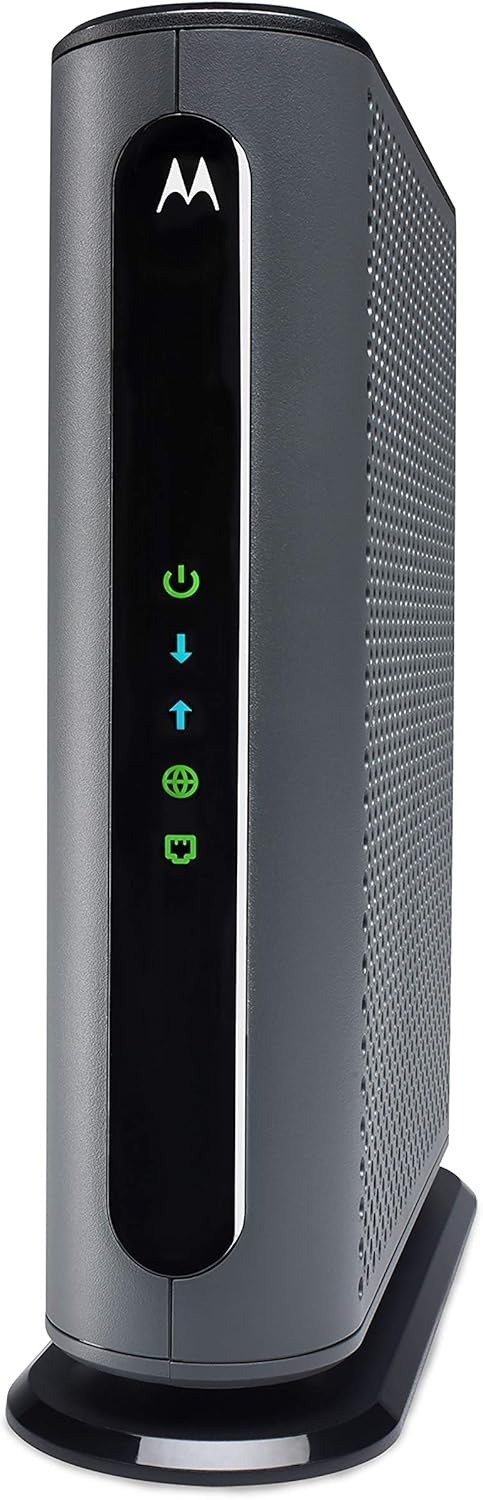
MOTOROLA MB7621
The Speed Looks Fine. The Risk Is Hidden.
You plugged it in. Spectrum activated it. Your speed test passed. You put the ISP modem in a box and felt like you finally made a smart decision.
And for weeks — maybe months — nothing went wrong.
That’s the part that misleads people.
The Motorola MB7621 is not a bad modem. It is a modem with a precise ceiling. And most buyers only discover that ceiling when they’re already past it — after the ISP upgrades their infrastructure, after they bump their plan to gigabit, after Spectrum posts a deprecation date. The satisfaction score stays high because the people inside the threshold genuinely experience a clean, stable connection. The ones outside it often don’t realize the modem was the variable until someone else names it.
This review names it.
What You’re Actually Feeling but Not Naming
You’re paying a monthly rental fee — $10, $14, sometimes $15 — for a modem that belongs to your ISP, that they can replace, reprovision, or remove support for without asking you. You don’t own the device sitting in your home. You’re financing it indefinitely.
That’s the annoyance underneath the decision to buy your own modem.
It’s not purely about speed. It’s about a quiet, compounding loss. At $14/month, you spend $168 per year on hardware you will never own. Over four years: $672. The MB7621 sells for around $70–90 new. The math takes one minute to do, and once you do it, the rental model becomes genuinely difficult to justify.
That financial friction is legitimate. And the MB7621 is a direct, honest answer to it — under the right conditions.
The Hidden Mechanism Behind the Miss
The MB7621 operates on DOCSIS 3.0 with 24 downstream and 8 upstream channel bonding. In the right ISP environment, this produces real-world download speeds between 500 and 900 Mbps, with some users clocking 703 Mbps in direct laptop tests. It runs on a Broadcom chipset — not the Intel Puma 6, which carries documented latency defects found in competing models. It runs cooler. It doesn’t drop connections from heat stress the way some rivals do.
But there’s a mechanism most buyers skip over when they read the spec sheet.
DOCSIS 3.0 uses SC-QAM channel bonding — a technology architecture with a real-world provisioning ceiling. Even with 24 bonded channels, ISPs typically cap DOCSIS 3.0 modems significantly below their theoretical maximum. The number on the box says 1,000 Mbps. What the ISP’s provisioning system actually delivers is often 300–700 Mbps depending on your plan, your node, and your cable plant.
That gap is not Motorola’s fault. It’s the physics of the protocol and the policy of the provider.
The Threshold Where the Outcome Quietly Breaks
| Plan Speed | MB7621 Performance | What Happens |
|---|---|---|
| Up to 300 Mbps | Full plan speed delivered | No ceiling contact |
| 300–700 Mbps | Generally adequate, plan-dependent | Some headroom loss |
| 700–900 Mbps | Approaching the real-world edge | Occasional shortfall |
| 900 Mbps–1 Gbps | At or past the practical ceiling | Speed loss likely |
| 1 Gbps+ (gigabit plans) | Outside the modem’s reliable range | Wrong tool entirely |
The threshold is approximately 700 Mbps of actual provisioned speed.
Below it, the MB7621 is a quiet, reliable, cost-recovering device. Above it, you’re pushing against a protocol ceiling that no firmware update, no reboot, and no ISP call will resolve. The modem is simply not built for what you’re asking it to do.
One user who moved from a 16-channel modem to the MB7621 saw speeds jump from 60 Mbps to 143 Mbps. That’s the product performing exactly as designed. Another user on a plan pushing toward gigabit found channels weren’t fully bonding — not because of a defect, but because their ISP was already transitioning infrastructure toward DOCSIS 3.1, and the MB7621 couldn’t follow.
That’s the threshold. Cross it and the problem is structural, not fixable.
Why Most Buyers Misread This Too Early
The comparison most people make is: MB7621 vs. the modem they’re renting.
That comparison almost always favors the MB7621. The rented gateway is slower, the rental fee is real, and switching is straightforward. So buyers make the switch and feel good — and they should, within the threshold.
The comparison they miss is: MB7621 vs. a DOCSIS 3.1 modem at $120–140.
Here’s what that comparison actually shows:
| Feature | MB7621 (DOCSIS 3.0) | DOCSIS 3.1 Modem |
|---|---|---|
| Max real-world speed | ~700–900 Mbps | 1–2.5 Gbps |
| Channel technology | SC-QAM bonding | OFDM (wider, more efficient) |
| Chipset (common) | Broadcom (good) | Broadcom BCM3390 (better) |
| ISP deprecation risk | High — Spectrum ending support Oct 2026 | Low — current standard |
| Xfinity compatibility | Being removed from approved list | Fully supported |
| Plan upgrade flexibility | Limited | Full |
| Price difference | ~$70–90 | ~$120–145 |
| Price gap | — | ~$50–60 more |
That $50 gap is what makes most people choose the MB7621. And for a user on a stable 300–500 Mbps plan with no near-term upgrade intention, it’s a defensible decision.
But if you’re buying this modem in 2026, you need to know that Spectrum is ending support for DOCSIS 3.0 modems on October 28, 2026. Xfinity has already been removing DOCSIS 3.0 devices from its approved list as of March 2025. The modem you’re buying today may be ineligible for activation on your ISP’s network within months.
That changes the math.
Who Is Actually Inside This Problem
The MB7621 is genuinely the right device for a specific, well-defined user:
| Profile | Fit |
|---|---|
| On a plan at or below 500 Mbps | ✅ Strong fit |
| Paying monthly ISP rental fees | ✅ Strong fit |
| On Cox or Xfinity (currently supported tiers) | ✅ Acceptable fit |
| Stable plan — no upgrade planned in 2–3 years | ✅ Acceptable fit |
| Network Engineer who understands protocol limits | ✅ Informed choice |
| Wants to eliminate rental fees, has a separate router | ✅ Fully compatible |
This person exists. They’re not imaginary. And for them, the MB7621 delivers exactly what it promises: a clean Broadcom chipset, a 2-year warranty, zero connection drops in most documented cases, and a break-even point on rental fees within 6–8 months.
Where Wrong-Fit Begins
| Profile | Risk |
|---|---|
| On a gigabit plan (1 Gbps+) | ❌ Wrong modem, wrong protocol |
| On Spectrum — buying in 2026 | ❌ Support ends October 28, 2026 |
| Expecting to upgrade plan in 12–18 months | ❌ Will need to buy again |
| Currently on Xfinity (verify approved list before purchase) | ⚠️ Check status — removals ongoing |
| Comparing on price alone without checking plan speed | ❌ Will hit the ceiling and not know why |
| Running a home office or heavy upload workload | ⚠️ Upstream is DOCSIS 3.0 limited |
The buyer who will feel regret is the one who bought the MB7621 as a “future-proof” decision. It is not future-proof. It is a current-protocol device that serves its threshold well and fails cleanly past it.
The buyer who will feel satisfaction is the one who matched the modem to their actual plan speed, understood the rental savings, and wasn’t planning an upgrade.
The One Situation Where This Product Becomes Logical
If your internet plan is at or below 500 Mbps, you are currently paying an ISP rental fee, your ISP still has the MB7621 on its approved list, and you have no intention of pushing past 700 Mbps in the next 18–24 months — the MB7621 is the correct decision.
| Decision Factor | Answer Needed |
|---|---|
| Is MB7621 on your ISP’s current approved list? | Must verify before purchase |
| Is your plan speed 700 Mbps or below? | Yes = proceed |
| Are you on Spectrum and buying after mid-2026? | No = choose DOCSIS 3.1 |
| Will you save rental fees within 8 months? | Yes at $10+/month = proceed |
| Do you already own a router? | Yes = full value unlocked |
For this specific intersection of conditions, the MB7621 is not a compromise. It’s the correct tool. It runs cool. It doesn’t drop connections. The Broadcom chipset performs without the latency artifacts found in Intel Puma chipset alternatives. The 2-year warranty outlasts most competitors in its price tier. Users who connected it to their plan-appropriate setup consistently report speed improvements at activation and no hardware failures over multi-year ownership windows.
What It Solves, What It Reduces, and What It Still Leaves to You
| Category | Detail |
|---|---|
| Solves | Monthly rental fee — break-even typically within 6–8 months |
| Solves | Connection instability from aging ISP-provided equipment |
| Solves | Chipset latency (Broadcom replaces Intel Puma risk) |
| Reduces | Equipment complexity — one clean modem, pairs with any router |
| Reduces | Dependency on ISP hardware decisions |
| Still yours | ISP call during activation — expect 15–20 minutes on hold |
| Still yours | Router purchase if you don’t have one — modem has no built-in Wi-Fi |
| Still yours | Monitoring ISP approved list — especially on Xfinity and Spectrum |
| Does not solve | Gigabit plan speed delivery |
| Does not solve | Protocol deprecation — DOCSIS 3.0 is being phased out |
| Does not solve | Future-proofing beyond 2026 for Spectrum customers |
The modem does not pretend to be more than it is. Its failure mode is not hardware collapse — it’s misapplication. Buy it for the wrong plan speed or the wrong ISP timeline and it performs exactly as designed, just not for what you actually needed.
Final Compression
The MB7621 is a protocol-honest device. It solves a real financial problem for a specific user. It does not solve a speed ceiling it was never designed to reach.
Buy it if: Your plan is at or below 500 Mbps, your ISP currently approves it, you’re paying a rental fee, and you’re not planning a plan upgrade in the next 18 months.
Skip it if: You’re on Spectrum buying in 2026, you’re on a gigabit plan, you’re on Xfinity and the device has been removed from their approved list, or you want hardware that won’t need replacing when your ISP finishes deprecating DOCSIS 3.0.
The $50 difference between this and a DOCSIS 3.1 modem is the exact number at which the wrong decision costs more than the right one. At a $14/month rental fee, you recover that $50 gap in under 4 months on the better hardware — and you don’t face a deprecation deadline before the year ends.
If you are at or below 500 Mbps and your ISP confirms current approval, this is the modem. Verify the approved list for your specific ISP before purchasing — that single step is the difference between a clean 6-month payback and a hardware replacement you didn’t plan for.
Frequently Asked Questions
| Question | Answer |
|---|---|
| Is the Motorola MB7621 still worth buying in 2026? | For plans at or below 500 Mbps on Cox or currently approved Xfinity tiers — yes. For Spectrum customers: Spectrum is ending DOCSIS 3.0 support on October 28, 2026, making a new MB7621 purchase inadvisable. Verify your ISP’s approved list before purchasing. |
| Does the MB7621 work with Xfinity gigabit plans? | No. The MB7621’s real-world provisioning ceiling sits around 700–900 Mbps under ideal conditions. For gigabit plans, a DOCSIS 3.1 modem is required. Xfinity is also actively removing DOCSIS 3.0 devices from its approved list. |
| What chipset does the MB7621 use, and why does it matter? | It uses a Broadcom chipset, which matters because competing modems in the same price range have used the Intel Puma 6 chipset — documented for latency spikes and connection instability. The Broadcom chip runs cooler and has no such defects. |
| How long does the MB7621 take to pay for itself? | At a $14/month rental fee (Xfinity’s common rate), break-even occurs within 6–7 months on an $85 purchase. At $10/month, break-even is around 8–9 months. Annual savings range from $120 to $168 depending on your provider. |
| Does the MB7621 include Wi-Fi? | No. It is a standalone cable modem with one Gigabit Ethernet port. You need a separate router for wireless connectivity. This is by design — it allows you to pair it with any router independently. |
| What’s the difference between DOCSIS 3.0 and DOCSIS 3.1 in real terms? | DOCSIS 3.0 uses SC-QAM channel bonding with a real-world ceiling of approximately 300–900 Mbps depending on ISP provisioning. DOCSIS 3.1 uses OFDM channels up to 192 MHz wide, delivering 1–2.5 Gbps with significantly higher spectral efficiency. For plans below 500 Mbps, the practical difference is minimal. Above that threshold, DOCSIS 3.1 is measurably superior. |
| Will the MB7621 work after Spectrum ends DOCSIS 3.0 support? | After October 28, 2026, Spectrum will no longer support DOCSIS 3.0 modems. Existing users may face deprovisioning. If you’re on Spectrum, purchasing the MB7621 today means buying hardware with a known expiration date that may arrive before the device pays for itself. |
| What should I buy instead if the MB7621 isn’t the right fit? | For gigabit plans or future-proofing: the ARRIS S33, Motorola MB8611, or Hitron CODA56 — all DOCSIS 3.1 with 2.5 GbE ports. For Spectrum customers specifically, these three are Spectrum’s own recommended replacements for DOCSIS 3.0 devices. |
Transparency Note:
This analysis is built on aggregated real-world experience.
It extracts what repeatedly holds, what breaks, and what users uncover only after living with the system—then shapes it into a clear model you can use immediately.
Think of it as structured experience, refined and presented so you don’t have to learn it the hard way.
“A quick note: Don’t believe the star ratings, but trust personal experience. This article is a compilation of collected experiences”