PUROAIR 240 REVIEW: THE ROOM SIZE CLAIM FELL APART BEFORE I GOT COMFORTABLE
The Result Looks Fine. The Problem Isn’t.
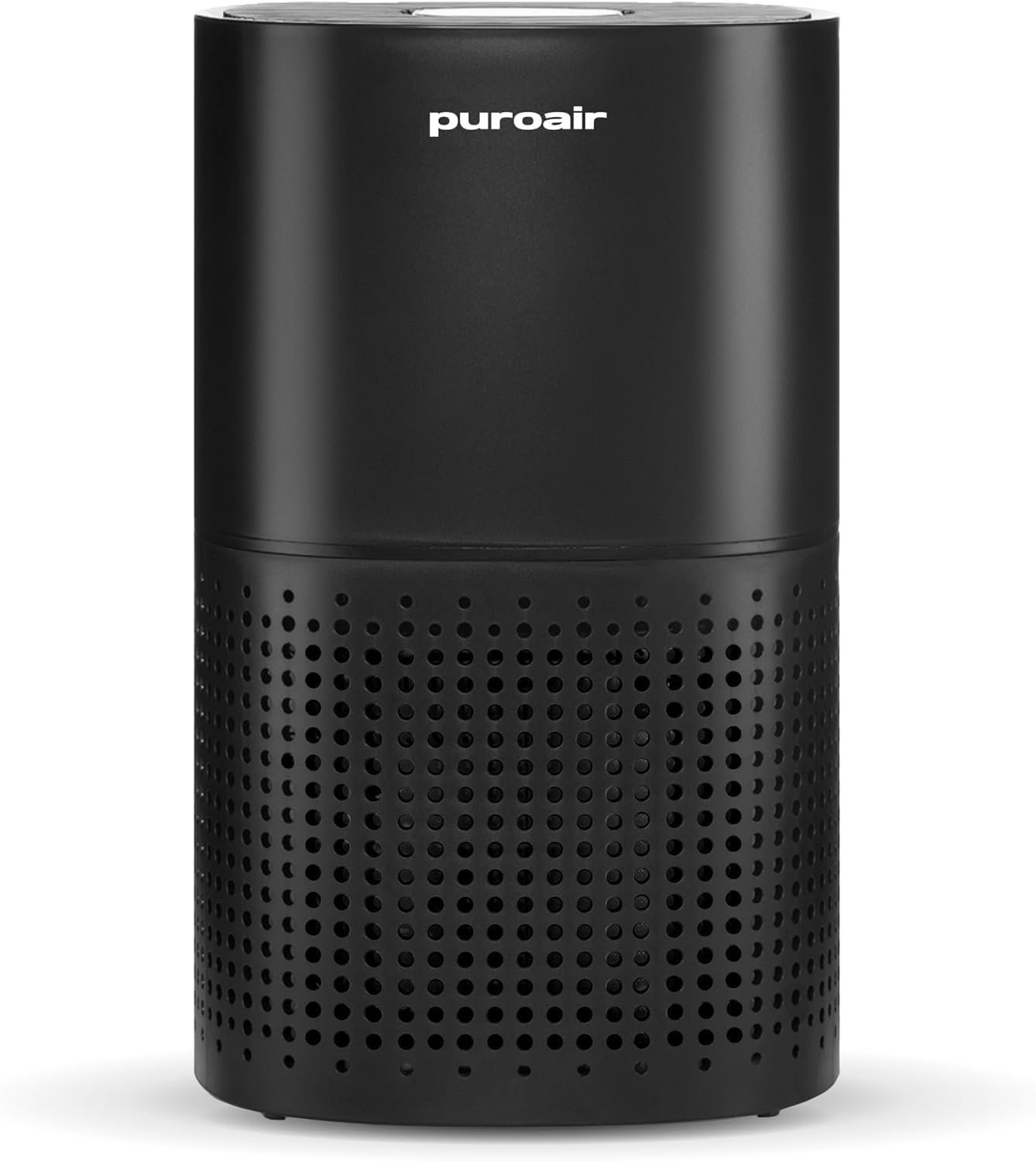
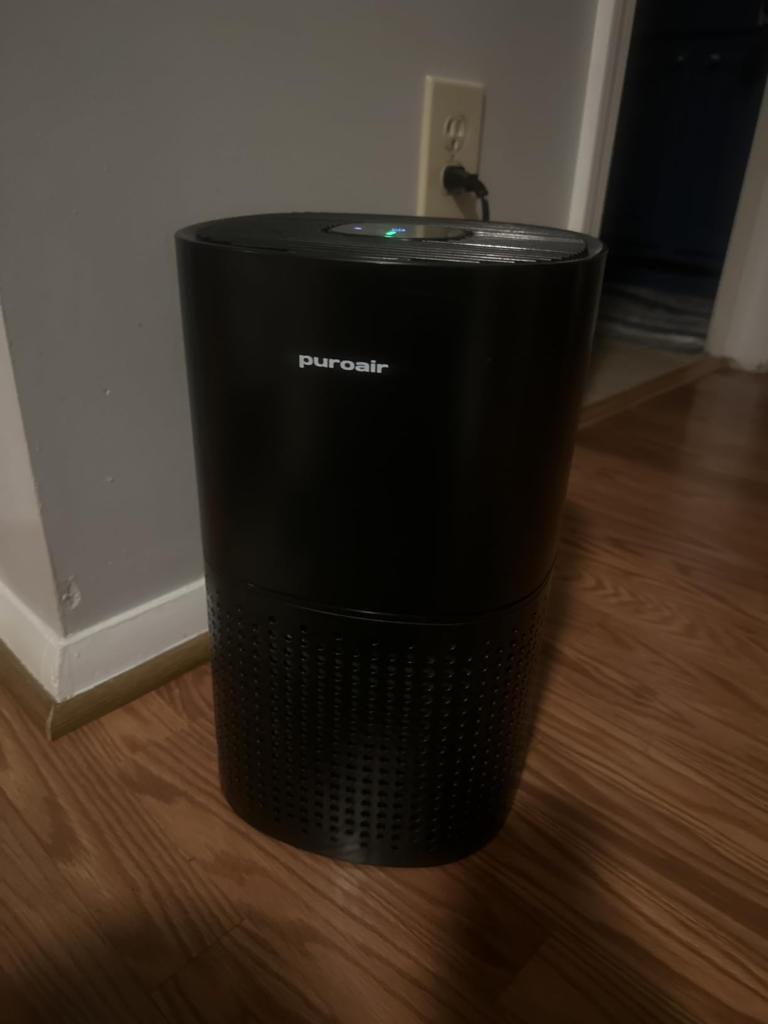
You plug it in. The sensor glows green. The fan hums quietly. You feel like you made a solid choice.
That feeling is real — and mostly incomplete.
The PuroAir 240 is the best-selling air purifier on Amazon. It pulled an estimated $56 million in sales in a single year alone, outselling the Levoit Core 300 — a device that had been on the market since 2019 — by roughly $23 million. Those numbers are not proof of performance. They are proof of reach. And reach and filtration are two entirely separate things that this market has spent years conflating.
The quiet fan, the clean aesthetic, the smart sensor — they all give you the impression that the machine is doing serious work on the air around you. Sometimes it is. Often, it is doing serious work on a much smaller portion of your room than you were sold.
That gap — between the number printed on the box and the physics of actual airflow — is where most buyers stop reading and start regret-posting.
What You’re Actually Feeling but Not Naming
You wake up and your throat is still dry. Your eyes still feel slightly gritty. The air quality indicator on the machine is green, and you cannot explain why your sinuses haven’t gotten the message.
Or: you notice the machine is loud. Not loud like a problem — loud like a trade-off you did not know you were agreeing to.
Or: you get the filter replacement notification six months in and realize the ongoing cost is not what you calculated when you hit Buy.
None of these are dramatic failures. They are precision mismatches — the kind that happen when a product is built for one condition and marketed for a broader one. The irritation you feel is real. The name for it is “buying based on peak performance specs instead of daily operating reality.”
The Hidden Mechanism Behind the Miss
Air purifiers have two numbers that matter more than coverage claims: CADR (Clean Air Delivery Rate) and ACH (Air Changes per Hour). Marketing leans on coverage. Engineers rely on CADR.
The AHAM-verified CADR report for the PuroAir 240 recommends a room size of 284 square feet — a fraction of the 1,115 square feet advertised on the Amazon listing. At $159, that translates to one of the highest cost-per-CADR-CFM ratios among small air purifiers.
The coverage claim is not fabricated. It is calculated at one air change per hour — a rate that is technically accurate and practically insufficient for anyone with allergies or respiratory sensitivity. For allergy sufferers who need 4 to 5 air changes per hour, the PuroAir 240’s CADR makes it ideally suited for rooms up to approximately 210 square feet — not 1,000.
This is the mechanism. Not deception. Not failure. A measurement gap that exists on every spec sheet and that almost no buyer knows to look for.
| Metric | PuroAir 240 Claim | AHAM-Verified Reality | Allergy-Grade Reality |
|---|---|---|---|
| Coverage Area | 1,000–1,115 sq ft | 284 sq ft | ~210 sq ft |
| Air Changes/Hour at Max Coverage | 1 ACH | — | 4–5 ACH needed |
| CADR Rating | ~240 CFM (model name) | 181 CFM (dust) | — |
| Price Per CADR CFM | — | ~$1.15 (high) | — |
The Threshold Where the Outcome Quietly Breaks
The PuroAir 240 has four fan speeds. The quiet operation you saw in ads — the sleep mode, the whisper fan — is real at low and medium settings.
The device measures 24 dB on low and 48 dB on high according to independent lab testing. Sleep mode sits below 40 dB, which is below the threshold sleep researchers identify as potentially disruptive.
The threshold that breaks the promise is not low setting. It is Turbo.
Roughly 200 users report that on Turbo or High mode, noise can exceed 60 dB — comparable to background office chatter. While manageable for short bursts, continuous operation at top speed becomes difficult to sustain in a bedroom or living space.
This creates a structural contradiction: the mode powerful enough to purify larger rooms is too loud to run continuously in rooms where you actually spend time. The mode quiet enough for sleeping is only effective in smaller spaces than advertised. You are constantly negotiating between silence and performance — a trade-off that does not appear in the marketing but shows up in every honest user review.
| Fan Speed | Noise Level | Practical Use | Effective Coverage |
|---|---|---|---|
| Sleep Mode | ~24–36 dB | Sleeping, deep work | Small rooms only |
| Low | ~28–36 dB | Reading, working | Small-medium rooms |
| Medium | ~40–45 dB | Background use | Medium rooms |
| High / Turbo | 48–60+ dB | Burst cleaning only | Approaches coverage claim |
Why Most Buyers Misread This Too Early
The PuroAir 240 appeared on “Best Air Purifiers” lists from major publishers across 2023 and 2024. Publications including USA Today, Money.com, and the LA Times recommended it to their readers, contributing to its status as Amazon’s best-selling air purifier of 2023. Yet none of the air quality experts in the independent research community had mentioned the device, and it appears in no independent air quality database of the 680 devices tracked by the Clean Air Stars project.
The lists were real. The recommendations were genuine in intent. What they were not is performance-tested by the publishers recommending them.
When something appears in eight “best of” lists before independent lab testing has been published, the reader assumes those lists are based on technical evaluation. They are usually based on press materials, Amazon ratings, and affiliate relationships.
Independent testing at HouseFresh found that the PuroAir 240 did not live up to its marketing, noting that a denser HEPA 14 filter is not automatically equivalent to better performance — if the fan is not strong enough to draw sufficient air through a denser medium, cleaning power is actually reduced compared to a well-matched HEPA 13 system.
Buying based on list placement and star rating average is not a mistake. It is the default. The mistake is assuming those signals have already filtered for the thing you actually care about — the air in your specific room, with your specific use pattern.
Who Is Actually Inside This Problem
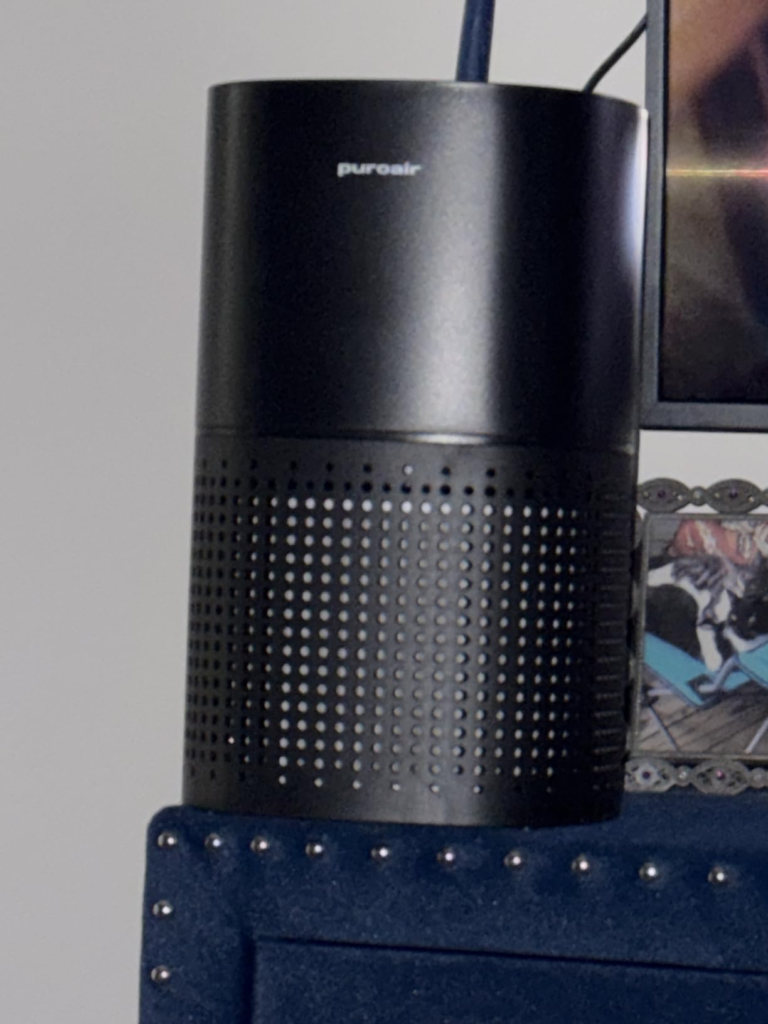
The PuroAir 240 works. For a specific profile of user, it works cleanly and without friction.
That user lives or sleeps in a room between 150 and 400 square feet. They are mildly to moderately sensitive to dust, pollen, or pet dander. They want automatic adjustment, not manual control. They do not need smartphone connectivity. They sleep lightly and value quiet above coverage speed. They are willing to pay $48–$75 for a filter replacement every 6 to 8 months depending on air quality conditions.
For bedrooms and medium-sized living spaces, the PuroAir 240 is well-suited — especially if you are okay with some fan noise when air quality degrades. It cuts down on dust, helps with allergies, and clears everyday smells without turning your living room into a wind tunnel.
In a survey of 120 PuroAir customers, 84% reported reduced pet-related allergy symptoms, with most noticing improvement within 3 to 5 days.
That outcome is real. It is just bounded by room size and expectations around coverage speed.
Where Wrong-Fit Begins
| Buyer Profile | Fit Assessment | Why It Fails |
|---|---|---|
| Large open-plan living room 800+ sq ft | Wrong fit | CADR too low for 4–5 ACH at that size |
| Budget-sensitive buyer calculating 1-year cost | Wrong fit | Filter cost ~$75–$100/year adds up fast |
| Buyer prioritizing smart home integration | Wrong fit | No app, no Wi-Fi, no scheduling |
| Heavy odor elimination (cooking, smoke) | Partial fit | One verified buyer reported it did not eliminate odors even in a 5×5 foot space — results vary significantly |
| Severe asthma or clinical-grade sensitivity | Wrong fit | CADR and ACH insufficient for medical-grade air changes |
| Bedroom sleeper in a room under 300 sq ft | Strong fit | Quiet enough, effective at that scale |
| Pet owner in a medium apartment | Strong fit | 45-day real-world testing with pets confirmed reliable allergen reduction and dander control |
The regret threshold sits at 500 square feet. Below it, the machine delivers. Above it, you are running it on High constantly, disturbing everyone in the room, and still not reaching the air change rate you actually need.
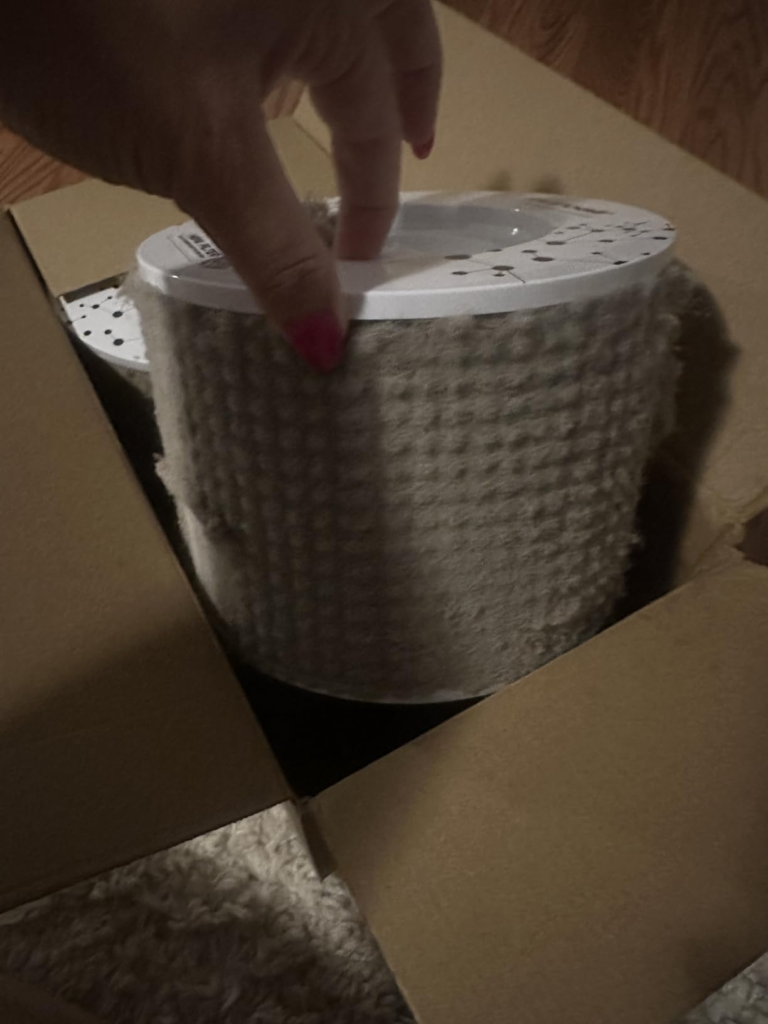
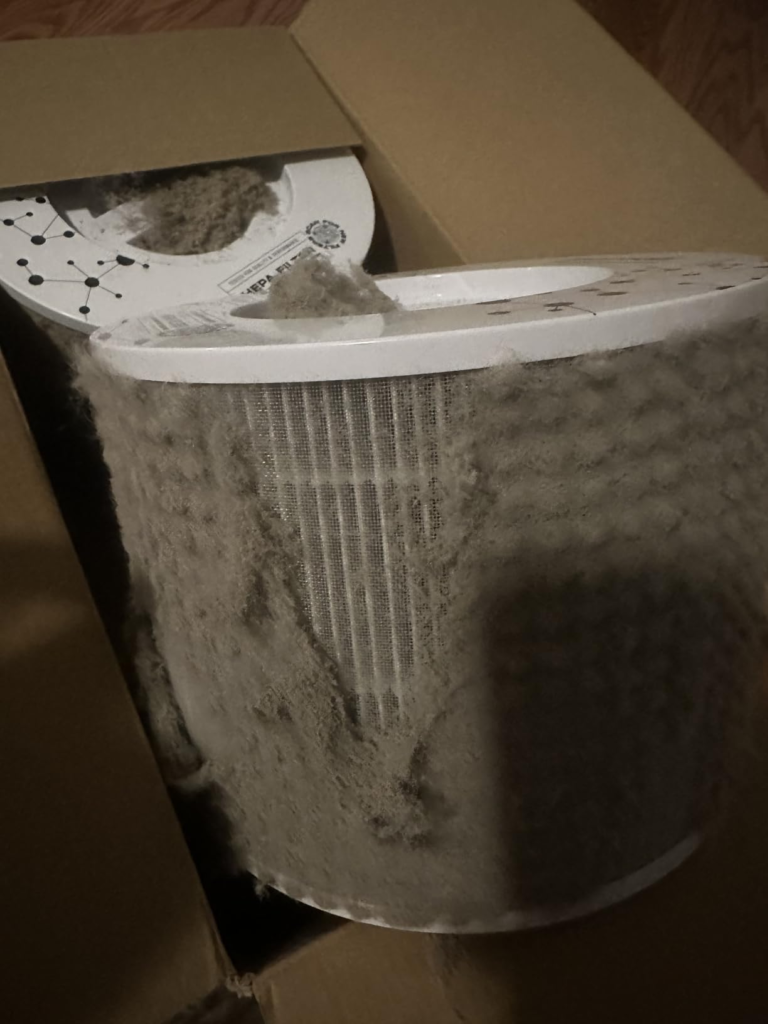
A notable complaint among nearly 171 reviewers centers specifically on the cost of genuine PuroAir replacement filters — approximately $75 for a 2-pack — compared to third-party alternatives around $33, which lack the brand’s tested carbon blend and HEPA efficiency.
The machine is not expensive. The machine plus two years of genuine filters, running continuously, is a different number than the one you saw on the product page.
The One Situation Where This Product Becomes Logical
If your room is under 400 square feet, you sleep in it, you have seasonal allergies or a pet, and you want a device that requires zero setup complexity — this is a structurally sound choice.
At roughly $20 more than comparable 1,000-square-foot-rated Levoit units, the PuroAir 240 offers a 2-year warranty, genuine whisper-quiet operation even at upper settings, and a filter with noticeably better build quality and seal than budget alternatives.
The device is backed by CARB, ETL, ISO, and Energy Star certifications. It does not emit ozone. Its energy consumption runs from 2 watts in sleep mode to 45 watts at maximum — an efficient profile for continuous 24-hour operation.
The logic of buying it is not “this is the highest-performing air purifier.” The logic is: “this is a reliable, quiet, low-maintenance machine for the room I actually use, and I understand what it does and does not cover.”
That is a legitimate purchase. It just requires you to arrive at it with accurate information, not list-ranking confidence.
What It Solves, What It Reduces, and What It Still Leaves to You
| Category | What Happens |
|---|---|
| Solves | Dust and pet dander accumulation in rooms under 400 sq ft |
| Solves | Nighttime allergen exposure during sleep in small-medium bedrooms |
| Solves | Auto-response to cooking smoke or sudden air quality drops |
| Reduces | Morning allergy symptoms for mild-to-moderate sensitivity |
| Reduces | Visible dust settling on surfaces in active rooms |
| Reduces | Pet odor in enclosed spaces (not open kitchens) |
| Leaves to you | Monitoring filter cost and replacement schedule |
| Leaves to you | Accepting noise trade-off at high fan speed |
| Leaves to you | Managing realistic expectations for large rooms |
| Leaves to you | Sourcing filters — OEM vs. compatible options differ in quality |
It is not perfect. The plastic build is more functional than fancy, and filter replacements can add up — especially if you stick to the branded ones. If you are expecting total silence and hotel-quality air, you will be disappointed. If you want something that genuinely takes the edge off allergies and dust in a real-world medium space, it is a solid option.
Final Compression
The PuroAir 240 is not a scam. It is a product sold beyond its honest operating window.
The machine works at 150–400 square feet on Auto or Low. It struggles with credibility at the 1,000-square-foot number printed on the box. The noise at high speed is real and limiting. The filter cost is ongoing and non-trivial. The lack of smart features is a real gap at this price tier in 2026.
If you sleep in a medium bedroom, have mild-to-moderate allergies or a pet, want zero setup friction, and understand the filter cost going in — this machine will deliver exactly what a well-matched air purifier should: quieter nights, less dust, and fewer mornings where your sinuses remind you of everything you breathed overnight.
If your room is larger than 500 square feet, your sensitivity is clinical, or you need smart home control — this is the wrong fit, and buying it will not change that.
The decision is not complicated once the coverage gap is named.
Frequently Asked Questions
| Question | Answer |
|---|---|
| Does the PuroAir 240 actually clean 1,000 square feet? | Technically, at one air change per hour — yes. Practically, for anyone with allergies or respiratory sensitivity who needs 4 to 5 air changes per hour, the effective coverage is closer to 210 to 284 square feet based on AHAM-verified test data. The 1,000-square-foot claim is accurate under conditions that do not reflect allergy-grade air quality standards. |
| How loud is the PuroAir 240 at night? | In Sleep and Low mode, it runs at 24 to 36 dB — below the 40 dB threshold most sleep experts consider disruptive. On High or Turbo, it can exceed 60 dB, which is comparable to background office noise. For sleep use, keep it on Auto or Sleep mode and the noise is genuinely minimal. |
| How much do PuroAir 240 replacement filters cost? | Official OEM filters run approximately $48 to $75 for a 2-pack, depending on the retailer. Third-party compatible filters exist at lower prices (around $33) but may not replicate the exact carbon blend or HEPA seal quality of genuine replacements. Plan for one filter replacement every 6 to 8 months with continuous use. |
| Is the PuroAir 240 worth it for pet owners? | For pet owners in rooms under 400 square feet, yes. Independent 45-day real-world testing with cats confirmed reliable reduction in airborne dander and fur. In larger open spaces, the performance gain over lower-cost alternatives narrows significantly. |
| Does the PuroAir 240 produce ozone? | No. The unit holds CARB certification, which specifically addresses ozone compliance. No verified evidence of ozone emission has been found in any independent test or regulatory report. The confusion in some reviews comes from conflating this device with ionizer-based purifiers — the PuroAir 240 uses mechanical HEPA filtration only. |
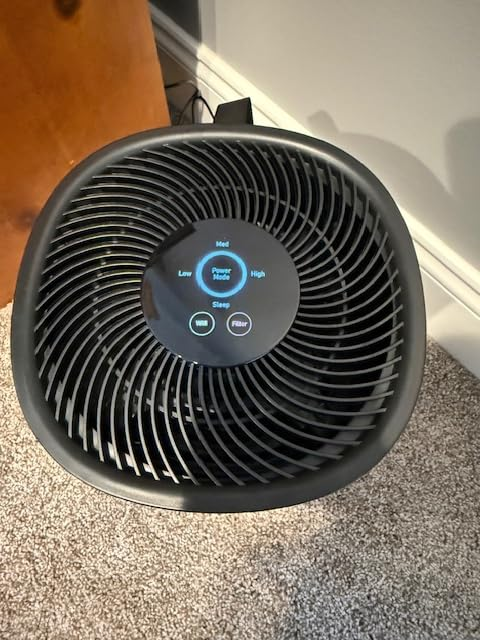
| Does the PuroAir 240 have Wi-Fi or app control? | No. There is no app, no Wi-Fi, no smart home integration, and no scheduling feature. Operation is entirely manual or via the onboard auto-sensor mode. For buyers who want Alexa compatibility or remote monitoring, this is a meaningful limitation at its price point. |
| What is the PuroAir 240’s warranty? | Two years standard. PuroAir also offers a lifetime warranty when paired with an active filter subscription, plus a 100-day money-back guarantee. |
Transparency Note:
This analysis is built on aggregated real-world experience.
It extracts what repeatedly holds, what breaks, and what users uncover only after living with the system—then shapes it into a clear model you can use immediately.
Think of it as structured experience, refined and presented so you don’t have to learn it the hard way.
“A quick note: Don’t believe the star ratings, but trust personal experience. This article is a compilation of collected experiences”